
(H.Hara) Zarrei & Wilkin
Description
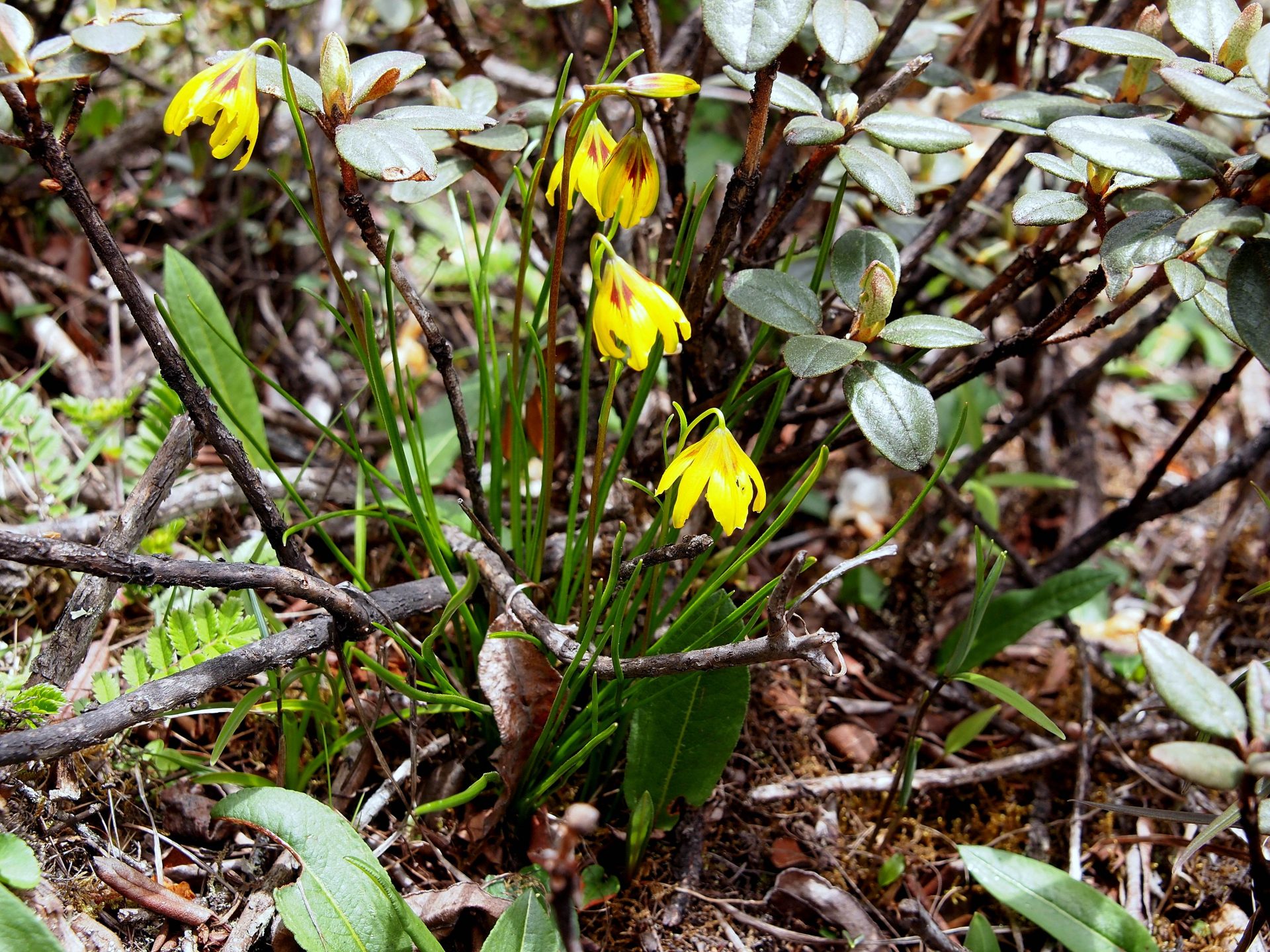
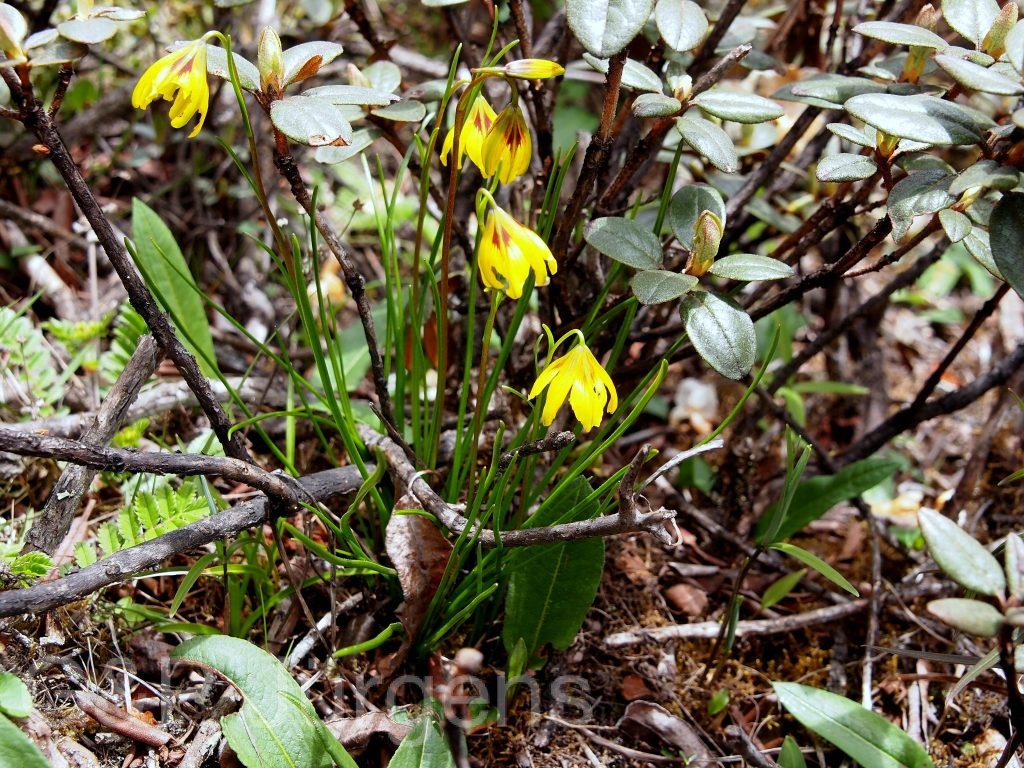
Gagea flavonutans is a small alpine bulbous geophyte of the eastern Himalaya, recorded from Nepal, India, China, Bhutan and Myanmar, with about 104 georeferenced occurrences clustered along the high inner ranges. It grows in open alpine turf, on grassy and stony slopes, screes and moist ground at the edge of melting snow, chiefly between roughly 3800 and 4500 m. The plant was photographed in the Sikkim Chopta Valley at 4200 m in June, an elevation and season characteristic of the genus, whose members flush and flower rapidly in the brief interval following snowmelt before the soil dries.
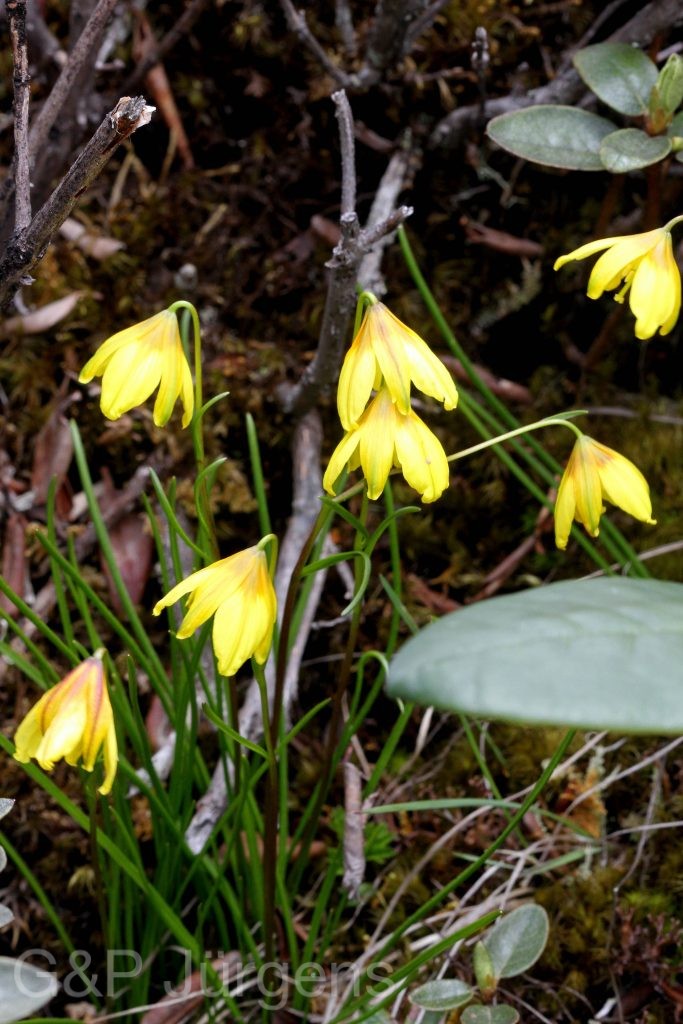
It is a slender, hairless perennial arising from one or few ovoid tunicate bulbs. There are typically two narrowly linear basal leaves, channelled and grass-like, considerably exceeding the short scape. The inflorescence is few-flowered, the flowers nodding as the epithet flavonutans implies. The perianth comprises six free, narrowly elliptic to oblong tepals, yellow within and often greenish or purplish-tinged on the outer surface; the six stamens have slender filaments and small anthers, and the superior tricarpellate ovary bears a single style. The fruit is a small loculicidal capsule containing numerous seeds.
Gagea (Liliaceae) is a large, taxonomically difficult Old World genus in which species are delimited by bulb structure, leaf number and section, and floral orientation; G. flavonutans, originally described by Hara, was transferred to Gagea in the molecular reassessment by Zarrei and Wilkin that absorbed the segregate Lloydia into a broadened Gagea. Its nodding yellow flowers and high-Himalayan range distinguish it within this complex. As a short-statured snowbed geophyte it is sensitive to changes in snow cover and grazing, though it remains locally frequent and is not currently regarded as threatened.
Author: (H.Hara) Zarrei & Wilkin · Sources: POWO (Kew), GBIF, Flora of China, Annotated Checklist of the Flowering Plants of Nepal, Zarrei & Wilkin phylogenetic revision of Gagea