
D.Don
Description
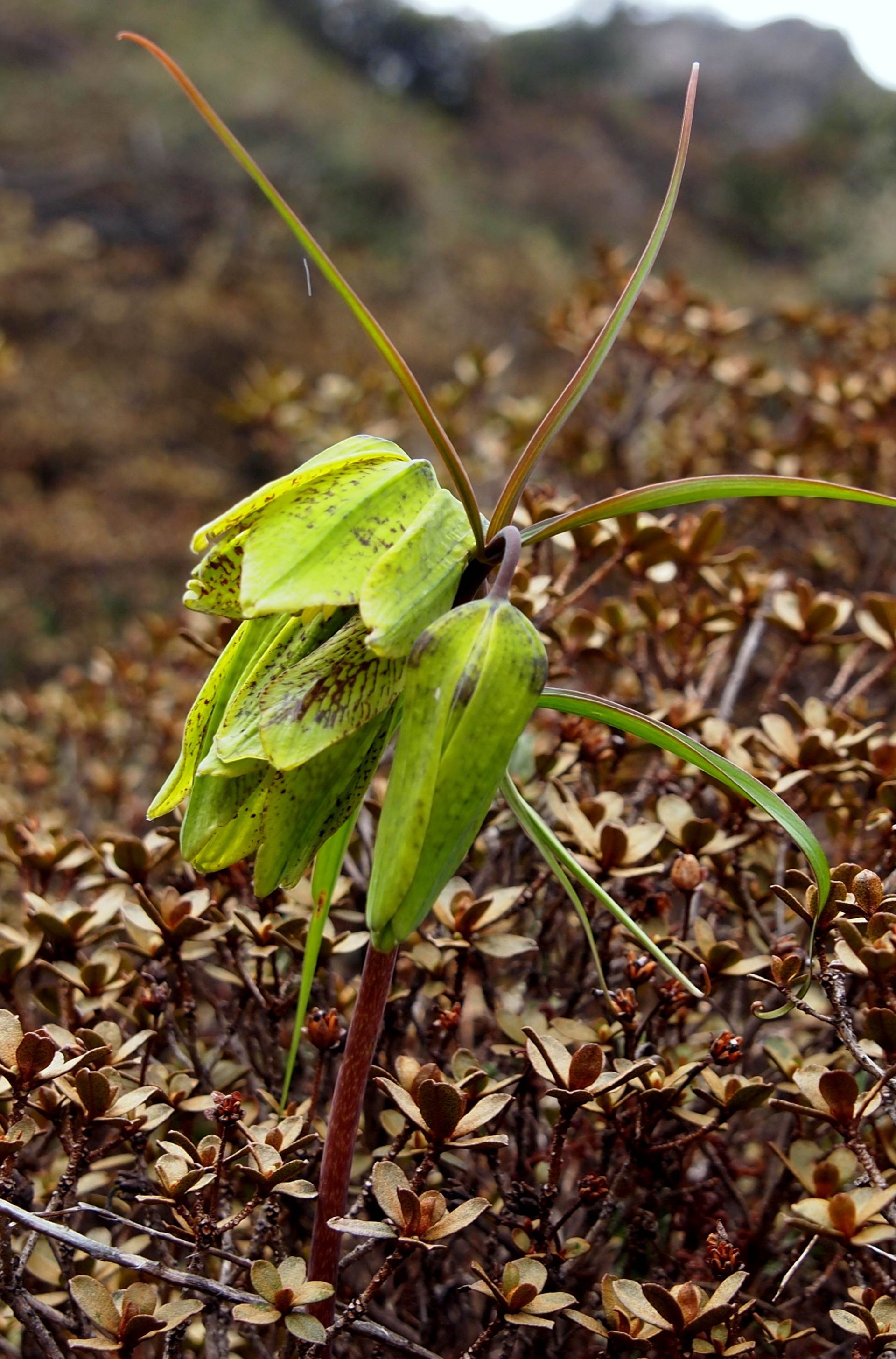
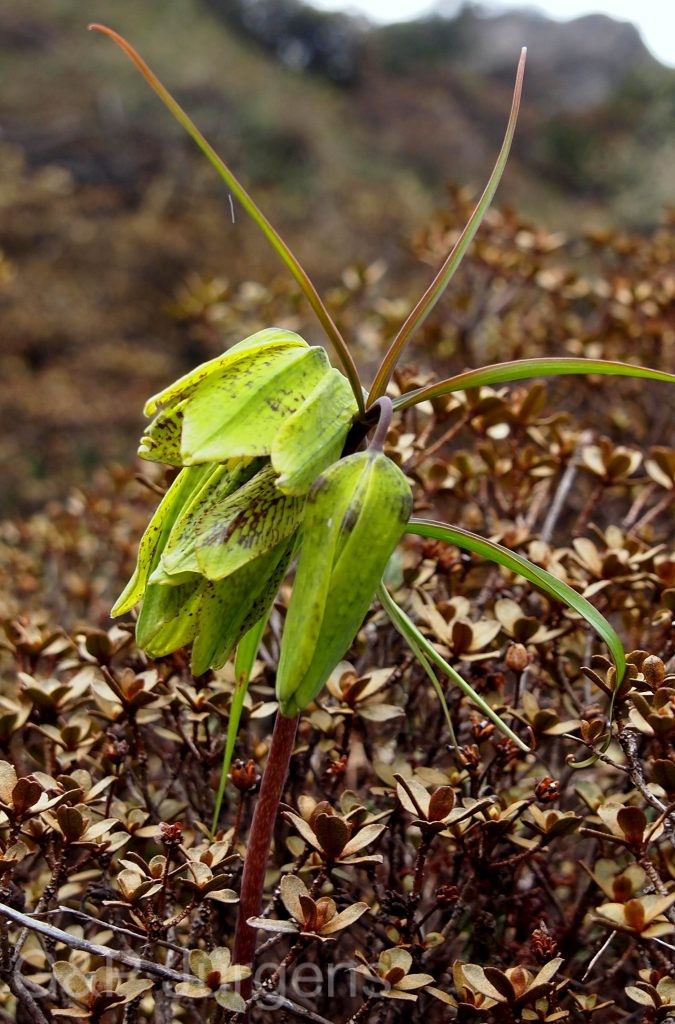
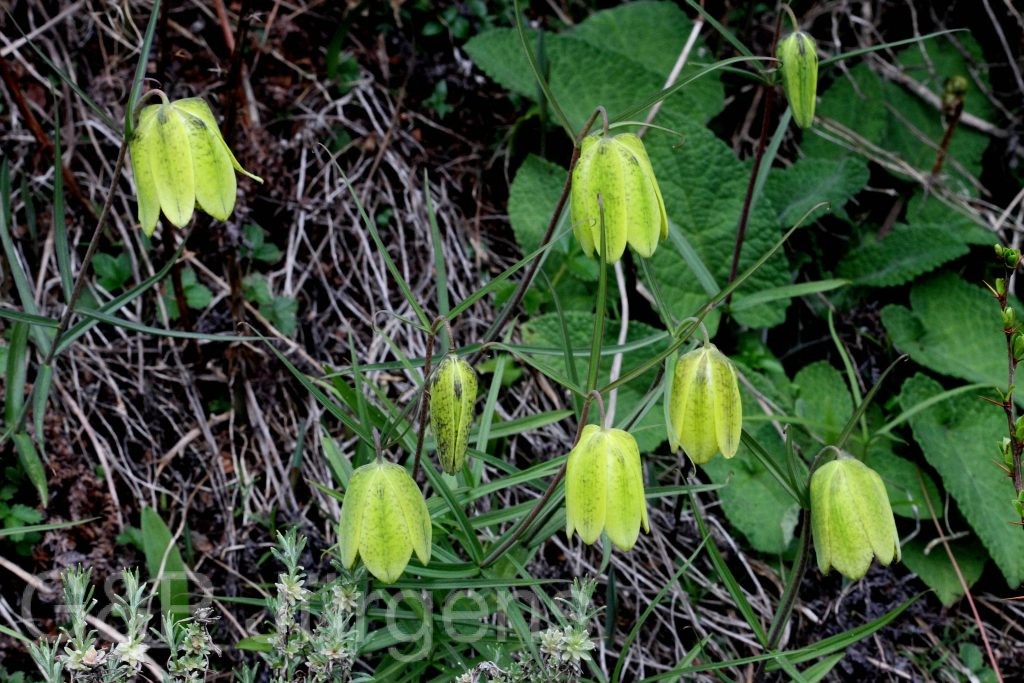
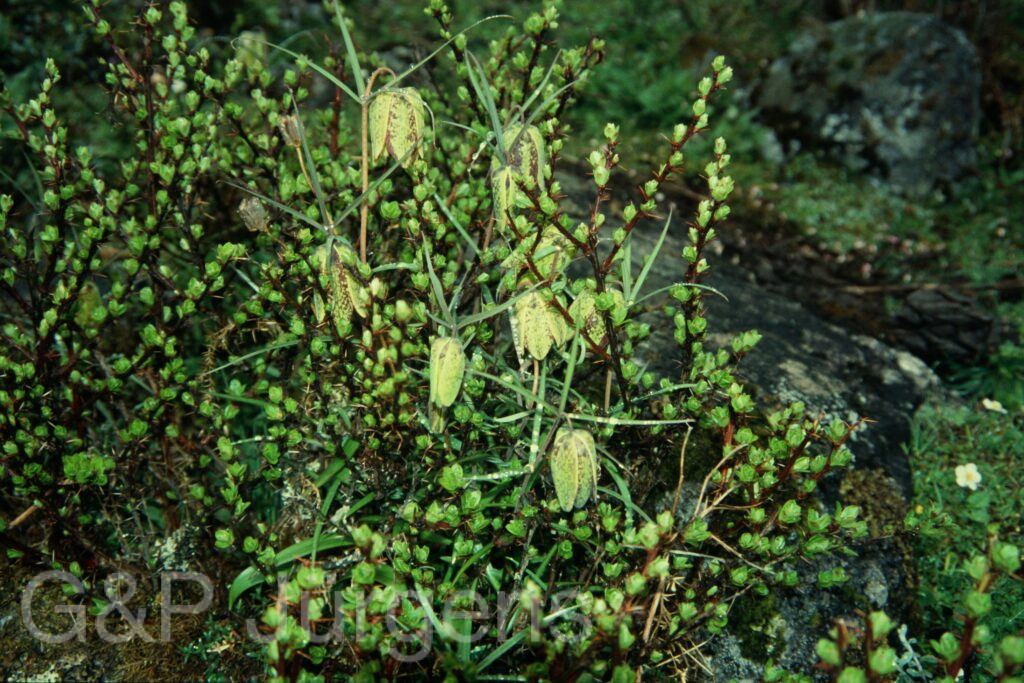
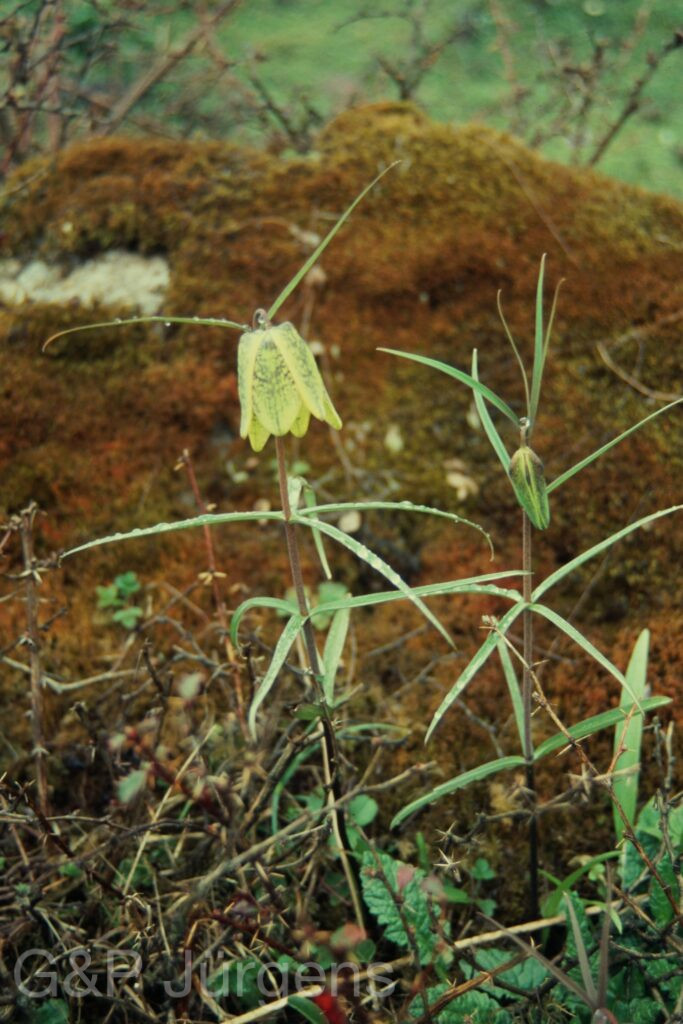
Fritillaria cirrhosa is a bulbous alpine lily of the Himalaya and the Hengduan mountains, native to China, India, Nepal, Pakistan, Bhutan and Myanmar, the very large total of c. 962 records reflecting its wide range and economic importance. It inhabits alpine meadows, scrub, rocky slopes, screes and grassy clearings, mostly between roughly 3200 and 4600 m. The illustrated plants were photographed at Tanghu in Sikkim at 3900 m in June and at Yumthang on the Sikkim/India border at 3700 m in May, sites characteristic of the species, which flowers shortly after snowmelt on cool, moist, well-drained high-montane ground.
It is a perennial herb arising from a small bulb of a few fleshy scales. The slender erect stem bears scattered to whorled, linear to lanceolate leaves, the uppermost of which are prolonged into slender, curling, tendril-like tips, the cirrhose feature from which the epithet derives. The flowers are usually solitary and nodding, broadly campanulate, with six tepals that are yellowish-green to purplish and conspicuously tessellated (chequered) with darker purple-brown; a nectary gland sits near the base of each tepal. The six stamens surround a superior trilocular ovary with a three-lobed style. The fruit is an erect, six-angled or narrowly winged loculicidal capsule.
Fritillaria (Liliaceae) is a Holarctic genus delimited by section on bulb structure, leaf arrangement and style form, and F. cirrhosa is a polymorphic species of the subgenus Fritillaria. Its dried bulb is the source of the renowned traditional Chinese medicine "chuan bei mu," used as an antitussive, and this heavy commercial harvesting is the principal conservation concern: although still widespread, the species is subject to intense wild collection, and the chuan bei mu trade has prompted cultivation efforts and regulatory attention across its range.
Author: D.Don · Sources: POWO (Kew), GBIF, Flora of China, Flowers of the Himalaya (Polunin & Stainton), Rix monograph of Fritillaria