
(Wall.) Makino
Description
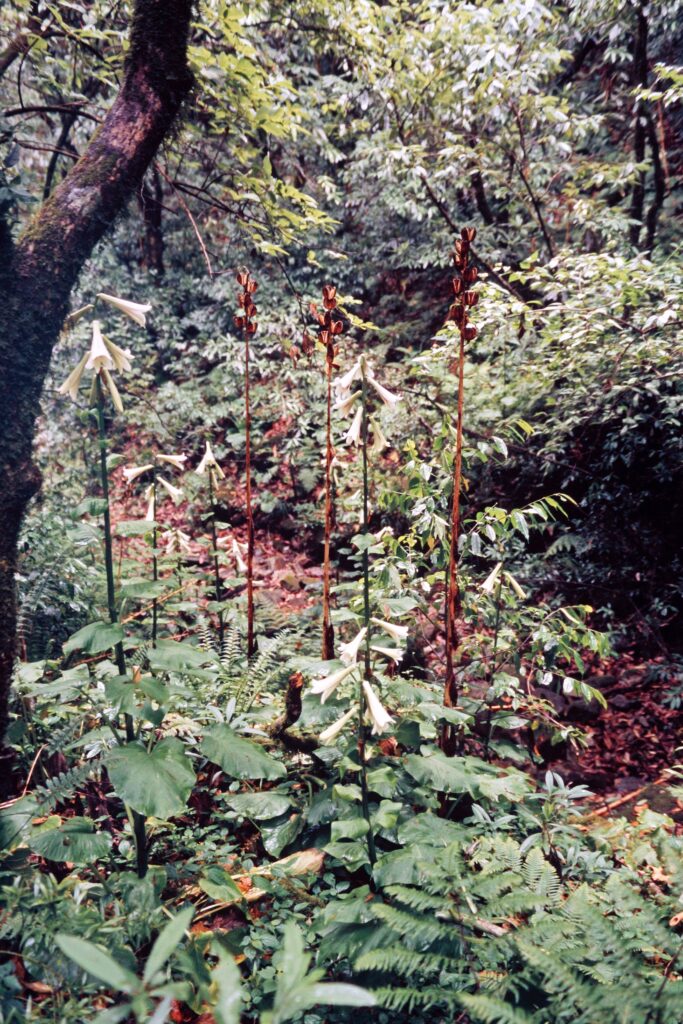
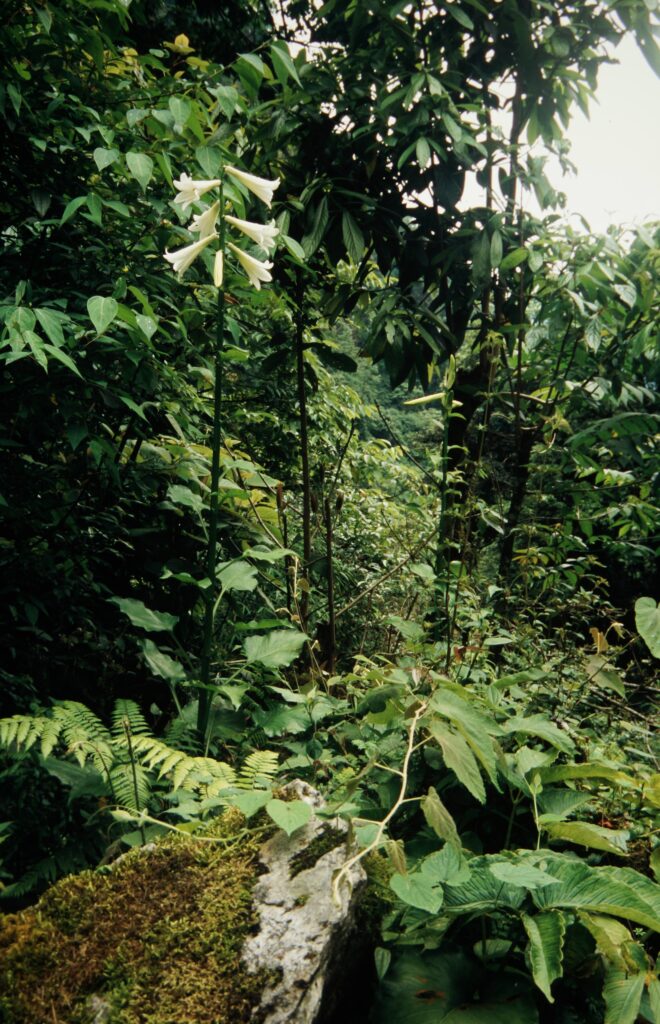
Cardiocrinum giganteum is the world's largest lily, distributed from central Nepal through Sikkim, Bhutan, and northeast India into upper Myanmar and southwestern China (Yunnan, Sichuan, Xizang). With over 1,370 occurrences recorded on GBIF, it is well-documented across its range. The species inhabits moist, shaded ravines and openings in temperate broadleaved and mixed forests at elevations of 1,500–2,800 m, favouring deep, humus-rich soils under canopies of Magnolia, Acer, and Rhododendron.
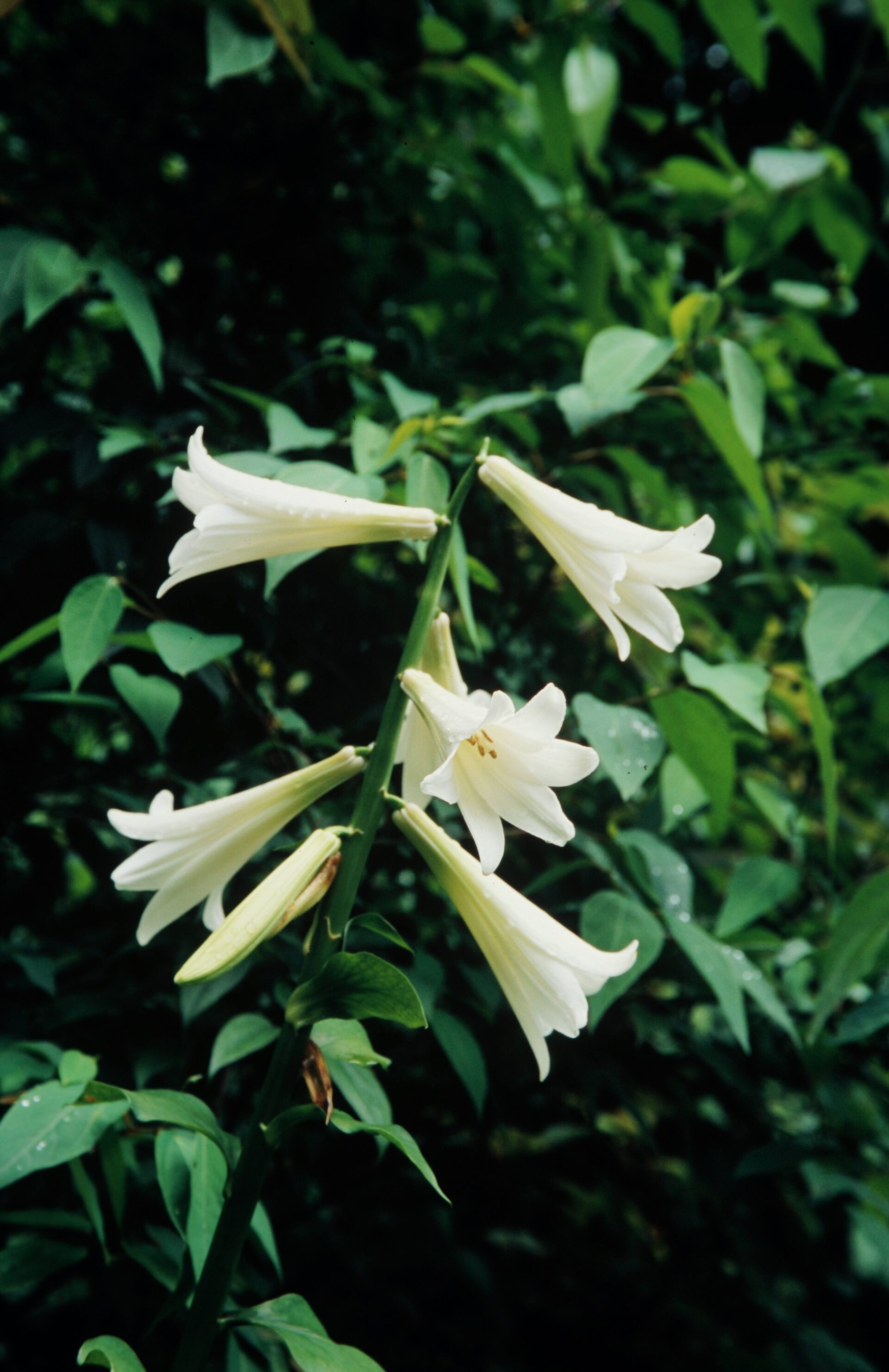
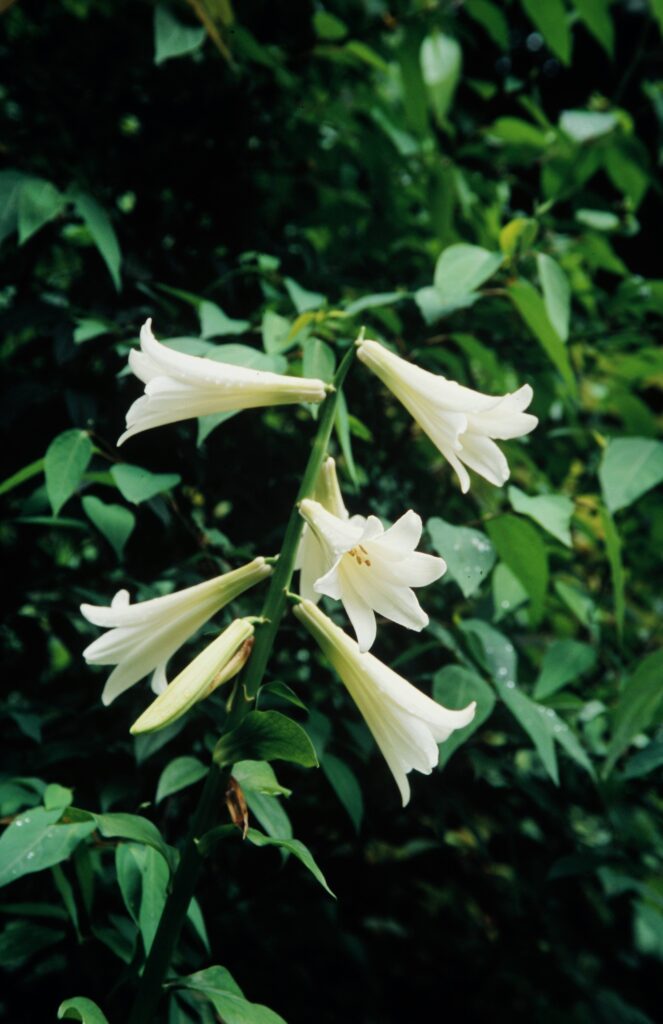
Cardiocrinum giganteum is a monocarpic perennial growing from a large, conical bulb up to 15 cm in diameter. In its final flowering year, the plant produces a stout, hollow stem reaching 1.5–3.5 m in height. Basal leaves are broadly cordate, glossy dark green, up to 45 cm long, with a conspicuous reticulate venation. The inflorescence is a terminal raceme of 10–20 large, trumpet-shaped, fragrant flowers, each 15–20 cm long, white with maroon-purple streaking inside the throat. The six tepals are slightly recurved at the tips. The fruit is an oblong, erect capsule, 4–6 cm long, containing numerous flat, winged seeds adapted for wind dispersal. After flowering and fruiting, the parent bulb dies, but several daughter bulblets persist at the base, requiring 5–7 years to reach flowering size.
The species was first described from material collected by Nathaniel Wallich in Nepal. The photographed specimens from Trijugi Narayan in Garhwal (2,250 m) and Ringi Chu in Sikkim (2,200 m) represent populations near the western and central portions of the range, respectively. Though widely cultivated in temperate gardens, wild populations face pressure from habitat fragmentation and collection. The var. yunnanense, sometimes recognized from southwestern China, differs in its bronze-flushed foliage, but its taxonomic distinctness remains debated.
Author: (Wall.) Makino · Sources: POWO (Kew), GBIF, Flora of China Vol. 24, Flora of Bhutan Vol. 3, Grierson & Long (1983)