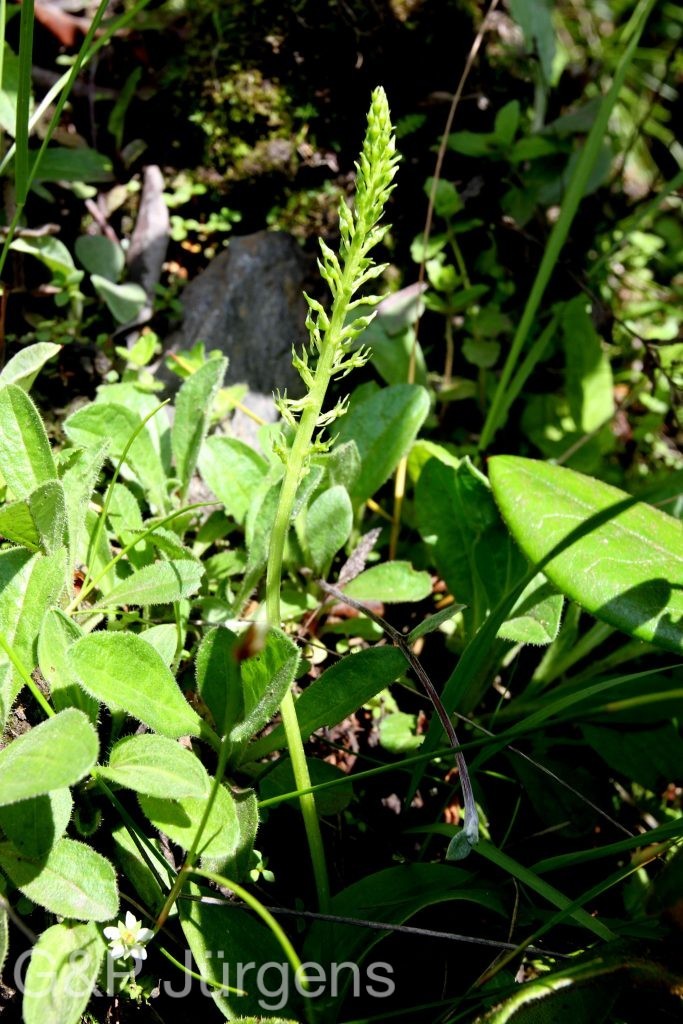
Tag:

Alpine (>3500 m)

(Lindl.) Kuntze

BhutanPG2011 788 01 01
Bhutan Chele-La, 3750m July

Description

Malaxis muscifera is a small terrestrial orchid widespread through the Himalaya and adjacent China, recorded from Nepal, India, China, Bhutan, Pakistan and Myanmar, with some 237 occurrences in GBIF. It grows in moist temperate to subalpine forest and forest margins, among shaded humus, mossy banks and grassy clearings, broadly between about 2,500 and 4,000 m. The plant figured was photographed at Chele-La in western Bhutan at around 3,750 m in July, when the species flowers during the summer monsoon in the cool, damp conditions of the upper conifer and Rhododendron belt.

It is a slender, glabrous perennial herb arising from a small pseudobulb-like, fleshy stem-base. There are usually two, occasionally more, ovate to elliptic, plicate-veined leaves clasping the lower stem by their sheathing bases. The erect stem terminates in a long, dense, many-flowered raceme of minute greenish to yellowish flowers. The narrow sepals and the very slender, thread-like petals spread or reflex, giving the inflorescence its characteristic spidery aspect; the labellum is uppermost through resupination, broadly cordate-auriculate at the base and abruptly contracted to a narrow apex, embracing the short column. The fruit is a small ellipsoid capsule with numerous dust-like seeds.

Malaxis is a large, mainly tropical and warm-temperate genus, and M. muscifera, with its narrowly filiform petals, is among the most distinctive Himalayan representatives, the epithet alluding to the fly-like floral appearance. The flowers are pollinated by small insects, and germination requires mycorrhizal fungi. Frequent and locally abundant across the Himalaya, it is of low conservation concern, though, as an orchid, it is covered by the CITES Appendix II listing of the family.

Author: (Lindl.) Kuntze · Sources: POWO (Kew), GBIF, Flora of China, Flora of Bhutan, Annotated Checklist of the Flowering Plants of Nepal, Pridgeon et al. Genera Orchidacearum
C.B.Clarke

Sikkim2004 215 G367
Sikkim/India Gometang 3900m May
Nepal 97 203 P415
Nepal Thudam 3850m April
Nepal 97 202 P414
Nepal Thudam 3850m April

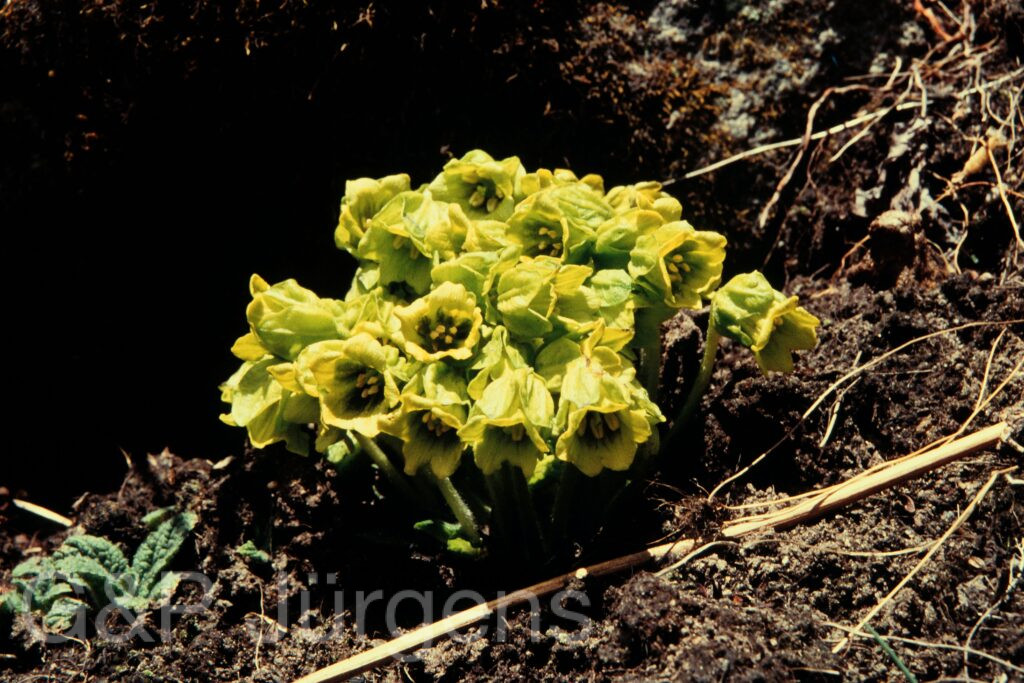
Description

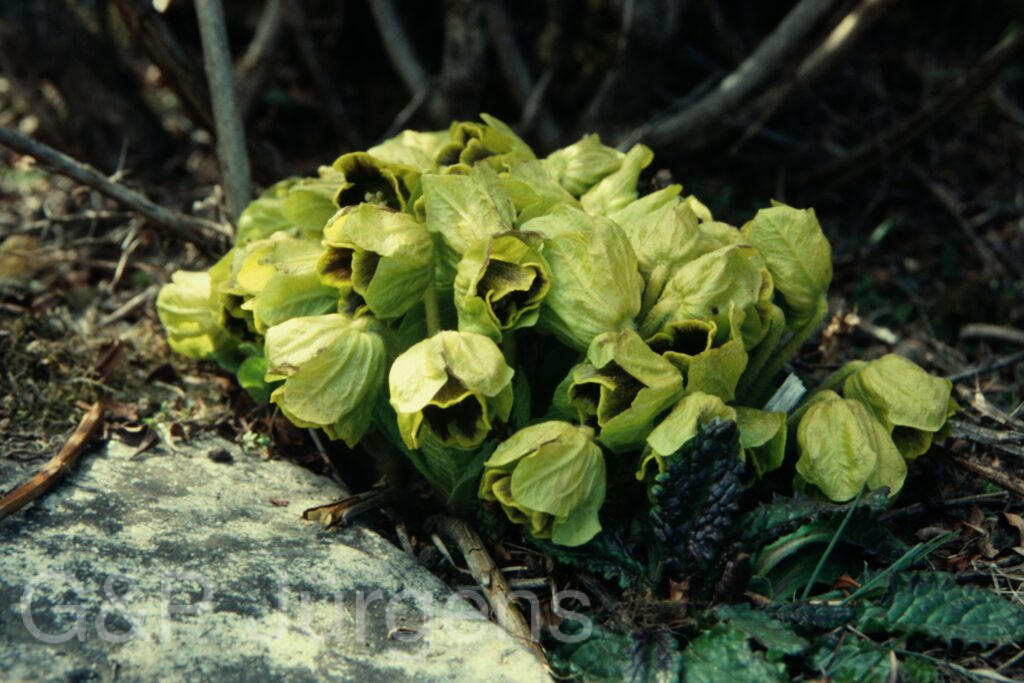
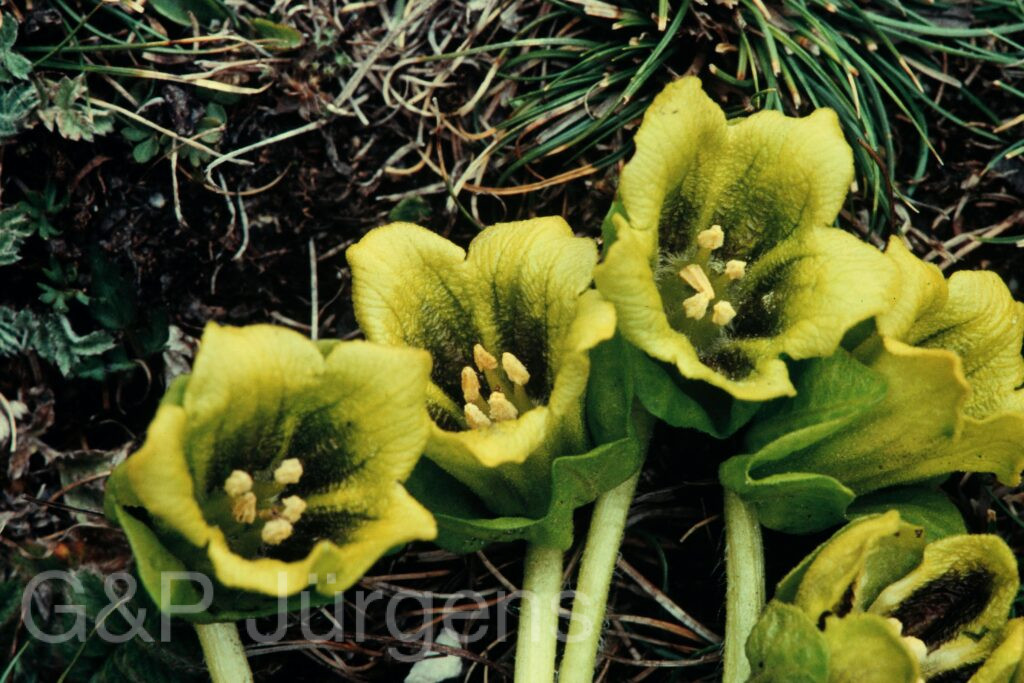
Mandragora caulescens is a stout alpine perennial of the high Himalaya and Tibetan borderlands, distributed across southwestern China (Xizang, Yunnan, Sichuan), northern India, Nepal, Bhutan and Myanmar; GBIF documents some 540 collections, indicating it is locally frequent within its high-elevation range. It occupies open alpine meadows, grassy slopes, scrub margins and stony pasture, generally between about 2500 and 4500 m, often in moist, well-drained turf. The photographed plants were recorded at Gometang on the Sikkim/India border at about 3900 m in May and at Thudam in eastern Nepal near 3850 m in April, typical of this snowmelt-associated meadow species.

Unlike the stemless Mediterranean mandrakes, this species is caulescent, developing a short, leafy aerial stem from a large, fleshy, often forked taproot. The leaves are clustered, oblong to oblanceolate, tapering to the base, entire or sinuate, and somewhat fleshy. The flowers are solitary on long, decurved or nodding peduncles among the leaves; the corolla is broadly campanulate, dull purple to brownish-violet or rarely greenish, five-lobed, subtended by a deeply lobed persistent calyx. The fruit is a globose, fleshy berry seated in the enlarged calyx.

The placement of Mandragora has long been debated; it is treated here in Solanaceae, in which it is conventionally classified, though some authors segregate it. M. caulescens is the principal Asian representative of the genus and, like its western relatives, contains tropane alkaloids and features in regional ethnomedicine. Widespread across the high Sino-Himalayan ranges, it is not regarded as globally threatened.

Author: C.B.Clarke · Sources: POWO (Kew), GBIF, Flora of China Vol. 17, Flora of Bhutan Vol. 2, Flora of Nepal, Flora of Pakistan, Ungricht et al. revision of the genus Mandragora

(Jacqu. ex Benth.) Hedge

Nepal 99 790 ergebnis
West-Nepal Baga-La-Phedi 4460m, July

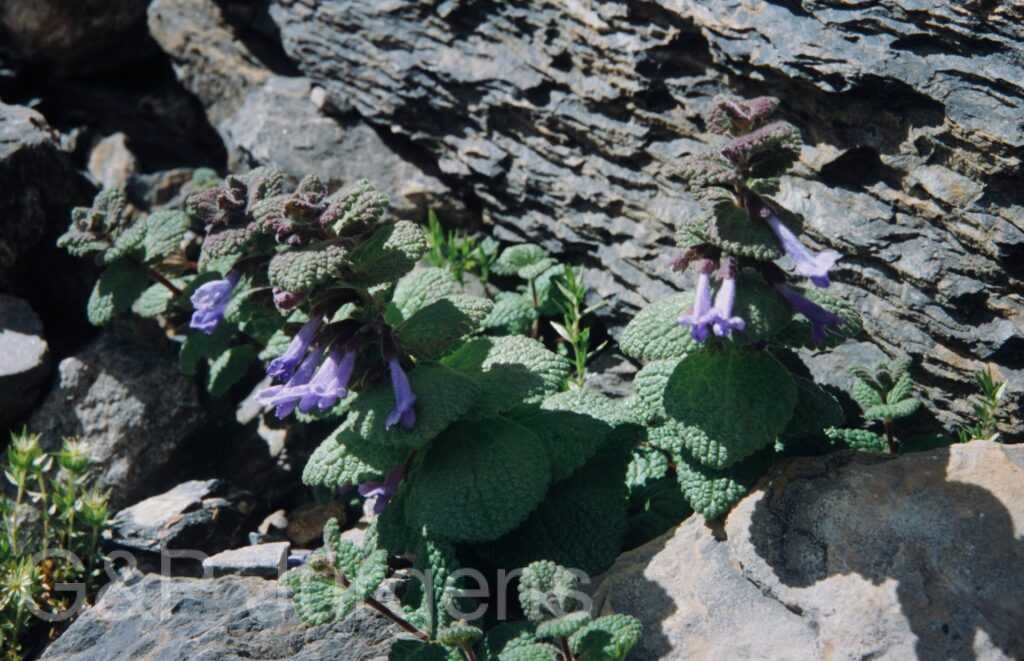
Description

Marmoritis nivalis is a high-alpine herb of the Himalaya, recorded from India, Nepal, Bhutan and China; with only about 36 georeferenced records it is a sparsely collected, narrowly montane species. As the epithet "nivalis" indicates, it is a plant of the snow line, growing on open screes, stony alpine turf, moraine and rocky slopes typically between 4000 and 5000 m. The photographed individual from Baga-La-Phedi in West Nepal at 4460 m, flowering in July, exemplifies its occurrence in the cushion-and-scree zone above the timberline, where the short summer growing season coincides with the monsoon.

It is a low, mat-forming or tufted perennial herb arising from a branched woody caudex and slender rhizome, the stems short, ascending and grey-pubescent. The leaves are small, opposite, ovate to orbicular, crenate, thick and densely hairy, an adaptation to cold, exposed, high-radiation habitats. The flowers are crowded in compact terminal heads subtended by leafy bracts; each corolla is bilabiate, pale violet to bluish, with a notched upper lip and a spreading three-lobed lower lip. The calyx is tubular and conspicuously veined, and the four stamens lie under the upper lip. The fruit consists of four small nutlets enclosed in the persistent calyx.

This taxon is treated by GBIF as a synonym, with Marmoritis nivalis itself as the accepted name (combination by Hedge, based on Bentham's earlier name in Dracocephalum/Nepeta). Marmoritis is a small Sino-Himalayan genus segregated from the Nepeta alliance of the Lamiaceae. The cushion habit and dense indumentum are classic high-alpine adaptations. Pollination is by hardy bumblebees active in the brief alpine summer. Owing to its restricted, high-elevation range it warrants monitoring, though no formal threat status is established.

Author: (Jacqu. ex Benth.) Hedge · Sources: POWO (Kew), GBIF, Flora of Nepal, Flora of China, Flora of Bhutan, Hedge's treatment of Himalayan Nepeteae (Lamiaceae)

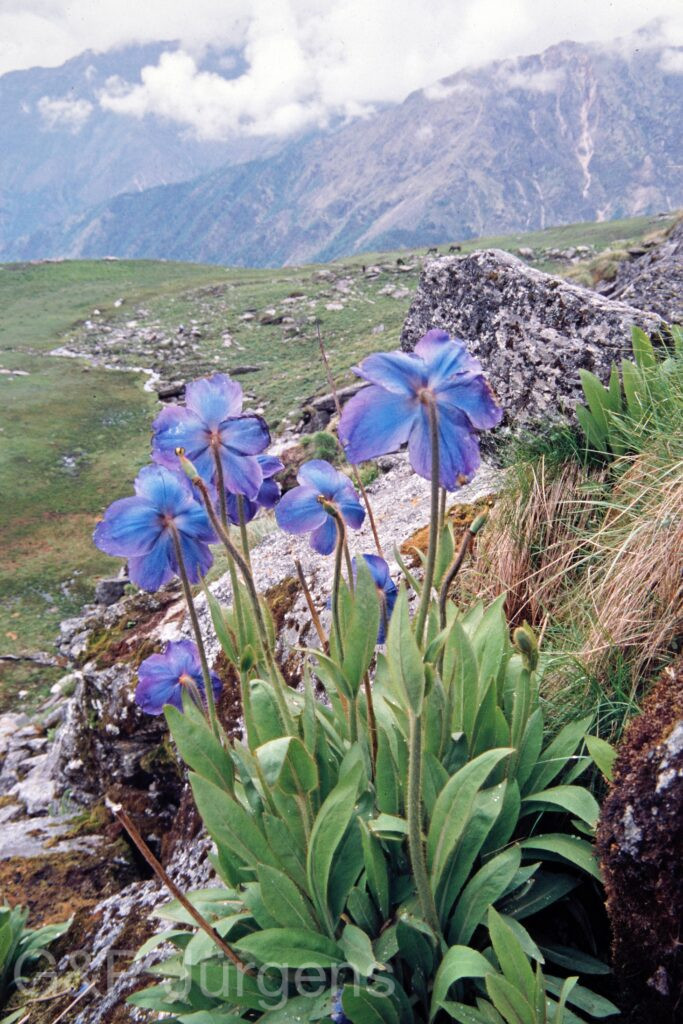
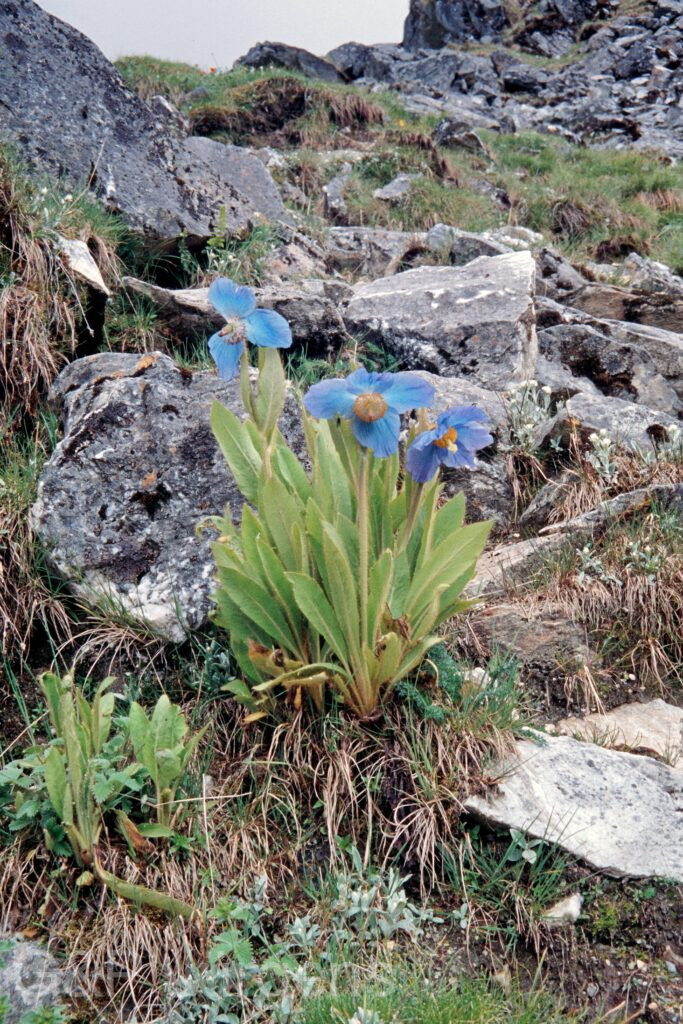
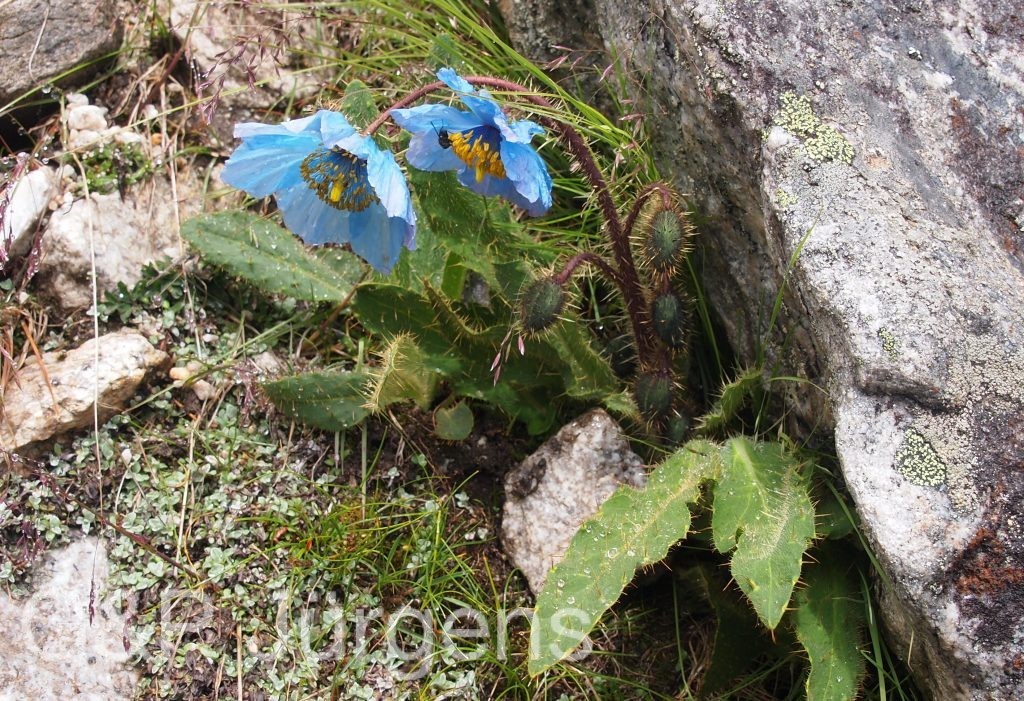
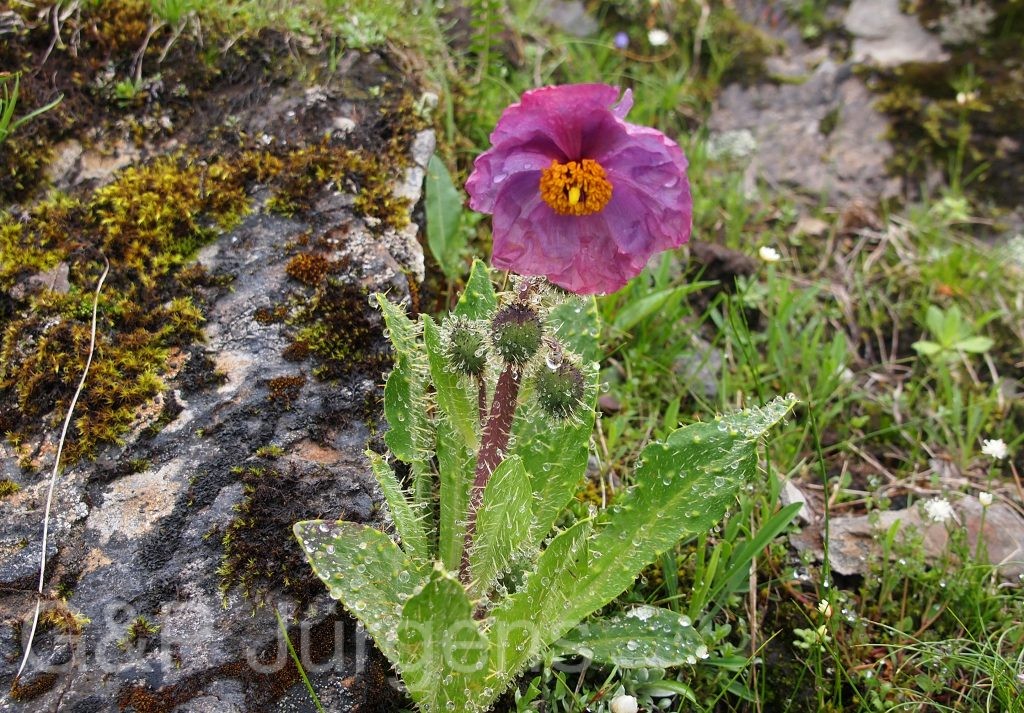
Royle

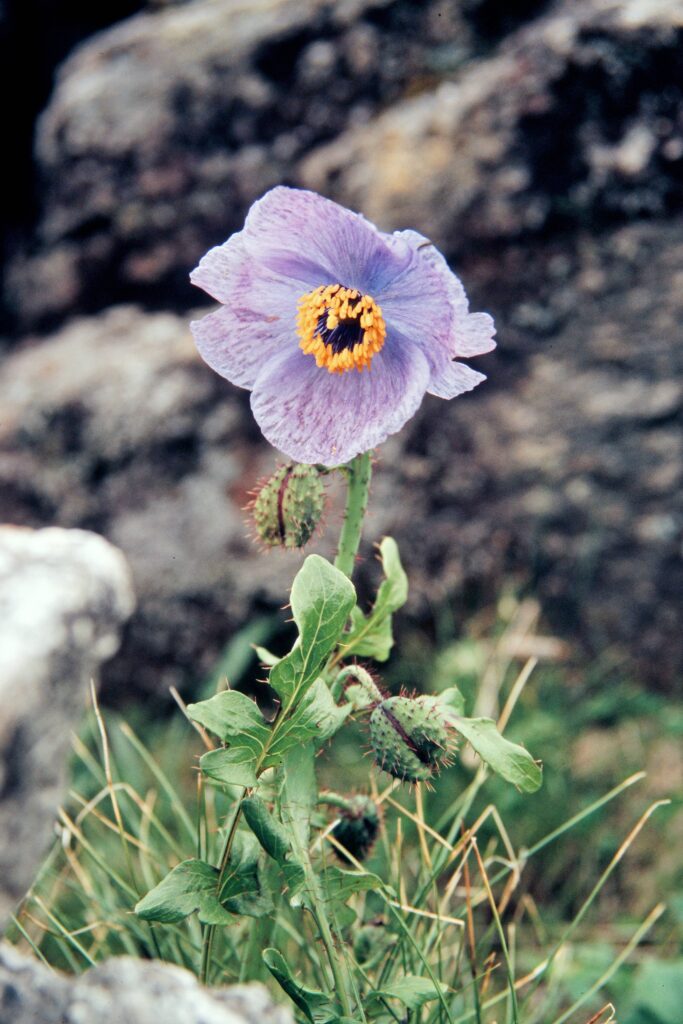
Description

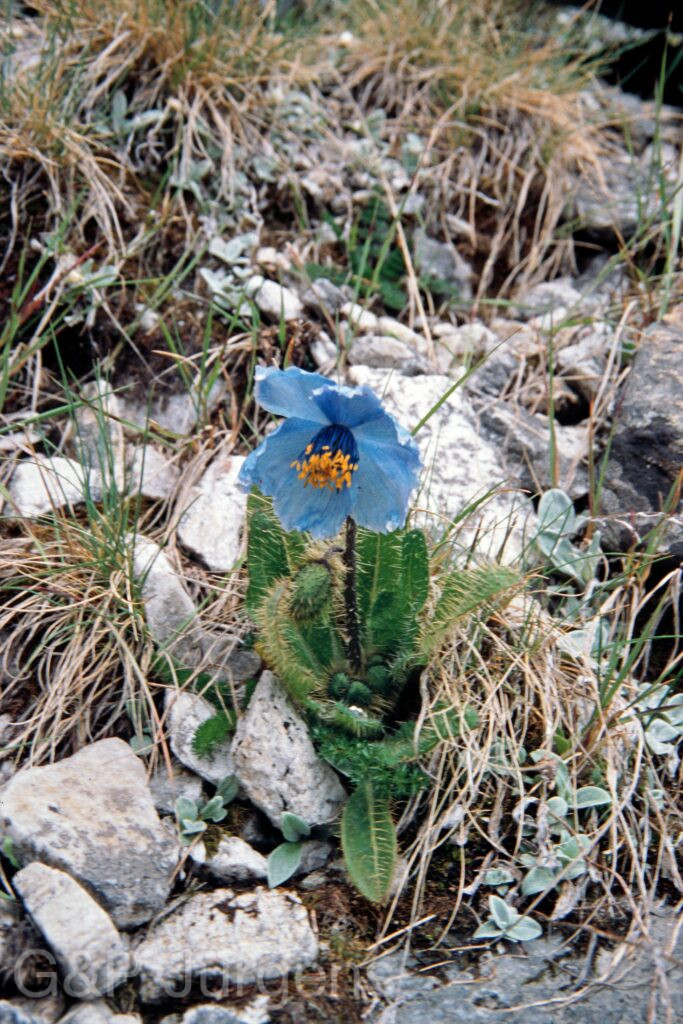
Meconopsis aculeata is a Western Himalayan endemic of the high mountains of northern India, Pakistan and adjacent China (Tibet), extending marginally into Nepal; its roughly 249 GBIF records concentrate in the north-western ranges, with cultivated and herbarium material accounting for the scattered occurrences in Great Britain, Canada and Egypt. It grows on open alpine slopes, moist screes, rock crevices and moraine margins, typically between 3000 and 4500 m. The photographed population at Khiar Kutti in the Garhwal Himalaya of India, at 3850 m in June, is characteristic of its early-summer flowering on damp, stony alpine meadow.

It is a monocarpic or short-lived perennial herb forming a stout taproot and a basal rosette. The whole plant is densely armed with stiff, yellowish bristles and prickle-like setae, giving it its epithet aculeata. Leaves are oblong to oblanceolate, pinnately lobed to deeply pinnatifid, narrowed to a winged petiole. The flowering stem bears several large, nodding to spreading flowers; the four petals are clear sky-blue to purplish-blue, broadly obovate and crinkled. Stamens are numerous; the bristly ovary ripens into an ellipsoid, setose capsule dehiscing by short apical valves to release many small seeds.

Within Meconopsis, this species belongs to the blue-flowered, bristly poppies and is among the most widespread of the blue Himalayan poppies west of Nepal. Its dense armature is an adaptation to grazing and harsh exposure, and like many monocarpic Meconopsis it depends on a multi-year rosette to accumulate resources before a single flowering episode. It remains locally frequent and is not formally assessed as threatened, though habitat degradation and collection pressure are localised concerns.

Author: Royle · Sources: POWO (Kew), GBIF, Flora of Pakistan, Flora of British India, The Genus Meconopsis (Grey-Wilson monograph)

Prain

BhutanPG2011 198
Bhutan Tsochenchen, 3650m June
BhutanPG2011 206
Bhutan Tsochenchen, 3650m June

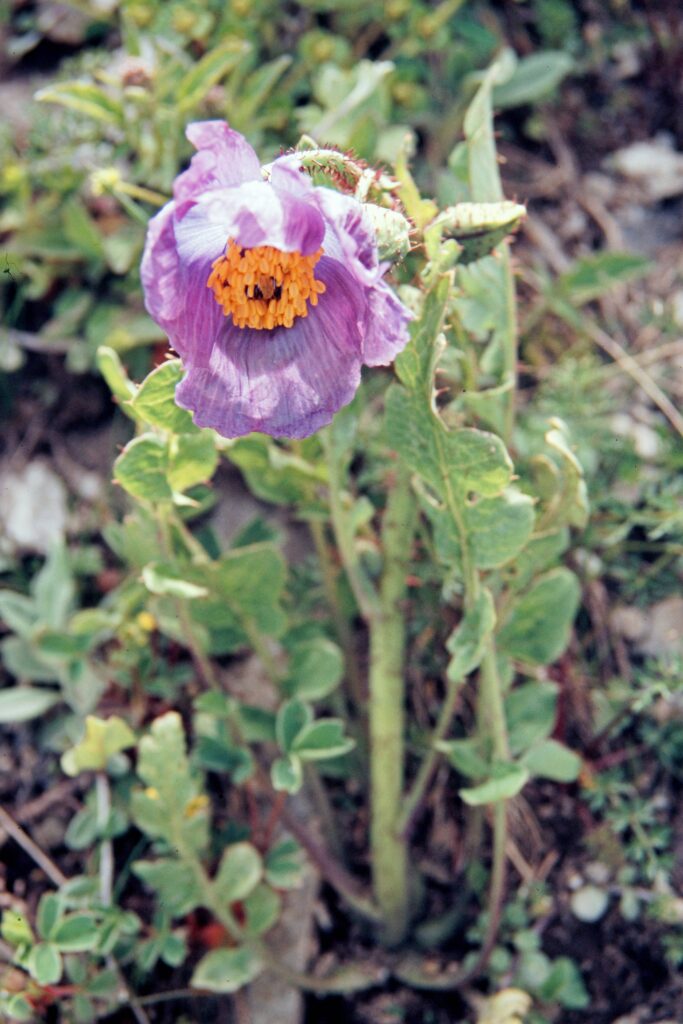
Description

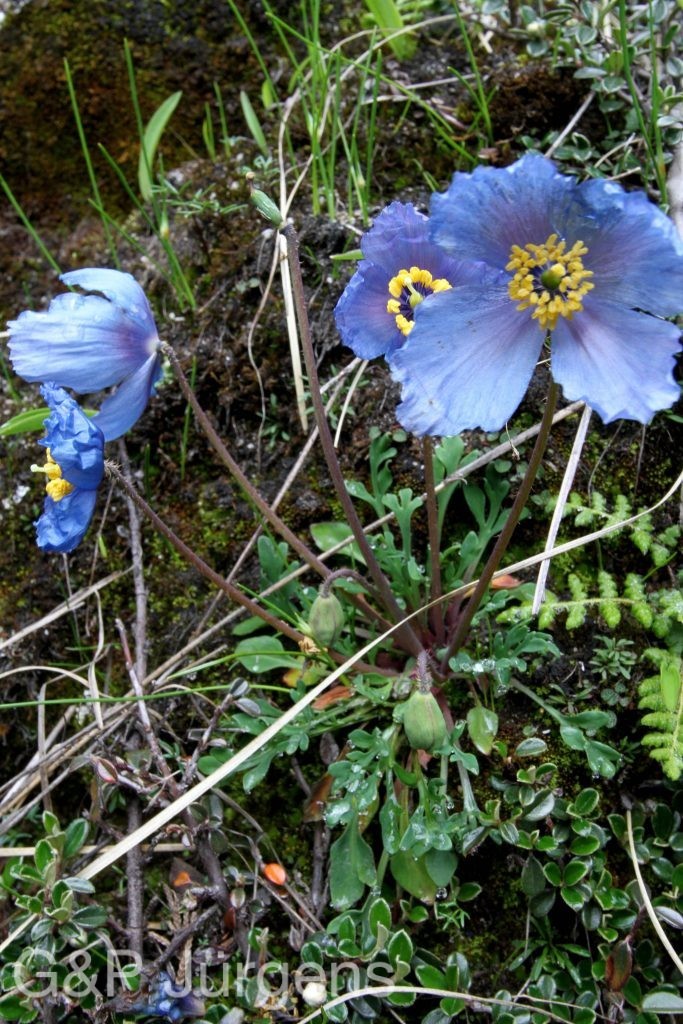
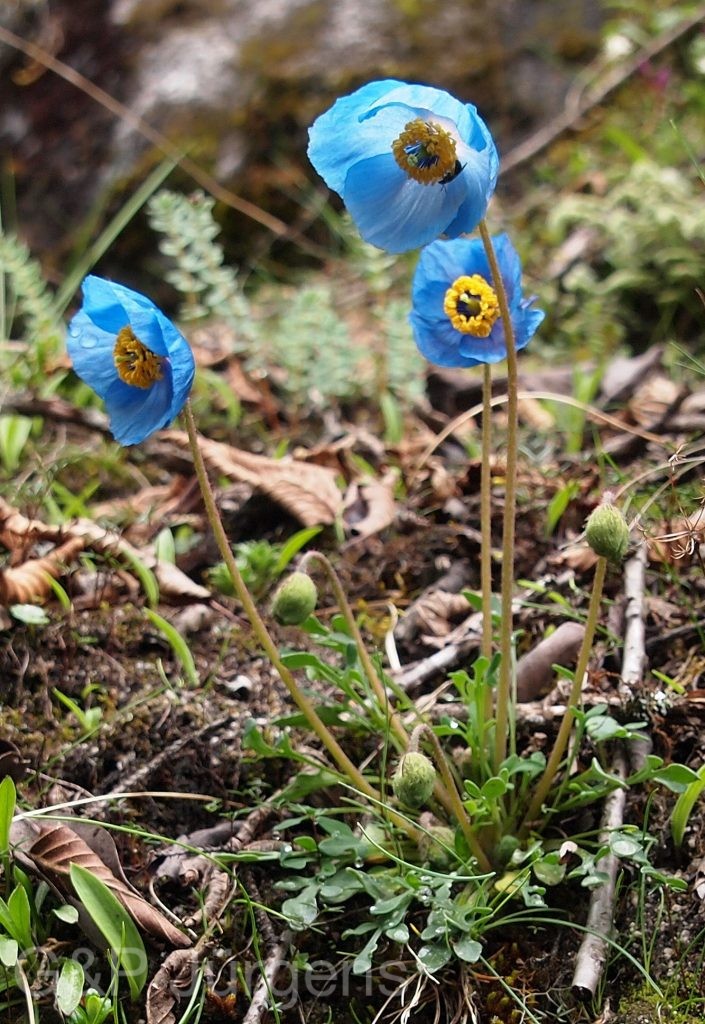
Meconopsis bella is a dwarf, exquisite blue poppy endemic to the eastern Himalaya, recorded from Nepal, northern India, Bhutan and adjacent southern China, the 79 GBIF occurrences reflecting its narrow range and the inaccessibility of its habitat. It grows in cool, moist, sheltered situations at high elevation, characteristically rooted in crevices of rock faces, cliff ledges, moraines and shaded banks between roughly 3300 and 4500 m. The photographed plant was found at Tsochenchen in Bhutan at 3650 m in June, the early-summer flowering season when it blooms amid the monsoon mists of the subalpine zone.

It is a small, slender, tap-rooted perennial lacking a leafy stem, the few leaves forming a basal tuft; the blades are obovate and pinnately lobed or coarsely toothed, on long slender petioles, bearing scattered fine hairs. The flowers are solitary on long, thread-like leafless scapes that arise directly from the rootstock and nod gracefully. Each flower has four broad, satiny petals in pale sky-blue to lavender or, in some forms, soft pink-mauve, surrounding a boss of yellow stamens and a prominent ovary tipped by a clavate stigma. The fruit is a narrow erect capsule dehiscing apically to shed numerous small seeds.

The genus Meconopsis is the celebrated assemblage of Asiatic blue poppies, and M. bella is among the smallest and most delicate, belonging to the crevice-dwelling group. Its scattered, cliff-bound populations and exacting requirements for cool humid air and sharp drainage render it both horticulturally prized and intrinsically vulnerable to collection and climatic shifts. Although not formally Red-Listed, its restricted eastern Himalayan endemism warrants conservation attention, and seed-grown stock underpins its limited cultivation in specialist gardens.

Author: Prain · Sources: POWO (Kew), GBIF, Flora of Bhutan, Grey-Wilson: The Genus Meconopsis, Flora of China

Prain

Nepal 97 187 G369
Nepal Tayla-La 4050m April
Nepal 99 107 ergebnis
West-Nepal South of Rara-Lake 3600m, June
Nepal 99 280 ergebnis
West-Nepal Kalomura 4100m, June
Nepal 99 281 ergebnis
West-Nepal Kalomura 4100m, June

Description

Meconopsis grandis is a high-altitude perennial of the eastern and central Himalaya, distributed across Nepal, northern India, Sikkim, Bhutan and adjacent southern Tibet (China), with cultivated and naturalised records reflected in the European data (United Kingdom, Belgium, Norway, Sweden). GBIF documents some 266 occurrences, a figure inflated by its long horticultural history as one of the celebrated "blue poppies." In its native range it grows in moist alpine meadows, open scrub, the margins of Rhododendron thickets and along streamsides on humus-rich, well-drained acidic soils. The collections illustrated span the snowmelt belt between roughly 3600 and 4100 m, from Tayla-La in central Nepal at 4050 m in April to the slopes south of Rara Lake at 3600 m and Kalomura at 4100 m in June, where it flowers as the monsoon advances.

It forms a stout, deciduous perennial from a thick rootstock, with a basal rosette of oblanceolate to elliptic leaves clothed in rust-coloured to fulvous bristly hairs, the blades narrowing into a winged petiole and often shallowly toothed. The flowering scape is erect, bristly and bears one to several large nodding flowers, each typically with four (sometimes more) broad, satiny, overlapping petals of intense azure to violet-blue, occasionally purplish. Numerous golden stamens surround a stout ovary crowned by a short, well-defined style and capitate to clavate stigma. The fruit is an elongate, ellipsoid to narrowly ovoid capsule, bristly-hairy, dehiscing by short apical valves to release small seeds.

Meconopsis grandis belongs to a taxonomically intricate complex of perennial blue poppies and has historically hybridised in cultivation, giving rise to the widely grown Meconopsis × sheldonii. Variation in flower colour, leaf indumentum and monocarpic versus polycarpic habit has prompted recognition of several subspecies and forms by different authors. Ecologically it is pollinated chiefly by bumblebees attracted to its conspicuous corolla. Though not formally assessed as threatened across its wide range, populations are localised and sensitive to grazing pressure, trampling and the warming of alpine habitats, making it a flagship species for Himalayan montane conservation.

Author: Prain · Sources: POWO (Kew), GBIF, Flora of Bhutan, Flora of Nepal, Annotated Checklist of the Flowering Plants of Nepal, Christopher Grey-Wilson – The Genus Meconopsis

Hook.f. & Thomson

BhutanPG2011 552 1
Bhutan Ludlow-Sherriff-Trail Dem-Tso, 4650m July
BhutanPG2011 664
Bhutan Ludlow-Sherriff-Trail Dem-Tso, 4700m July
Nepal 99 328 ergebnis
West-Nepal Kalmura 4300m, June

Description

Meconopsis horridula is one of the most widespread of the blue poppies, distributed across the high Himalaya and the Tibetan plateau through China, Nepal, Bhutan and India, with a large dataset of around 1472 occurrences (records reported from cultivation in Britain, Canada and elsewhere reflect its horticultural celebrity). It inhabits open stony slopes, scree, moraine, rock crevices and high alpine turf, typically between about 4000 and 5000 m. The photographed plants from Dem-Tso on the Ludlow-Sherriff Trail in Bhutan at 4650–4700 m in July, and from Kalmura in West Nepal at 4300 m in June, are characteristic of its preference for exposed, well-drained high-elevation ground.

It is a monocarpic herb, the whole plant densely armed with stiff, spreading, pale to purplish spines. The leaves form a basal rosette and are oblanceolate, entire to lobed and likewise spiny on both surfaces and along the petiole. Flowering stems bear nodding, saucer-shaped flowers, solitary on long scapes or several on a leafy raceme; the four (to six) petals are sky-blue to purple or occasionally reddish, surrounding a boss of yellow stamens and a stout ovary topped by a short style. The fruit is an erect, narrowly ellipsoid, bristly capsule dehiscing by apical valves to release numerous small seeds.

Meconopsis horridula, described by Hooker and Thomson, has long served as a catch-all for variable spiny blue poppies, and modern revisions have segregated several taxa (such as M. racemosa and M. prattii) formerly lumped under it. Being monocarpic, individuals flower once and die after seed-set. Though locally common, the genus is subject to over-collection of seed and pressure from trekking and grazing across its range.

Author: Hook.f. & Thomson · Sources: POWO (Kew), GBIF, Flora of China (Papaveraceae), Annotated Checklist of the Flowering Plants of Nepal, Grierson & Long Flora of Bhutan, Christopher Grey-Wilson's monograph The Genus Meconopsis

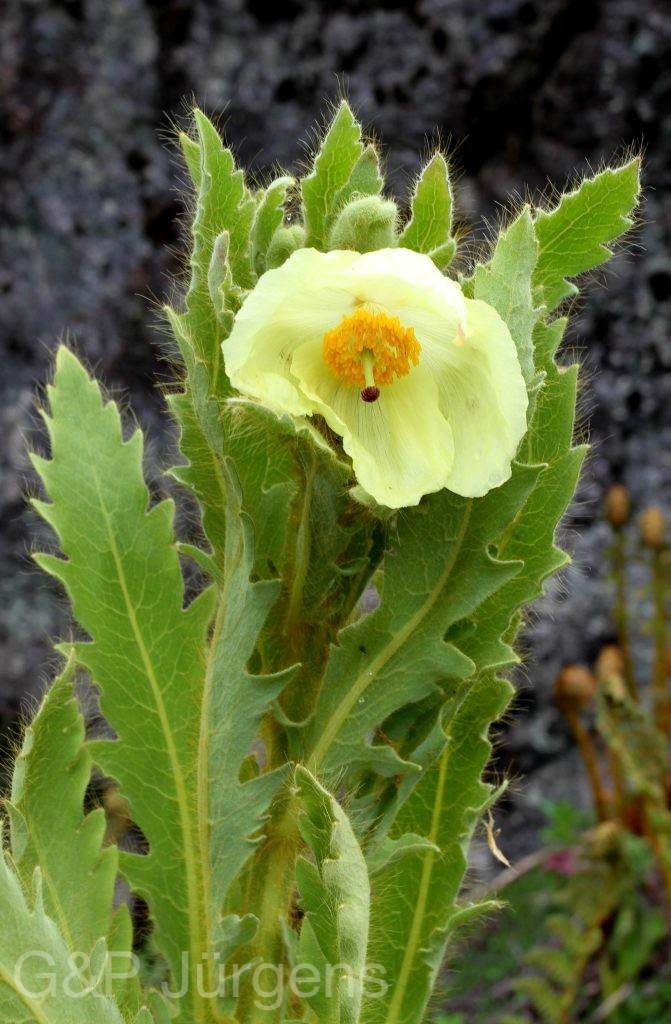
DC.

BhutanPG2011 271
Bhutan Jule-Tso, 4100m June

Description

Meconopsis napaulensis DC. is a monocarpic Himalayan poppy distributed through Nepal, Bhutan, Sikkim, north-east India and adjacent south-west China, growing in open subalpine and alpine habitats such as moist meadows, scrub margins, rocky slopes and forest clearings. It favours cool, humid, well-drained sites between roughly 3000 and 4200 m. The photographed plant from Jule-Tso in Bhutan at 4100 m, flowering in June, sits near the upper end of this range, where late snowmelt and summer moisture sustain the brief but spectacular flowering of these high-mountain poppies on open, sunlit slopes.

The plant is a giant, monocarpic herb that builds up over several years as a large basal rosette of pinnately lobed to deeply divided, bristly leaves before producing a single tall, leafy, branched flowering stem in its final season. The whole plant is clothed in stiff, often rust-coloured bristles. The flowers are large, nodding and saucer-shaped, with four (sometimes more) silky petals ranging from blue and purple to red, pink or yellow in different populations, surrounding a central boss of numerous stamens and a prominent ovary. The fruit is an elongate, bristly capsule dehiscing by apical valves to shed abundant minute seeds, after which the entire plant dies.

Meconopsis napaulensis has long been a taxonomically confused name, applied to a range of red- and purple-flowered big rosette poppies; modern revisions have segregated several distinct species (such as M. paniculata and M. wilsonii) formerly lumped under it. Pollinated chiefly by bumblebees, these poppies are emblematic of the Himalayan alpine flora. While not formally assessed as threatened, their monocarpic life cycle, narrow alpine niche and horticultural appeal make wild populations vulnerable to over-collection and climate-driven habitat change.

Author: DC. · Sources: POWO (Kew), GBIF, Flora of Bhutan, Annotated Checklist of the Flowering Plants of Nepal, The Genus Meconopsis (Grey-Wilson), Flora of China (Papaveraceae)

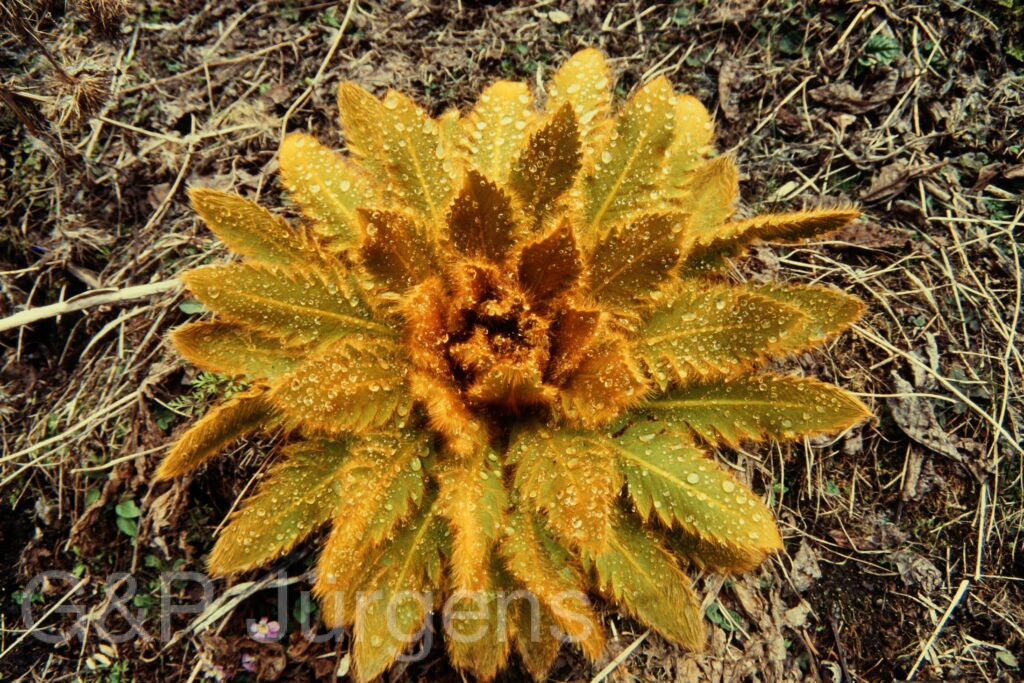
(D. Don) Prain

Sikkim2011 89
Sikkim Chopta-valley 4200m, June
BhutanPG2011 321
Bhutan
Sikkim2011 252
Sikkim Yumthang 3700m, June
Nepal 97 136 G252
Nepal Mewa-Khola 3100m April

Description

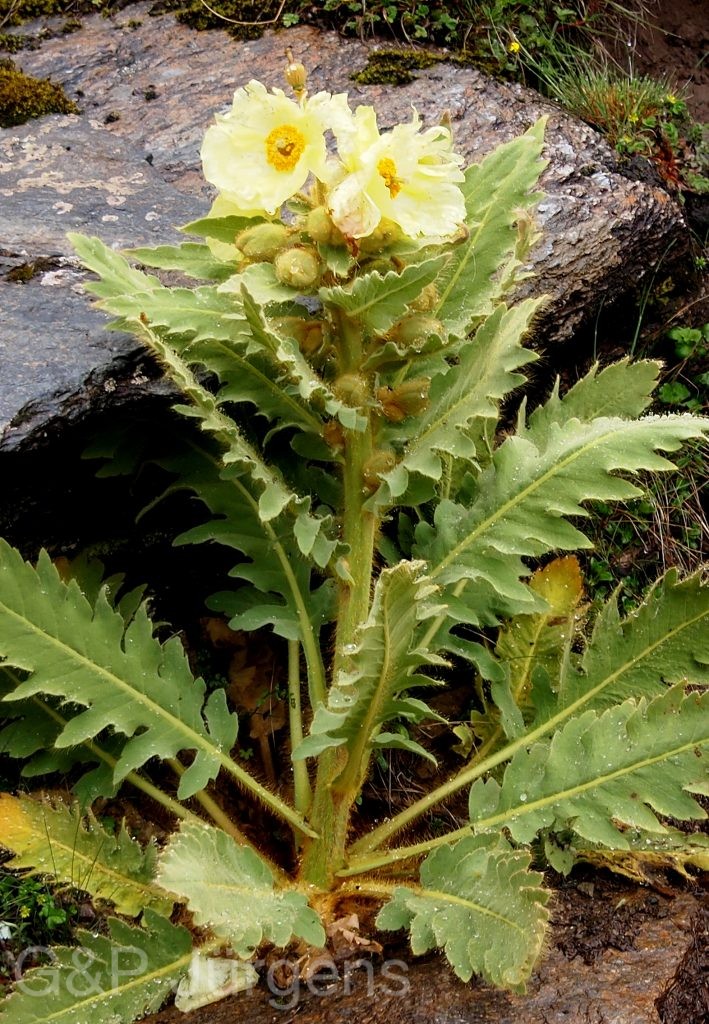
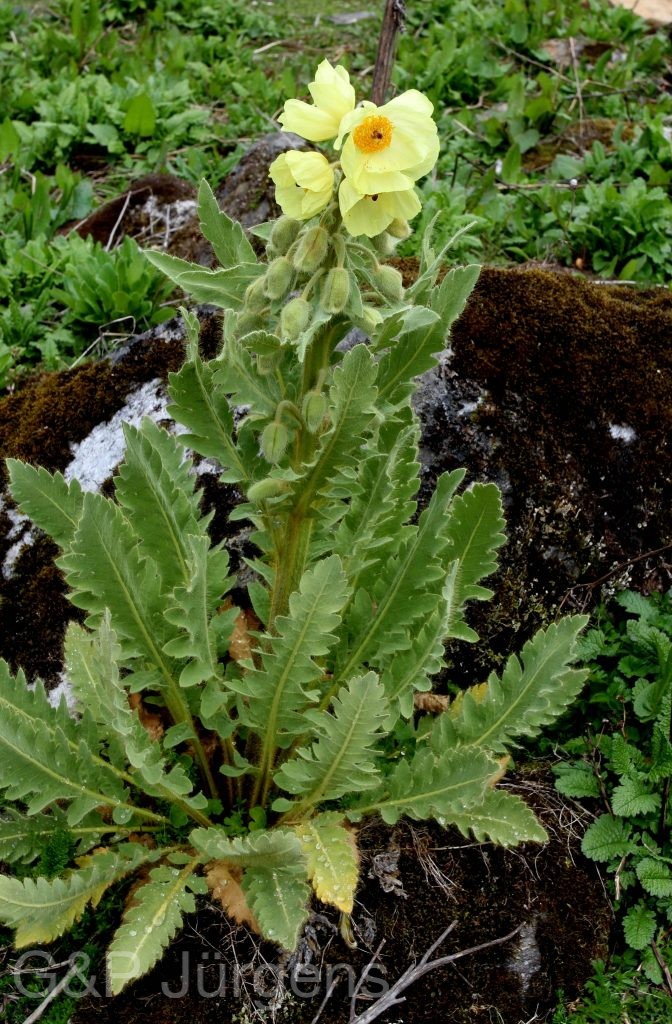
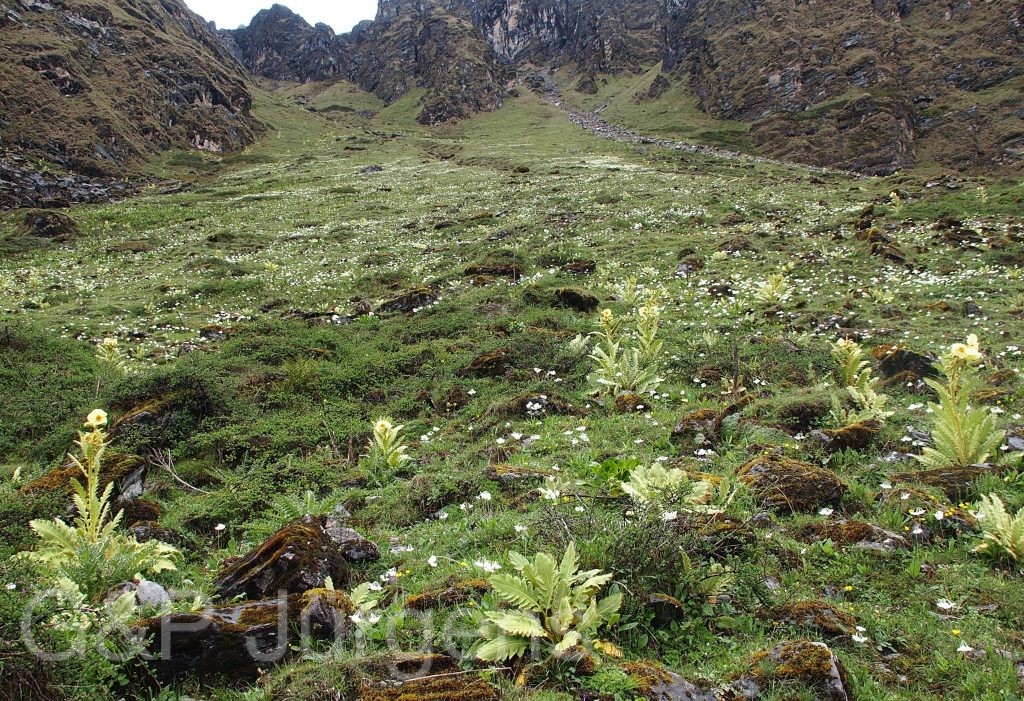
Meconopsis paniculata is a stately Himalayan poppy distributed through Nepal, the Indian states of Sikkim and Darjeeling, Bhutan and southern Tibet (China), with cultivated records in Britain and Canada; GBIF documents about 440 occurrences. It grows in the upper temperate to subalpine and lower alpine zone, on open grassy slopes, forest clearings, streamsides and shrubby hillsides, as recorded in the Chopta valley (4200 m) and at Yumthang (3700 m) in Sikkim and at Mewa-Khola (3100 m) in Nepal. Spanning roughly 3000-4200 m, it flowers from spring into early summer (April-June), often forming conspicuous stands on damp, humus-rich slopes.

It is a robust monocarpic herb, forming in its first years a large basal rosette before producing a single tall, branched flowering stem up to 1.5-2 m. The whole plant is densely clothed in golden to rusty, spreading bristly hairs. The basal leaves are large, oblong-lanceolate and pinnately lobed or deeply cut, narrowing into a winged petiole. The inflorescence is an elongate, leafy panicle (the epithet "paniculata") of nodding, broadly cup-shaped flowers; the four (rarely more) petals are pale to clear yellow, surrounding a boss of numerous yellow stamens and a stout ovary crowned by a short style and lobed stigma. The fruit is an oblong, bristly capsule dehiscing by apical pores to shed many small seeds.

Described by Prain from D. Don's basionym, M. paniculata belongs to the monocarpic, bristly-fruited group of Meconopsis allied to M. napaulensis and M. wallichii, a complex whose taxonomy has long been debated owing to hybridisation and variable indumentum. As a monocarpic species it dies after a single flowering, relying entirely on abundant seed for regeneration. The flowers are visited by bumblebees foraging at altitude. Widespread across its range, it is not considered globally threatened, though seed collection and grazing can affect local populations.

Author: (D. Don) Prain · Sources: POWO (Kew), GBIF, Flora of Bhutan, Flora of Nepal, Grey-Wilson's monograph of the genus Meconopsis

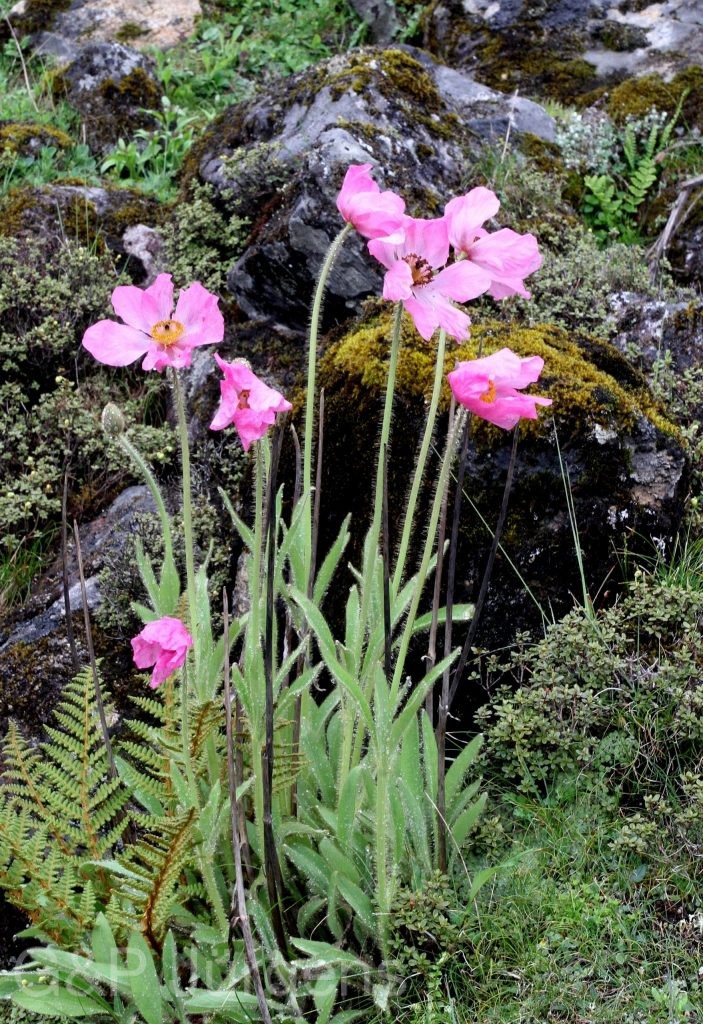
G. Taylor

BhutanPG2011 482 scaled
Bhutan Ludlow-Sherriff-Trail Warrtlang-La, 4400m June

Description

Meconopsis sherriffii is a rare and narrowly endemic Himalayan poppy known only from a small area of the eastern Himalaya straddling south-eastern Xizang (China) and adjacent northern Bhutan; with merely around 17 georeferenced occurrences (CN, BT) it ranks among the most localised members of its celebrated genus. It is a plant of high alpine turf, screes and rocky, well-drained slopes near the upper limit of vegetation, typically between about 4000 and 4800 m. The plant photographed at Warrtlang-La on the historic Ludlow-Sherriff Trail in Bhutan at 4400 m in June, flowering in the short alpine summer, occupies exactly this exposed, high-elevation habitat for which the species is named after its co-discoverer George Sherriff.

It is a tap-rooted perennial forming a low rosette of leaves clothed, like the scapes, in soft golden to rufous hairs. The leaves are oblong to oblanceolate, entire to shallowly lobed, and densely pilose. The flowers, borne singly or few on hairy scapes, are large and saucer-shaped, with four (occasionally more) broad, satiny petals of a distinctive soft pink to rose colour, unusual in a genus dominated by blue and yellow species; the boss of numerous golden stamens surrounds a superior ovary topped by a short style and lobed stigma. The fruit is an ellipsoid, hairy, several-valved capsule opening by apical pores to release many minute seeds.

Meconopsis sherriffii belongs to the section of monocarpic-to-perennial hairy Himalayan poppies and is prized in cultivation for its rare pink colouring. Its extremely restricted range, low population numbers and dependence on fragile high-alpine habitat make it of clear conservation concern, vulnerable to grazing, collection and climatic change.

Author: G. Taylor · Sources: POWO (Kew), GBIF, Flora of Bhutan, Flora of China, Grey-Wilson's monograph The Genus Meconopsis, Ludlow & Sherriff's Bhutan collections