
(Lindl.) Kuntze
Description
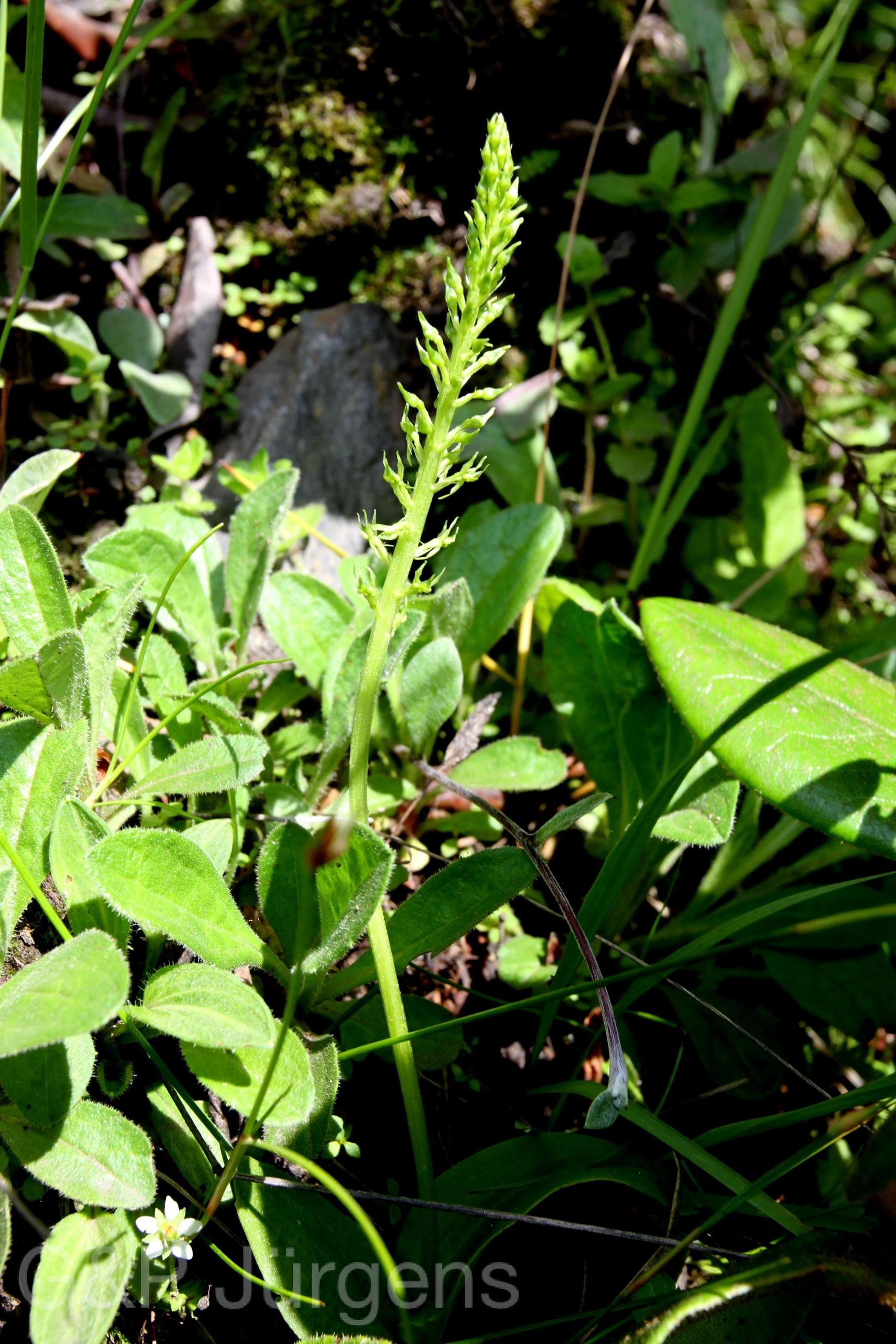
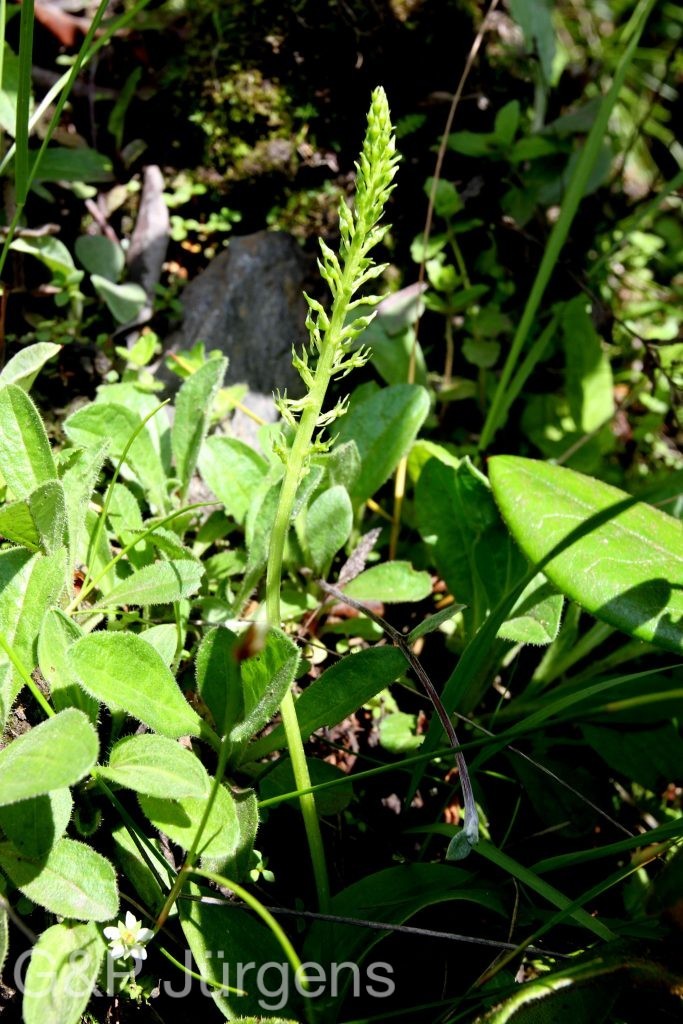
Malaxis muscifera is a small terrestrial orchid widespread through the Himalaya and adjacent China, recorded from Nepal, India, China, Bhutan, Pakistan and Myanmar, with some 237 occurrences in GBIF. It grows in moist temperate to subalpine forest and forest margins, among shaded humus, mossy banks and grassy clearings, broadly between about 2,500 and 4,000 m. The plant figured was photographed at Chele-La in western Bhutan at around 3,750 m in July, when the species flowers during the summer monsoon in the cool, damp conditions of the upper conifer and Rhododendron belt.
It is a slender, glabrous perennial herb arising from a small pseudobulb-like, fleshy stem-base. There are usually two, occasionally more, ovate to elliptic, plicate-veined leaves clasping the lower stem by their sheathing bases. The erect stem terminates in a long, dense, many-flowered raceme of minute greenish to yellowish flowers. The narrow sepals and the very slender, thread-like petals spread or reflex, giving the inflorescence its characteristic spidery aspect; the labellum is uppermost through resupination, broadly cordate-auriculate at the base and abruptly contracted to a narrow apex, embracing the short column. The fruit is a small ellipsoid capsule with numerous dust-like seeds.
Malaxis is a large, mainly tropical and warm-temperate genus, and M. muscifera, with its narrowly filiform petals, is among the most distinctive Himalayan representatives, the epithet alluding to the fly-like floral appearance. The flowers are pollinated by small insects, and germination requires mycorrhizal fungi. Frequent and locally abundant across the Himalaya, it is of low conservation concern, though, as an orchid, it is covered by the CITES Appendix II listing of the family.
Author: (Lindl.) Kuntze · Sources: POWO (Kew), GBIF, Flora of China, Flora of Bhutan, Annotated Checklist of the Flowering Plants of Nepal, Pridgeon et al. Genera Orchidacearum