Tag:

Alpine (>3500 m)

Baill.

Nepal 99 350 ergebnis
Nepal Kalomura 3710m, June
Nepal 99 350 ergebnis
Nepal Kalomura 3710m, June

Description

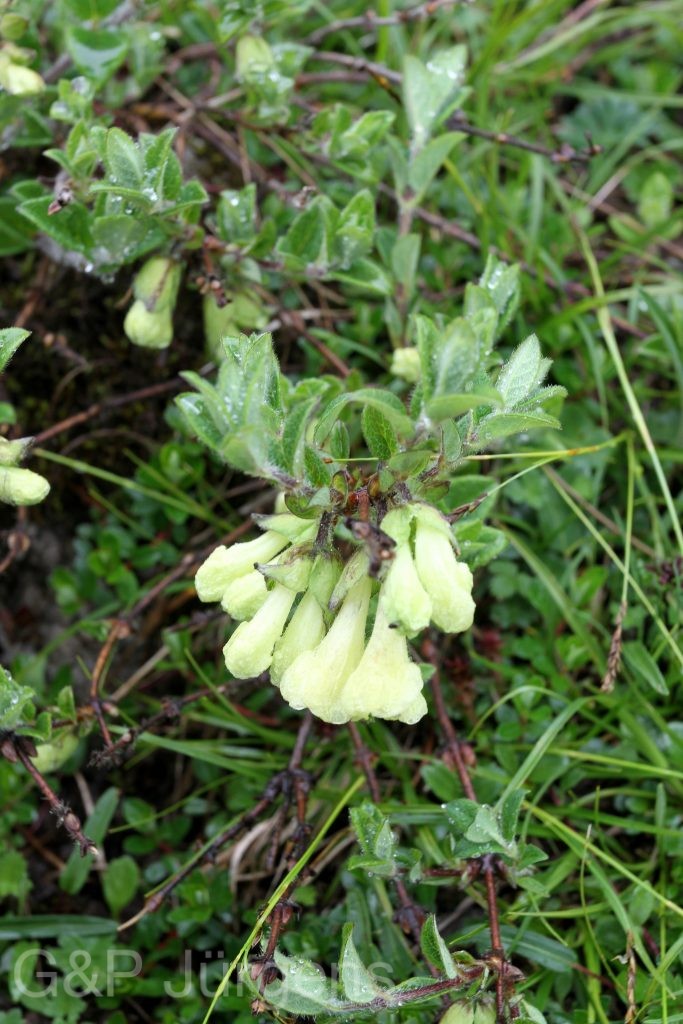
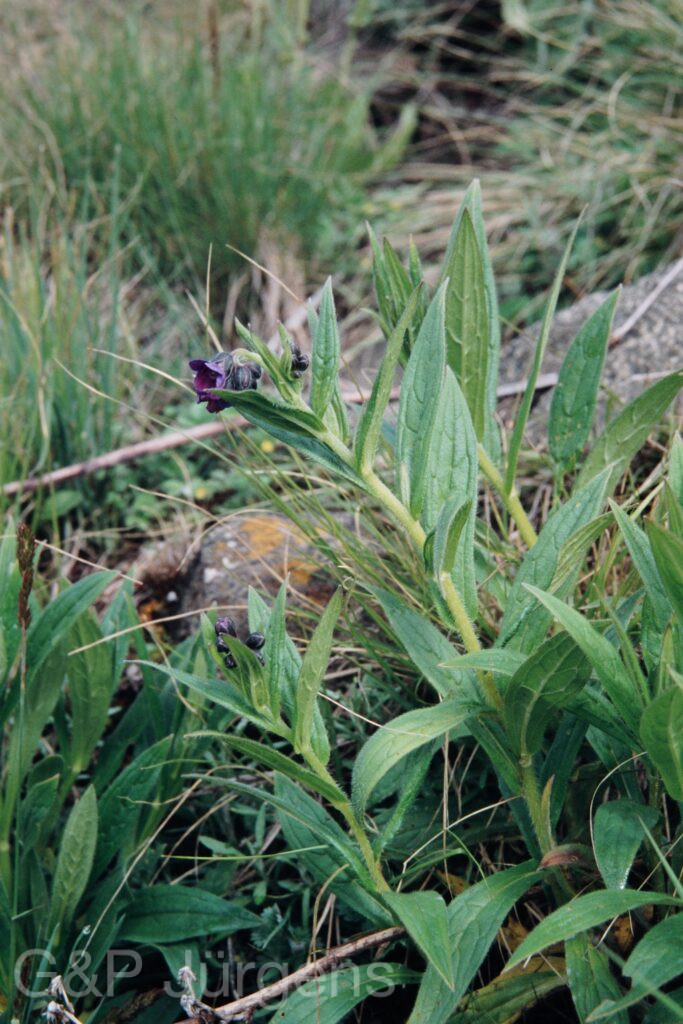
Lindelofia longiflora (Benth.) Baill. is a robust perennial herb of the borage family native to the western and central Himalaya and the adjoining mountains of Central Asia. Its core native range covers Pakistan, northern India and Nepal, with numerous additional records from Europe, North America, Russia and New Zealand reflecting its cultivation as an ornamental and its escape from gardens. It grows in open subalpine and alpine meadows, on grassy slopes, forest margins and stony banks, generally between about 2,500 and 4,000 m. The photographed plant at Kalomura in Nepal, recorded at 3,710 m in June, is typical of its preference for moist, well-drained montane grassland during the early monsoon flush.

The plant develops from a stout, woody rootstock, producing erect, leafy, bristly-hairy stems. The leaves are alternate, the lower long-petiolate and the upper sessile, narrowly oblong-lanceolate, entire and roughly hispid on both surfaces. The inflorescence is a terminal, often branched, scorpioid cyme bearing nodding flowers; the corolla is deep violet-blue to purple, tubular and conspicuously long, exceeding the calyx, with prominent scales (fornices) in the throat. The fruit comprises four nutlets that are flattened and marginally winged with a row of hooked, glochidiate spines aiding epizoochorous dispersal.

Lindelofia belongs to tribe Cynoglosseae, near Cynoglossum and Adelocaryum, and the long-tubed, winged-nutlet morphology distinguishes it within the group. The species is widely grown in alpine and herbaceous-border horticulture, which accounts for its scattered naturalised occurrences across temperate regions. Within its native Himalayan range it remains common and is not considered threatened, while in some introduced areas its self-sowing habit warrants monitoring.

Author: Baill. · Sources: POWO (Kew), GBIF, Flora of Pakistan, Flora of Nepal, Kazmi: Boraginaceae of West Pakistan and Kashmir
(Thunberg) Lindl.

Bhutan2014 786
Bhutan Wangdi Mo-Chu 1400m, May
BhutanPG2011 609 01
Bhutan Ludlow-Sherriff-Trail Ken-La, 4300m July
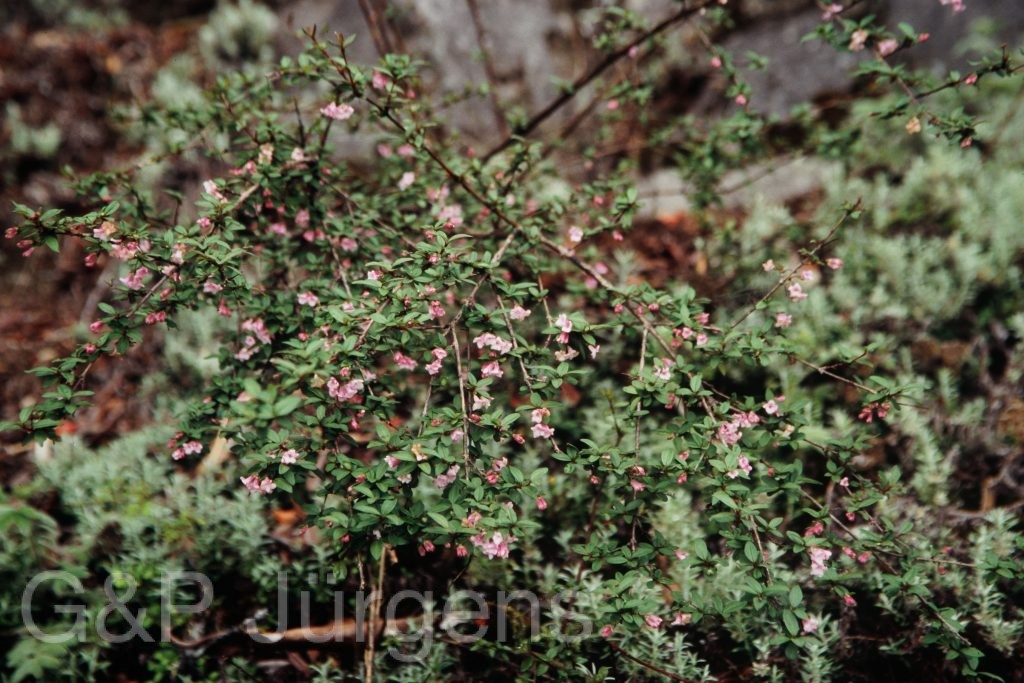
Also included: Cotoneaster microphyllus Lindb.
Bhutan2014 784
Bhutan Ludlow-Sherriff-Trail Ken-La, 4300m July
Sikkim2003 28 P39
Sikkim Rathong-Chu 1200m 08.2003

Hook.

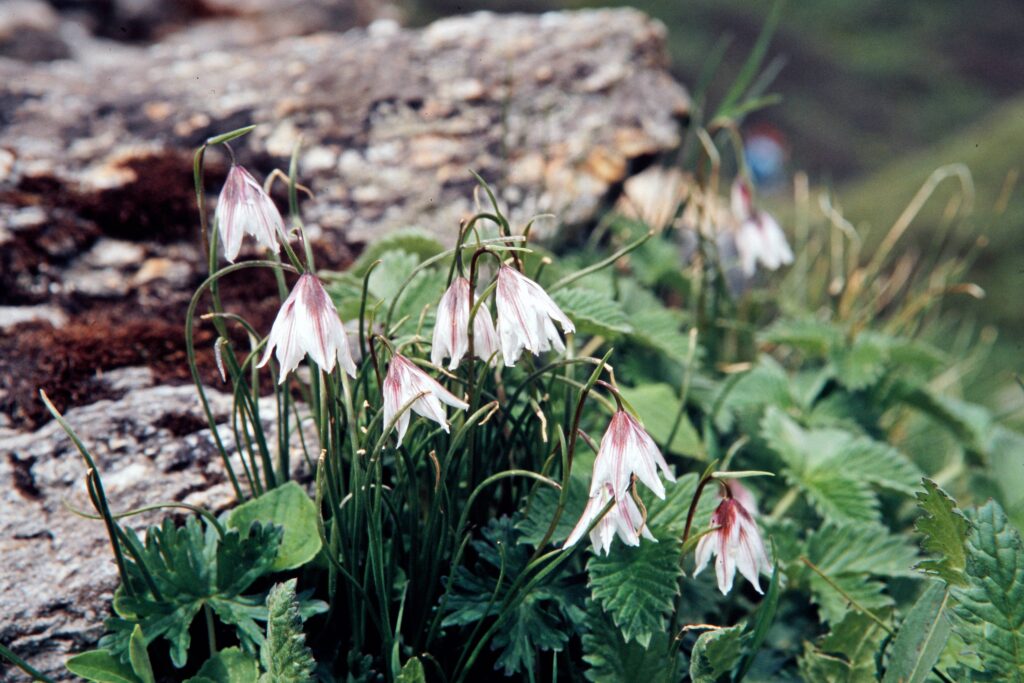
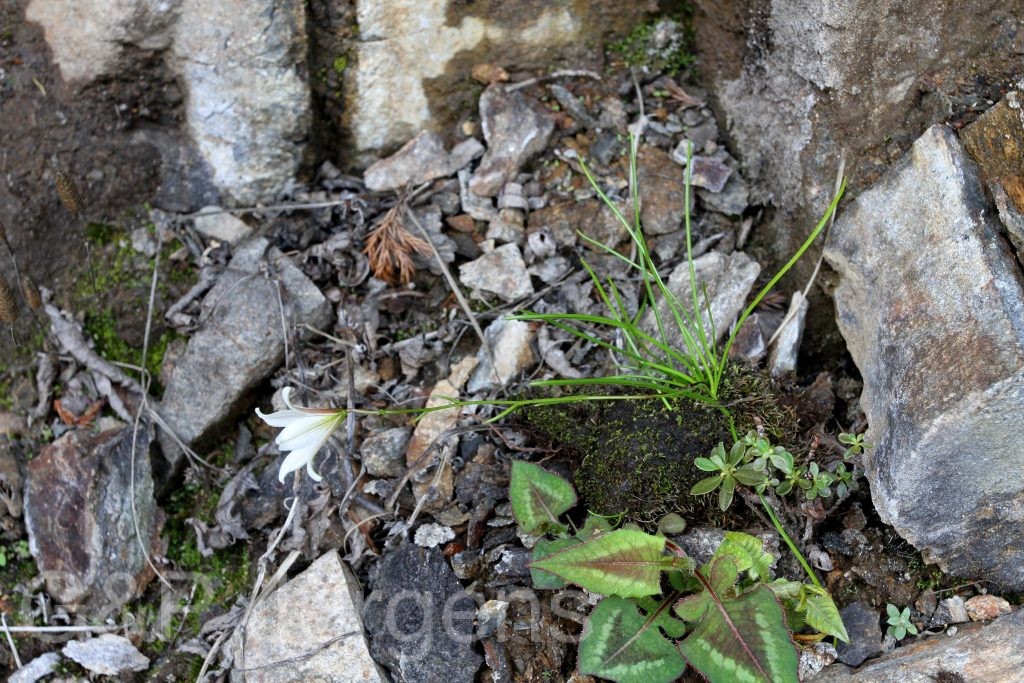
Nepal 99 296 ergebnis
West-Nepal Kalmura 4100m, June

Description

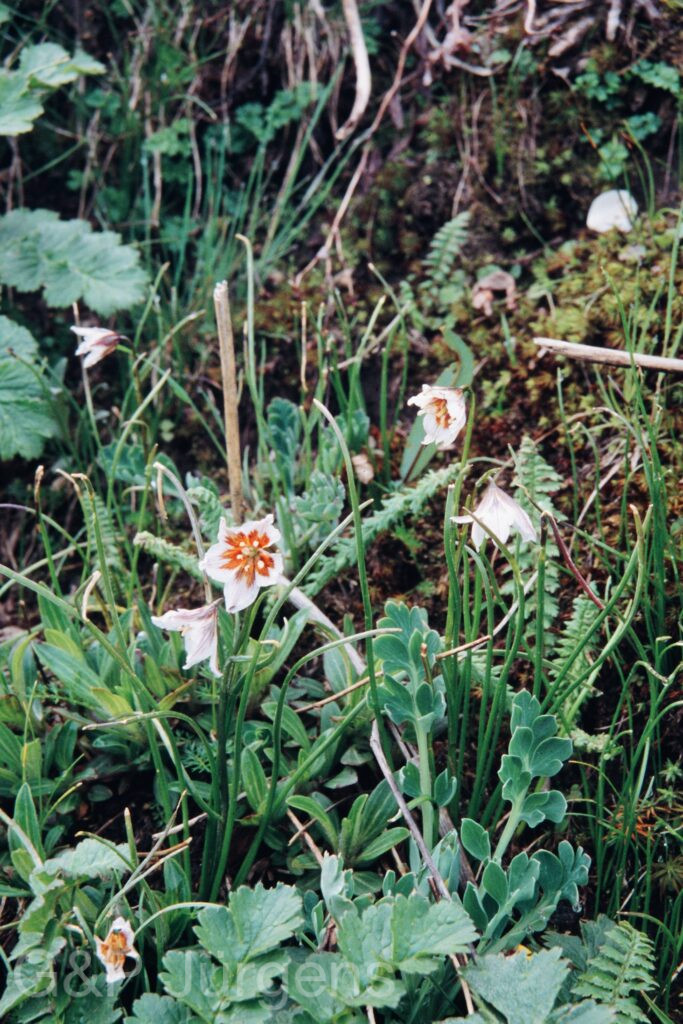
Lloydia longiscapa Hook. is a delicate bulbous geophyte of the high Himalaya. According to GBIF (about 75 occurrences) it ranges across Nepal, northern India, southern China (Tibetan plateau margins) and Bhutan, growing in alpine meadows, on grassy and rocky slopes and among open turf near the upper limit of vegetation. It is a true high-alpine plant, recorded chiefly between 3,500 and 4,500 m. The populations documented at Kalmura in West Nepal (4,100 m) and Khiar Kutti in Garhwal (3,900 m), both flowering in June, illustrate its phenology as a snow-melt species that emerges and blooms shortly after the retreat of the winter snowpack.

The plant develops from a small ovoid bulb enclosed in membranous tunics, producing one or few slender stems. The leaves are narrowly linear, almost grass-like, with basal leaves longer than the few reduced cauline ones. The flowers are solitary or few, erect, broadly campanulate, with six free, white to pale yellowish tepals usually marked with fine purplish veins and a small nectary at the base; the long, slender scape gives the species its epithet "longiscapa". Stamens are six, the ovary superior and three-locular, maturing into a loculicidal capsule containing numerous flat seeds.

GBIF flags this name as a synonym; the genus Lloydia is now widely subsumed within Gamochaeta-unrelated Gagea (Gagea sensu lato), so the taxon is best treated under the accepted concept indicated by current authorities while retaining Lloydia longiscapa as the working name. As a snow-bed and alpine-turf specialist it exemplifies the bulbous "spring ephemeral" strategy adapted to short Himalayan growing seasons, and its restricted high-elevation habitat warrants attention under scenarios of alpine climate change.

Author: Hook. · Sources: POWO (Kew), Flora of China Vol. 24, Flora of Nepal, GBIF, Stearn: Notes on the genus Lloydia

Franch.

BhutanPG2011 123
Bhutan Tsochenchen, 3550m June

Description

Lloydia yunnanensis is a small alpine bulbous herb ranging across south-central China (notably Yunnan and Xizang), the Indian Himalaya, Bhutan and Nepal, with around one hundred and thirty GBIF records testifying to a fairly continuous high-mountain distribution. It grows in alpine and subalpine meadows, on grassy and rocky slopes, in open scrub and among rocks, typically between about 3000 and 4500 m. The photographed plant from Tsochenchen in Bhutan at 3550 m, flowering in June, is characteristic of its early-summer flowering as the snow recedes from the upper pastures it favours.

The species arises from a small ovoid bulb with a fibrous tunic and produces a slender, erect stem. The leaves are few, narrowly linear and grass-like, the lower ones basal and the upper cauline and reduced. The flowers are solitary or few, erect, with six free, spreading tepals that are white to pale yellow, often veined or tinged with purple toward the base and bearing a nectary at the inner base; the six stamens have slender filaments and the superior ovary bears a single style. The fruit is a small loculicidal capsule containing numerous flat seeds.

Lloydia yunnanensis is here treated under the accepted name Lloydia yunnanensis. Although the genus Lloydia has frequently been merged into Gagea in modern molecular treatments, the segregate name is retained here following the input. Its dwarf stature, bulb-protected perennating organ and rapid post-snowmelt flowering are classic adaptations to the brief alpine growing season. The species is widespread and not regarded as threatened, though high-altitude grassland degradation could affect local populations.

Author: Franch. · Sources: POWO (Kew), GBIF, Flora of China, Flora of Bhutan, Peruzzi & Zarrei revision of Gagea/Lloydia (Liliaceae monograph)

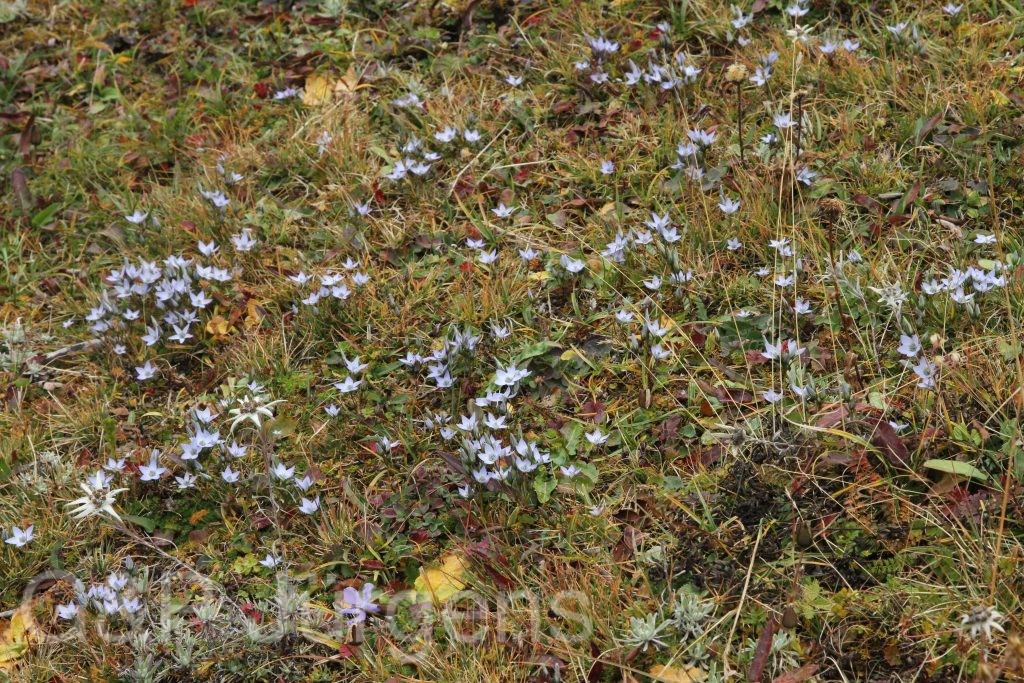
(Wulfen) A.Braun

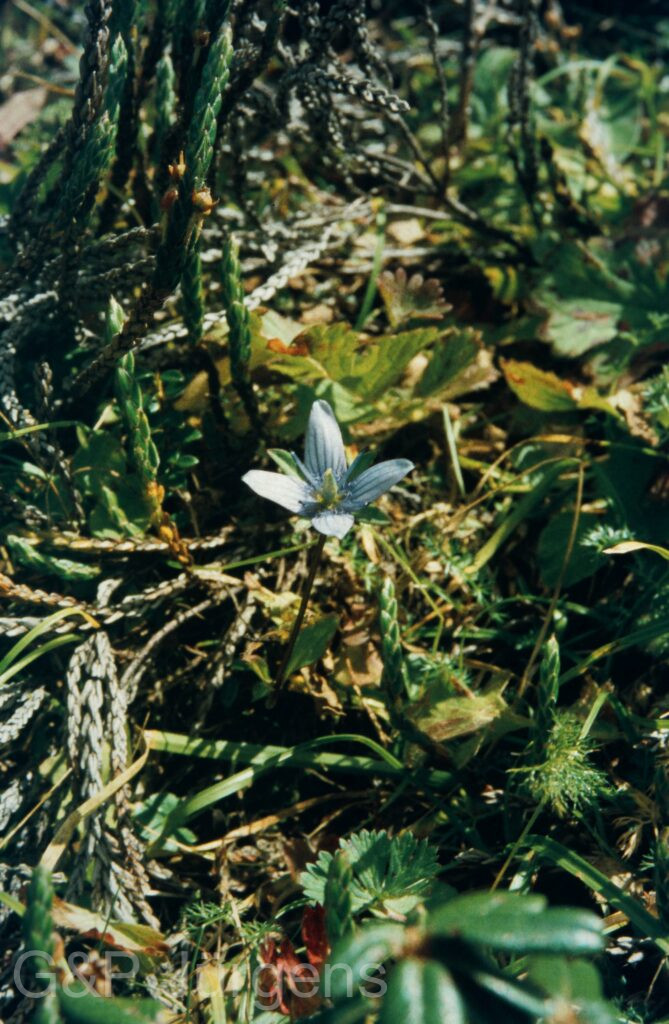
Garw 2005 135 ergebnis ergebnis
India Garhwal Kuari-Pass 3600m, September

Description

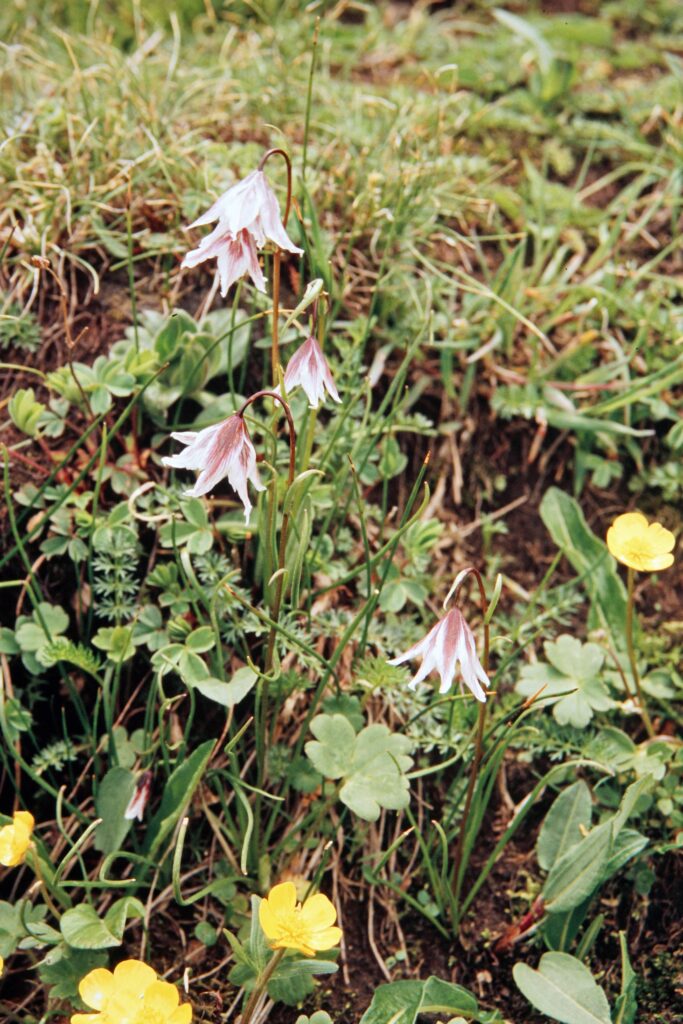
Lomatogonium carinthiacum is a small alpine gentian with an exceptionally broad Eurasian distribution, reaching from the European Alps eastward through the Caucasus, central Asia and the Himalaya to the Tibetan Plateau and Mongolia; GBIF records (over 2600) span Austria, Switzerland, China, Russia, India, Pakistan, Nepal and many other countries. It grows in alpine and subalpine meadows, damp turf, stream banks and open grassy slopes, generally between about 2500 and 4500 m. The photographed plant from the Kuari Pass in Garhwal, India (3600 m, September), is typical of the species flowering in late summer in moist alpine grassland.

The plant is a small annual or short-lived herb with an erect, often branched, somewhat quadrangular stem and opposite, sessile, ovate to lanceolate leaves. The flowers are solitary or few in lax cymes, with a rotate, deeply five-lobed corolla coloured pale blue to bluish-violet, often with darker veining; the lobes lack the plicate folds and basal fringed scales of Swertia and Gentiana. Diagnostically for the genus, the nectaries take the form of paired, scale-fringed grooves at the base of each corolla lobe. The five stamens alternate with the lobes, and the ovary is unilocular, maturing into a many-seeded capsule with the persistent styles forming decurrent ridges (the basis of the generic name).

Lomatogonium (tribe Swertieae) is closely allied to Swertia, from which it is separated chiefly by its decurrent stigmatic lines running down the ovary and by the form of its nectaries. The genus is centred on the Sino-Himalayan region, with L. carinthiacum being by far its most widespread member and a classic example of a circum-boreal/alpine disjunct distribution. It is common across much of its range and is not of conservation concern.

Author: (Wulfen) A.Braun · Sources: POWO (Kew), GBIF, Flora of China (Gentianaceae), Flora Europaea, Flora of Pakistan, A revision of Lomatogonium (Gentianaceae)

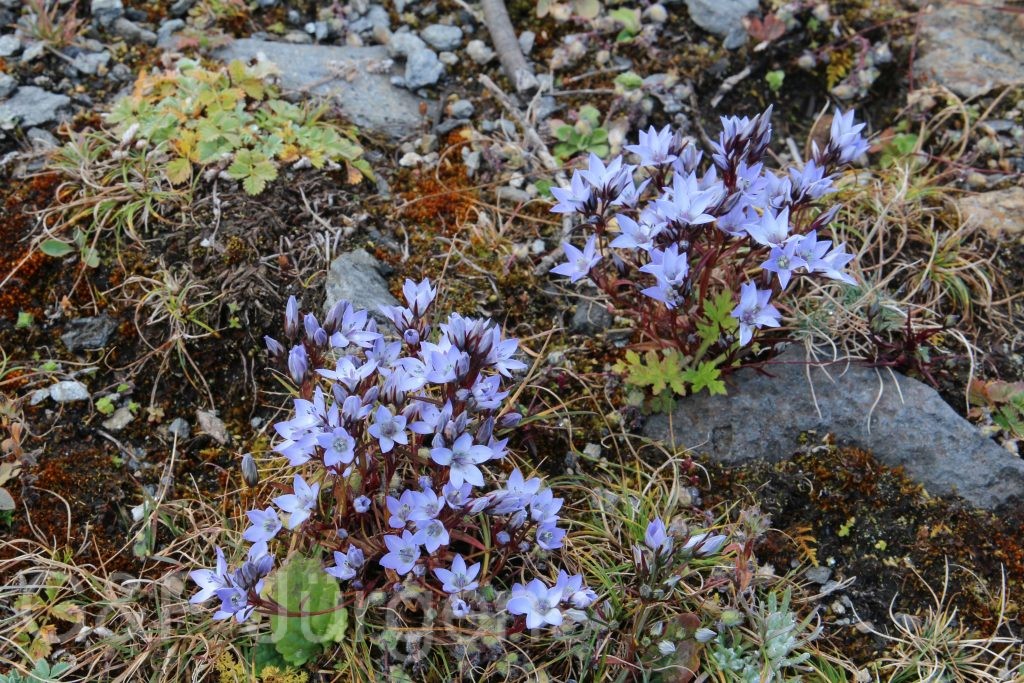
(Burkill) Harry Sm.

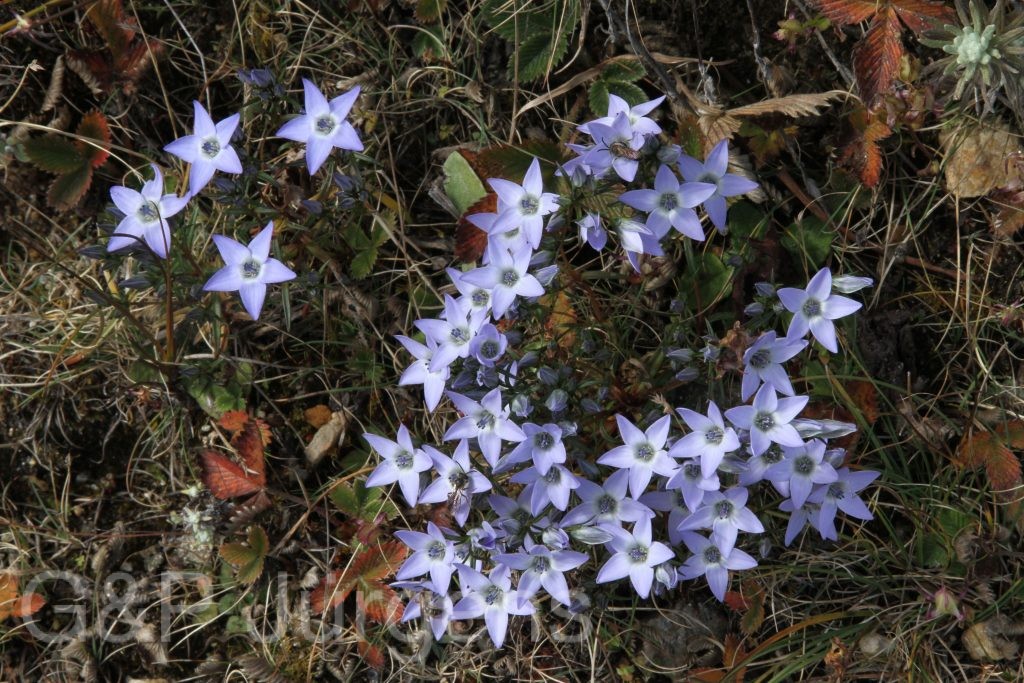
Bhutan2015 666
Bhutan Chele-La 4000m, October
Bhutan2015 682
Bhutan Chele-La 4000m, October
Bhutan2015 685
Bhutan Chele-La 4000m, October

Description

Lomatogonium sikkimense is a high-alpine gentian relative restricted to the eastern Himalaya and adjacent Tibet, recorded from Nepal, India, Bhutan and China, with about 74 occurrences in GBIF. It grows in the alpine zone on open turf, moist meadows, streamsides and gravelly slopes, characteristically between about 3500 and 4500 m, flowering late as the monsoon ends. The plants photographed at the Chele-La in Bhutan at around 4000 m in October exemplify this habitat, where the species blooms among short alpine vegetation just before the onset of winter.

It is a slender annual or short-lived herb with erect or ascending, often branched stems bearing opposite, sessile, narrowly lanceolate to linear leaves. The flowers, borne singly or in a few-flowered cyme, are rotate and deeply five-lobed, the blue to violet-blue corolla lobes acute and often delicately veined; characteristically for the genus, each lobe bears a pair of fringed nectary scales at its base, distinguishing Lomatogonium from the closely related Swertia and Gentianella. The five stamens alternate with the lobes, and the superior ovary develops into a many-seeded capsule.

Lomatogonium is a small Eurasian genus of high mountains and is centred on the Sino-Himalayan and Tibetan flora, with L. sikkimense among its narrowly distributed eastern Himalayan members, as its epithet referencing Sikkim records. The fringed paired nectaries and rotate corolla are key diagnostic features separating it from allied swertioid gentians. No formal conservation assessment exists; the species appears locally frequent within its restricted alpine range, though such narrowly zoned high-altitude annuals are potentially vulnerable to climate-driven shifts in alpine meadow vegetation.

Author: (Burkill) Harry Sm. · Sources: POWO (Kew), GBIF, Flora of Bhutan, Flora of China, Annotated Checklist of the Flowering Plants of Nepal, Ho & Liu Worldwide Monograph of Swertia and its Allies

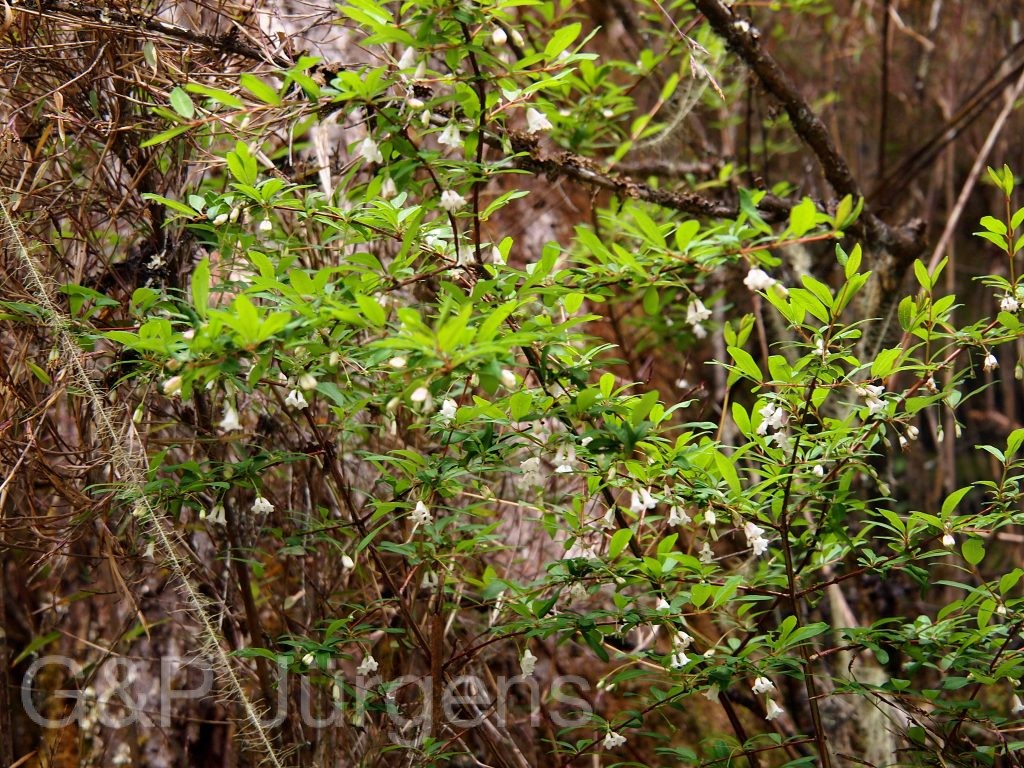
Wall. ex DC.

BhutanPG2011 141
Bhutan Tsochenchen, 3550m June
Bh09 325 P531
Bhutan Tumching, 3700m June

Description

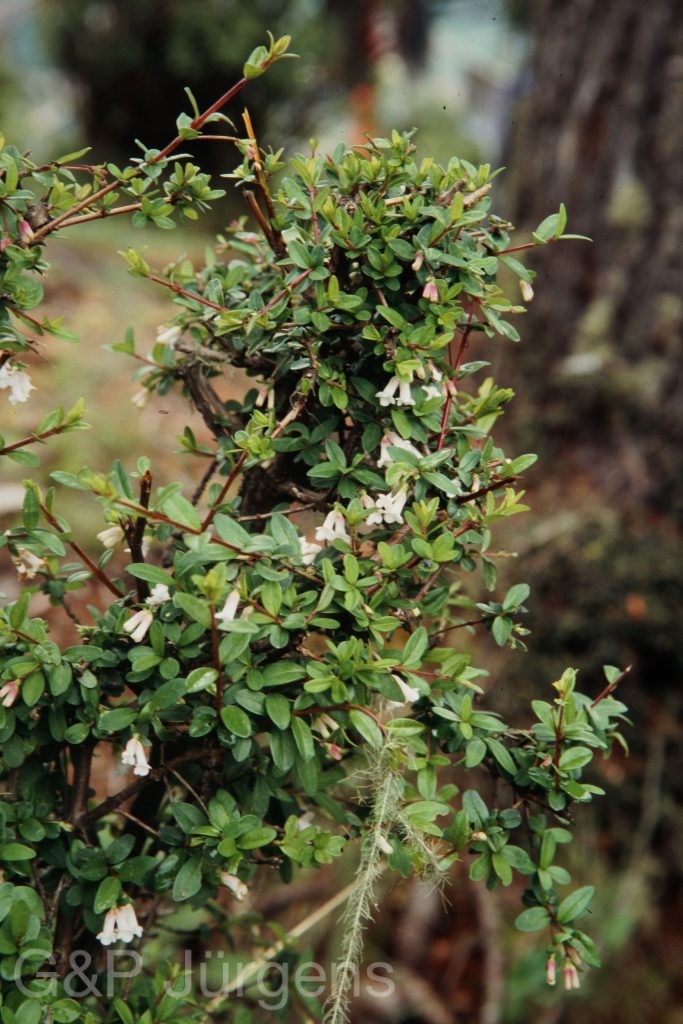
Lonicera angustifolia is a Sino-Himalayan honeysuckle distributed along the Himalaya from Afghanistan and Pakistan through India, Nepal and Bhutan to south-western China, with scattered records eastward to Myanmar; GBIF lists around 1,200 occurrences, several reflecting cultivation in Europe and North America. It is a shrub of the upper temperate and subalpine zones, occupying open coniferous and mixed forest, scrub, forest margins and rocky slopes, broadly from 2,400 to 4,000 m. The plants photographed at Tsochenchen at 3,550 m and Tumching at 3,700 m in Bhutan, both in June, show it flowering in early summer within high subalpine shrubbery near the upper forest limit.

It is an erect, much-branched deciduous shrub reaching 1-2.5 m, with slender greyish branchlets. The leaves are opposite, narrowly elliptic to oblong-lanceolate or linear, hence the epithet angustifolia ('narrow-leaved'), 1-4 cm long, entire and glabrous to thinly pubescent. The flowers are borne in axillary pairs on a common peduncle, each pair subtended by small bracts; the corolla is tubular-funnelform, two-lipped and pale pink to whitish, and the paired ovaries are partly fused. The two berries are connate at the base, ripening red and remaining largely free at the apex, each containing several seeds.

Lonicera section Isika, to which L. angustifolia belongs, comprises numerous shrubby, paired-flowered honeysuckles that are particularly diverse in the Himalaya and western China. Its tubular pink corollas are adapted to pollination by bees and long-tongued insects, while the bright red, partly fused berries are dispersed by birds and form an important food source in the subalpine zone. As a widespread, hardy and ecologically tolerant species spanning a broad elevational range, it is of least concern; its cold-hardiness and ornamental berries account for its occasional cultivation in temperate gardens.

Author: Wall. ex DC. · Sources: POWO (Kew), GBIF, Flora of China, Flora of Bhutan, Flowers of the Himalaya (Polunin & Stainton), monograph of Lonicera (Caprifoliaceae)

(Hook. f. & Thomson) Q. E. Yang, Landrein, Borosova & J. Osborne

Bh09 326 P532
Bhutan Tumching-La, 3700m June

Description

Lonicera angustifolia var. myrtillus is a high-montane to subalpine shrub of the Himalaya and adjacent ranges, recorded from China, Nepal, India, Pakistan, Bhutan, Afghanistan and Myanmar; GBIF holds about 873 occurrences for the taxon, with scattered cultivated records elsewhere. It is characteristic of the upper temperate and subalpine zone, typically between roughly 3000 and 4000 m, the photographed plant deriving from Tumching-La in Bhutan at 3700 m in June, at the onset of flowering. It grows in open coniferous and rhododendron forest, at the forest-line ecotone, and among scrub on rocky, well-drained slopes, often forming part of the dwarf-shrub understorey.

This variety is a small, much-branched deciduous shrub with slender, often arching twigs and small, opposite, entire leaves that are narrowly oblong to elliptic, the var. myrtillus being notably small-leaved and bilberry-like in aspect. The flowers are borne in axillary pairs on short peduncles; each pair subtended by bracts, the tubular-funnelform corolla is white to pale pink, weakly two-lipped or nearly regular. The paired ovaries are partly connate, and at maturity produce small, fused, juicy berries that ripen red, dispersed by birds, as is typical of the genus.

The combination (Hook. f. & Thomson) Q. E. Yang, Landrein, Borosova & J. Osborne reflects modern revisionary work on Himalayan Lonicera within an enlarged Caprifoliaceae. As an intraspecific taxon of a widespread, ecologically tolerant species, it is of no conservation concern, and like other shrubby honeysuckles it contributes nectar and fleshy fruit to subalpine pollinator and frugivore networks at the upper forest margin.

Sources: POWO (Kew), GBIF, Flora of China, Flora of Bhutan, Flora of Pakistan, Yang et al. revision of Lonicera (Caprifoliaceae), Rehder Synopsis of the Genus Lonicera

Pall. ex Schult.

BhutanPG2011 590
Bhutan Kem-La 4100m, July
Garh 07 111 ergebnis
India Garhwal Meggu Kichatti 3200m, June

Description

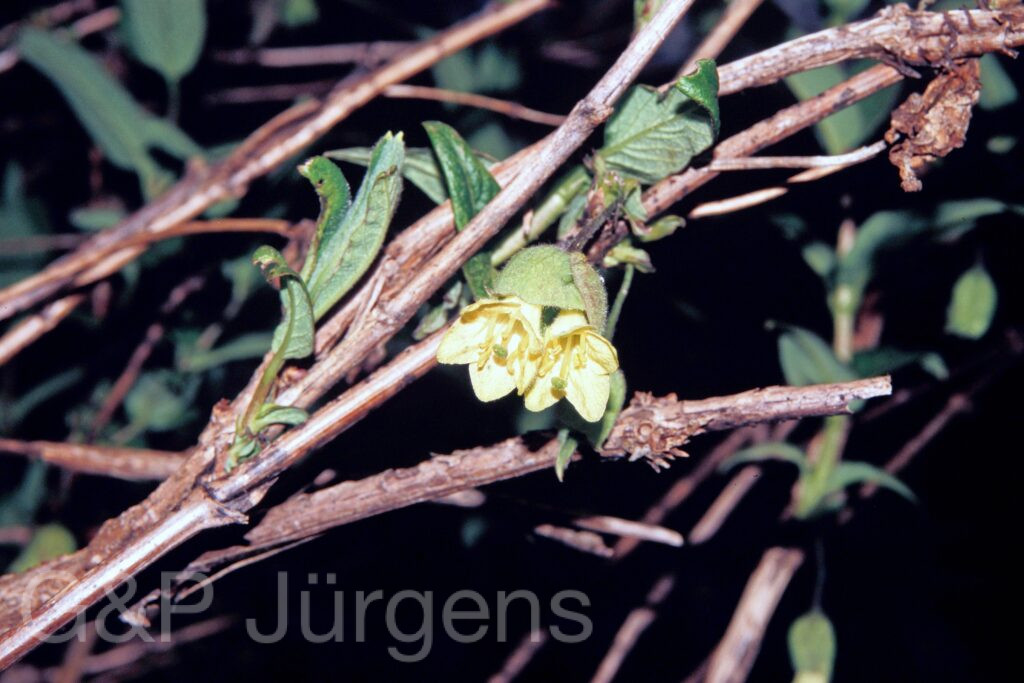
Lonicera hispida is a deciduous shrub of the high mountains of Central and High Asia, ranging through the Himalaya from Pakistan and India to Nepal and Bhutan, across Tibet and western China, and northward into the Tien Shan, Pamir-Alai and Altai of Central Asia and Russia. It grows in subalpine and alpine scrub, open coniferous forest, stream banks and rocky slopes, typically between about 2500 and 4500 m. The photographed material comes from Kem-La in Bhutan at around 4100 m and from Meggu Kichatti in Indian Garhwal at about 3200 m, flowering in June and July. With over 3100 georeferenced records it is a well-documented and widespread montane honeysuckle.

It forms an erect, much-branched shrub up to about 2 m, the young shoots and petioles bristly-hispid with stiff spreading hairs and glandular bristles, the older bark exfoliating. The leaves are opposite, oblong to elliptic, ciliate and bristly-margined, often glaucous beneath. The flowers are borne in axillary pairs subtended by large, broad, persistent bracts that enlarge in fruit; the corolla is tubular-funnelform, white to pale yellow, weakly two-lipped, with a gibbous base and exserted stamens and style. The paired ovaries are partly united, and the fruit is a fleshy berry, red at maturity, the bracts often colouring and partly enclosing the twin fruits.

Lonicera hispida belongs to section Isika and is distinguished by its conspicuously hispid bristly indumentum and large floral bracts. It is morphologically variable across its enormous range, and several varieties have been recognised. The berries are taken by birds, aiding dispersal. As a common, broadly distributed alpine shrub it is of least conservation concern.

Author: Pall. ex Schult. · Sources: POWO (Kew), GBIF, Flora of China, Flora of Bhutan, Rehder's revision of Lonicera

(Wall.) LaFrankie

BhutanPG2011 169
Bhutan Tsochenchen, 3550m June
Nepal 99 100 ergebnis
West-Nepal South of Rara-Lake 3600m, June

Description

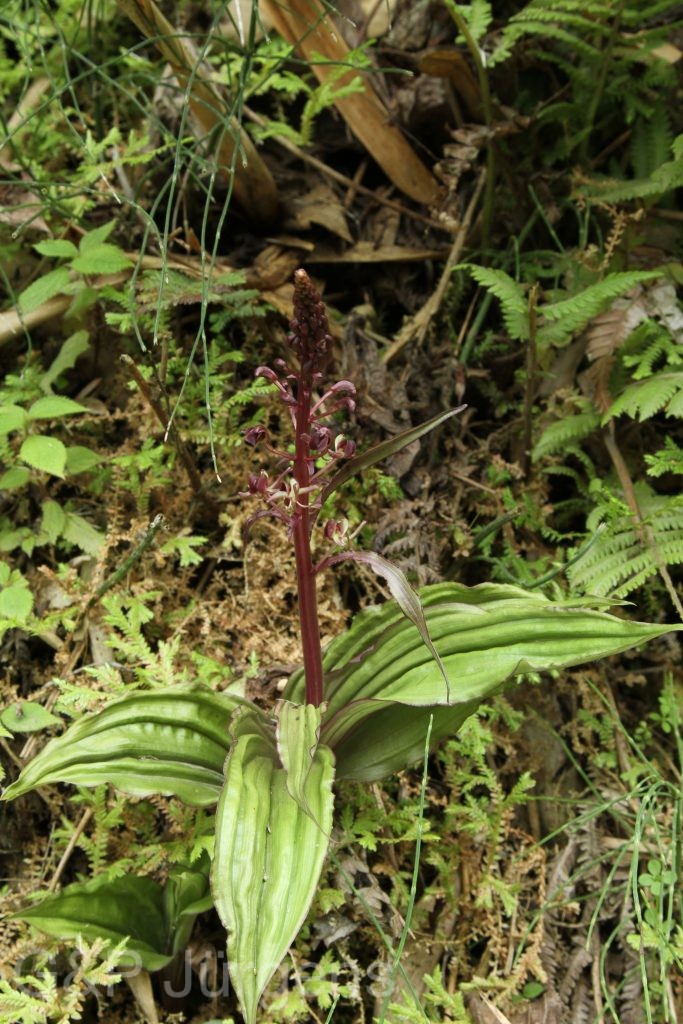
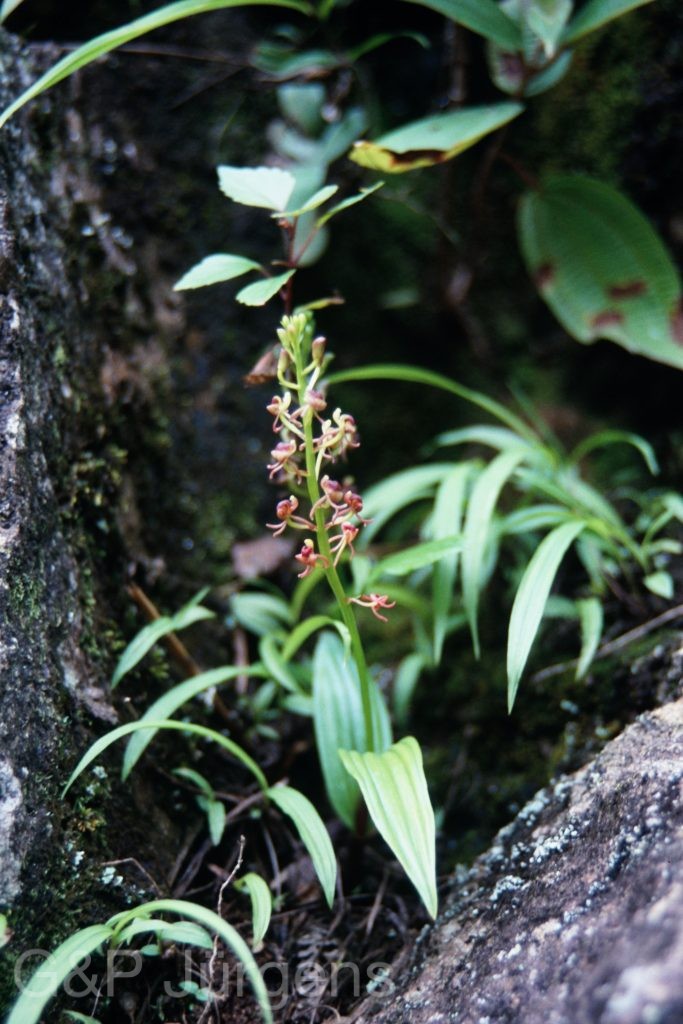
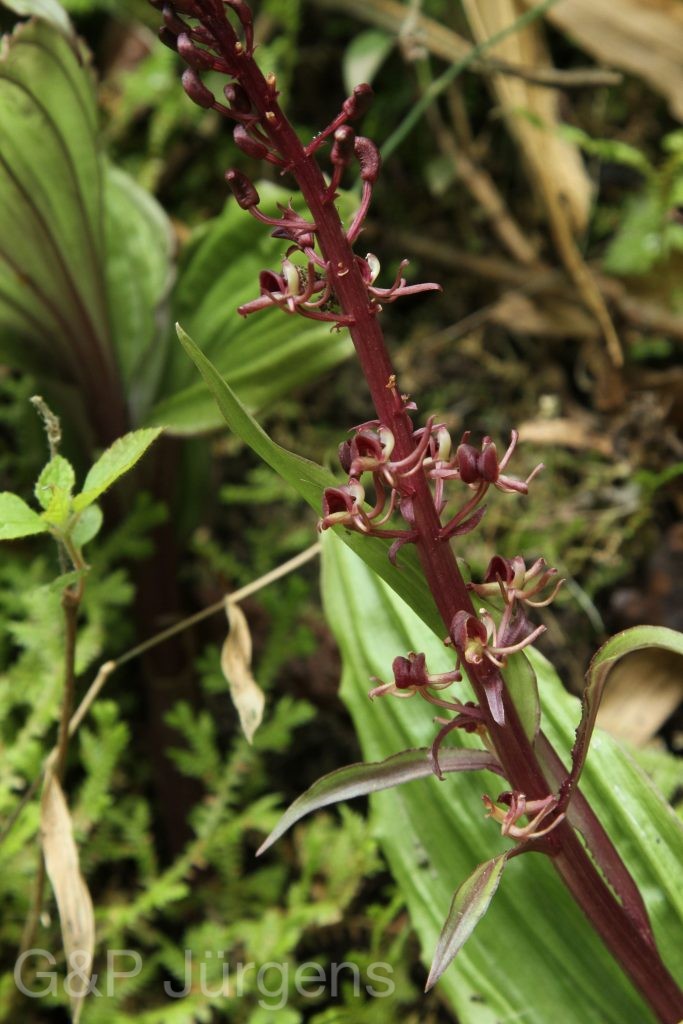
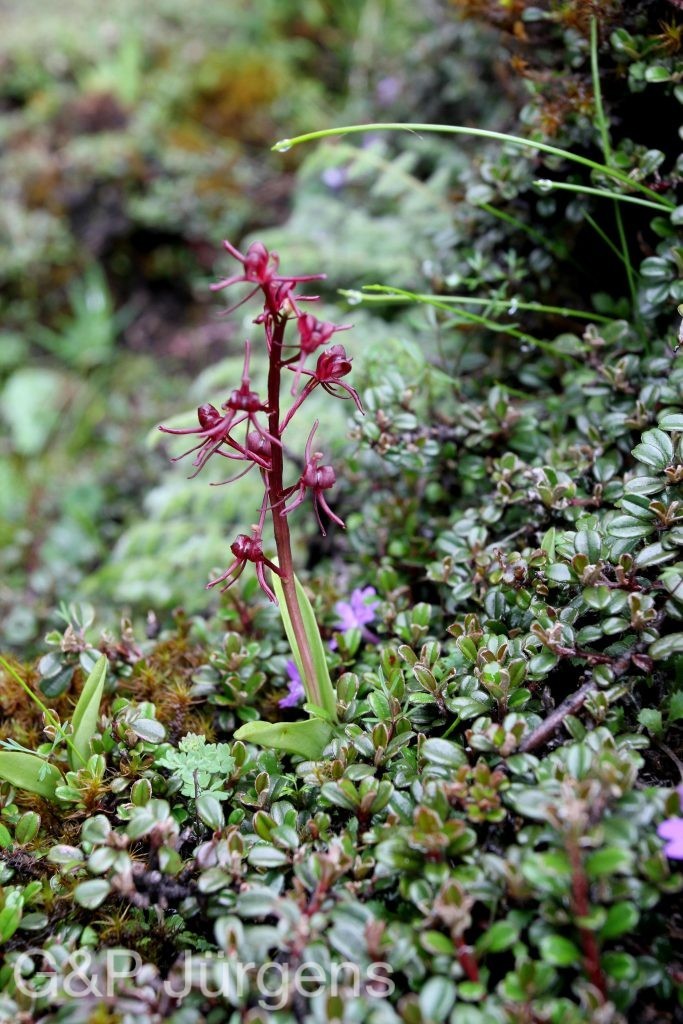
Maianthemum purpureum (Wall.) LaFrankie is a montane false Solomon's-seal of the Himalaya and southwestern China, with about 673 records from China, Nepal, India, Bhutan, Myanmar and Taiwan. It grows in shaded, humus-rich situations: fir and rhododendron forest, subalpine scrub, mossy stream banks and the edges of high meadows, typically in the upper temperate to subalpine belt around 3000 to 3800 m. The plants photographed at Tsochenchen in Bhutan at 3550 m and south of Rara Lake in West Nepal at 3600 m, both in June, are typical of its cool, moist, snow-influenced woodland and forest-margin habitats.

The species is an erect rhizomatous perennial arising from a creeping, somewhat fleshy rhizome. The simple, unbranched stem bears several alternate, sessile to subsessile, ovate to elliptic leaves with conspicuous parallel venation. The inflorescence is a terminal raceme or narrow panicle of small flowers; in contrast to typical white-flowered Maianthemum, the perianth here is purple to dull reddish, with six free or shortly united tepals and six stamens. The fruit is a small globose berry that ripens red to purplish-black, each containing one to few seeds.

Long placed in Smilacina (and Tovaria), the species was transferred to a broadly circumscribed Maianthemum, which subsumes those segregate genera on molecular and morphological grounds. Its purple-flowered condition is notable within the predominantly white-flowered genus. The nectariferous flowers attract small insects, and the fleshy berries are dispersed by birds. Widespread across the Sino-Himalayan region and locally common in suitable forest, M. purpureum is not considered threatened, although it depends on the persistence of undisturbed montane woodland.

Author: (Wall.) LaFrankie · Sources: POWO (Kew), GBIF, Flora of China, Flora of Bhutan, Flora of Nepal, LaFrankie's revision of Maianthemum (incl. Smilacina)