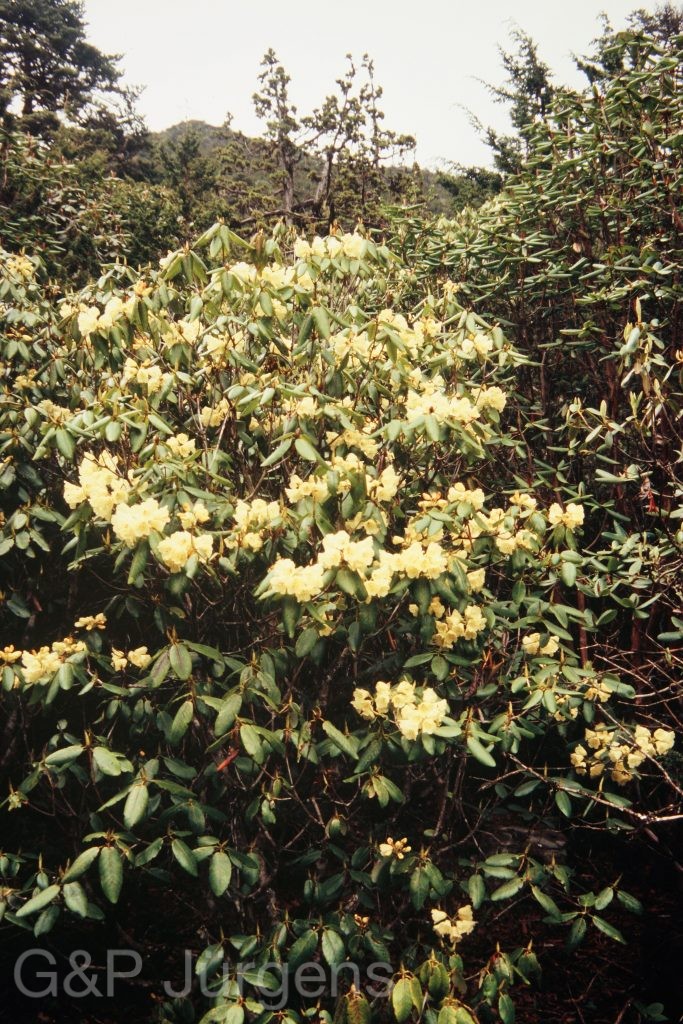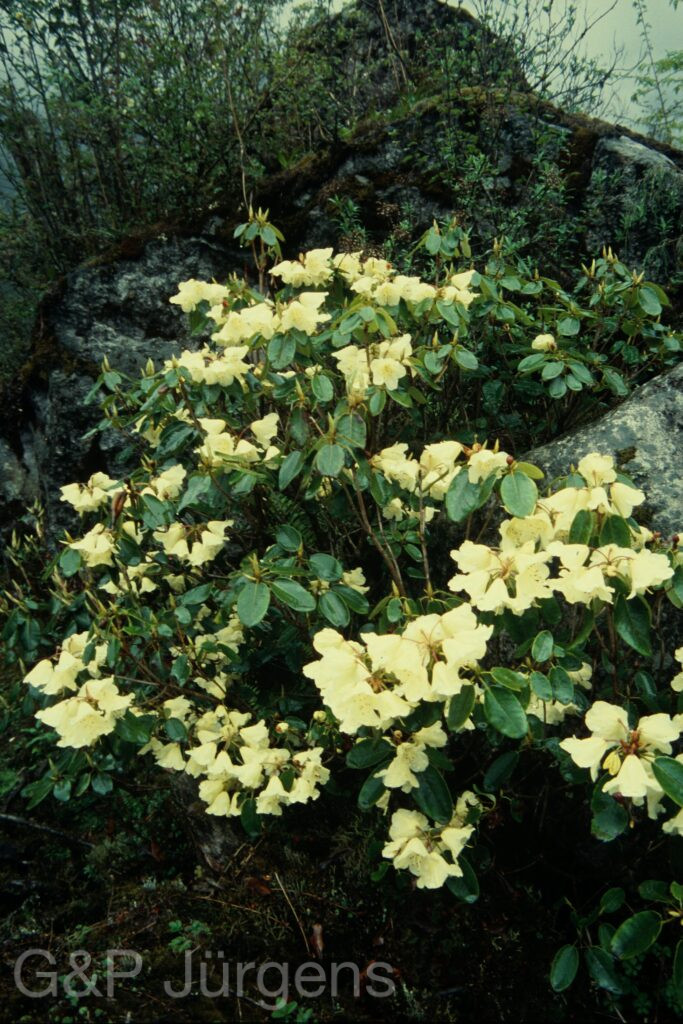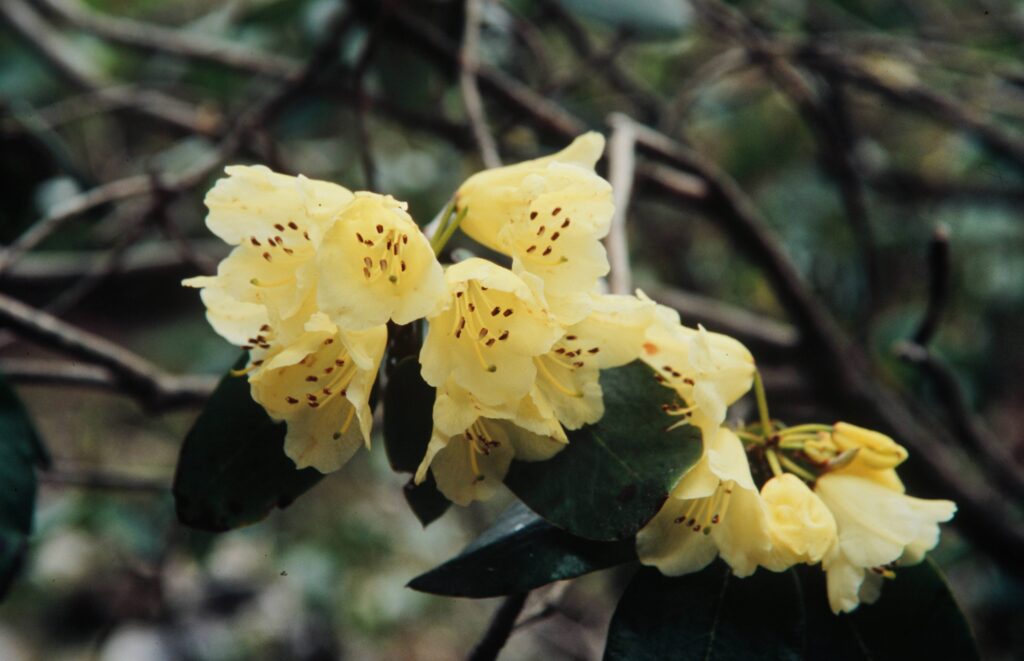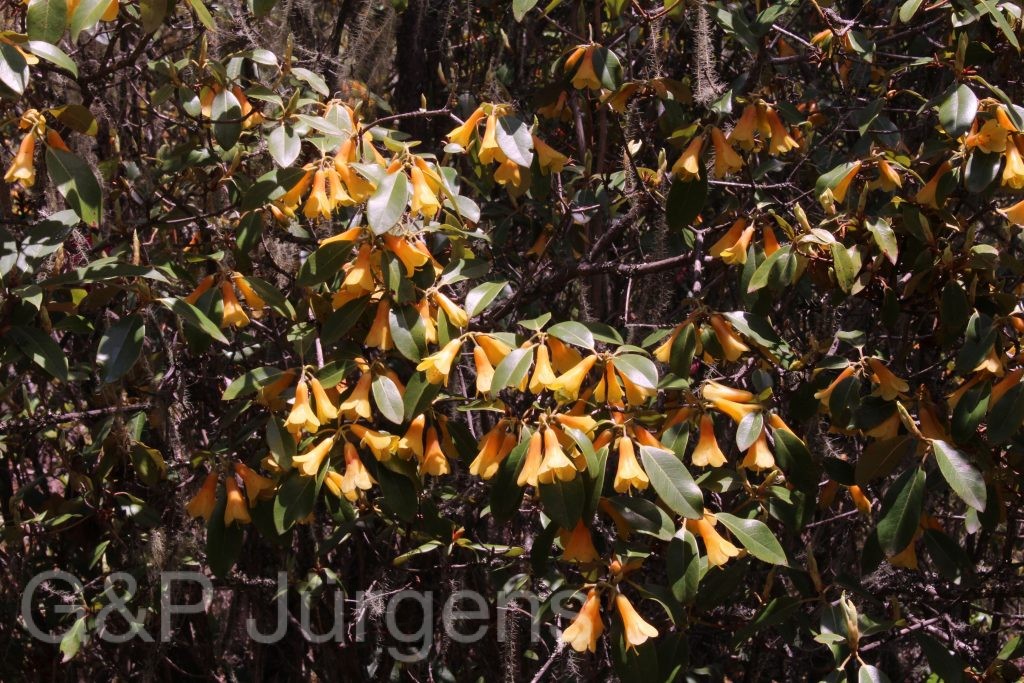
Tag:

Alpine (>3500 m)

Balf. f.

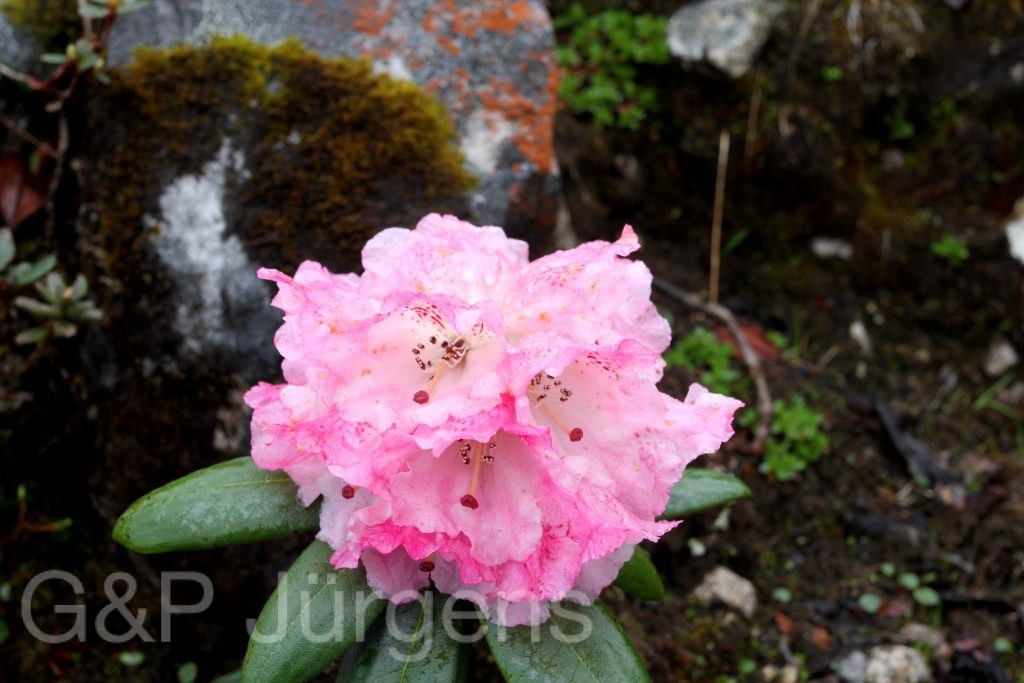
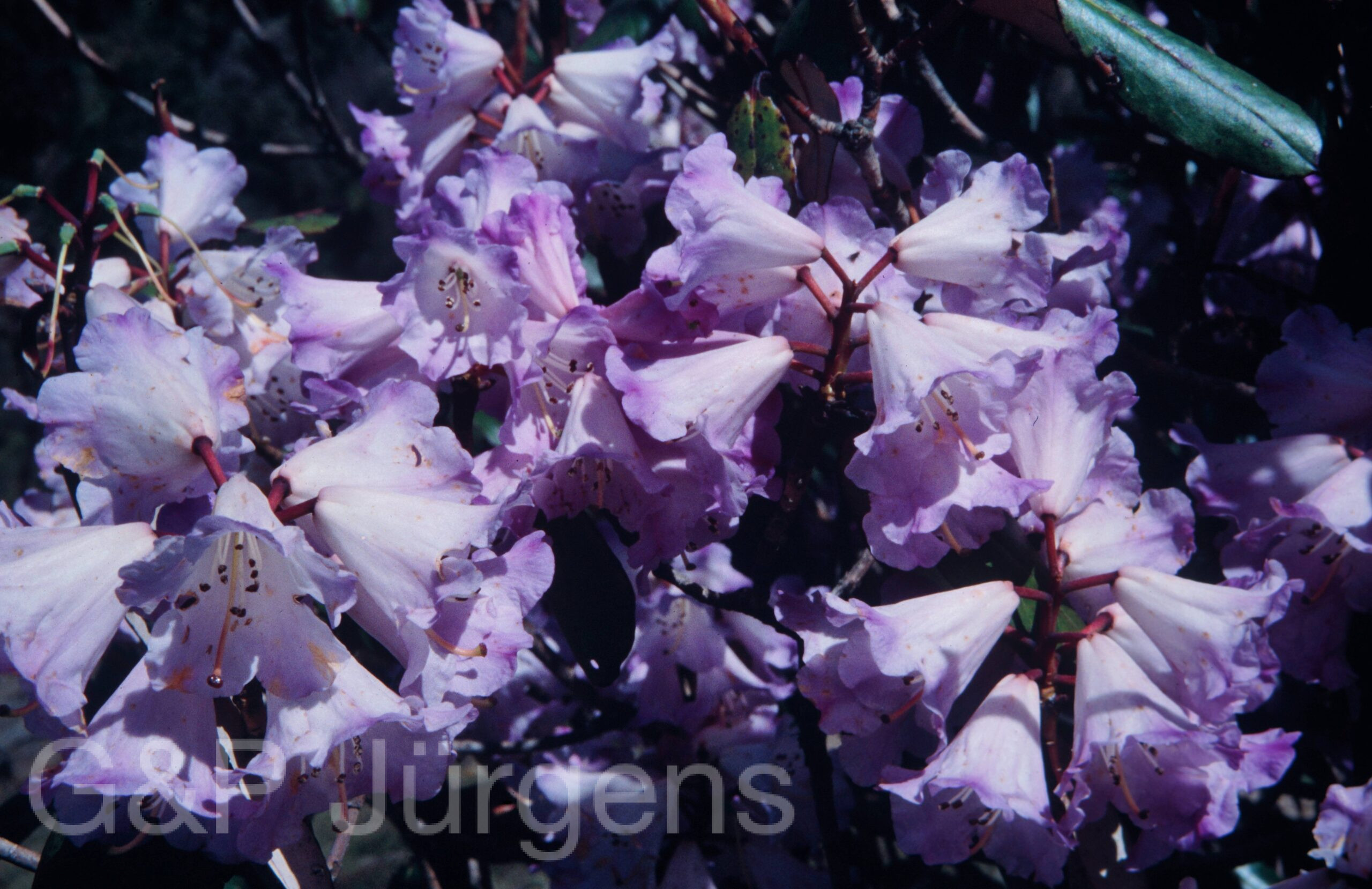
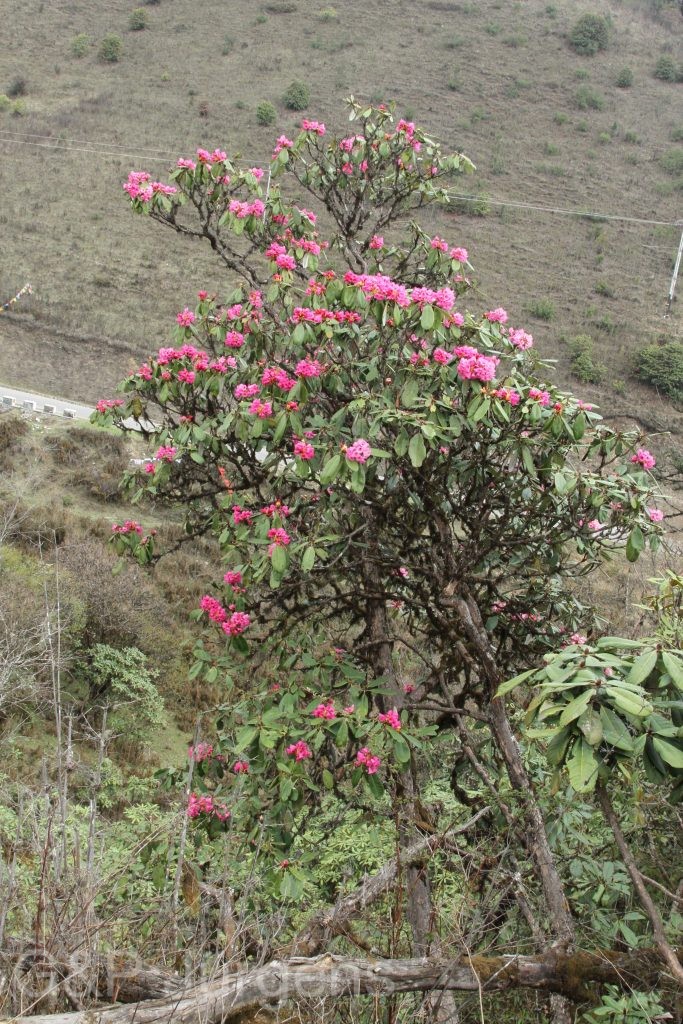
Sikkim2011 204
Sikkim Lachung 3100m, June
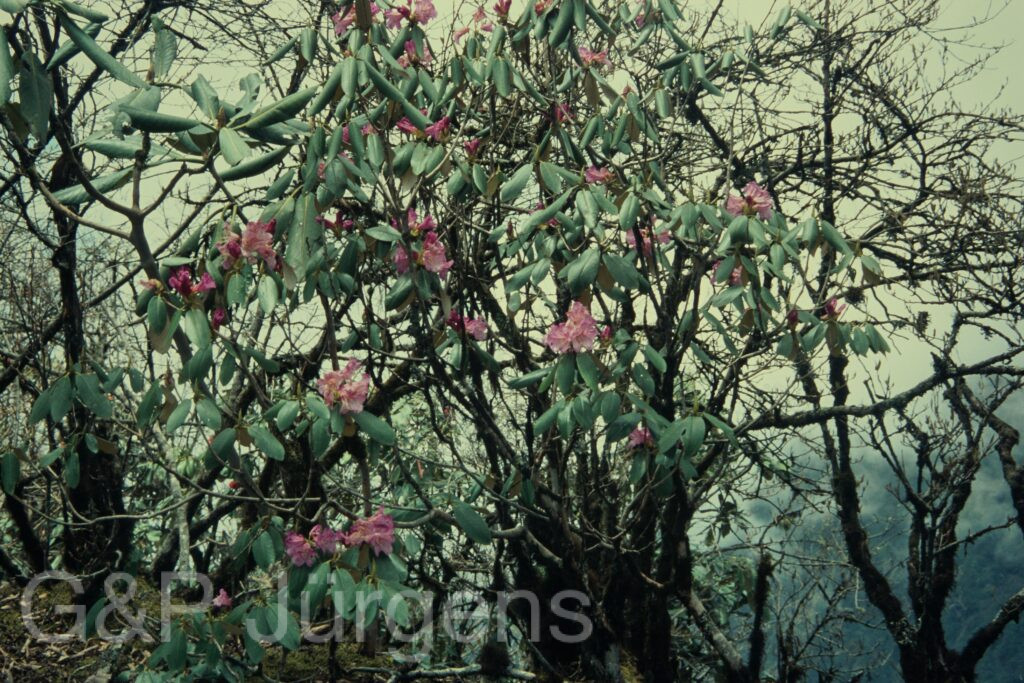
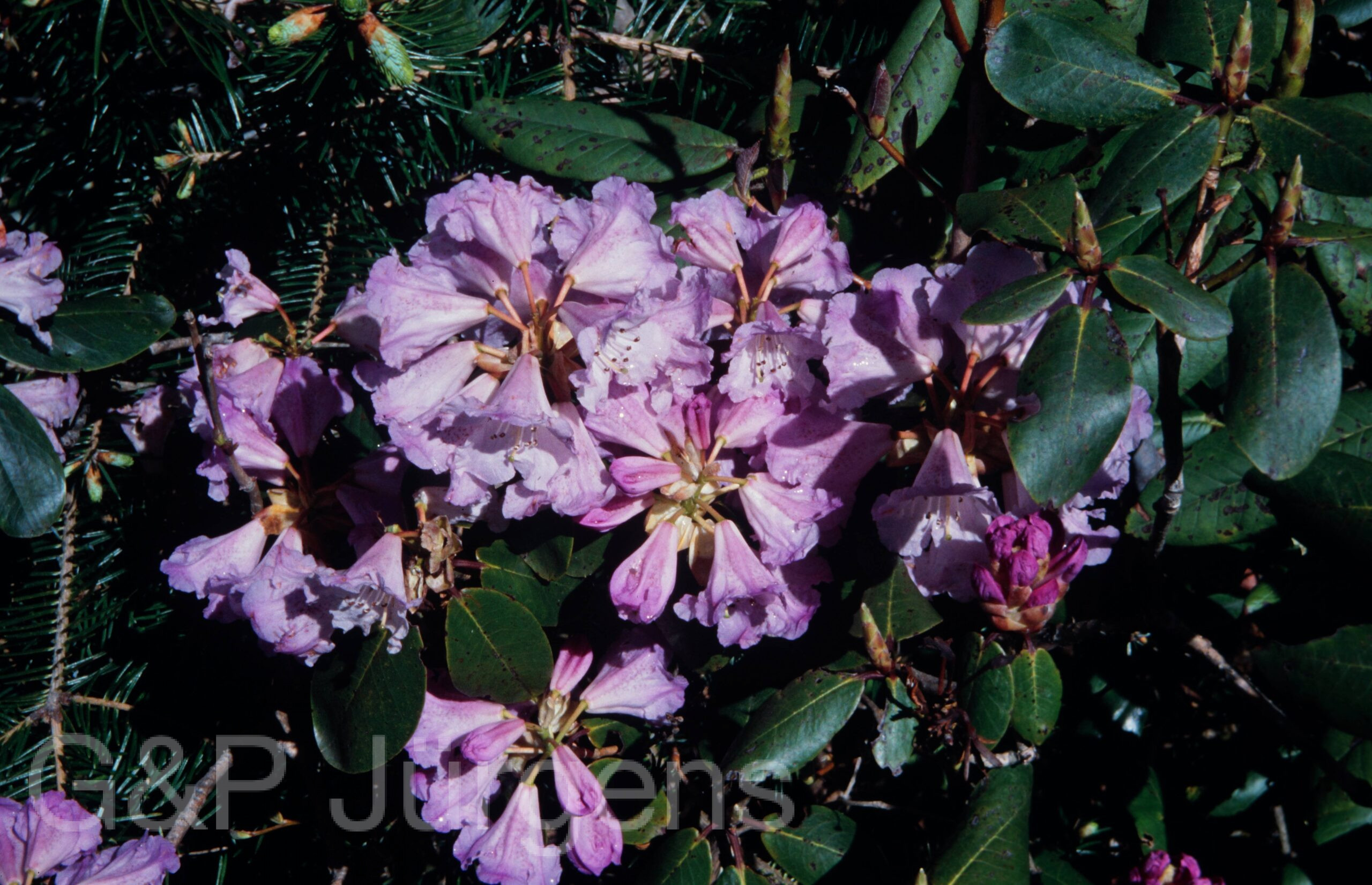
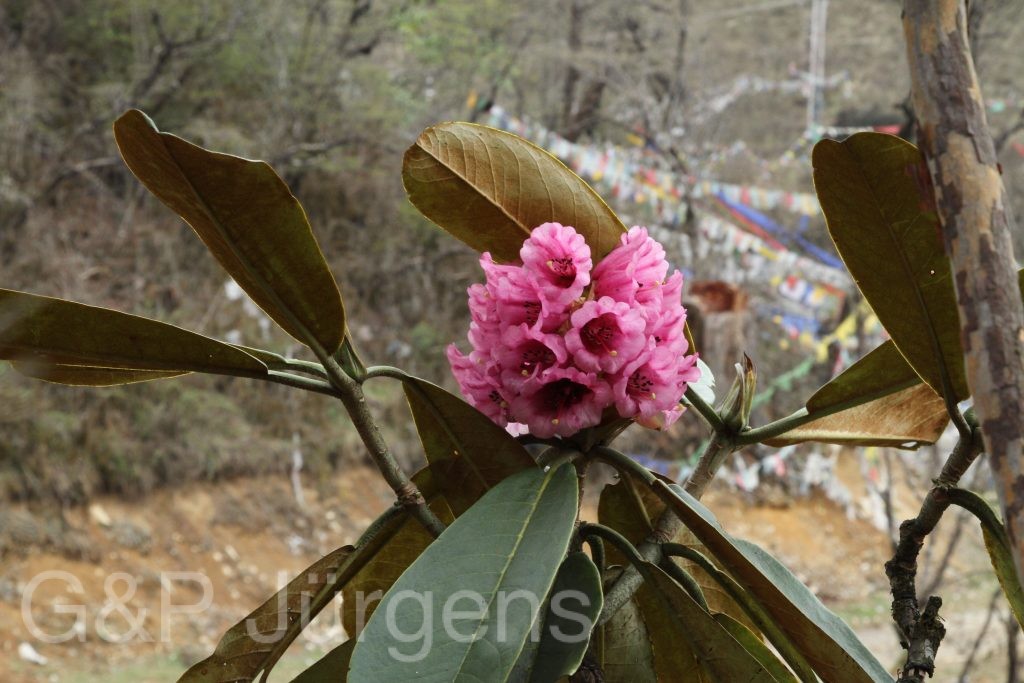
Sikkim2011 205
Sikkim Lachung 3100m, June
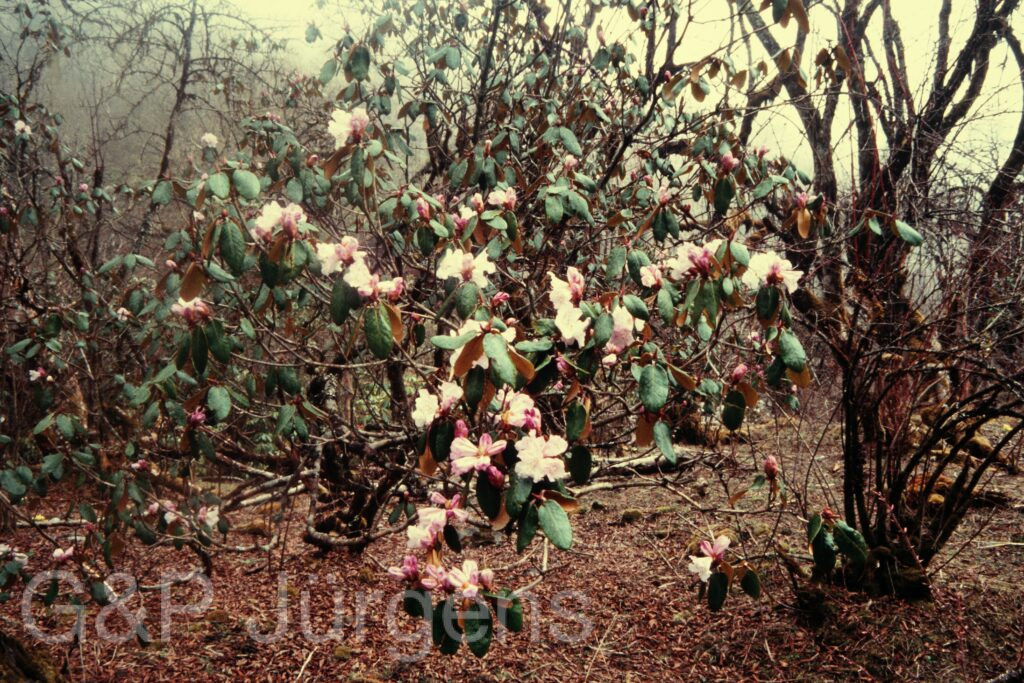
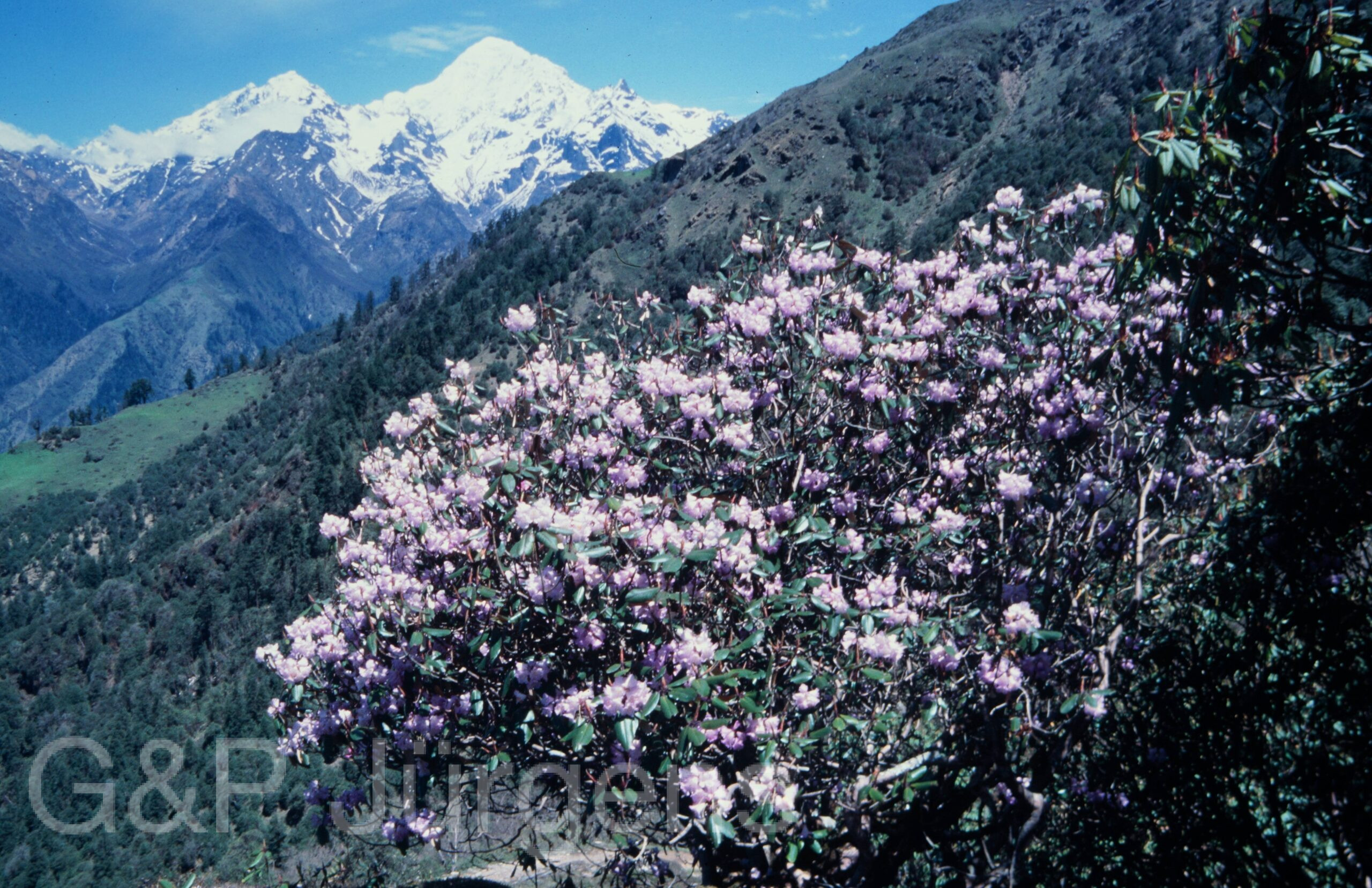
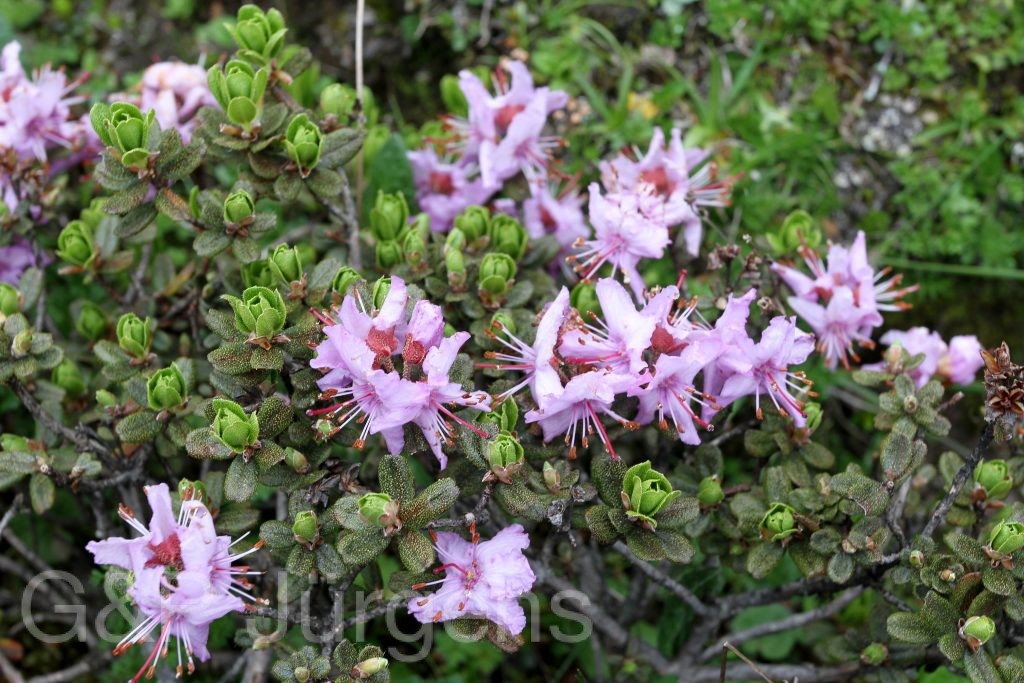
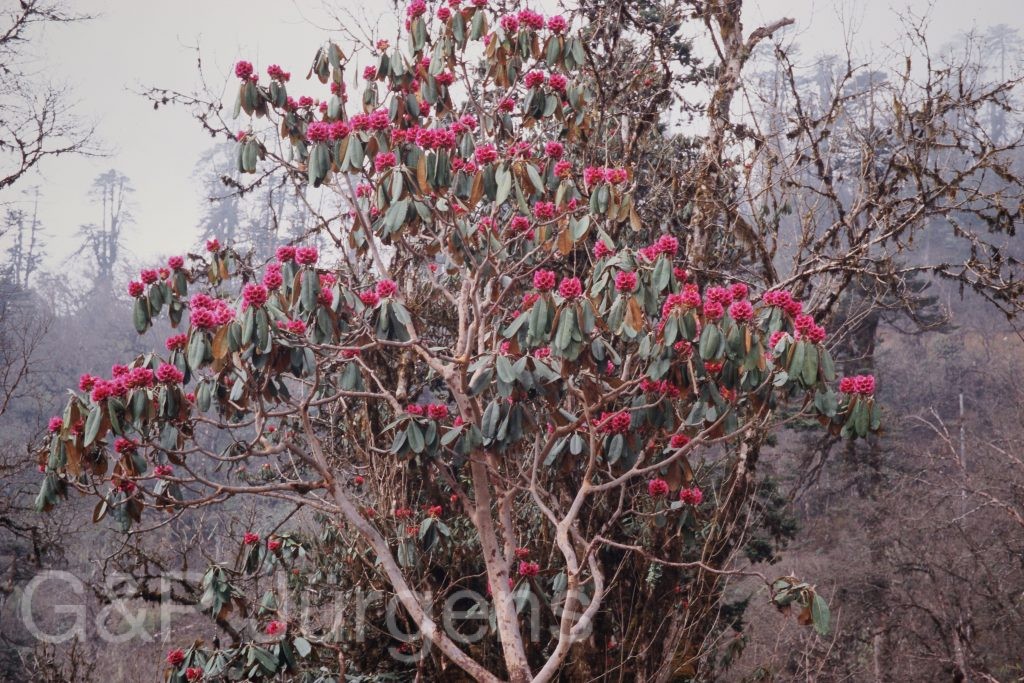
Sikkim2004 435 P758
Sikkim/India Lachung 3600m May

Description

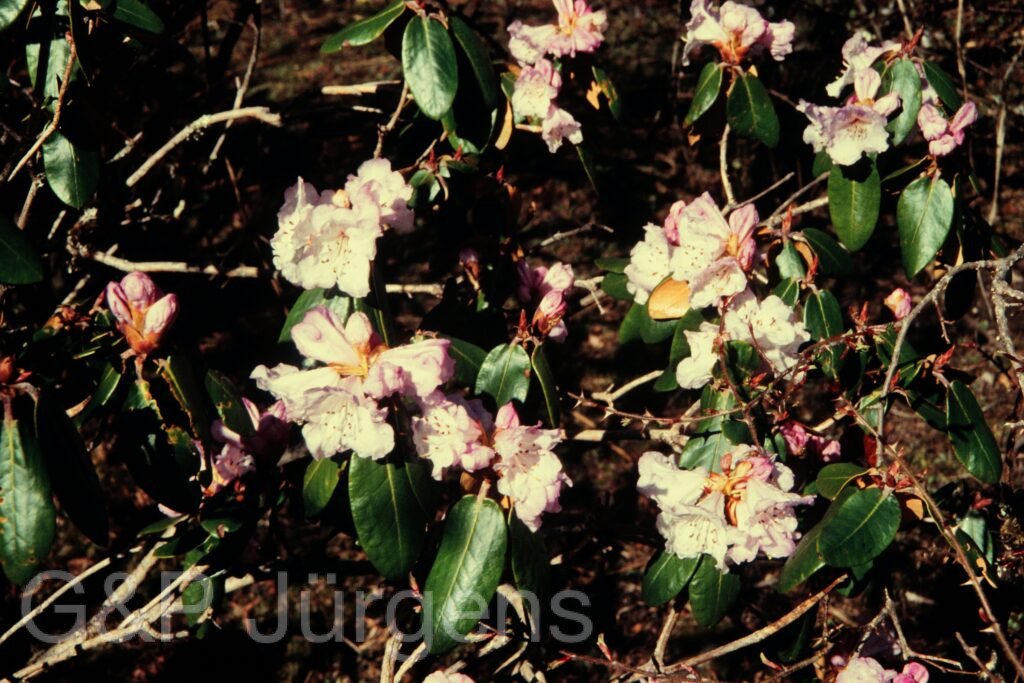
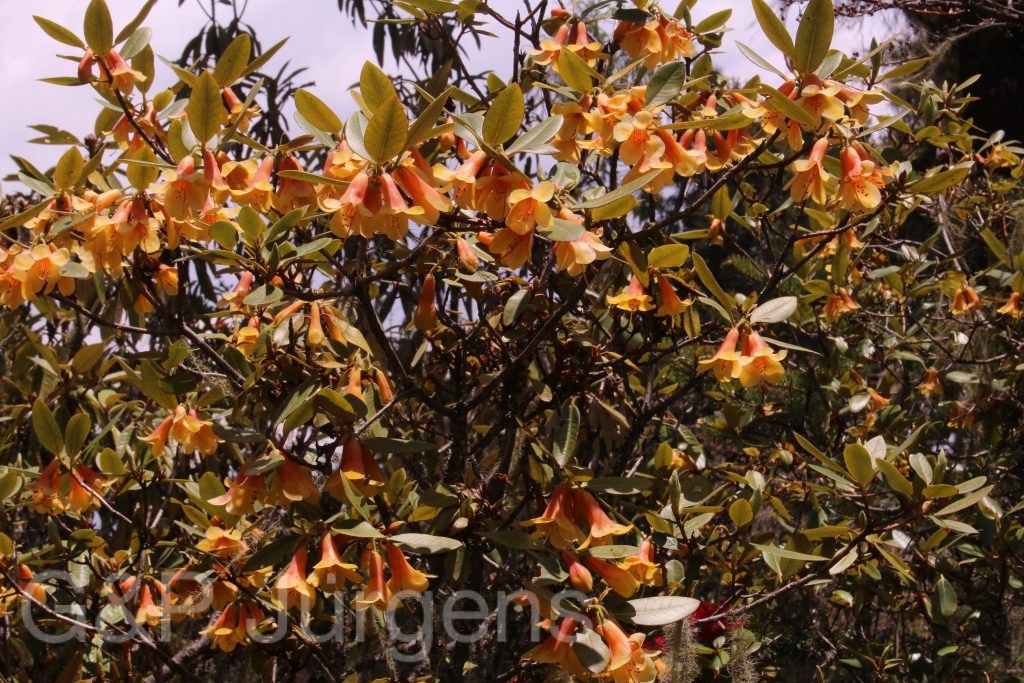
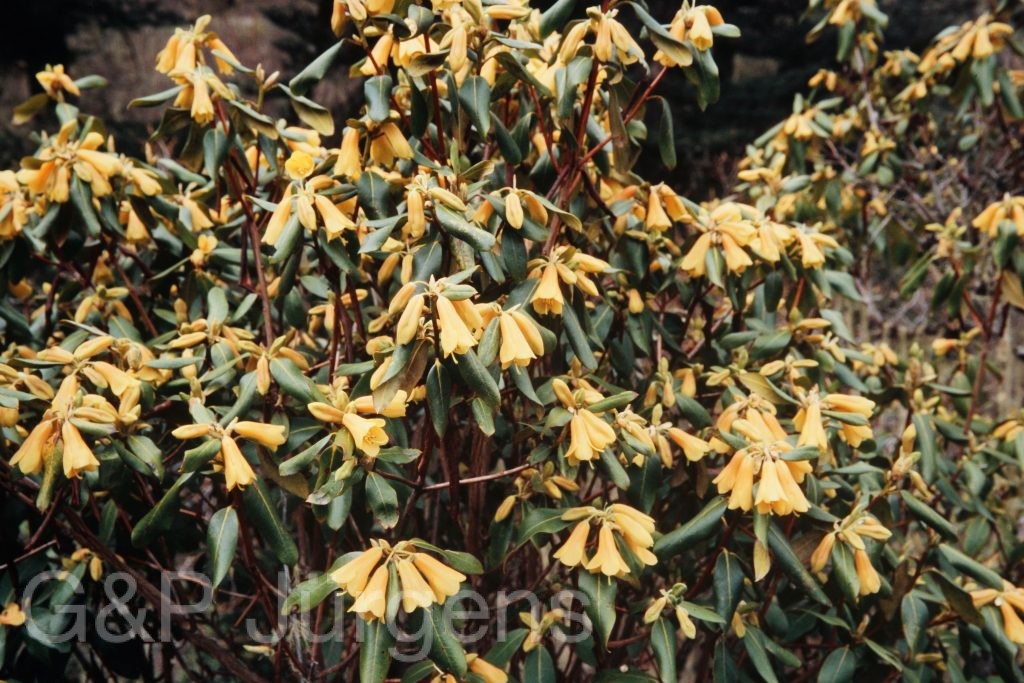
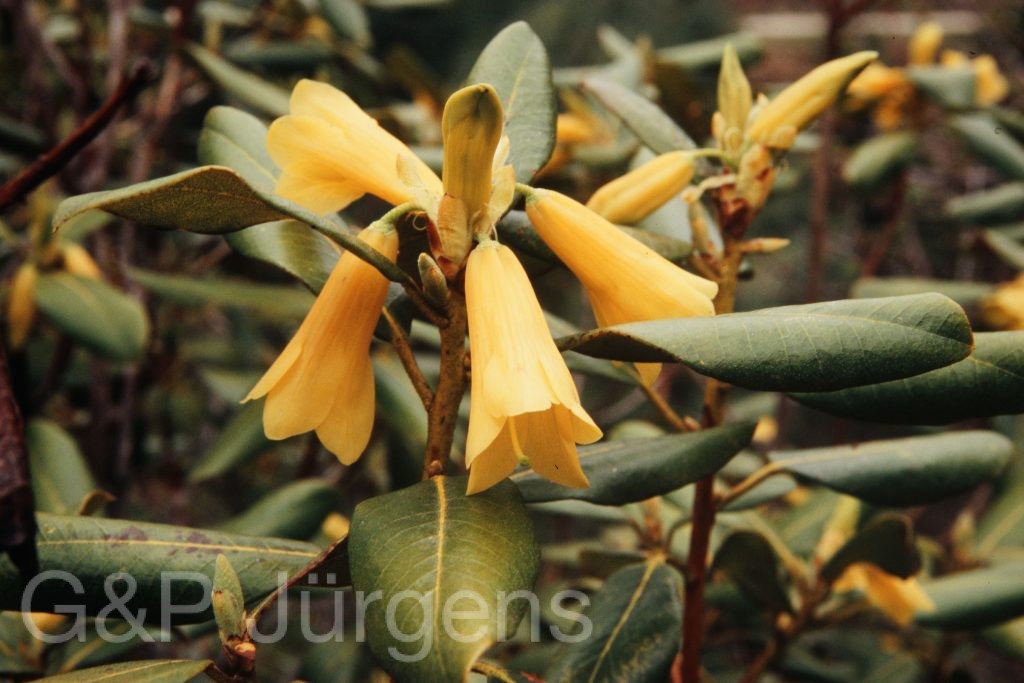
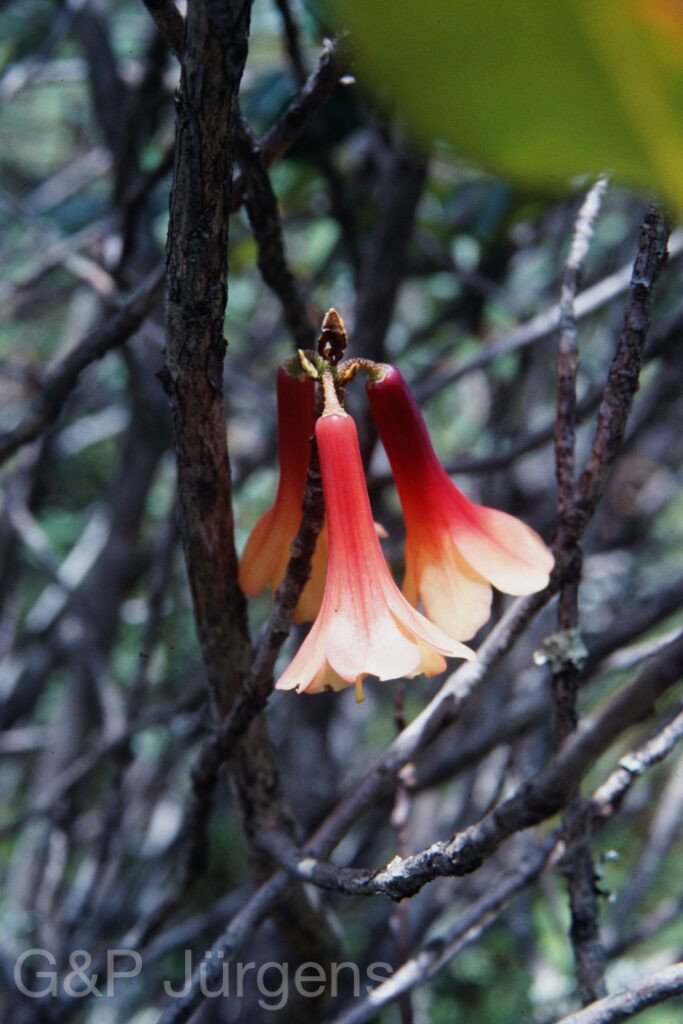
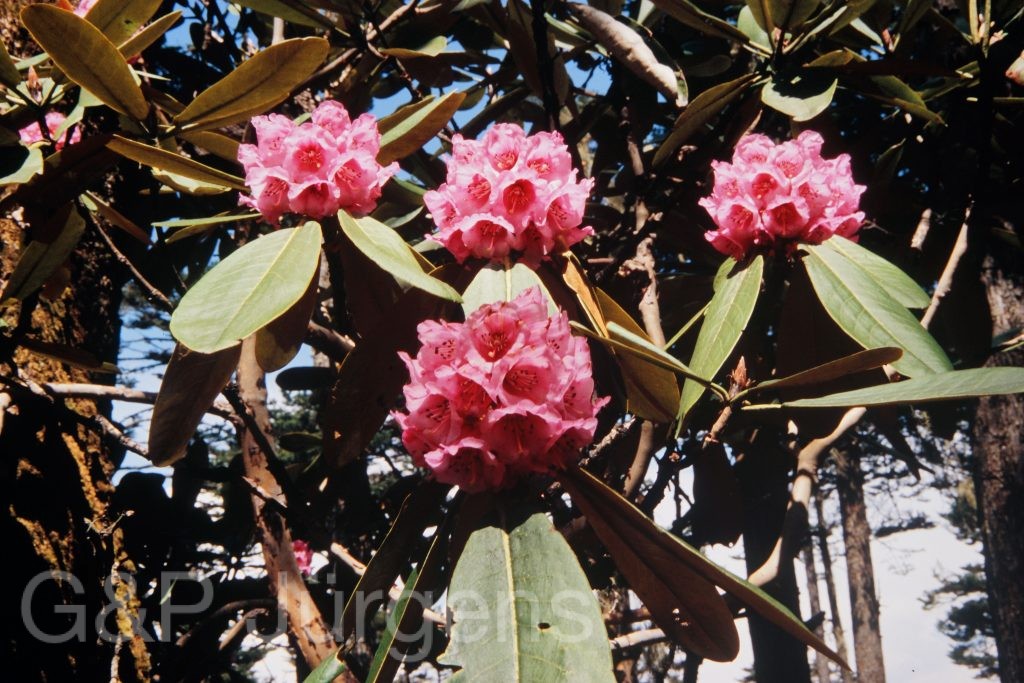
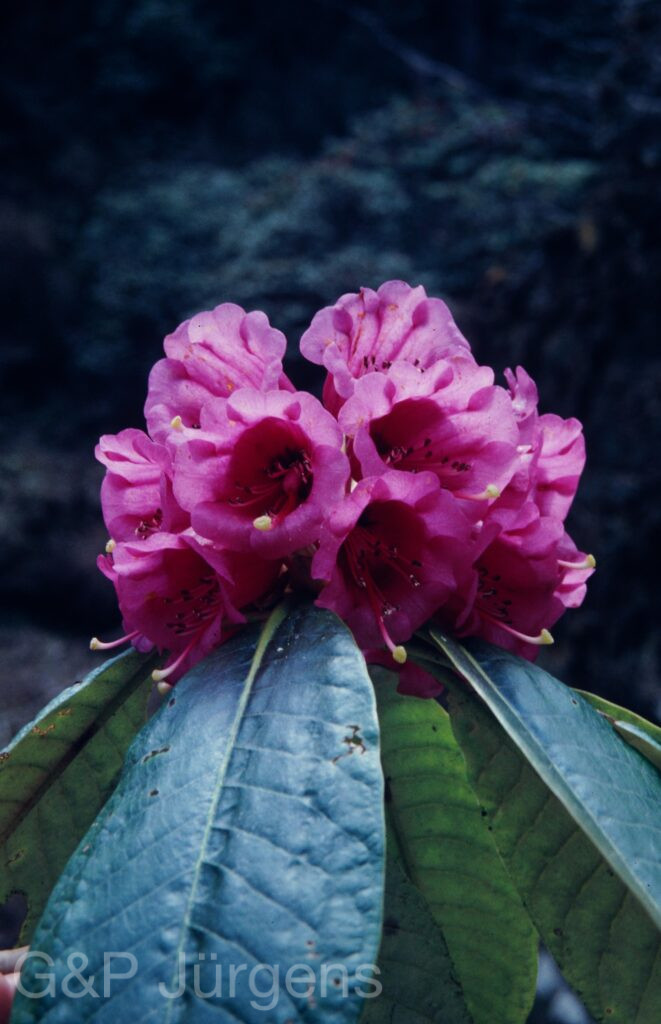
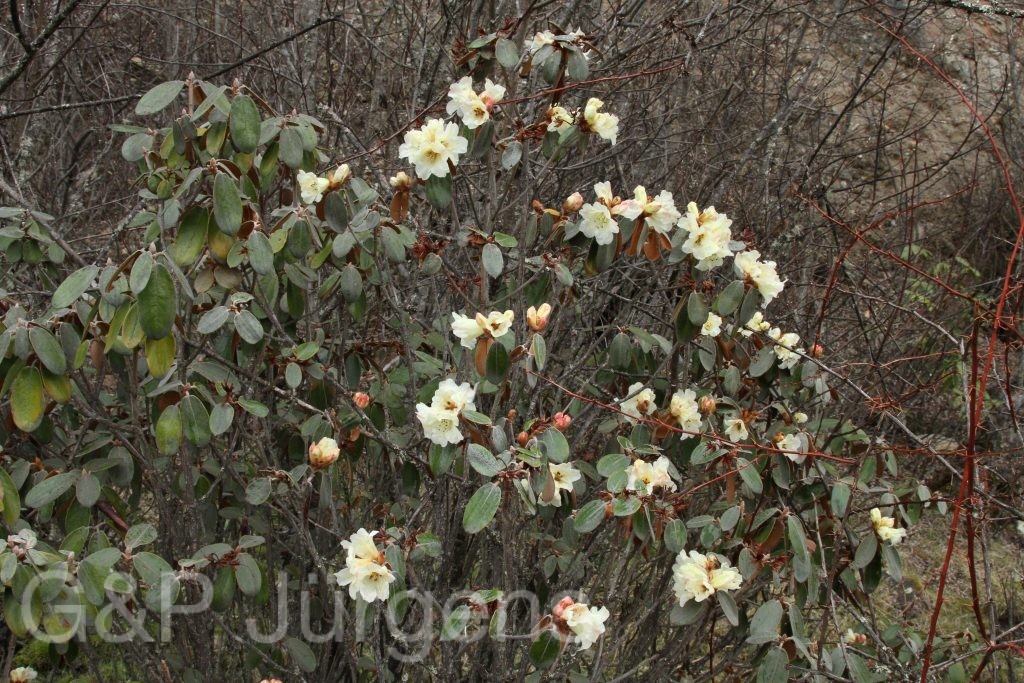
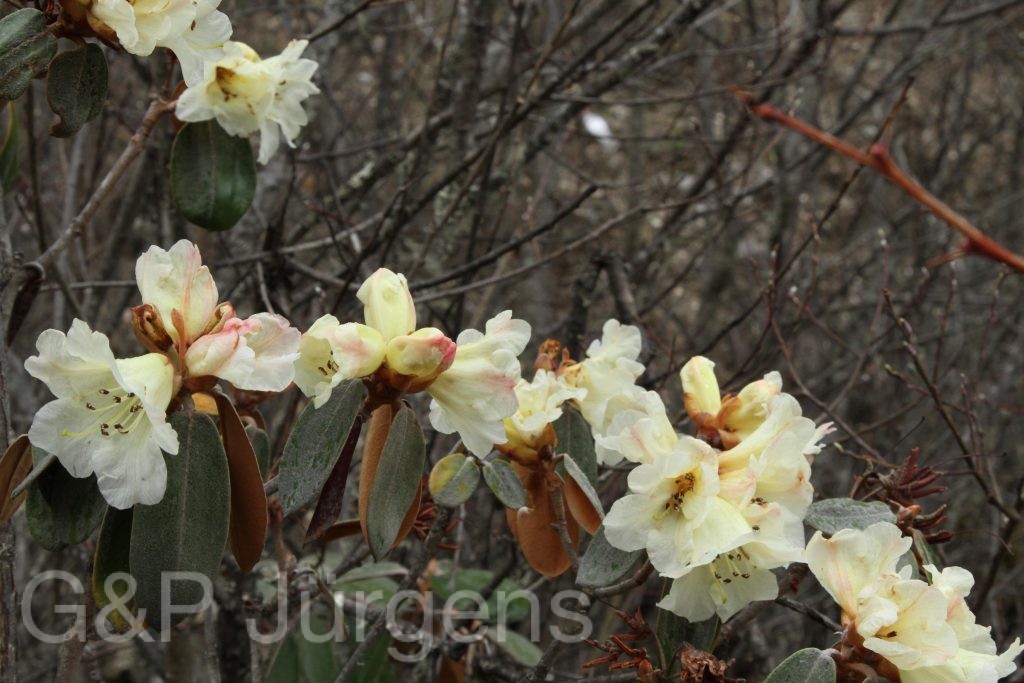
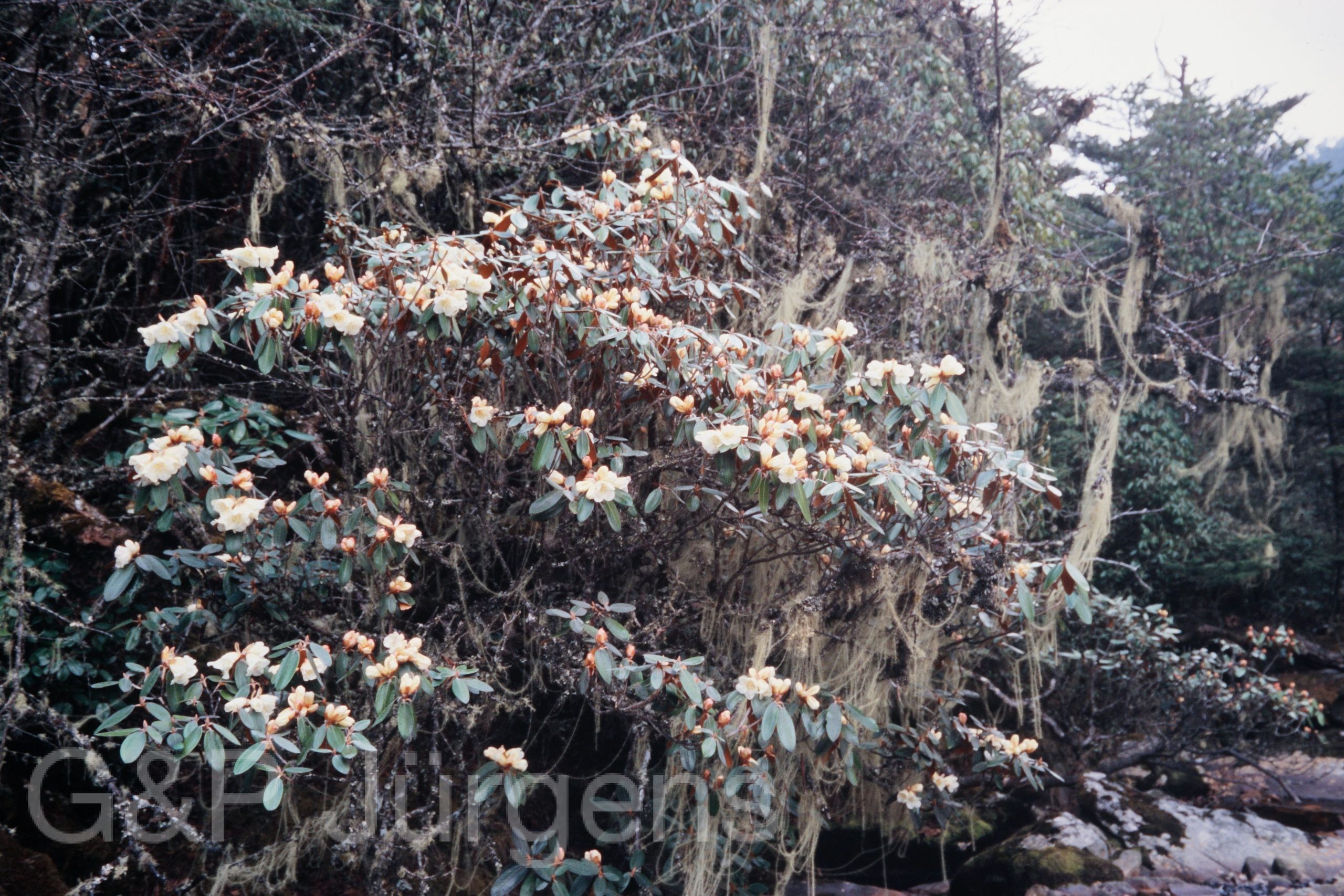
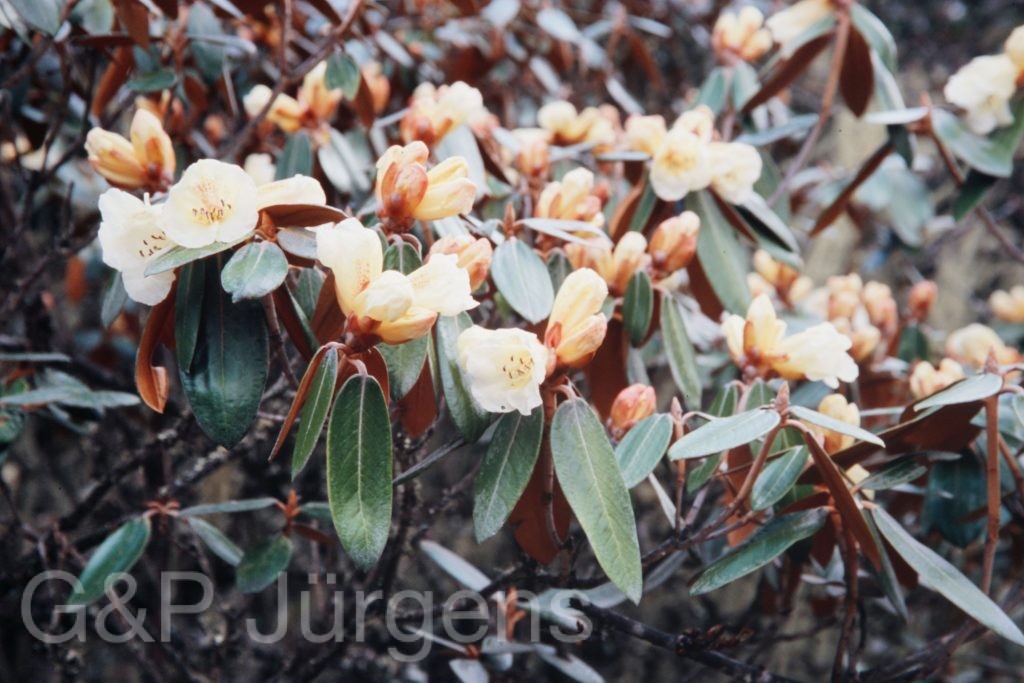
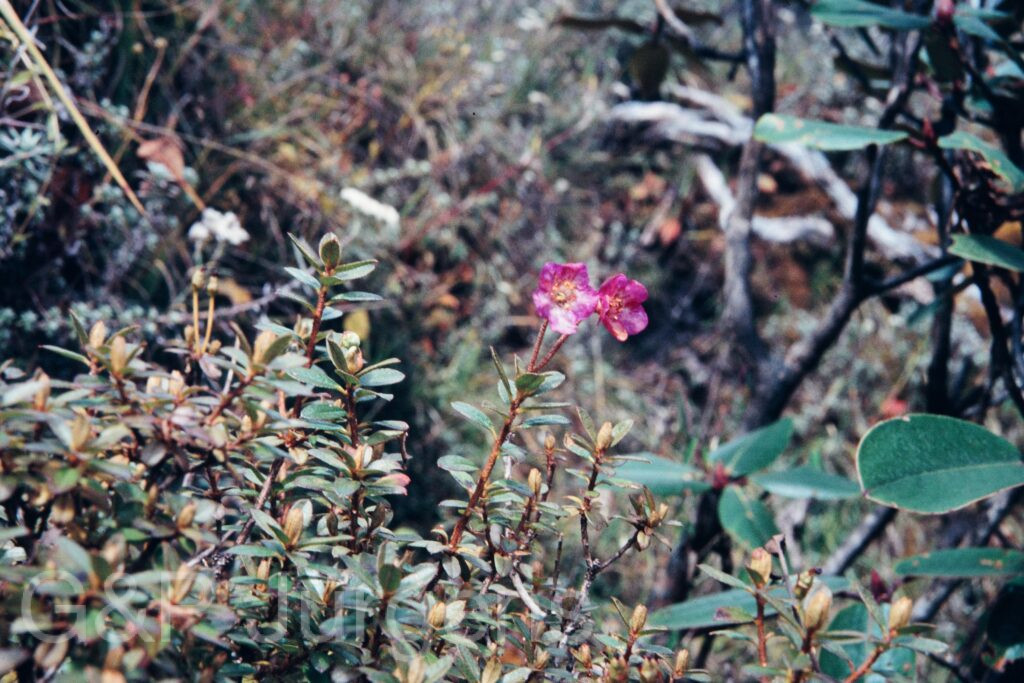
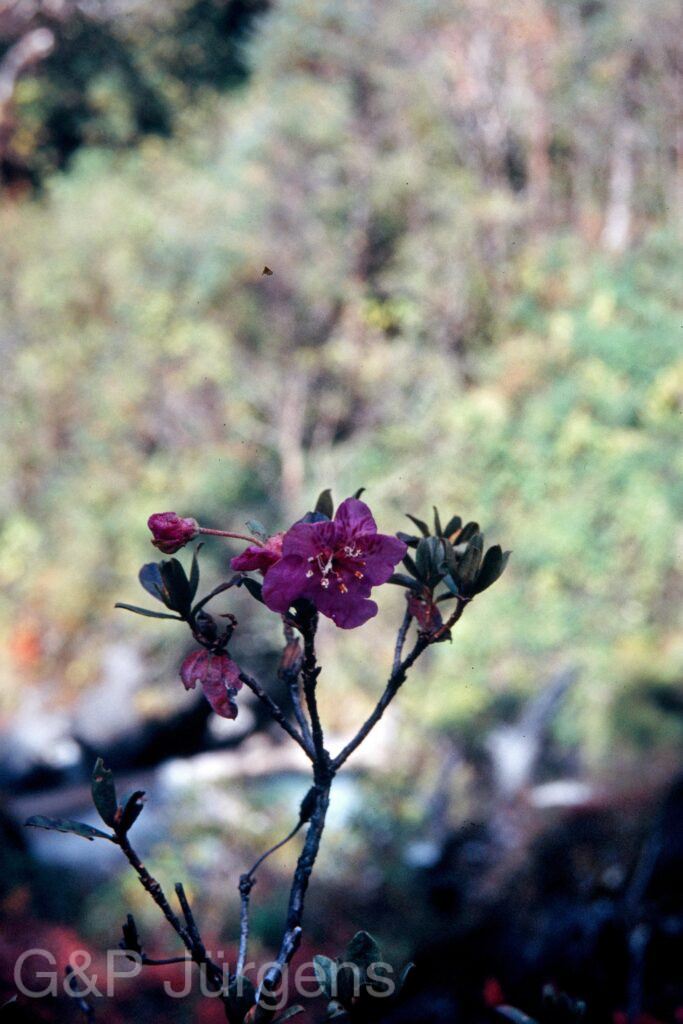
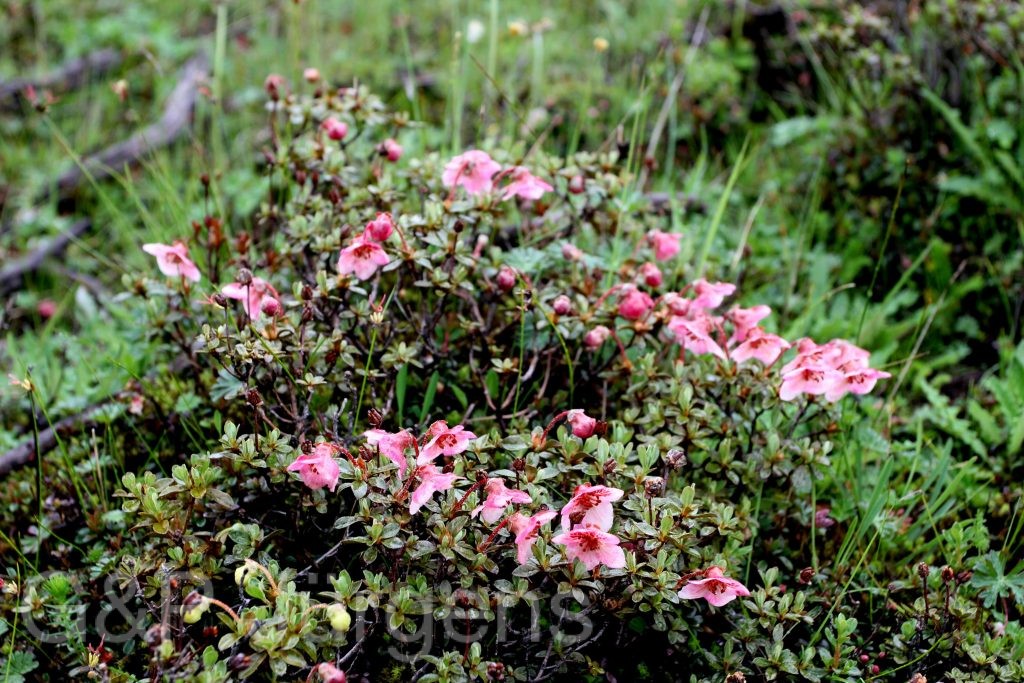
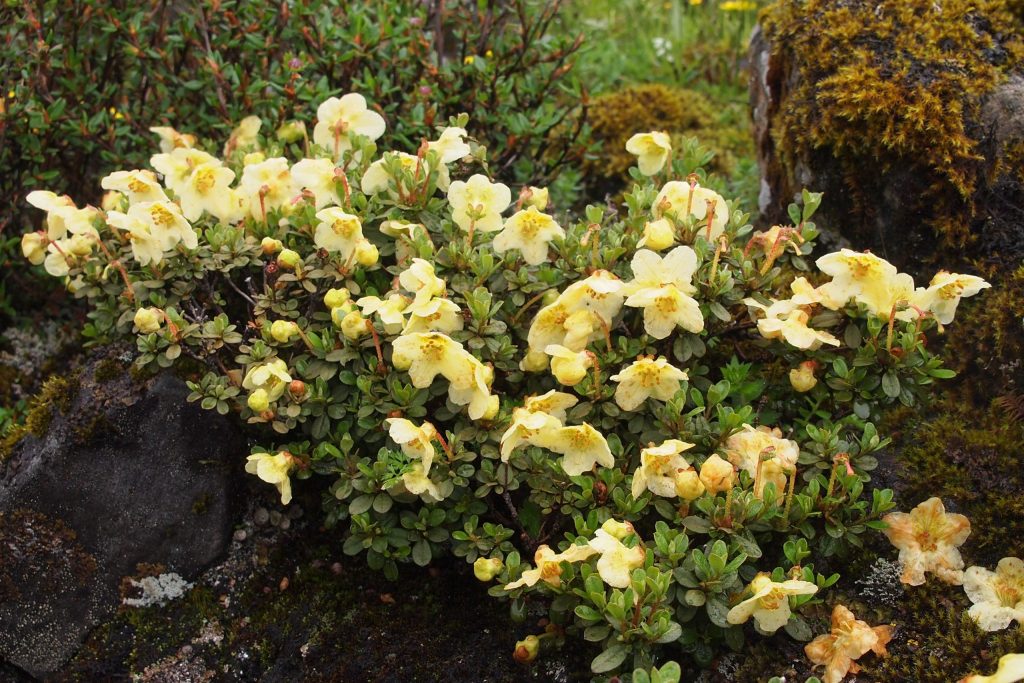
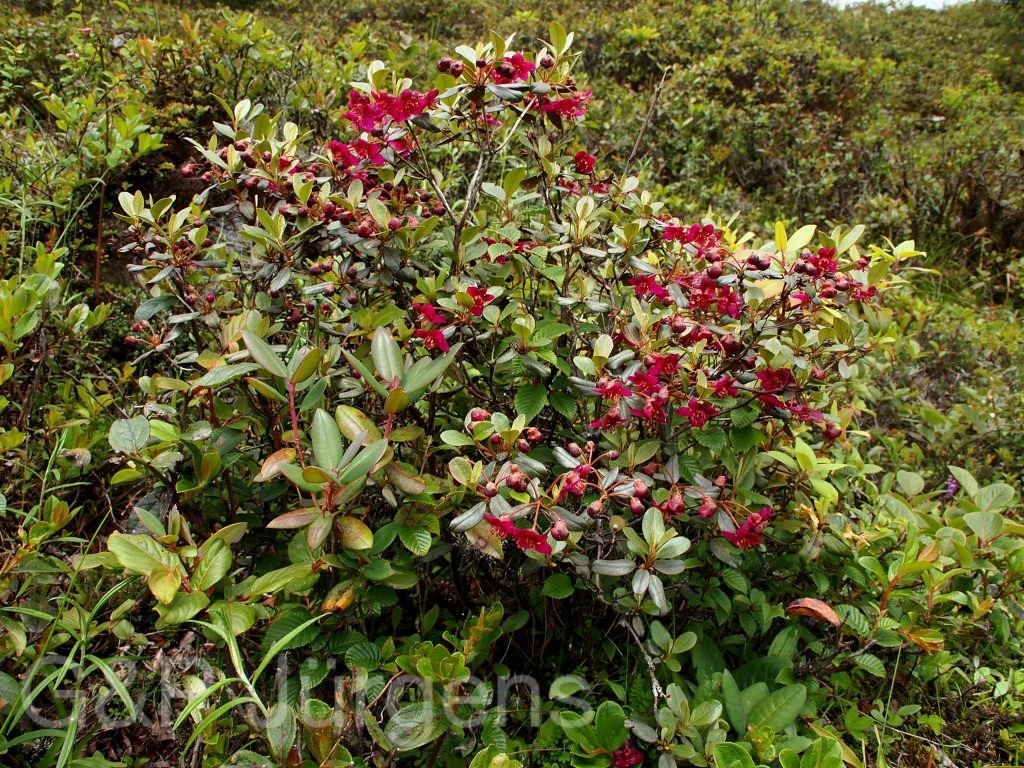
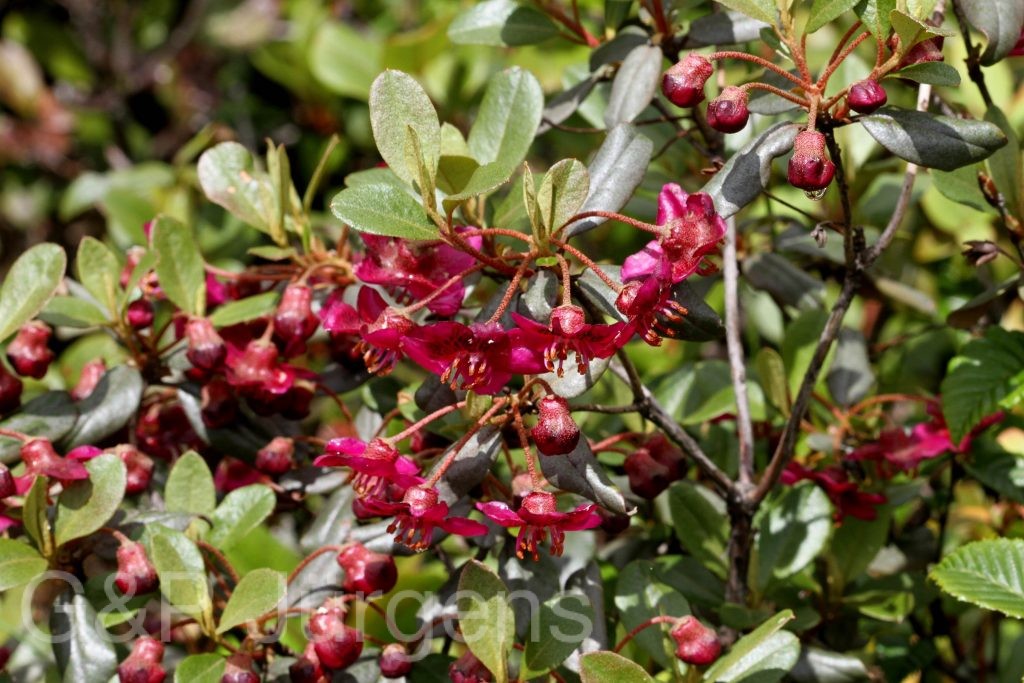
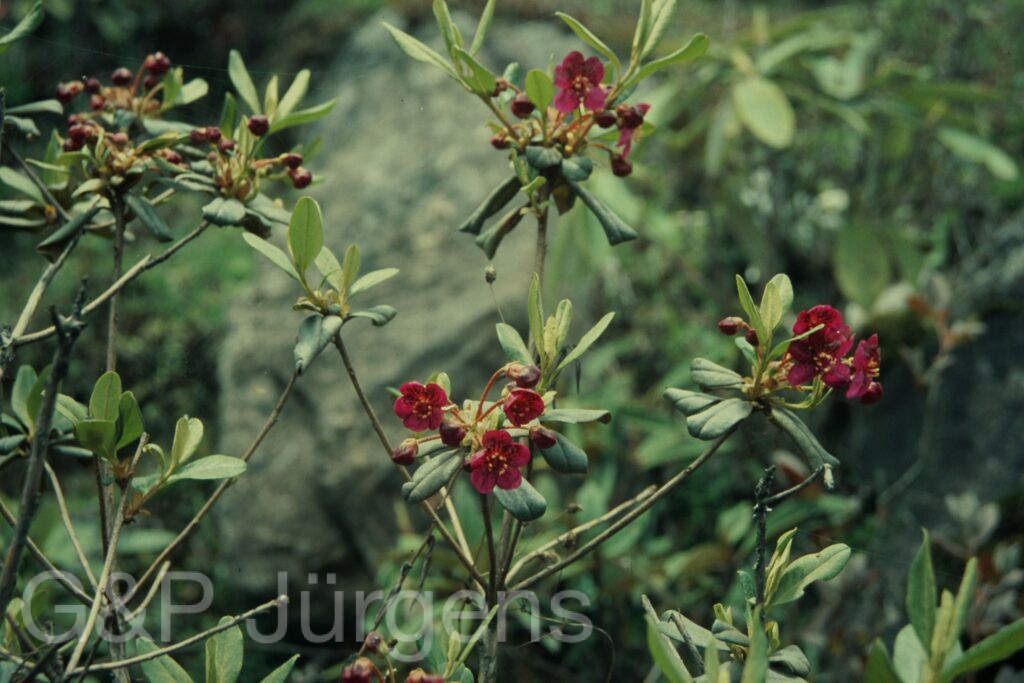
Rhododendron baileyi is a lepidote shrub of the eastern Himalaya, native to Sikkim and the rest of northern India, Bhutan and south-eastern Tibet in China, with the remaining GBIF records (Great Britain, Canada, Japan, Sweden, United States) reflecting its presence in cultivation. Its roughly 121 georeferenced records indicate a narrowly distributed but well-known garden plant. It grows in open subalpine forest, rocky slopes and rhododendron-dominated thickets at roughly 3000-4300 m. The Sikkim collections noted above, from the Lachung valley at 3100-3600 m in May and June, are characteristic of its montane habitat.

It is a small to medium evergreen shrub with scaly young shoots, the leaves elliptic to oblong, leathery and densely covered beneath with overlapping reddish-brown lepidote scales that give the undersurface a rusty, almost continuous coating. The flowers are borne in compact terminal clusters and are widely campanulate to saucer-shaped, deep reddish-purple to magenta, often darker-spotted within, with the corolla and the exserted stamens and style bearing scattered scales. The fruit is a small ovoid, scaly, septicidal capsule splitting to release numerous minute seeds.

Within the genus Rhododendron, R. baileyi belongs to the lepidote subgenus and is placed in subsection Baileya, a small group distinguished by its strongly flattened, overlapping leaf scales and richly coloured flat-faced flowers. Named for the explorer F. M. Bailey, it has been valued in horticulture since its introduction. Pollination is by bumblebees and other long-tongued insects of the high Himalaya. Although not broadly assessed, its limited natural range and dependence on intact subalpine shrubland make it locally sensitive to grazing, fire and forest disturbance.

Author: Balf. f. · Sources: POWO (Kew), GBIF, Flora of China, Flora of Bhutan, The Genus Rhododendron (Royal Botanic Garden Edinburgh) monograph
D.G.Long & S.Bowes-Lyon

BhutanPG2011 510
Bhutan Ludlow-Sherriff-Trail Warrtlang-La, 4500m June
BhutanPG2011 412
Bhutan Ludlow-Sherriff-Trail Warrtlang-La, 4500m June
BhutanPG2011 511
Bhutan Ludlow-Sherriff-Trail Warrtlang-La, 4500m June

Description

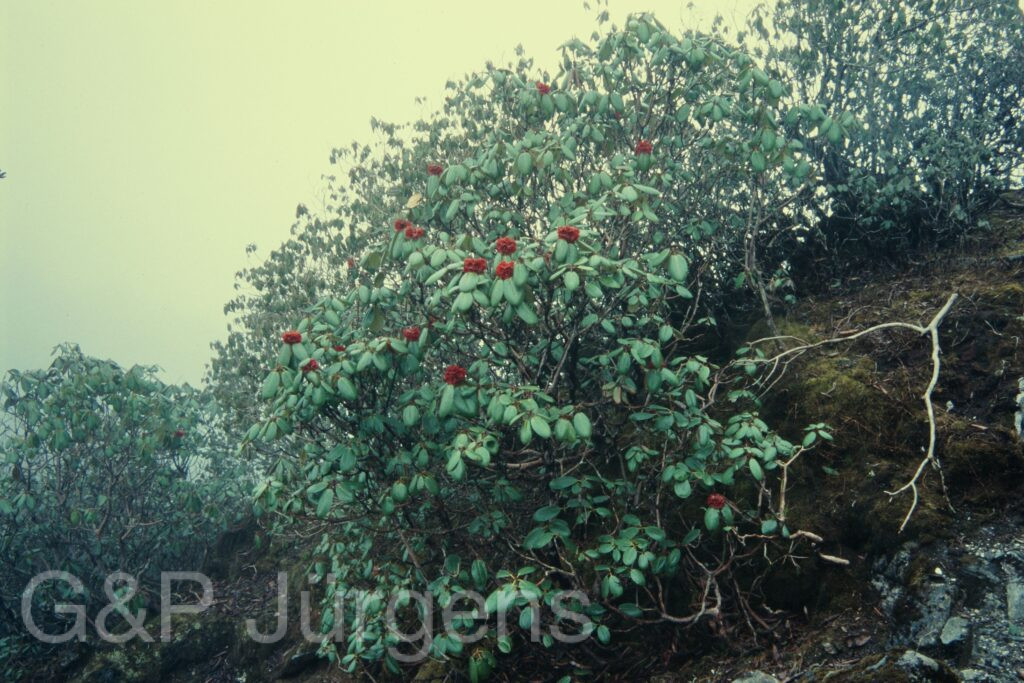
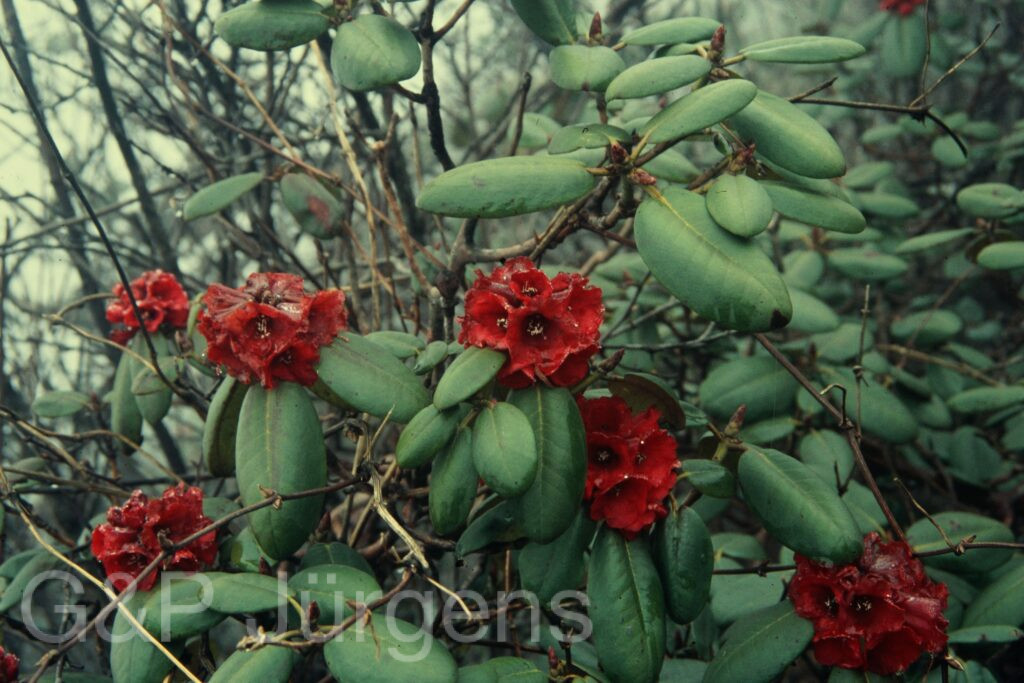
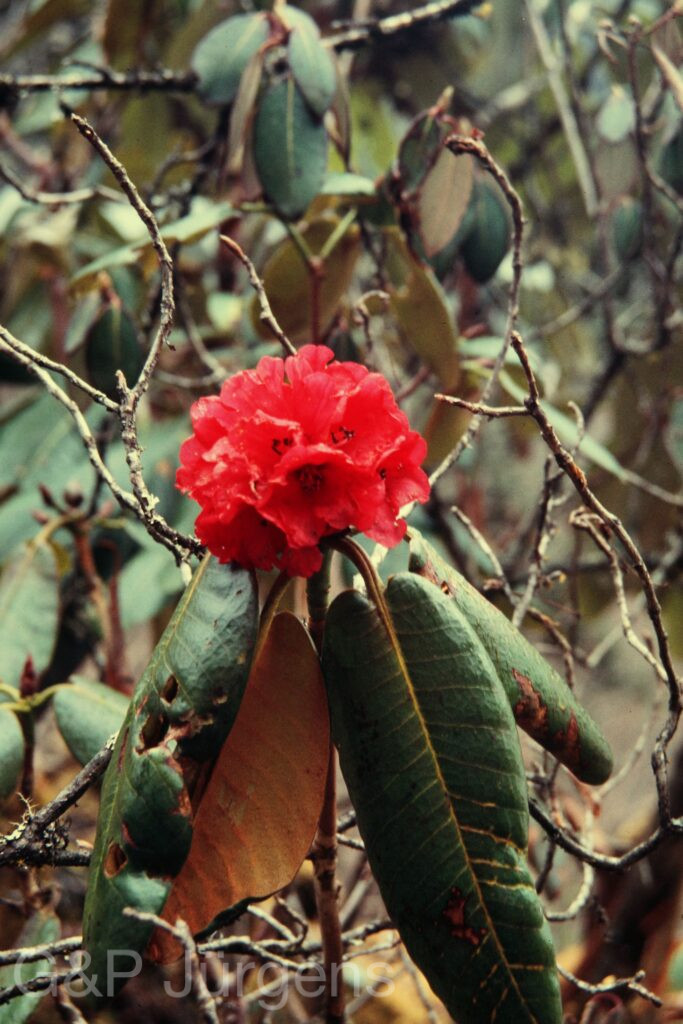
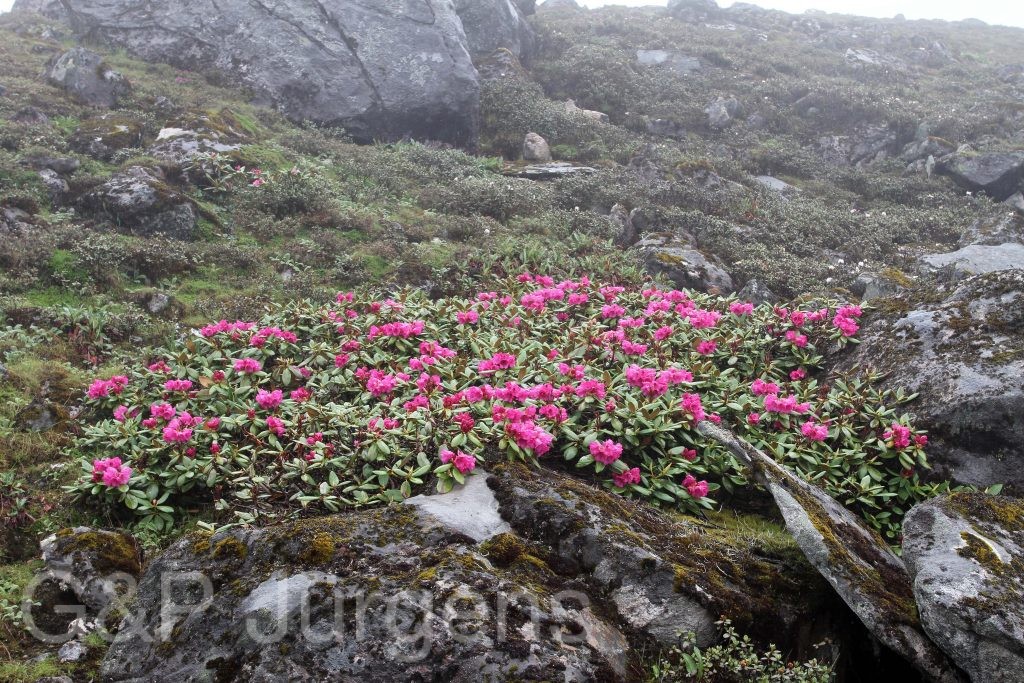
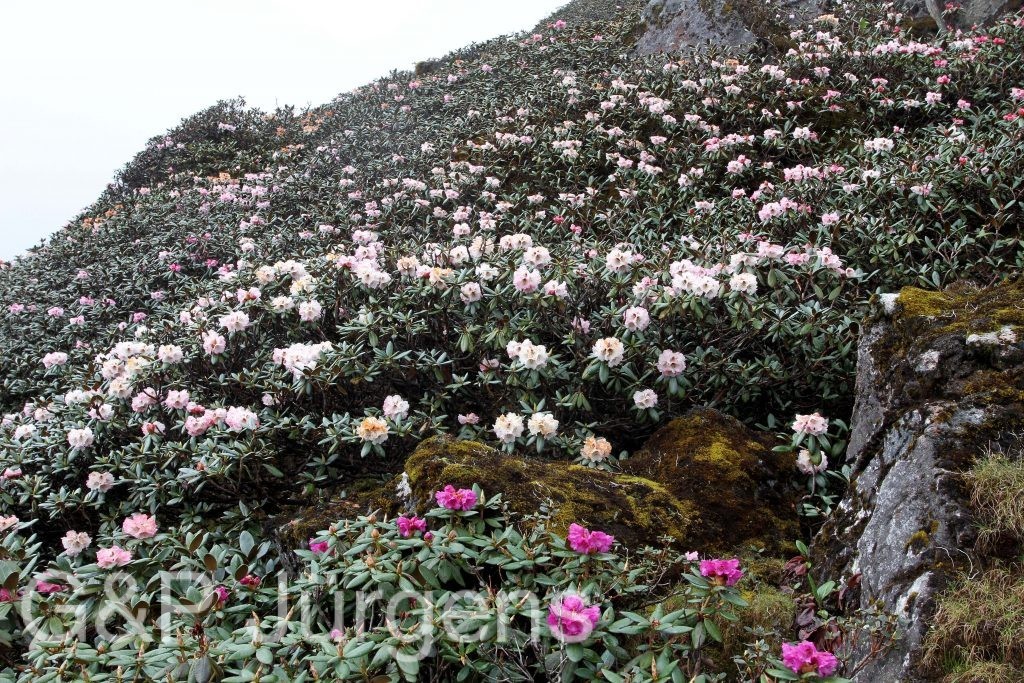
Rhododendron bhutanense is a high-alpine shrub endemic to the eastern Himalaya, centred on Bhutan and adjacent India, with only about 59 GBIF records reflecting its restricted range. It is a component of the dwarf rhododendron heath and open alpine scrub that clothes exposed slopes near and above the treeline, typically between about 3500 and 4500 m. The photographed plant on the historic Ludlow–Sherriff trail at the Warrtlang La pass at 4500 m, flowering in June, exemplifies its occupancy of the highest shrub zone, where it endures intense irradiation, wind and frost on thin, acidic, peaty soils in the early summer flowering season.

The species is a low to medium evergreen shrub with stout branchlets. Its leaves are coriaceous, oblong to elliptic, with the lower surface bearing a dense indumentum (a felted tomentum) characteristic of the section to which it belongs, an adaptation reducing water loss and radiation damage at altitude. The flowers are borne in compact terminal trusses; the corolla is campanulate to funnel-campanulate, pink to pale rose or purplish, often with darker spotting within. Stamens are typically ten, and the ovary is densely hairy, maturing into a woody, septicidal capsule that releases numerous small seeds.

Rhododendron bhutanense was described by D.G.Long and S.Bowes-Lyon and is placed in subgenus Hymenanthes, allied to the indumented R. campanulatum group, its tomentose leaf undersides being a key diagnostic. As a narrow eastern-Himalayan endemic confined to a thin alpine band, it is of particular biogeographic and conservation interest: such high-altitude endemics are especially exposed to upslope habitat loss under climate warming, making monitoring of its limited Bhutanese populations worthwhile.

Author: D.G.Long & S.Bowes-Lyon · Sources: POWO (Kew), GBIF, Flora of Bhutan, Rhododendrons of Bhutan, Cullen & Chamberlain Revision of Rhododendron

D. Don

Sikkim2004 128 P223
Sikkim/India Singalila 2600m April
Nepal 97 229 P476
Nepal Thudam 3800m April
Nepal 97 239 W494
Nepal Thudam 3800m April

Description

Rhododendron campanulatum D. Don is an evergreen Himalayan shrub or small tree distributed through Nepal (NP), India (IN), Bhutan (BT) and southern China (CN), with GBIF logging 1357 occurrences plus numerous cultivated records from Britain, North America and Europe. It forms dense thickets at and above the temperate treeline, in subalpine fir and birch forest and on open alpine slopes. The image documents populations across its range: Singalila on the Sikkim-India ridge at 2600 m in April, Thudam in Nepal at 3800 m in April, and the Rupina-La in Gorkha at 3250 m in May, reflecting the species' role as a dominant of the upper forest belt.

The plant is a much-branched shrub with stout twigs and a characteristically thick, rufous indumentum of dendroid hairs on the lower leaf surface. The leaves are coriaceous, elliptic to oblong, dark green and glabrous above, the undersurface densely felted with cinnamon-brown to fawn tomentum. The flowers are borne in compact terminal trusses; each has a broadly campanulate corolla, pale lilac to rose-purple or whitish, often spotted within, with five lobes and ten stamens. The fruit is a curved, woody, septicidal capsule releasing numerous small winged seeds.

Rhododendron campanulatum belongs to subgenus Hymenanthes, the large-leaved tomentose-leaved alliance, and includes subsp. aeruginosum with strikingly glaucous young foliage. As a treeline dominant it strongly influences alpine ecology, and recent studies have documented its upslope migration and densification in response to warming, with implications for fragile alpine meadows. It is widely cultivated and has contributed to garden hybrids. The species remains common and is not considered threatened.

Author: D. Don · Sources: POWO (Kew), GBIF, Flora of Nepal, Flora of Bhutan, Rhododendron monograph (Davidian; Royal Botanic Garden Edinburgh revision)
Hook. f.

Bh2008 237 P374
Bhutan Tumching-La, 3600m April
Bh09 83 G141
Bhutan Langchlakha, 3700m June
Sikkim2004 403 G687
Sikkim/India Lachung 3300m May
Sikkim 2006 372 ergebnis
India West-Bengal, Tamrong 2850m, May

Description

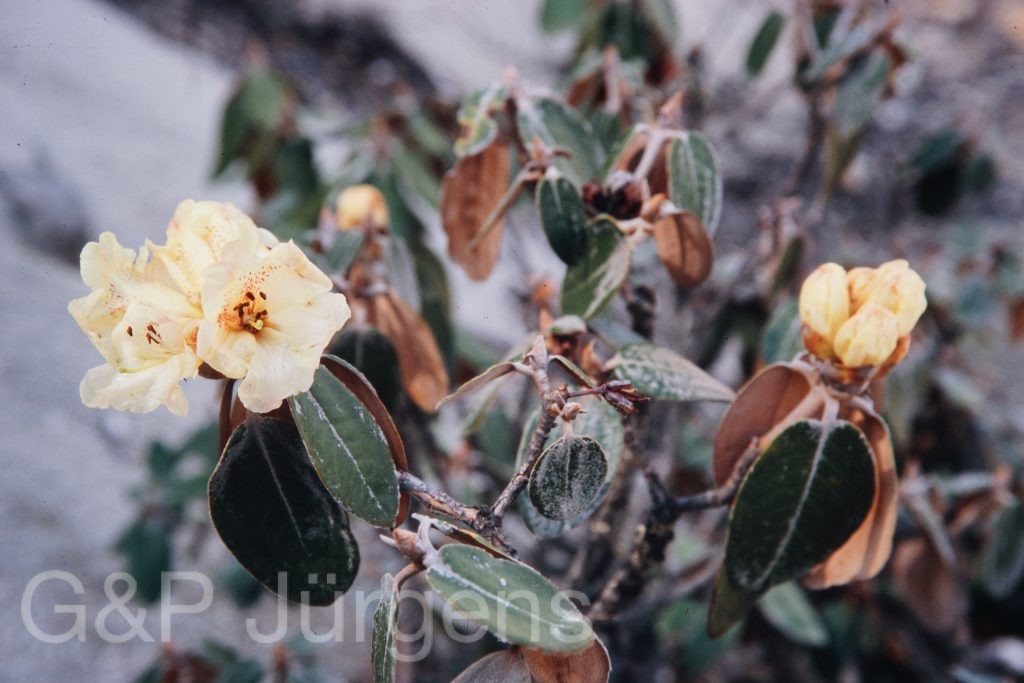
Rhododendron campylocarpum is an East Himalayan species distributed through the higher ranges of Nepal, Sikkim and Darjeeling in India, Bhutan, southern Tibet (China) and northern Myanmar, with abundant horticultural records (GB, US, NZ, etc.) reflecting long cultivation in temperate gardens; GBIF holds some 676 occurrences. It grows in the upper temperate and subalpine zone, typically between about 2850 and 3700 m, as documented at Tumching-La (3600 m) and Langchlakha (3700 m) in Bhutan, at Lachung (3300 m) in Sikkim and at Tamrong (2850 m) in West Bengal, inhabiting conifer and Abies forest margins, rhododendron thickets and moist rocky slopes near the treeline. It flowers in late spring and early summer (April-June).

It is an evergreen, much-branched shrub or small tree reaching 1-4 m, with smooth, peeling bark. The leaves are alternate, clustered toward the branch tips, broadly ovate to elliptic-oblong, 4-10 cm long, rounded to cordate at the base, glabrous and dark green above and conspicuously glaucous beneath. The inflorescence is a lax, terminal truss of 5-12 flowers; the corolla is campanulate, 3-4 cm across, clear sulphur- to canary-yellow, frequently with a crimson basal blotch within. Stamens are 10, included; the ovary and slender style are usually glandular. The fruit is a curved, cylindrical capsule, the epithet ("campylocarpum", bent fruit) referring to this curvature.

The species belongs to subgenus Hymenanthes, subsection Campylocarpa, a small group of yellow-flowered Himalayan rhododendrons including R. wardii and R. callimorphum, and it hybridises freely in the wild and in cultivation. Introduced by J. D. Hooker in the 1850s, it became an important parent of many garden hybrids and is an early-summer nectar source for bumblebees and other high-altitude pollinators. Though locally common and not globally threatened, individual populations are subject to grazing, fuelwood collection and the upward shift of the treeline.

Author: Hook. f. · Sources: POWO (Kew), GBIF, Flora of Bhutan, Flora of China, The Genus Rhododendron (Cullen & Chamberlain monograph)

Hook. f.

Bhutan2014 877
Bhutan Chele-La 2850m, May
Bhutan2014 882
Bhutan Chele-La 2850m, May
Bh2008 221 P349
Bhutan Tumching-La, 3400m April
Bh2008 222 G350
Bhutan Tumching-La, 3400m April
Sikkim2003 191 G262
Sikkim Dzongri 3900m 08.2003

Description

Rhododendron cinnabarinum is an Eastern Himalayan species native to Bhutan, Sikkim and adjacent northeastern India, Nepal and southern Tibet (China), the nearly 768 records also reflecting its popularity in cultivation in Britain, North America and elsewhere. It is a shrub of the cool temperate to subalpine zone, the images documenting plants on the Chele-La in Bhutan at about 2850 m in May, the Tumching-La at about 3400 m in April, and Dzongri in Sikkim near 3900 m. It grows in fir and mixed forest, rhododendron thickets, forest margins and open subalpine scrub on moist, acidic, humus-rich slopes within the monsoon-influenced humid belt of the range.

It is an evergreen shrub reaching one to several metres, with smooth bark and aromatic foliage. The leaves are elliptic to obovate, conspicuously glaucous-blue when young and densely scaly (lepidote) beneath, the scales being diagnostic of the lepidote rhododendrons. The pendulous, tubular-campanulate to narrowly funnel-shaped flowers are borne in small terminal trusses and are noted for their waxy texture and remarkable colour range, from cinnabar-red and orange to plum and yellow; the ten stamens and the style are enclosed within the elongate corolla tube, which matures into a scaly capsule.

Described by J.D. Hooker, the species is placed in subgenus Rhododendron, subsection Cinnabarina, the only members of the lepidote group with markedly tubular, drooping corollas suited to pollination by birds and long-tongued insects. It is variable across its range, with several recognised subspecies and varieties differing in flower colour and foliage, and is an important parent in horticulture. Locally common in suitable habitat and widely cultivated, it is not regarded as globally threatened, though parts of its native forest are under pressure.

Author: Hook. f. · Sources: POWO (Kew), GBIF, Flora of Bhutan, Flora of China, The Genus Rhododendron (Royal Botanic Garden Edinburgh)

Kingdon-Ward

BhutanPG2011 241
Bhutan Tsochenchen, 3800m June

Description

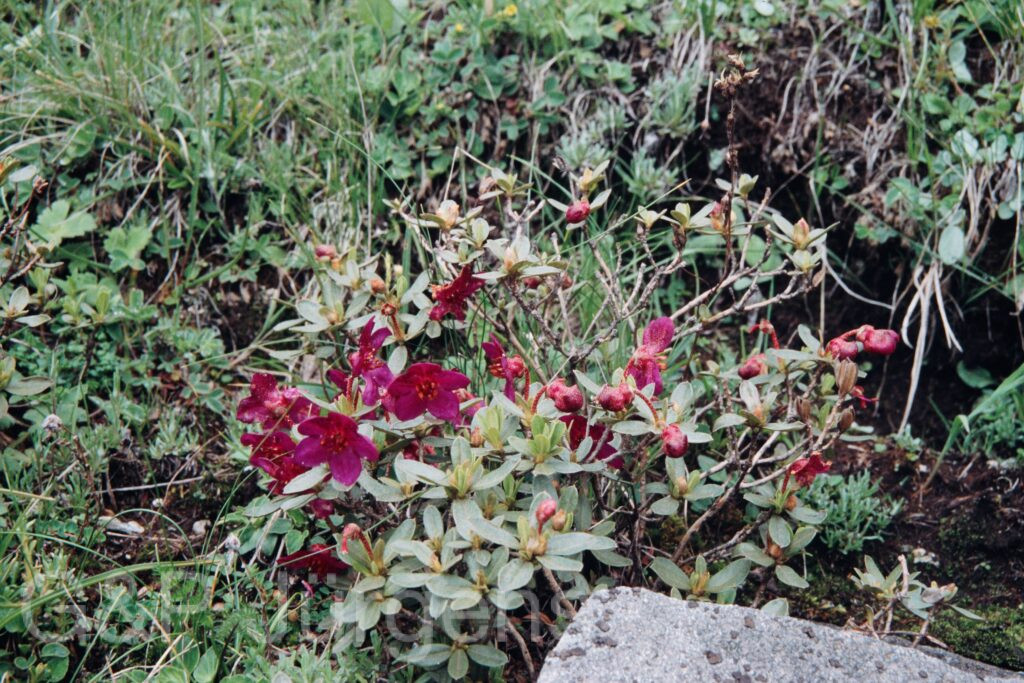
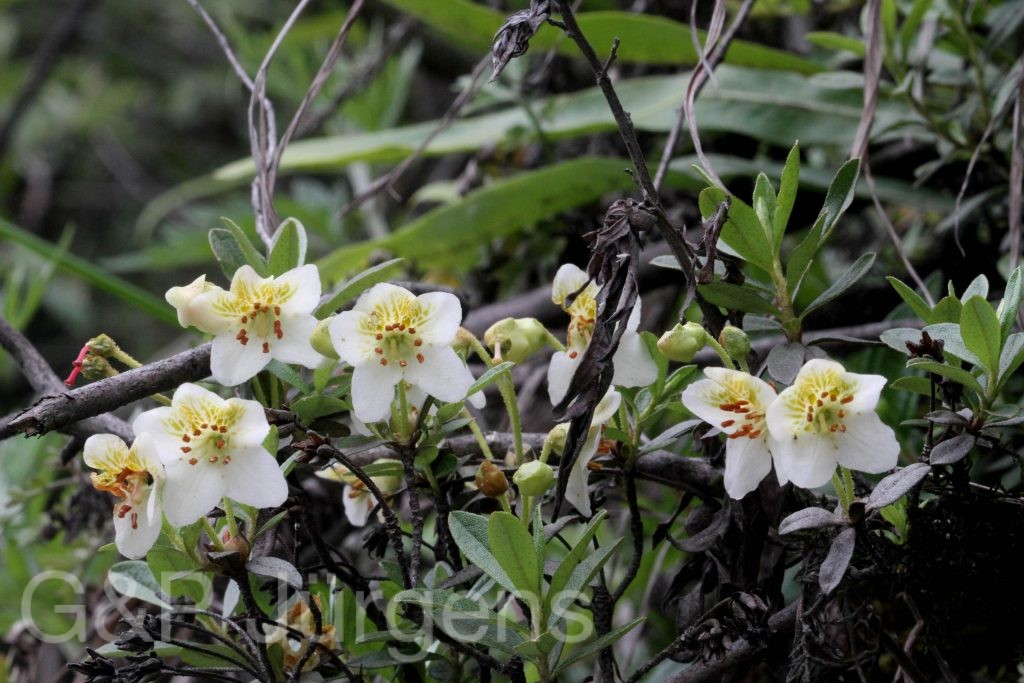
Rhododendron fragariiflorum (correctly orthographed as R. fragariflorum) is a dwarf, cushion-forming shrub endemic to the high eastern Himalaya and adjacent southeastern Tibet. Its distribution, documented by GBIF across China (Xizang), India (Sikkim, Arunachal Pradesh) and Bhutan, is restricted to the alpine zone, where it grows on open, peaty slopes, in moist meadows and among rocks at elevations of roughly 3,800–5,000 m. The photographed population near Tsochenchen in Bhutan at 3,800 m in June illustrates its typical habitat above the treeline, where it forms low mats in the company of alpine sedges, primulas and other prostrate rhododendrons subjected to strong insolation, frost and a brief summer growing season.

The plant is a low, much-branched, semi-prostrate shrublet seldom exceeding 10–20 cm in height, with slender, often decumbent stems clad in persistent leaf scales. The small, elliptic to obovate leaves are coriaceous, scaly (lepidote) beneath, and dark green above, frequently with revolute margins. Distinctively, the flowers are solitary or borne in pairs and are a deep purplish-crimson to magenta, often described as strawberry-coloured, hence the epithet fragariflorum. The corolla is broadly campanulate to rotate, five-lobed and lepidote on the outer surface, with ten exserted stamens; the fruit is a small, scaly, dehiscent capsule.

The species belongs to subgenus Rhododendron, section Pogonanthum-related lepidote groups, and is taxonomically notable for its unusually open, non-tubular corolla among scaly rhododendrons. As a strict high-alpine specialist with a narrow range and modest occurrence record, it is of biogeographic interest as an indicator of intact Sino-Himalayan alpine habitats. Climate-driven upward shifts of the treeline pose the principal long-term threat to such cushion communities.

Author: Kingdon-Ward · Sources: POWO (Kew), GBIF, Flora of Bhutan Vol. 2, Flora of China Vol. 14, Cullen: Revision of Rhododendron subgenus Rhododendron (Notes RBG Edinburgh)

Hook. f.

Sikkim2004 145 P253
Sikkim/India Singalila 4000m April
Sikkim2004 147 G255
Sikkim/India Singalila 4000m April
Nepal 97 213 P434
Nepal Thudam 3850m April

Description

Rhododendron fulgens is an East Himalayan shrub, with GBIF's c. 170 occurrences centred on India, Nepal, Bhutan and adjacent Tibetan China (records from GB, DE, US, CA, KR being cultivated material). It is a plant of the upper subalpine and lower alpine zones, typically 3300–4500 m, forming dense thickets at the treeline and in the understorey of Abies and Betula forest on moist, peaty, north-facing slopes. The populations photographed on the Singalila ridge (Sikkim/India) at 4000 m and at Thudam in eastern Nepal at 3850 m, both flowering in April, exemplify its preference for cool, snow-influenced ridges where it blooms before the monsoon.

It forms a stout, gnarled evergreen shrub to small tree 1–4 m tall, with smooth, peeling cinnamon to reddish-brown bark. The leaves are coriaceous, broadly elliptic to obovate, glossy dark green above and clothed beneath with a thick, persistent rusty to fulvous indumentum from which the epithet derives. The inflorescence is a compact, rounded truss of 10–20 campanulate flowers; the corolla is fleshy, deep blood-red to scarlet-crimson, about 2.5–3 cm long, with darker nectar pouches at the base. Stamens are 10, the ovary glandular, and the fruit a curved, woody, dehiscent capsule.

Described by J. D. Hooker from Sikkim, R. fulgens belongs to subsection Fulgensia within subgenus Hymenanthes and is allied to R. sherriffii and R. succothii. Though locally common across its core range and not globally threatened, its restricted treeline habitat is sensitive to grazing, fuelwood collection and shifting snowlines, and it serves as an important early-season nectar source for high-altitude pollinators.

Author: Hook. f. · Sources: POWO (Kew), GBIF, Flora of Bhutan, Flora of China, The Genus Rhododendron (Royal Horticultural Society monograph)

Hook. f.

Bhutan2014 502
Bhutan Yatong-La 3250m, May
Bhutan2014 508
Bhutan Yatong-La 3250m, May
Bh2008 129 G216
Bhutan Pele-La, 3000m April
Bh2008 594 G889
Bhutan Chele-La 3900m April
Nepal 1994 209 ergebnis
Ost-Nepal Mewa-Khola 2500m April 

Description

Rhododendron hodgsonii is a large evergreen shrub or small tree of the temperate and subalpine zones of the eastern Himalaya, native to India (Sikkim, Arunachal), Nepal, Bhutan and adjacent China, with over 440 georeferenced records (many of the further-flung being cultivated specimens in botanic gardens). It forms a conspicuous component of the upper broad-leaved and conifer-Rhododendron forests, typically between about 2500 and 3700 m. The photographed plants span this range in Bhutan, from Pele-La and Chele-La to Yatong-La at 3000-3900 m, and in eastern Nepal at Mewa-Khola at 2500 m, flowering from April into May as the snow recedes from the high passes.

The species is distinguished by its smooth, fawn to plum-coloured peeling bark and very large, leathery, obovate-elliptic leaves up to 30 cm long, dark glossy green above and clothed beneath with a thin, silvery to fawn, plastered indumentum. The flowers are borne in dense, rounded terminal trusses of fifteen to twenty-five blooms; the corolla is fleshy, campanulate and eight- to ten-lobed, ranging from magenta-rose to pale pink with darker nectar pouches at the base. The stamens are numerous and the stout style ends in a broad capitate stigma. The fruit is a stout, curved, woody capsule.

Rhododendron hodgsonii belongs to subgenus Hymenanthes, subsection Falconera, allied to R. falconeri but separable by its thinner leaf indumentum and rich magenta corolla. Named for Brian Houghton Hodgson, it is a keystone of the Himalayan Rhododendron forests, its leaves traditionally used for wrapping and its thickets providing shelter for montane wildlife. Locally abundant and not threatened, it is widely grown in temperate gardens.

Author: Hook. f. · Sources: POWO (Kew), GBIF, Flora of Bhutan, The Genus Rhododendron (Royal Botanic Garden Edinburgh), Rhododendrons of Sikkim-Himalaya (Hooker)

Hook. f.

Bhutan2014 374
Bhutan Tumcheng-La 3900m, May
Bhutan2014 375
Bhutan Tumcheng-La 3900m, May
Bh2008 252 P398
Bhutan Tumching-La, 3400m April
Bh2008 270 P424 scaled
Bhutan Tumching-La, 3700m April
Bh2008 271 P425 1
Bhutan Tumching-La, 3700m April

Description

Rhododendron lanatum is an East Himalayan species restricted to the eastern Himalaya, ranging from Sikkim and adjacent northern India through Bhutan to south-eastern Xizang and Yunnan in China, with peripheral records in Nepal; its roughly 180 georeferenced occurrences (IN, BT, CN, NP) reflect a comparatively narrow distribution, supplemented by garden records in Britain and Sweden. It is a component of the subalpine Rhododendron-Abies forest and shrubberies, growing on humus-rich, acidic slopes and rocky moraine between about 3000 and 4300 m. The plants documented on the Bhutanese passes of Tumching-La and Tumcheng-La between 3400 and 3900 m, flowering from April into May, occupy exactly this cool, cloud-soaked subalpine zone.

It is an evergreen shrub or small tree to 3-4 m, conspicuous for the dense rusty to fawn woolly (lanate) indumentum that clothes the young shoots, leaf undersides and bud scales. The leaves are coriaceous, oblong-elliptic, glabrous and dark green above but covered beneath with a thick, two-layered tomentum of branched hairs. The bell-shaped (campanulate) flowers, pale to sulphur-yellow and often flecked with crimson at the base, are 3-4 cm long and grouped in dense terminal trusses of up to a dozen; the corolla bears five lobes, ten stamens and a glabrous ovary. The fruit is a curved, woody, septicidal capsule releasing numerous minute winged seeds.

Rhododendron lanatum belongs to subsection Lanata of subgenus Hymenanthes, a small group defined by their woolly indumentum and yellow campanulate flowers, allied to R. wightii. Its narrow eastern Himalayan range and dependence on intact subalpine forest make it locally vulnerable to grazing, fire and woodland degradation, though it remains frequent within Bhutan's protected highlands.

Author: Hook. f. · Sources: POWO (Kew), GBIF, Flora of Bhutan, Flora of China, Cox's The Larger Rhododendron Species, The Genus Rhododendron (Royal Botanic Garden Edinburgh)

Hook.f.

Nepal 95 386 P685 ergebnis
Nepal Bahanjyang 3800m October
Nepal 95 424 P738 ergebnis
Nepal Bahanjyang 3800m October
BhutanPG2011 629 01
Bhutan Ludlow-Sherriff-Trail Ken-La, 4300m July
BhutanPG2011 620 scaled
Bhutan Ludlow-Sherriff-Trail Ken-La, 4300m July
Nepal 99 548 ergebnis
West-Nepal Churta-Khola, 3800m June
Sikkim2011 183
Sikkim Lachung 2650m, June