Tag:

Alpine (>3500 m)

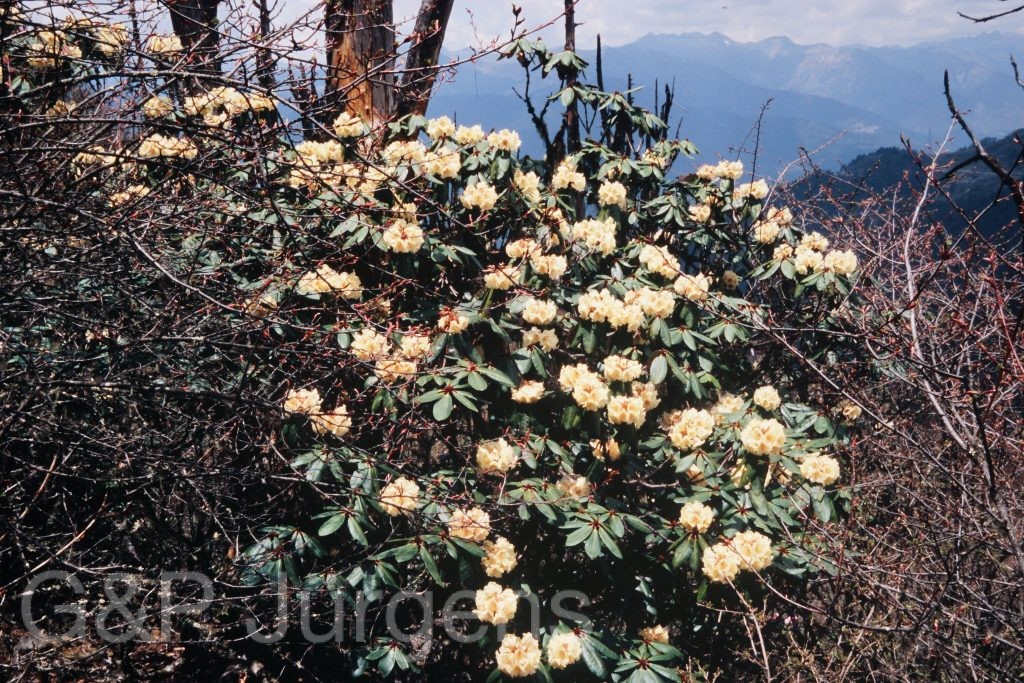
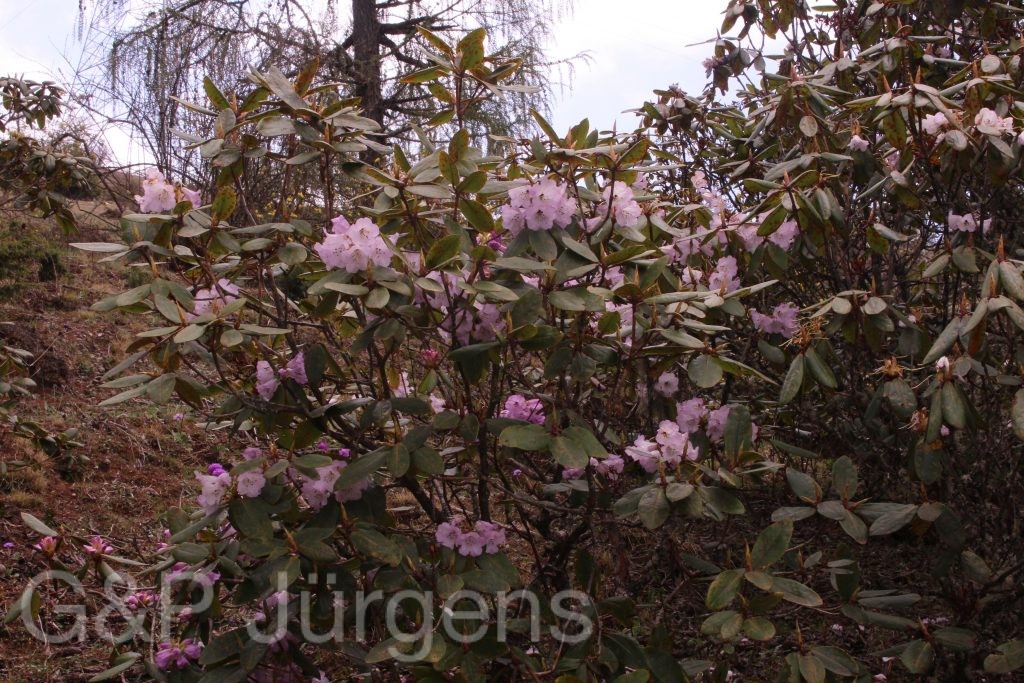
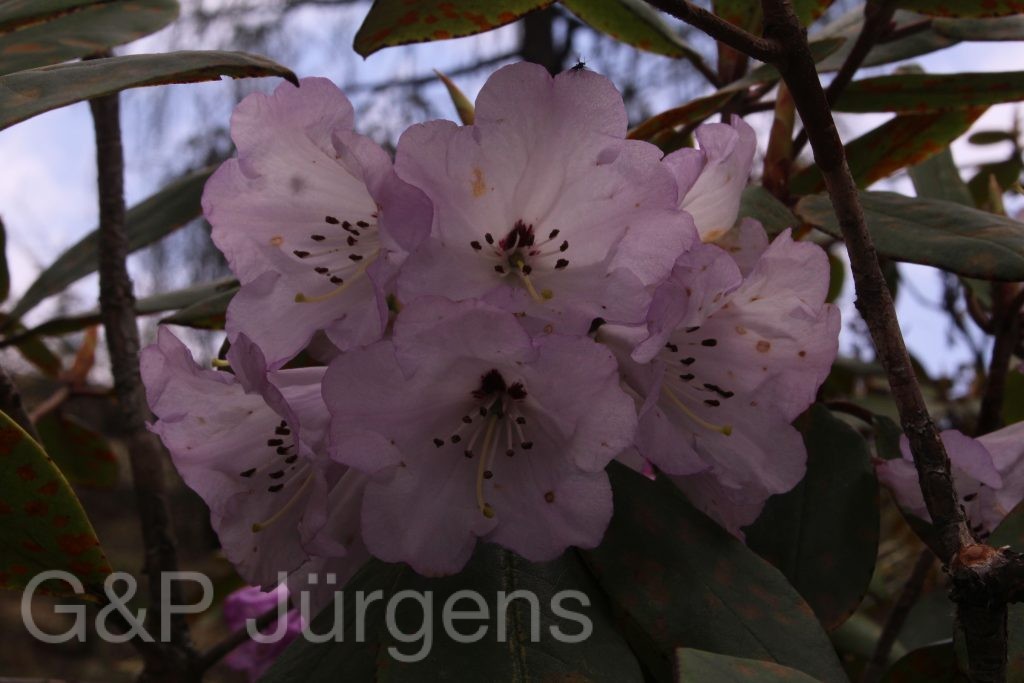
Cowan

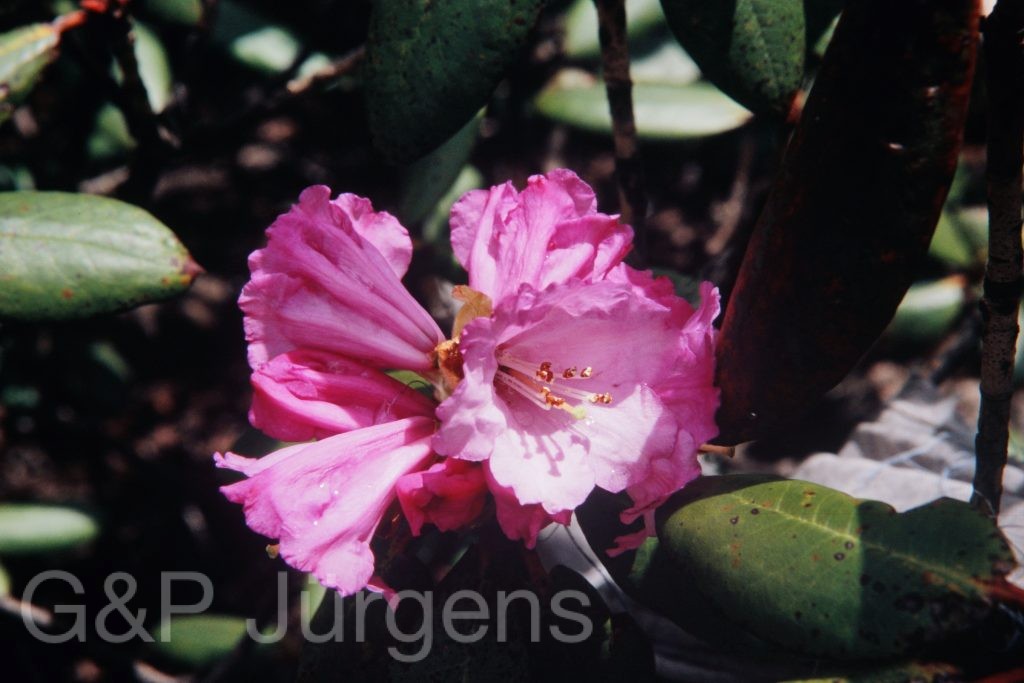
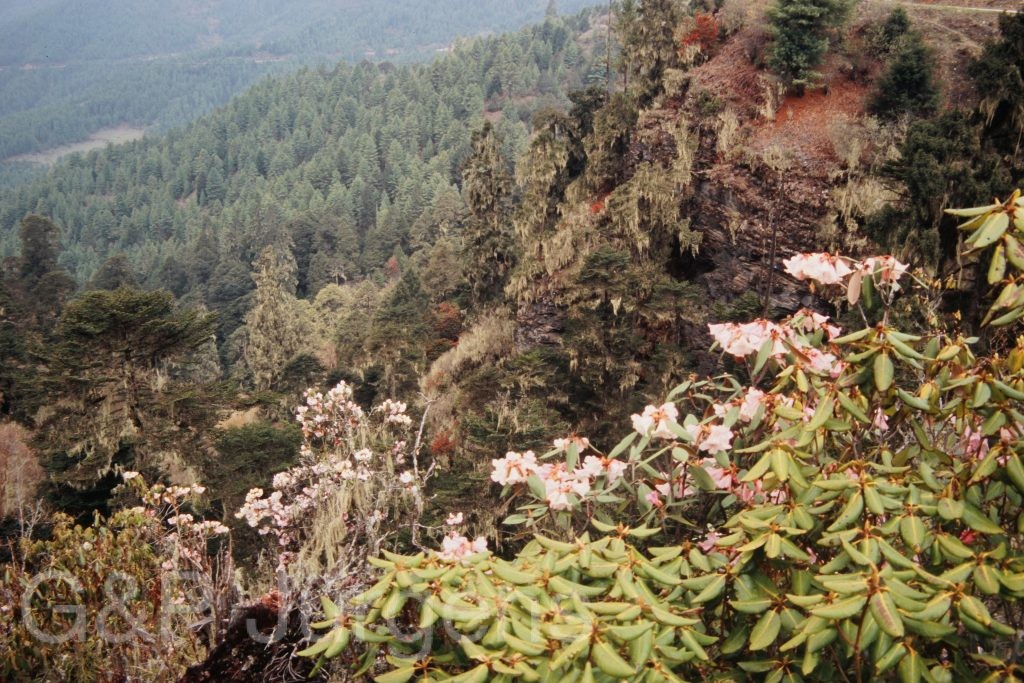
Bh2008 223 G352
Bhutan Tumching-La, 3800m April
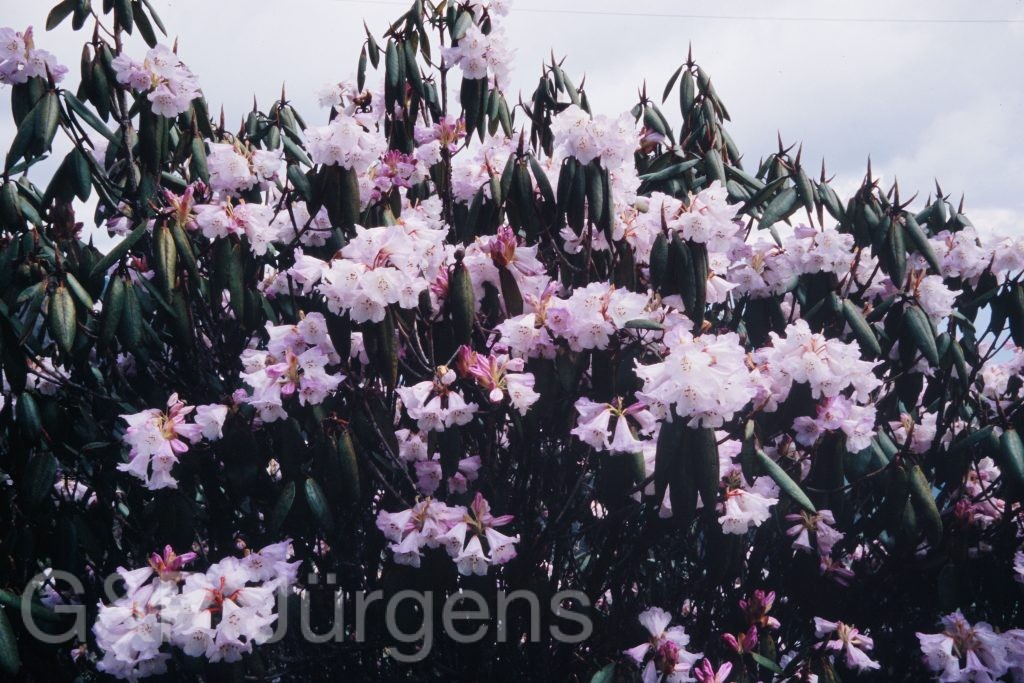
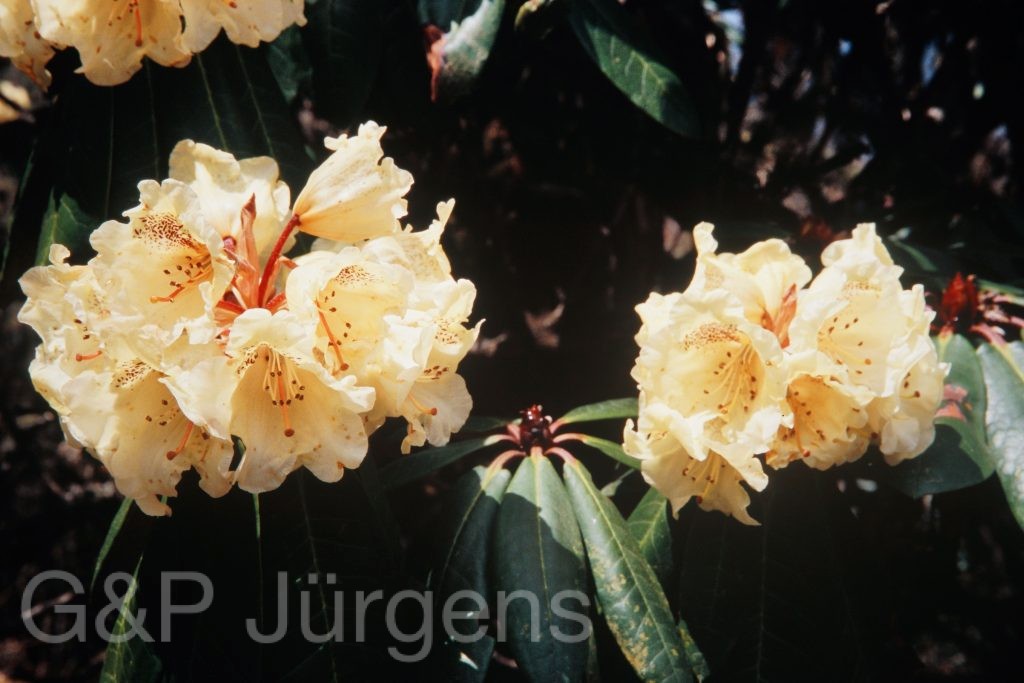
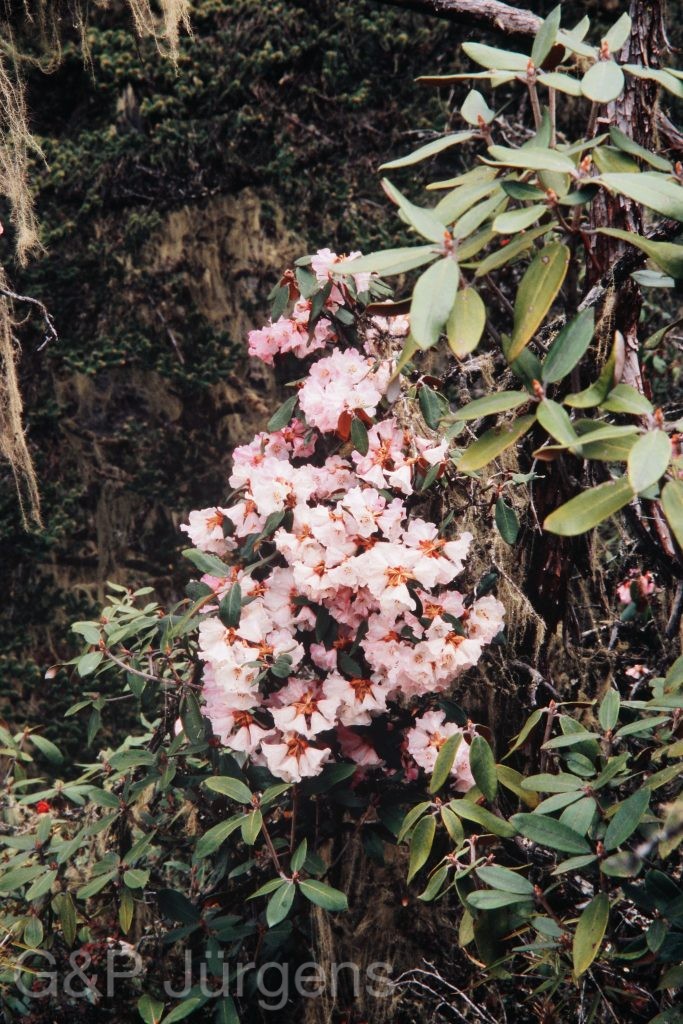
Bh2008 224 P355
Bhutan Tumching-La, 3800m April
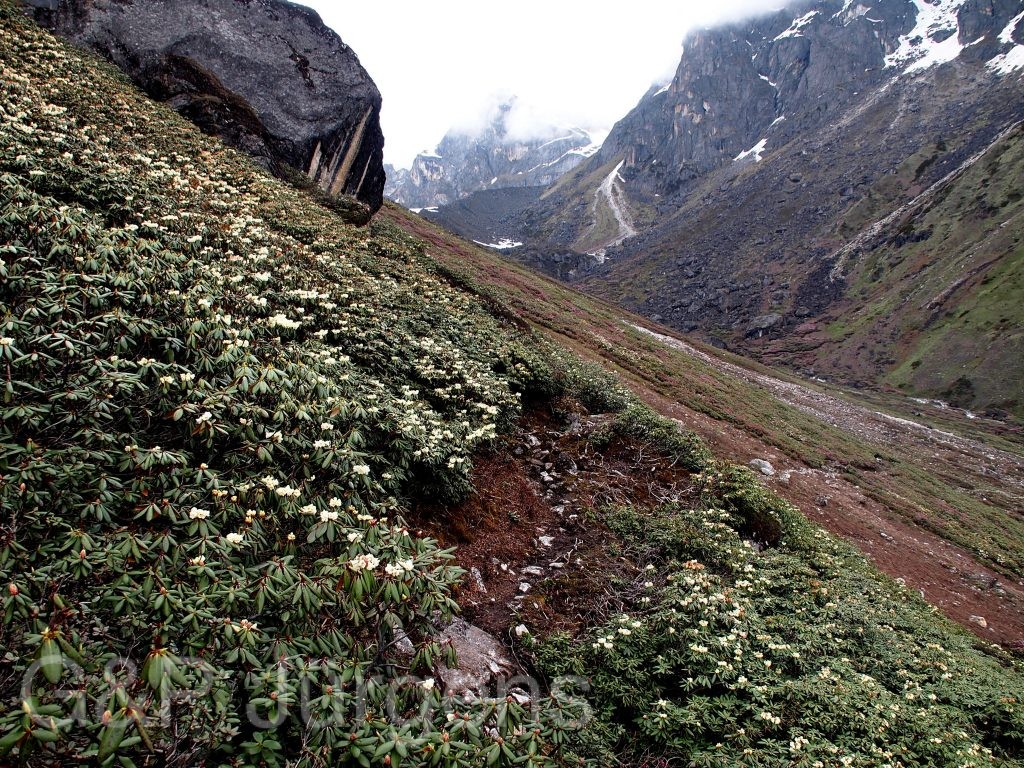
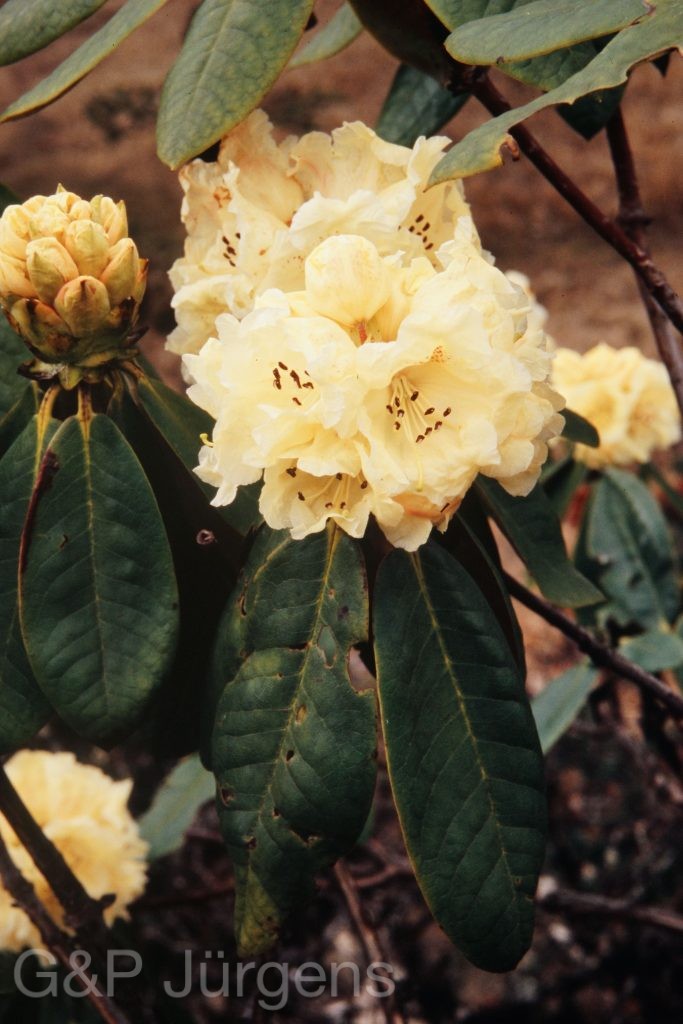
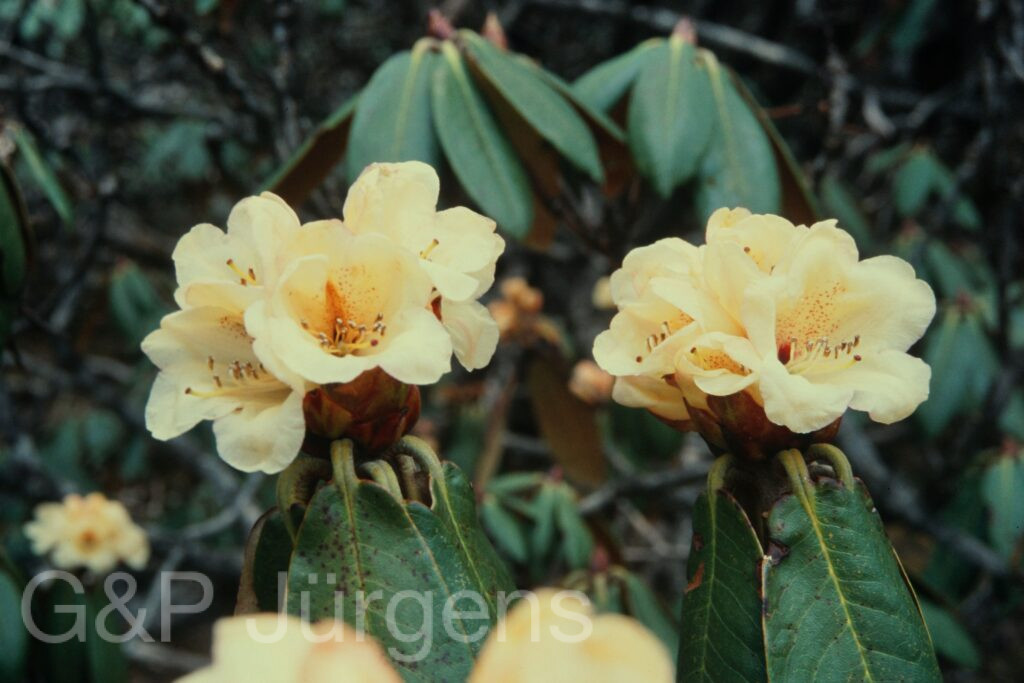
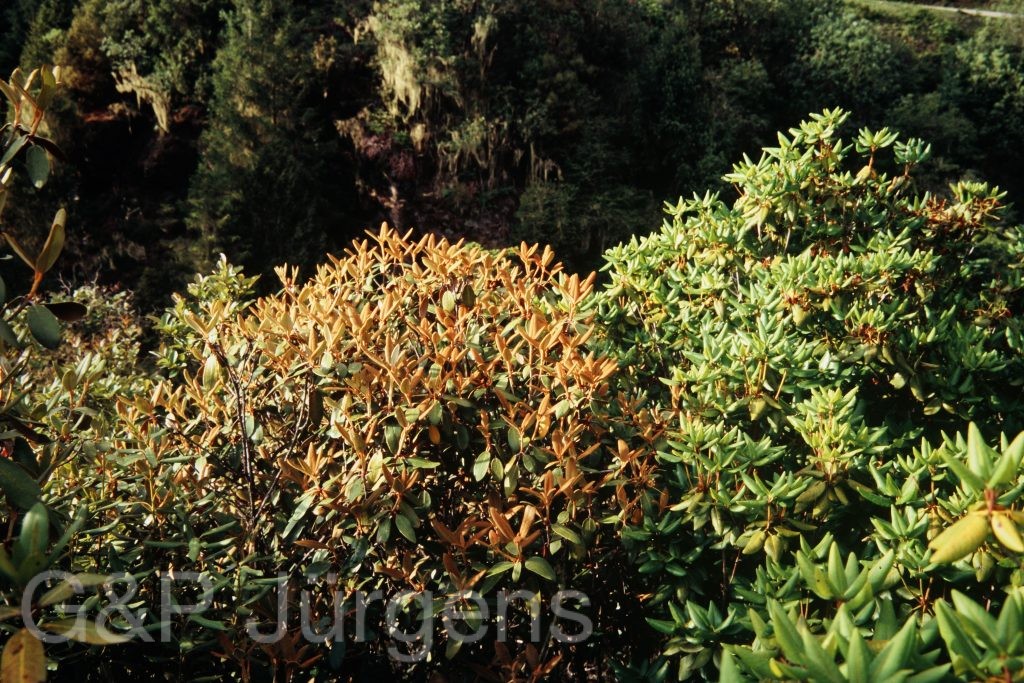
Bh09 339 G553
Bhutan Jakar 3700m April

Description

Rhododendron tsariense is a shrub of the eastern Himalaya, restricted to China (south-eastern Tibet), north-eastern India and Bhutan, with a small number of records (66 occurrences in GBIF) reflecting its limited range. It inhabits high subalpine and alpine zones, growing in open coniferous and Rhododendron scrub, on rocky slopes, ridges and the margins of fir forest, characteristically between about 3000 and 4300 m. The photographed plants come from Bhutan, at Tumching-La (3800 m) and near Jakar (3700 m), flowering in April as the high passes emerge from winter, an elevation typical of the species' montane habitat.

It is a compact, much-branched evergreen shrub, the young shoots and undersides of the leaves clothed in a dense, felted, fawn to rusty-brown indumentum that is one of its most diagnostic features. The leaves are small, leathery, elliptic to obovate, dark green and somewhat rugose above. The flowers are borne in small terminal trusses; the corolla is campanulate (bell-shaped), creamy white to pale pink, often flushed rose and spotted within. The fruit is a woody dehiscent capsule, the persistent style and calyx remaining at the apex.

The species belongs to subsection Lanata (subgenus Hymenanthes), a group of indumented eastern Himalayan rhododendrons characterised by their conspicuously hairy leaf undersurfaces. Named for the Tsari region, it is a narrow-range endemic of conservation interest, its alpine populations potentially sensitive to climate shifts and to grazing and burning pressure in the high pastures. Like other rhododendrons it is bee- and bird-pollinated and forms ericoid mycorrhizal associations adapted to acidic, peaty mountain soils.

Author: Cowan · Sources: POWO (Kew), GBIF, Flora of Bhutan, The Genus Rhododendron (Cowan & Davidian), Edinburgh Rhododendron revision
Hook. f.

Bhutan2014 988
Bhutan Chele-La 3900m, May
Bhutan2014 989
Bhutan Chele-La 3900m, May

Bh2008 575 P864 1
Bhutan Shele-La 3800m, May
Bh2008 573 P861 1
Bhutan Shele-La 3800m, May

Description

An evergreen rhododendron of the eastern Himalaya, native to China, Bhutan, Nepal and India, with about 353 GBIF occurrences (extra-range entries reflect cultivation in botanic gardens). It is a shrub to small tree of the upper subalpine and lower alpine zone, forming part of rhododendron-fir and dwarf rhododendron scrub, on cool, moist, humus-rich slopes generally between about 3300 and 4300 m. The depicted plants were photographed in May on the Bhutanese passes of Chele-La at around 3900 m and Shele-La at about 3800 m, exposed high-elevation habitats where it flowers as the snow recedes.

The species forms a rounded shrub with smooth, peeling bark and stout branchlets. The leaves are coriaceous, elliptic to oblong-elliptic, dark green and glabrous above, and beneath bear a distinctive thin, patchy, fawn to brownish indumentum of dendroid hairs that often wears away to leave scattered remnants. The flowers are borne in compact terminal trusses; each has a campanulate corolla of pale lilac to rose-pink, often with crimson basal blotches and spotting, the limb shallowly seven- to eight-lobed, with numerous stamens and a glabrous ovary topped by a slender style. The fruit is a curved, woody, septicidal capsule releasing many small winged seeds.

Though GBIF flags the name as a synonym, R. wallichii is widely accepted at species rank and placed in subsection Campanulata, allied to R. campanulatum, from which it is separated by its thinner, more fugacious leaf indumentum. Ecologically it is a major component of high Himalayan rhododendron heath, providing spring nectar and structural cover. Locally abundant within its range, it faces no immediate threat but is sensitive to grazing pressure, fire and the warming of its narrow alpine belt.

Author: Hook. f. · Sources: POWO (Kew), GBIF, Flora of Bhutan, Flora of China, Royal Botanic Garden Edinburgh revision of Rhododendron

Hook. f.

Sikkim2011 290
Sikkim Lada-La 3950m, June
Bh2008 257 G404
Bhutan Tumching-La, 3750m April
Bh2008 591 P884
Bhutan Tumching-La, 3750m April
Bh2008 592 P885
Bhutan Chele-La, 3850m April
Sikkim2004 224 P383
Sikkim/India Singalila 4000m May

Description

Rhododendron wightii is an Eastern Himalayan shrub or small tree ranging from eastern Nepal through Sikkim and northern West Bengal into Bhutan and adjoining southern Tibet (China), with GBIF recording 251 occurrences over IN, NP, CN and BT alongside cultivated records from Britain and elsewhere. It is a constituent of the upper temperate to subalpine zone, growing in rhododendron thickets, at the forest limit and among open hillsides between about 3300 and 4300 m. The photographed populations span Sikkim (Lada-La 3950 m, June; Singalila 4000 m, May) and Bhutan (Tumching-La 3750 m and Chele-La 3850 m, April), documenting its spring to early-summer flowering.

It is an evergreen shrub to small tree with stout branches. The leaves are leathery, elliptic to obovate, dark green and glabrous above, and conspicuously coated beneath with a dense, suede-like, fawn to rust-coloured indumentum of agglutinate hairs that is diagnostic. The flowers are grouped in lax, one-sided terminal trusses; each campanulate corolla is pale yellow to creamy-yellow, often marked with a crimson basal blotch, and has five lobes. The androecium of ten stamens surrounds a superior ovary topped by a long style, and the fruit is a curved, woody, septicidal capsule releasing numerous small seeds.

Within the genus, R. wightii belongs to subgenus Hymenanthes (the elepidote rhododendrons), allied to the Taliensia group and characterised by its yellow flowers and thick leaf indumentum. Named for the botanist Robert Wight, it is valued in horticulture for hardiness and foliage. Its dwarf-rhododendron habitat is locally extensive, but high-altitude shrublands face pressure from grazing, burning and a warming climate.

Author: Hook. f. · Sources: POWO (Kew), GBIF, Flora of Bhutan, The Genus Rhododendron (Cullen & Chamberlain, Edinburgh), Hooker's Rhododendrons of the Sikkim-Himalaya

Hook. f. & Thomson

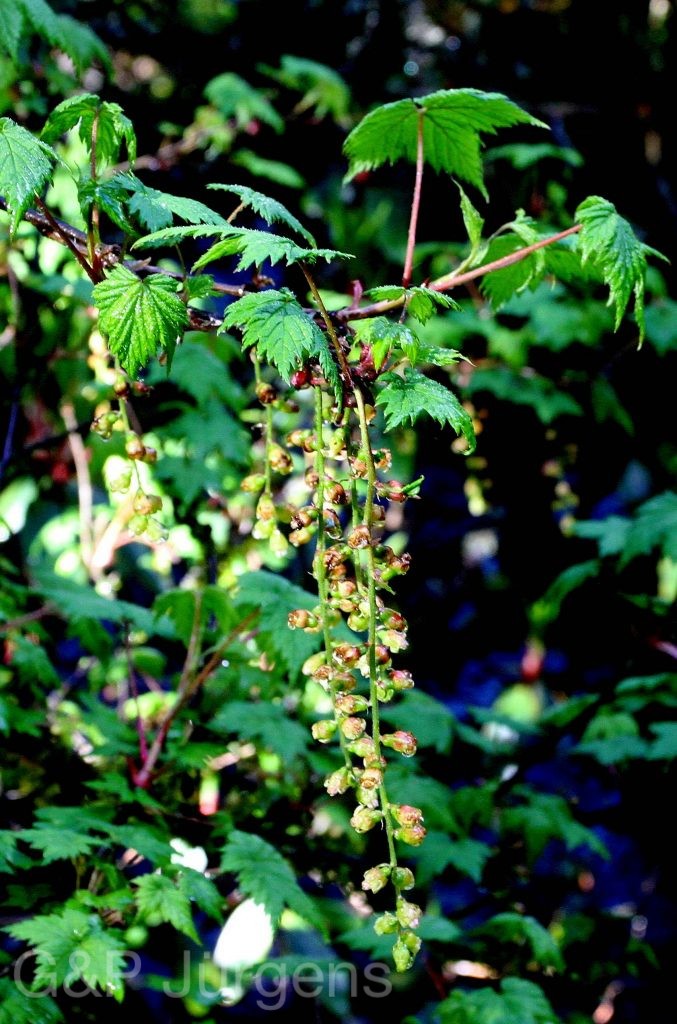
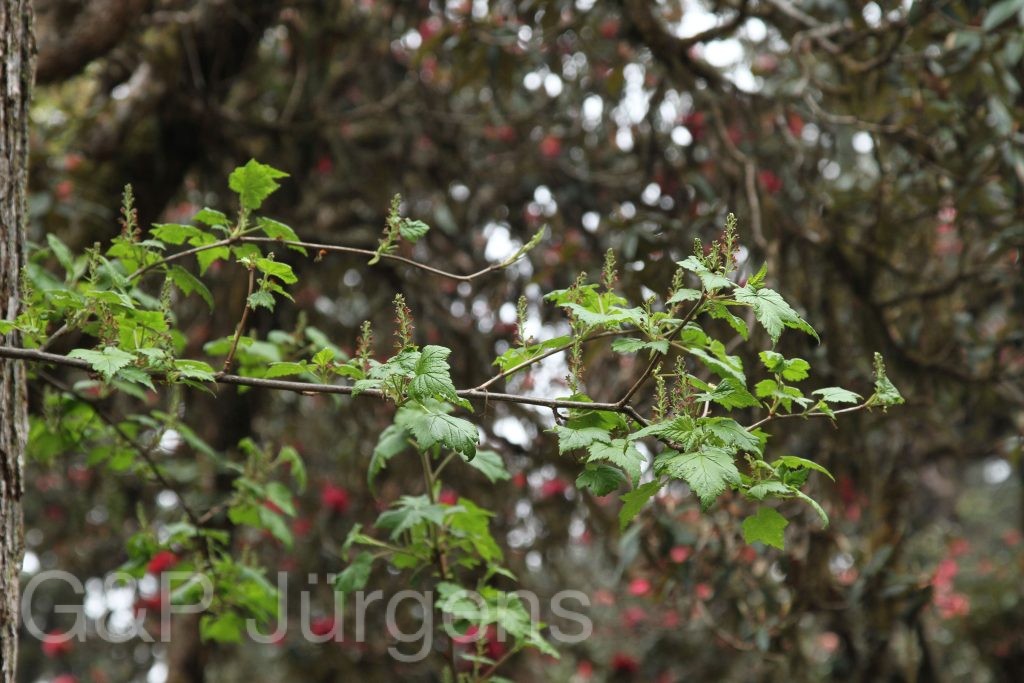
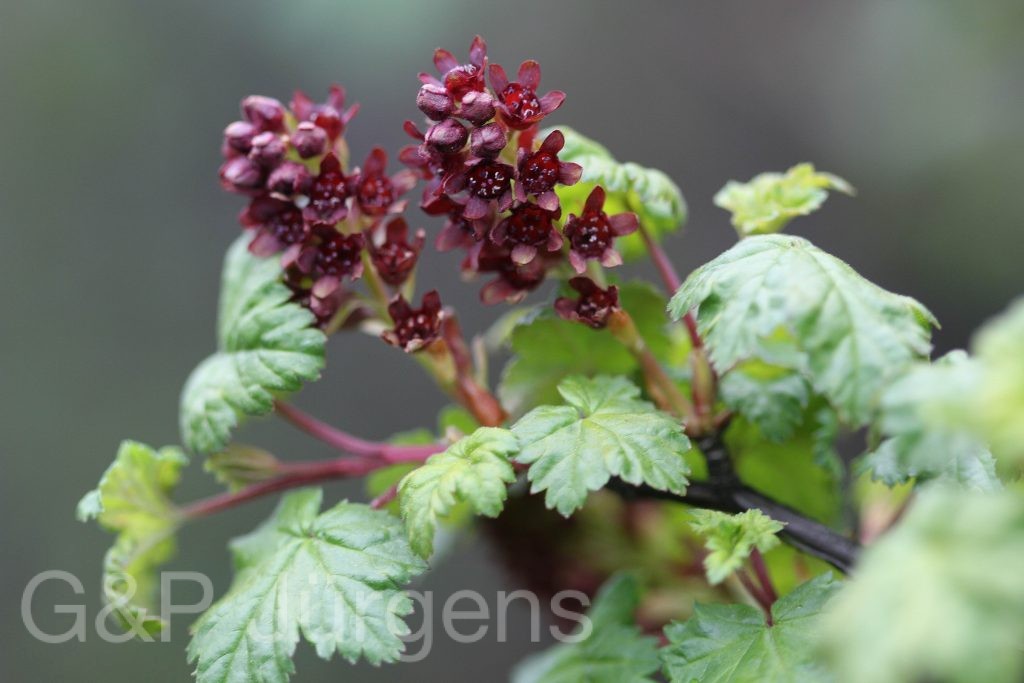
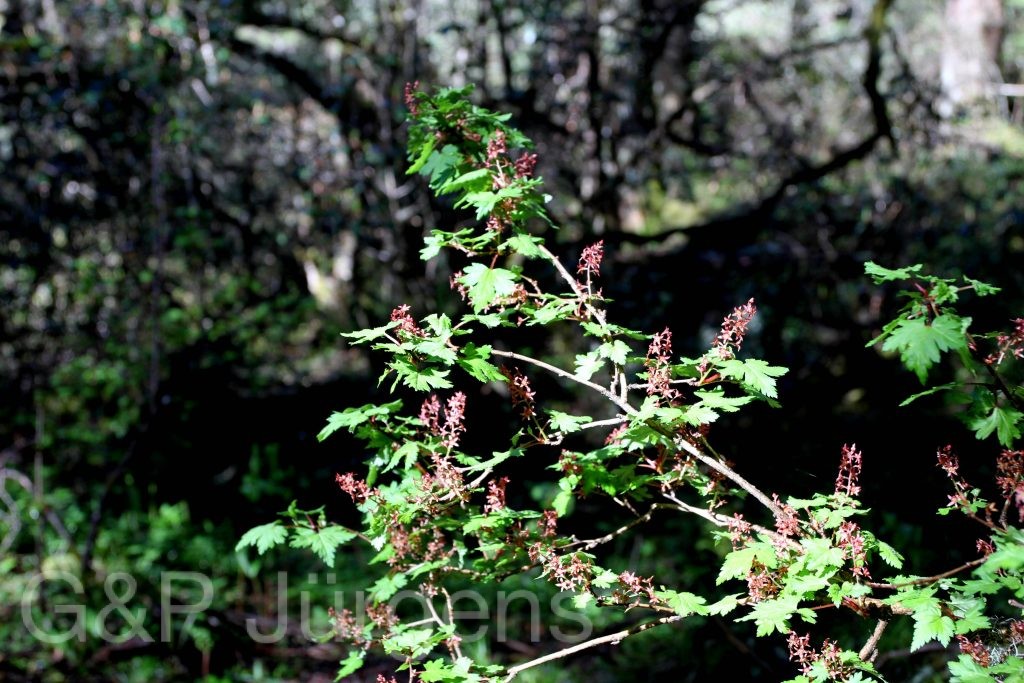
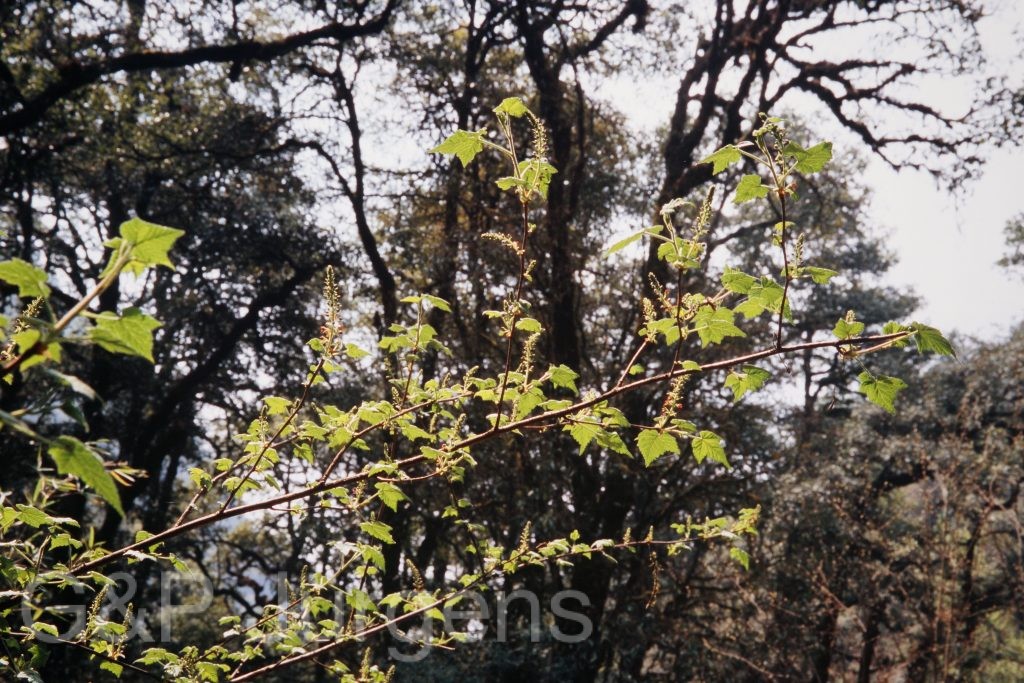
Sikkim2011 366
Sikkim Lada-La 3900m, June

Description

Ribes griffithii is a Sino-Himalayan currant of high-elevation shrubberies, distributed through China, Nepal, Bhutan and India (with a few scattered extralimital records); GBIF lists 277 occurrences, the great majority along the Himalayan and Tibetan margins. It occupies subalpine forest edges, Rhododendron and juniper scrub, moist rocky slopes and streamside thickets, generally between about 3000 and 4000 m. The illustrated plant was recorded in Sikkim near Lada-La at 3900 m in June, a characteristic upper-montane to subalpine station where the shrub leafs out and flowers as the snow recedes.

The plant is a deciduous, unarmed shrub with arching to ascending branches and smooth or flaking bark. Leaves are alternate, palmately three- to five-lobed with a cordate base and a serrate to crenate-dentate margin, glabrescent to slightly pubescent and borne on slender petioles. The flowers are arranged in pendulous, many-flowered racemes; each is small, with a saucer-shaped to shallowly campanulate hypanthium, five reflexed greenish to reddish sepals, five smaller petals, five stamens and an inferior ovary. The fruit is a glabrous, ellipsoid to globose berry, reddening to dark red at maturity and crowned by the persistent perianth.

The species belongs to subgenus Ribes among the unarmed true currants, distinguished from the spiny gooseberries by its racemose, many-flowered inflorescences. POWO and GBIF accept the name. As a fleshy-fruited shrub it contributes to the diet of Himalayan birds and small mammals that disperse its seeds across the subalpine mosaic.

Author: Hook. f. & Thomson · Sources: POWO (Kew), GBIF, Flora of China, Flora of Bhutan, Annotated Checklist of the Flowering Plants of Nepal, A Monograph of the Genus Ribes (Grossulariaceae)

Hook. f. & Thomson

Bhutan2014 606
BhutanPhobjika 2810, May
Sikkim2011 76
Sikkim Tanghu 3900m, June

Description

Ribes luridum is a Sino-Himalayan currant distributed from south-western China through northern Myanmar, Nepal, northern India and Bhutan, with around 348 GBIF occurrences (the records from US, CA, PL and RU largely representing cultivated or herbarium material). It is a shrub of cool-temperate to subalpine forest, scrub margins and rocky slopes, typically between about 2800 and 4000 m. The collections from Phobjika in Bhutan at 2810 m in May and from Tanghu in Sikkim at 3900 m in June bracket this altitudinal range and its late-spring to early-summer flowering, on moist, humus-rich ground at and above the upper forest belt.

It is a deciduous, unarmed shrub with spreading branches and finely glandular young growth. The leaves are alternate, orbicular-cordate in outline and palmately three- to five-lobed, the lobes crenate-serrate, sparsely pubescent and often glandular beneath. The species is dioecious or functionally so, the small flowers borne in short, few-flowered, pendulous racemes; each has a saucer-shaped to shortly campanulate hypanthium and five small, dull purplish to lurid greenish-brown petals and sepals, the colouration alluded to by the epithet. The fruit is a small subglobose berry, glandular-bristly and reddish to dark purple when ripe.

Within Ribes the species sits in the section of unarmed currants and is distinguished by its dingy, glandular flowers and dioecious tendency. The pendulous berries are dispersed by frugivorous birds, an important agent in fragmented montane forest, while the inconspicuous flowers attract small bees and flies. The species is widespread across the eastern Himalaya and faces no recognised conservation threat.

Author: Hook. f. & Thomson · Sources: POWO (Kew), GBIF, Flora of China Vol. 8, Flora of Bhutan Vol. 1, Flora of Nepal, A Monograph of the Genus Ribes

D. Don

Sikkim2011 365
Sikkim Lada-La 3900m, June
Bh2008 12 P20
Bhutan Thimphu-Chu, 2750m April
Sikkim2004 62 P110
Sikkim West-Bengal, Bersay 2700m April
Sikkim 2006 30 ergebnis
India West-Bengal Tonglu 3150m, May

Description

Ribes takare is a Himalayan currant distributed along the temperate and subalpine belt from Afghanistan through Pakistan, Nepal, India and Bhutan into southwestern China and Myanmar, with GBIF recording close to a thousand occurrences across this arc. It grows in moist temperate and upper montane forest, forest margins, shrubberies, ravines and rocky slopes, typically between about 2500 and 4000 m. The image caption documents this range well, with collections from the Lada La in Sikkim at 3900 m in June, the Thimphu Chu in Bhutan at 2750 m in April, Bersay in West Bengal at 2700 m in April, and Tonglu at 3150 m in May, showing both its broad altitudinal span and its spring-to-early-summer flowering as the snowline retreats.

It is a deciduous, spineless (unarmed) shrub up to about 2-3 m tall, with greyish, peeling bark and glandular-pubescent young shoots. The leaves are alternate, palmately three- to five-lobed with crenate-serrate margins and a cordate base, somewhat resembling a maple leaf and often glandular-hairy beneath. The flowers are borne in many-flowered, pendulous racemes; they are small and reddish to purplish-brown, with a saucer-shaped to shallowly campanulate hypanthium, five reflexed sepals, five smaller petals, five stamens and an inferior ovary. The fruit is a glandular-bristly, reddish to purplish-black berry that is edible but rather acidic and somewhat resinous.

The genus Ribes, sole genus of Grossulariaceae, is well represented in the Himalaya, where R. takare belongs to the unarmed, raceme-flowered black-currant alliance and has been treated under synonyms including R. acuminatum and R. glaciale-related names by various authors. Its pendent racemes of nectariferous flowers attract bees and other insects, while the berries are dispersed by birds and small mammals; the species forms an understorey component of moist Himalayan forest. It is widespread and common across its extensive range and is of no conservation concern, while its acidic fruits are gathered locally and its hardiness has drawn modest horticultural interest.

Author: D. Don · Sources: POWO (Kew), GBIF, Flora of China Vol. 8, Flora of Bhutan Vol. 1, Flora of Nepal, Flora of Pakistan, Berger's taxonomic review of Ribes

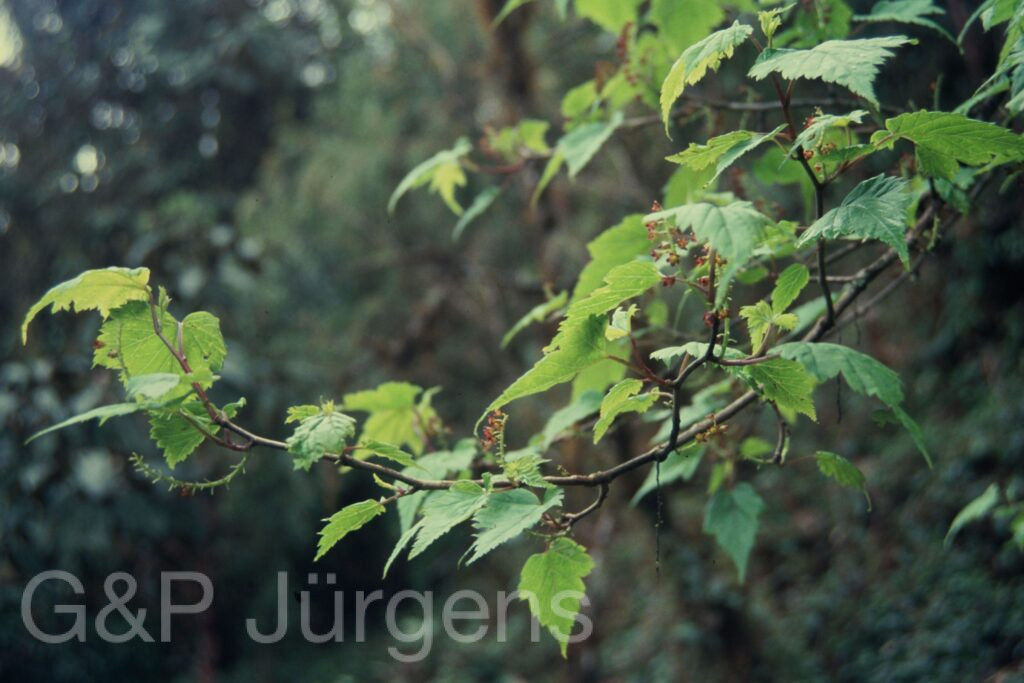
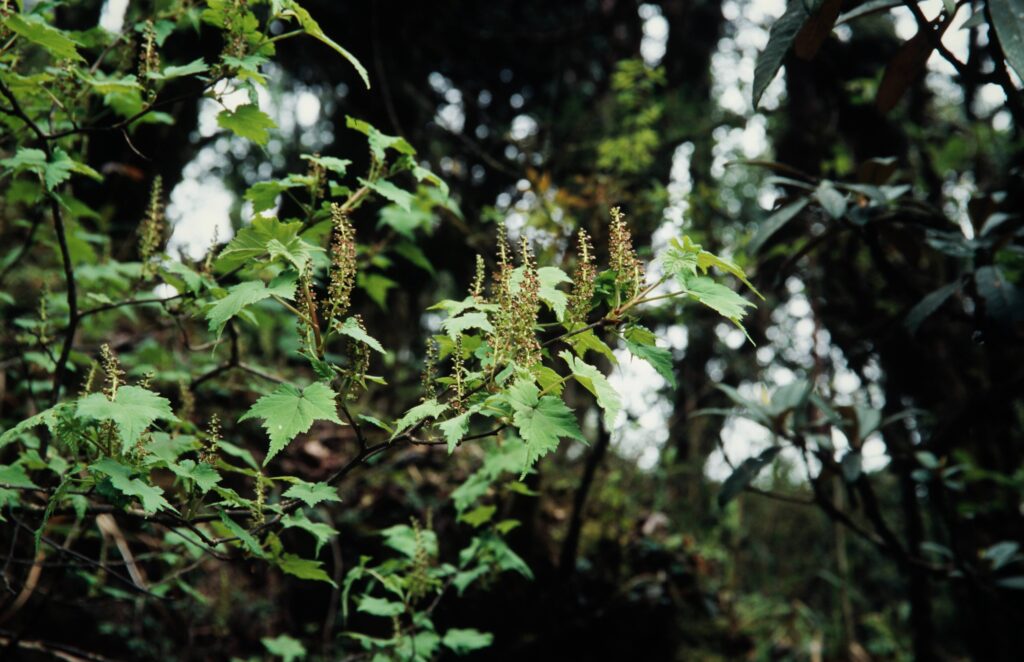
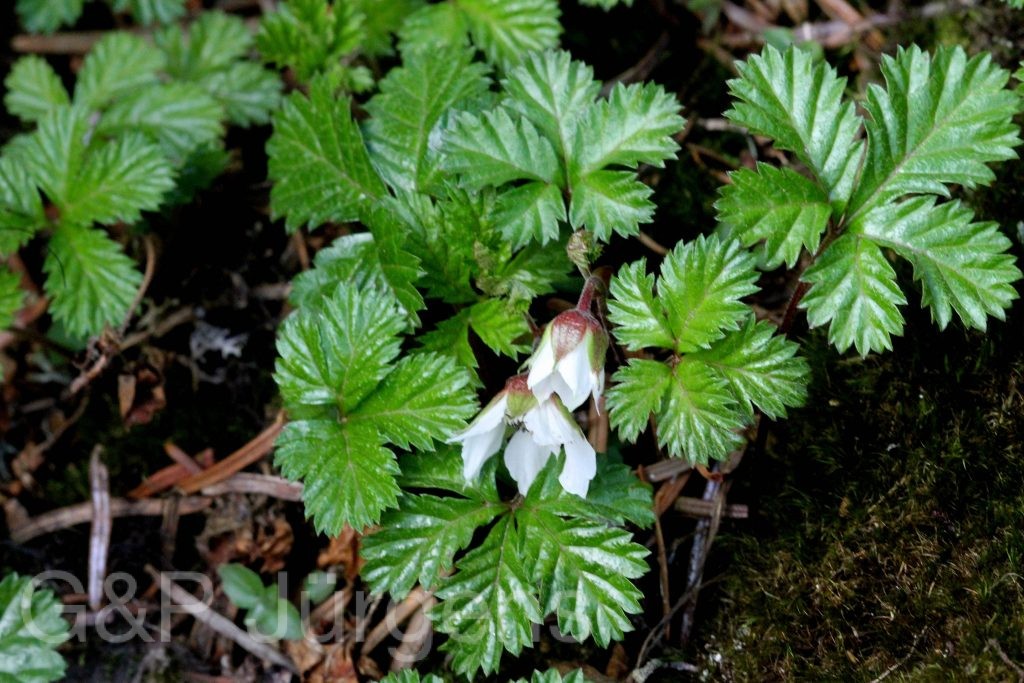
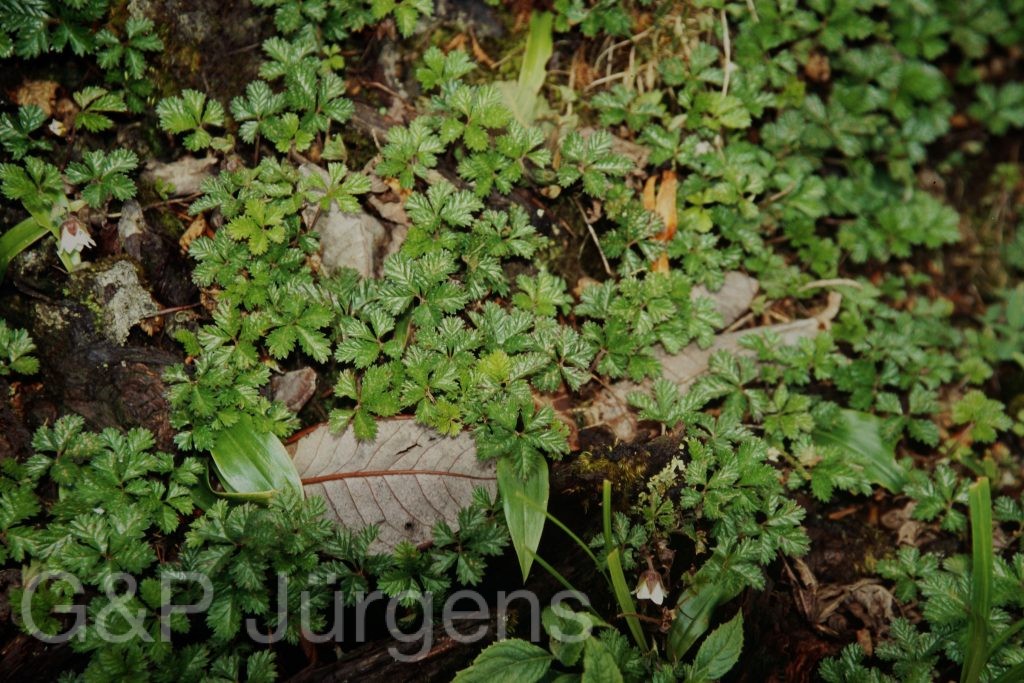
Rubus fragarioides

by GP Jürgens

Bertol.

Sikkim2011 234
Sikkim Yumthang 3700m, June
Bh09 281 P463
Bhutan Pele-La 2900m, June

Description

Rubus fragarioides is a dwarf, strawberry-like bramble of the Sino-Himalayan region, recorded from China, Nepal, India, Bhutan and Myanmar, with about 166 occurrence records mapping a range centred on the eastern Himalaya and adjacent western China. It grows in open coniferous and rhododendron forest, forest clearings, alpine meadow margins and mossy banks at upper-temperate to subalpine elevations. The photographed populations—at Yumthang in Sikkim at 3700 m and at Pele-La in Bhutan at 2900 m, both flowering in June—reflect its typical occurrence in cool, humid montane habitats.

Unlike the familiar cane-forming raspberries, this is a diminutive, almost herbaceous perennial spreading by slender creeping rhizomes and bearing only a low, scarcely woody aerial system. The leaves are usually simple to shallowly three-lobed or ternate, with a cordate base, doubly serrate margins and a wrinkled, sparsely hairy surface, recalling those of a strawberry, whence the epithet fragarioides. The flowers are solitary or few, with five spreading white petals, a leafy calyx and numerous stamens and carpels on a domed receptacle. The aggregate fruit is a small red drupelet-cluster, edible and dispersed by birds and small mammals.

Rubus is an enormous and taxonomically difficult genus complicated by hybridisation, polyploidy and apomixis; R. fragarioides, described by Bertoloni, belongs among the low-growing creeping species sometimes segregated in subgenus Chamaebatus. Its mat-forming habit aids soil stabilisation in fragile alpine clearings. Widespread within its montane belt, it is not considered threatened, though it depends on the persistence of intact subalpine forest.

Author: Bertol. · Sources: POWO (Kew), GBIF, Flora of China (Rosaceae), Annotated Checklist of the Flowering Plants of Nepal, Grierson & Long Flora of Bhutan, Focke's monograph Species Ruborum

Wall. ex Andersson

Garh 07 395 2 ergebnis
India Garhwal Khiar Kutti 3950m, June

Description

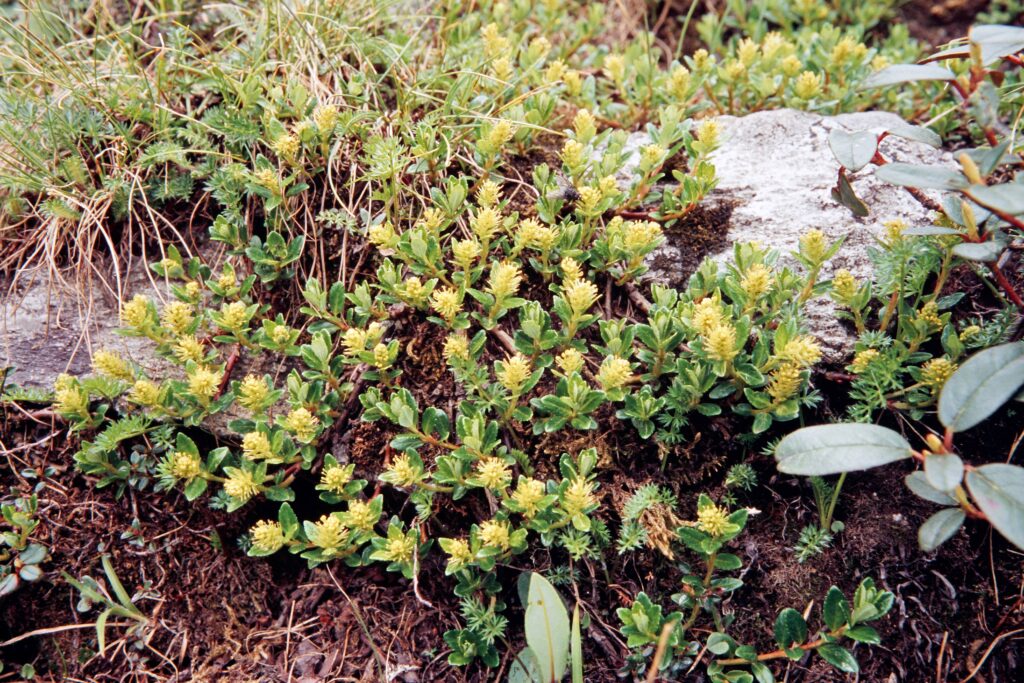
Salix lindleyana is a high-altitude dwarf willow distributed across the Himalayas from Pakistan through northern India, Nepal, and Bhutan to southwest China (Xizang, Yunnan) and northern Myanmar. GBIF records approximately 773 occurrences, concentrated in the alpine zones of the western and central Himalayas. The species is a characteristic element of subnival and alpine habitats at 3,500–5,200 m elevation, growing on moraines, scree slopes, stream margins, and moist alpine meadows. At Khiar Kutti in Garhwal at 3,950 m, it forms prostrate mats on gravelly substrates near glacial meltwater channels, flowering in June as the snowpack recedes and summer warmth permits a brief growing season.
Salix lindleyana is a prostrate, creeping deciduous shrub rarely exceeding 5–15 cm in height. Stems are slender, woody, rooting at the nodes, spreading laterally to form dense mats up to 1 m or more across. Leaves are small, elliptic to obovate, 5–15 mm long, entire or obscurely crenulate, glabrous at maturity, bright green above and slightly glaucous beneath. Catkins are terminal, erect, 1–3 cm long, appearing with or just after the leaves; male catkins bear stamens with purple-tipped filaments and yellow anthers, while female catkins develop into capsules 3–5 mm long containing minute, comose seeds that are dispersed by wind. The entire growth form is adapted to minimise exposure to desiccating alpine winds and to capture warmth from the ground surface.
Salix lindleyana is one of the highest-growing woody plants in the Himalayas and an important pioneer species in alpine and subnival ecosystems. Its prostrate, mat-forming habit stabilises loose substrates on moraines and scree slopes, facilitating soil development and subsequent colonisation by other alpine plants. The species is named after the English botanist John Lindley and was formally described by Andersson based on Wallich's Himalayan collections. It belongs to the section Chamaetia, a group of arctic-alpine dwarf willows, and is closely related to S. serpyllifolia of the European Alps — a biogeographical parallel reflecting Tertiary migration routes between the Alpine and Himalayan orogens.

Author: Wall. ex Andersson · Sources: POWO (Kew), GBIF, Flora of China Vol. 4, Flora of Pakistan Vol. 203, Polunin & Stainton: Flowers of the Himalaya (1984)

Andersson

Bh2008 587 G879
Bhutan Chele-La 3900m April
Bhutan2014 932
Bhutan Chele-La 4000m, May

Description

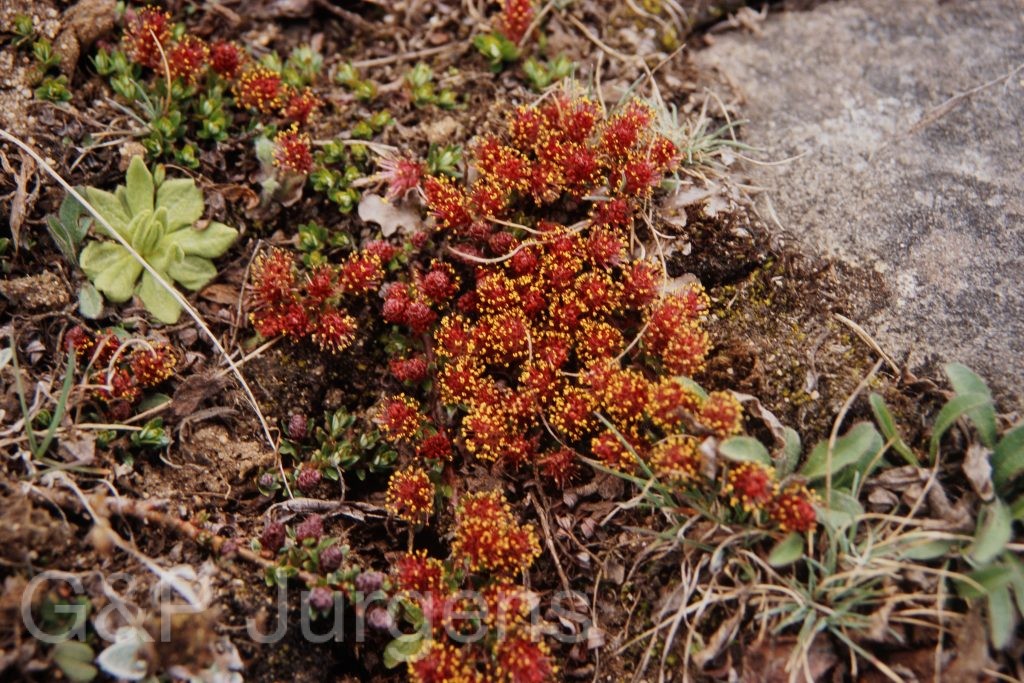
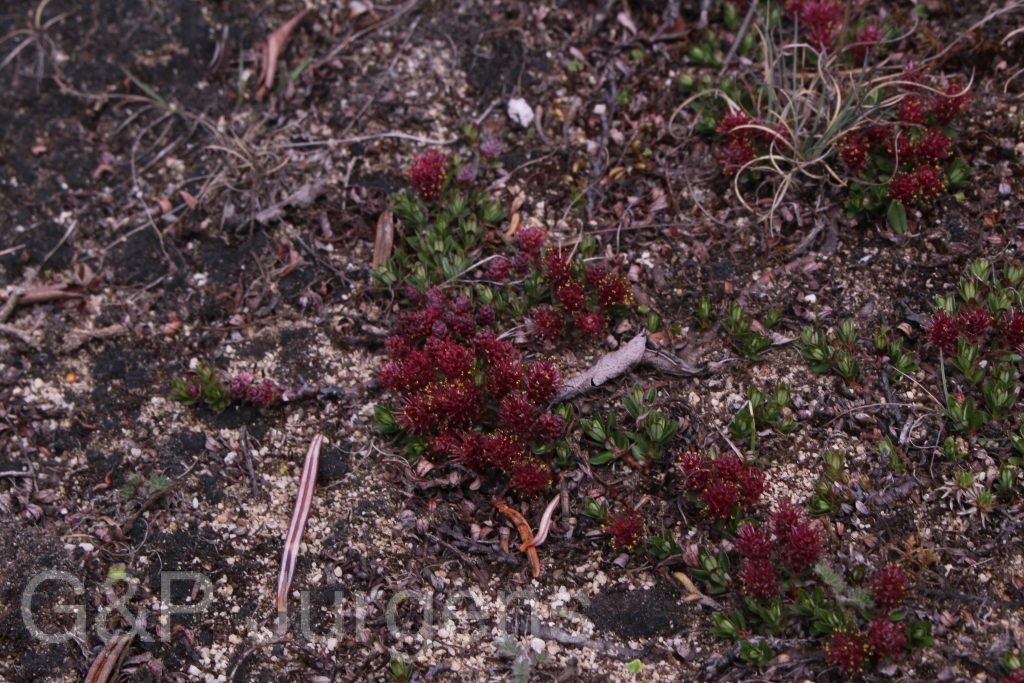
Salix thomsoniana is a dwarf, high-alpine willow of the family Salicaceae, endemic to the Himalaya. GBIF records, though few in number, are restricted to India, Nepal and Bhutan, reflecting both its genuine narrow range and the limited collecting of prostrate willows at extreme elevations. It is a plant of the upper alpine zone, growing among rocks, on stony slopes, moraine and the margins of alpine turf, typically between about 3,800 and 4,500 m. The collections illustrated from the Chele-La pass in western Bhutan at 3,900–4,000 m in April and May capture the species at the very start of its short growing season, flowering as the snow melts.

Like many high-mountain willows it is a low, decumbent to prostrate shrublet with creeping, often partly buried woody stems and short ascending shoots. The leaves are small, elliptic to obovate, with entire or finely toothed margins, glabrescent above and somewhat paler beneath. As in all Salix, the plant is dioecious, the flowers reduced and aggregated into short, erect catkins that appear with or just before the leaves; each minute flower is subtended by a hairy bract, the staminate flowers with two stamens and the pistillate flowers reduced to a single gynoecium with a nectary. The fruit is a small capsule releasing numerous minute, plumed seeds dispersed by wind.

The alpine willows form a taxonomically intricate group in which species are separated on subtle characters of leaf shape, indumentum, catkin structure and bract coloration, and hybridisation further complicates delimitation. As a cushion-forming dwarf shrub of the high Himalaya, S. thomsoniana contributes to soil stabilisation and provides early-season forage and pollen in an otherwise sparse environment. Its restricted range and dependence on the narrow alpine belt make such species potentially vulnerable to upward shifts in vegetation zones driven by warming.

Author: Andersson · Sources: POWO (Kew), GBIF, Flora of Bhutan Vol. 1, Flora of China Vol. 4, Flora of Nepal, Skvortsov: Willows of the USSR and adjacent regions

Wall. ex Benth.

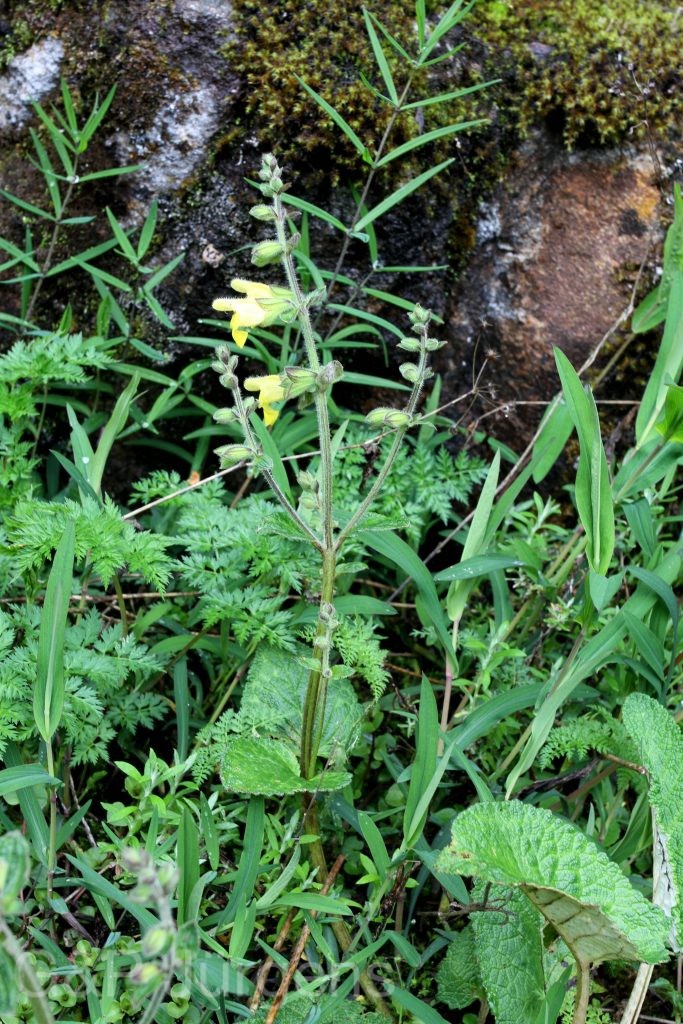
BhutanPG2011 767 01 01
Bhutan Dur-Tso, 3600m June
also included: Anemone rivularis DC.
BhutanPG2011 374
Bhutan Dur-Tso, 3600m June

Description

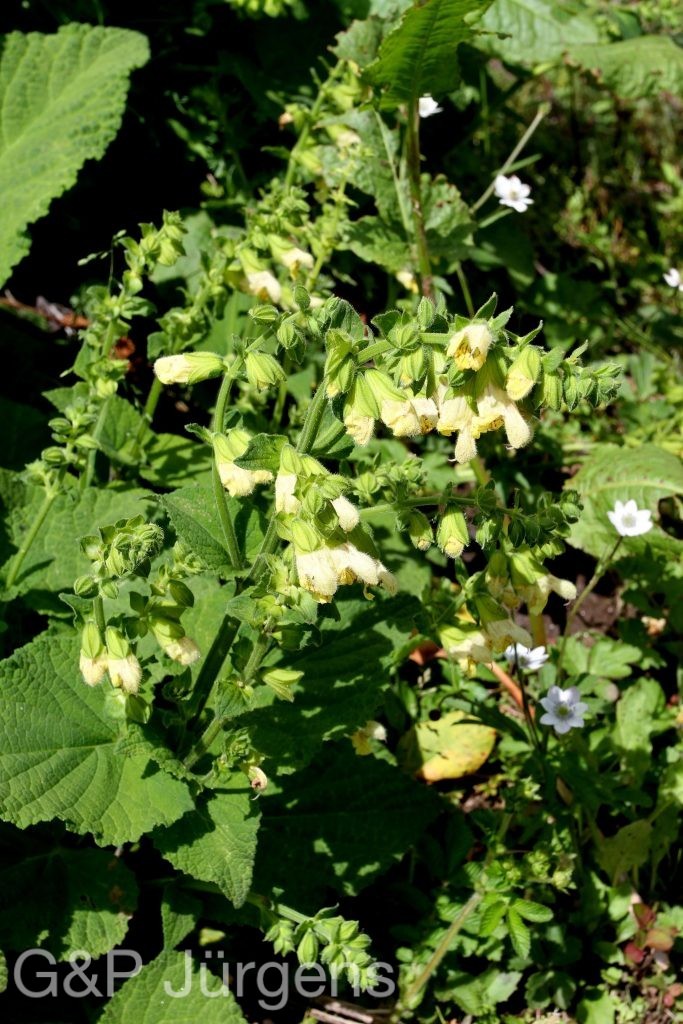
Salvia campanulata is a robust perennial sage of the Himalaya and adjacent China, with verified occurrences in Nepal, China, India, Bhutan and Myanmar. It grows on open grassy slopes, in forest clearings, scrub and along streamsides through the upper-temperate and subalpine zones, broadly between about 2500 and 3800 m. The plant illustrated from near Dur-Tso in Bhutan at around 3600 m in June, where it grows in company with Anemone rivularis, exemplifies its preference for moist, open subalpine grassland flowering early in the monsoon season.

The species arises from a stout rootstock and produces erect, quadrangular stems clothed, like the foliage, in soft hairs. The leaves are mostly basal and on the lower stem, large, broadly ovate to triangular-hastate with cordate bases and crenate-serrate margins, and long-petiolate. The inflorescence is an elongate terminal raceme of remote whorls (verticillasters), each of a few flowers. The calyx is bell-shaped, the feature noted in the epithet campanulata, and the corolla is comparatively large, yellow to greenish-yellow often marked with brown or purple, strongly two-lipped with a hooded upper lip enclosing the two functional stamens characteristic of the genus. The fruit comprises four smooth nutlets enclosed in the persistent calyx.

Salvia, the largest genus of Lamiaceae, is distinguished by its specialised lever-arm stamen mechanism that promotes precise pollen placement on visiting bees and other long-tongued insects. S. campanulata, described by Bentham from a Wallich collection, belongs to the Himalayan assemblage of large-leaved montane sages. It is widespread and locally common across its range and is not regarded as being of conservation concern.

Author: Wall. ex Benth. · Sources: POWO (Kew), GBIF, Flora of China, Flora of Bhutan, Annotated Checklist of the Flowering Plants of Nepal