
Hook. f.
Description
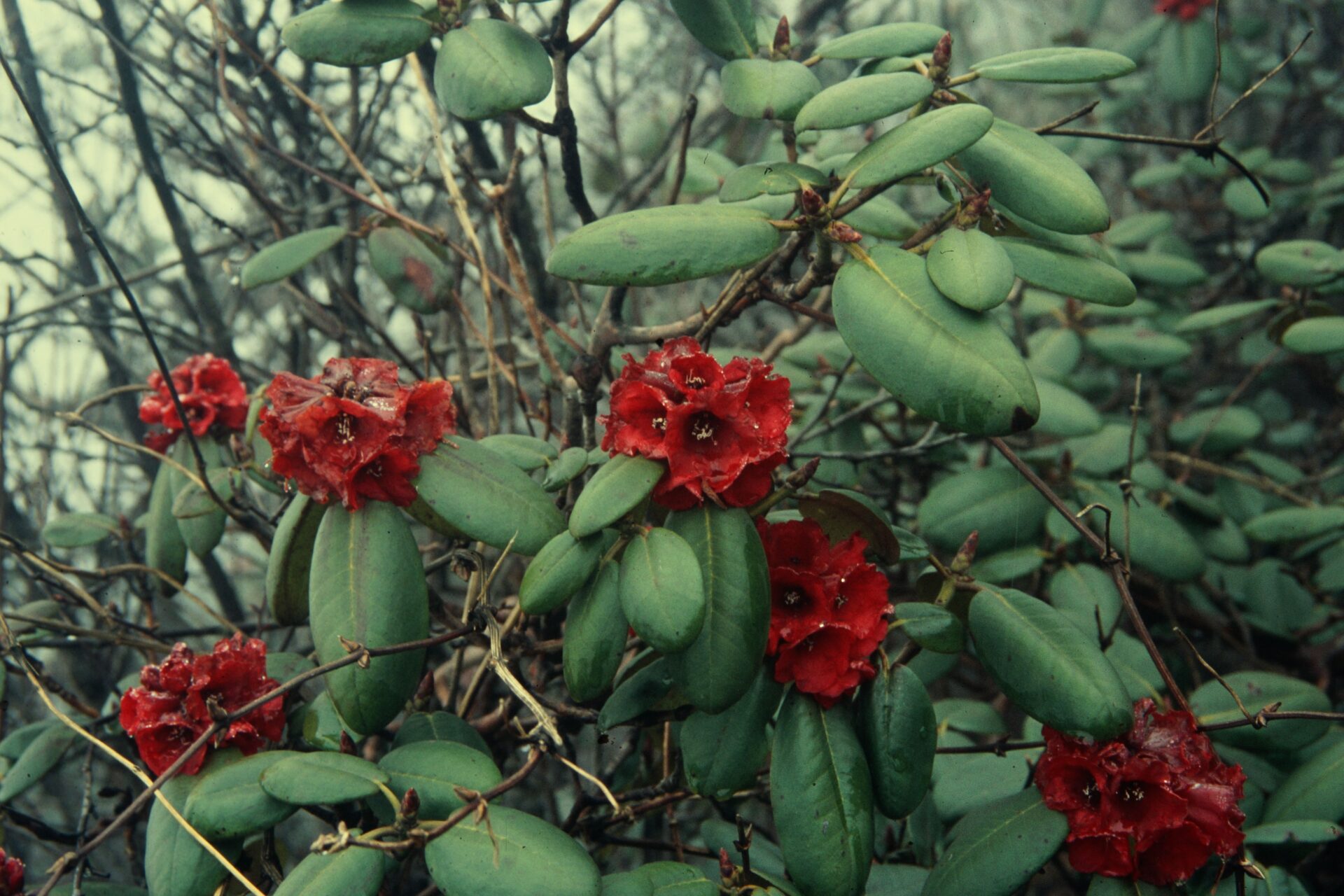
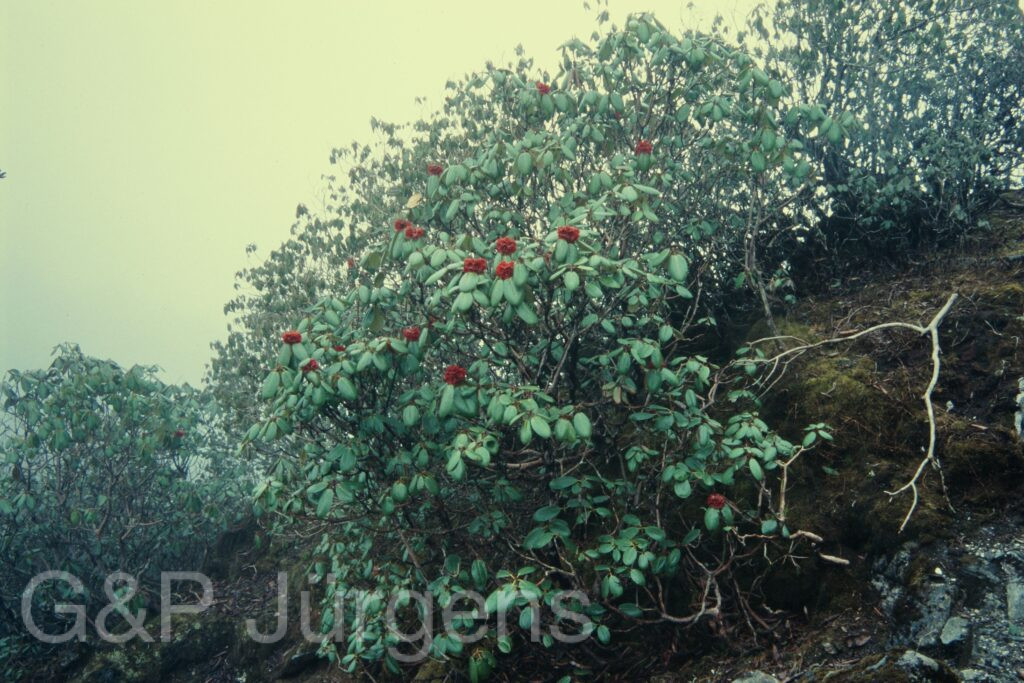
Rhododendron fulgens is an East Himalayan shrub, with GBIF's c. 170 occurrences centred on India, Nepal, Bhutan and adjacent Tibetan China (records from GB, DE, US, CA, KR being cultivated material). It is a plant of the upper subalpine and lower alpine zones, typically 3300–4500 m, forming dense thickets at the treeline and in the understorey of Abies and Betula forest on moist, peaty, north-facing slopes. The populations photographed on the Singalila ridge (Sikkim/India) at 4000 m and at Thudam in eastern Nepal at 3850 m, both flowering in April, exemplify its preference for cool, snow-influenced ridges where it blooms before the monsoon.
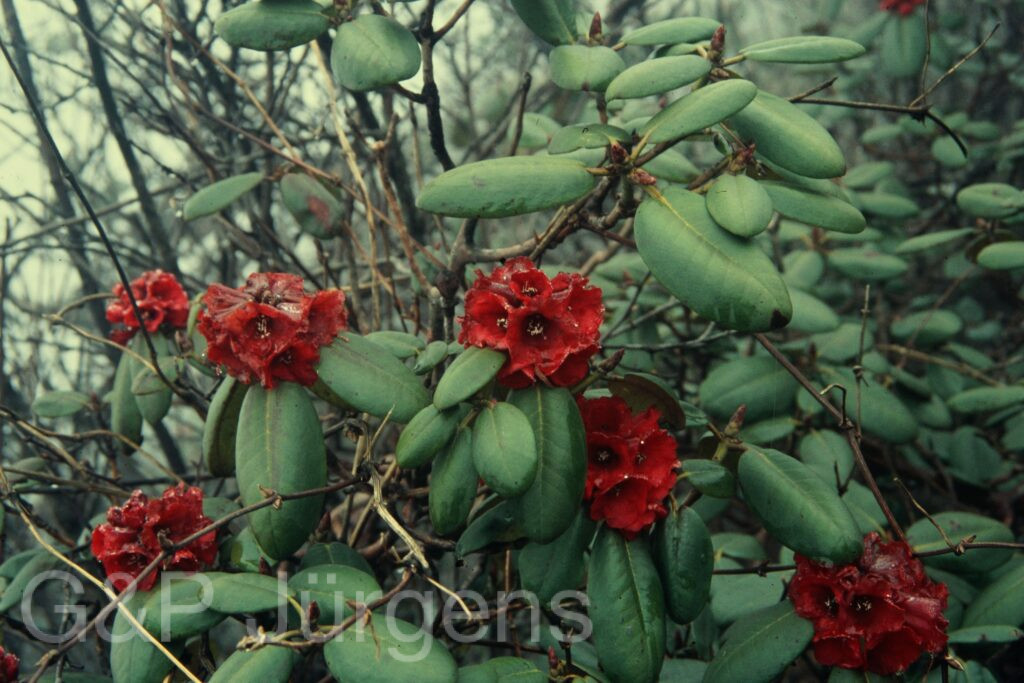
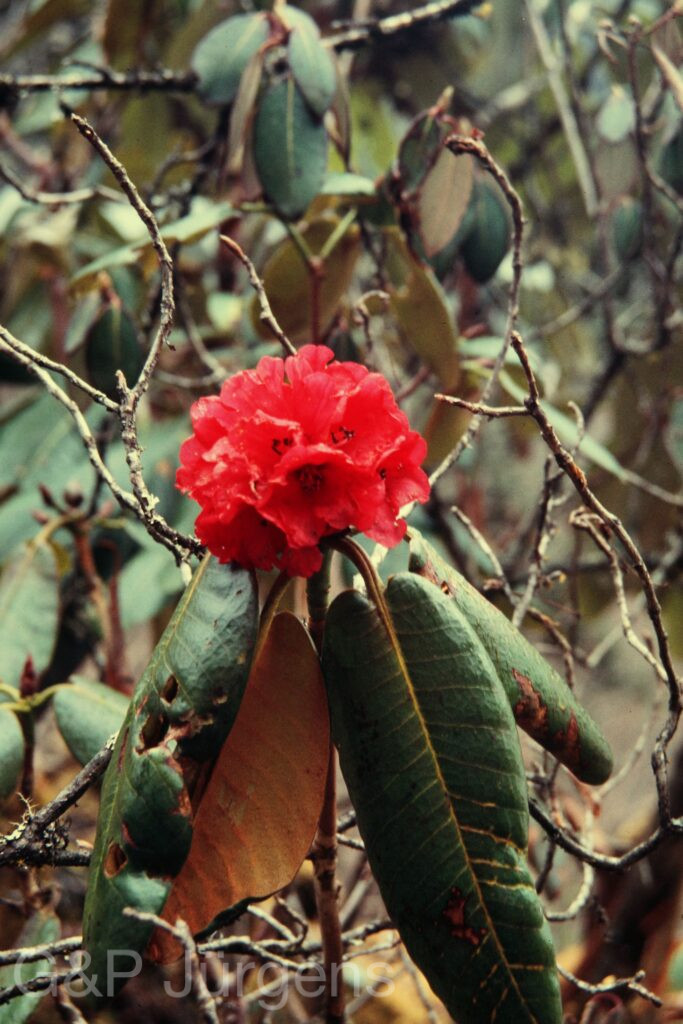
It forms a stout, gnarled evergreen shrub to small tree 1–4 m tall, with smooth, peeling cinnamon to reddish-brown bark. The leaves are coriaceous, broadly elliptic to obovate, glossy dark green above and clothed beneath with a thick, persistent rusty to fulvous indumentum from which the epithet derives. The inflorescence is a compact, rounded truss of 10–20 campanulate flowers; the corolla is fleshy, deep blood-red to scarlet-crimson, about 2.5–3 cm long, with darker nectar pouches at the base. Stamens are 10, the ovary glandular, and the fruit a curved, woody, dehiscent capsule.
Described by J. D. Hooker from Sikkim, R. fulgens belongs to subsection Fulgensia within subgenus Hymenanthes and is allied to R. sherriffii and R. succothii. Though locally common across its core range and not globally threatened, its restricted treeline habitat is sensitive to grazing, fuelwood collection and shifting snowlines, and it serves as an important early-season nectar source for high-altitude pollinators.
Author: Hook. f. · Sources: POWO (Kew), GBIF, Flora of Bhutan, Flora of China, The Genus Rhododendron (Royal Horticultural Society monograph)