
Hook. f.
Description
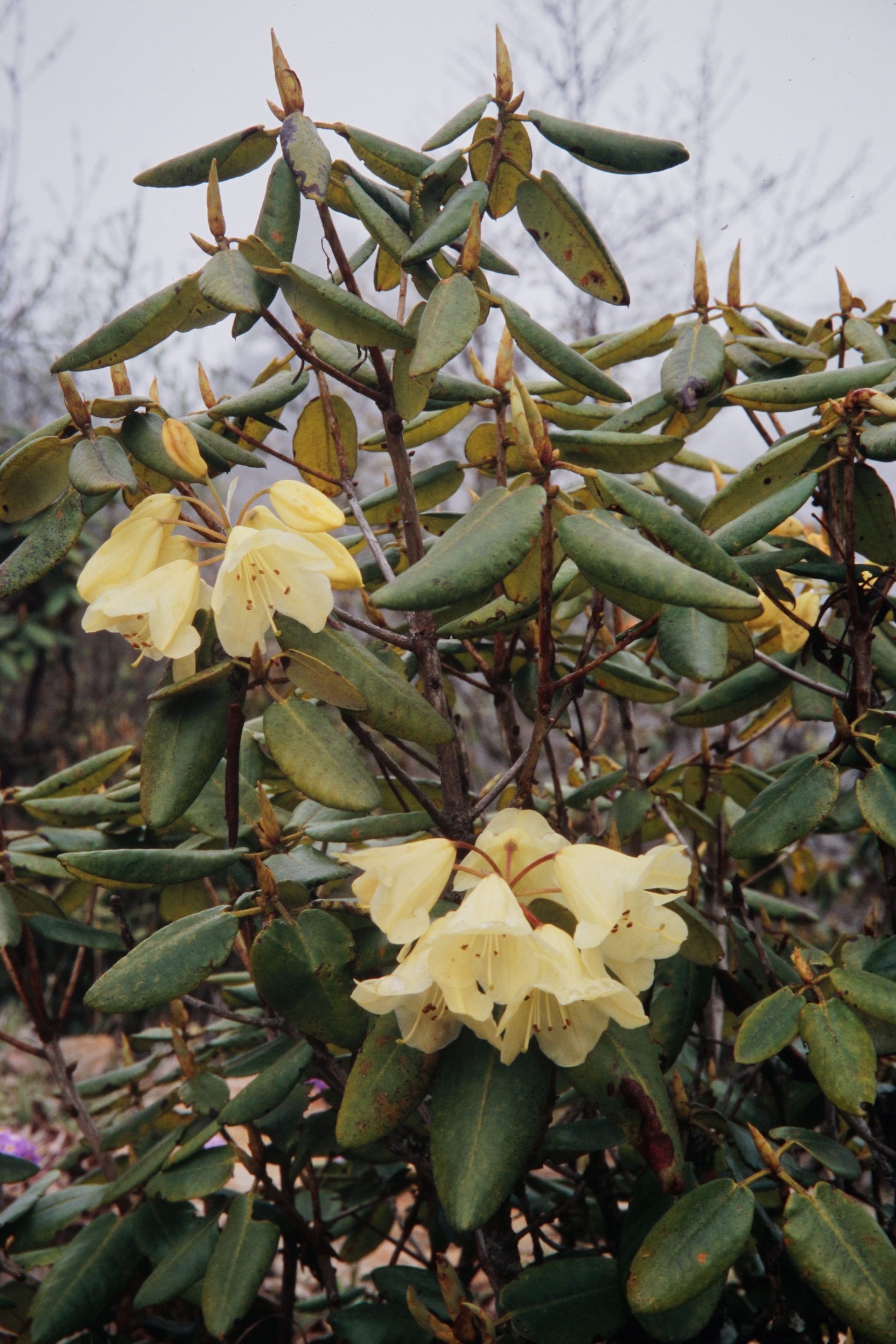
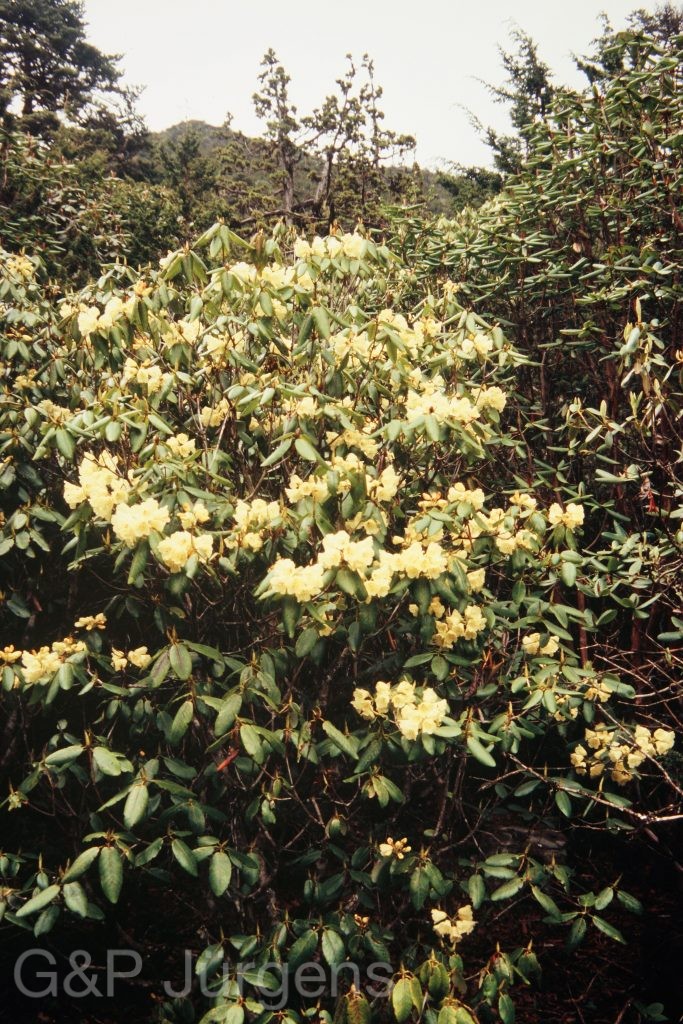
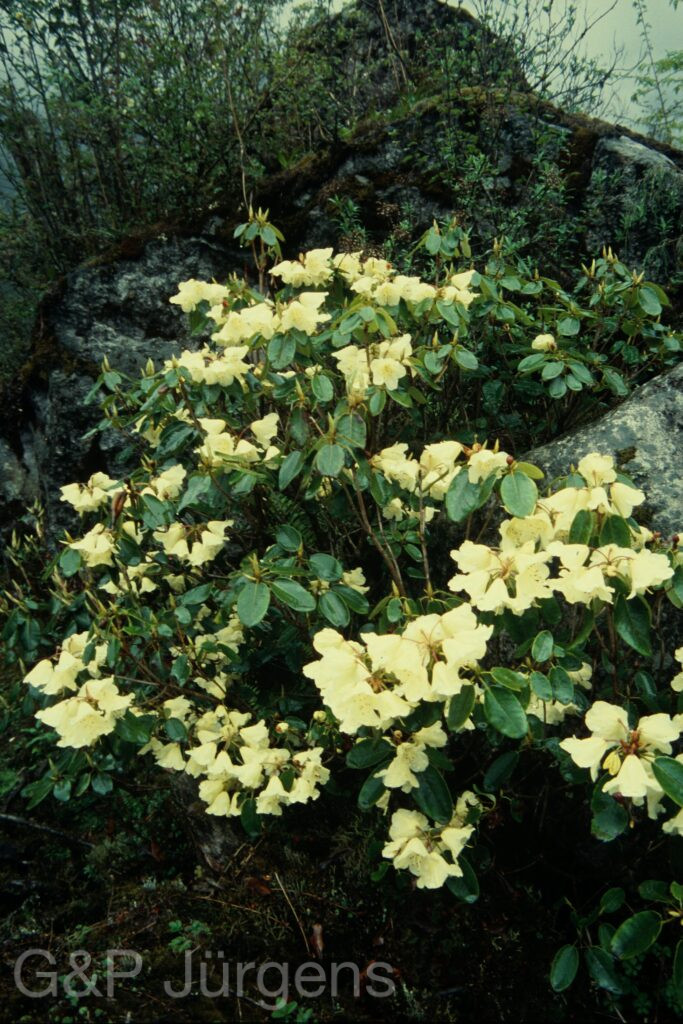
Rhododendron campylocarpum is an East Himalayan species distributed through the higher ranges of Nepal, Sikkim and Darjeeling in India, Bhutan, southern Tibet (China) and northern Myanmar, with abundant horticultural records (GB, US, NZ, etc.) reflecting long cultivation in temperate gardens; GBIF holds some 676 occurrences. It grows in the upper temperate and subalpine zone, typically between about 2850 and 3700 m, as documented at Tumching-La (3600 m) and Langchlakha (3700 m) in Bhutan, at Lachung (3300 m) in Sikkim and at Tamrong (2850 m) in West Bengal, inhabiting conifer and Abies forest margins, rhododendron thickets and moist rocky slopes near the treeline. It flowers in late spring and early summer (April-June).
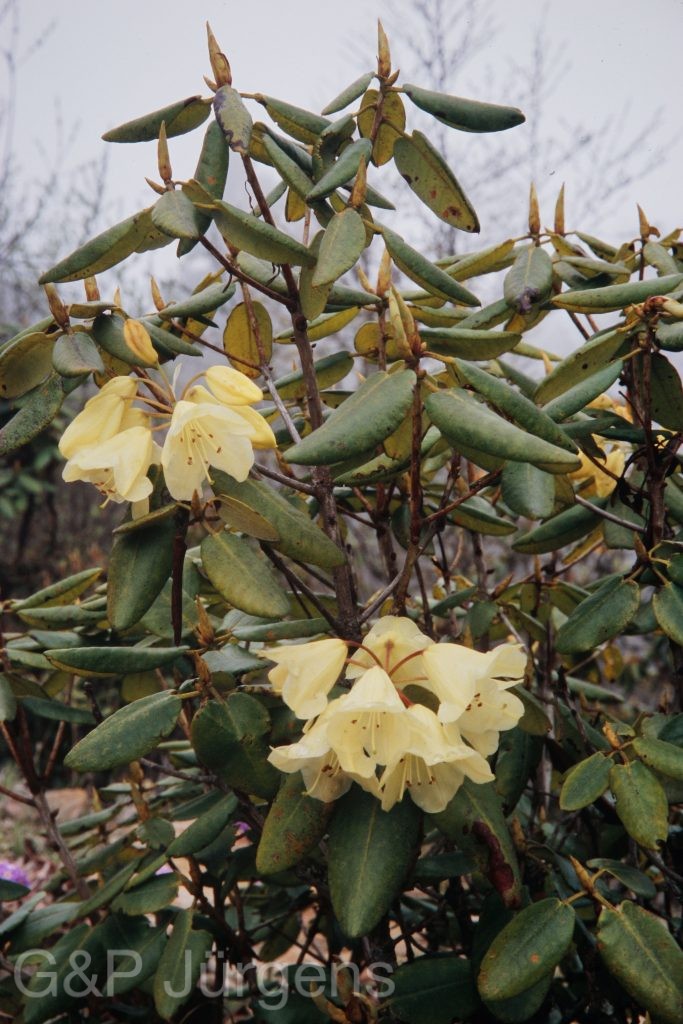
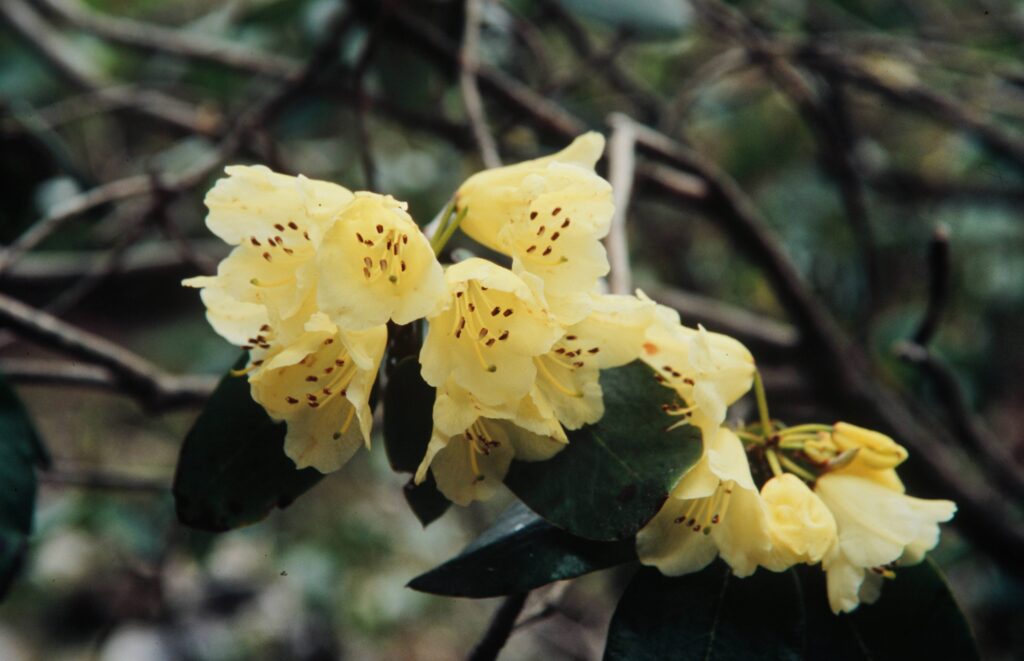
It is an evergreen, much-branched shrub or small tree reaching 1-4 m, with smooth, peeling bark. The leaves are alternate, clustered toward the branch tips, broadly ovate to elliptic-oblong, 4-10 cm long, rounded to cordate at the base, glabrous and dark green above and conspicuously glaucous beneath. The inflorescence is a lax, terminal truss of 5-12 flowers; the corolla is campanulate, 3-4 cm across, clear sulphur- to canary-yellow, frequently with a crimson basal blotch within. Stamens are 10, included; the ovary and slender style are usually glandular. The fruit is a curved, cylindrical capsule, the epithet ("campylocarpum", bent fruit) referring to this curvature.
The species belongs to subgenus Hymenanthes, subsection Campylocarpa, a small group of yellow-flowered Himalayan rhododendrons including R. wardii and R. callimorphum, and it hybridises freely in the wild and in cultivation. Introduced by J. D. Hooker in the 1850s, it became an important parent of many garden hybrids and is an early-summer nectar source for bumblebees and other high-altitude pollinators. Though locally common and not globally threatened, individual populations are subject to grazing, fuelwood collection and the upward shift of the treeline.
Author: Hook. f. · Sources: POWO (Kew), GBIF, Flora of Bhutan, Flora of China, The Genus Rhododendron (Cullen & Chamberlain monograph)