Tag:

Bhutan

Flowers of Bhutan — 1326 plant species documented across the Bhutanese Himalaya, from dense broadleaf and conifer forests to alpine scrub and meadows. Bhutan’s largely intact wilderness shelters an exceptional diversity of orchids, rhododendrons, primulas and Himalayan poppies, many of them regional endemics. Each species page includes a botanical description, distribution, habitat and flowering time, with the original photograph and its recorded altitude and locality.

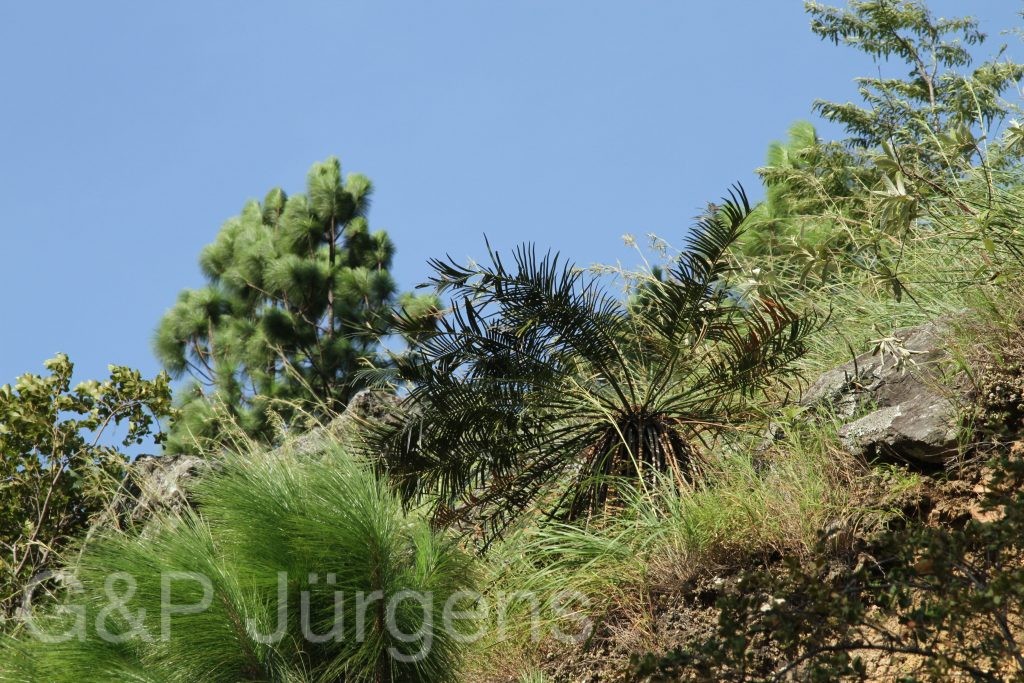
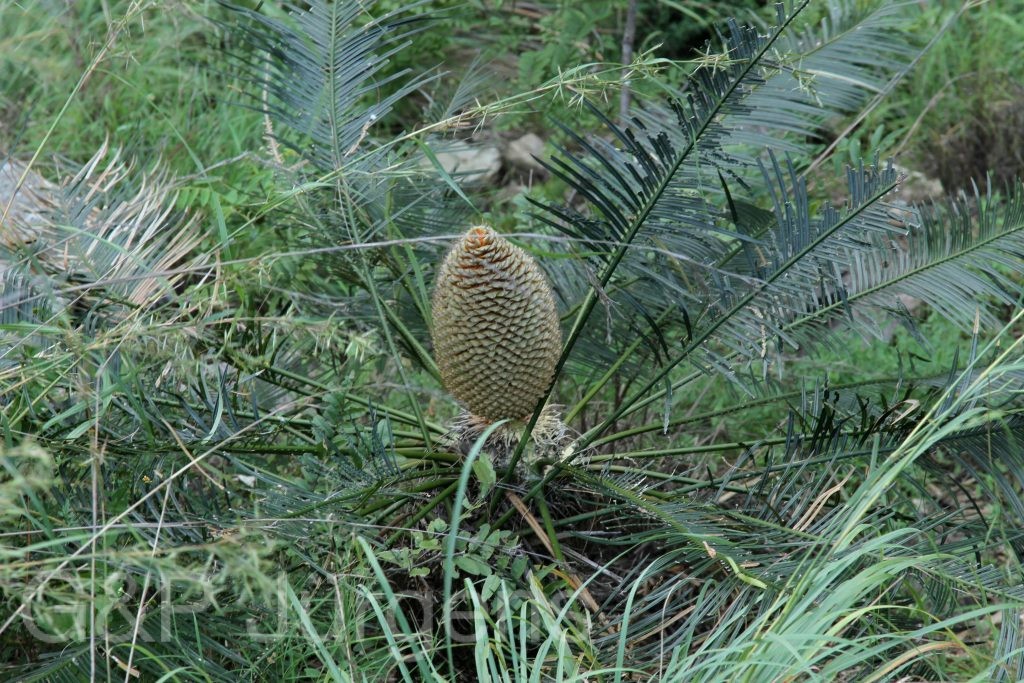
Cycas pectinata

by GP Jürgens

Buch.-Ham.

Bhutan2012 1055
Bhutan Koma-Chu-Valley 900m, October
Bhutan2012 1057
Bhutan Koma-Chu-Valley 900m, October

Description

Cycas pectinata is a large arborescent cycad of the eastern Himalayan foothills and Indochina, recorded by GBIF from Thailand, India, Vietnam, China, Bhutan, Nepal, Myanmar and Bangladesh, among others, across about 318 georeferenced occurrences. It inhabits warm subtropical to tropical situations, growing on hill slopes, in open dry forest, on limestone outcrops, in scrub and along forest margins, generally at low elevations. The photographed plant from the Koma-Chu valley in southern Bhutan at about 900 m in October typifies its occurrence in the warm inner valleys of the foothill zone, where it tolerates seasonally dry, well-drained and often rocky substrates exposed to strong sunlight.

The plant develops a stout, columnar, unbranched trunk that may reach several metres in height, crowned by a rosette of large, once-pinnate, dark green leaves with numerous narrow, rigid, spine-tipped leaflets and a spiny petiole base. Like all cycads it is strictly dioecious. The male plants produce a large solitary terminal pollen cone, ovoid to cylindrical and yellow to orange-brown; the female plants bear loose, open clusters of megasporophylls rather than a closed cone, each megasporophyll with a pectinate (comb-like, hence pectinata) lateral fringe of teeth and bearing ovules along its margins. The large seeds are drupe-like, ovoid and become orange-brown to reddish at maturity.

Cycas pectinata is one of the most widely distributed Asian species of Cycas, the sole genus of the ancient family Cycadaceae, a lineage of gymnosperms of considerable evolutionary antiquity that reproduces through motile, swimming sperm and relies on insect (weevil and beetle) pollination. The species is of high conservation interest: like cycads generally it is listed on CITES Appendix II, and wild populations are depleted by over-collection for ornament and religious use, seed and starch harvesting, and habitat loss, so that the species is regarded as threatened across much of its range despite its broad distribution.

Author: Buch.-Ham. · Sources: POWO (Kew), GBIF, Flora of China Vol. 4, Flora of Bhutan Vol. 1, Flora of Nepal, Flora of Pakistan, Hill & Lindstrom: revision of the Cycas pectinata complex (and The Cycad Pages)
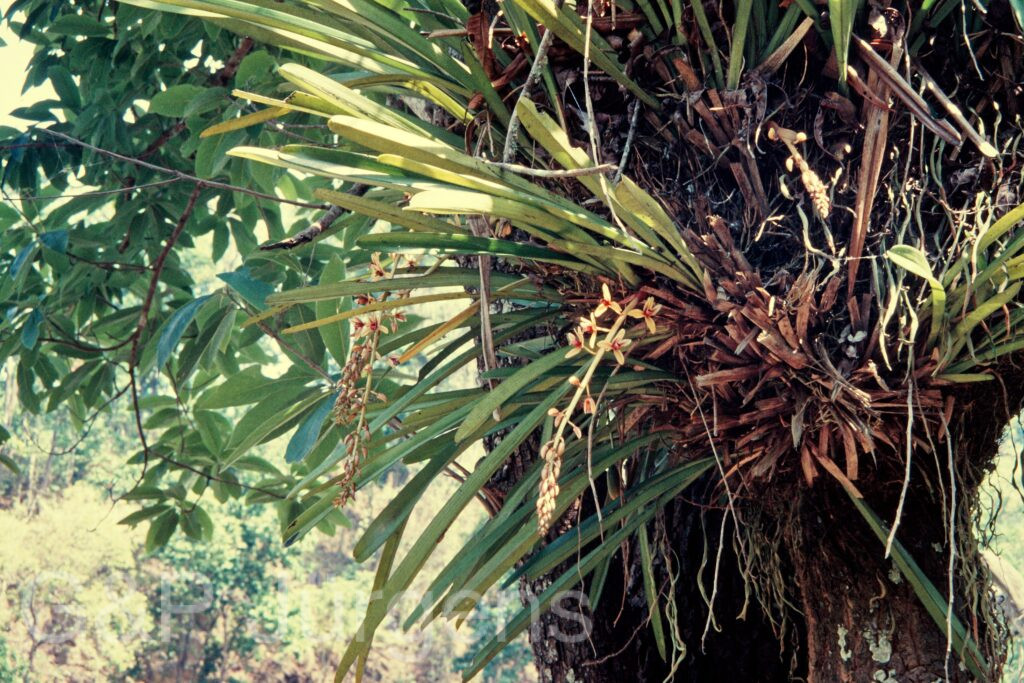
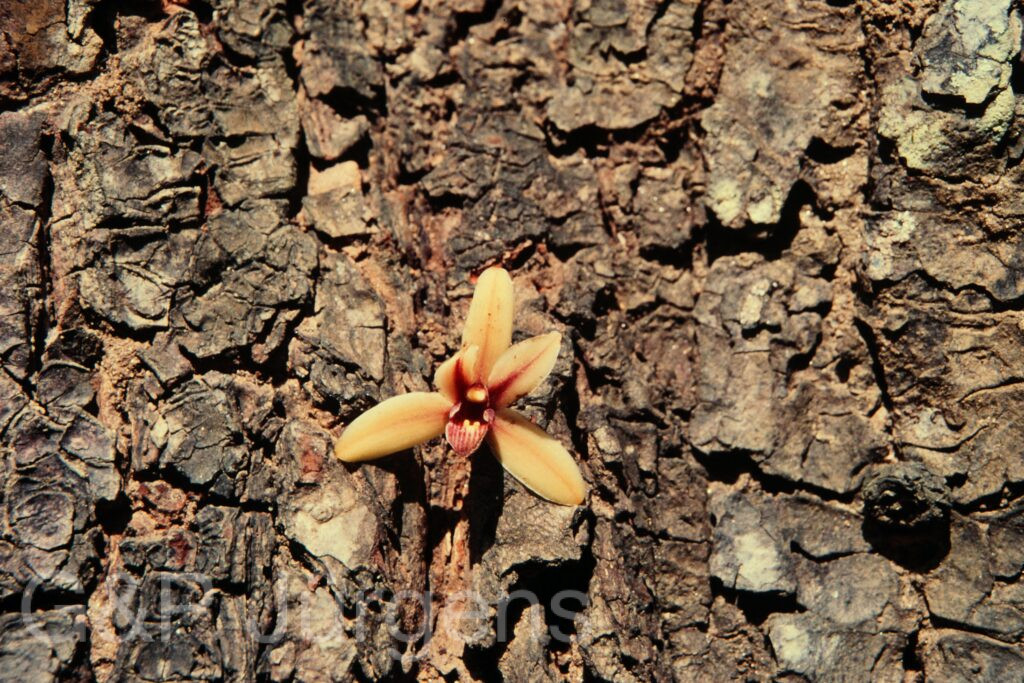
(L.) Sw.

Nepal 97 589 P1136
Nepal Sabha-Khola 560m May
Nepal 97 590 P1138
Nepal Sabha-Khola 560m May

Description

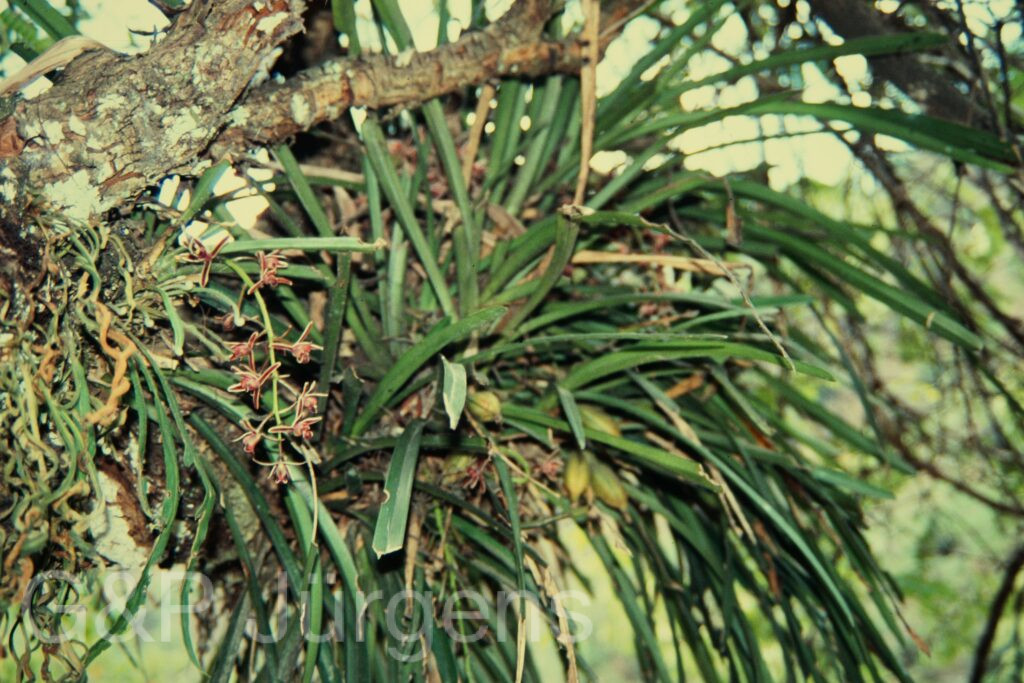
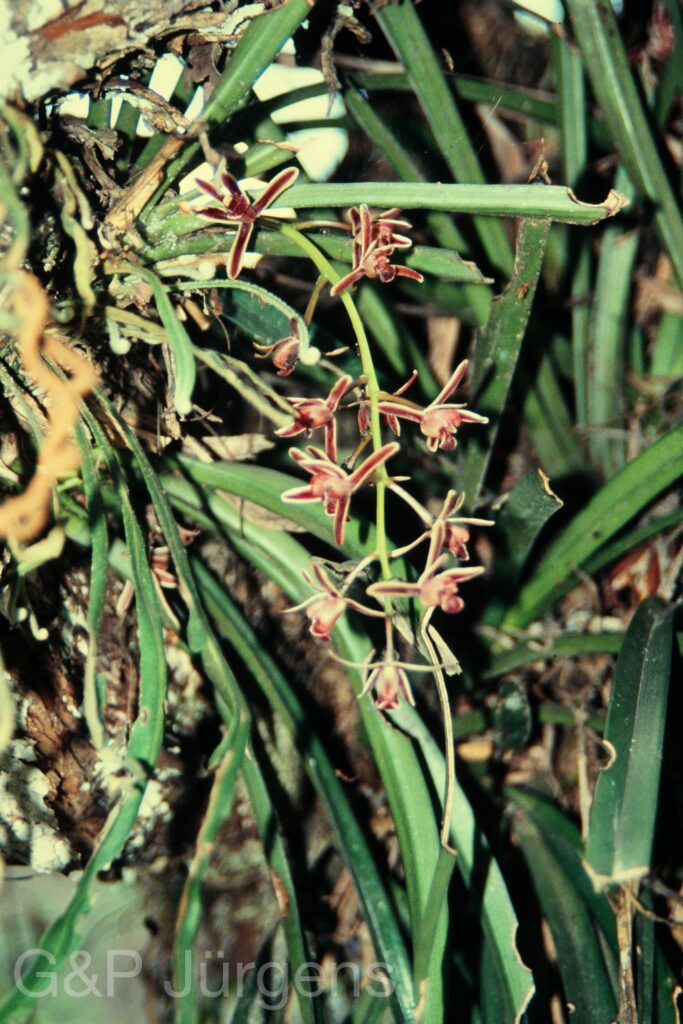
Cymbidium aloifolium is a widespread tropical Asian orchid recorded by GBIF (638 occurrences) from India, China, Vietnam, Thailand, Nepal, Sri Lanka, Indonesia, Bangladesh, the Philippines, Myanmar and Bhutan, alongside cultivated records farther afield. It is a robust epiphyte, and occasional lithophyte, of warm, seasonally dry lowland and submontane forest, growing on tree trunks and large branches and on rocky outcrops, generally below about 1000 m. The plant photographed in the Sabha Khola of Nepal at only 560 m in May represents its characteristic low-elevation, pre-monsoon flowering, the lowest-altitude species treated in this group.

The species forms dense clumps of ovoid pseudobulbs largely concealed by leaf bases. The leaves are several, distichous, thick and rigidly coriaceous, linear-ligulate and unequally bilobed at the apex, recalling those of an Aloe and giving the species its epithet. The inflorescence is a long, pendulous raceme bearing numerous closely set flowers. The sepals and petals are similar, oblong, pale yellow to cream and marked with a broad central reddish-brown to maroon stripe; the three-lobed labellum echoes this colouring, with erect lateral lobes and a recurved mid-lobe, and bears two longitudinal keels on the disc. The stout column carries waxy pollinia, and the fruit is an ellipsoid capsule.

Cymbidium aloifolium belongs to the section of pendulous-racemed, drought-tolerant epiphytic species adapted to monsoonal climates, in which the rigid leaves and water-storing pseudobulbs buffer the long dry season. The flowers are bee-pollinated, and the species is much collected for horticulture and traditional medicine. Although still locally common, like all Cymbidium it is listed on CITES Appendix II to regulate international trade in wild plants.

Author: (L.) Sw. · Sources: POWO (Kew), GBIF, Flora of China, Flora of Bhutan, Flora of Nepal, The Genus Cymbidium (Du Puy & Cribb)

Wall.

Nepal 97 58 G90
Nepal Mewa-Khola 1160m April
Nepal 97 59 G93
Nepal Mewa-Khola 1160m April

Description

Cymbidium crassifolium Wall. is an epiphytic to lithophytic orchid of the warm subtropical Himalaya and adjacent Southeast Asia, recorded from Nepal, Bhutan, north-east India, Myanmar, Thailand and southern China. It grows in broad-leaved evergreen and semi-deciduous forest at low to moderate elevations, frequently perched on mossy tree trunks, on shaded rock faces or on steep humus-covered banks in humid ravines. The photographed population from the Mewa-Khola valley of eastern Nepal at 1160 m, flowering in April, typifies its preference for lower hill forests near the warm-temperate transition, where it relies on free drainage, dappled light and a seasonal alternation of monsoon rains and a drier cool season.

The plant forms clustered, ovoid to spindle-shaped pseudobulbs partly enclosed by leaf bases, bearing several thick, leathery, linear-ligulate leaves (the epithet crassifolium referring to their fleshy texture). The inflorescence is an arching to pendent lateral raceme carrying numerous fragrant, relatively small flowers. Sepals and petals are narrow and spreading, yellowish to dull olive or brownish-green, often veined with maroon; the trilobed labellum is whitish marked with red-purple spotting and bears longitudinal keels on the disc. The fused column and stalked pollinia are typical of the genus, pollination being followed by an erect, ellipsoid dehiscent capsule.

The name has frequently been confused with the closely allied Cymbidium mannii, with which it shares the pendent, multiflowered habit. POWO accepts C. crassifolium as a distinct species within section Cymbidium. As a member of a genus heavily collected for the ornamental trade, wild populations are subject to over-collection and habitat loss; like all Orchidaceae it is listed under CITES, underscoring the need for in-situ protection of its subtropical forest habitat.

Author: Wall. · Sources: POWO (Kew), GBIF, Flora of China, The Genus Cymbidium (Du Puy & Cribb), Orchids of Nepal, CITES Orchid Checklist

Paxton

Bhutan2015 603
Bhutan Gasa 2200m, October

Description

Cymbidium devonianum is an epiphytic orchid of the Himalaya and northern Indochina, native to India, Nepal, Bhutan, Myanmar, China, Thailand and Vietnam, with a modest number of wild records reflecting its scattered, localised occurrence. It grows as an epiphyte and occasional lithophyte on mossy branches and rocks in humid, shaded subtropical to warm-temperate broadleaved and oak forest, typically between about 1500 and 2500 m. The plant photographed near Gasa in northern Bhutan at 2200 m in October exemplifies its preference for cool, moss-laden forest where high humidity persists through the year.

The species forms compact clusters of short, ovoid pseudobulbs almost concealed by the leaf bases. The leaves are few, large, broadly elliptic to oblanceolate and leathery, narrowed to a channelled petiole, distinguishing it from the grass-leaved cymbidiums. The inflorescence is a distinctive, dense, pendulous raceme bearing numerous flowers. The sepals and petals are olive-green to dull yellowish, heavily suffused and streaked with reddish-brown to maroon, while the broad labellum is whitish to pink, marked with two deep purple blotches and a short, fleshy callus. The column is stout, the pollinia waxy, and the fruit a pendent capsule.

Classified in Cymbidium subgenus Cymbidium, the species is named for the Duke of Devonshire and is horticulturally esteemed, having contributed to numerous pendulous-spike hybrids. Like all cymbidiums it is listed on CITES Appendix II, and wild populations are vulnerable to over-collection for the ornamental trade and to forest degradation, so that sustainable management and habitat protection across its Himalayan range remain conservation priorities.

Author: Paxton · Sources: POWO (Kew), GBIF, The Orchids of Bhutan (Pearce & Cribb), Flora of China, The Genus Cymbidium (Du Puy & Cribb), CITES Appendices

Lindl.

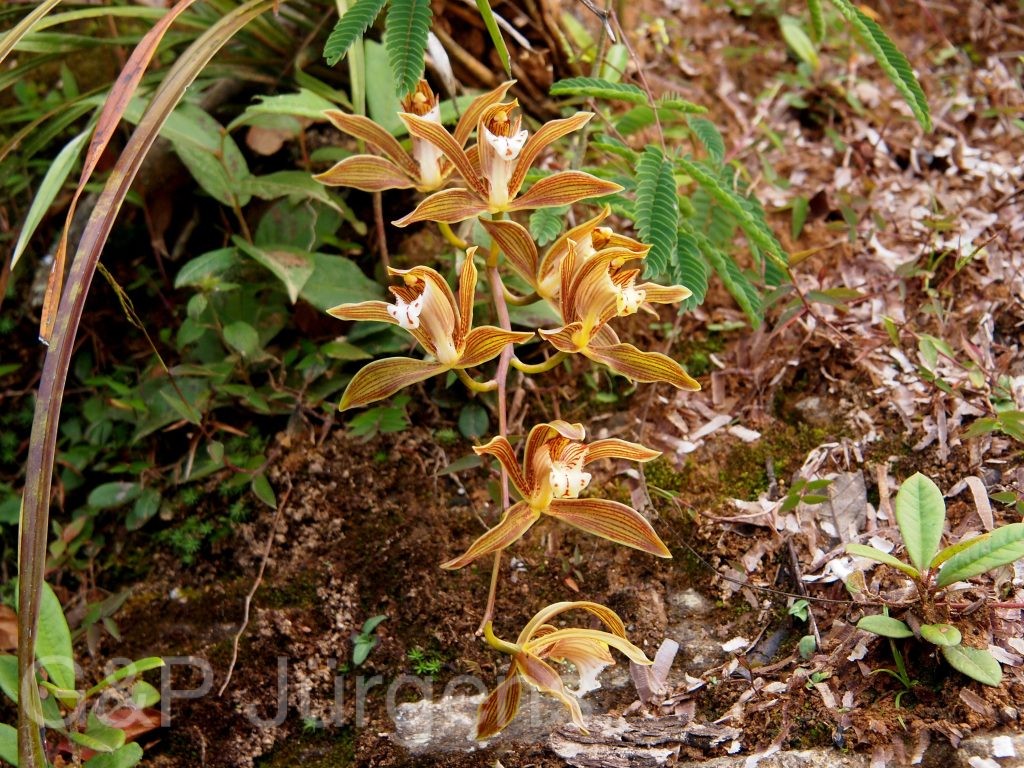
Bhutan2012 1133
Bhutan Trachiyangtse 1780m, October

Description

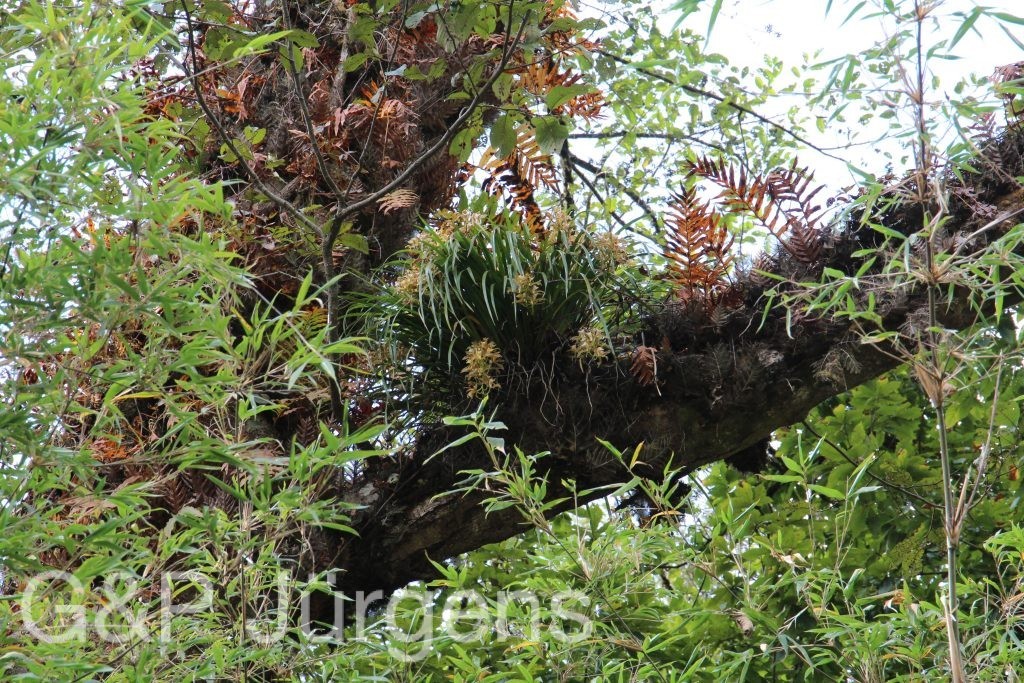
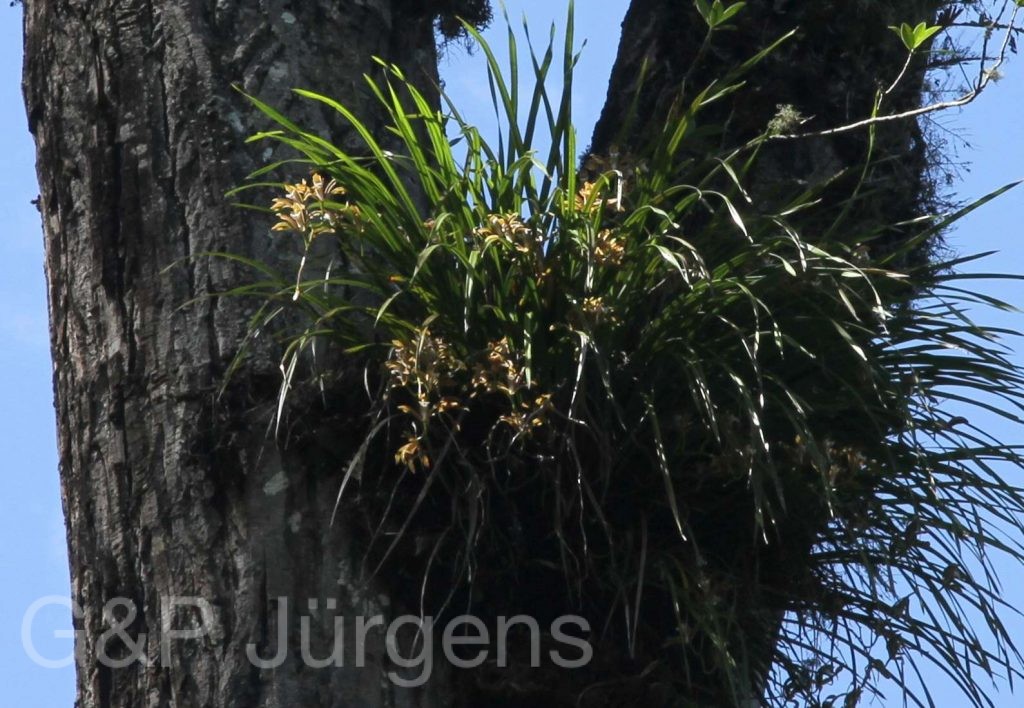
Cymbidium erythraeum is an epiphytic orchid distributed across the Sino-Himalayan region, native from China and the Himalaya (India, Nepal, Bhutan) into Myanmar and Vietnam, with cultivated material accounting for the Canadian GBIF records; about 116 occurrences are aggregated overall. It is an epiphyte, sometimes lithophytic, of humid evergreen and broad-leaved montane forest, growing on mossy trunks and shaded rock faces generally between roughly 1,400 and 2,800 m. The plant illustrated was photographed at Trashiyangtse (Trachiyangtse) in eastern Bhutan at about 1,780 m in October, the species typically flowering in autumn into winter.

It is a tufted epiphyte with ovoid to fusiform pseudobulbs sheathed by the bases of several distichous, narrowly linear, arching leaves. The inflorescence is a stout, suberect to arching lateral raceme carrying several large, fragrant flowers. The sepals and petals are green to olive, conspicuously veined and overlaid with reddish-brown lines, the petals spreading; the trilobed labellum is whitish to pale yellow, streaked and spotted with red, its disc furnished with two pubescent longitudinal keels and the side lobes erect about the slender column. The fruit is an ellipsoid, dehiscent capsule containing numerous minute seeds.

The species is referred to Cymbidium section Iridorchis, near C. iridioides, from which it differs in its narrower leaves and more strongly red-lined segments. Pollination is by bees, and germination requires mycorrhizal fungi. Prized in horticulture and subject to wild collection, it is, like the whole genus, protected under CITES Appendix II; over-collection and mid-elevation forest loss are the chief pressures.

Author: Lindl. · Sources: POWO (Kew), GBIF, Flora of China, Flora of Bhutan, The Orchids of Bhutan (Pearce & Cribb), Du Puy & Cribb's monograph The Genus Cymbidium

Rchb.f.

Nepal1992 60 P85 ergebnis
Nepal Milka Danda 2700m March 
Nepal1992 157 P230 ergebnis
Nepal Milka Danda 2700m March 

Description

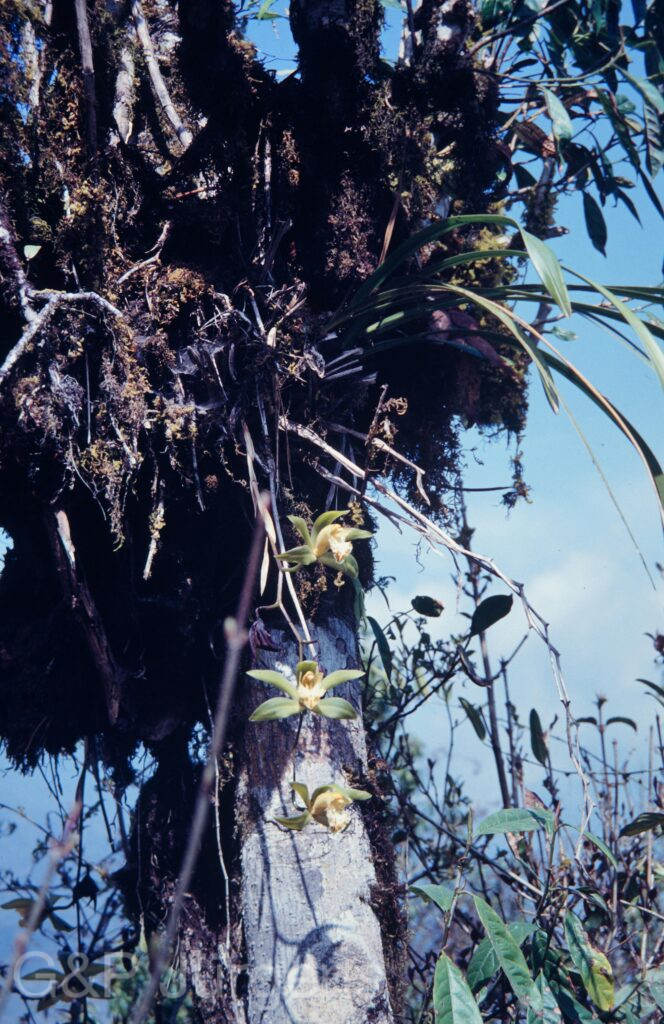
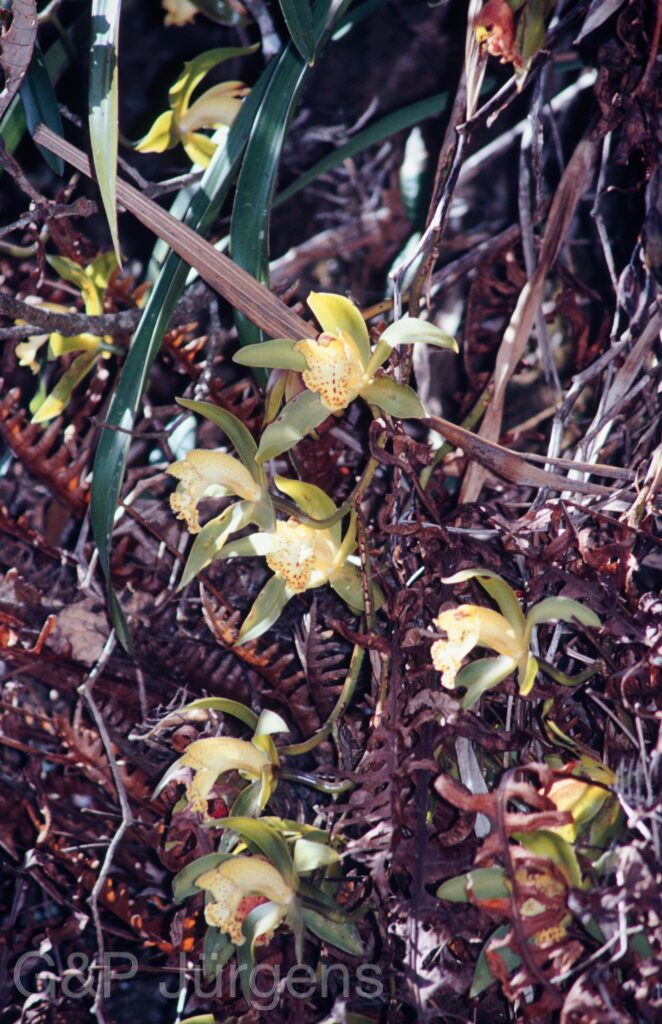
Cymbidium hookerianum is a large-flowered orchid of the Himalaya and southwestern China, distributed through China, India, Bhutan, Nepal, Myanmar and Thailand, with around 185 GBIF records. It is chiefly an epiphyte, also growing on mossy rocks, in cool, humid temperate broadleaved and evergreen forest, typically between about 1500 and 2800 m. The gathering from Milka Danda in Nepal at 2700 m in March documents its early-spring flowering, when this mid-montane cloud-forest belt provides the moist, shaded, well-ventilated conditions the species requires.

It is a robust sympodial epiphyte forming clusters of stout, ovoid pseudobulbs partly sheathed by the bases of the long, arching, linear-lanceolate leaves. The inflorescence is a long arching to pendent raceme bearing several large, fragrant flowers. The sepals and petals are broad and spreading, apple-green to yellow-green, while the trilobed labellum is whitish to cream, spotted and blotched with crimson or maroon, with raised keels along its disc; the column is winged in typical Cymbidium fashion. The fruit is an ellipsoid capsule releasing innumerable dust-like seeds.

Cymbidium is a genus of tribe Cymbidieae long prized in horticulture, and C. hookerianum (commemorating J. D. Hooker) is an important parent in modern hybrids. Its showy, scented flowers are pollinated by bees, while the minute seeds depend on mycorrhizal fungi for germination. Wild populations are vulnerable to over-collection for the ornamental trade and to forest loss, and Cymbidium species are listed on CITES Appendix II, regulating their international commerce.

Author: Rchb.f. · Sources: POWO (Kew), GBIF, Flora of China, Flora of Bhutan, The Genus Cymbidium (Du Puy & Cribb)

D.Don

Bhutan2012 1162
Bhutan Tashiyangtse 1900m, October
Bhutan2012 1163
Bhutan Tashiyangtse 1900m, October
Bhutan2012 1260
Bhutan Tashiyangtse 2000m, October

Description

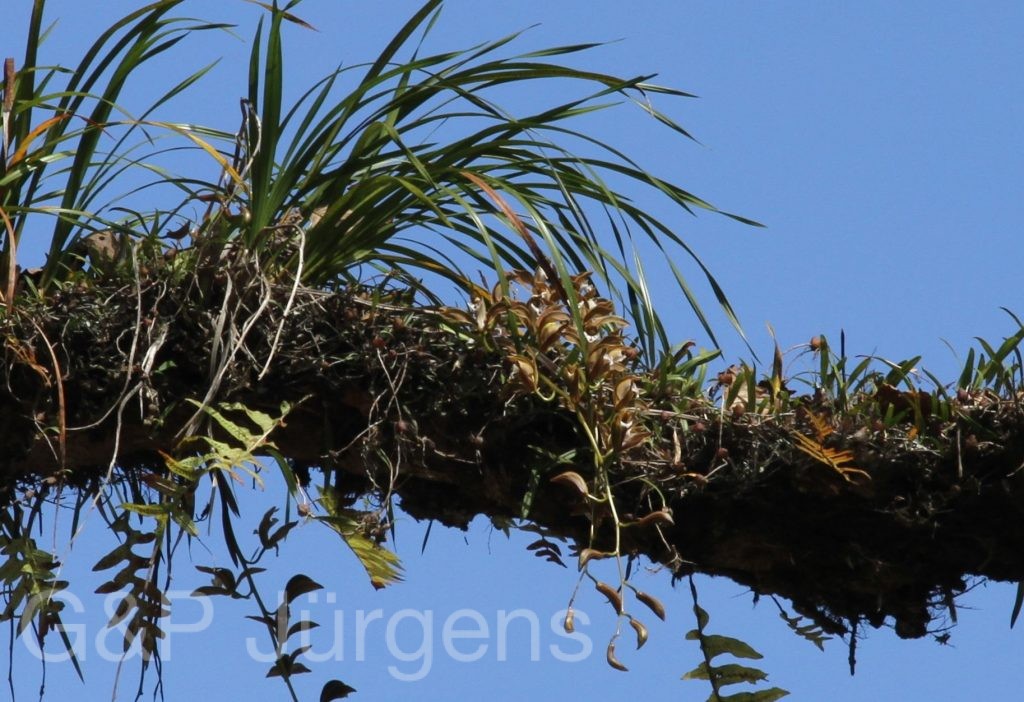
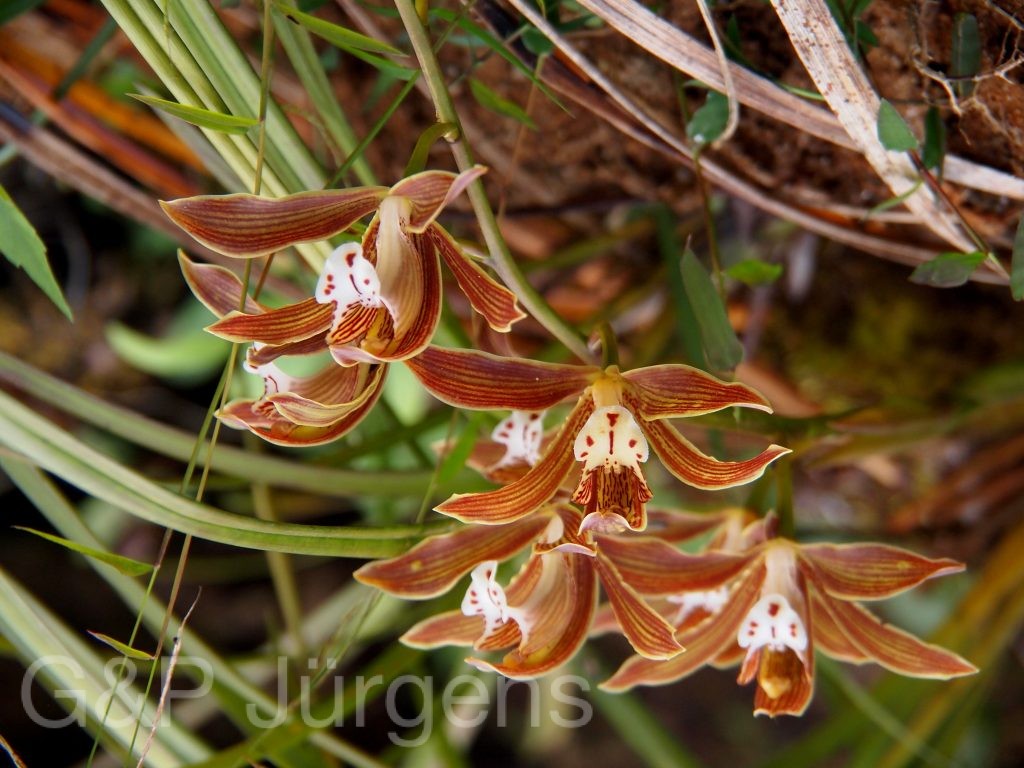
Cymbidium iridioides is a large epiphytic orchid of the Sino-Himalayan and Indochinese region, native from China and the Himalaya (India, Nepal, Bhutan) through Myanmar to Vietnam, with the GBIF dataset reflecting both wild records and cultivated specimens in Europe and North America. It grows as an epiphyte, and occasionally a lithophyte, on mossy trunks and rocks in humid broad-leaved and evergreen montane forest, generally between about 1,200 and 2,800 m. The plants figured were photographed near Tashiyangtse in eastern Bhutan at roughly 1,900 to 2,000 m in October, where the species comes into flower at the close of the monsoon.

It is a robust, tufted epiphyte with stout, fusiform to ovoid pseudobulbs largely enclosed by the bases of several distichous, linear-ligulate, leathery leaves. The inflorescence is a stout, arching to pendent raceme arising laterally from the pseudobulb and bearing numerous large, showy flowers. The sepals and petals are yellowish-green, longitudinally veined and streaked with reddish-brown; the trilobed labellum is recurved, marked with red lines and crested with two longitudinal, papillose-pubescent keels, the side lobes erect about the column. The fruit is an ellipsoid, ribbed capsule releasing copious dust-like seeds.

The species belongs to Cymbidium section Iridorchis, marked by large pseudobulbs, many-flowered pendent racemes and hairy lip keels. Like other large Cymbidium it is bee-pollinated and depends on mycorrhizal fungi for establishment. Long valued in horticulture and medicine, it has been heavily collected; the genus is listed on CITES Appendix II, and over-collection with forest loss is the principal threat.

Author: D.Don · Sources: POWO (Kew), GBIF, Flora of China, Flora of Bhutan, The Orchids of Bhutan (Pearce & Cribb), Du Puy & Cribb's monograph The Genus Cymbidium

(Lindl.) D.K.Liu & Ming H.Li

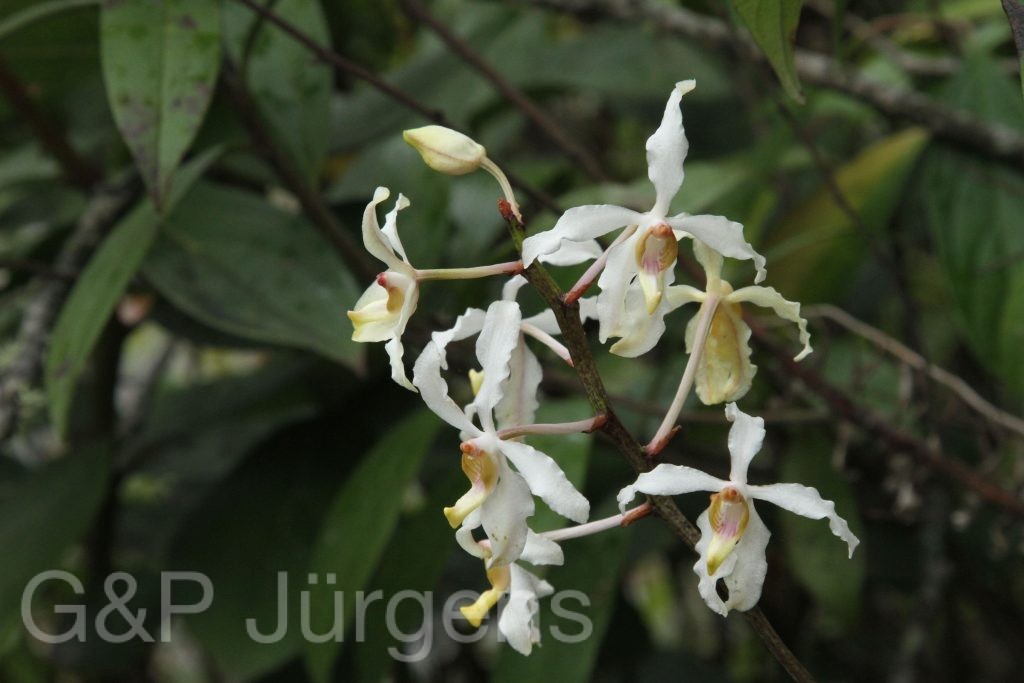
Bhutan2014 39
Bhutan Trashigang 1100m, May
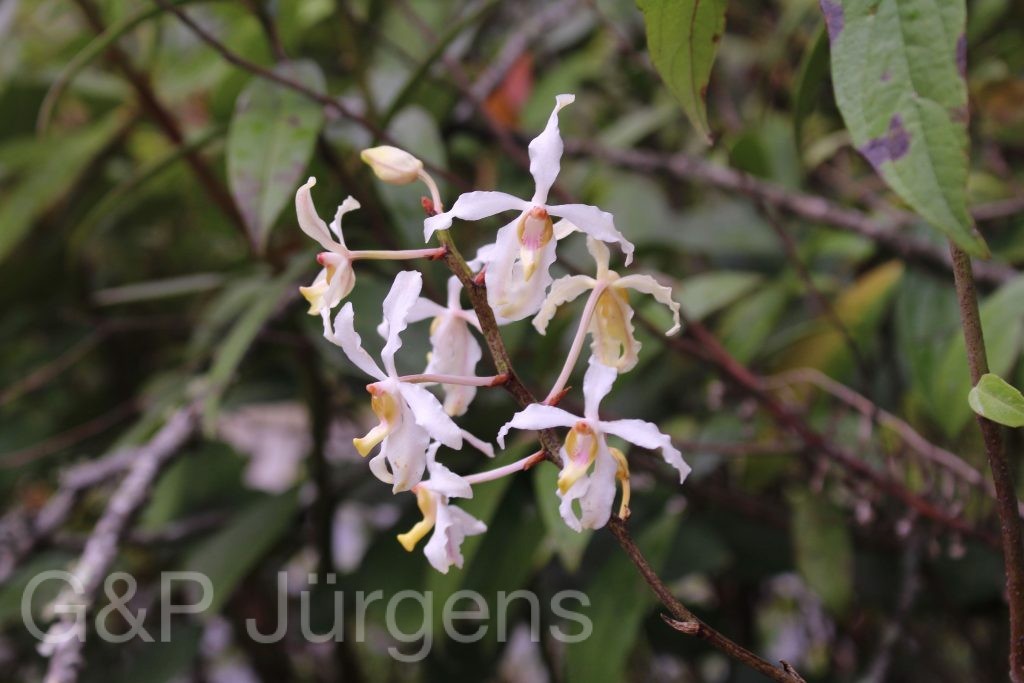
Bhutan2014 40
Bhutan Trashigang 1100m, May

Description

Cymbilabia undulata (formerly placed in Vandopsis) is an epiphytic orchid of the eastern Himalaya and adjacent areas, recorded from Nepal, north-east India, Bhutan, Myanmar and south-west China across some 129 georeferenced occurrences. It grows as an epiphyte on the trunks and larger limbs of trees in warm, humid subtropical to lower montane forest, favouring bright, well-drained positions. The Bhutan collection at Trashigang at about 1100 m reflects its preference for the warm subtropical belt, typically between roughly 700 and 1600 m, where seasonal monsoon rainfall and high humidity prevail.

It is a robust monopodial epiphyte with a stout, leafy stem and thick, fleshy roots. The leaves are distichous, ligulate to strap-shaped, coriaceous and unequally bilobed at the apex. The inflorescence is an axillary, branching raceme or panicle bearing numerous fleshy, long-lived flowers; these are yellowish marked with reddish-brown blotches, with spreading, undulate-margined sepals and petals. The lip is small, fleshy, three-lobed and saccate at the base, a diagnostic feature, and the column is short and stout bearing a waxy pollinarium.

The transfer from Vandopsis to Cymbilabia reflects molecular reassessment of the Aeridinae (subtribe of Vandeae), in which generic limits have been substantially revised. As with many Vandoid orchids, the showy resupinate flowers are adapted to insect pollination, and the dust-like seeds are wind-dispersed. Although fairly widespread, populations are vulnerable to habitat loss and orchid collecting; like all orchids the species is listed on CITES Appendix II, regulating international trade.

Author: (Lindl.) D.K.Liu & Ming H.Li · Sources: POWO (Kew), GBIF, Flora of Bhutan, Flora of China, The Orchids of Bhutan (Pearce & Cribb), Genera Orchidacearum (Pridgeon et al.)

Benth.

Garh 07 558 ergebnis
India Garhwal Sena 3760m,

Description

Cynoglossum microglochin is a high-altitude species of hound's-tongue distributed across the western and central Himalayas, from Afghanistan and Pakistan through northwest India (Kashmir, Himachal Pradesh, Uttarakhand) to Nepal, Bhutan, and into southwestern China. GBIF records document 209 occurrences across its range. The species typically inhabits open alpine meadows, grassy slopes, and disturbed ground along trails at elevations of 2,800–4,200 m, where it grows in well-drained, often stony soils among other subalpine and alpine herbaceous communities.
The plant is an erect or ascending perennial herb, 20–50 cm tall, with stems covered in appressed or spreading hairs. Basal leaves are oblanceolate to spatulate, 5–15 cm long, petiolate, with entire margins and a dense indumentum of short, stiff hairs on both surfaces. Cauline leaves are progressively smaller, sessile, and semi-amplexicaul. The inflorescence consists of terminal, ebracteate, scorpioid cymes that elongate considerably in fruit. Flowers are small, 3–5 mm in diameter, with blue to violet corollas; the tube is short, with rounded fornices closing the throat. The nutlets, typically four per flower, are ovoid, 2–3 mm long, and densely covered with short, glochidiate (barbed) prickles — notably smaller than those of congeners such as C. zeylanicum, a character reflected in the epithet 'microglochin' (small barb).
This species is distinguished from the widespread Cynoglossum glochidiatum by its smaller nutlet spines and generally more compact inflorescence. It was photographed at Sena in Garhwal at 3,760 m, near the upper limit of its elevational range. Though not currently assessed by the IUCN, its preference for undisturbed alpine habitats makes it potentially sensitive to grazing pressure and climate-driven upward shifts in vegetation zones. Its biogeographical range, extending from the Hindu Kush to the eastern Himalayas, indicates a broadly adapted yet montane-restricted taxon.

Author: Benth. · Sources: POWO (Kew), GBIF, Flora of British India Vol. 4, Flora of Pakistan (Boraginaceae), Kazmi (1970) — Revision of Boraginaceae

G.Don

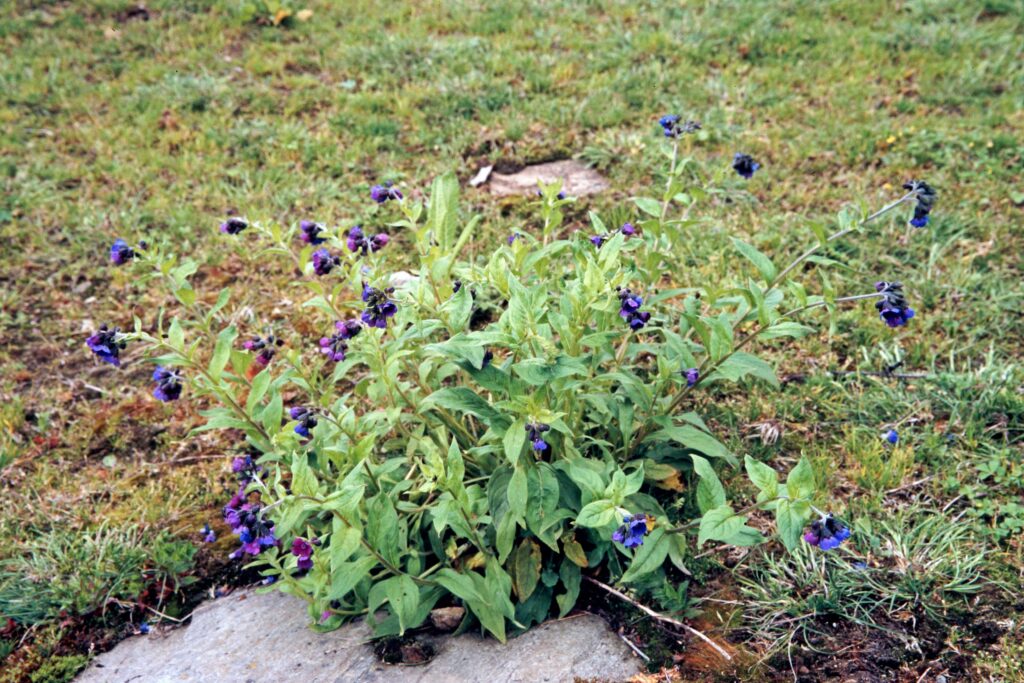
Garh 07 107 ergebnis
India Garhwal Mandakini 2900m, June
Garh 07 56 ergebnis
India Garhwal Mandakini 2900m, June

Description

Cynoglossum wallichii is a widespread Asian herb recorded across China, India, Nepal, Pakistan, Bhutan and Afghanistan, with naturalised or casual occurrences in the United States and parts of Europe. GBIF treats the name as a synonym, with Cynoglossum wallichii accepted under that combination. It occupies open hill slopes, forest margins, grassy clearings, fallow ground and roadside banks from about 1500 to 3500 m. The depicted plant from the Mandakini valley in Garhwal, India, at around 2900 m and flowering in June, is characteristic of its preference for disturbed, sunny temperate slopes during the early monsoon.

The plant is an erect annual or biennial herb, the stems simple or branched above and clothed, like the foliage, in appressed to spreading hispid hairs. The leaves are alternate, the lower oblanceolate and narrowed to a petiole, the upper sessile, lanceolate and somewhat clasping. The inflorescence consists of elongating, ebracteate scorpioid cymes bearing small, pale to bright blue, salverform to funnelform flowers with prominent fornices closing the throat. The fruit separates into four ovoid nutlets densely covered with glochidiate (barbed) bristles, an epizoochorous adaptation that promotes dispersal on animal fur.

The epithet honours Nathaniel Wallich, the Danish botanist whose Himalayan collections underpin much early taxonomy of the region. Within Cynoglossum the species belongs to a critical complex whose delimitation has prompted segregation into related genera such as Lindelofia and Paracaryum. The barbed nutlets account for its readiness to colonise trampled and grazed ground, and its weedy tendencies explain the scattered extra-Asian records; it is of no conservation concern.

Author: G.Don · Sources: POWO (Kew), GBIF, Flora of China Vol. 16, Flora of Pakistan, Flora of Nepal, A Revision of Cynoglossum (Boraginaceae) (Brand)