
Buch.-Ham.
Description
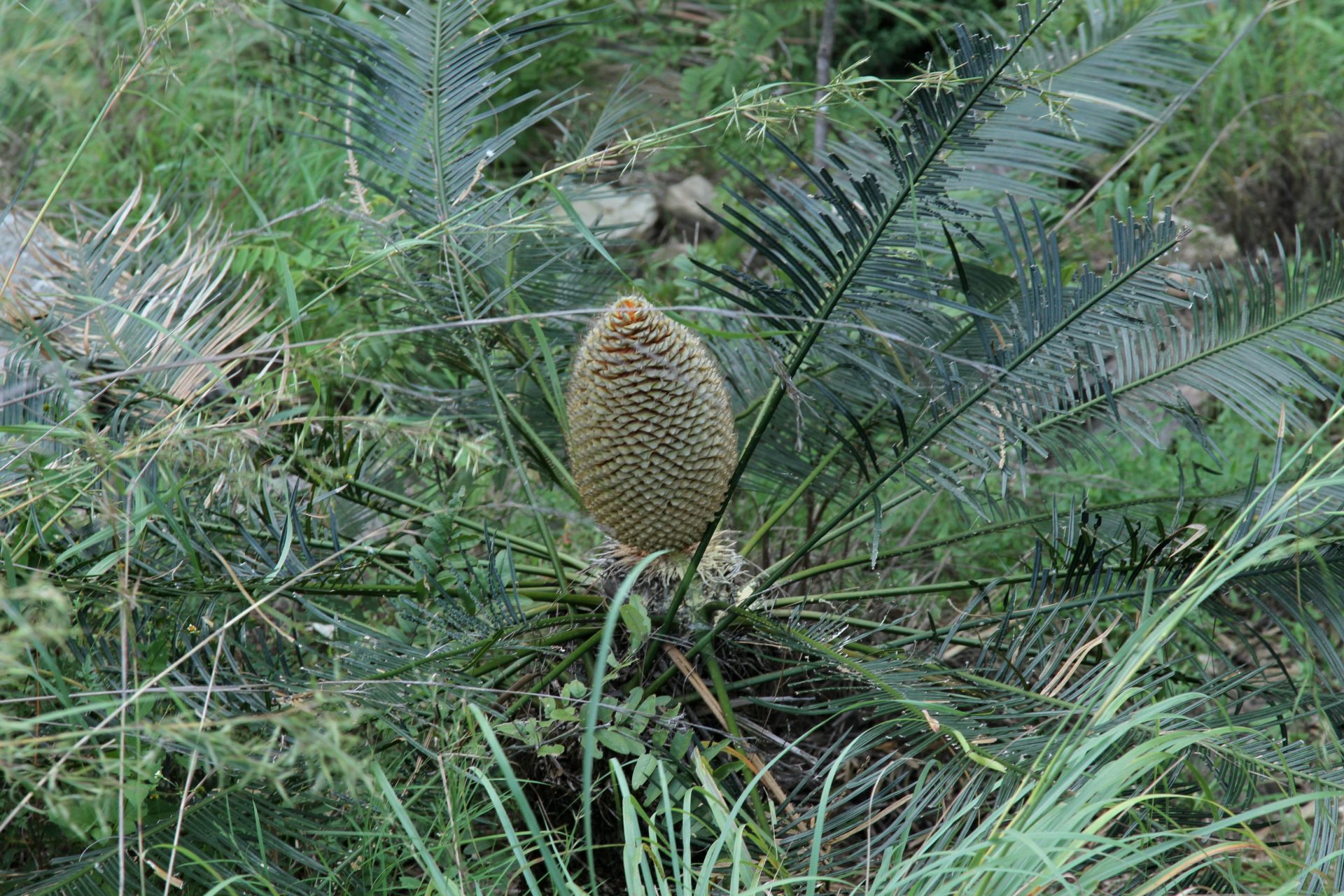
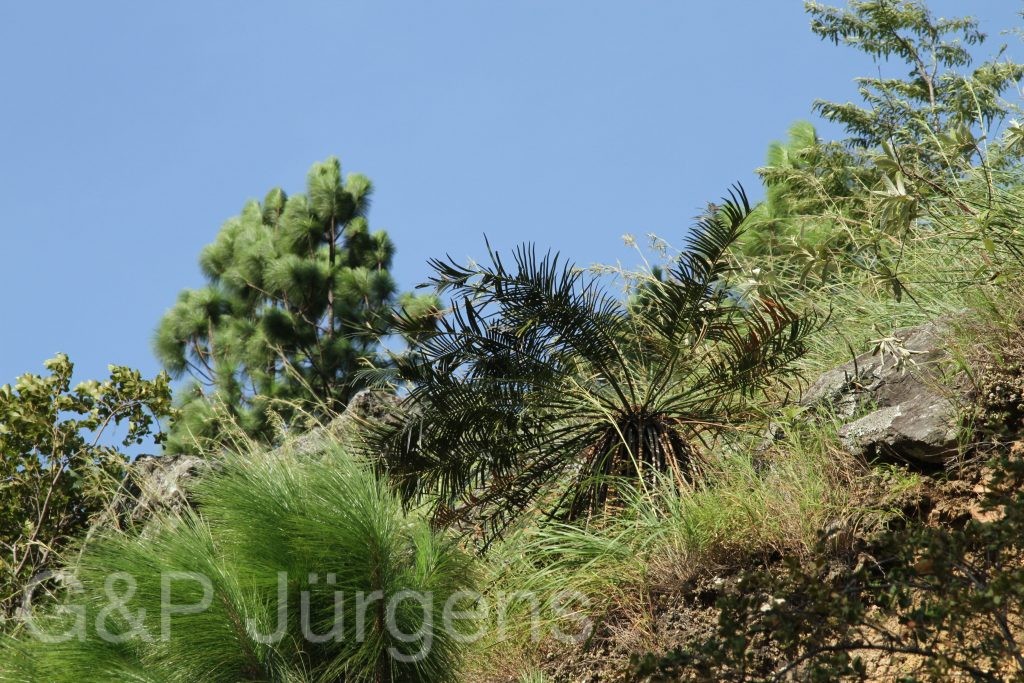
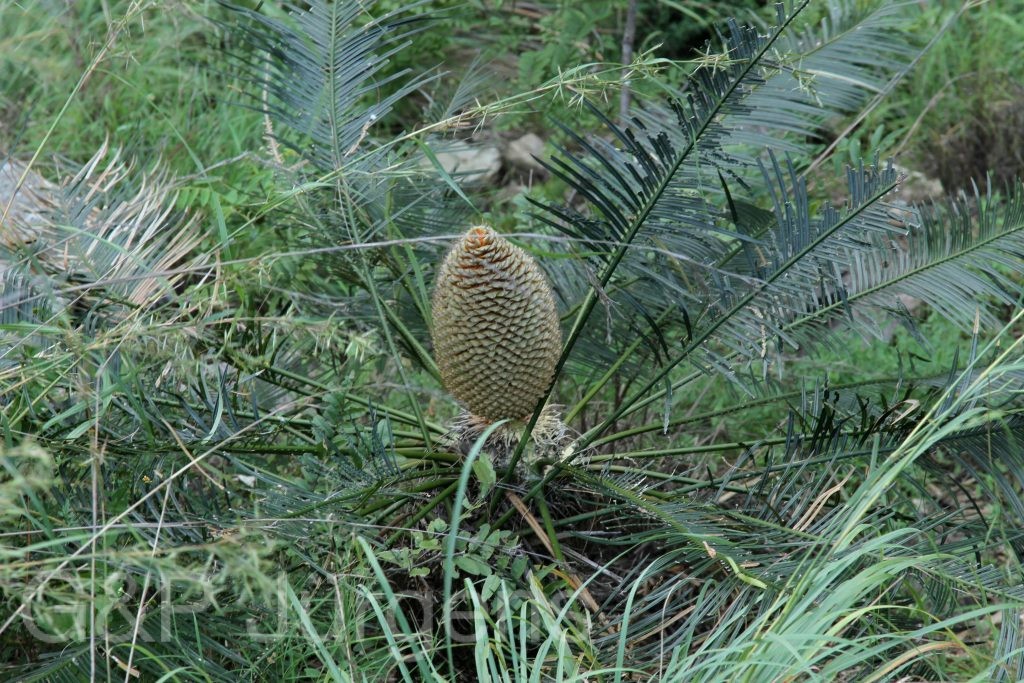
Cycas pectinata is a large arborescent cycad of the eastern Himalayan foothills and Indochina, recorded by GBIF from Thailand, India, Vietnam, China, Bhutan, Nepal, Myanmar and Bangladesh, among others, across about 318 georeferenced occurrences. It inhabits warm subtropical to tropical situations, growing on hill slopes, in open dry forest, on limestone outcrops, in scrub and along forest margins, generally at low elevations. The photographed plant from the Koma-Chu valley in southern Bhutan at about 900 m in October typifies its occurrence in the warm inner valleys of the foothill zone, where it tolerates seasonally dry, well-drained and often rocky substrates exposed to strong sunlight.
The plant develops a stout, columnar, unbranched trunk that may reach several metres in height, crowned by a rosette of large, once-pinnate, dark green leaves with numerous narrow, rigid, spine-tipped leaflets and a spiny petiole base. Like all cycads it is strictly dioecious. The male plants produce a large solitary terminal pollen cone, ovoid to cylindrical and yellow to orange-brown; the female plants bear loose, open clusters of megasporophylls rather than a closed cone, each megasporophyll with a pectinate (comb-like, hence pectinata) lateral fringe of teeth and bearing ovules along its margins. The large seeds are drupe-like, ovoid and become orange-brown to reddish at maturity.
Cycas pectinata is one of the most widely distributed Asian species of Cycas, the sole genus of the ancient family Cycadaceae, a lineage of gymnosperms of considerable evolutionary antiquity that reproduces through motile, swimming sperm and relies on insect (weevil and beetle) pollination. The species is of high conservation interest: like cycads generally it is listed on CITES Appendix II, and wild populations are depleted by over-collection for ornament and religious use, seed and starch harvesting, and habitat loss, so that the species is regarded as threatened across much of its range despite its broad distribution.
Author: Buch.-Ham. · Sources: POWO (Kew), GBIF, Flora of China Vol. 4, Flora of Bhutan Vol. 1, Flora of Nepal, Flora of Pakistan, Hill & Lindstrom: revision of the Cycas pectinata complex (and The Cycad Pages)