Tag:

Bhutan

Flowers of Bhutan — 1326 plant species documented across the Bhutanese Himalaya, from dense broadleaf and conifer forests to alpine scrub and meadows. Bhutan’s largely intact wilderness shelters an exceptional diversity of orchids, rhododendrons, primulas and Himalayan poppies, many of them regional endemics. Each species page includes a botanical description, distribution, habitat and flowering time, with the original photograph and its recorded altitude and locality.

B.Heyne ex Roth

Nepal 2009 120 ergebnis
Nepal Helambu Melanehe Pul 1080, May

Description

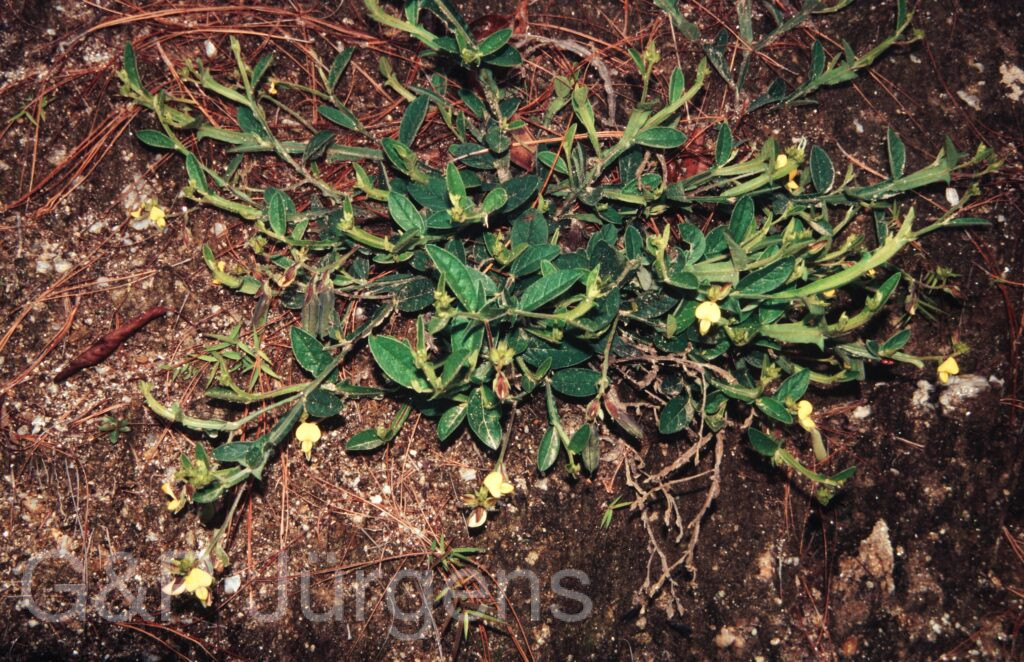
Crotalaria albida is one of the most widespread Asian rattlepods, ranging from Pakistan, India, Nepal, Bhutan and Bangladesh eastward through China, Taiwan, Hong Kong, Myanmar, Thailand, Laos, Vietnam and Malesia to the Philippines, Indonesia, New Guinea and Australia, with naturalised records in Sri Lanka and the United States; over 2100 GBIF occurrences attest to this amplitude. In the Himalaya it favours open grassy hillsides, dry banks, pine-forest margins and disturbed roadsides on well-drained, often acidic soils. The plant photographed near Melamchi Pul in the Helambu region of central Nepal, at about 1080 m in May, typifies its preference for warm, low to mid-montane slopes between roughly 300 and 2300 m.

It is a slender, erect to ascending perennial herb or subshrub 30-90 cm tall, the wiry stems clothed in appressed silvery hairs. The leaves are simple, unifoliolate, oblong to oblanceolate and shortly petiolate, paler and pubescent beneath. The inflorescence is a slender terminal raceme of small papilionaceous flowers; the standard is pale yellow, often veined reddish-brown, and the keel is incurved and beaked. The calyx is bilabiate and hairy. As in the genus, the fruit is a short, inflated, glabrescent legume in which the loosened seeds rattle when dry.

The epithet albida alludes to the whitish, silky indumentum. Crotalaria is a large pantropical genus, and many species, including this one, contain pyrrolizidine alkaloids that render them toxic to livestock, though the plant is used locally in folk medicine. Its nitrogen-fixing root nodules enrich degraded slopes, and the species behaves as a pioneer colonist of disturbed ground, accounting for its extensive distribution and naturalisation.

Author: B.Heyne ex Roth · Sources: POWO (Kew), GBIF, Flora of China, Flora of Nepal, Flora of British India, Le Roux monograph of Crotalaria
Thoth.

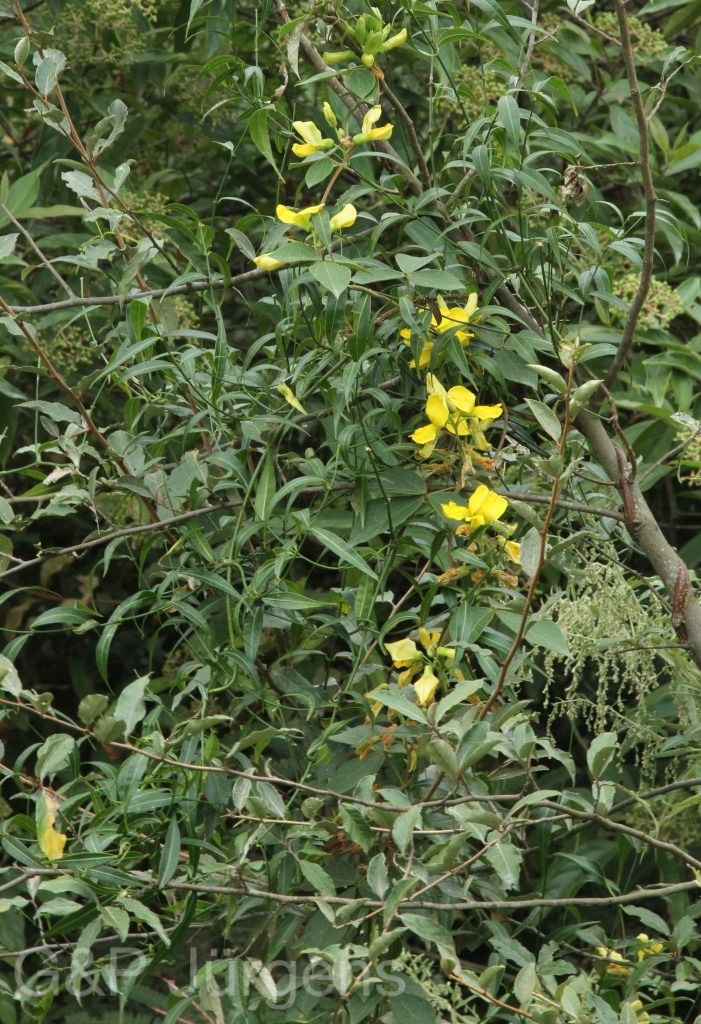
Bhutan2012 190
Bhutan Haar-Valley, 3300m September
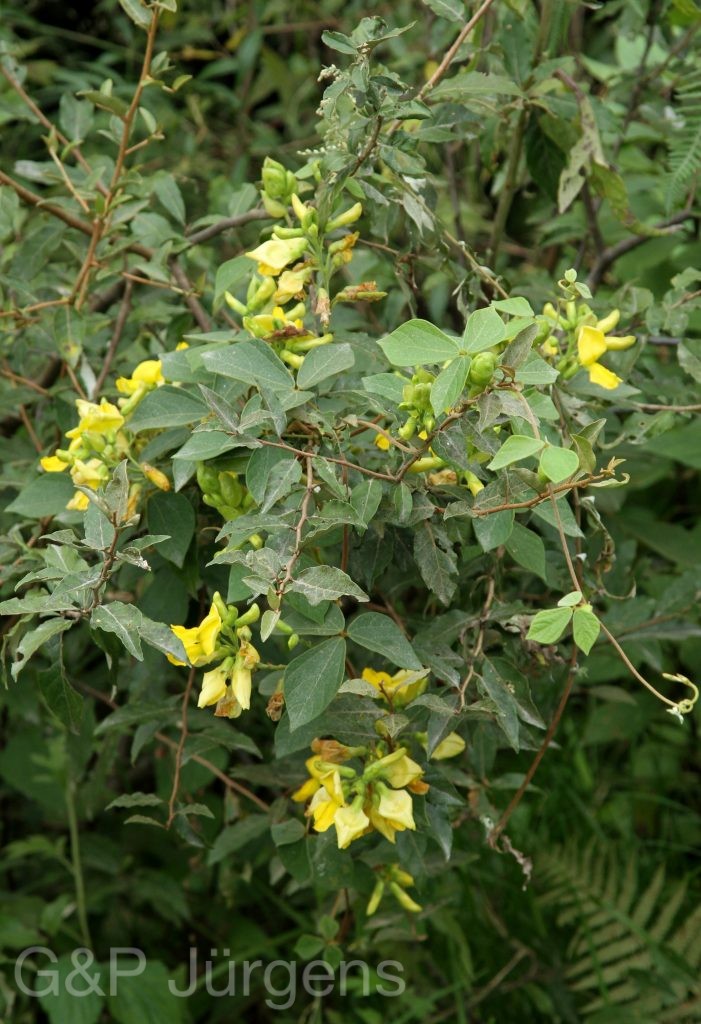
Bhutan2012 362
Bhutan Dochu-La 2700m, September

Description

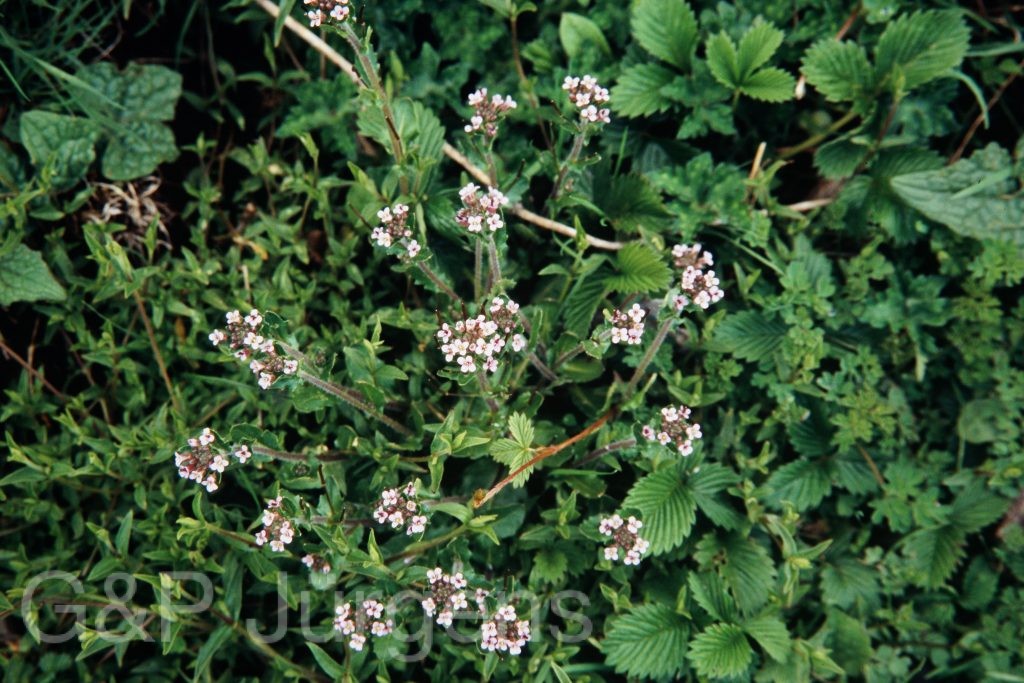
Crotalaria bhutanica is a narrowly distributed legume of the eastern Himalaya, described from and centred on Bhutan; it has no georeferenced records in GBIF, underscoring how poorly documented and locally restricted this taxon remains. It is a plant of open grassy slopes, scrub and disturbed montane ground, and the two collection sites given, the Haar valley at about 3300 m and Dochu-La at 2700 m, both in September, place it in the cool temperate to subalpine zone of western and central Bhutan, where it flowers and fruits in the late monsoon and early autumn.

Like others of its genus, the species is a herb or small subshrub with simple or trifoliolate leaves and stems bearing the appressed hairs characteristic of Crotalaria. The flowers are arranged in terminal or leaf-opposed racemes and have the typical papilionaceous structure of the genus, with a large rounded standard, two lateral wings and a beaked keel enclosing the stamens and style; the corolla is yellow, sometimes veined or flushed with brown or purple. The fruit, as in all Crotalaria, is an inflated, bladder-like pod in which the loosened seeds rattle when ripe, the feature that gives the genus its name (from the Greek krotalon, a rattle).

Crotalaria (tribe Crotalarieae, subfamily Faboideae) is a large pantropical genus, and C. bhutanica is one of its restricted Himalayan endemics, distinguished within the regional flora by its combination of habit, indumentum and floral detail. Like most papilionoid legumes it forms nitrogen-fixing root nodules with rhizobia and is pollinated by bees adapted to tripping the keel mechanism. Given its apparently very limited range, the absence of occurrence data, and ongoing pressures on Himalayan grassland habitats, the species warrants targeted survey and a formal conservation assessment.

Author: Thoth. · Sources: POWO (Kew), GBIF, Flora of Bhutan, Polhill Crotalaria in Africa and Madagascar, Legumes of the World (Lewis et al.)

DC.

Bhutan2012 822 Kopie
Bhutan Trongsa 2100m, October
Bhutan2012 823
Bhutan Trongsa 2100m, October

Description

Crotalaria cytisoides is a shrubby rattlepod of the Himalaya and into Southeast Asia. GBIF records it from China, India, Nepal, Myanmar, Thailand, Bhutan, Laos, Malaysia and Indonesia, with further occurrences extending to Madagascar and Uganda, totalling over 400 records. It grows on open hill slopes, scrub, grassy banks, forest margins and roadsides at lower to middle elevations, broadly between 1000 and 2700 m. The plant shown was photographed near Trongsa in central Bhutan at 2100 m in October, flowering in the post-monsoon period along the warm temperate hill zone where this species is a frequent component of disturbed scrub.

It is a much-branched shrub or undershrub with silky-pubescent young branches. The leaves are trifoliolate, the obovate to elliptic leaflets softly hairy beneath, subtended by small stipules. The flowers are borne in terminal and leaf-opposed racemes; the papilionaceous corolla is yellow, sometimes veined or flushed reddish-brown on the standard, with the keel beaked as is typical of the genus. The fruit is an inflated, oblong legume in which the loosened ripe seeds rattle when shaken, the feature giving Crotalaria its English name rattlepod.

Crotalaria is a large pantropical legume genus, and like its relatives it forms root nodules with nitrogen-fixing rhizobia, enriching poor soils and contributing to its success as a coloniser of disturbed ground. Many species, including this one, contain pyrrolizidine alkaloids that deter herbivores and can be toxic to livestock. With its wide distribution, ruderal tendency and abundant seed production, C. cytisoides is common and of no conservation concern across its broad range.

Author: DC. · Sources: POWO (Kew), GBIF, Flora of China, Flora of Bhutan, Annotated Checklist of the Flowering Plants of Nepal, A revision of the genus Crotalaria (Leguminosae)

L.

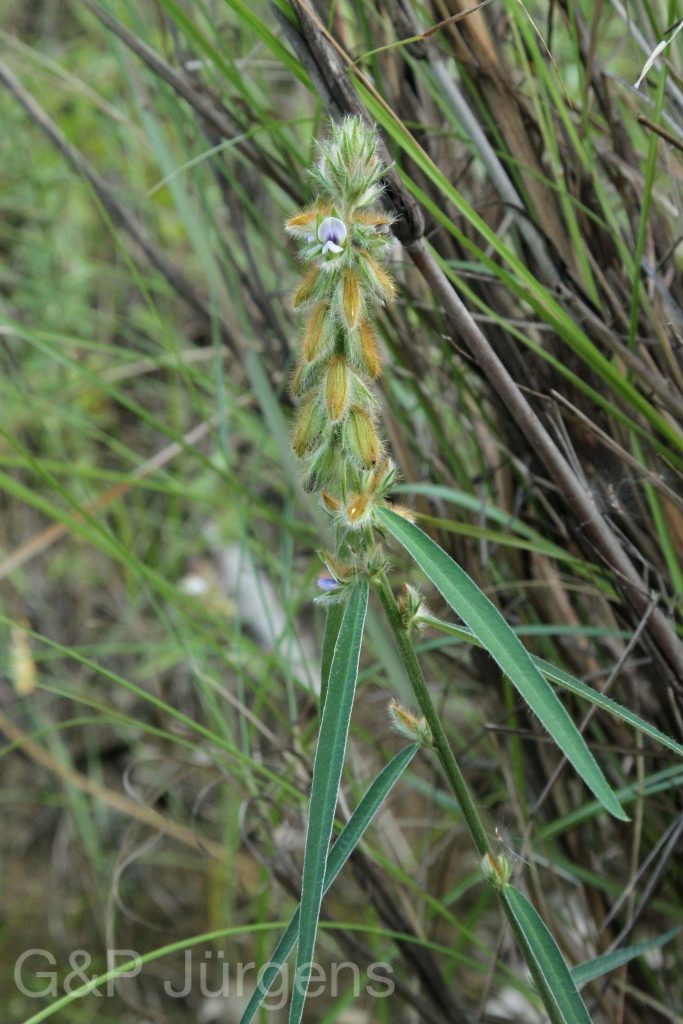
Bhutan2012 625
Bhutan Wangdi 2800m, September

Description

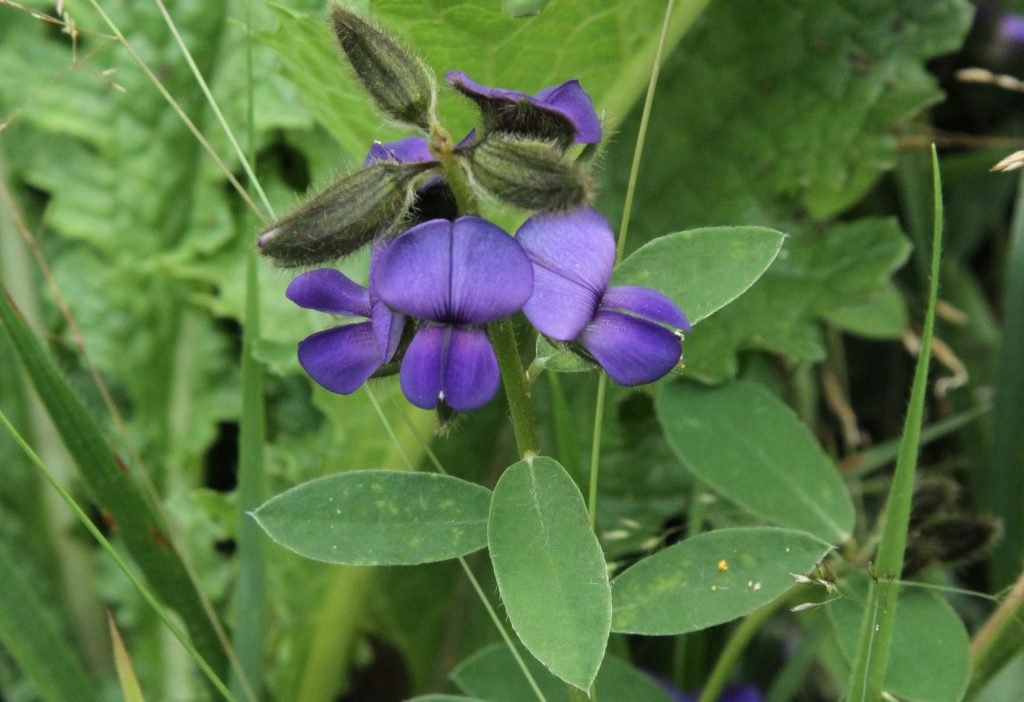
Crotalaria sessiliflora is a wide-ranging Asian-Australasian rattlepod, recorded by GBIF (3102 occurrences) from China, Japan, Korea, Taiwan, India, Thailand, Indonesia, Papua New Guinea, Australia, Nepal, the Philippines, Myanmar, Bhutan, Malaysia and Indochina. It is a plant of open, sunny, seasonally dry habitats, occupying grasslands, hill slopes, fallow fields, roadsides and waste ground from the lowlands up into the lower mountains, roughly to 2800 m. The photographed plant from near Wangdi in western Bhutan at about 2800 m, flowering in September, sits at the upper elevational margin of the species and reflects its late-monsoon flowering across the eastern Himalaya.

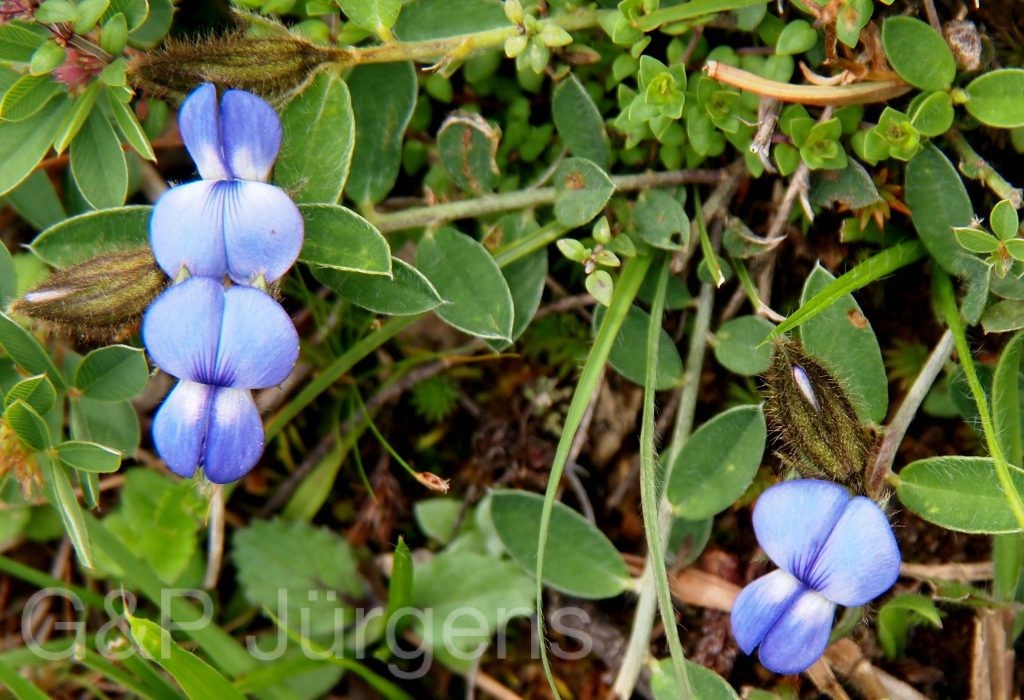
The species is an erect annual herb, usually 30-100 cm tall, with stems and foliage clothed in long, spreading brownish hairs. The leaves are simple (unifoliolate), narrowly linear to oblanceolate, sessile or shortly petiolate, with conspicuous setose stipules. The flowers are borne in dense, head-like or short terminal racemes, often crowded and almost sessile as the epithet indicates, each subtended by leafy bracts. The papilionate corolla is blue, violet or pale purple, the standard hairy outside. As in Crotalaria the stamens are monadelphous with dimorphic anthers. The fruit is a small, inflated, oblong pod enclosed by the persistent calyx, the loose seeds rattling within when ripe.

Described by Linnaeus, the species belongs to the large pantropical genus Crotalaria (Fabaceae, subfamily Faboideae, tribe Crotalarieae). Like its relatives it forms root nodules with rhizobial bacteria, fixing atmospheric nitrogen and enriching soils, and is sometimes grown as a green manure. The plant contains pyrrolizidine alkaloids and is used in traditional Asian medicine, though these compounds render it potentially toxic to livestock. With an extensive range and weedy tendencies it is of least conservation concern.

Author: L. · Sources: POWO (Kew), GBIF, Flora of China, Flora of Bhutan, Monograph of the genus Crotalaria (Polhill)

Andrews

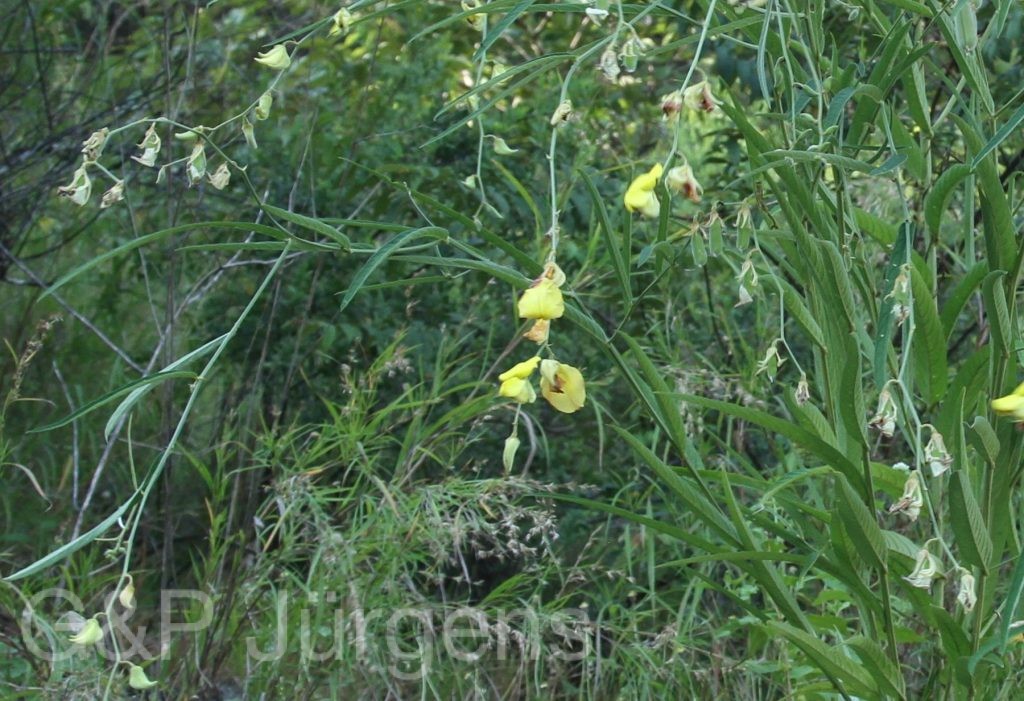
Bhutan2012 1148
Bhutan Trashiyangtse 1780m, October

Description

Crotalaria tetragona Andrews is a tall rattlepod widely distributed across tropical and subtropical Asia, native from India, Nepal, Bhutan and Bangladesh through southern China, Myanmar, Thailand, Laos, Vietnam, Cambodia and the Malesian region; GBIF lists about 405 occurrences, with records from Brazil, Jamaica, Colombia and Mauritius indicating introduction and naturalisation. It grows in open grassland, forest margins, scrub and disturbed roadside ground in the warm subtropical and submontane zone, generally below about 2000 m. The photographed plant from Trashiyangtse in eastern Bhutan at around 1780 m, flowering in October, reflects its occurrence in warm, lower-elevation valley habitats.

The species is a robust erect perennial herb or subshrub with conspicuously four-angled, often winged stems, the epithet tetragona alluding to this quadrangular form. The leaves are simple, elliptic to lanceolate and entire. The flowers are borne in long terminal racemes and are large and bright yellow, with the standard frequently veined reddish-brown; the calyx is deeply lobed and the keel beaked in the papilionaceous arrangement. The fruit is a large, inflated, oblong pod that turns blackish and rattles when the loose seeds detach at maturity, giving the genus its common name.

Crotalaria (Fabaceae, subfamily Faboideae, tribe Crotalarieae) is a large pantropical genus of nitrogen-fixing legumes, several used as green manure and fibre plants. C. tetragona is locally common and weedy, of least conservation concern, and like its congeners may contain pyrrolizidine alkaloids rendering it toxic to livestock.

Author: Andrews · Sources: POWO (Kew), GBIF, Flora of China, Flora of Bhutan, Flora of British India, Polhill monograph Crotalaria in Africa and Asia

(Edgew.) Al-Shehbaz, O’Kane & R.A.Price

Bh09 187 G324
Bhutan Phajoding, 3700m June
Nepal 99 155 ergebnis
West-Nepal South of Rara-Lake 3400m, June

Description

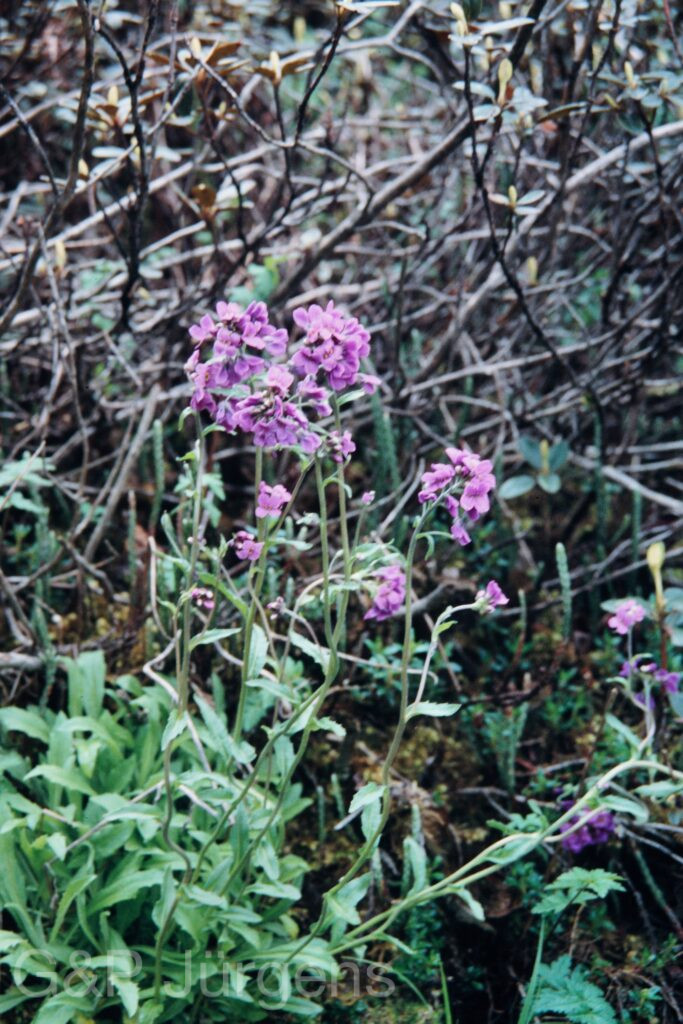
Crucihimalaya himalaica is a widespread alpine crucifer of the High Asian mountains, strongly represented in GBIF with about 704 occurrences spanning India, China, Nepal, Pakistan, Bhutan, Afghanistan, Iran and Myanmar. It is a plant of open, often disturbed high-elevation ground, growing on stony slopes, screes, moraine, grazed turf, fallow and the margins of cultivation in the subalpine and alpine belts. The plants photographed at Phajoding in Bhutan at about 3700 m and south of Rara Lake in West Nepal at 3400 m, both in June, illustrate its characteristic occupation of open alpine slopes early in the growing season across the breadth of the range.

It is an annual to short-lived perennial herb with a basal rosette of oblanceolate to spathulate leaves bearing toothed or lyrate-pinnatifid margins, the herbage often clothed in branched (stellate or dendritic) and simple hairs. The erect, sparingly leafy stems terminate in racemes of small flowers with four free sepals and four white to pale lilac petals arranged in the cruciform pattern of the family, and six stamens in the usual tetradynamous arrangement. The fruit is a slender, linear, elongate silique that ascends to spreading and dehisces by two valves from a persistent septum to release the seeds.

The genus Crucihimalaya was segregated from Arabis and allied genera on molecular and morphological grounds by Al-Shehbaz, O'Kane and R.A.Price, and it is closely related to Arabidopsis, making the group of interest in comparative and evolutionary genomics. As an abundant, ecologically flexible species thriving in both natural and anthropogenically disturbed alpine habitats, C. himalaica is of no conservation concern, and its wide range reflects effective dispersal and tolerance of harsh, open mountain conditions.

Author: (Edgew.) Al-Shehbaz, O'Kane & R.A.Price · Sources: POWO (Kew), GBIF, Flora of China, Flora of Bhutan, Flora of Pakistan, Al-Shehbaz Brassicaceae of the Himalaya

D.Don

Nepal 99 694 ergebnis ergebnis
West-Nepal Pugmo-Khola 3400m, July

Description

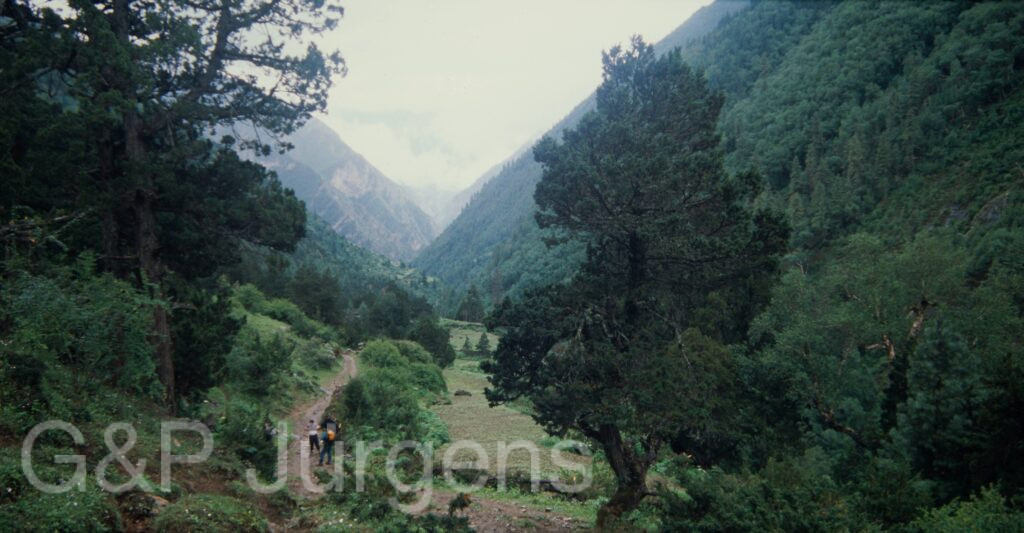
Cupressus torulosa D.Don, the Himalayan or Bhutan cypress, is a coniferous evergreen tree of the Cupressaceae native to the Himalaya and southwestern China. Its native range covers India, Nepal and China, while the large GBIF tally of 1,094 occurrences and many additional countries (New Zealand, USA, Britain, Germany, Australia, South Africa, Brazil and others) reflects its extensive cultivation as an ornamental and forestry tree. In the wild it grows on dry, calcareous and rocky slopes in temperate forests, typically between 1,800 and 3,300 m. The photographed tree from the Pugmo-Khola in West Nepal at 3,400 m, in July, marks the upper edge of its altitudinal distribution.

The plant is a tall, conical to broadly columnar tree reaching 20–45 m, with reddish-brown, fibrous, vertically peeling bark and spreading branches bearing slender, pendulous, terete branchlets. The leaves are scale-like, decussate, closely appressed, dark green and obtuse, lacking a conspicuous dorsal gland. It is monoecious, the small ovoid male cones terminal on lateral branchlets and the female cones globose, 1–2 cm across, composed of 8–12 woody peltate scales each bearing a small umbo and ripening from glaucous green to grey-brown in the second year, releasing numerous narrowly winged seeds.

The taxonomy of Asian Cupressus has been much debated, with several Himalayan and Chinese populations variously segregated or lumped, but C. torulosa is consistently accepted as the core western Himalayan species. Long valued for its durable, aromatic timber and planted around temples and monasteries, it is locally over-exploited; while not globally threatened, several native stands are fragmented, and it remains an important component of dry temperate conifer woodland.

Author: D.Don · Sources: POWO (Kew), GBIF, Flora of China Vol. 4, Flora of Bhutan Vol. 1, Flora of Pakistan (Cupressaceae), Farjon: A Monograph of Cupressaceae and Pinus

Kurz

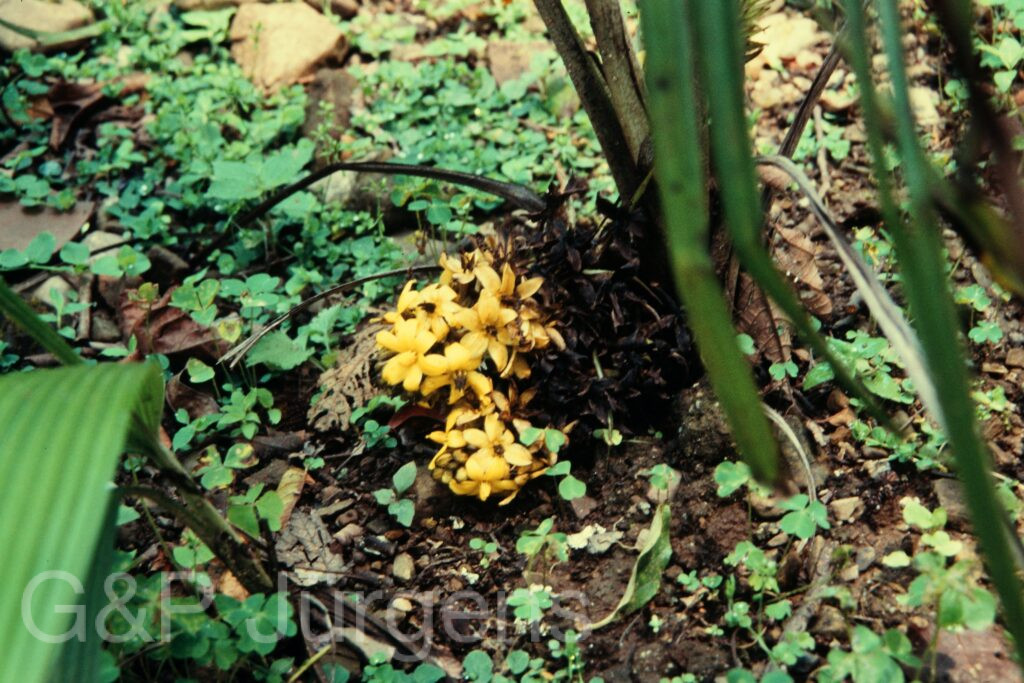
Nepal 97 612 P1183
Nepal Godavari 1400m, May
Nepal 97 613 P1184
Nepal Godavari 1400m, May

Description

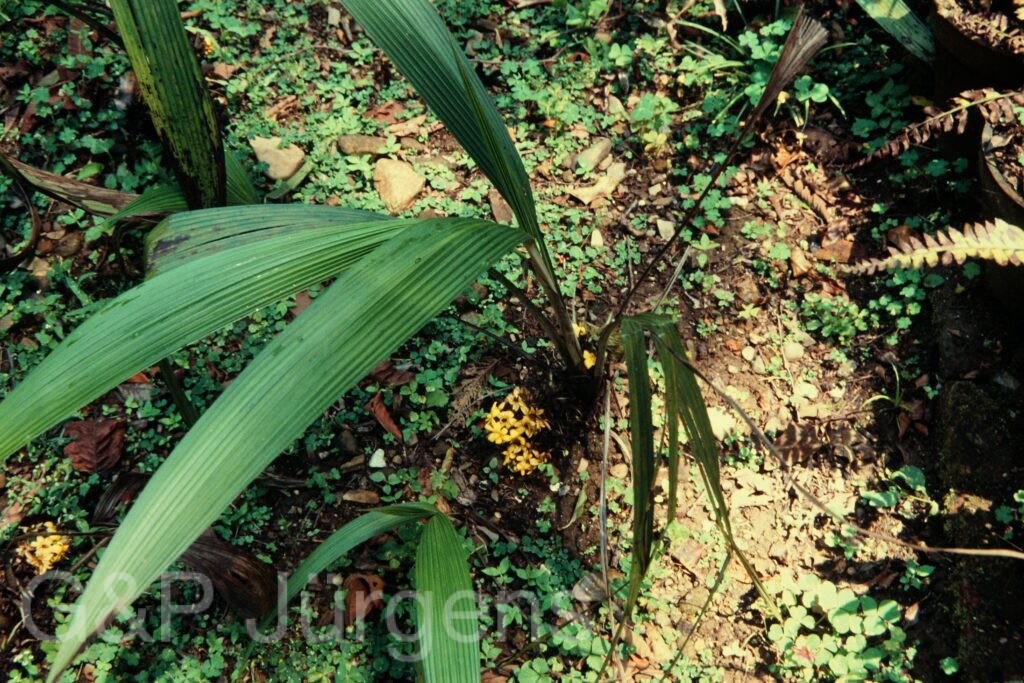
Curculigo gracilis Kurz (accepted by some authorities as Molineria gracilis, under which name the species page is filed) is a small rhizomatous herb of the Hypoxidaceae distributed through the eastern Himalaya and into Southeast Asia. GBIF records, numbering 70 occurrences, span China, Thailand, India, Nepal, Bhutan, Cambodia and Vietnam. The species grows in the shaded, humid understorey of subtropical and lower montane broadleaved forests, on moist, humus-rich banks and slopes, generally between roughly 700 and 1,800 m. The illustrated plant from Godavari near Kathmandu in Nepal at 1,400 m, in May, is typical of this damp mid-hill forest habitat.

The plant arises from a short, tuberous, vertical rhizome and produces a small tuft of basal leaves. The leaves are linear-lanceolate to narrowly elliptic, plicate (longitudinally pleated) and conspicuously veined, tapering to a slender petiole-like base and often thinly hairy. The flowers are borne on short, often subterranean to ground-level scapes hidden among the leaf bases; each flower is small, bright yellow, with six spreading tepals, and the ovary is inferior and frequently prolonged into a slender beak, a diagnostic feature of the genus. The fruit is a small, fleshy, indehiscent berry-like capsule containing black, often beaked seeds.

The generic limits of Curculigo and the segregate Molineria have long been disputed, and this species is treated under both names depending on the classification followed; the disposition adopted here follows the source page in recognising Molineria gracilis as the accepted combination. As a forest-floor geophyte of humid Asian woodlands, it is of no particular conservation concern across its range, but it contributes to the diversity of the shaded understorey and is part of a genus of modest economic and ethnobotanical interest in tropical Asia.

Author: Kurz · Sources: POWO (Kew), GBIF, Flora of China Vol. 24, Flora of Bhutan Vol. 3, Flora of Nepal, Geerinck: Hypoxidaceae studies

Salisb.

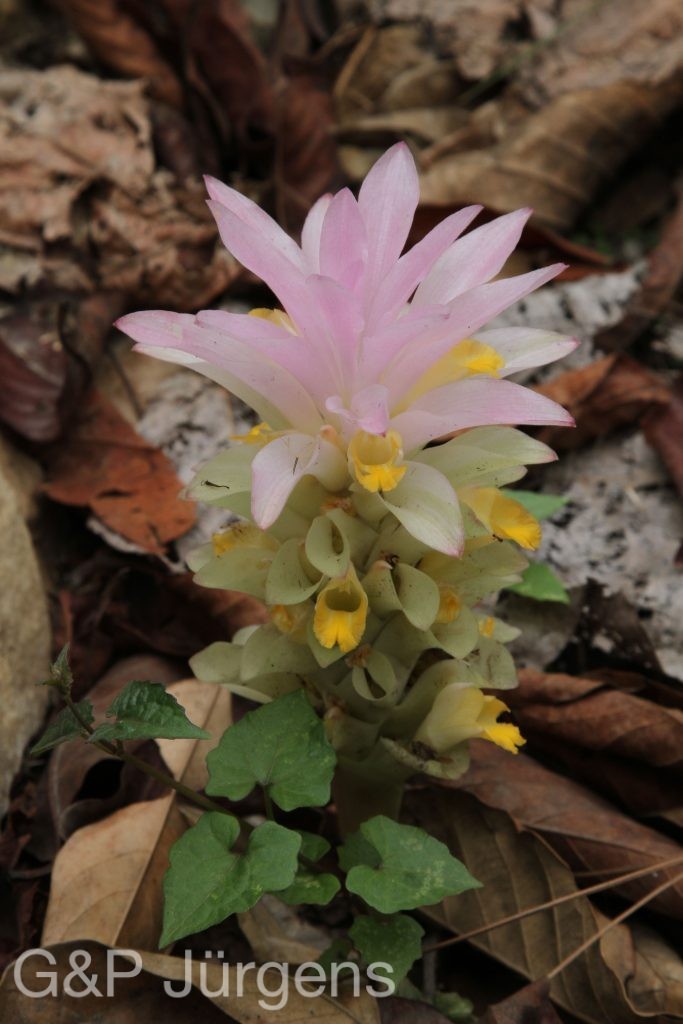
Bhutan2014 285
Bhutan Trithangebe near a farmhouse 800m, May
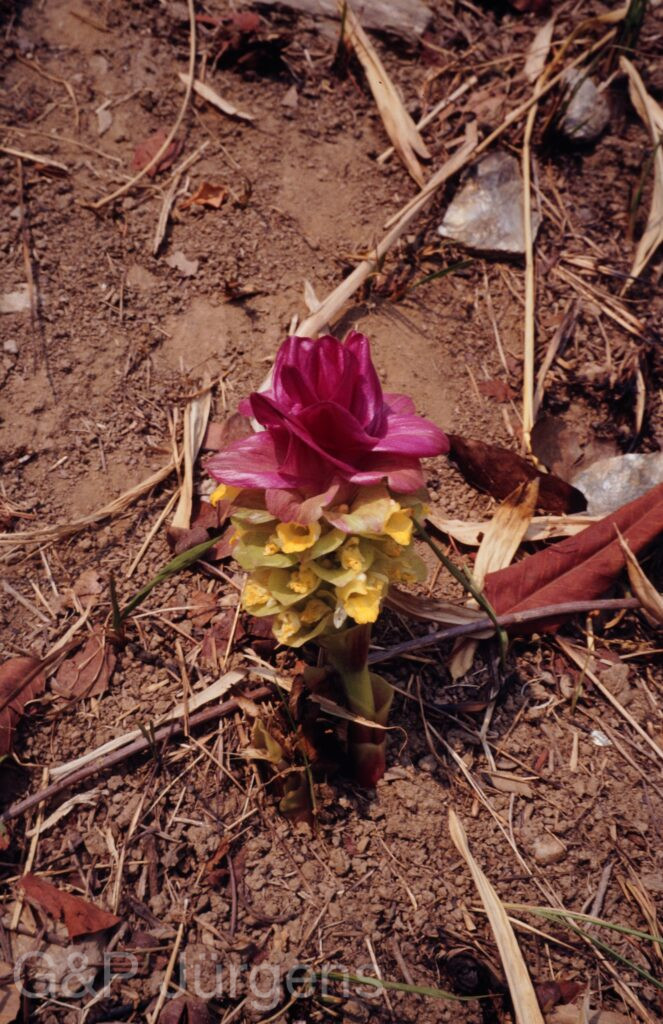
Nepal1992 189 P276 ergebnis
Nepal Banyang 2100m March 
Nepal1992 190 P277 ergebnis
Nepal Banyang 2100m March 
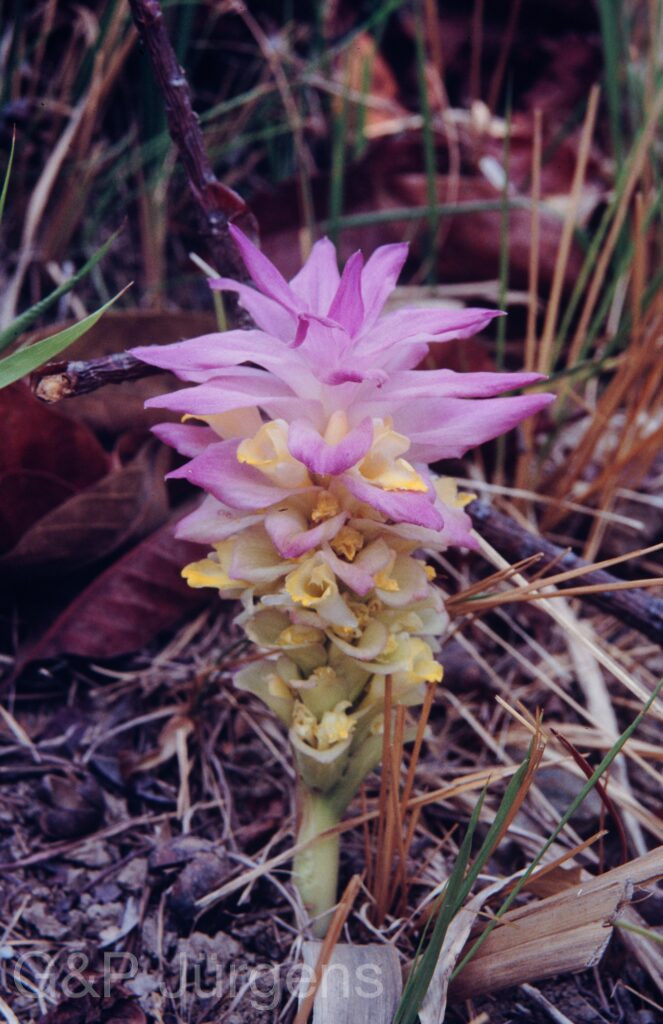
Nepal 2001 30 ergebnis ergebnis
East-Nepal Korong 1150m, April

Description

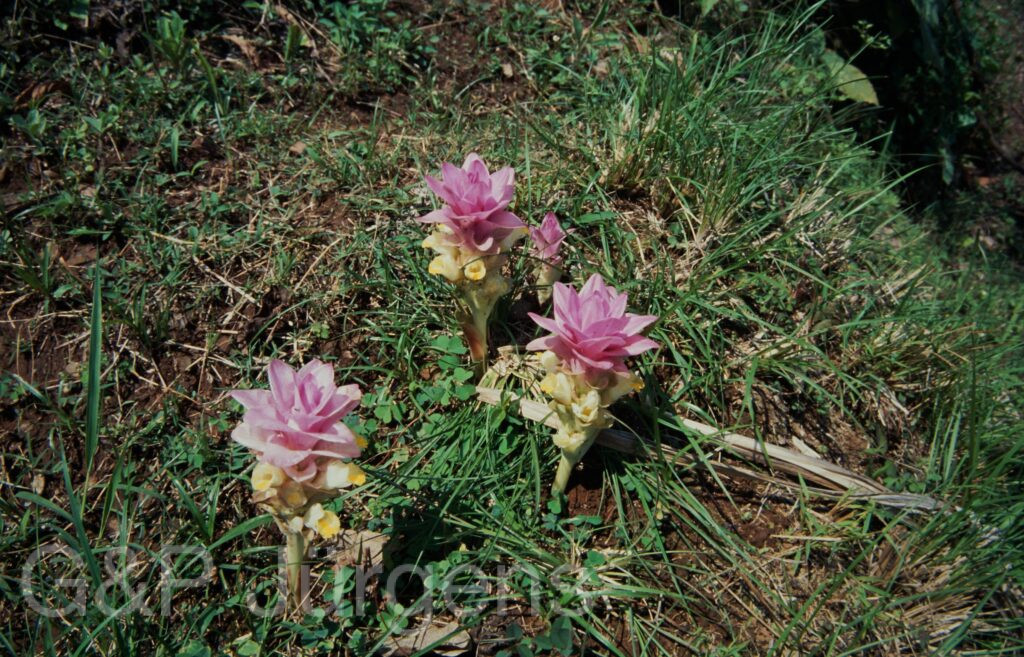
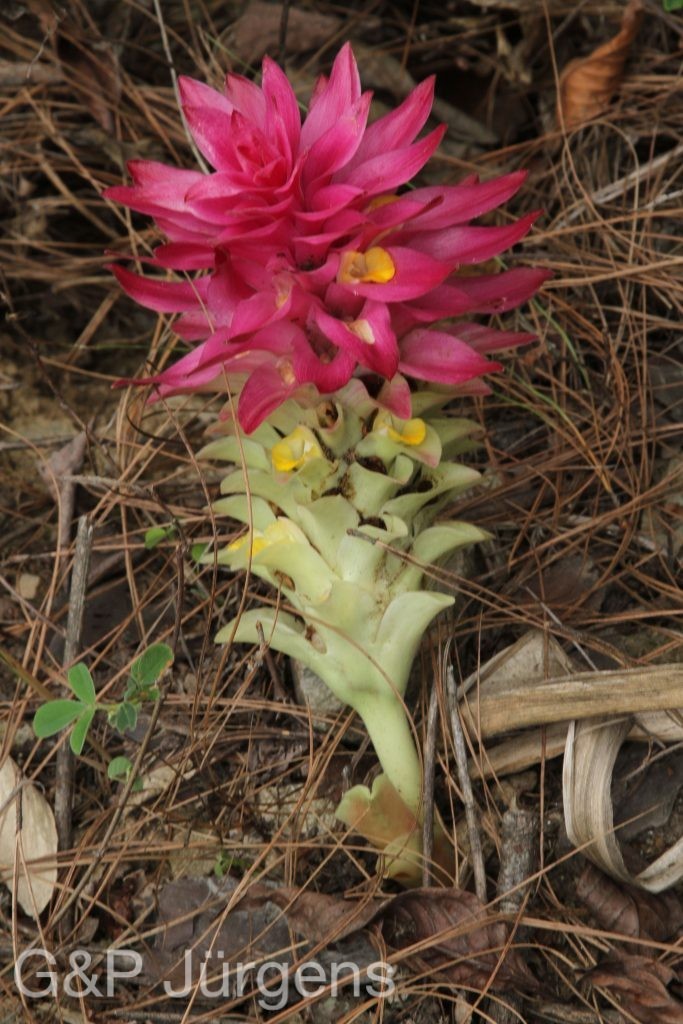
Curcuma aromatica, wild or yellow zedoary, is a South and Southeast Asian rhizomatous herb with a broad distribution documented by 490 GBIF occurrences across China (CN), India (IN), Hong Kong (HK), Bhutan (BT), Sri Lanka (LK), Myanmar (MM), Thailand (TH), Nepal (NP), Vietnam (VN), Bangladesh (BD), Laos (LA), Pakistan (PK), Indonesia (ID), Korea (KR), Malaysia (MY) and Taiwan (TW), with cultivated records in Japan (JP), Colombia (CO) and Britain (GB). It grows in moist deciduous and semi-evergreen forest, scrub and forest margins, often near habitation as a semi-cultivated medicinal plant. The illustrated collections span Bhutan at Trithangebe near a farmhouse at 800 m in May and the Nepalese sites of Banyang at 2100 m in March and Korong in East-Nepal at 1150 m in April.

It is a stout perennial arising from a fleshy, aromatic, internally orange-yellow rhizome bearing sessile and stalked tubers. The pseudostem supports large oblong to oblong-lanceolate leaves, pubescent beneath. The inflorescence appears before or with the leaves as a lateral spike, its lower fertile bracts green and the upper sterile coma bracts tinged pink to rose; the flowers are pale yellow with a tubular calyx, a hooded dorsal corolla lobe and a deflexed, emarginate yellow labellum. Fruit is a capsule, though spread is mainly clonal.

Widely employed in traditional medicine and as a cosmetic and culinary turmeric substitute, C. aromatica is rich in aromatic essential oils and curcuminoids. It is frequently confused with C. zedoaria, from which it differs in floral and rhizome characters. The family is cited verbatim as Zingiberacaea (Zingiberaceae).

Author: Salisb. · Sources: POWO (Kew), GBIF, Flora of China, Flora of Bhutan, Flora of British India, Revision of the genus Curcuma (Skornickova et al.)

(Christm.) Roscoe

Bhutan2014 287

Description

Curcuma zedoaria, white turmeric or zedoary, is a tropical and subtropical species of probable northeast Indian and Southeast Asian origin that is now pantropically cultivated and naturalised. Its 694 GBIF occurrences span an extensive range including India (IN), China (CN), Thailand (TH), the Philippines (PH), Taiwan (TW), Indonesia (ID), Bangladesh (BD), Vietnam (VN), Malaysia (MY), Myanmar (MM), Sri Lanka (LK) and Japan (JP), alongside introductions to the Neotropics in Costa Rica (CR), Brazil (BR), Colombia (CO), French Guiana (GF), Panama (PA) and Ecuador (EC), and the United States (US). It thrives in warm, humid lowland and lower-montane situations, in moist forest understorey, clearings and as a cultivated medicinal and ornamental rhizomatous herb.

It is a robust herbaceous perennial arising from a large, fleshy, aromatic, yellowish-internally rhizome with cylindrical tuberous roots. The pseudostem is formed by the sheathing leaf bases, bearing oblong-lanceolate leaves that often display a characteristic reddish-purple midrib stripe. The inflorescence emerges separately from the rhizome, a spike of imbricate green and pink coma bracts subtending small pale-yellow flowers; each flower has a tubular calyx, a corolla with a hooded dorsal lobe, and a showy three-lobed labellum derived from staminodes. The fruit is a trilocular capsule, though propagation is chiefly vegetative.

Long used in traditional Asian medicine for its bitter, camphoraceous rhizome, zedoary is valued as a digestive and source of essential oils. Its taxonomy within the variable genus Curcuma has been complicated by sterile triploid cultivated clones and by confusion with allies such as C. aromatica and C. caesia. The family is given verbatim as Zingiberacaea (Zingiberaceae).

Author: (Christm.) Roscoe · Sources: POWO (Kew), GBIF, Flora of China, Flora of Bhutan, Flora of Thailand, Revision of the genus Curcuma (Skornickova et al.)