
Kurz
Description
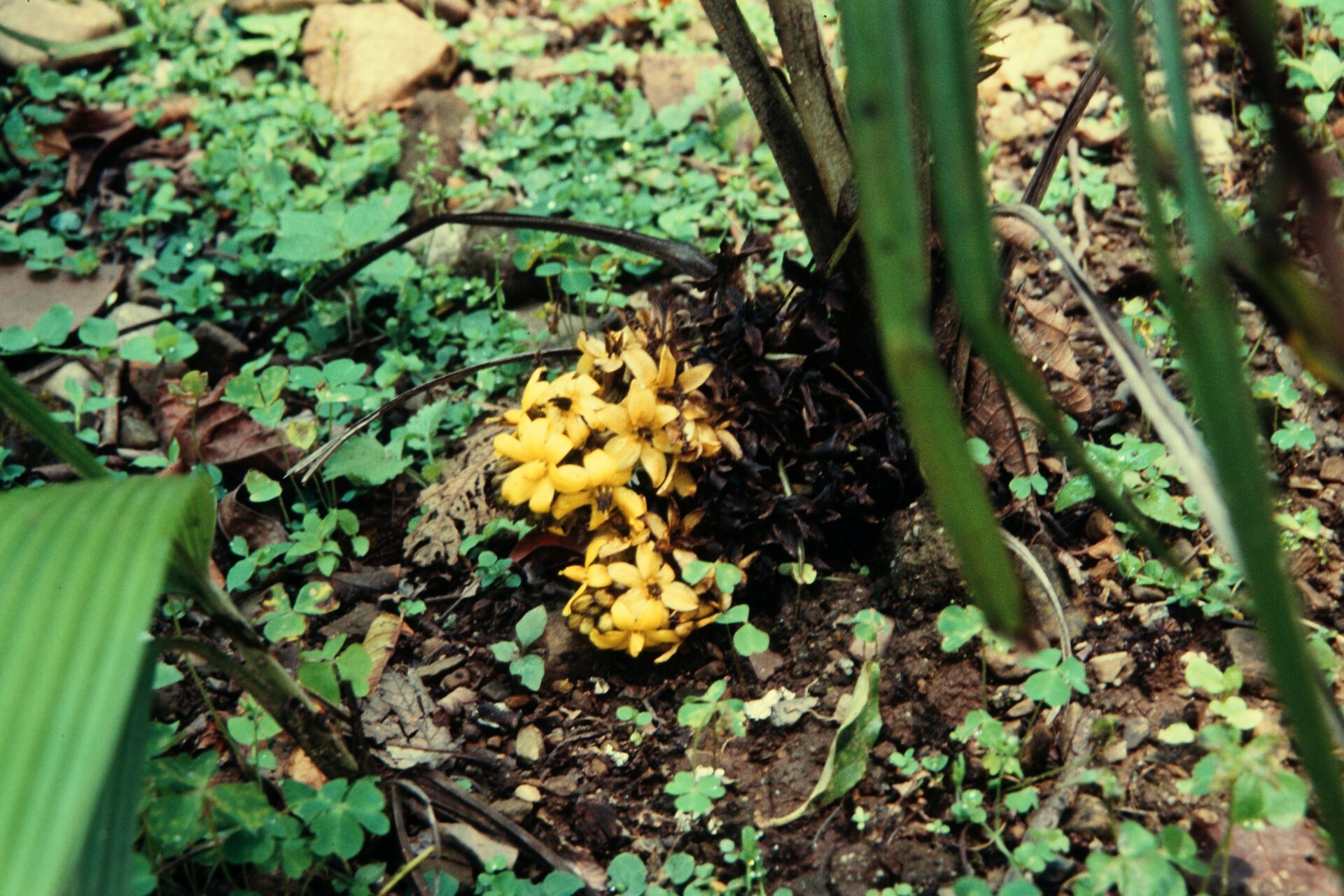
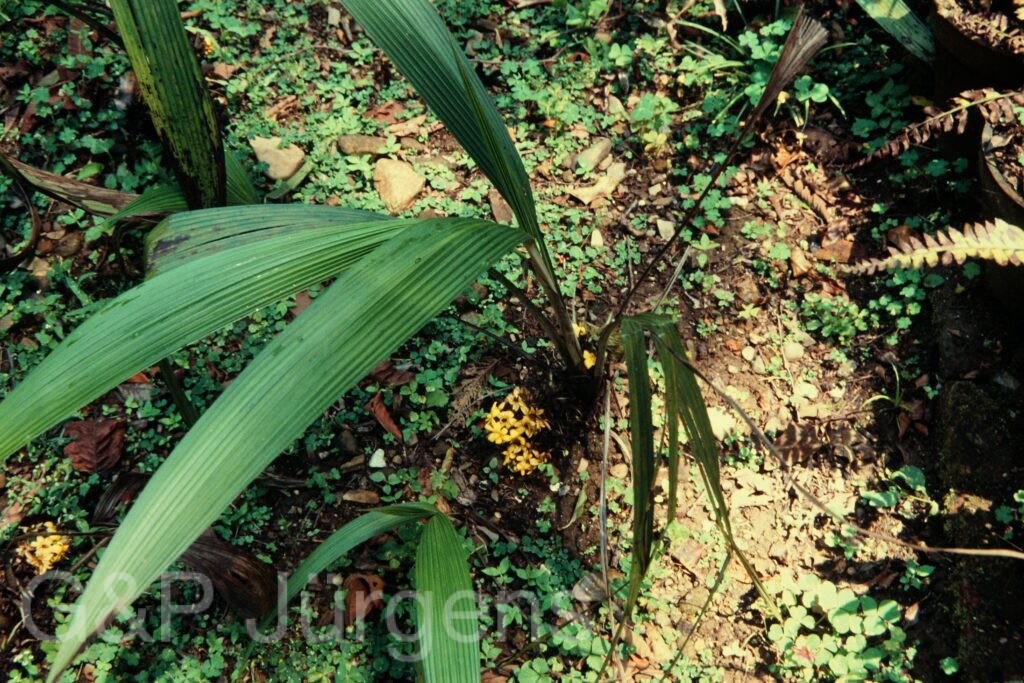
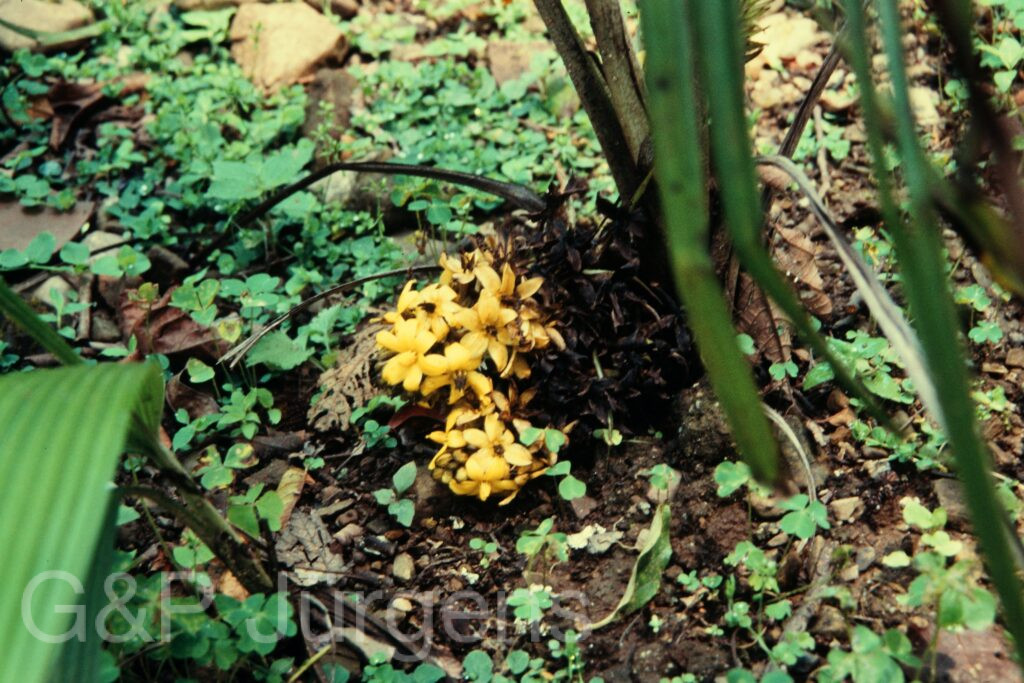
Curculigo gracilis Kurz (accepted by some authorities as Molineria gracilis, under which name the species page is filed) is a small rhizomatous herb of the Hypoxidaceae distributed through the eastern Himalaya and into Southeast Asia. GBIF records, numbering 70 occurrences, span China, Thailand, India, Nepal, Bhutan, Cambodia and Vietnam. The species grows in the shaded, humid understorey of subtropical and lower montane broadleaved forests, on moist, humus-rich banks and slopes, generally between roughly 700 and 1,800 m. The illustrated plant from Godavari near Kathmandu in Nepal at 1,400 m, in May, is typical of this damp mid-hill forest habitat.
The plant arises from a short, tuberous, vertical rhizome and produces a small tuft of basal leaves. The leaves are linear-lanceolate to narrowly elliptic, plicate (longitudinally pleated) and conspicuously veined, tapering to a slender petiole-like base and often thinly hairy. The flowers are borne on short, often subterranean to ground-level scapes hidden among the leaf bases; each flower is small, bright yellow, with six spreading tepals, and the ovary is inferior and frequently prolonged into a slender beak, a diagnostic feature of the genus. The fruit is a small, fleshy, indehiscent berry-like capsule containing black, often beaked seeds.
The generic limits of Curculigo and the segregate Molineria have long been disputed, and this species is treated under both names depending on the classification followed; the disposition adopted here follows the source page in recognising Molineria gracilis as the accepted combination. As a forest-floor geophyte of humid Asian woodlands, it is of no particular conservation concern across its range, but it contributes to the diversity of the shaded understorey and is part of a genus of modest economic and ethnobotanical interest in tropical Asia.
Author: Kurz · Sources: POWO (Kew), GBIF, Flora of China Vol. 24, Flora of Bhutan Vol. 3, Flora of Nepal, Geerinck: Hypoxidaceae studies