
Lour.
Description
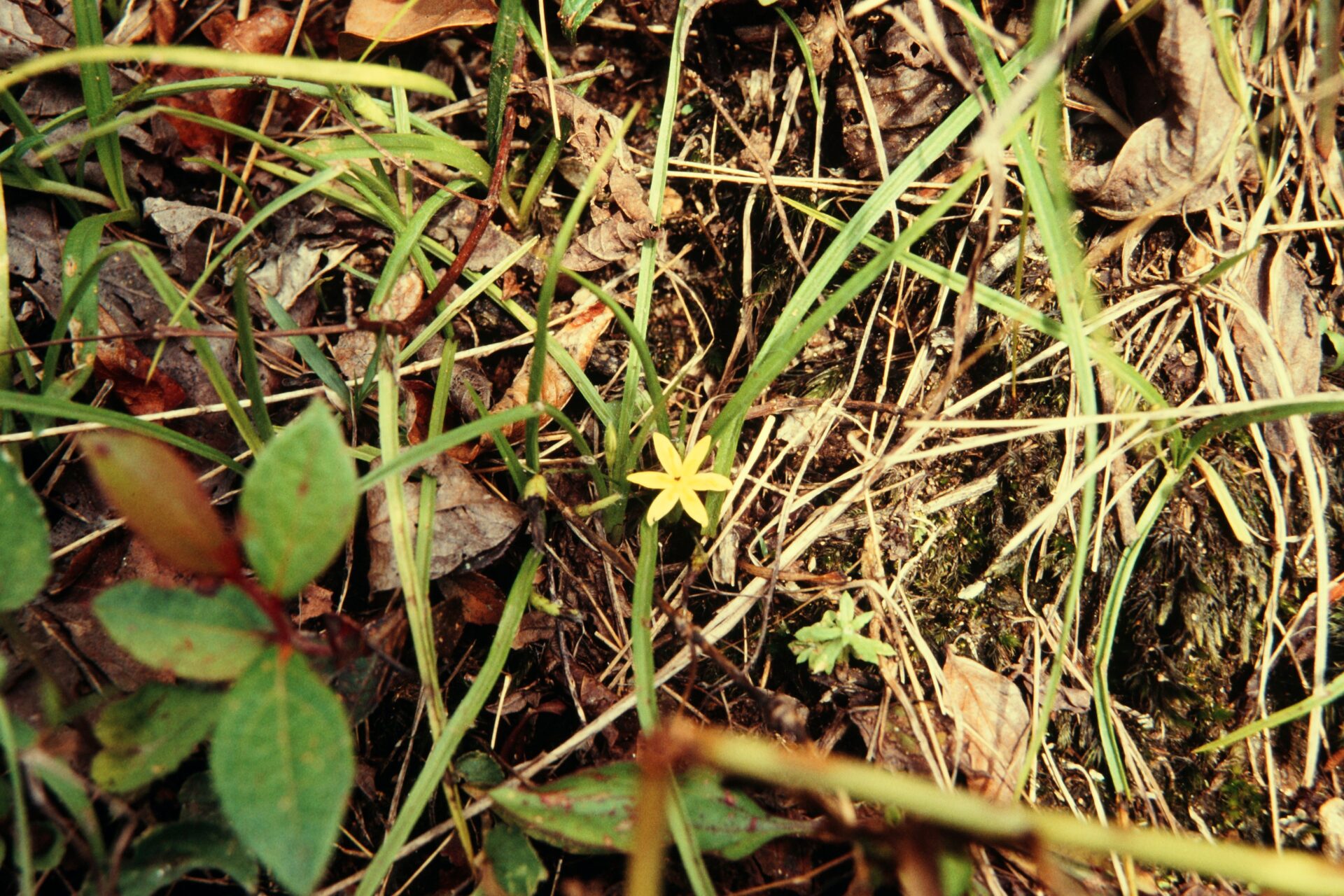
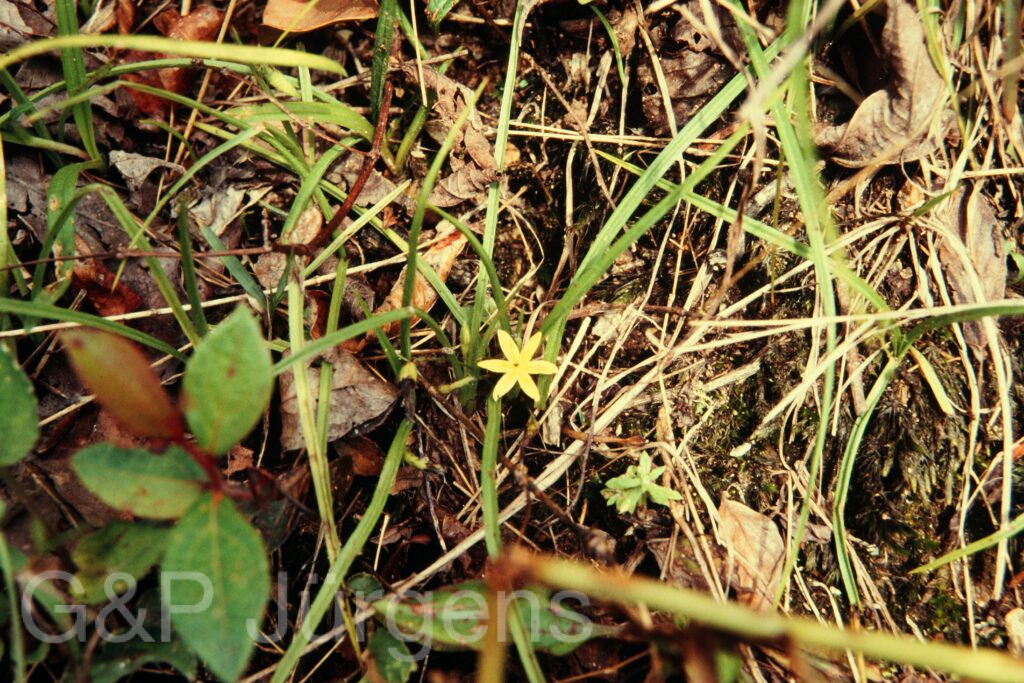
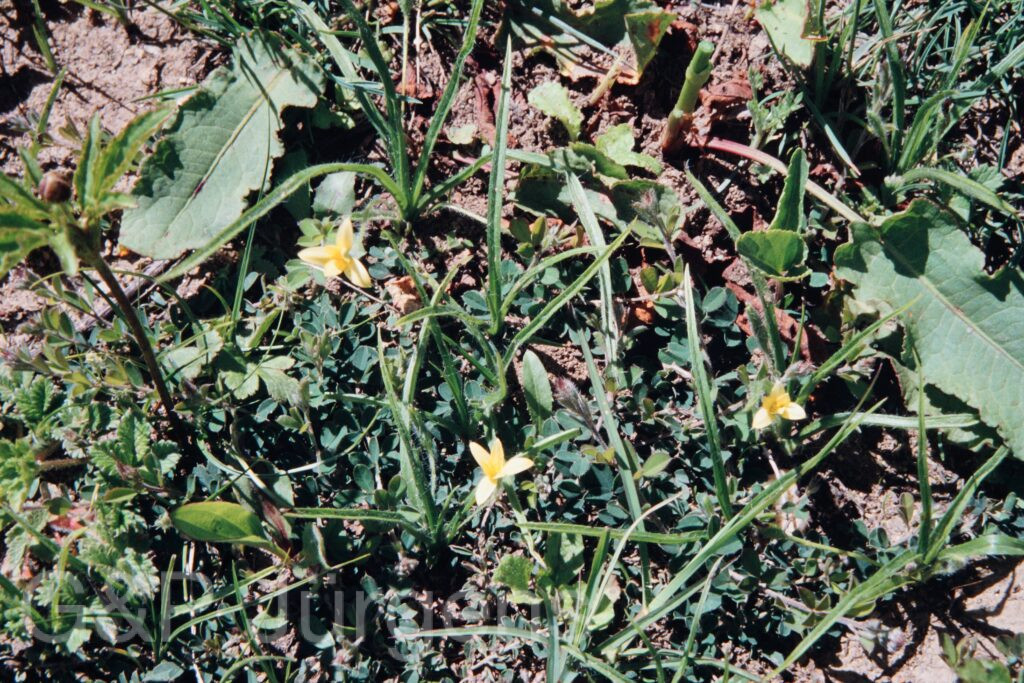
Hypoxis aurea Lour. is a small cormous geophyte of the Hypoxidaceae with a wide Asian and Pacific distribution, recorded from India, Nepal, Bhutan, Sri Lanka and China through Taiwan, Japan and Korea, across Southeast Asia (Myanmar, Thailand, Vietnam, Laos, Cambodia, Indonesia, the Philippines) to New Guinea, with around 1,240 georeferenced occurrences. It grows in open, well-lit grassy habitats: hill grassland, open pine and oak woodland, pasture, terrace banks and disturbed slopes, often in seasonally moist soils. The photographed plants from Num at about 1,650 m and from the Lara-Lake area of West Nepal at about 2,900 m, flowering in May and June, show its broad altitudinal span from subtropical foothills to the lower-temperate zone in the Himalaya.
It is a perennial herb arising from a small ovoid to tuberous corm. The leaves are all basal, several, narrowly linear and grass-like, often keeled and clothed (especially toward the base) in long soft hairs. The flowers are borne singly or few together on slender scapes shorter than or about equalling the leaves; each has six spreading yellow tepals, golden within and frequently greenish and hairy on the outer surface, with six stamens and an inferior, hairy ovary. The fruit is a small capsule opening to release numerous tiny black, often muricate seeds.
Hypoxis is a chiefly tropical and warm-temperate genus of grassland geophytes, and its members are well adapted to fire and seasonal drought through the perennating corm, which resprouts after burning or dry-season dormancy. The yellow, pollen-rich, nectarless flowers attract pollen-gathering insects. Widely distributed and frequently associated with grazed and disturbed grassland, H. aurea is common across its range and not considered threatened.
Author: Lour. · Sources: POWO (Kew), Flora of China Vol. 24, Flora of Bhutan Vol. 3, GBIF, Nordal: Hypoxidaceae (in Kubitzki, 1998)