
L.
Description
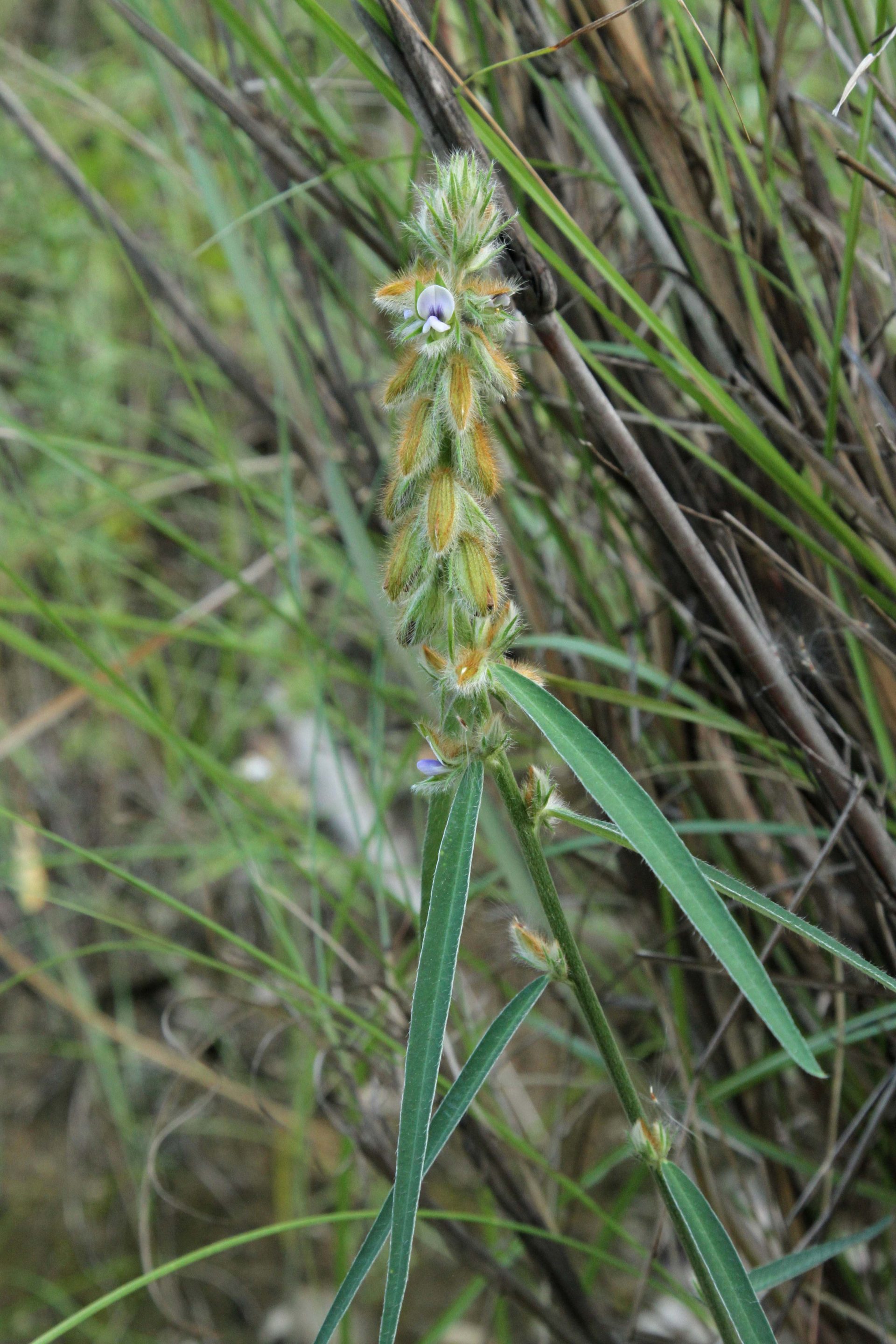
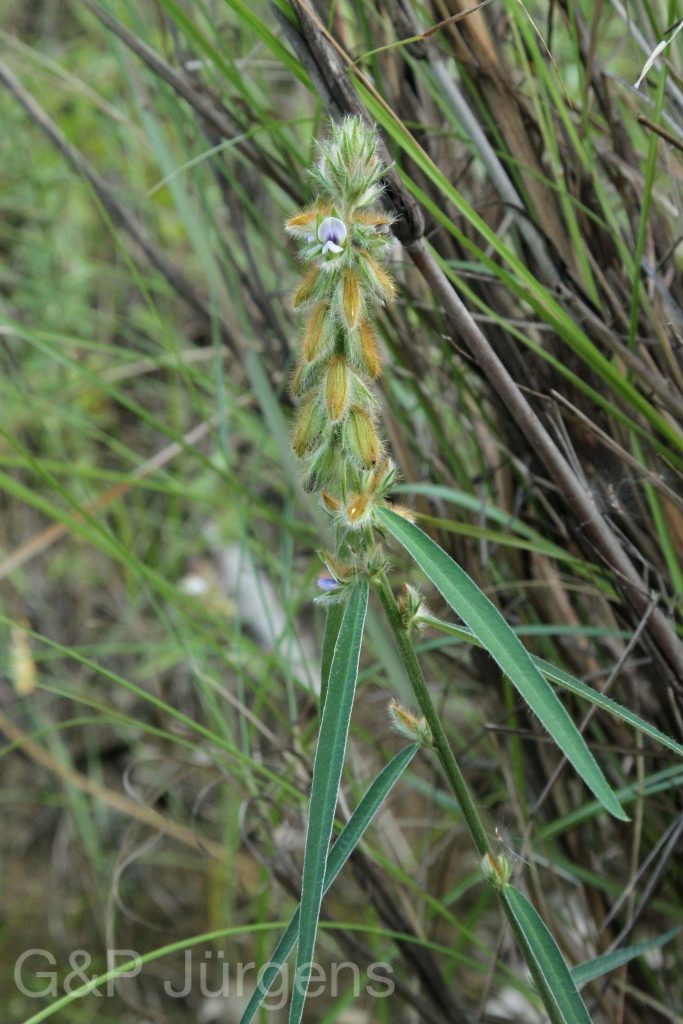
Crotalaria sessiliflora is a wide-ranging Asian-Australasian rattlepod, recorded by GBIF (3102 occurrences) from China, Japan, Korea, Taiwan, India, Thailand, Indonesia, Papua New Guinea, Australia, Nepal, the Philippines, Myanmar, Bhutan, Malaysia and Indochina. It is a plant of open, sunny, seasonally dry habitats, occupying grasslands, hill slopes, fallow fields, roadsides and waste ground from the lowlands up into the lower mountains, roughly to 2800 m. The photographed plant from near Wangdi in western Bhutan at about 2800 m, flowering in September, sits at the upper elevational margin of the species and reflects its late-monsoon flowering across the eastern Himalaya.
The species is an erect annual herb, usually 30-100 cm tall, with stems and foliage clothed in long, spreading brownish hairs. The leaves are simple (unifoliolate), narrowly linear to oblanceolate, sessile or shortly petiolate, with conspicuous setose stipules. The flowers are borne in dense, head-like or short terminal racemes, often crowded and almost sessile as the epithet indicates, each subtended by leafy bracts. The papilionate corolla is blue, violet or pale purple, the standard hairy outside. As in Crotalaria the stamens are monadelphous with dimorphic anthers. The fruit is a small, inflated, oblong pod enclosed by the persistent calyx, the loose seeds rattling within when ripe.
Described by Linnaeus, the species belongs to the large pantropical genus Crotalaria (Fabaceae, subfamily Faboideae, tribe Crotalarieae). Like its relatives it forms root nodules with rhizobial bacteria, fixing atmospheric nitrogen and enriching soils, and is sometimes grown as a green manure. The plant contains pyrrolizidine alkaloids and is used in traditional Asian medicine, though these compounds render it potentially toxic to livestock. With an extensive range and weedy tendencies it is of least conservation concern.
Author: L. · Sources: POWO (Kew), GBIF, Flora of China, Flora of Bhutan, Monograph of the genus Crotalaria (Polhill)