
Rchb.f.
Description
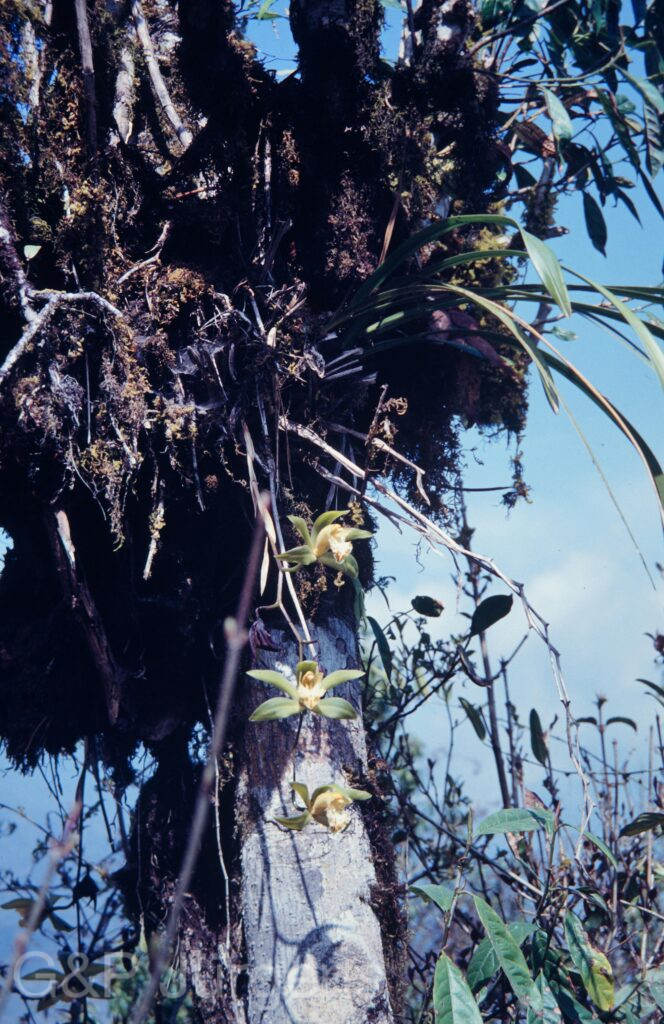
Cymbidium hookerianum is a large-flowered orchid of the Himalaya and southwestern China, distributed through China, India, Bhutan, Nepal, Myanmar and Thailand, with around 185 GBIF records. It is chiefly an epiphyte, also growing on mossy rocks, in cool, humid temperate broadleaved and evergreen forest, typically between about 1500 and 2800 m. The gathering from Milka Danda in Nepal at 2700 m in March documents its early-spring flowering, when this mid-montane cloud-forest belt provides the moist, shaded, well-ventilated conditions the species requires.
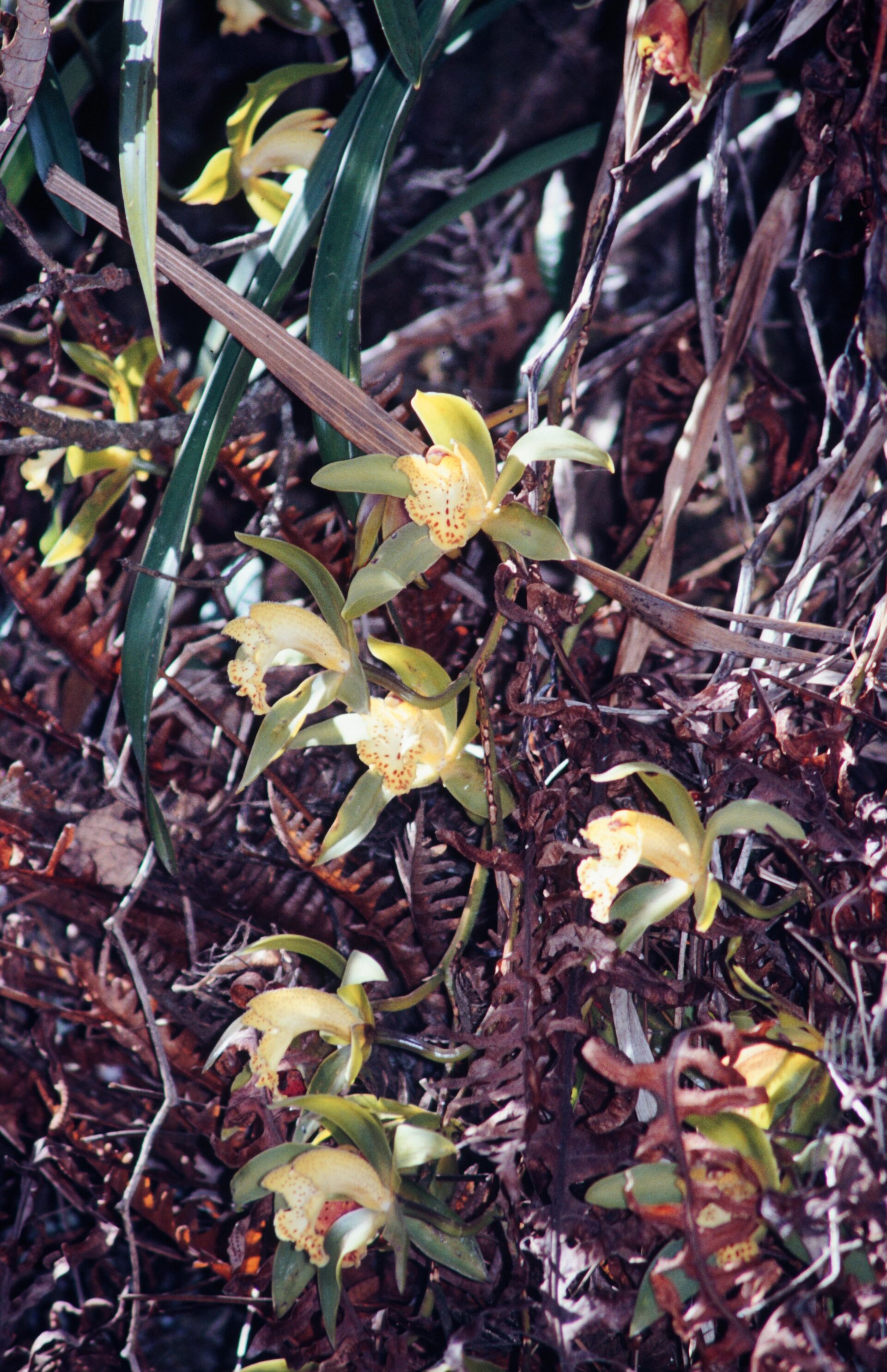
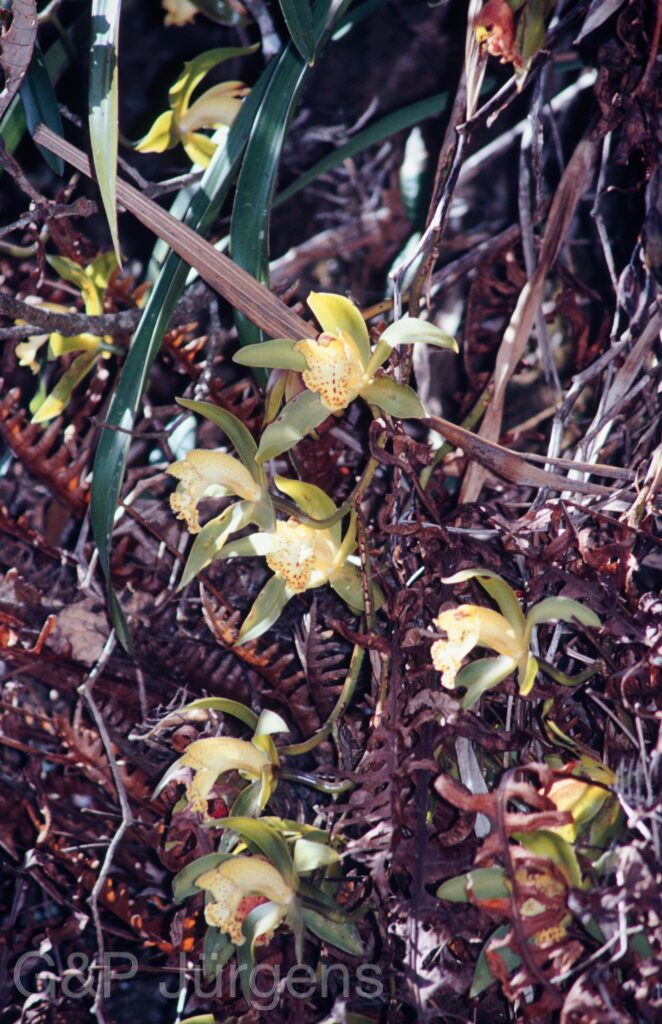
It is a robust sympodial epiphyte forming clusters of stout, ovoid pseudobulbs partly sheathed by the bases of the long, arching, linear-lanceolate leaves. The inflorescence is a long arching to pendent raceme bearing several large, fragrant flowers. The sepals and petals are broad and spreading, apple-green to yellow-green, while the trilobed labellum is whitish to cream, spotted and blotched with crimson or maroon, with raised keels along its disc; the column is winged in typical Cymbidium fashion. The fruit is an ellipsoid capsule releasing innumerable dust-like seeds.
Cymbidium is a genus of tribe Cymbidieae long prized in horticulture, and C. hookerianum (commemorating J. D. Hooker) is an important parent in modern hybrids. Its showy, scented flowers are pollinated by bees, while the minute seeds depend on mycorrhizal fungi for germination. Wild populations are vulnerable to over-collection for the ornamental trade and to forest loss, and Cymbidium species are listed on CITES Appendix II, regulating their international commerce.
Author: Rchb.f. · Sources: POWO (Kew), GBIF, Flora of China, Flora of Bhutan, The Genus Cymbidium (Du Puy & Cribb)