Moq.

Description
Cyathula tomentosa is a coarse perennial herb of the Himalaya, Sino-Himalaya and parts of tropical Africa, recorded from Nepal, NW and NE India, Bhutan, southern China and Myanmar, with disjunct records from New Guinea and Rwanda; GBIF holds 238 occurrences. It grows on forest margins, shrubby slopes, roadsides, clearings and other disturbed, semi-shaded ground in the temperate and subtropical zone. The collection from Pana in Garhwal, India, at about 2,800 m in September corresponds to its late-summer to autumn fruiting in mid-montane forest country.
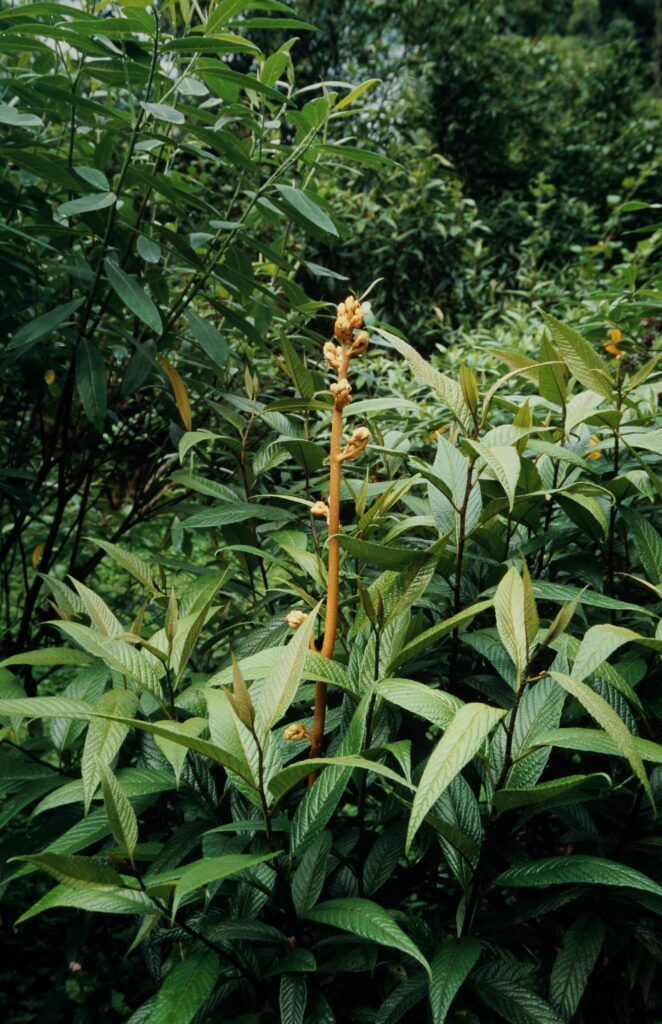
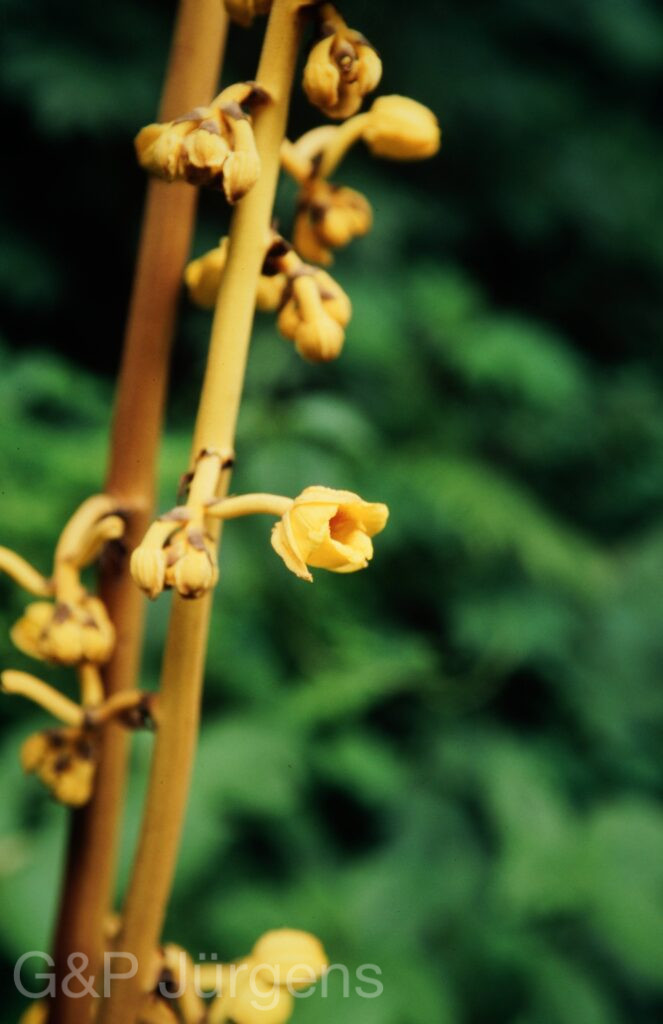
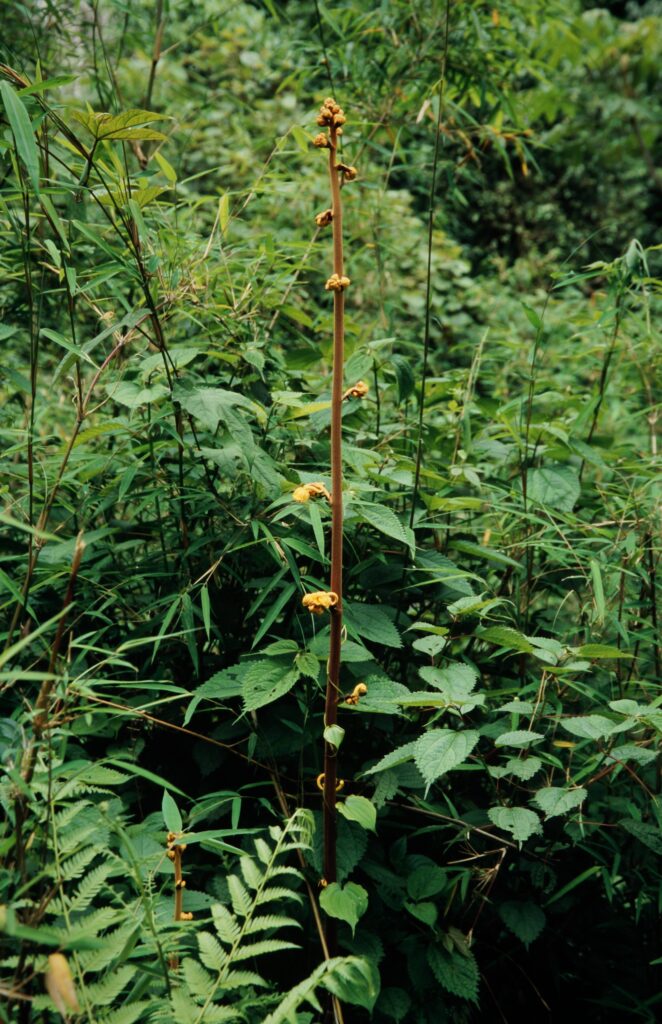
It is an erect to ascending, much-branched herb up to about 1–1.5 m tall, with quadrangular, densely white-tomentose stems. The leaves are opposite, ovate to elliptic, 4–12 cm long, acuminate, with a soft woolly indumentum, especially beneath. The inflorescence is a long, interrupted, spike-like thyrse of dense glomerules, each cluster comprising a central fertile flower surrounded by modified sterile flowers whose perianth segments and bracteoles are produced into hooked, hardened spines. The perianth of the fertile flower is membranous; the fruit is a small utricle enclosed within the indurated, burr-like cluster.
The species belongs to Cyathula (Amaranthaceae, subfamily Amaranthoideae), allied to Achyranthes and Pupalia, the genus being distinguished by its glomerules of hooked sterile flowers. GBIF treats the name as accepted. The barbed fruiting clusters are an effective epizoochorous dispersal mechanism, attaching to fur and clothing, which accounts for the plant's affinity for disturbed and trackside habitats. It is widespread and of no conservation concern.
Author: Moq. · Sources: POWO (Kew), Flora of China Vol. 5, Flora of Bhutan Vol. 1, GBIF, Townsend: Amaranthaceae in Flora of Tropical East Africa (1985)