Tag:

Myanmar

Flowers of the Myanmar Himalaya — 604 species recorded from northern Myanmar (Burma) and the eastern Himalayan borderlands, a biodiversity hotspot linking the Himalaya to the mountains of Yunnan and Southeast Asia. The region’s forests and alpine slopes hold a rich flora of rhododendrons, orchids, balsams and gentians. Every page gives a botanical description, distribution, habitat and flowering time with the original photograph.

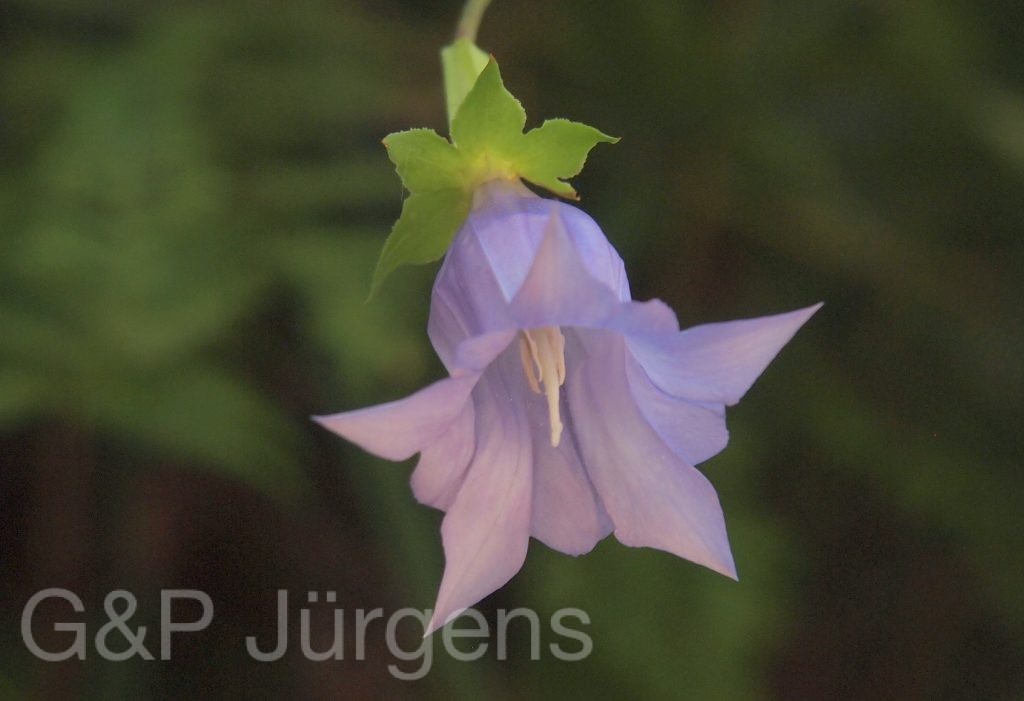
(Wall. ex R.Br.) B.L.Burtt
Nepal 97 369 P725
Nepal Arun-Valley 1750m May
Nepal 99 927 ergebnis
West-Nepal Roha 2750m, July

Description

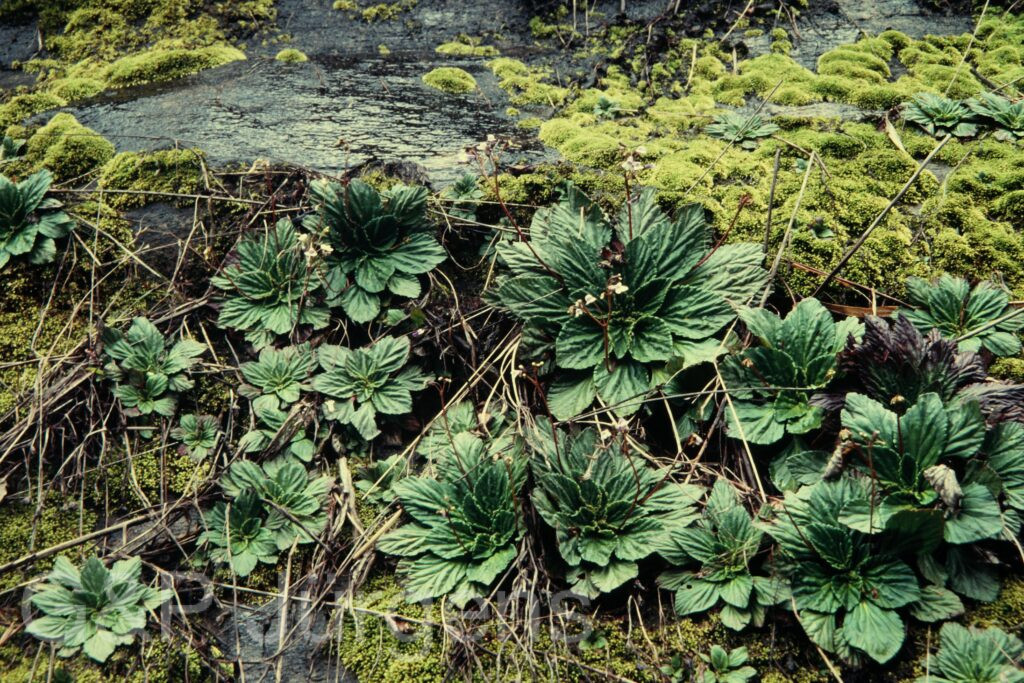
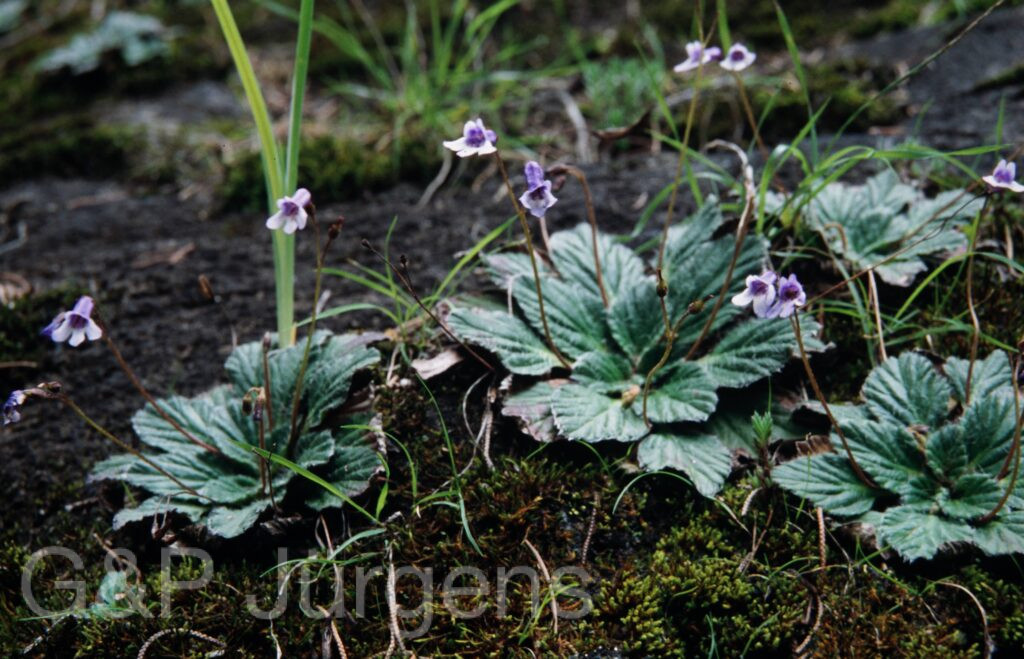
Corallodiscus lanuginosus (Wall. ex R.Br.) B.L.Burtt is a rosette-forming, rupicolous perennial of the Gesneriaceae, distributed across the Himalaya and southwest China. GBIF data (over 2,000 occurrences) record it from China, Nepal, India, Bhutan, Pakistan, Myanmar, and Thailand, indicating a broad Sino-Himalayan range. It was photographed in Nepal in the Arun Valley (1,750 m, May) and at Roha in west Nepal (2,750 m, July), reflecting its occurrence on shaded, mossy cliff faces, rock crevices, and boulders in montane forest, generally between about 1,500 and 3,500 m where humidity is high.

The plant forms a compact basal rosette of leaves pressed against the rock surface. The leaves are obovate to elliptic, with a crenate margin, the upper surface dark green and rugose, the lower surface densely clothed in woolly, rusty to whitish hairs (hence "lanuginosus"). Slender, leafless scapes bear cymose clusters of flowers; the corolla is tubular-campanulate and bluish-violet to purple with a paler throat, with the slightly oblique limb and reduced fertile stamens typical of the genus. The fruit is a slender capsule.

Corallodiscus belongs to the Old World Gesneriaceae (subfamily Didymocarpoideae) and is closely allied to the lithophytic Himalayan radiation that includes Didymocarpus and allies; the input subtribe name reflects this placement. Many populations exhibit poikilohydric, resurrection-like desiccation tolerance, surviving dry periods on exposed rock and reviving with the monsoon. Widespread and locally common on cliffs, the species is not considered threatened.

Author: (Wall. ex R.Br.) B.L.Burtt · Sources: POWO (Kew), Flora of China Vol. 18, Flora of Bhutan Vol. 2, GBIF, Burtt: Studies in the Gesneriaceae of the Old World
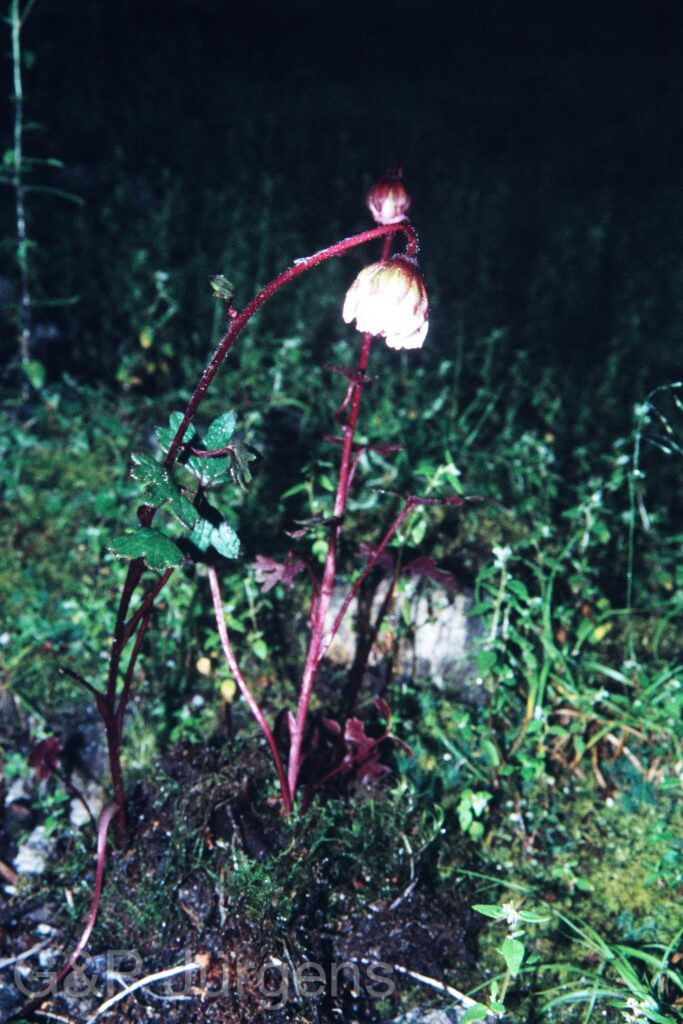
Wall.

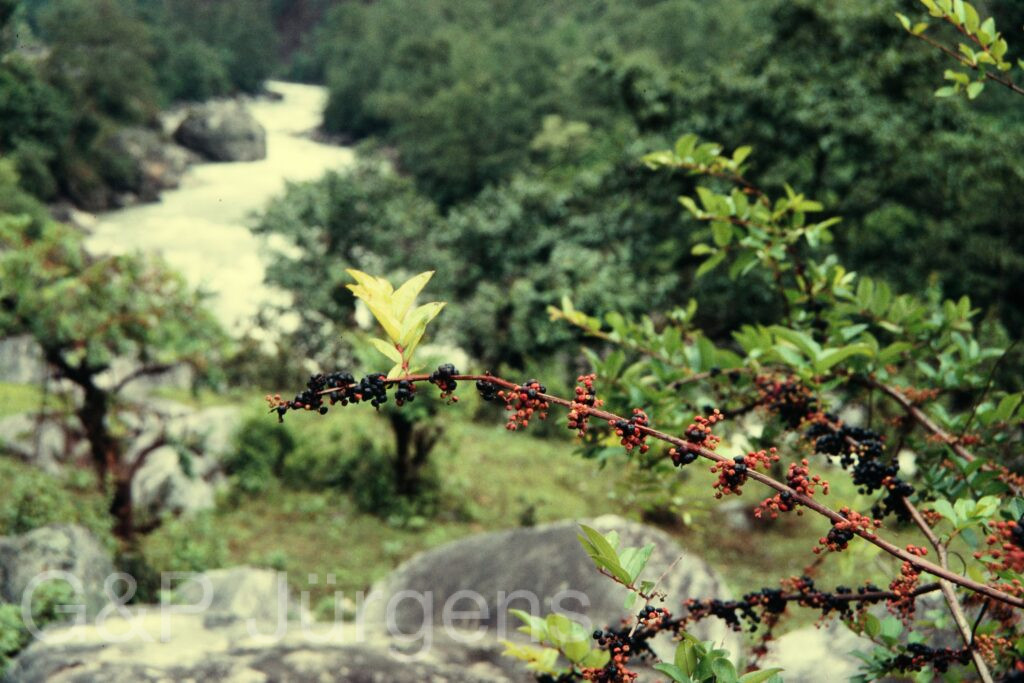
Nepal 97 354 P693
Nepal Arun-Valley 1650m May

Description

Coriaria nepalensis is a shrub of the Himalaya and adjacent mountains of western China, ranging from Pakistan through the Indian Himalaya, Nepal and Bhutan to south-western China and Myanmar. GBIF aggregates around 1880 occurrences, including scattered introductions in Europe and Japan where it is grown as a curiosity. It is a vigorous colonist of open hillsides, landslips, riverbanks, terrace edges and disturbed ground, often forming thickets on poor soils between about 1000 and 3000 m. The plant from the Arun Valley of eastern Nepal at 1650 m in May is characteristic of its role as a pioneer of the subtropical to warm-temperate hill zone.

It is a much-branched deciduous shrub with arching, reddish, four-angled young branchlets. The leaves are opposite or whorled, sessile or subsessile, ovate to ovate-lanceolate, entire and conspicuously three- to five-veined from the base. The small flowers are borne in slender axillary or terminal racemes, with five sepals and five small petals; after flowering the petals enlarge, becoming fleshy and dark purple-black, closely investing the cluster of achene-like fruitlets to form a juicy, mulberry-like pseudo-fruit. These succulent infructescences are bird-dispersed but, like the whole plant, are highly poisonous, containing the convulsant sesquiterpene coriamyrtin.

Coriariaceae is a small, isolated family of the single genus Coriaria, with a remarkable disjunct distribution across the Mediterranean, eastern Asia, the Himalaya, New Zealand and the Americas, a textbook case of relictual biogeography. C. nepalensis fixes atmospheric nitrogen through root nodules harbouring the actinomycete Frankia, underpinning its success on impoverished, eroded substrates. Widespread and weedy in its native range, it is of no conservation concern, though its toxicity is locally significant to livestock.

Author: Wall. · Sources: POWO (Kew), GBIF, Flora of China Vol. 11, Flora of Bhutan Vol. 1, Flora of Pakistan, Annotated Checklist of the Flowering Plants of Nepal, Skog revision of Coriaria

Wall.

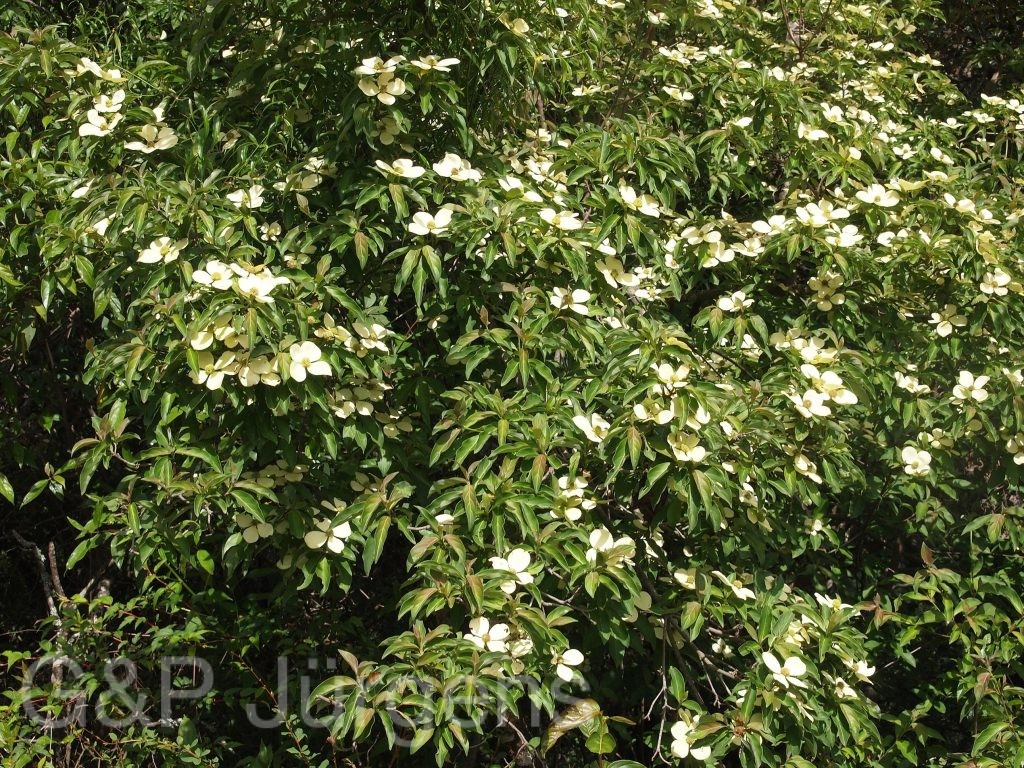
BhutanPG2011 45 1
Bhutan Wangdi 2500m June
Bh09 284 P467
Bhutan Paro 2300m June

Description

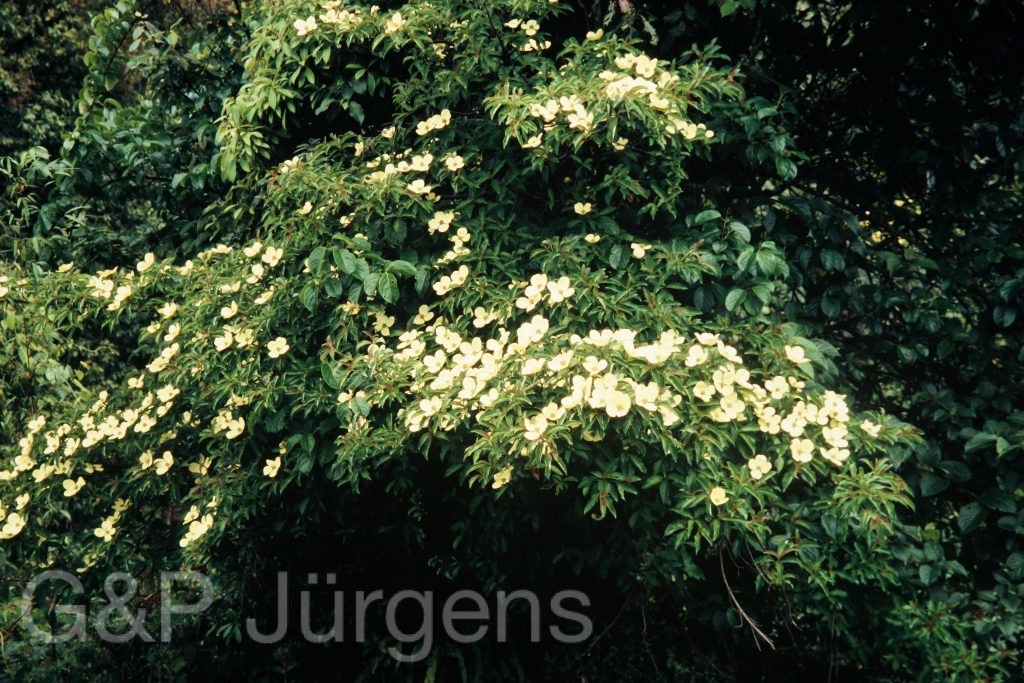
Cornus capitata Wall. is an evergreen dogwood of the Cornaceae native to the Himalaya and SW China, recorded from India, Nepal, Bhutan, Myanmar and China, and now widely cultivated and naturalised in temperate regions worldwide (Europe, North America, Australia, New Zealand, South Africa), accounting for its very large tally of over 4,200 georeferenced records. In its native range it grows in montane evergreen and mixed broad-leaved forest, forest margins, ravines and open hillsides, generally between about 1,000 and 3,200 m. The photographed trees from Wangdi at about 2,500 m and Paro at about 2,300 m in Bhutan, flowering in June, are typical of its mid-montane habitat in the eastern Himalaya.

It is a small to medium evergreen tree or large shrub with leathery, opposite, elliptic to oblong-lanceolate leaves that are dark green above and pale or glaucous beneath, with arcuate lateral veins. The small four-merous flowers are densely aggregated into a globose head subtended by four (to six) large, showy, creamy-white to pale-yellow petaloid bracts that function as the display structure. After flowering the entire head develops into a fleshy, strawberry-like compound fruit, a syncarp of fused drupes, ripening crimson-red and edible.

Cornus capitata belongs to the bracteate, head-flowered group of dogwoods (subgenus Syncarpea / Dendrobenthamia), in which numerous flowers and their swollen receptacles coalesce into a single fleshy aggregate fruit. The conspicuous bracts attract pollinators, while the sweet syncarp is dispersed by birds and mammals. Widely grown as an ornamental for its bracts and fruit, the species is common and widespread and of no conservation concern, though it has become locally invasive in parts of its introduced range.

Author: Wall. · Sources: POWO (Kew), Flora of China Vol. 14, Flora of Bhutan Vol. 2, GBIF, Xiang et al.: Phylogeny and classification of Cornus (2006)

(D.Don) C.Norman

Nepal 99 273 ergebnis
West-Nepal Loccu 3800m, June

Description

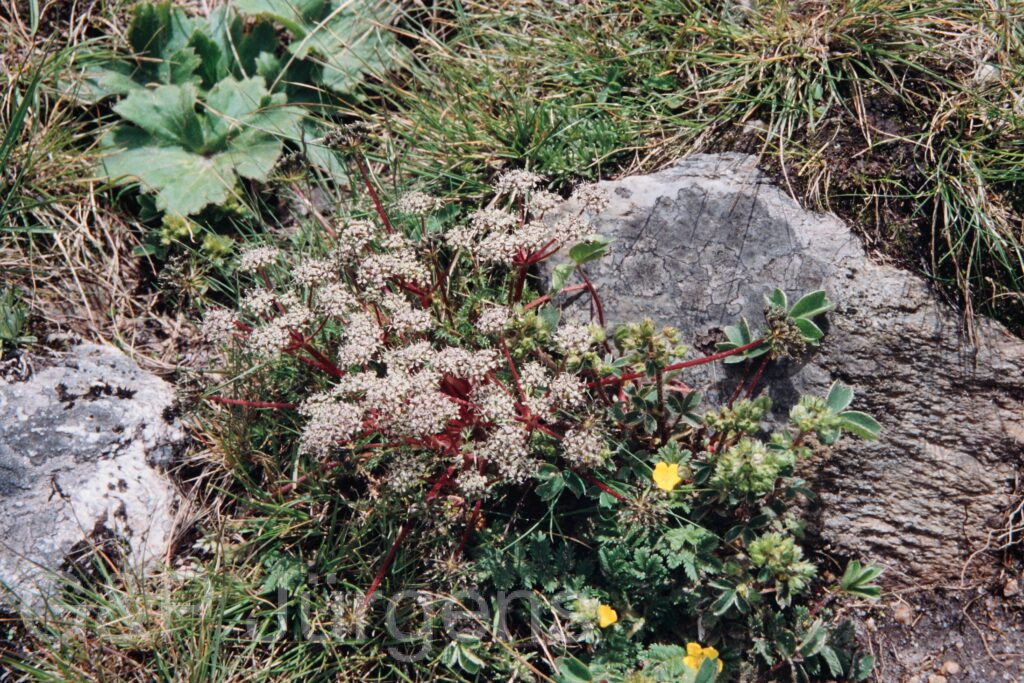
Cortia depressa is a cushion-forming alpine umbellifer distributed from Nepal through Sikkim, Bhutan, and northeast India into upper Myanmar and southwestern China (Yunnan, Xizang). GBIF records 284 occurrences, indicating a moderately well-collected species. It is characteristic of high-altitude open habitats including alpine meadows, rocky screes, dry turf, and exposed ridgetops at elevations of 3,200–4,800 m. The species is well adapted to the extreme conditions of the alpine zone, where it tolerates intense solar radiation, frost, and wind exposure by maintaining an extremely compact growth form pressed close to the substrate.
Cortia depressa is a dwarf, depressed-caespitose, perennial herb arising from a stout, woody taproot. The entire plant is typically only 2–5 cm tall, forming dense rosettes or low mats. Leaves are pinnately or bipinnately dissected into small, crowded, linear segments, 1–3 cm long, with sheathing petiolar bases that are often purple-tinged and somewhat scarious. The inflorescence is a simple or compound umbel, sessile or on very short peduncles barely exceeding the foliage. Umbellules are compact, with minute, white to pinkish flowers, 1–2 mm across, each with five petals and five stamens. The involucral and involucellar bracts are conspicuous relative to the diminutive plant. The fruit is a compressed, ellipsoid cremocarp, 3–5 mm long, with prominent dorsal ridges and well-developed vittae.
The photographed specimen from Loccu in western Nepal at 3,800 m in June documents an early-monsoon flowering occurrence, consistent with the brief alpine growing season. Cortia is a small genus of five to eight species endemic to the Sino-Himalayan region, and C. depressa is the most widespread member. It is distinguished from the related C. lindleyi by its more strongly depressed habit and sessile to subsessile umbels. The species exemplifies morphological adaptations to alpine environments — dwarfism, dense pubescence, and compact rosette architecture — that minimize heat and water loss. It serves as an indicator species for well-preserved alpine turf communities across the Himalayas.

Author: (D.Don) C.Norman · Sources: POWO (Kew), GBIF, Flora of China Vol. 14, Flora of Nepal Checklist, Pimenov & Leonov: The Genera of Umbelliferae (1993)

Hook.f. & Thomson

Bhutan2014 185
Bhutan Trachyangtse 2300m, May

Description

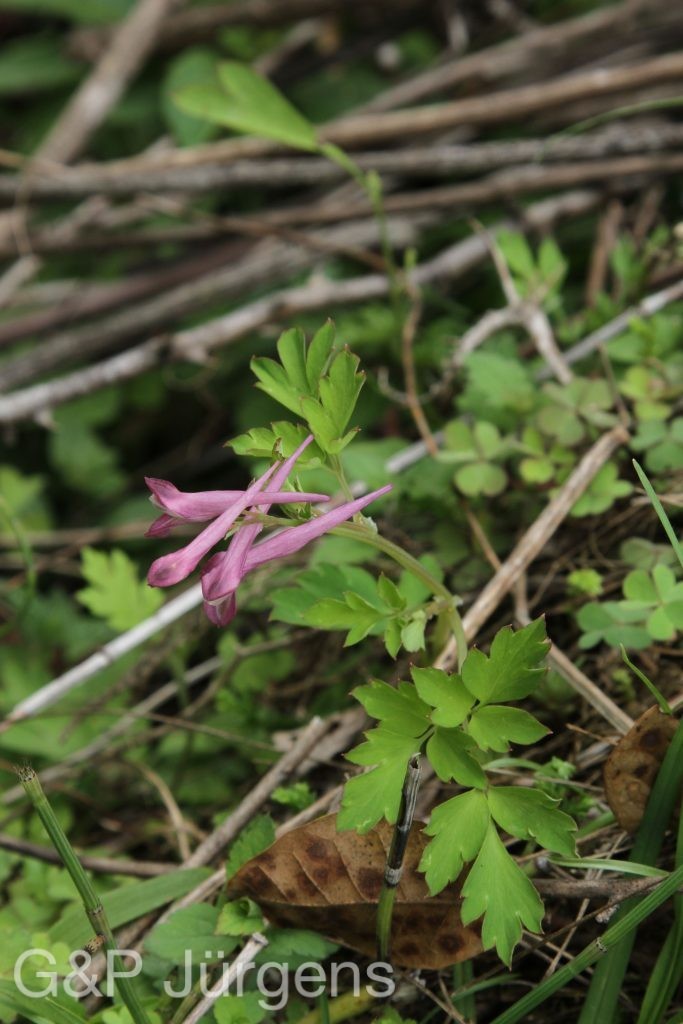
Corydalis leptocarpa is a Sino-Himalayan to East Asian fumitory recorded from China, Bhutan, India, Myanmar, Japan, Nepal, Thailand and Korea, with around 163 GBIF occurrences spanning this broad temperate range. It is a plant of shaded, humid forest, woodland margins, mossy banks and damp ravines, typically at montane elevations from roughly 1500 to 3000 m. The individual photographed near Trashiyangtse (Trachyangtse, eastern Bhutan) at about 2300 m in May illustrates its association with moist broad-leaved forest in spring, when the slender stems and pale flowers appear in the dappled understorey.

The species is a slender, erect to ascending annual or short-lived perennial herb with brittle, somewhat glaucous foliage. The leaves are bi- to triternately compound, the ultimate segments ovate and lobed, borne on delicate petioles. The inflorescence is a lax raceme of pale yellow, zygomorphic flowers; each has four petals, the upper outer one prolonged backward into a slender spur, enclosing two stamen bundles and an elongate ovary. The fruit, as the epithet leptocarpa ('slender-fruited') indicates, is a narrow, linear, pendulous capsule that dehisces elastically to scatter the shining black seeds, which often bear an oily elaiosome.

Corydalis is one of the largest genera of the Papaveraceae (subfamily Fumarioideae), exceptionally diverse in the Sino-Himalaya, where hundreds of species occupy habitats from forest floor to alpine scree. C. leptocarpa belongs to the yellow-flowered woodland element of the genus. Many Corydalis species rely on ant-mediated seed dispersal of their elaiosome-bearing seeds. With its wide East Asian range and tolerance of forest-edge habitats it is not considered threatened, though it remains tied to intact montane forest cover.

Author: Hook.f. & Thomson · Sources: POWO (Kew), GBIF, Flora of China, Flora of Bhutan, Annotated Checklist of the Flowering Plants of Nepal, Lidén & Zetterlund monograph of Corydalis

Wall. & Griff. ex C.B.Clarke

Bhutan2012 1153
Bhutan Tashiyangtse 1850m, October
Bhutan2012 1155
Bhutan Tashiyangtse 1850m, October

Description

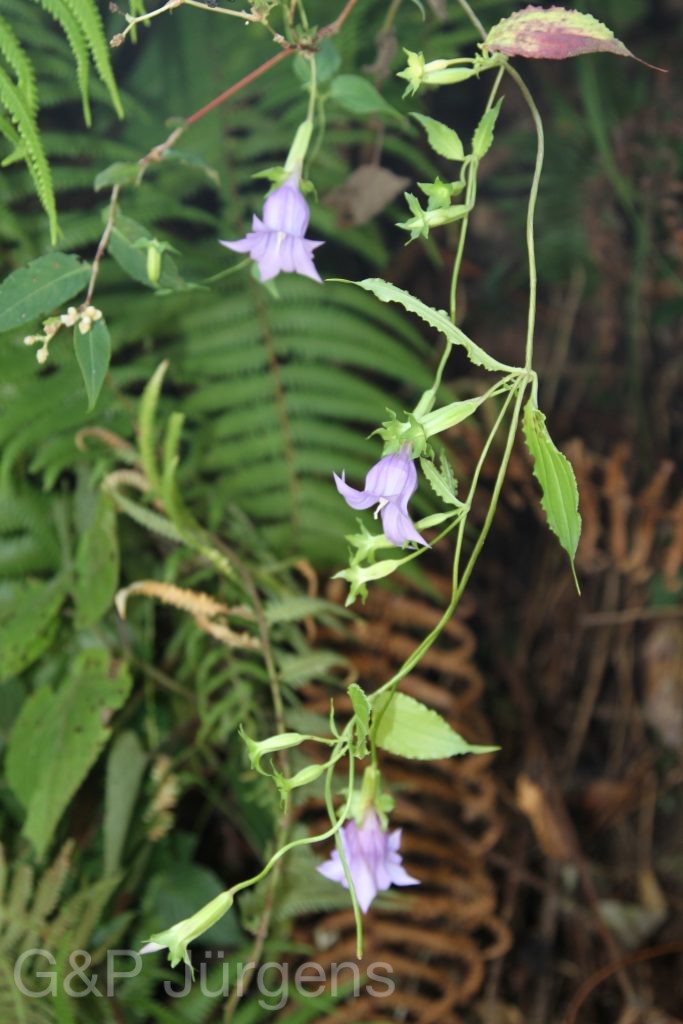
Crawfurdia campanulacea is a twining gentian of the eastern Himalaya and adjacent China, distributed from north-eastern India through Bhutan and Bangladesh into Myanmar, Vietnam and south-western China; its roughly 220 georeferenced occurrences (CN, IN, MM, BD, BT, VN) mark it as a regional element of the moist subtropical-to-temperate forest belt. It is a climbing herb of forest margins, thickets, shaded slopes and stream banks, generally between about 1500 and 2800 m, flowering in the autumn. The plant photographed at Tashiyangtse in eastern Bhutan at 1850 m in October illustrates this late-season blooming within humid broad-leaved forest.

It is a perennial herbaceous climber with slender, twining stems scrambling over surrounding vegetation. The leaves are opposite, ovate to ovate-lanceolate, acuminate, three- to five-nerved and short-petiolate, with entire margins. The conspicuous flowers are solitary or few in the upper axils, the corolla broadly campanulate (bell-shaped, as the epithet records), bluish-purple to violet, with five lobes and small plicate folds in the sinuses typical of the gentian alliance; there are five epipetalous stamens and a superior, stalked (stipitate) ovary. The fruit is a stipitate, ellipsoid capsule containing numerous small, flattened and often winged seeds.

Crawfurdia is a small Asian genus closely allied to Gentiana and Tripterospermum, distinguished by its twining habit and stipitate, winged-seeded capsules; some authors have submerged it within those genera, and its limits remain debated. Adapted to scrambling through forest understorey, C. campanulacea depends on intact woodland and is not regarded as threatened, though it is restricted to undisturbed montane forest across its range.

Author: Wall. & Griff. ex C.B.Clarke · Sources: POWO (Kew), GBIF, Flora of China, Flora of Bhutan, Flora of India, Ho & Pringle's treatment of Gentianaceae

Benth.

Sikkim2003 335 G472
Sikkim Saniti-Lake 4100m August

Description

Cremanthodium palmatum is an alpine herb of the eastern Himalaya and adjacent Sino-Himalayan mountains, recorded in GBIF (about 330 occurrences) from China, India, Bhutan, Myanmar, Nepal and Taiwan. It inhabits moist alpine meadows, streamsides, seepage slopes and rocky turf, generally between 3500 and 4500 m, where late-summer monsoon moisture sustains lush herbaceous growth. The photographed population at Saniti Lake in Sikkim at 4100 m in August typifies its preferred high-elevation, snowmelt-fed habitat, flowering as the brief alpine summer reaches its peak.

It is a perennial with a short rhizome and fibrous roots, producing erect, somewhat glandular-hairy stems. The basal leaves are long-petiolate and palmately lobed or divided, the blade reniform to orbicular in outline with toothed segments, recalling the foliage of a buttercup; the stem leaves are reduced and sessile upwards. The capitula are usually solitary and nodding, characteristic of the genus, with broad campanulate involucres of subequal, often dark-margined bracts. The ray florets are yellow, ligulate and spreading, surrounding numerous yellow tubular disc florets; the fruit is a cylindrical, glabrous achene crowned by a pappus of fine white bristles.

Cremanthodium belongs to tribe Senecioneae of the Asteraceae and is closely allied to Ligularia and Parasenecio, distinguished by its predominantly nodding, solitary alpine capitula. The genus is centred on the Hengduan Shan and eastern Himalaya, where rapid diversification has accompanied uplift and glacial cycling, making C. palmatum part of a characteristic high-alpine endemic radiation. Restricted to specialised cold, wet habitats but locally frequent across its range, it is not regarded as globally threatened, though such alpine specialists are sensitive to climatic warming.

Author: Benth. · Sources: POWO (Kew), GBIF, Flora of China, Flora of Bhutan, Annotated Checklist of the Flowering Plants of Nepal, Good revision of Cremanthodium

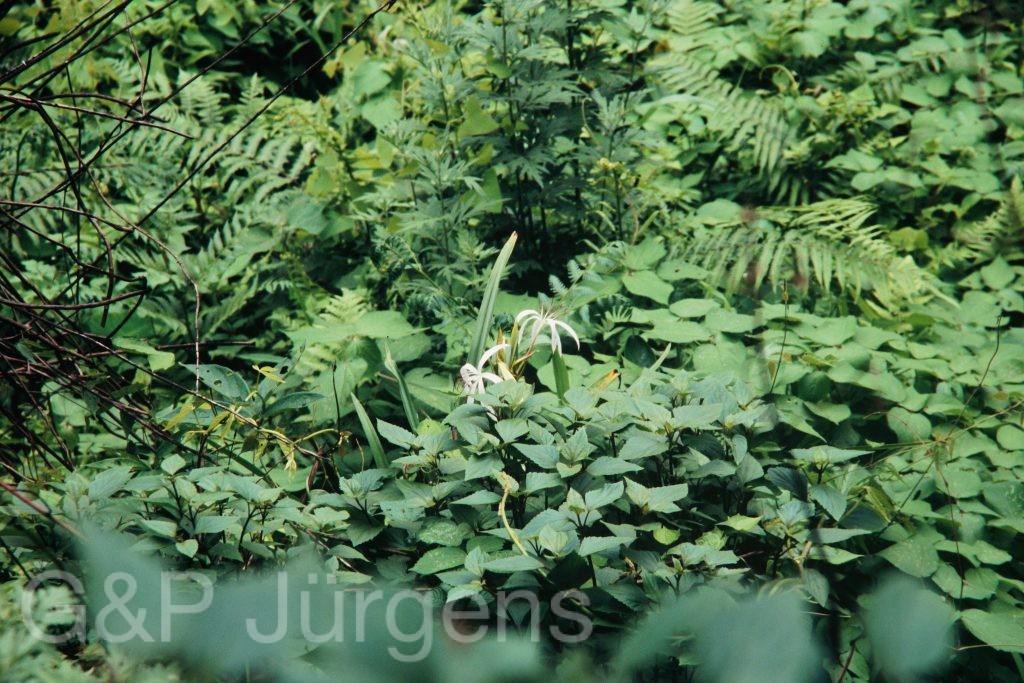
Roxb. ex Ker Gawl.

Bh09 390 G617
Bhutan Mo-Chu, 1500m June

Description

Crinum amoenum is a bulbous herb of the Himalayan foothills and adjacent Southeast Asia, distributed across India, Nepal, Bhutan, Thailand and Myanmar, with about 51 georeferenced occurrences in GBIF. It grows in moist grassland, forest clearings, stream banks and damp open ground in the subtropical lower montane belt, generally below about 1800 m, flowering with the onset of the summer monsoon. The plant illustrated was photographed along the Mo-Chu in Bhutan at about 1500 m in June, a characteristic riverine setting where it favours seasonally moist, humus-rich soils.

The species arises from a large, ovoid, tunicate bulb bearing a distinct neck, from which spring several strap-shaped, channelled leaves with somewhat undulate margins. The leafless flowering scape carries a terminal umbel of a few to several fragrant flowers subtended by membranous spathe bracts. Each flower has a slender, elongate perianth tube opening into six narrow, spreading to recurved tepals that are white, often flushed or striped with rose-pink along the keel, with six declinate stamens bearing versatile anthers and an inferior ovary. The fruit is an irregularly dehiscing capsule containing a few large, fleshy seeds.

Crinum (Amaryllidaceae, subfamily Amaryllidoideae) is a pantropical genus of bulbous geophytes whose tissues contain isoquinoline (crinine-type) alkaloids of pharmacological interest and considerable toxicity. The strongly scented, trumpet-shaped flowers are adapted to pollination by long-tongued moths and other nocturnal visitors, and several species are cultivated as ornamentals. Though not formally assessed as threatened, its lowland riparian and grassland habitats are vulnerable to agricultural conversion, drainage and bulb collection.

Author: Roxb. ex Ker Gawl. · Sources: POWO (Kew), GBIF, Flora of China, Flora of British India, Flora of Bhutan, Nordal Revision of African and Asian Crinum

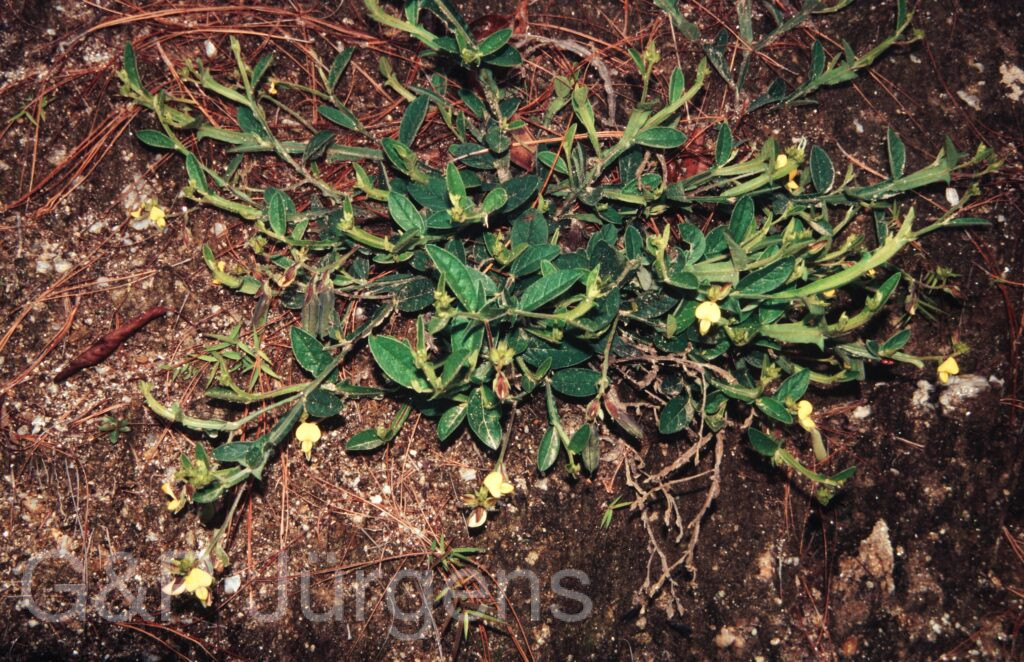
B.Heyne ex Roth

Nepal 2009 120 ergebnis
Nepal Helambu Melanehe Pul 1080, May

Description

Crotalaria albida is one of the most widespread Asian rattlepods, ranging from Pakistan, India, Nepal, Bhutan and Bangladesh eastward through China, Taiwan, Hong Kong, Myanmar, Thailand, Laos, Vietnam and Malesia to the Philippines, Indonesia, New Guinea and Australia, with naturalised records in Sri Lanka and the United States; over 2100 GBIF occurrences attest to this amplitude. In the Himalaya it favours open grassy hillsides, dry banks, pine-forest margins and disturbed roadsides on well-drained, often acidic soils. The plant photographed near Melamchi Pul in the Helambu region of central Nepal, at about 1080 m in May, typifies its preference for warm, low to mid-montane slopes between roughly 300 and 2300 m.

It is a slender, erect to ascending perennial herb or subshrub 30-90 cm tall, the wiry stems clothed in appressed silvery hairs. The leaves are simple, unifoliolate, oblong to oblanceolate and shortly petiolate, paler and pubescent beneath. The inflorescence is a slender terminal raceme of small papilionaceous flowers; the standard is pale yellow, often veined reddish-brown, and the keel is incurved and beaked. The calyx is bilabiate and hairy. As in the genus, the fruit is a short, inflated, glabrescent legume in which the loosened seeds rattle when dry.

The epithet albida alludes to the whitish, silky indumentum. Crotalaria is a large pantropical genus, and many species, including this one, contain pyrrolizidine alkaloids that render them toxic to livestock, though the plant is used locally in folk medicine. Its nitrogen-fixing root nodules enrich degraded slopes, and the species behaves as a pioneer colonist of disturbed ground, accounting for its extensive distribution and naturalisation.

Author: B.Heyne ex Roth · Sources: POWO (Kew), GBIF, Flora of China, Flora of Nepal, Flora of British India, Le Roux monograph of Crotalaria

DC.

Bhutan2012 822 Kopie
Bhutan Trongsa 2100m, October
Bhutan2012 823
Bhutan Trongsa 2100m, October

Description

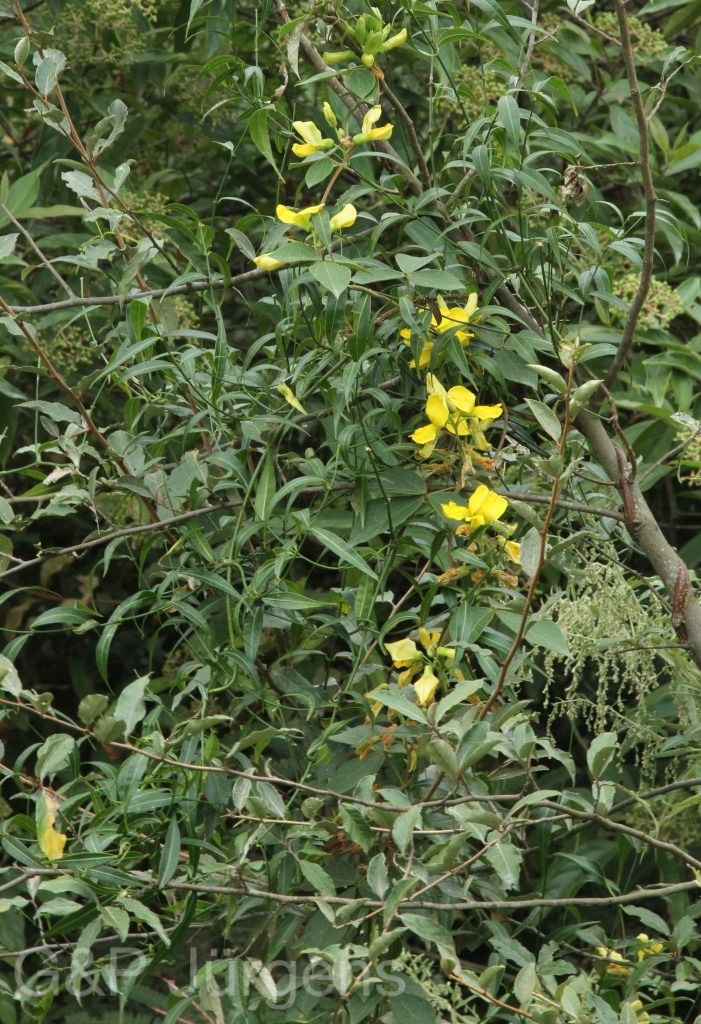
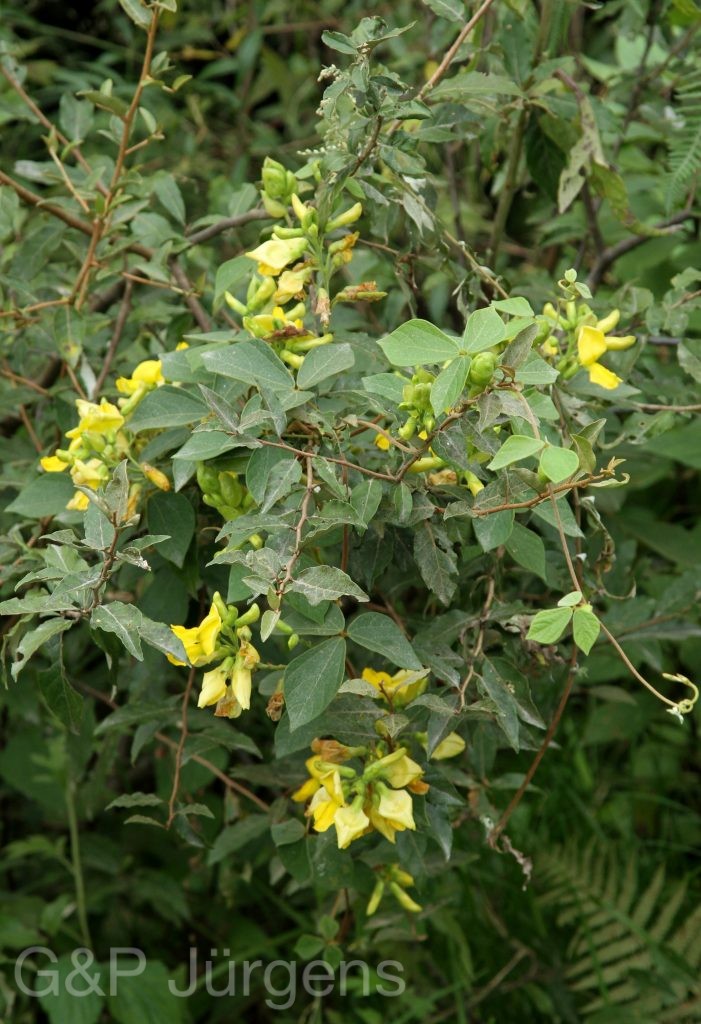
Crotalaria cytisoides is a shrubby rattlepod of the Himalaya and into Southeast Asia. GBIF records it from China, India, Nepal, Myanmar, Thailand, Bhutan, Laos, Malaysia and Indonesia, with further occurrences extending to Madagascar and Uganda, totalling over 400 records. It grows on open hill slopes, scrub, grassy banks, forest margins and roadsides at lower to middle elevations, broadly between 1000 and 2700 m. The plant shown was photographed near Trongsa in central Bhutan at 2100 m in October, flowering in the post-monsoon period along the warm temperate hill zone where this species is a frequent component of disturbed scrub.

It is a much-branched shrub or undershrub with silky-pubescent young branches. The leaves are trifoliolate, the obovate to elliptic leaflets softly hairy beneath, subtended by small stipules. The flowers are borne in terminal and leaf-opposed racemes; the papilionaceous corolla is yellow, sometimes veined or flushed reddish-brown on the standard, with the keel beaked as is typical of the genus. The fruit is an inflated, oblong legume in which the loosened ripe seeds rattle when shaken, the feature giving Crotalaria its English name rattlepod.

Crotalaria is a large pantropical legume genus, and like its relatives it forms root nodules with nitrogen-fixing rhizobia, enriching poor soils and contributing to its success as a coloniser of disturbed ground. Many species, including this one, contain pyrrolizidine alkaloids that deter herbivores and can be toxic to livestock. With its wide distribution, ruderal tendency and abundant seed production, C. cytisoides is common and of no conservation concern across its broad range.

Author: DC. · Sources: POWO (Kew), GBIF, Flora of China, Flora of Bhutan, Annotated Checklist of the Flowering Plants of Nepal, A revision of the genus Crotalaria (Leguminosae)