
Wall.
Description
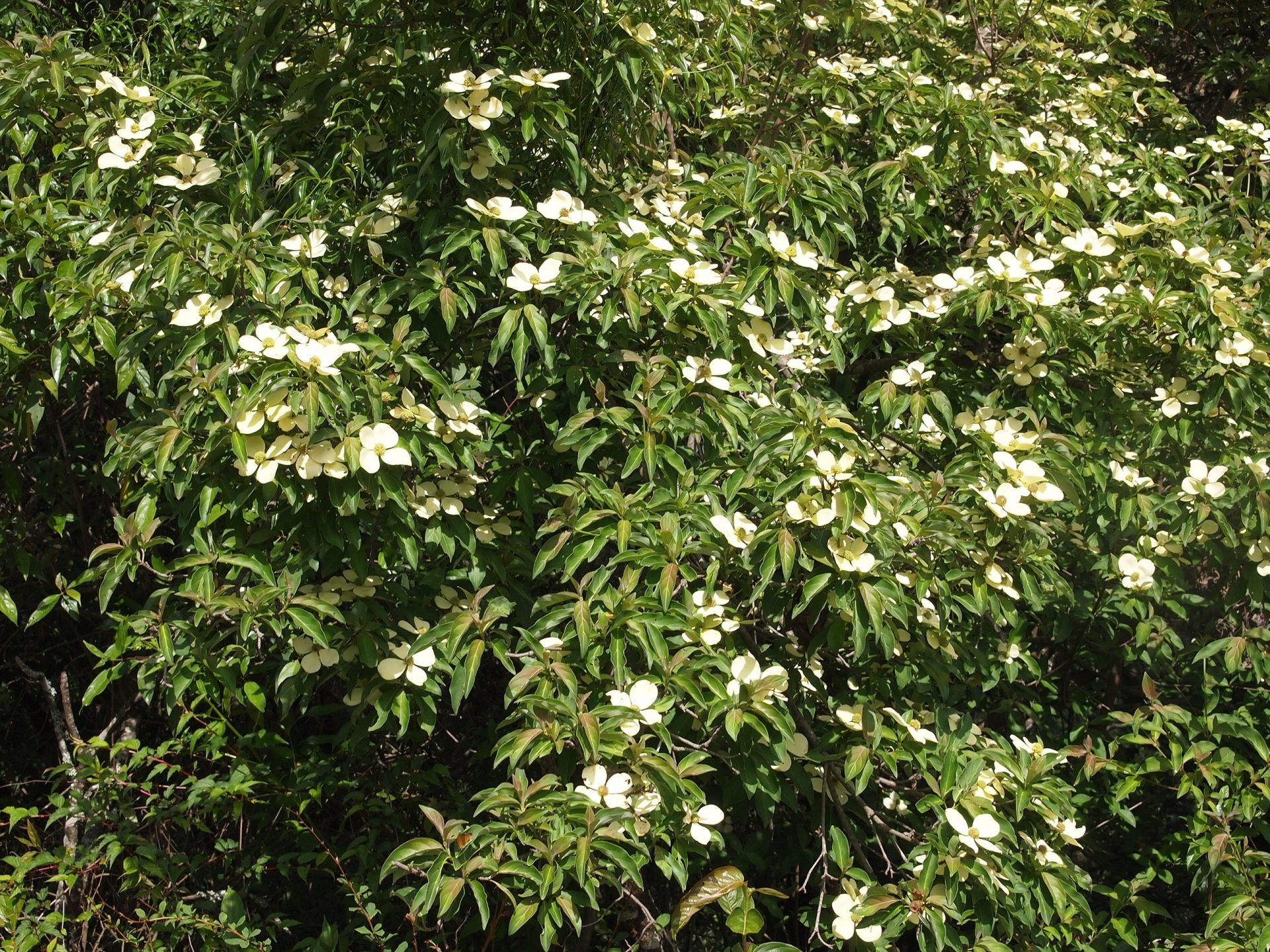
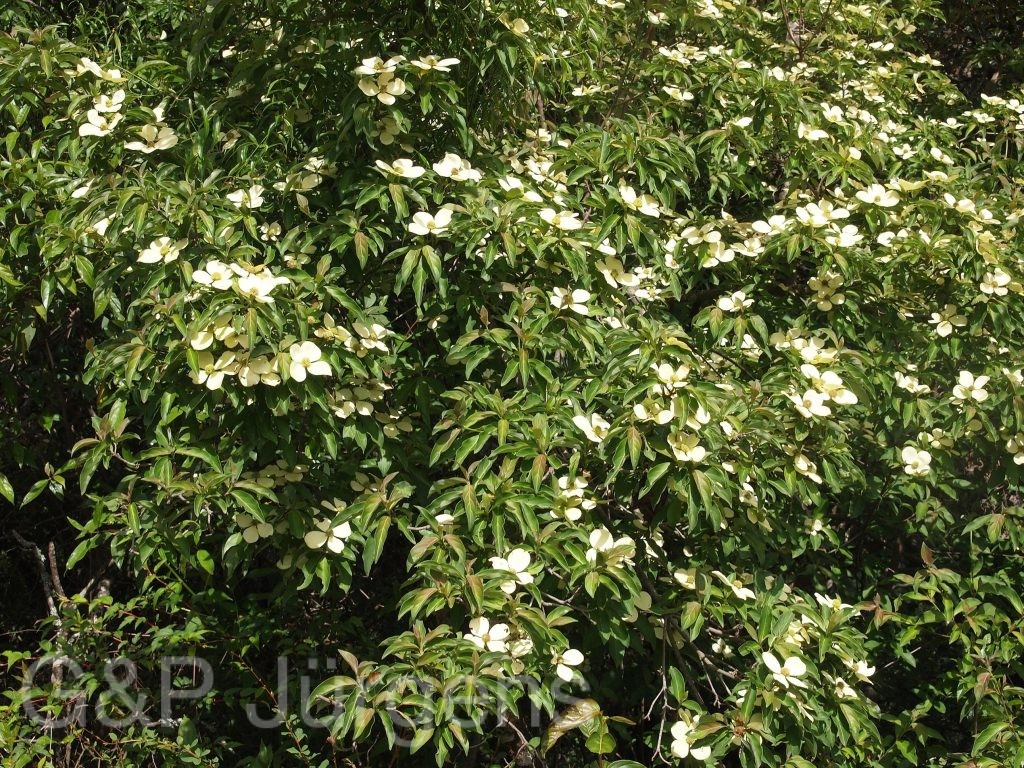
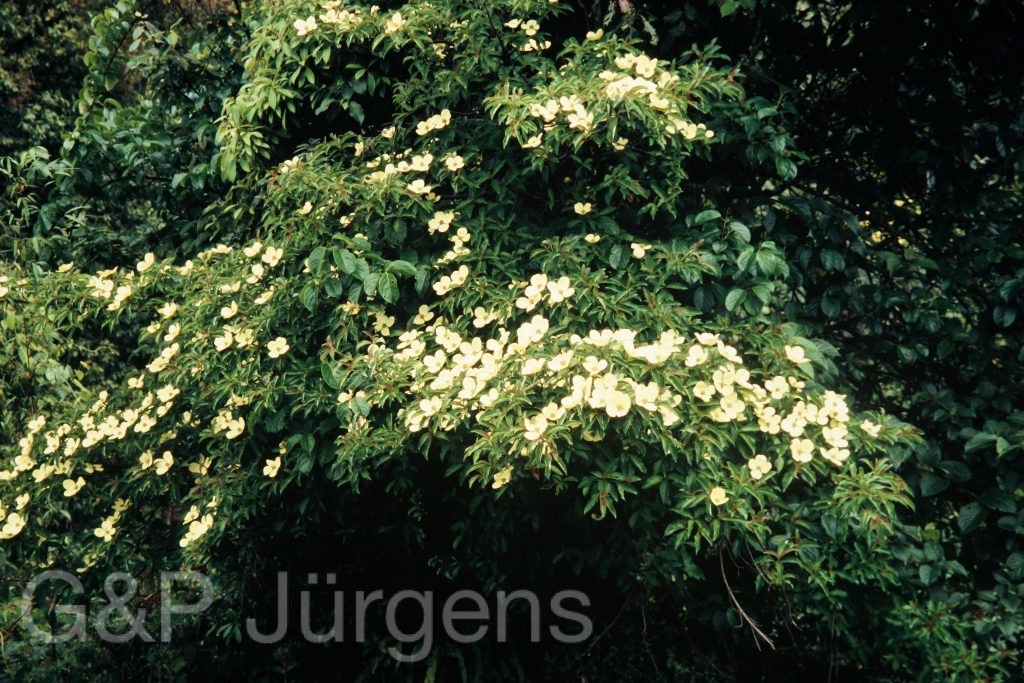
Cornus capitata Wall. is an evergreen dogwood of the Cornaceae native to the Himalaya and SW China, recorded from India, Nepal, Bhutan, Myanmar and China, and now widely cultivated and naturalised in temperate regions worldwide (Europe, North America, Australia, New Zealand, South Africa), accounting for its very large tally of over 4,200 georeferenced records. In its native range it grows in montane evergreen and mixed broad-leaved forest, forest margins, ravines and open hillsides, generally between about 1,000 and 3,200 m. The photographed trees from Wangdi at about 2,500 m and Paro at about 2,300 m in Bhutan, flowering in June, are typical of its mid-montane habitat in the eastern Himalaya.
It is a small to medium evergreen tree or large shrub with leathery, opposite, elliptic to oblong-lanceolate leaves that are dark green above and pale or glaucous beneath, with arcuate lateral veins. The small four-merous flowers are densely aggregated into a globose head subtended by four (to six) large, showy, creamy-white to pale-yellow petaloid bracts that function as the display structure. After flowering the entire head develops into a fleshy, strawberry-like compound fruit, a syncarp of fused drupes, ripening crimson-red and edible.
Cornus capitata belongs to the bracteate, head-flowered group of dogwoods (subgenus Syncarpea / Dendrobenthamia), in which numerous flowers and their swollen receptacles coalesce into a single fleshy aggregate fruit. The conspicuous bracts attract pollinators, while the sweet syncarp is dispersed by birds and mammals. Widely grown as an ornamental for its bracts and fruit, the species is common and widespread and of no conservation concern, though it has become locally invasive in parts of its introduced range.
Author: Wall. · Sources: POWO (Kew), Flora of China Vol. 14, Flora of Bhutan Vol. 2, GBIF, Xiang et al.: Phylogeny and classification of Cornus (2006)