(Lindl.) Rchb.f.
Description
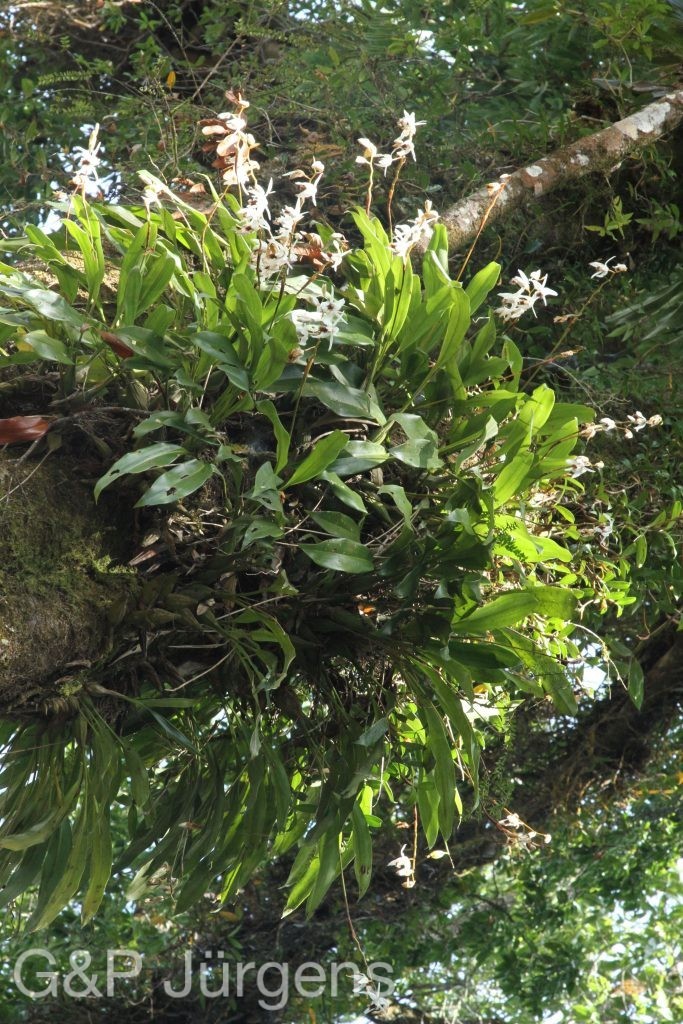
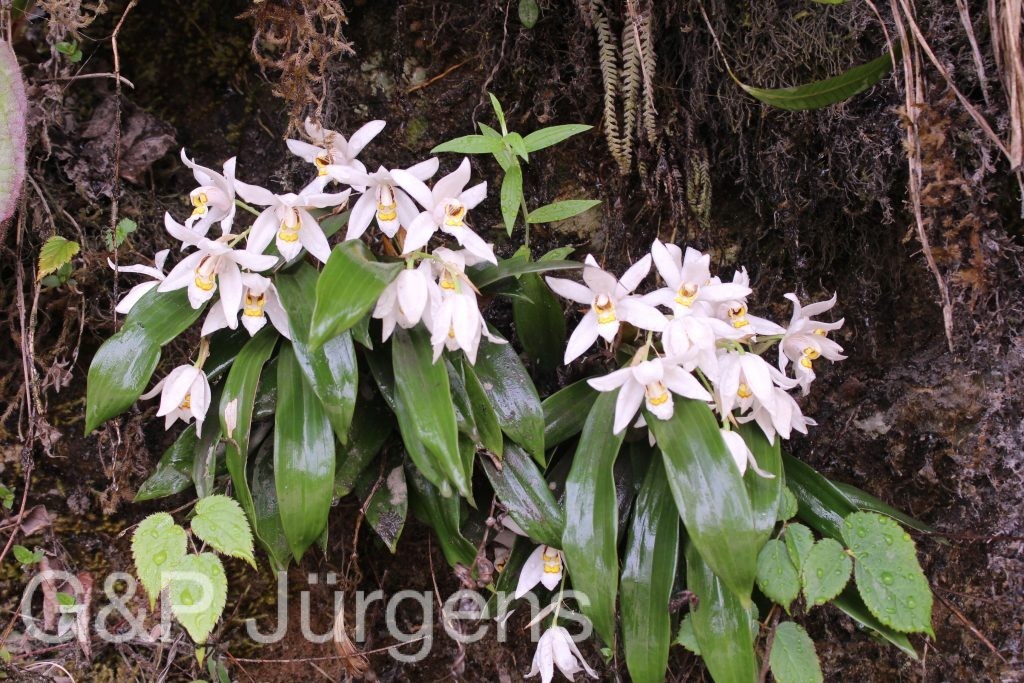
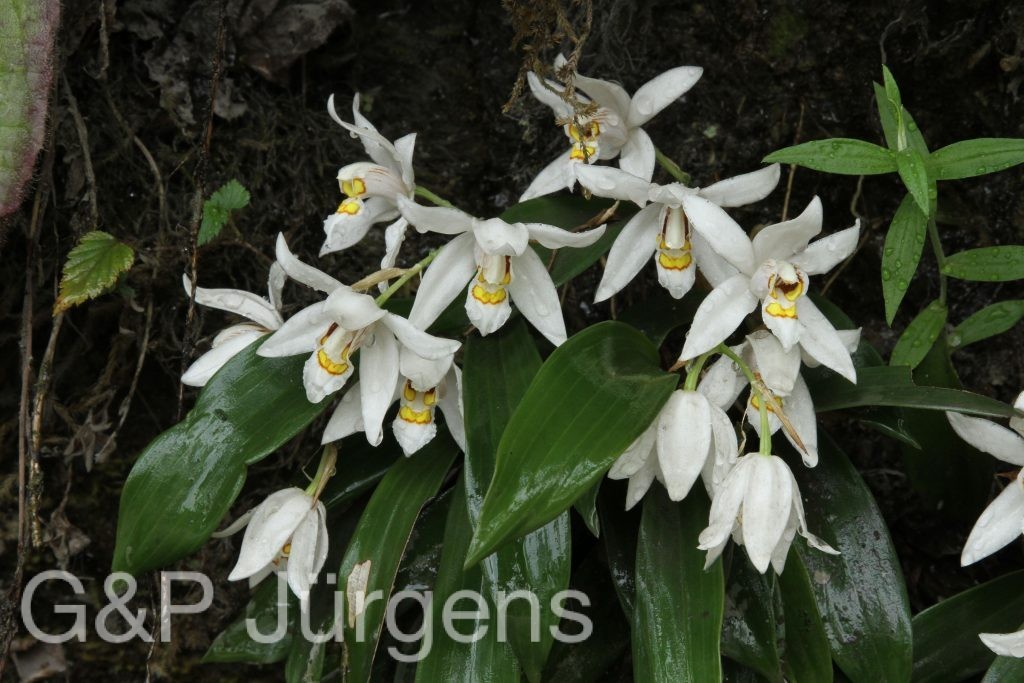
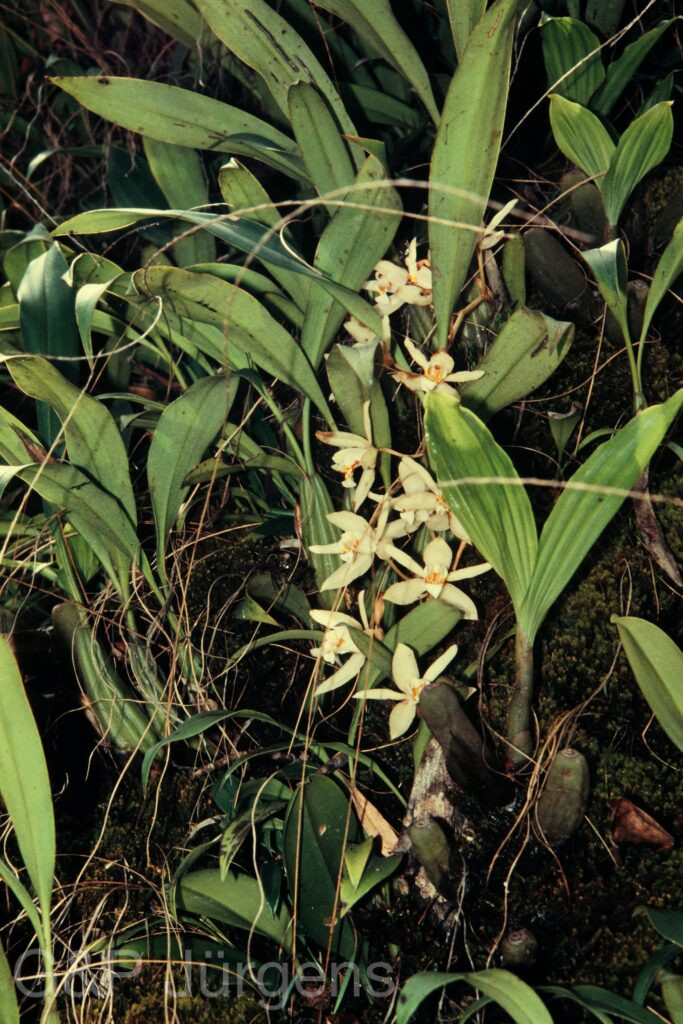
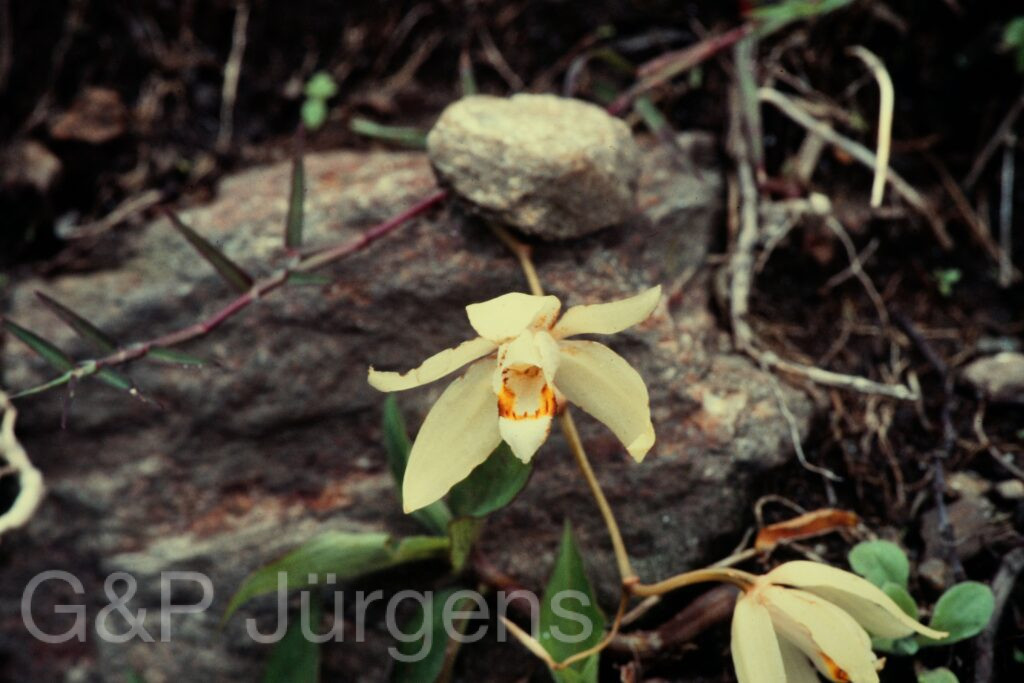
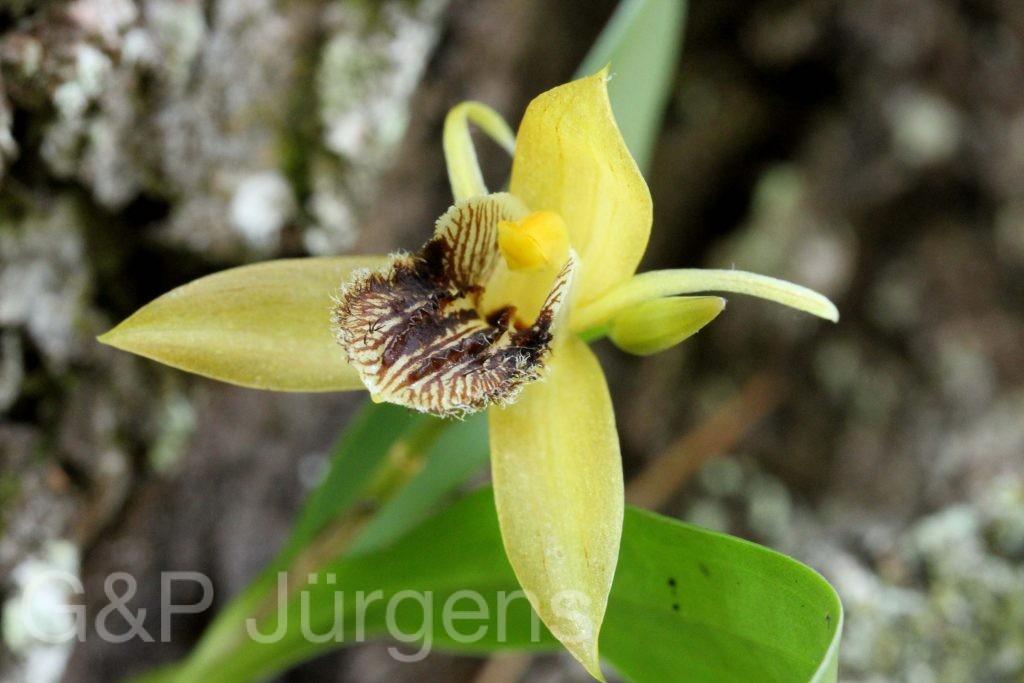
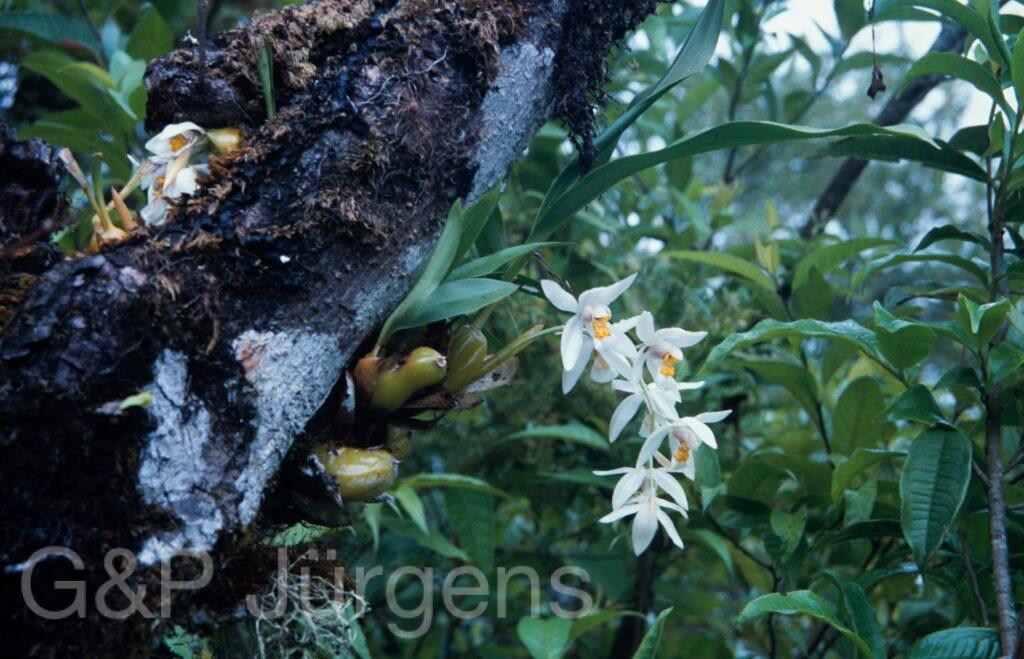
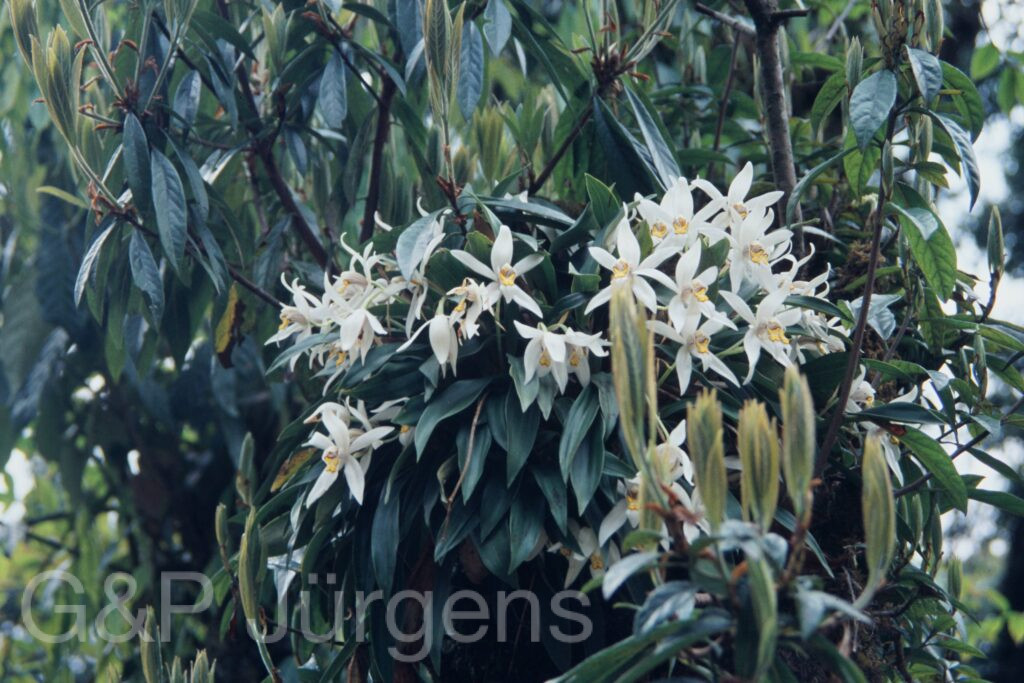
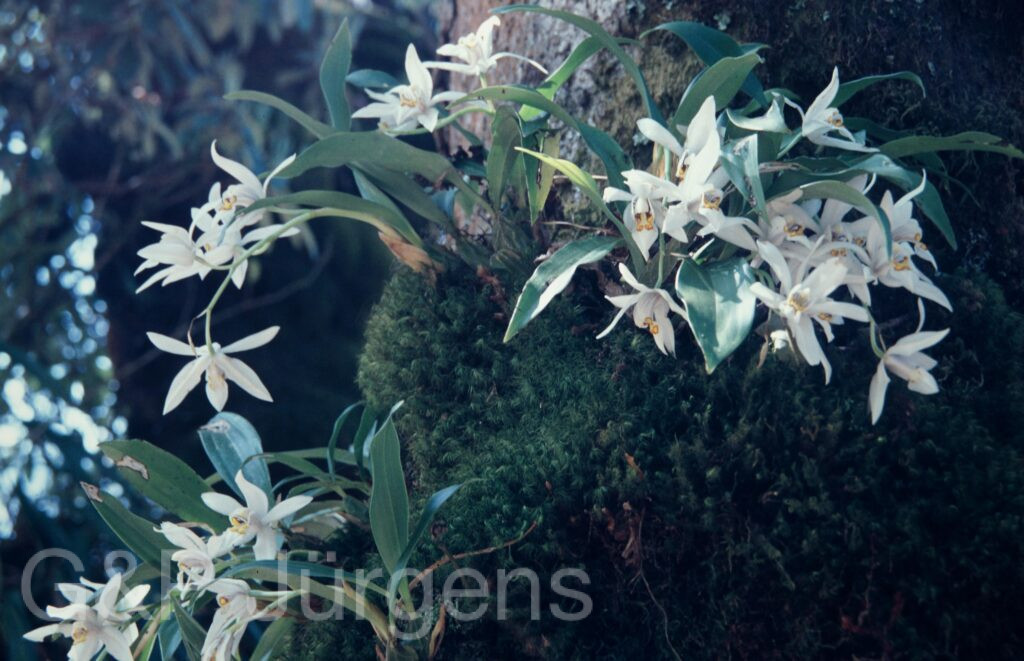
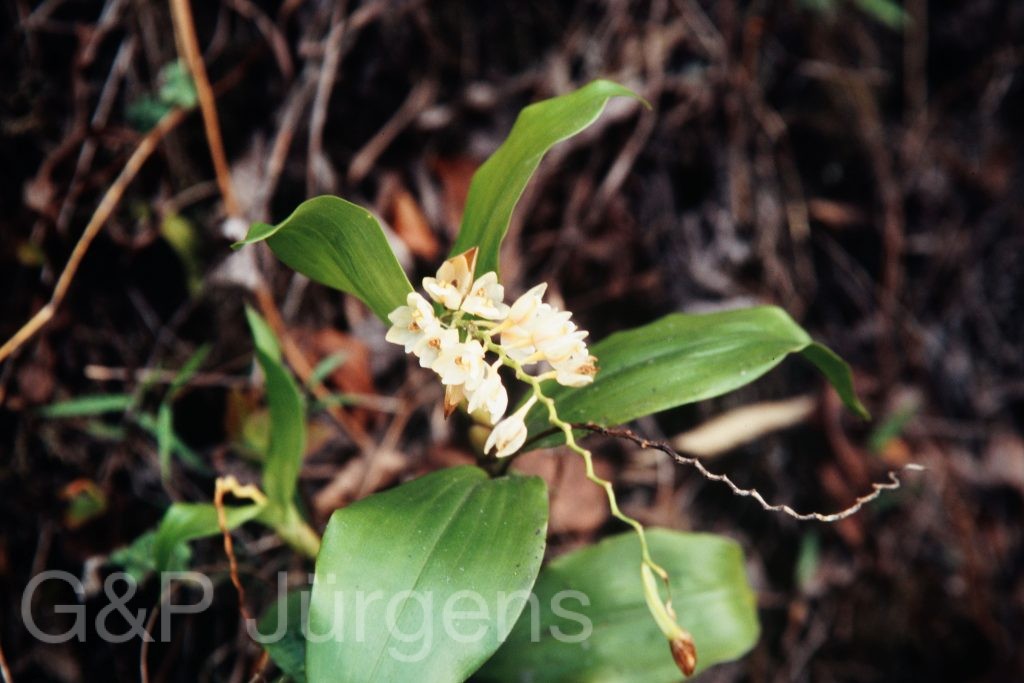
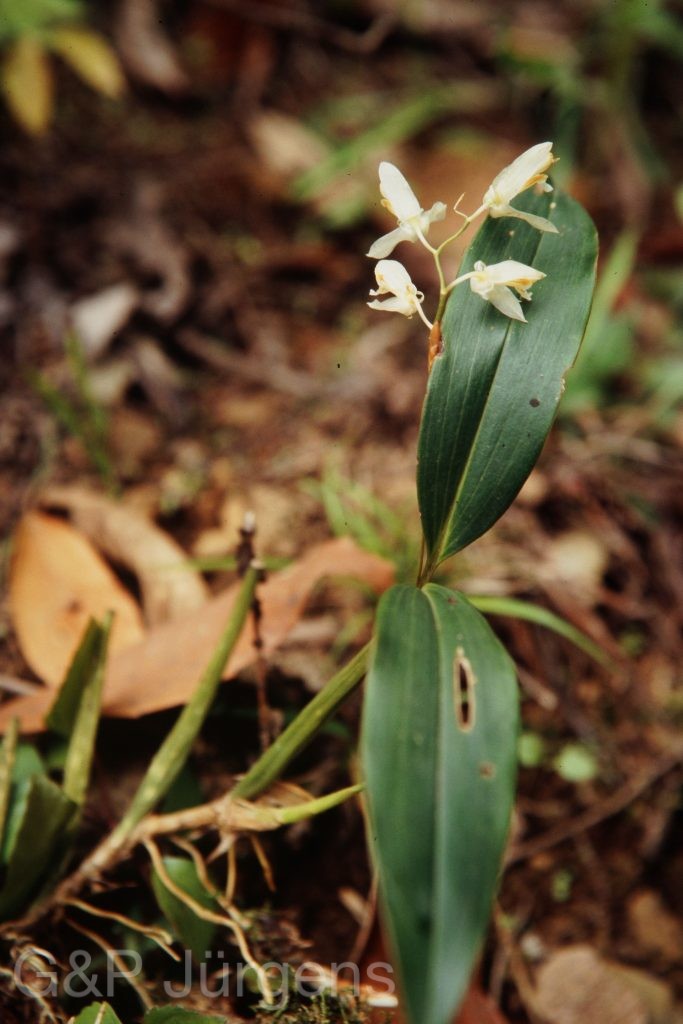
Coelogyne articulata (long widely known as Pholidota articulata) is an epiphytic orchid distributed broadly across tropical and subtropical Asia, from India, Nepal, Bhutan and China through Myanmar, Thailand, Indochina and Malesia to New Guinea, with 733 occurrences in GBIF. It grows as an epiphyte on tree trunks and mossy branches, occasionally as a lithophyte on shaded rocks, in evergreen and mixed broadleaved forest from the lowlands up to about 2900 m. The Bhutanese collection figured, from Dochu-La at 2900 m in June, marks the upper, cool-temperate edge of its range, where it flowers in the early monsoon in humid, shaded forest.
The plant has a creeping rhizome bearing a chain of cylindrical to fusiform pseudobulbs jointed end to end, each successive bulb arising from the apex of the last, producing the articulated, beaded habit reflected in the epithet. Each pseudobulb carries one or two oblong-lanceolate, plicate leaves. The slender, pendulous inflorescence is a distichous, secund raceme of many small flowers subtended by conspicuous boat-shaped bracts; the flowers are whitish to pale pink, with concave sepals, narrow petals and a saccate, concave lip. The fruit is a small ribbed dehiscent capsule releasing dust-like seeds.
The genus name on the source page reflects past placement in Pholidota; molecular phylogenetics has shown Pholidota to be nested within Coelogyne (Orchidaceae, subfamily Epidendroideae), and POWO accepts the combination Coelogyne articulata. The input family is given as "Orchideaceae"; the accepted family is Orchidaceae. Widespread, locally common and tolerant of secondary forest, the species is not regarded as threatened, though all wild orchids are listed on CITES Appendix II.
Author: (Lindl.) Rchb.f. · Sources: POWO (Kew), GBIF, Flora of China, Flora of Bhutan, The Genus Coelogyne (A Synopsis)