Tag:

Myanmar

Flowers of the Myanmar Himalaya — 604 species recorded from northern Myanmar (Burma) and the eastern Himalayan borderlands, a biodiversity hotspot linking the Himalaya to the mountains of Yunnan and Southeast Asia. The region’s forests and alpine slopes hold a rich flora of rhododendrons, orchids, balsams and gentians. Every page gives a botanical description, distribution, habitat and flowering time with the original photograph.

DC.

Bhutan2012 680
Bhutan Galephu 950m, September
Bhutan2012 681
Bhutan Galephu 950m, September

Description

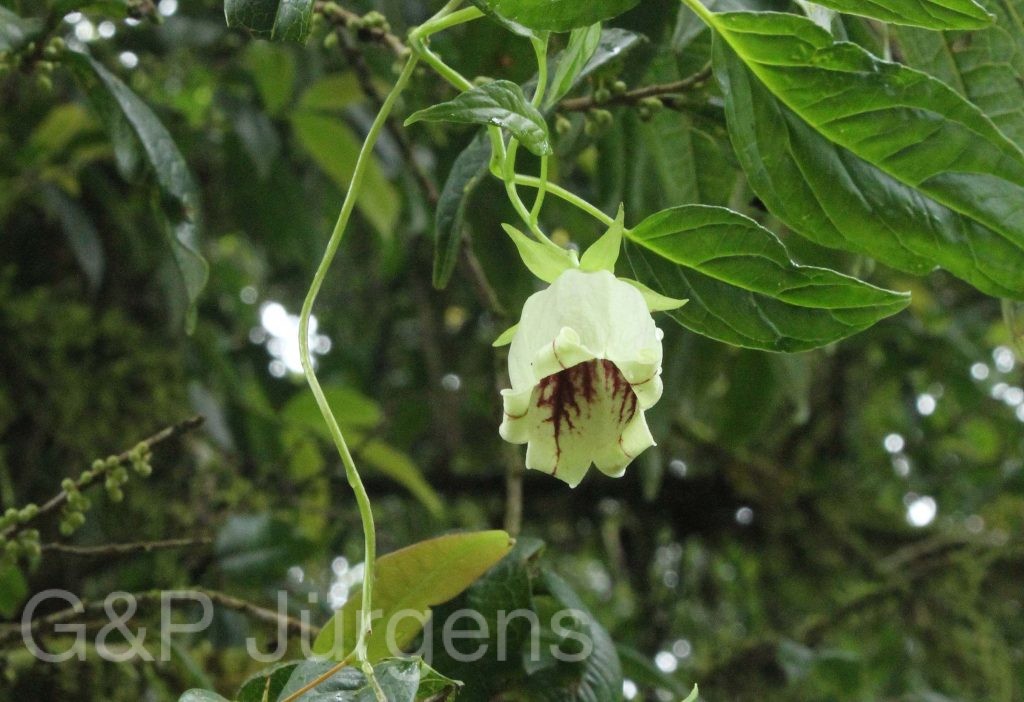
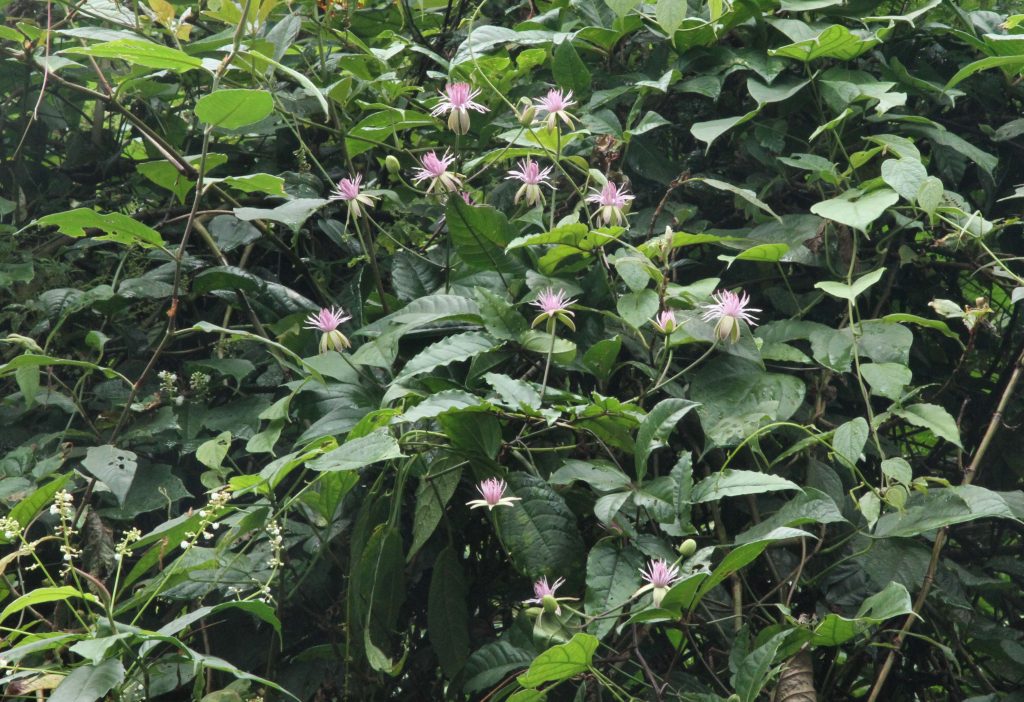
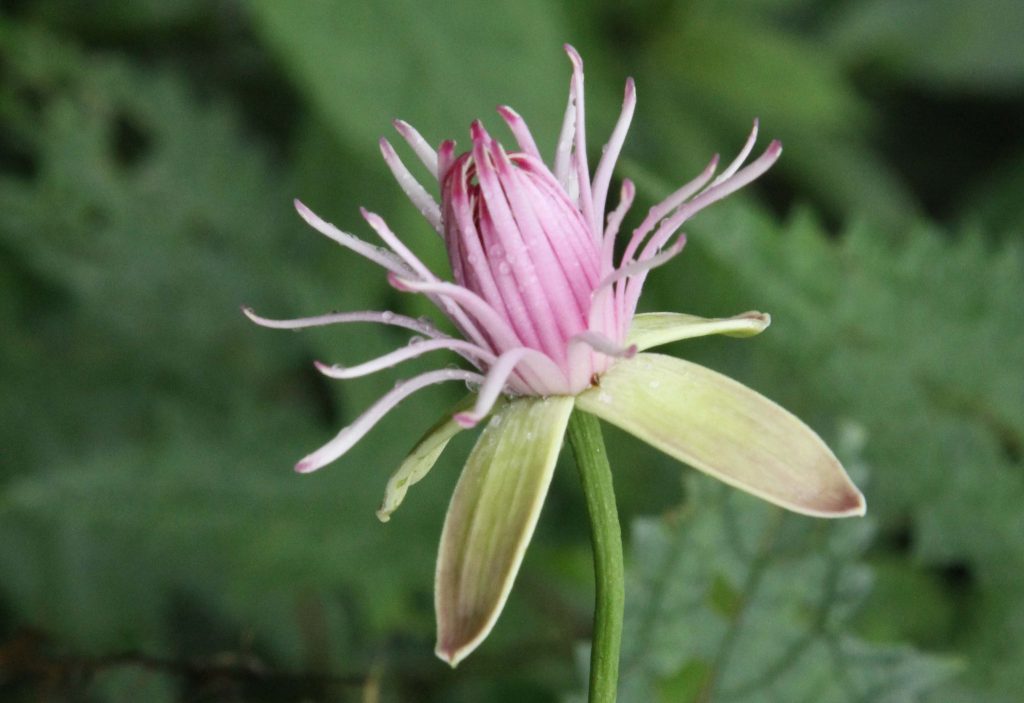
Clematis napaulensis is a vigorous woody climber of the Himalaya and southwestern China, recorded by GBIF in some 197 occurrences from Nepal, China, India, Bhutan and Myanmar, with scattered cultivated or naturalised records in Spain, the Netherlands, Switzerland, France, South Africa and New Zealand. It scrambles through forest margins, thickets, hedgerows and riverine scrub in the warm-temperate and subtropical belt, broadly between 900 and 2500 m. The photographed plant is from Bhutan at Galephu at 950 m in September, at the low, warm end of its range, where it begins its unusual winter flowering season as growth resumes after the monsoon.

The plant is a deciduous to semi-evergreen liana climbing by twining petioles. The leaves are opposite and pinnate, with ovate to lanceolate, entire or toothed leaflets. Distinctively, the species flowers in autumn and winter, bearing pendulous, axillary clusters of bell-shaped flowers; the four creamy to greenish-white sepals form a narrow campanulate bloom and curve back at the tips, while the numerous stamens have conspicuous reddish-purple filaments that protrude from the mouth. The fruit is a head of achenes each tipped with a long, silky, plumose style that aids wind dispersal.

Clematis (Ranunculaceae, tribe Anemoneae) lacks petals, its showy perianth being sepaline; C. napaulensis belongs to a group of winter-flowering Asian species valued in horticulture for blooming when little else is in flower. GBIF treats the name as accepted, the orthography napaulensis referring to Nepal. Widespread and adaptable across the southern Himalaya, it is of least concern and is cultivated internationally as an ornamental climber.

Author: DC. · Sources: POWO (Kew), GBIF, Flora of China, Annotated Checklist of the Flowering Plants of Nepal, Grey-Wilson monograph of Clematis
(Bruehl) Tamura

BhutanPG2011 157 5
Bhutan Tsochenchen, 3550m June

Description

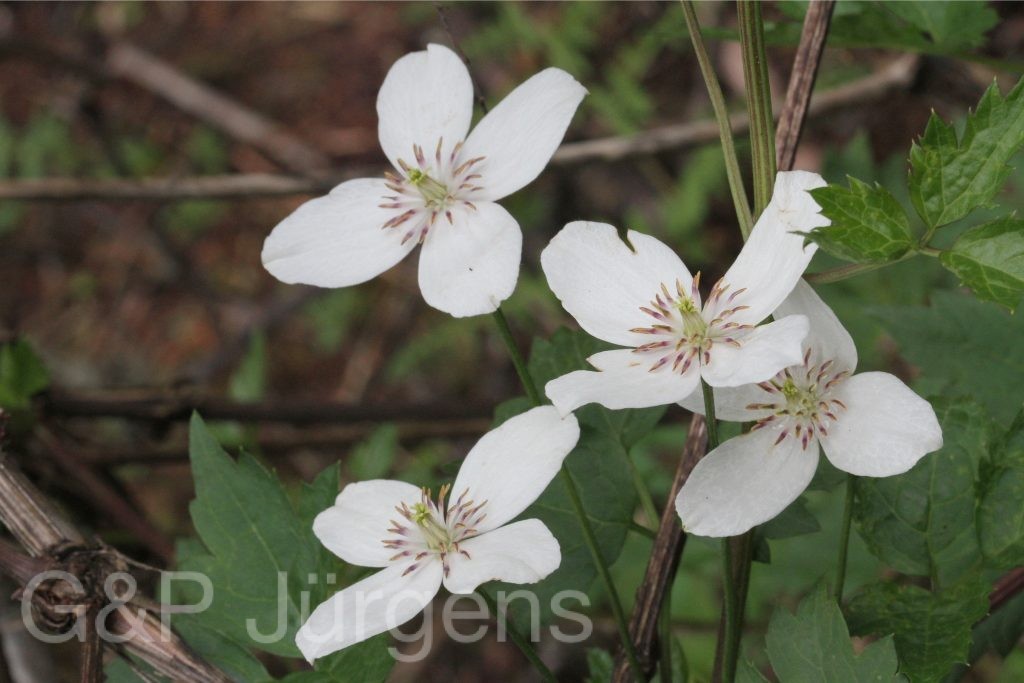
Clematis tongluensis is a Himalayan climber recorded from Nepal, Bhutan, India, China and Myanmar, with additional cultivated or vouchered material noted from Canada; GBIF holds around 58 occurrences. It is a plant of temperate to subalpine forest, scrambling through shrubberies, over forest-edge thickets and along open slopes, generally between about 2700 and 3700 m. It was photographed at Tsochenchen in Bhutan at 3550 m in June, where it climbs through rhododendron and conifer woodland margins, flowering at the onset of the summer monsoon.

The species is a woody to semi-woody climber with ribbed, somewhat pubescent stems that twine and clamber by means of the petioles. The leaves are ternate to pinnate, the leaflets ovate to lanceolate, acuminate and serrate, often thinly hairy. The flowers, borne singly or in few-flowered cymes, are nodding and broadly campanulate, lacking true petals; the four (rarely more) thick, spreading to recurved sepals are usually creamy-white to pale yellow, sometimes flushed purplish, with tomentose margins. Numerous stamens surround the carpels, and the fruit is a head of achenes each bearing a long, plumose persistent style.

Clematis tongluensis sits within the bell-flowered Sino-Himalayan groups of the genus, allied to the Montanae and related sections, and has at times been treated under or confused with the variable C. montana complex. Its nodding campanulate flowers and montane forest habitat are diagnostic. The species is fairly widely distributed and faces no recognised conservation threat, though it depends on the persistence of intact temperate broad-leaved and coniferous forest.

Author: (Bruehl) Tamura · Sources: POWO (Kew), GBIF, Flora of Bhutan, Flora of China, A Revision of the Genus Clematis (Grey-Wilson), Annotated Checklist of the Flowering Plants of Nepal

Walp.

Bhutan2015 316
Bhutan Trongsa 1900m, October
Bhutan2012 751
Bhutan Zemgang 1200m, October
Bhutan2012 752
Bhutan Zemgang 1200m, October
Bhutan2015 149 scaled
Bhutan Zhemgang 800m, October

Description

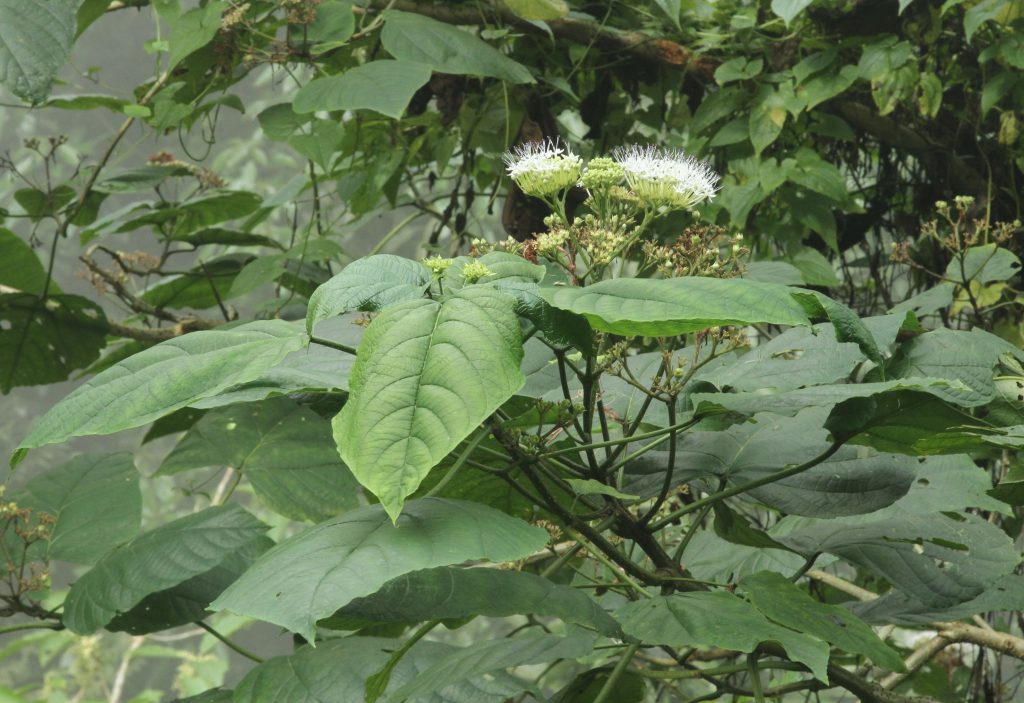
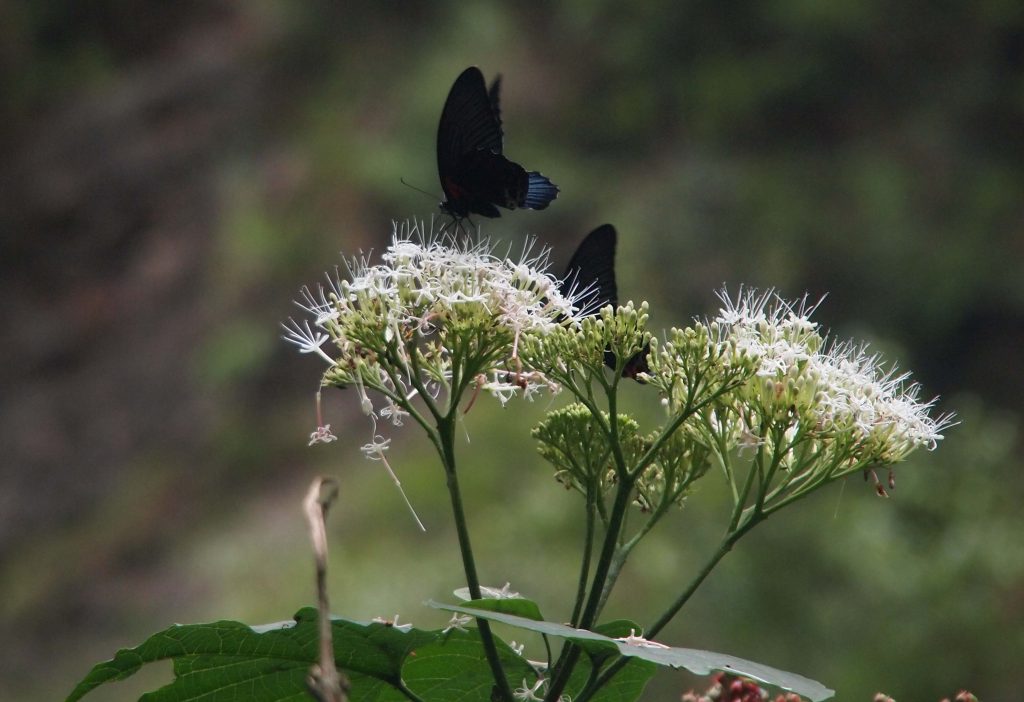
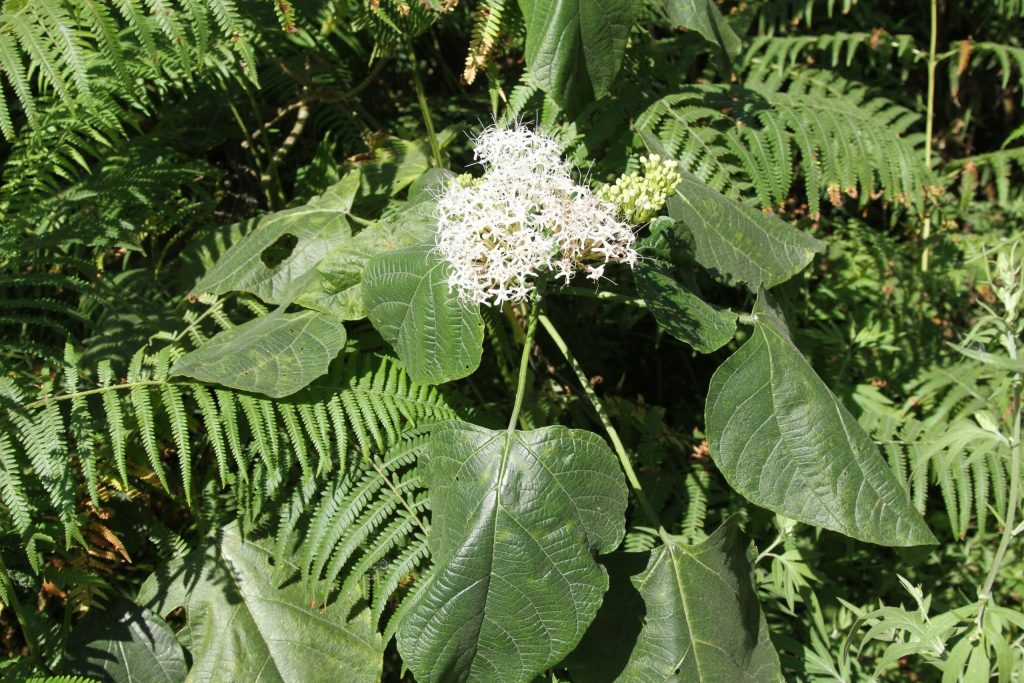
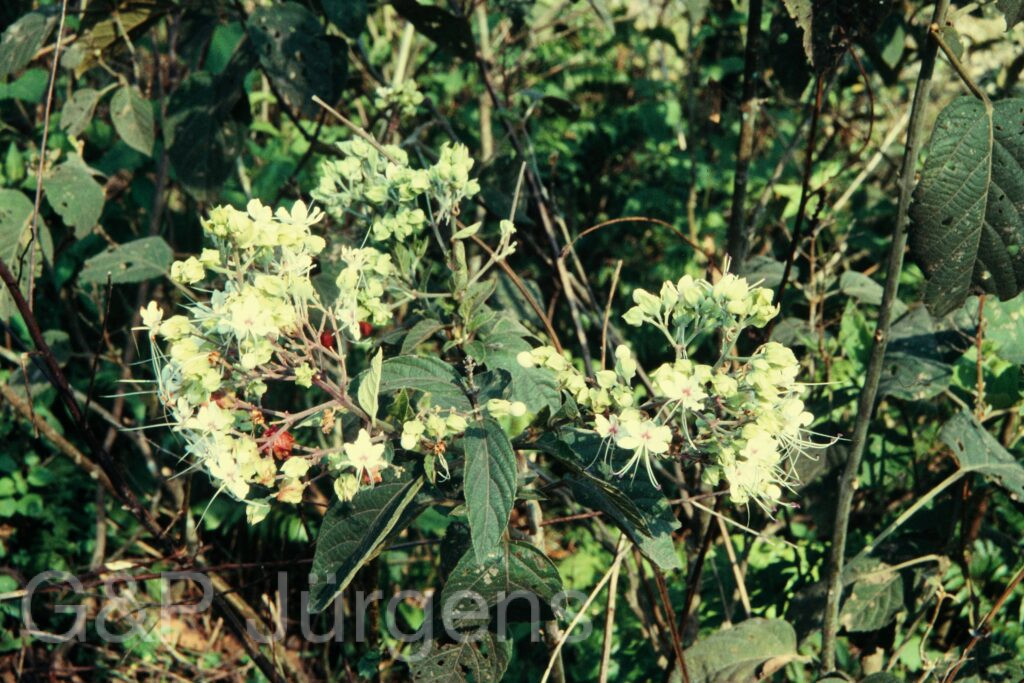
Clerodendrum colebrookianum is a shrub of the Indo-Himalayan and Southeast Asian region, recorded from Nepal, NE India, Bhutan, Bangladesh, Myanmar, southern China and southward through Thailand, Laos, Vietnam, Malaysia and Indonesia; the GBIF dataset (299 occurrences) also includes outlying records. It is a plant of warm-temperate to subtropical broad-leaved forest, forest margins, secondary scrub and disturbed roadsides, frequently following human settlement. In Bhutan it has been collected across a broad altitudinal span, from around 800 m in Zhemgang up to about 1,900 m near Trongsa, with autumn (October) collections capturing it in flower and early fruit.

It is an erect shrub 1–3 m tall with quadrangular, finely pubescent young branchlets. The leaves are opposite, broadly ovate to cordate, 8–20 cm long, acuminate at the apex, entire or shallowly toothed, with a soft indumentum beneath and a strong odour when crushed. The inflorescence is a broad, terminal, flat-topped corymbose cyme; flowers are white, the calyx campanulate and 5-lobed, the corolla with a slender tube and five spreading lobes, and four long-exserted stamens and a bifid style projecting well beyond the limb. The fruit is a fleshy drupe splitting into four pyrenes seated on the persistent, reddening calyx.

Though GBIF flags the name as a synonym, the accepted name is Clerodendrum colebrookianum, here treated as correct. Formerly placed in Verbenaceae, the genus is now referred to Lamiaceae following molecular phylogenetic revision. The species is a well-known leafy vegetable and ethnomedicinal plant across NE India and adjacent regions, valued in folk treatment of hypertension, and is widespread and unthreatened.

Author: Walp. · Sources: POWO (Kew), Flora of China Vol. 17, Flora of Bhutan Vol. 2, GBIF, Harley et al.: Labiatae in The Families and Genera of Vascular Plants (2004)

L.

Nepal 97 545 P1067
Nepal Sabha-Khola 520m,May
Nepal 97 543 P1063

Nepal Sabha-Khola 520m, May

Description

Clerodendrum infortunatum is a common shrub of the lowland and foothill regions of tropical southern and southeastern Asia. GBIF records document a wide range across India, Thailand, Sri Lanka, Indonesia, Malaysia, Nepal, Bangladesh, the Philippines, China, Bhutan and Myanmar, with naturalised or cultivated occurrences in Brazil, Mexico, Singapore and elsewhere, amounting to over 2200 records. It is a plant of forest margins, clearings, wastelands, roadsides and disturbed secondary scrub, often forming dense thickets in the warm humid lowlands. The photographed material from the Sabha-Khola valley in Nepal at 520 m, flowering in May, is typical of its occurrence in the subtropical foothill belt, where it blooms in the pre-monsoon period.

It is an erect, soft-wooded shrub usually under 2 m, with quadrangular young stems and large, broadly ovate to cordate leaves that are opposite, softly pubescent and emit a characteristic unpleasant smell when crushed. The flowers are borne in large, lax, terminal panicled cymes; each has an inflated, often reddish calyx and a white to pinkish-tinged, salverform corolla with a slender tube and five spreading lobes, the four stamens and style long-exserted. The fruit is a fleshy drupe seated on the persistent, accrescent calyx, splitting at maturity into four nutlet-like pyrenes.

Formerly placed in the Verbenaceae, Clerodendrum is now treated within the Lamiaceae following molecular phylogenetic reclassification. C. infortunatum is well known in traditional medicine across South Asia, where its leaves and roots are used against fevers and skin and digestive ailments. Ecologically it is a pioneer of disturbed ground, its exserted flowers attracting butterflies and other long-tongued pollinators, and its drupes dispersed by birds.

Author: L. · Sources: POWO (Kew), GBIF, Flora of Nepal, Flora of China (Lamiaceae), Revision of Clerodendrum (Steane & Mabberley)

Trautv. & C.A.Mey.

Nepal 99 154 ergebnis
West-Nepal South of Rara-Lake 3500m, June

Description

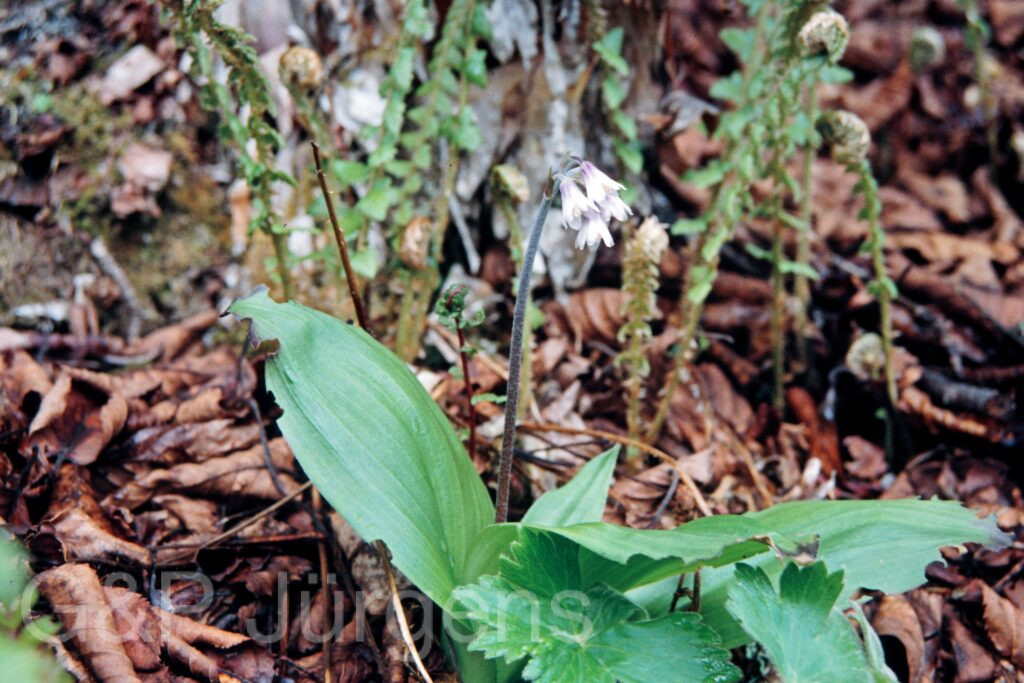
Clintonia udensis is a woodland perennial with a remarkably wide East Asian to Himalayan distribution, recorded from China, Japan, Russia (Far East), Korea, Nepal, India, Bhutan, Myanmar and Pakistan, with over 3800 GBIF occurrences across this temperate arc. It is a shade-loving plant of moist, humus-rich coniferous and mixed forests, fir and rhododendron understorey, bamboo thickets and damp shaded gullies, typically between about 2500 and 4000 m in the Himalaya. The plant photographed south of Rara Lake in West Nepal at 3500 m in June, flowering as the high forests emerge from winter, exemplifies its preference for cool, sheltered subalpine forest floors where deep leaf litter retains moisture.

The species arises from a short, creeping rhizome and produces a basal rosette of two to five broadly elliptic to oblong-obovate leaves that are conspicuously parallel-veined, entire and ciliate at the margin, sheathing at the base. A leafless scape rises above the foliage bearing a terminal raceme of a few nodding, campanulate flowers. The six white tepals are oblong and free, subtending six stamens with linear anthers, and the superior ovary matures into a fleshy, ellipsoid to ovoid berry that ripens from green to a deep blue-black, containing several seeds and crowned by the persistent style base.

Clintonia is a small Holarctic genus of about five species traditionally placed in the Liliaceae and treated by some authors within an expanded Convallariaceae or Uvulariaceae. C. udensis is the sole Asian representative and the only one with white flowers and a black berry, the remaining species being North American. Its disjunct amphi-Pacific generic distribution is a classic example of the East Asian–North American floristic link. The berries are dispersed by birds, and the species is widespread and common; it is of no particular conservation concern.

Author: Trautv. & C.A.Mey. · Sources: POWO (Kew), GBIF, Flora of China Vol. 24, Flora of Bhutan Vol. 3, Flora of Nepal, A Monograph of the Genus Clintonia (Liliaceae)

(Kunth ex Baker) H.Hara

Bhutan2014 578
Bhutan Phobjika 3100m, May
Bhutan2014 827
Bhutan Thimphu 2450m, May

Description

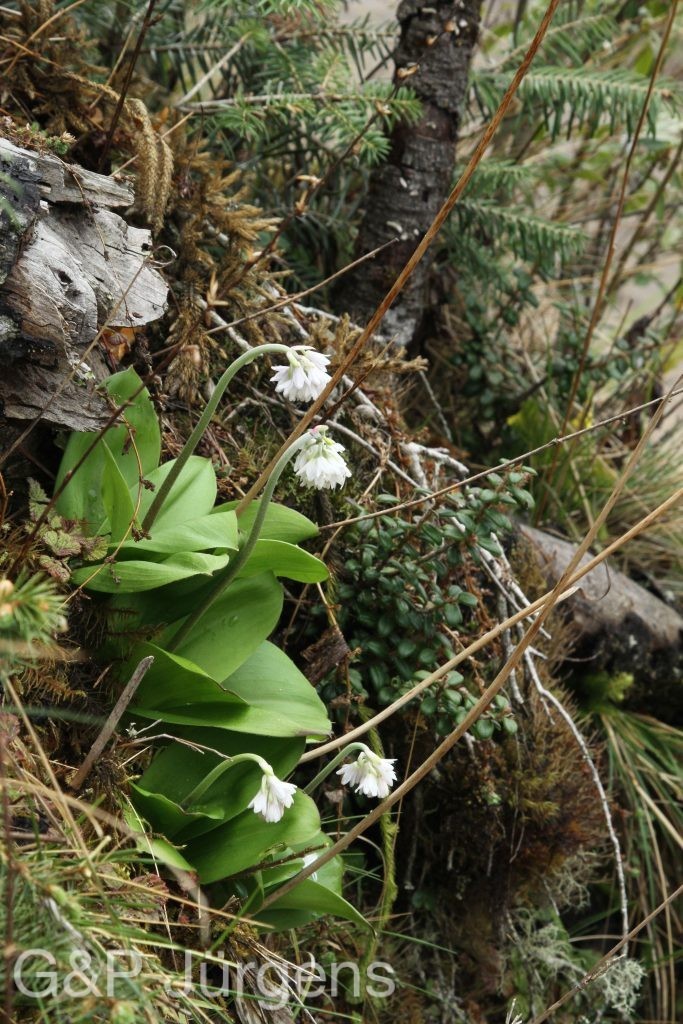
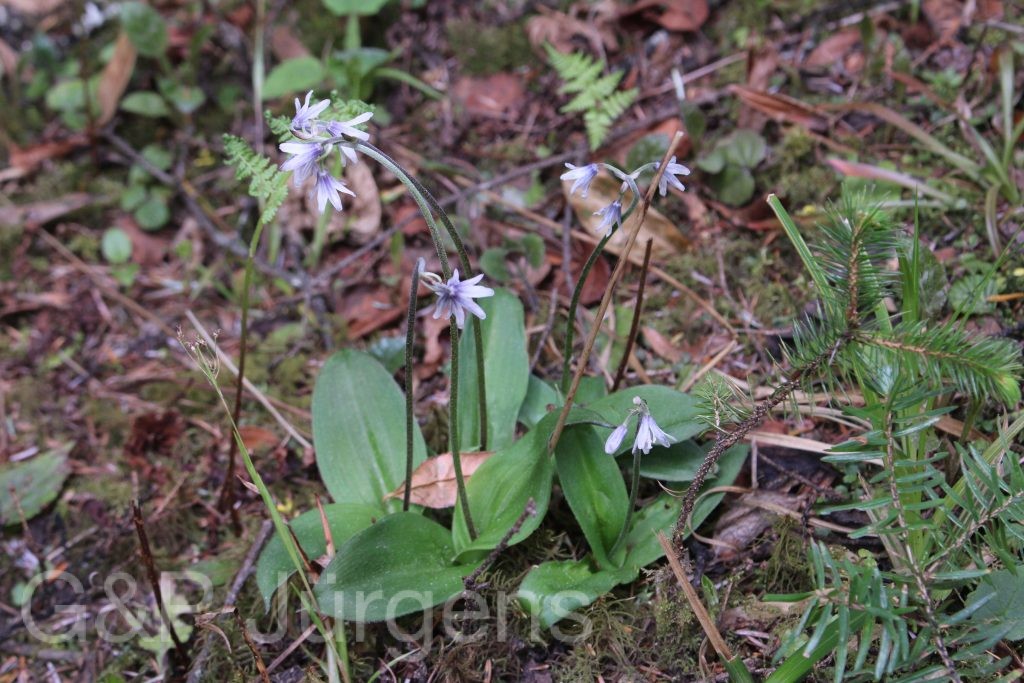
Clintonia udensis var. alpina is a rhizomatous woodland herb of the temperate Himalaya and the mountains of East Asia. GBIF records (around 230 occurrences) span China, India, Nepal, Bhutan, Myanmar, Korea and Japan, the species as a whole forming a classic Sino-Himalayan to East Asian arc. It is a plant of moist, shaded forest floors, growing among mosses beneath fir, hemlock and rhododendron, and along cool stream banks in the upper temperate and subalpine zones. The photographed plants came from Bhutan at Phobjika near 3100 m and above Thimphu at about 2450 m, both flowering in May, consistent with its habit of blooming as the snowmelt recedes.

The plant arises from a slender creeping rhizome and produces a basal rosette of two to five leaves. These are oblong-elliptic to obovate, entire, glabrous and somewhat fleshy, narrowed to a sheathing base. From the centre rises a leafless scape bearing a small umbel-like cluster of nodding, white, campanulate flowers; each has six free, oblong tepals, six stamens with versatile anthers, and a superior ovary topped by a short style. The fruit is a globose berry that ripens from green to a striking blue-black, borne erect on the lengthening pedicels, the contrast of dark fruit and green foliage being characteristic of the genus.

Clintonia is a small Northern Hemisphere genus of the Liliaceae traditionally placed near Medeola, with a disjunct distribution between eastern Asia and North America that makes it a textbook example of the boreal-temperate floristic link. The alpine variety represents the higher-elevation, smaller Himalayan expression of the wide-ranging C. udensis. The species is frequent in suitable forest and is of no conservation concern, its blue berries dispersed by birds.

Author: (Kunth ex Baker) H.Hara · Sources: POWO (Kew), GBIF, Flora of China, Flora of Bhutan, Annotated Checklist of the Flowering Plants of Nepal, Utech's taxonomic studies of Clintonia (Liliaceae)

H.Ohashi

Bhutan2015 585
Bhutan Punaka 1240m, October

Description

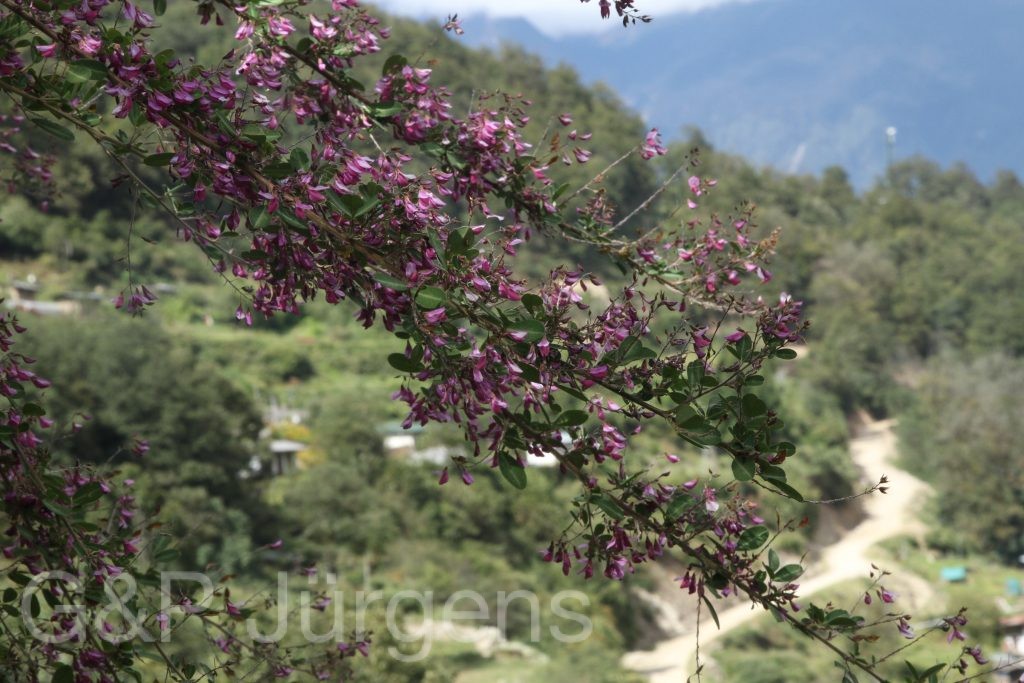
Codariocalyx motorius is a subshrub of the subtropical and tropical understorey, widely distributed across South and Southeast Asia and reaching the southern Himalayan foothills. GBIF records (some 1,418 occurrences) document it from China, India, Nepal, Bhutan, Myanmar, Thailand, Laos, Cambodia, Vietnam, Sri Lanka, Taiwan, the Philippines, Indonesia and Pakistan, with naturalised or cultivated material in Japan, the United States and elsewhere. It favours open scrub, forest margins, grassy slopes and disturbed ground. The photographed plant grows at Punakha in western Bhutan at about 1,240 m, flowering in October, typical of the warm broadleaved zone below 1,500 m it occupies in the eastern Himalaya.

It is an erect perennial subshrub 0.6–1.5 m tall with woody-based, finely pubescent stems. The leaves are pinnately trifoliolate; the terminal leaflet is large, oblong-lanceolate and up to 8 cm long, flanked by two minute lateral leaflets that perform spontaneous rotatory movements in response to light and warmth. The inflorescence is a terminal or axillary raceme of small papilionaceous flowers, violet to purplish, with a striate standard. The fruit is a curved, several-jointed lomentum that breaks into one-seeded articles at maturity.

Long known as Desmodium gyrans, the species is famous as the "telegraph" or "dancing" plant, its motile lateral leaflets having attracted study from Darwin onwards. It is locally used in traditional medicine and is of no conservation concern given its wide range and tolerance of disturbance, though it is a characteristic indicator of seasonally dry monsoon forest in the Himalayan tracts.

Author: H.Ohashi · Sources: POWO (Kew), Flora of China Vol. 10, Flora of Bhutan Vol. 1, GBIF, Ohashi: Taxonomic Studies in Desmodium (Leguminosae)

Hook.f. & Thomson

Sikkim2003 425 G591
Sikkim Chopta Valley 4250m August

Description

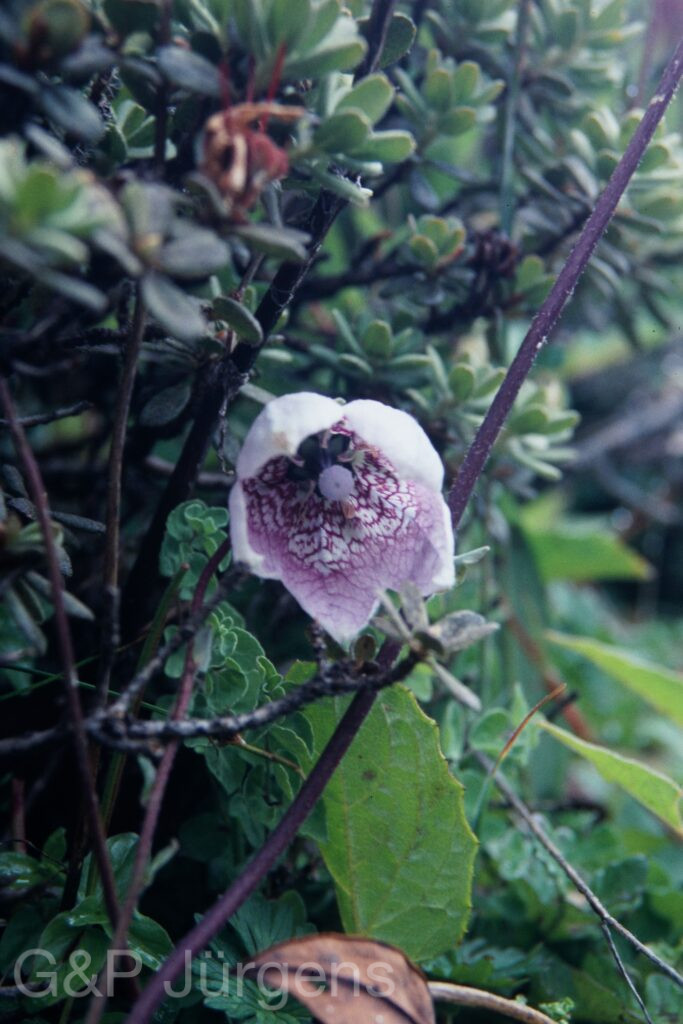
Codonopsis foetens is an alpine herb of the eastern Himalaya, distributed across China, Bhutan, India, Myanmar and Nepal, with about 712 georeferenced records in GBIF. It occupies high-elevation meadows, alpine scrub, screes and rocky slopes, typically between roughly 3500 and 4800 m. The plant illustrated was photographed in Sikkim's Chopta Valley at 4250 m in August, during the monsoon flowering season, where it grows among dwarf rhododendron scrub and damp alpine turf in the upper subalpine to alpine zone.

The species is an erect to ascending perennial herb arising from a thickened root, with simple or sparingly branched stems bearing small, scattered, ovate to lanceolate leaves. The flowers are solitary and terminal, nodding, with a broadly campanulate corolla that is pale blue to greyish-blue or violet and conspicuously marked internally with darker veins or blotches. The five corolla lobes are short and the throat often bears coloured patterning; the fruit is a capsule subtended by the persistent calyx lobes and releasing numerous minute seeds at maturity.

Codonopsis (Campanulaceae) is well diversified in the Sino-Himalayan alpine flora, and as the epithet foetens indicates, this species emits a strong, unpleasant odour when the foliage is bruised, a trait shared with several relatives and thought to deter herbivores while attracting particular insect visitors. The pendent bell-shaped flowers are pollinated chiefly by bumblebees. Restricted to high alpine habitats, C. foetens is not formally assessed as threatened but is dependent on intact alpine vegetation and is potentially sensitive to grazing pressure and climate-driven shifts in the alpine belt.

Author: Hook.f. & Thomson · Sources: POWO (Kew), GBIF, Flora of China, Flora of Bhutan, Annotated Checklist of the Flowering Plants of Nepal, Hong Monograph of the Genus Codonopsis

Hook.f. & Thomson

Description

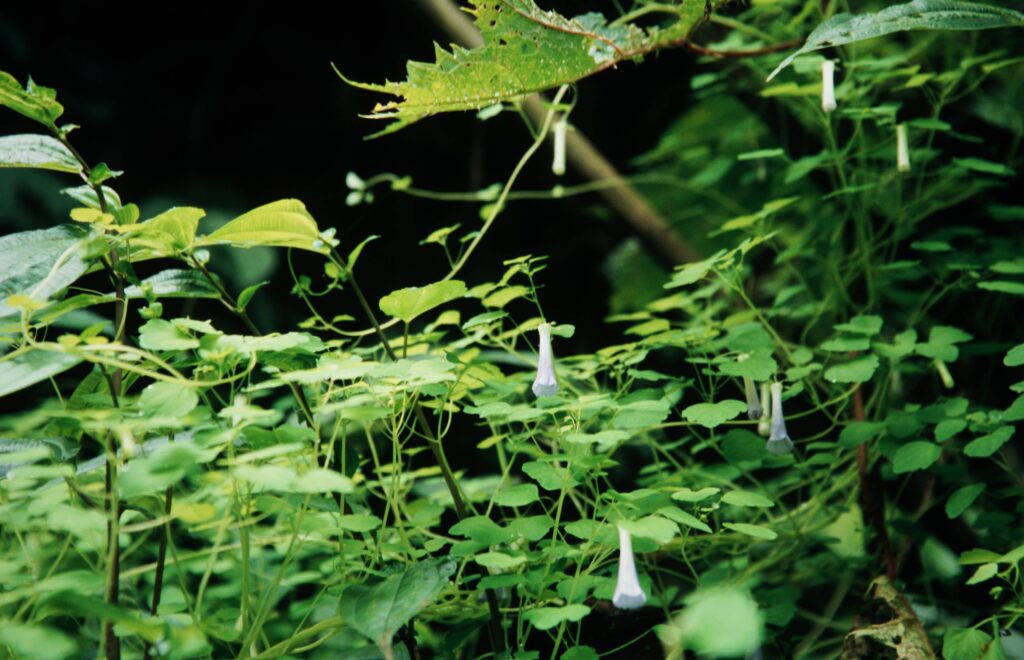
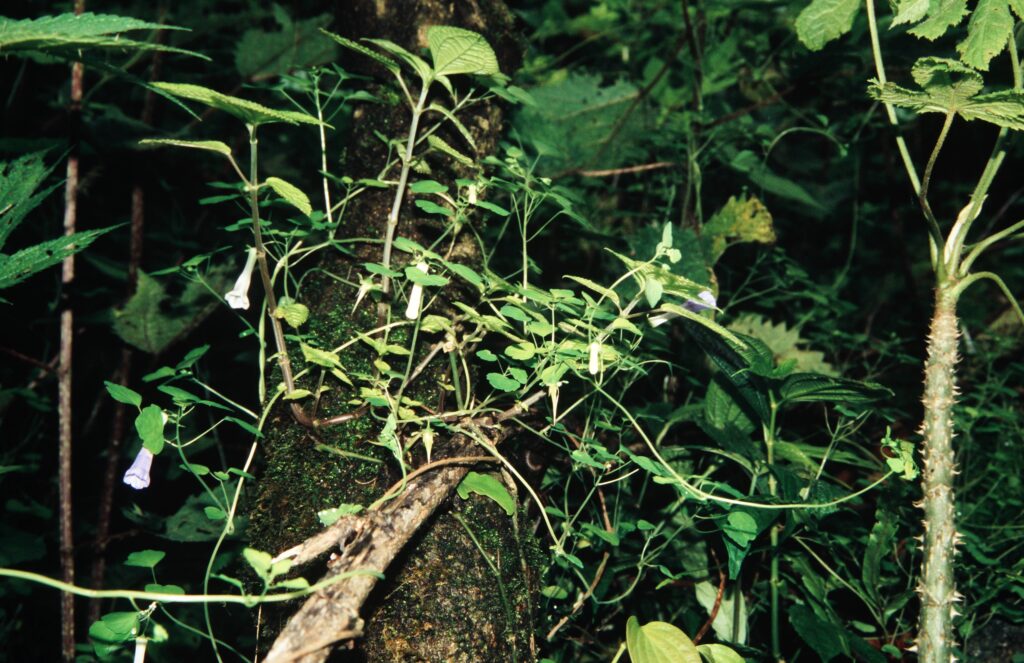
Codonopsis gracilis is a slender twining herb distributed across the eastern Himalaya and into mainland Southeast Asia and southern China. Its range extends from Nepal, Bhutan, and northeastern India (Sikkim, West Bengal, Assam, Meghalaya) through Myanmar and Vietnam to southern China (Yunnan, Sichuan, Guizhou). GBIF records 72 occurrences across these countries. The species grows in margins of subtropical and warm temperate broadleaved forests, thickets, hedgerows, and along streams, at elevations of 1,200–2,800 m. The photograph from Ruigi-Chu in West Bengal at 1,850 m, taken in May, shows the species at a mid-elevation site in the Sikkim-Darjeeling region during the early monsoon flowering period.
The plant is a perennial twining herb arising from a slender, fusiform or cylindrical root. Stems are slender, glabrous or sparsely pubescent, extensively twining through surrounding vegetation, reaching 1–3 m. Leaves are alternate or opposite on lower stems, ovate to broadly ovate, 2–5 cm long, with crenate to serrate margins, sparsely hairy above, paler beneath. Flowers are solitary, axillary, pendulous on slender pedicels. The calyx lobes are five, lanceolate to ovate, spreading. The corolla is broadly campanulate, 15–25 mm long, pale blue to lilac with darker purple veins and markings inside, particularly prominent reticulate venation in the throat. Stamens five, free; the ovary is semi-inferior. The fruit is a broadly conical capsule, dehiscing by apical valves.
Codonopsis gracilis is distinguished from congeners by its relatively small, delicate habit and slender roots, lacking the thick, fleshy taproots prized in traditional medicine that characterize species such as C. pilosula and C. tangshen. The genus Codonopsis comprises approximately 40 species centred on the Sino-Himalayan region, and molecular phylogenetic studies have confirmed its placement within Campanulaceae sensu lato. C. gracilis is not currently considered threatened and remains locally frequent in forest margins across its wide range.

Author: Hook.f. & Thomson · Sources: POWO (Kew), GBIF, Hong & Lammers: Campanulaceae in Flora of China Vol. 19, Grierson & Long: Flora of Bhutan Vol. 2

Hook.f.

Bhutan2012 672
Bhutan Tserang 1000m, September
Bhutan2012 675
Bhutan Tserang 1000m, September

Description

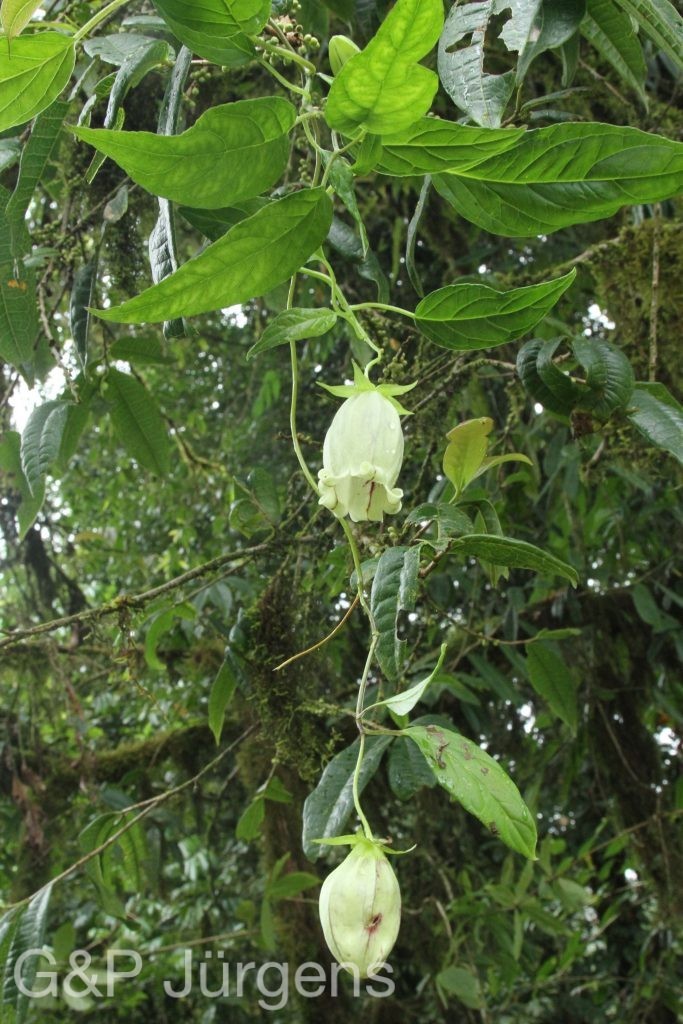
Codonopsis inflata is a herbaceous twining perennial of the eastern and central Himalaya, recorded from India, Nepal, Bhutan, China and Myanmar. It grows in forest margins, thickets, scrub and among tall herbs on shaded slopes and stream banks in the subtropical to lower temperate belt, generally between about 1000 and 2500 m, scrambling over surrounding vegetation. The photographed plant comes from Tserang in Bhutan at around 1000 m, flowering in September. With around 107 georeferenced records it is a moderately documented Himalayan bellflower relative, characteristic of the humid, vegetated lower montane zone where its slender climbing stems are supported by neighbouring shrubs and herbs.

It arises from a fleshy, often swollen rootstock and produces slender, twining, glabrous stems that exude latex when cut and emit the characteristic foetid odour of the genus. The leaves are alternate or subopposite, ovate to lanceolate, with entire to shallowly toothed margins and slender petioles. The flowers are solitary and nodding on long pedicels; the calyx has five lobes adnate to the lower part of the ovary, and the corolla is broadly campanulate to somewhat inflated, pale greenish, yellowish or bluish and usually marked within by darker veins or blotches. There are five stamens, and the inferior to half-inferior ovary ripens into a capsule that dehisces to release numerous small seeds.

Codonopsis is a large Sino-Himalayan genus, several species of which are valued in traditional Chinese and Himalayan medicine, the fleshy roots (dang shen) used as tonics; C. inflata shares this ethnobotanical use. Its taxonomy is complicated by variation in corolla form and by close affinity to allied Himalayan species. As a fairly widespread plant of vegetated montane habitats it is of least conservation concern.

Author: Hook.f. · Sources: POWO (Kew), GBIF, Flora of China, Flora of Bhutan, Lammers monograph of Campanulaceae (Codonopsis)