
DC.
Description
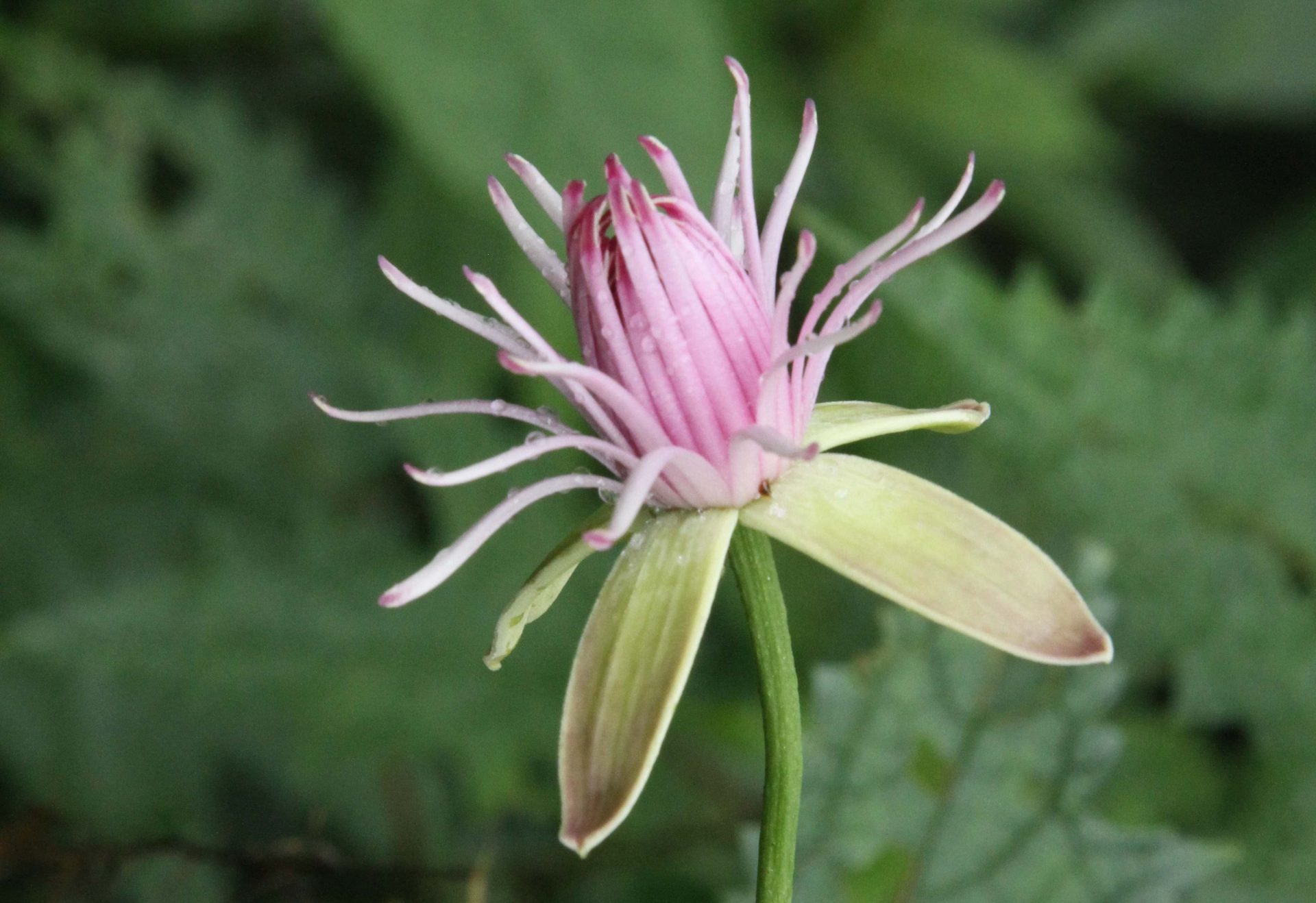
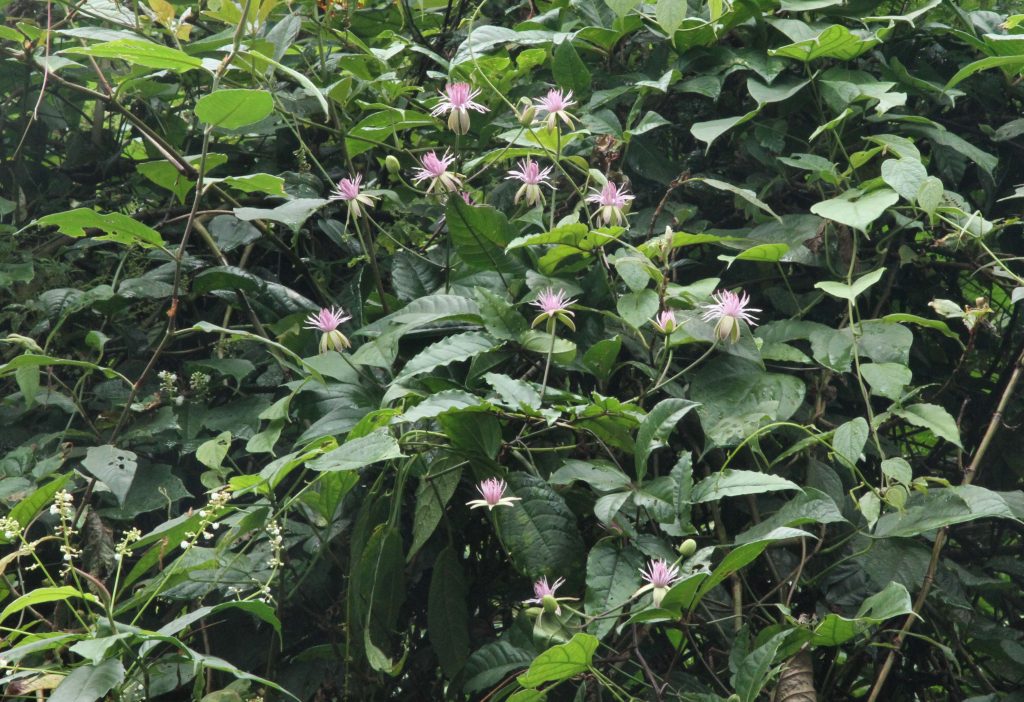
Clematis napaulensis is a vigorous woody climber of the Himalaya and southwestern China, recorded by GBIF in some 197 occurrences from Nepal, China, India, Bhutan and Myanmar, with scattered cultivated or naturalised records in Spain, the Netherlands, Switzerland, France, South Africa and New Zealand. It scrambles through forest margins, thickets, hedgerows and riverine scrub in the warm-temperate and subtropical belt, broadly between 900 and 2500 m. The photographed plant is from Bhutan at Galephu at 950 m in September, at the low, warm end of its range, where it begins its unusual winter flowering season as growth resumes after the monsoon.
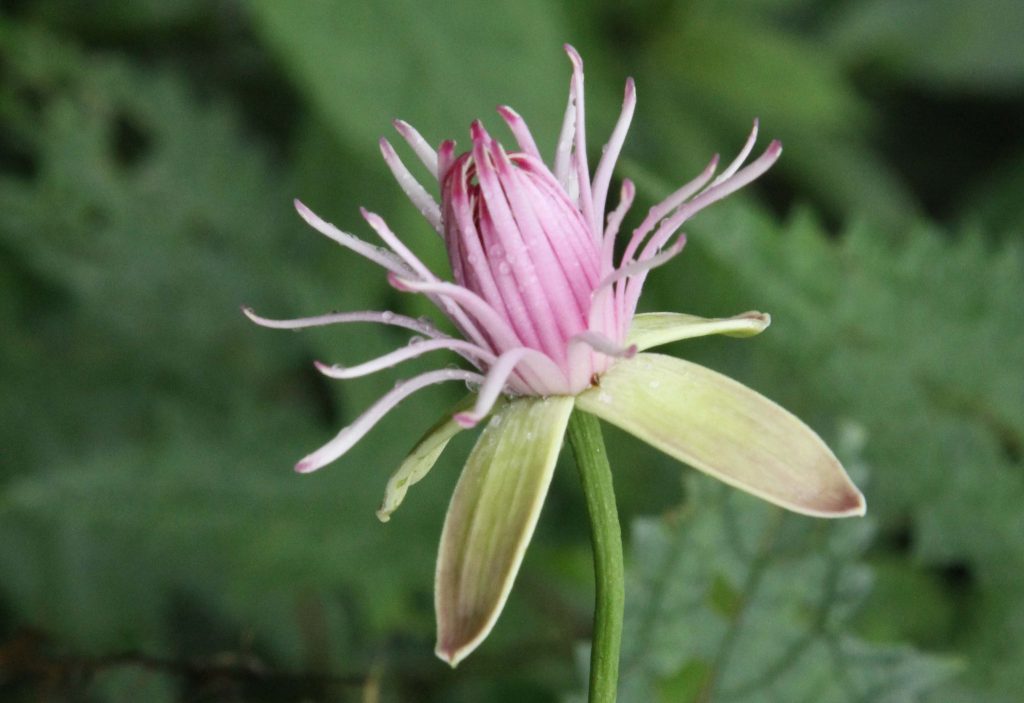
The plant is a deciduous to semi-evergreen liana climbing by twining petioles. The leaves are opposite and pinnate, with ovate to lanceolate, entire or toothed leaflets. Distinctively, the species flowers in autumn and winter, bearing pendulous, axillary clusters of bell-shaped flowers; the four creamy to greenish-white sepals form a narrow campanulate bloom and curve back at the tips, while the numerous stamens have conspicuous reddish-purple filaments that protrude from the mouth. The fruit is a head of achenes each tipped with a long, silky, plumose style that aids wind dispersal.
Clematis (Ranunculaceae, tribe Anemoneae) lacks petals, its showy perianth being sepaline; C. napaulensis belongs to a group of winter-flowering Asian species valued in horticulture for blooming when little else is in flower. GBIF treats the name as accepted, the orthography napaulensis referring to Nepal. Widespread and adaptable across the southern Himalaya, it is of least concern and is cultivated internationally as an ornamental climber.
Author: DC. · Sources: POWO (Kew), GBIF, Flora of China, Annotated Checklist of the Flowering Plants of Nepal, Grey-Wilson monograph of Clematis