
(Wall. ex R.Br.) B.L.Burtt
Description
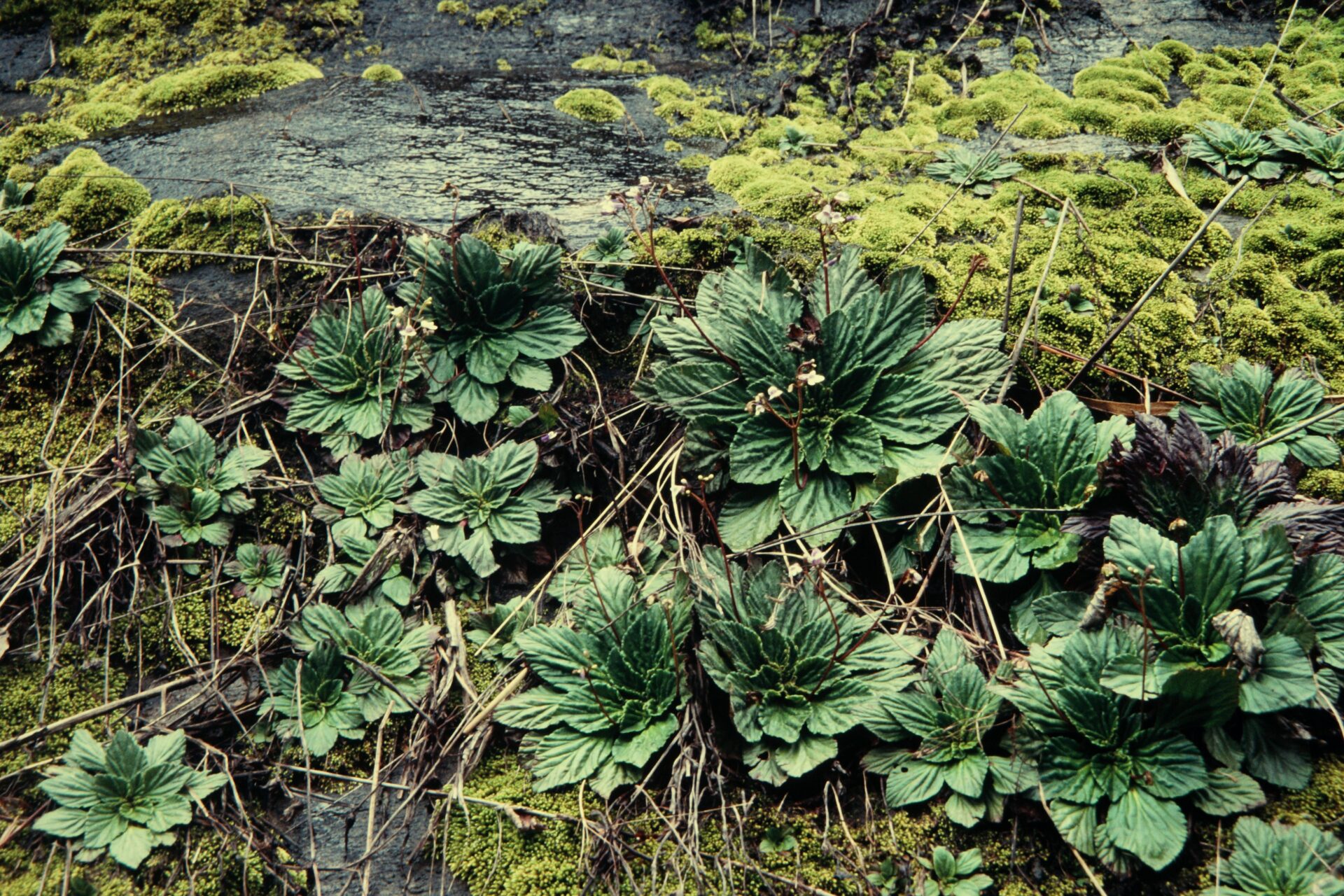
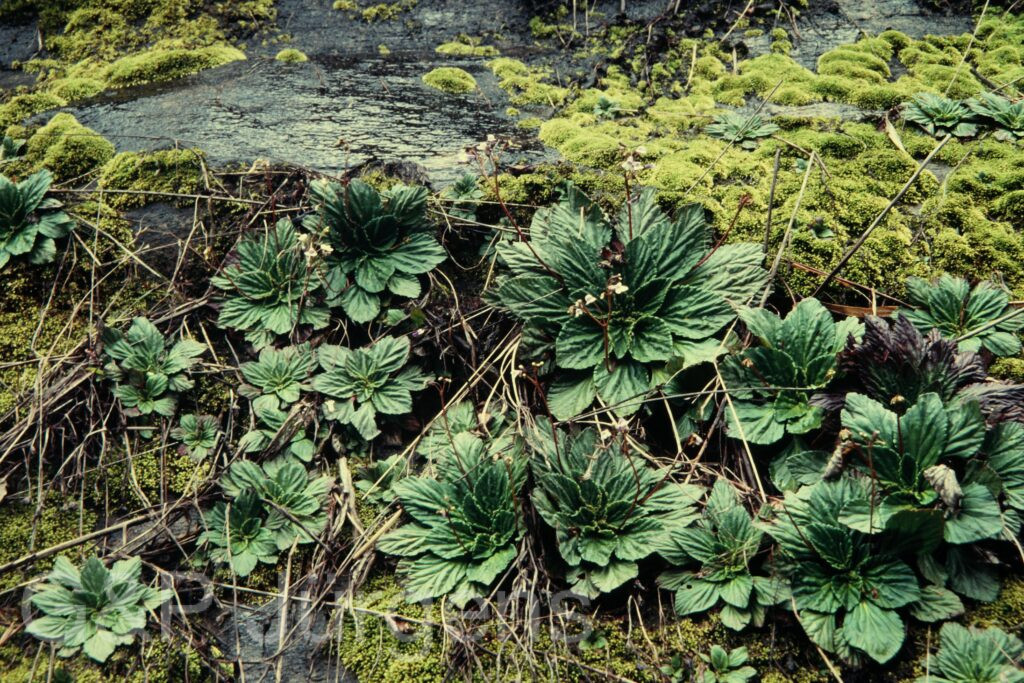
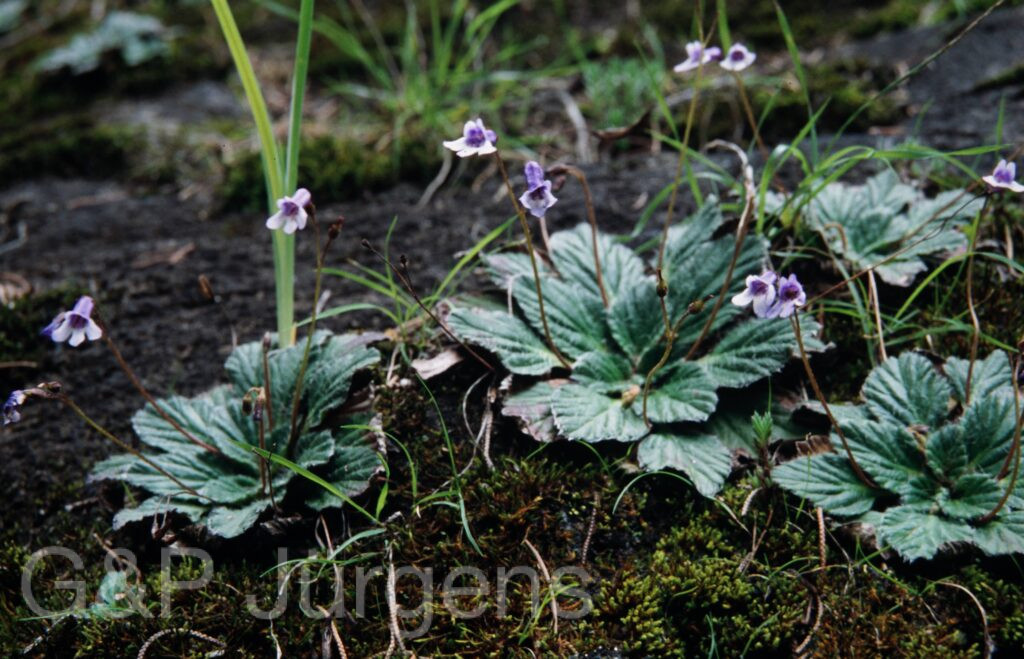
Corallodiscus lanuginosus (Wall. ex R.Br.) B.L.Burtt is a rosette-forming, rupicolous perennial of the Gesneriaceae, distributed across the Himalaya and southwest China. GBIF data (over 2,000 occurrences) record it from China, Nepal, India, Bhutan, Pakistan, Myanmar, and Thailand, indicating a broad Sino-Himalayan range. It was photographed in Nepal in the Arun Valley (1,750 m, May) and at Roha in west Nepal (2,750 m, July), reflecting its occurrence on shaded, mossy cliff faces, rock crevices, and boulders in montane forest, generally between about 1,500 and 3,500 m where humidity is high.
The plant forms a compact basal rosette of leaves pressed against the rock surface. The leaves are obovate to elliptic, with a crenate margin, the upper surface dark green and rugose, the lower surface densely clothed in woolly, rusty to whitish hairs (hence "lanuginosus"). Slender, leafless scapes bear cymose clusters of flowers; the corolla is tubular-campanulate and bluish-violet to purple with a paler throat, with the slightly oblique limb and reduced fertile stamens typical of the genus. The fruit is a slender capsule.
Corallodiscus belongs to the Old World Gesneriaceae (subfamily Didymocarpoideae) and is closely allied to the lithophytic Himalayan radiation that includes Didymocarpus and allies; the input subtribe name reflects this placement. Many populations exhibit poikilohydric, resurrection-like desiccation tolerance, surviving dry periods on exposed rock and reviving with the monsoon. Widespread and locally common on cliffs, the species is not considered threatened.
Author: (Wall. ex R.Br.) B.L.Burtt · Sources: POWO (Kew), Flora of China Vol. 18, Flora of Bhutan Vol. 2, GBIF, Burtt: Studies in the Gesneriaceae of the Old World