
(Craib) B.L.Burtt
Description
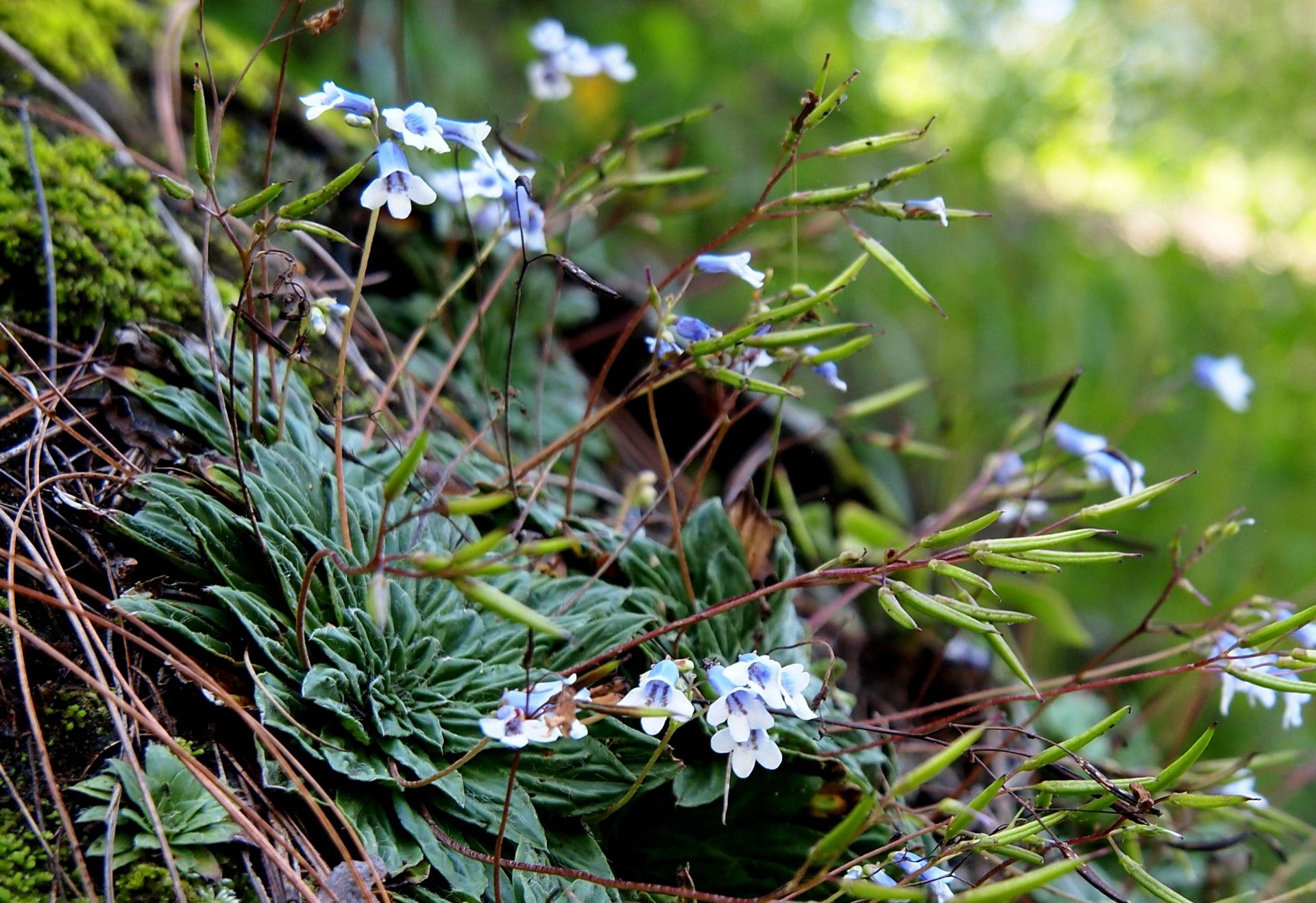
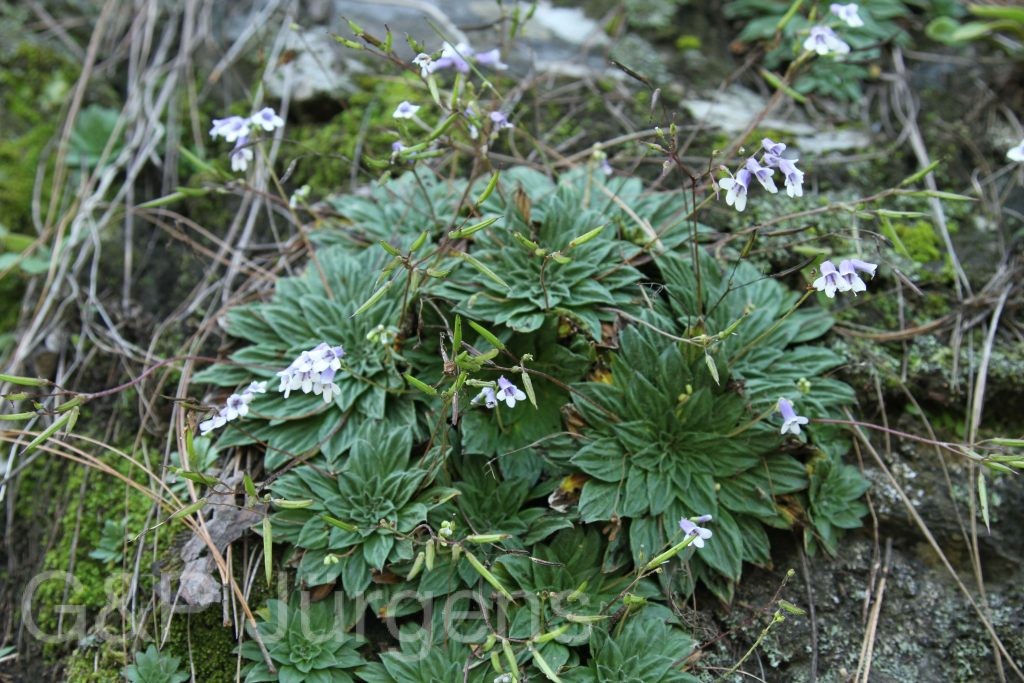
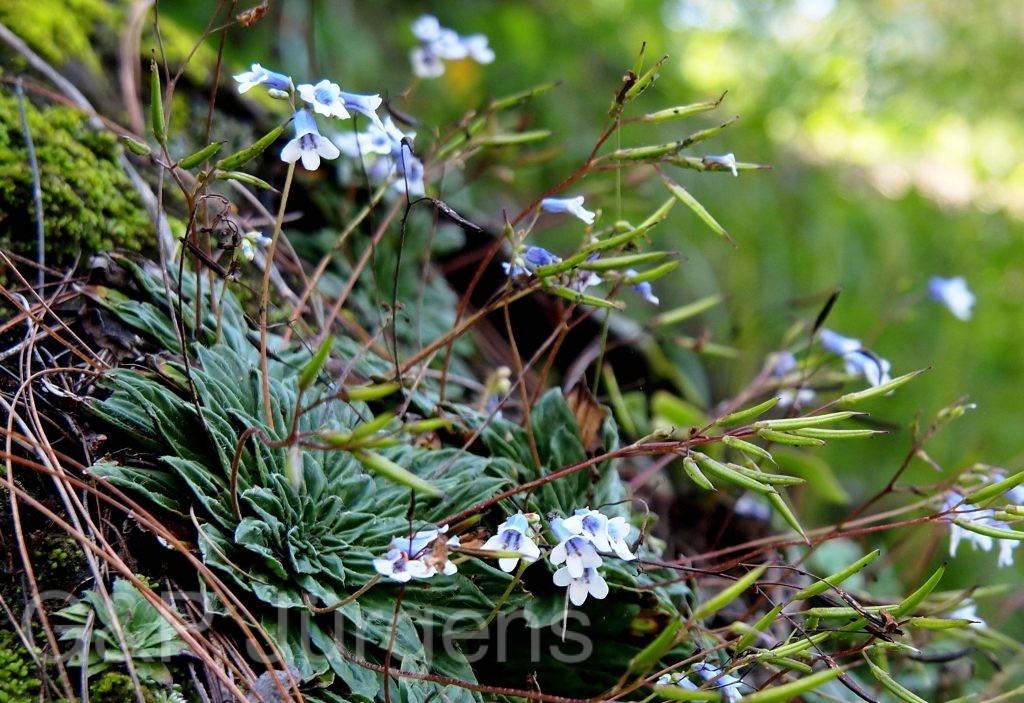
Corallodiscus cooperi is a narrowly distributed rosette herb of the eastern Himalaya, so far reliably known only from Bhutan, where the few catalogued occurrences point to a restricted, possibly endemic or near-endemic range. As with other members of the genus it is a lithophyte, growing on shaded, mossy rock faces, cliff ledges and boulders, often in the spray zone of streams or on damp, well-drained crags. The plant photographed at Trithangebe in Bhutan at 900 m in October occupies the warm subtropical foothill belt, lower than the montane elevations favoured by several congeners, flowering or fruiting into the autumn on its rocky substrate.
It is a small, perennial, acaulescent herb forming a dense, appressed basal rosette of leaves. The leaves are obovate to spathulate, thick-textured, with a green, often rugose and sparsely hairy upper surface and a densely brown- or rusty-tomentose lower surface, the margins crenate to entire. From the rosette arise slender, leafless scapes bearing few-flowered cymes; the flowers are small and weakly zygomorphic, with a tubular to campanulate, five-lobed corolla of blue to violet or purplish hue, and four didynamous stamens. The fruit is a slender, elongate capsule containing numerous minute seeds.
The placement here under "Corallodiscinae" reflects the subtribal rank of Corallodiscus within Gesneriaceae (subfamily Didymocarpoideae); the genus is a small Sino-Himalayan group of rosette-forming rock plants allied to Didymocarpus and Oreocharis. Its members are characteristically tolerant of seasonal desiccation. Given its apparently very limited known range, C. cooperi warrants attention as a potential narrow endemic of conservation interest, dependent on undisturbed rocky habitats.
Author: (Craib) B.L.Burtt · Sources: POWO (Kew), Flora of China Vol. 18, Flora of Bhutan Vol. 2, GBIF, Weber: Gesneriaceae in The Families and Genera of Vascular Plants