Tag:

Nepal

Flowers of Nepal — 1313 wild plant species documented from the Nepalese Himalaya, from subtropical foothills to high alpine meadows above 4,000 m. Nepal’s dramatic elevation gradient makes it one of the richest botanical regions on Earth, home to rhododendrons, primulas, gentians and the famed blue poppies (Meconopsis). Every entry gives a botanical description, native distribution, habitat and flowering season, alongside the original field photograph and the location where it was taken.

Sm.

Nepal 95 114 P202 ergebnis
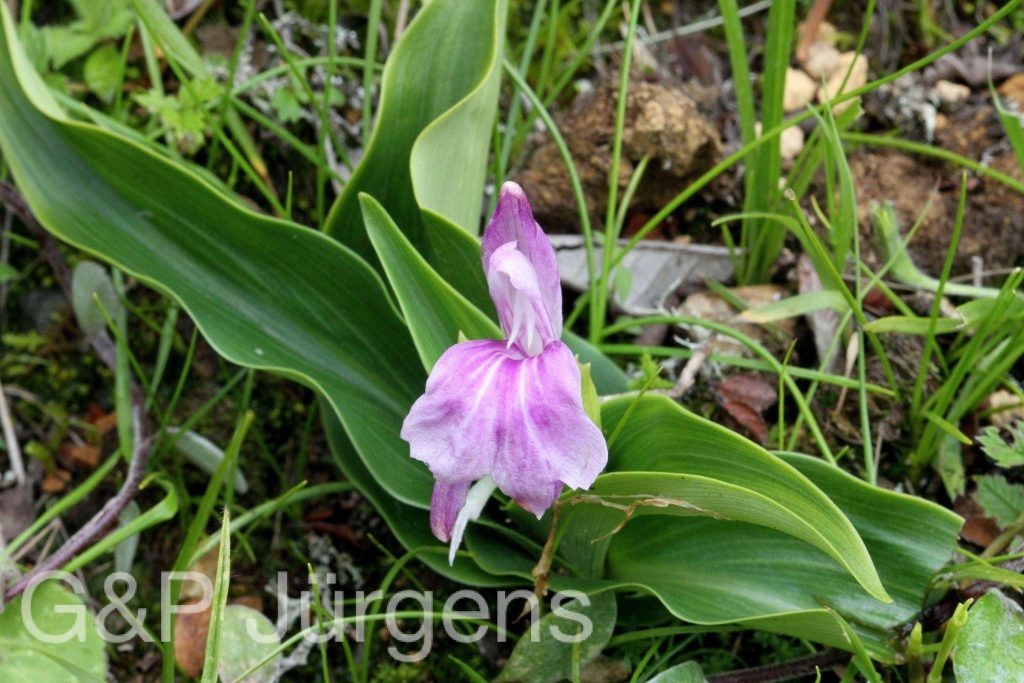
Nepal south of Rupien La 3200m October
Nepal 99 909 ergebnis
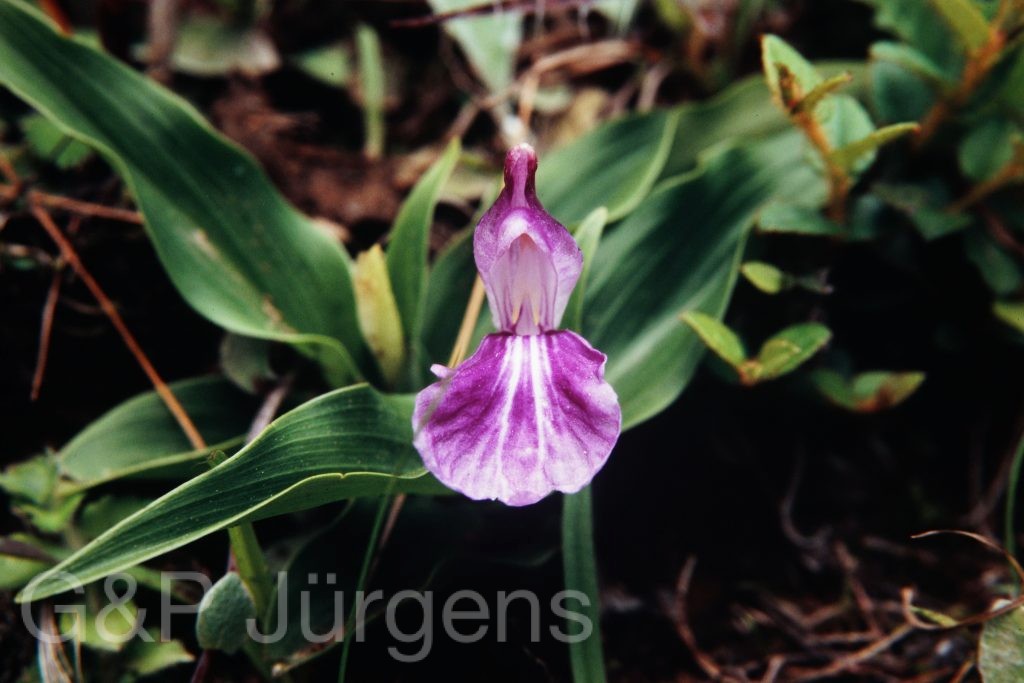
Nepal Sepka 2760 m, JUly

Description

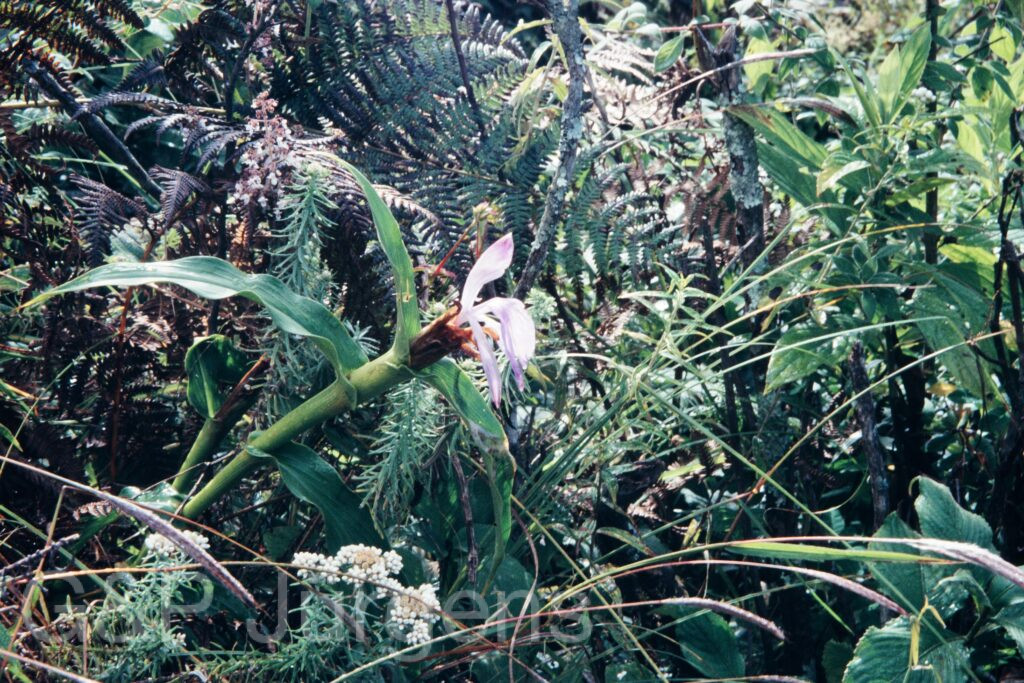
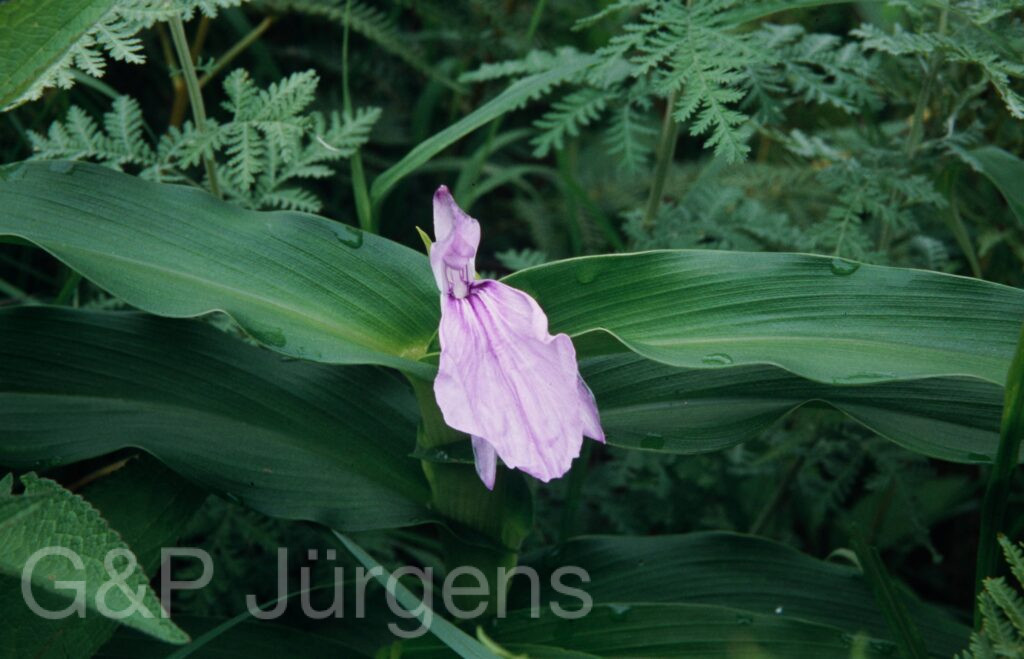
Roscoea purpurea is a tuberous-rooted ginger of the Himalaya, ranging through Nepal, northern India, Bhutan and adjacent China, with peripheral records (KR, MY, US, ZZ) reflecting horticultural cultivation, as it is widely grown as a hardy ornamental. Of nearly 400 georeferenced records, the densest concentration falls in the central and eastern Nepalese hills. It grows on open grassy slopes, in forest clearings, on banks and among shrubs in the upper temperate and subalpine belt. The photographed plants from south of the Rupien La at 3200 m in October and from Sepka at 2760 m in July illustrate its broad altitudinal span and its summer-to-autumn flowering, timed to the monsoon when the rootstock is in active growth.

It is a deciduous perennial herb arising from a cluster of fleshy, fascicled root tubers and a short rhizome. The pseudostem is formed by the overlapping leaf sheaths and bears several lanceolate to oblong, distichous leaves that are smooth and often with a sheathing, ligulate base. The showy flowers emerge from the leaf axils or a short terminal spike; each is enclosed by a green bract and has a slender corolla tube. The perianth is strongly zygomorphic, typically purple to lilac, with a hooded dorsal corolla lobe, narrow lateral lobes, and a large, conspicuously bilobed, deflexed labellum that serves as the pollinator platform. A single fertile stamen with a spurred connective and an inferior ovary produce an elongate capsule.

Roscoea is remarkable within the otherwise tropical Zingiberaceae for its adaptation to cold, seasonally dry montane climates, the genus disjunct between the Himalaya and the mountains of south-west China. R. purpurea is the type-associated and most variable Himalayan species, encompassing several named colour and form variants, and is pollinated chiefly by long-tongued bees and, in some populations, by long-proboscid flies. It remains locally common and is not considered threatened.

Author: Sm. · Sources: POWO (Kew), GBIF, Flora of China Vol. 24, Flora of Bhutan Vol. 3, Flora of Nepal, Cowley's The Genus Roscoea (Kew)
Batalin

BhutanPG2011 32
Bhutan Pele-La, 2800m June
Bh09 248 G414
Bhutan Tibetica, 3100m June

Description

Roscoea tibetica is a small, hardy terrestrial ginger of the eastern Himalaya and adjacent China, recorded from China, Bhutan, Myanmar and Nepal across about 309 occurrences. Unusually among the largely tropical Zingiberacaea, it is a montane plant of cool grassy slopes, open forest, meadows and stream banks, growing between roughly 2500 and 4000 m. The illustrated plants come from Bhutan, at Pele-La (2800 m) and a locality recorded as Tibetica (3100 m), both flowering in June soon after the start of the growing season, when the genus emerges from dormant rootstocks.

The plant is among the smallest of its genus, usually only 5-15 cm tall, arising from a cluster of fleshy, fasciculate tuberous roots. The few leaves are lanceolate to oblong, sheathing at the base and often only partly expanded at flowering. The flowers, one or few in succession, are borne low among the leaf sheaths and are strongly zygomorphic and orchid-like; the corolla is pale to deep violet or purple, comprising a hooded dorsal lobe, two lateral staminodial petaloid structures and a large, often reflexed and notched labellum. A single fertile stamen and an inferior ovary characterise the family; the fruit is a capsule.

The Sino-Himalayan genus Roscoea is remarkable for its temperate, high-altitude ecology, an adaptation involving dormant tuberous roots that survive cold winters. The orchid-like flowers are pollinated chiefly by long-tongued bees and, in some species, hawkmoths. Widely distributed and locally frequent, R. tibetica is not regarded as threatened, though it is valued as a hardy ornamental and a model for studies of pollination and montane radiation.

Author: Batalin · Sources: POWO (Kew), GBIF, Flora of China, Flora of Bhutan, The Genus Roscoea (Cowley, Kew monograph), Annotated Checklist of the Flowering Plants of Nepal

(Wall. ex Edgew.) C.-A.Jansson

Bhutan2012 1072
Bhutan Anthso 980m, October
Bhutan2012 1073
Bhutan Anthso 980m, October

Description

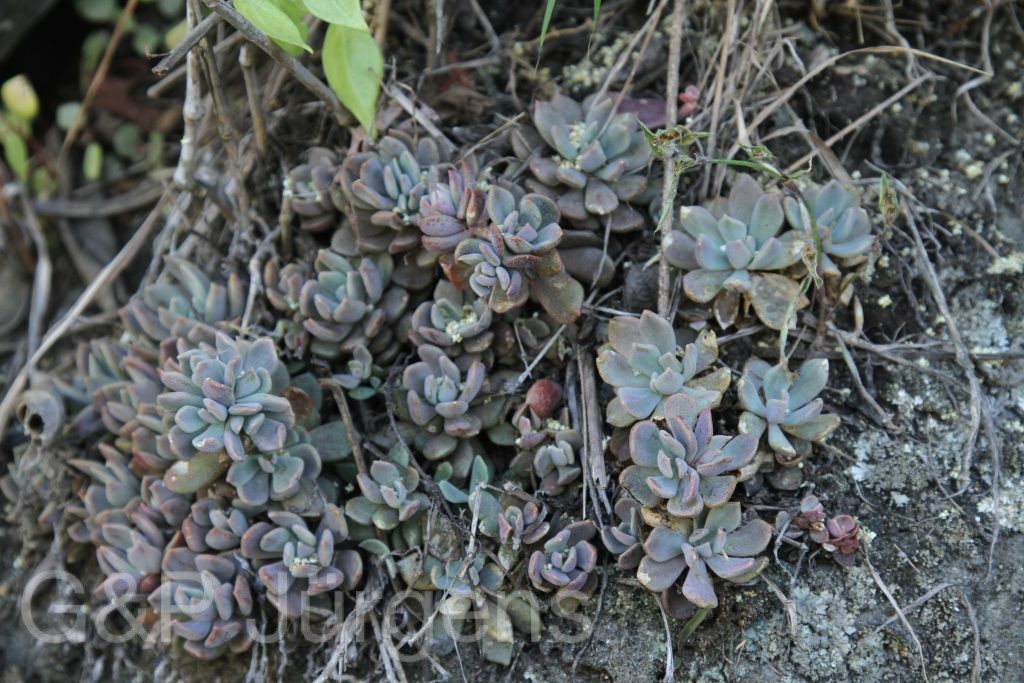
Rosularia adenotricha (Wall. ex Edgew.) C.-A.Jansson is a succulent rosette-forming herb of dry rocky slopes and cliff crevices in the western and central Himalaya and adjacent mountains. GBIF records span India, Pakistan, Afghanistan, Nepal and Bhutan, with scattered occurrences eastward to Myanmar and Thailand and west to Oman, totalling some 200 collections. It is a chasmophyte of warm, well-drained, often sun-exposed rock faces and gravelly banks, typically from low and middle elevations into the subalpine zone; the illustrated material was gathered in Bhutan at Anthso, 980 m, in October, near the lower end of its altitudinal range.

The plant develops compact basal rosettes of fleshy, obovate to spathulate leaves that are densely covered with glandular (adenose) hairs, giving a viscid, greyish-green appearance and accounting for the epithet adenotricha. From the rosette arises an erect, glandular-pubescent flowering stem bearing a cymose or thyrsoid inflorescence. The flowers are 5(–7)-merous with narrow, erect to slightly spreading petals fused only at the base, whitish to pale yellow often flushed pink, the stamens twice as many as the petals; nectar scales subtend each carpel. The fruit is a group of erect, many-seeded follicles.

Rosularia (subfamily Sempervivoideae) is a small Old World genus close to Sempervivum and Prometheum, distinguished by its campanulate, basally connate corolla. The species has been treated under several combinations, reflecting unsettled generic limits within the Sempervivum alliance. As a widespread rock-dwelling succulent it is not considered threatened, though its glandular indumentum makes it a distinctive element of arid Himalayan cliff floras.

Author: (Wall. ex Edgew.) C.-A.Jansson · Sources: POWO (Kew), GBIF, Flora of Pakistan, Flora of Bhutan Vol. 1, Flora of Nepal, Jansson: Studies in Rosularia (Sempervivoideae)

(Edgew.) H.Ohba

Garw 2005 234 ergebnis ergebnis
India Garhwal Guni 2400m, September

Description

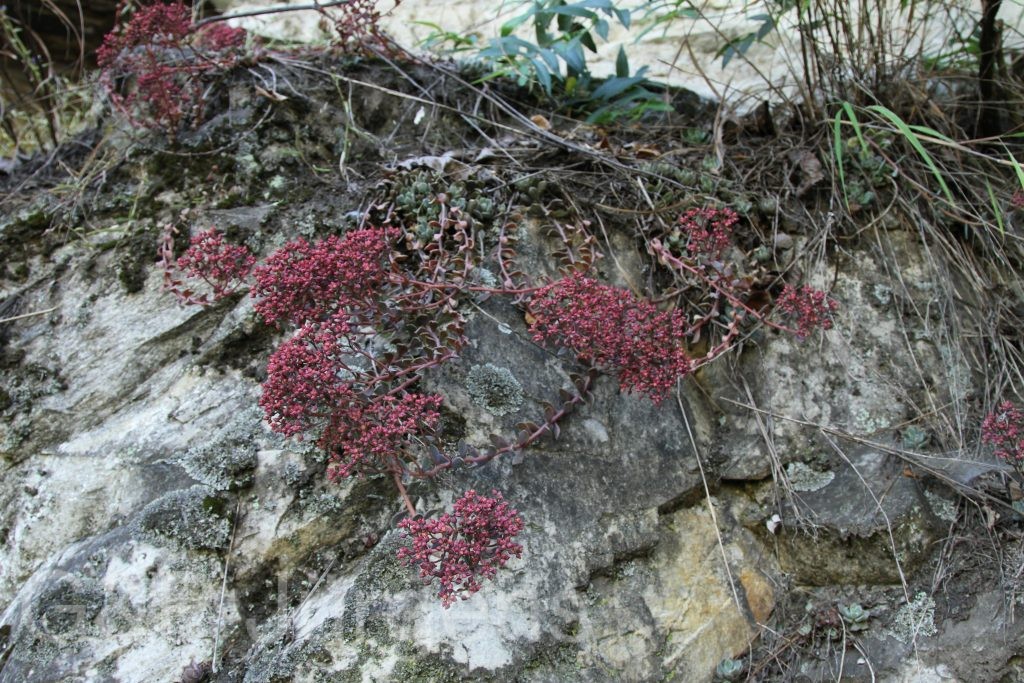
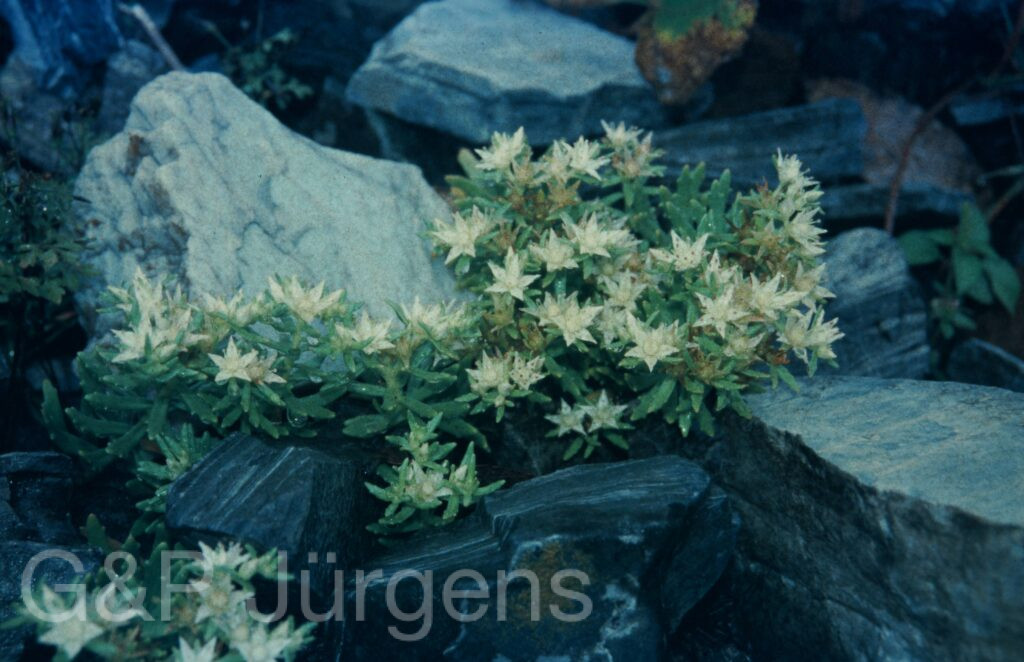
Rosularia rosulata is a saxicolous succulent of the western and central Himalaya, recorded from northern India, Pakistan and Nepal, with around 106 georeferenced occurrences in the GBIF dataset. It is a plant of dry, sunny rock faces, cliff crevices, stony slopes and crumbling walls at montane to subalpine elevations, where it exploits thin pockets of mineral soil and tolerates strong insolation and seasonal drought. The collection illustrated from Guni in Garhwal, India, at 2400 m in September, exemplifies its occurrence on exposed rocky ground in the inner-Himalayan ranges where the monsoon is attenuated and conditions are markedly continental.

It is a perennial herb forming dense basal rosettes of fleshy, obovate to spathulate leaves that are glabrous or finely glandular-pubescent, often reddish-tinged at the margins and apex. From the rosette arises an erect or ascending leafy flowering stem bearing a cymose, somewhat secund inflorescence. The flowers are five-merous, with narrow sepals and a campanulate to shortly tubular corolla of pale yellowish-white to pinkish petals fused at the base, the lobes erect to spreading. Stamens are typically ten, the carpels free and erect, maturing into follicles that release small seeds. After flowering the monocarpic rosette commonly dies, the plant persisting through offsets.

The genus Rosularia, segregated from Sedum and Cotyledon, comprises Old World rosette-forming Crassulaceae distinguished by their tubular fused corollas and rosulate habit. Rosularia rosulata, treated by H. Ohba, occupies a biogeographically interesting niche in the drier inner valleys, sharing affinities with Central Asian congeners. CAM photosynthesis and water storage adapt it to arid rock habitats; it is not considered threatened but is locally restricted to suitable lithic microsites.

Author: (Edgew.) H.Ohba · Sources: POWO (Kew), GBIF, Flora of Pakistan, Flora of Nepal, Crassulaceae of the Himalaya (H. Ohba), A Revision of the Genus Rosularia

(Buch.-Ham. ex Roxb.) Koehne

Nepal 97 63 P97
Nepal Mewa-Khola 1195m April

Description

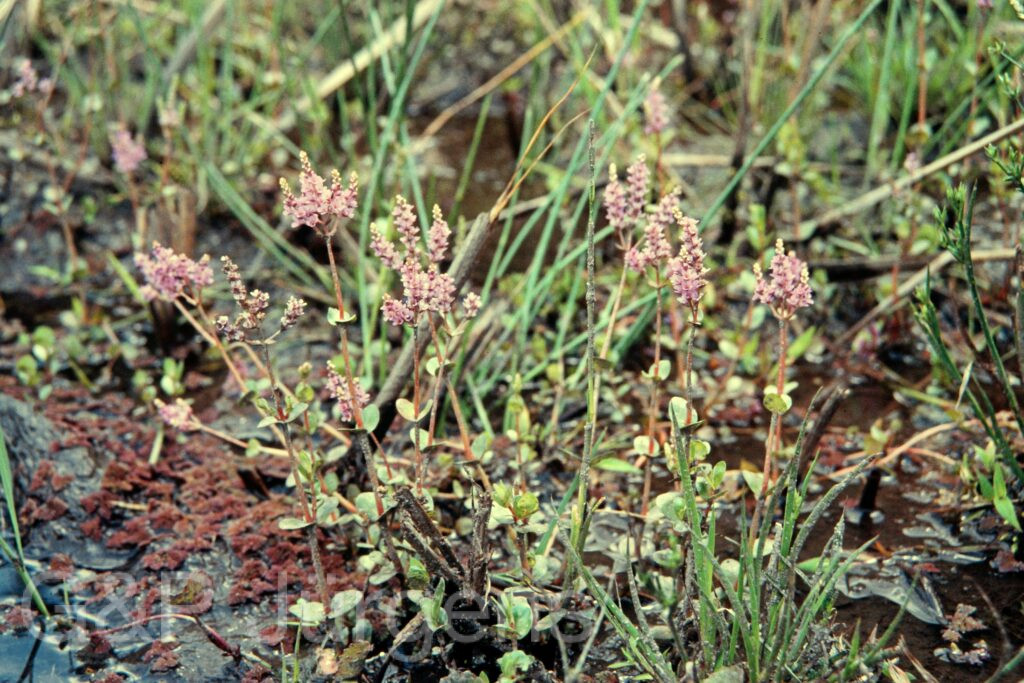
Rotala rotundifolia (Buch.-Ham. ex Roxb.) Koehne is a small amphibious herb of the Lythraceae with a wide Asian distribution and an extensive secondary range. GBIF, with 2,686 occurrences, records it natively across China, Taiwan, India, Nepal, Bhutan, Bangladesh, Myanmar, Thailand, Laos, Vietnam and Japan, and as an introduction in the USA, Australia, Brazil and elsewhere, partly through the aquarium trade. The species inhabits wet paddy margins, ditches, marshes, riverbanks and shallow standing water from the lowlands to around 1,500 m. The illustrated material from the Mewa-Khola in eastern Nepal at 1,195 m, in April, is typical of its subtropical wetland habitat.

The plant is a creeping to ascending annual or short-lived perennial, often rooting at the lower nodes and producing erect flowering shoots. Its stems are slender and four-angled, and the leaves are opposite, sessile, orbicular to ovate (as the epithet indicates) on submerged or basal parts but narrower on emergent shoots, a marked heterophylly. The flowers are minute and sessile, crowded into dense, spike-like terminal racemes; each has a four-lobed campanulate calyx, four small pink to rose-purple petals, and few stamens. The fruit is a small septicidal capsule with a finely striate surface containing numerous tiny seeds.

Rotala rotundifolia is taxonomically variable, with submerged and emergent forms differing strikingly in leaf shape and colour, a plasticity that has made it a popular ornamental aquatic. This same adaptability allows it to behave as an aggressive invasive in introduced regions, where it can clog drainage and displace native wetland flora. In its native Himalayan and Asian range it is an abundant and ecologically unremarkable component of seasonally inundated habitats.

Author: (Buch.-Ham. ex Roxb.) Koehne · Sources: POWO (Kew), GBIF, Flora of China Vol. 13, Flora of Nepal, Flora of British India Vol. 2, Cook: Aquatic and Wetland Plants of India

Rubus biflorus

by GP Jürgens

Buch.-Ham. ex Sm.

Bh2008 334 P515
Bhutan Chendebji, 2100m April
Bh2008 335 P516
Bhutan Chendebji, 2100m April

Description

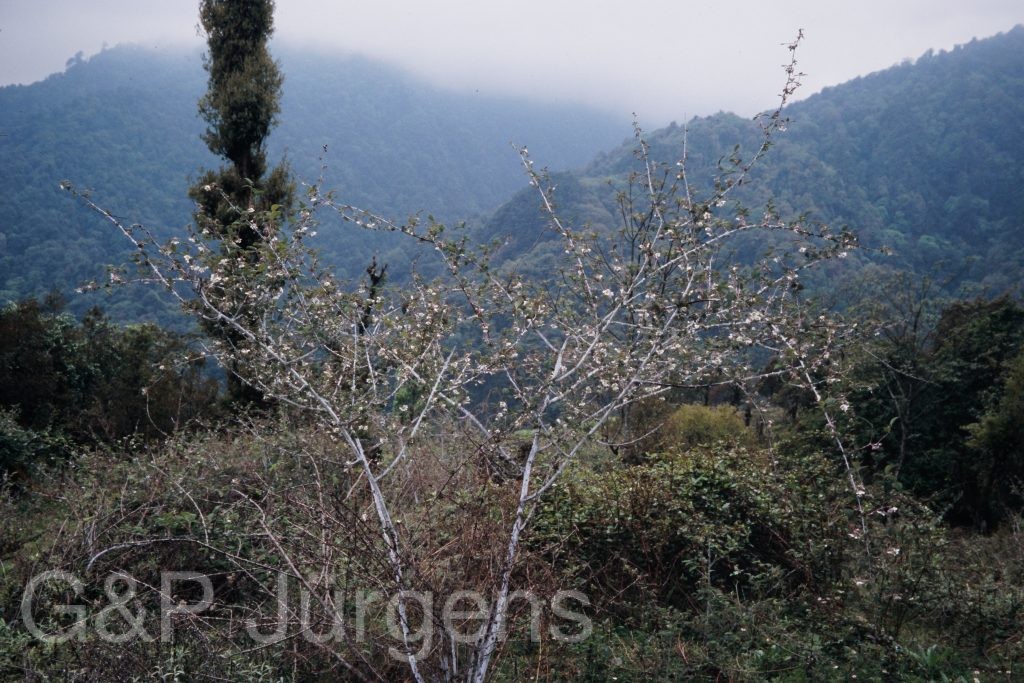
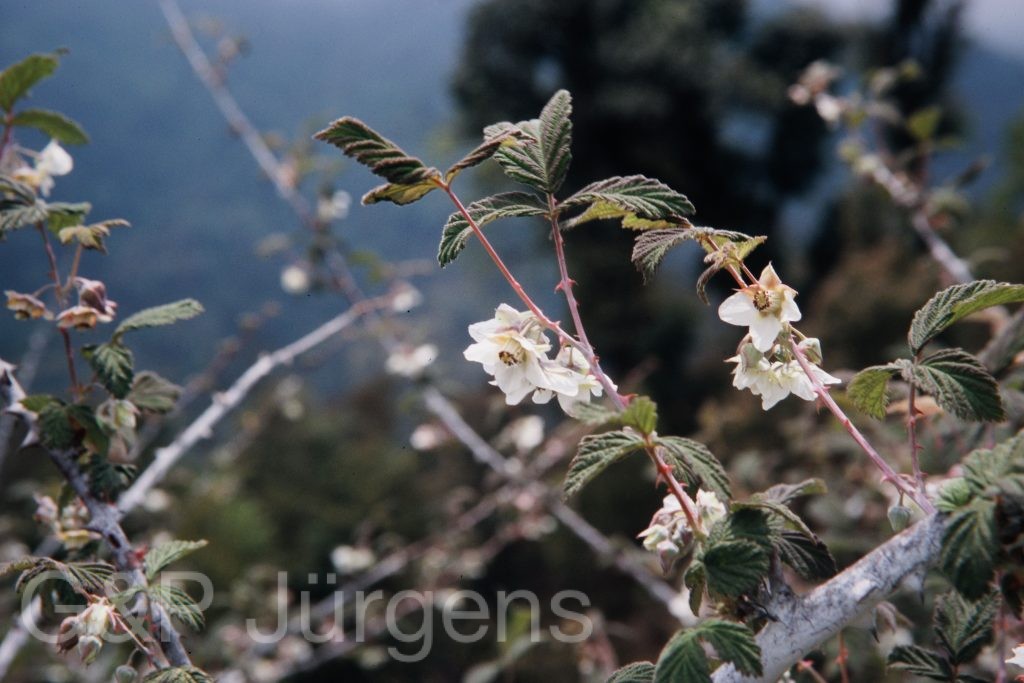
Rubus biflorus Buch.-Ham. ex Sm. is a Himalayan bramble distributed from Pakistan and Afghanistan eastward through Nepal, India, Bhutan and into southern China and Myanmar, with around 651 GBIF records anchored in the temperate Himalaya. It is characteristic of forest margins, scrub, clearings and roadside thickets in the moist temperate zone, generally between about 1800 and 3500 m. The photographed material from Chendebji in central Bhutan at roughly 2100 m, flowering in April, typifies its occurrence in cool, humid mid-montane habitats where it forms dense tangled stands on disturbed and successional ground.

The species is a robust, arching to scrambling shrub whose biennial canes are conspicuously coated with a white, waxy bloom and armed with stout, hooked prickles. The leaves are imparipinnate with three to five ovate, doubly serrate leaflets that are green above and white-tomentose beneath. The flowers, often borne in twos or few-flowered clusters as the epithet suggests, have white petals subtended by a tomentose calyx. The aggregate fruit is a globose, yellow to orange edible drupelet cluster maturing in summer.

Rubus biflorus belongs to the taxonomically complex genus Rubus (Rosaceae, subfamily Rosoideae), where extensive hybridisation and apomixis complicate species delimitation; it is placed in the white-stemmed Himalayan brambles allied to R. niveus. Widespread, common and ecologically pioneering, it is of least conservation concern, and its fruit is gathered locally while the canes contribute to soil stabilisation on eroded slopes.

Author: Buch.-Ham. ex Sm. · Sources: POWO (Kew), GBIF, Flora of Bhutan, Flora of China, Flora of Pakistan, H. Hara Enumeration of the Flowering Plants of Nepal, Focke monograph Species Ruborum

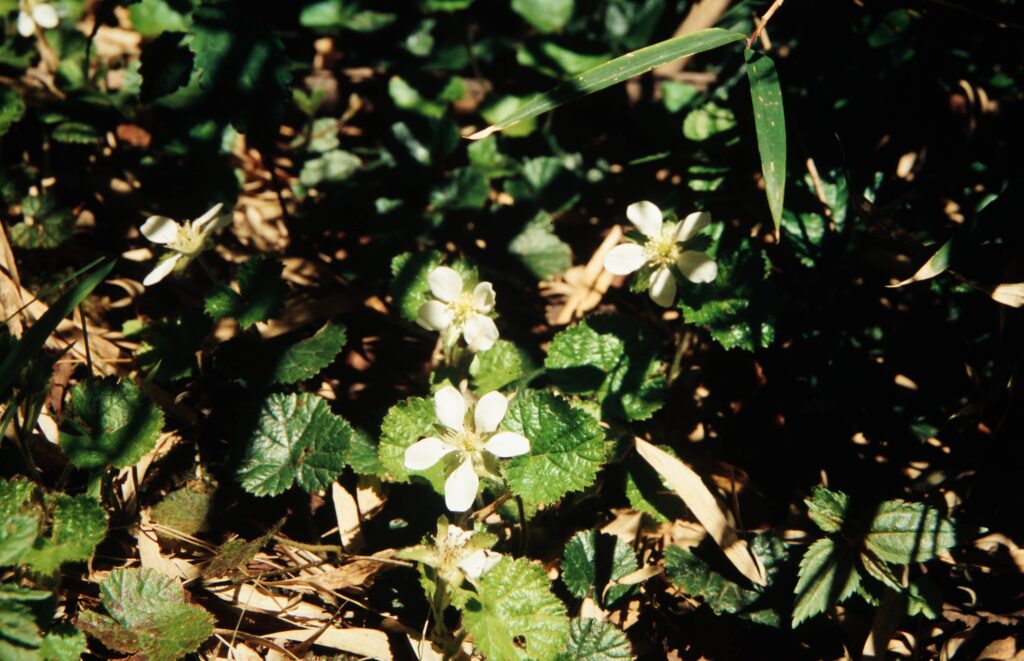
Wall. ex D.Don

Bh2008 328 P506
Bhutan Chendebji, 2100m April
Sikkim2004 88 P155
Sikkim West-Bengal, Bersay 2600m April
Sikkim 2006 163 ergebnis
India West-Bengal, Molley 3000m, May

Description

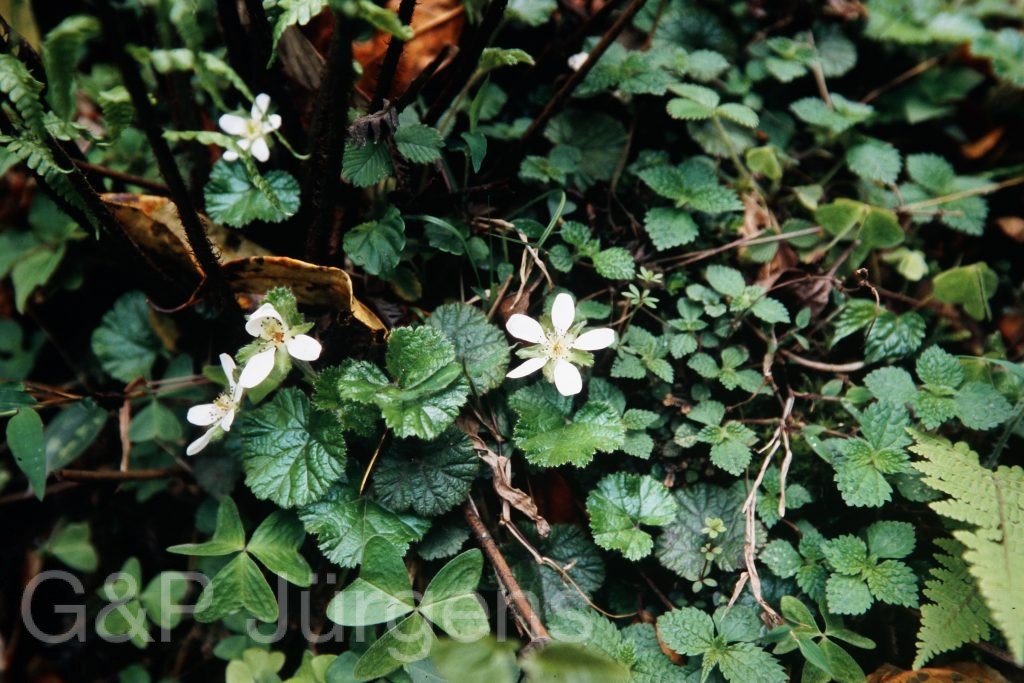
Rubus calycinus is a creeping Himalayan bramble distributed across China, India, Nepal, Bhutan, Myanmar, Bangladesh, Afghanistan and into Southeast Asia, with some 255 GBIF occurrences. It is a plant of the floor of moist temperate and subalpine forest, growing on humus-rich banks, mossy slopes and shaded forest margins, generally between about 1800 and 3300 m. The documented populations span Chendebji in Bhutan at 2100 m, Bersay in Sikkim/West Bengal at 2600 m, and Molley at 3000 m, all flowering in April and May, illustrating its early-season anthesis as the forest understorey greens.

Unlike the familiar scrambling brambles, R. calycinus is a small, prostrate, herbaceous to weakly woody perennial with slender, creeping and rooting stems that form low mats, the stems sparsely armed or nearly unarmed and bearing scattered bristles. The leaves are simple, broadly cordate-orbicular and shallowly three- to five-lobed, crenate-serrate at the margin and pilose on both surfaces. The flowers are solitary, white, with a conspicuously enlarged, leafy, lobed calyx that exceeds the petals and gives the species its name. The aggregate fruit is a small reddish drupelet cluster of few segments.

The species belongs to Rubus subgenus Chamaebatus (the herbaceous, simple-leaved creeping brambles), a distinctive group within the genus. It is widespread and not of conservation concern, valued ecologically as ground cover that stabilises forest-floor soils and provides minor forage and fruit for wildlife.

Author: Wall. ex D.Don · Sources: POWO (Kew), GBIF, Flora of Bhutan, Flora of China, Focke monograph Species Ruborum

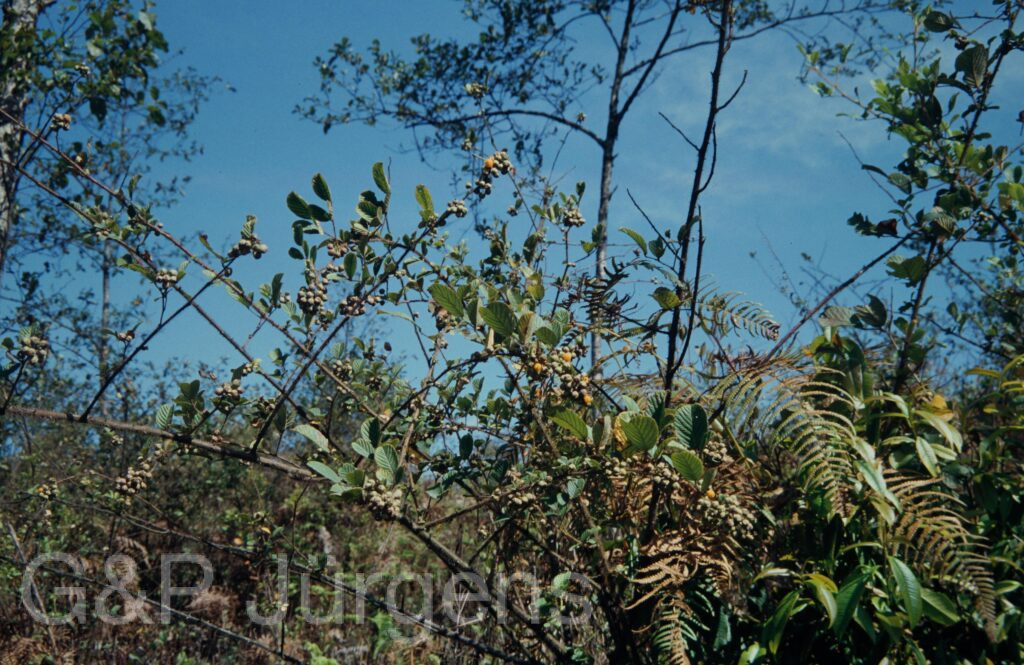
Rubus ellipticus

by GP Jürgens

Kupcsok

Nepal 1994 53 ergebnis
Ost-Nepal Bhalukhob 
1800m April

Description

Rubus ellipticus, the yellow Himalayan raspberry, is native to South and East Asia and has become one of the most notoriously invasive of all brambles, with 3973 GBIF occurrences spanning its native range in China (CN), Taiwan (TW), India (IN), Nepal (NP), Bhutan (BT), Sri Lanka (LK), Thailand (TH), Vietnam (VN), Myanmar (MM), the Philippines (PH), Pakistan (PK) and Afghanistan (AF), together with extensive introduced populations in the United States (US, notably Hawaii), Australia (AU), New Zealand (NZ), Malawi (MW), Tanzania (TZ), Ecuador (EC), Costa Rica (CR) and Jamaica (JM). It forms dense thickets in forest margins, clearings, scrub, roadsides and disturbed ground from the lowlands to the lower montane zone. The figured plant was recorded at Bhalukhob in East-Nepal at about 1800 m in April.

It is a robust, scrambling, perennial shrub with biennial canes armed with stout recurved prickles and clothed in dense reddish bristly hairs. The leaves are pinnately trifoliolate, the leaflets elliptic to obovate, finely serrate, dark green and rugose above and densely greyish-tomentose beneath. The flowers are borne in dense terminal and axillary clusters, white, with five sepals and petals and numerous stamens. The aggregate fruit is a juicy, golden-yellow edible raspberry composed of numerous drupelets separating from the receptacle.

Rubus ellipticus belongs to the taxonomically complex subgenus Idaeobatus. Its palatable fruit and prolific seed production, aided by bird dispersal and vigorous vegetative spread, underpin its status as a serious invasive listed among the world's worst invasive species, displacing native vegetation in tropical island and montane ecosystems.

Author: Kupcsok · Sources: POWO (Kew), GBIF, Flora of China, Flora of Nepal, Flora of British India, IUCN Global Invasive Species Database, Monograph of the genus Rubus

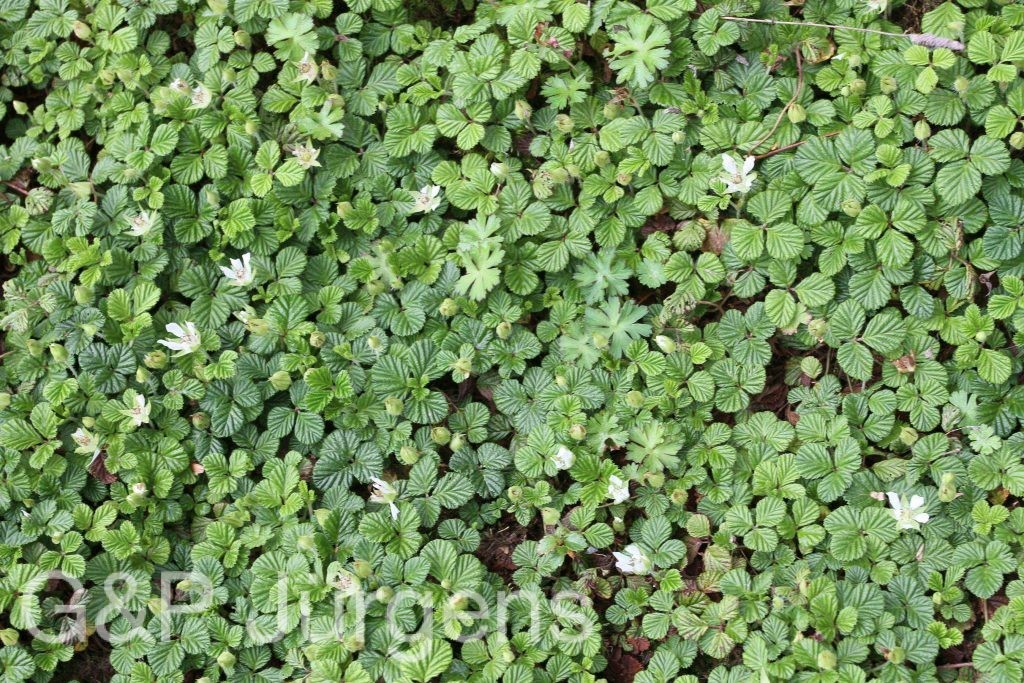
Kurz

BhutanPG2011 91
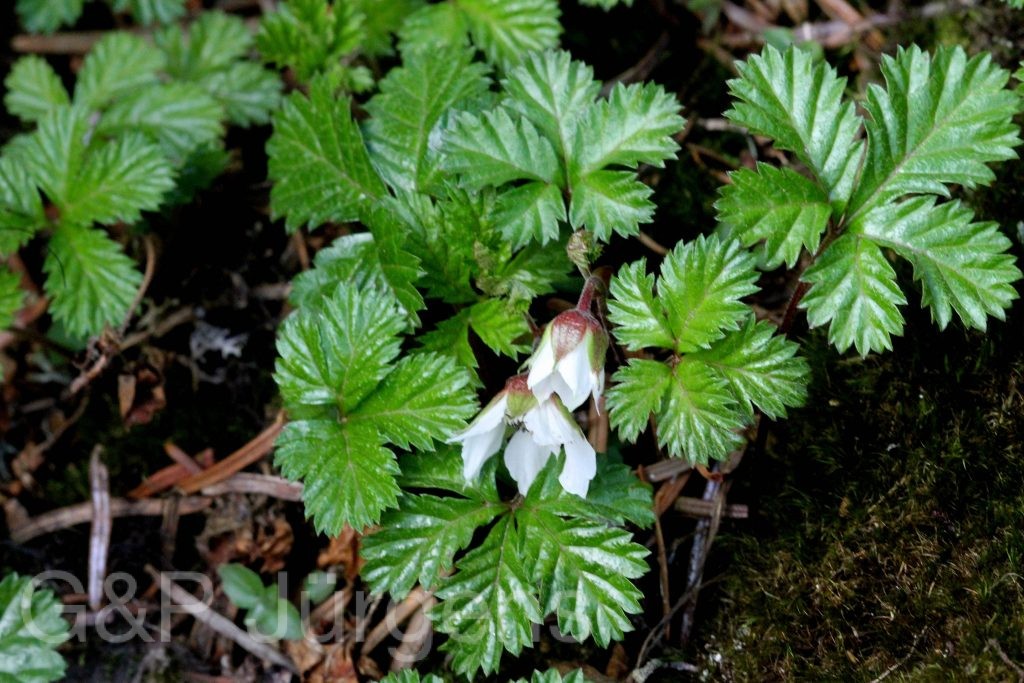
Bhutan Chogcham, 3100m June

Sikkim 2006 162 ergebnis
India West-Bengal, Molley 3000m, May

Description

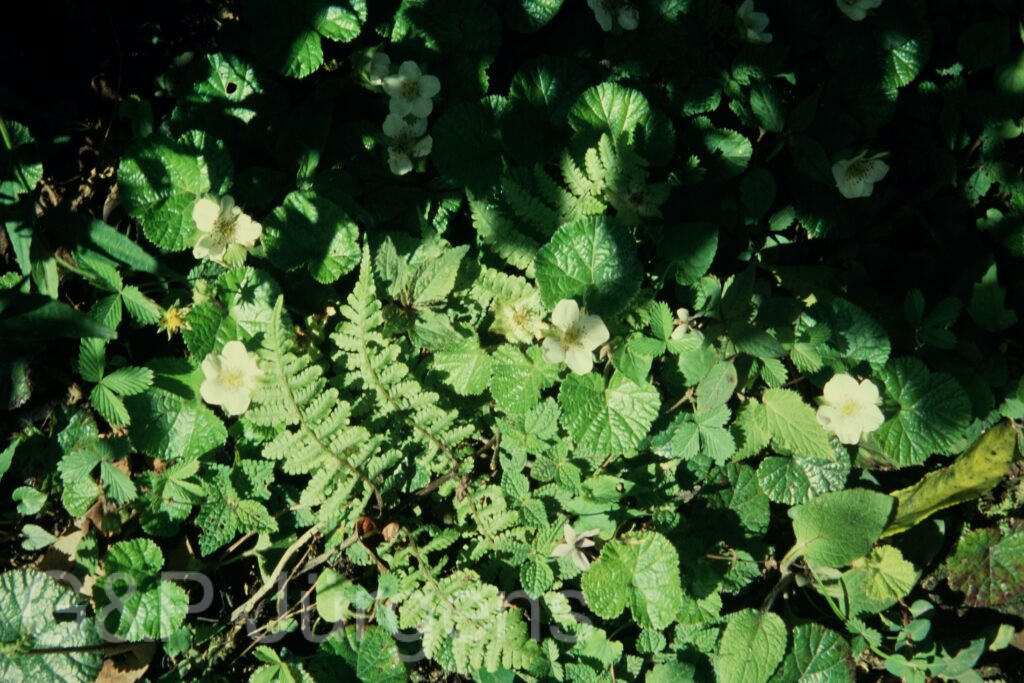
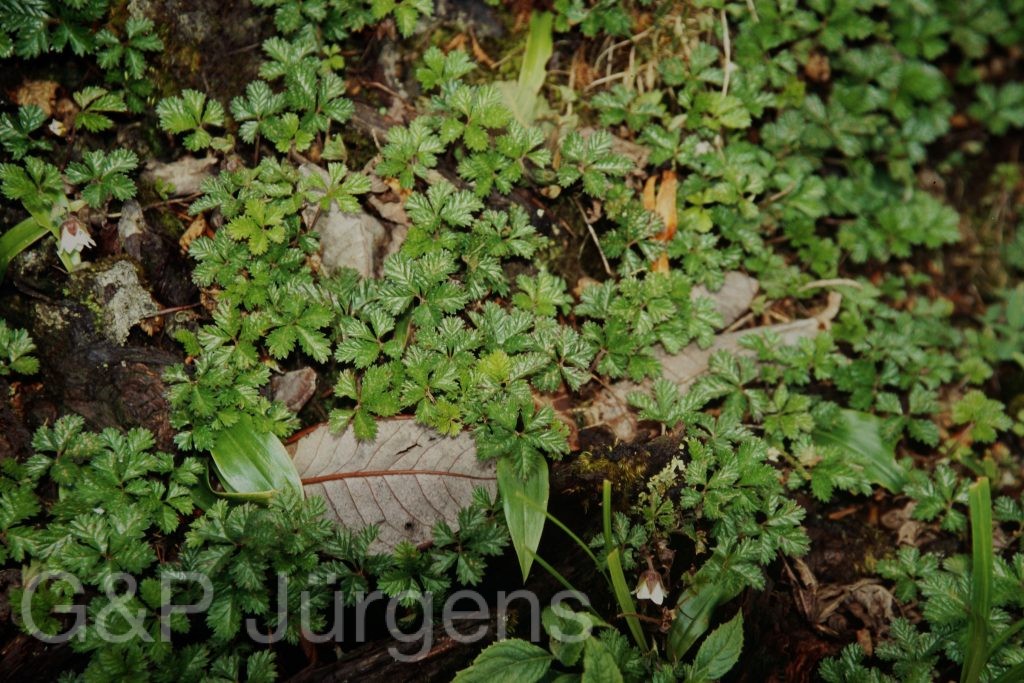
Rubus fockeanus is a diminutive, creeping bramble of the high mountains of Asia, ranging through China, Nepal, Bhutan, India, Afghanistan and Myanmar, with GBIF recording over 400 occurrences; the records from Great Britain and New Zealand represent introduced or cultivated material. It grows in damp alpine and subalpine meadows, mossy forest floors, streamsides and the margins of rhododendron scrub, broadly between 2500 and 4000 m. The two illustrated gatherings, from Chogcham in Bhutan at 3100 m in June and from Molley in West Bengal at 3000 m in May, are typical of its preference for cool, moist, sheltered montane ground.

Unlike the woody, arching brambles of the lowlands, R. fockeanus is a slender, herbaceous to subherbaceous perennial creeper, rooting at the nodes of prostrate stems to form mats, and unarmed or nearly so. The leaves are ternate (trifoliolate), with rounded, crenate-toothed leaflets. The flowers are small, solitary and white, with five petals, five sepals and numerous stamens surrounding an apocarpous gynoecium. The fruit is a small, red, aggregate drupelet cluster (an etaerio of drupelets) typical of Rubus, edible and dispersed by birds and mammals.

Within the immense and taxonomically intricate genus Rubus, this species belongs to a group of small, herbaceous, creeping alpine brambles (allied to subgenus Chamaebatus / Cylactis), distinguished by their ternate leaves, solitary flowers and matted habit. Widespread and locally common across the high Asian mountains, it is of no conservation concern and contributes to alpine ground cover and to the diet of montane fauna.

Author: Kurz · Sources: POWO (Kew), GBIF, Flora of Bhutan, Flora of China, Rubus monographic treatments

Rubus fragarioides

by GP Jürgens

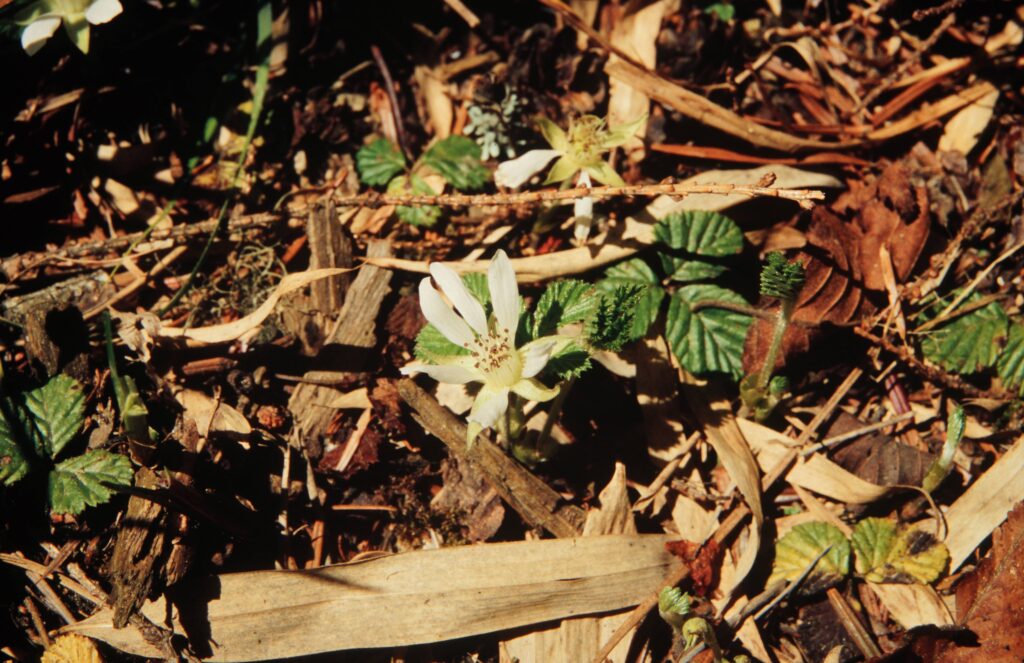
Bertol.

Sikkim2011 234
Sikkim Yumthang 3700m, June
Bh09 281 P463
Bhutan Pele-La 2900m, June

Description

Rubus fragarioides is a dwarf, strawberry-like bramble of the Sino-Himalayan region, recorded from China, Nepal, India, Bhutan and Myanmar, with about 166 occurrence records mapping a range centred on the eastern Himalaya and adjacent western China. It grows in open coniferous and rhododendron forest, forest clearings, alpine meadow margins and mossy banks at upper-temperate to subalpine elevations. The photographed populations—at Yumthang in Sikkim at 3700 m and at Pele-La in Bhutan at 2900 m, both flowering in June—reflect its typical occurrence in cool, humid montane habitats.

Unlike the familiar cane-forming raspberries, this is a diminutive, almost herbaceous perennial spreading by slender creeping rhizomes and bearing only a low, scarcely woody aerial system. The leaves are usually simple to shallowly three-lobed or ternate, with a cordate base, doubly serrate margins and a wrinkled, sparsely hairy surface, recalling those of a strawberry, whence the epithet fragarioides. The flowers are solitary or few, with five spreading white petals, a leafy calyx and numerous stamens and carpels on a domed receptacle. The aggregate fruit is a small red drupelet-cluster, edible and dispersed by birds and small mammals.

Rubus is an enormous and taxonomically difficult genus complicated by hybridisation, polyploidy and apomixis; R. fragarioides, described by Bertoloni, belongs among the low-growing creeping species sometimes segregated in subgenus Chamaebatus. Its mat-forming habit aids soil stabilisation in fragile alpine clearings. Widespread within its montane belt, it is not considered threatened, though it depends on the persistence of intact subalpine forest.

Author: Bertol. · Sources: POWO (Kew), GBIF, Flora of China (Rosaceae), Annotated Checklist of the Flowering Plants of Nepal, Grierson & Long Flora of Bhutan, Focke's monograph Species Ruborum