
Buch.-Ham. ex Sm.
Description
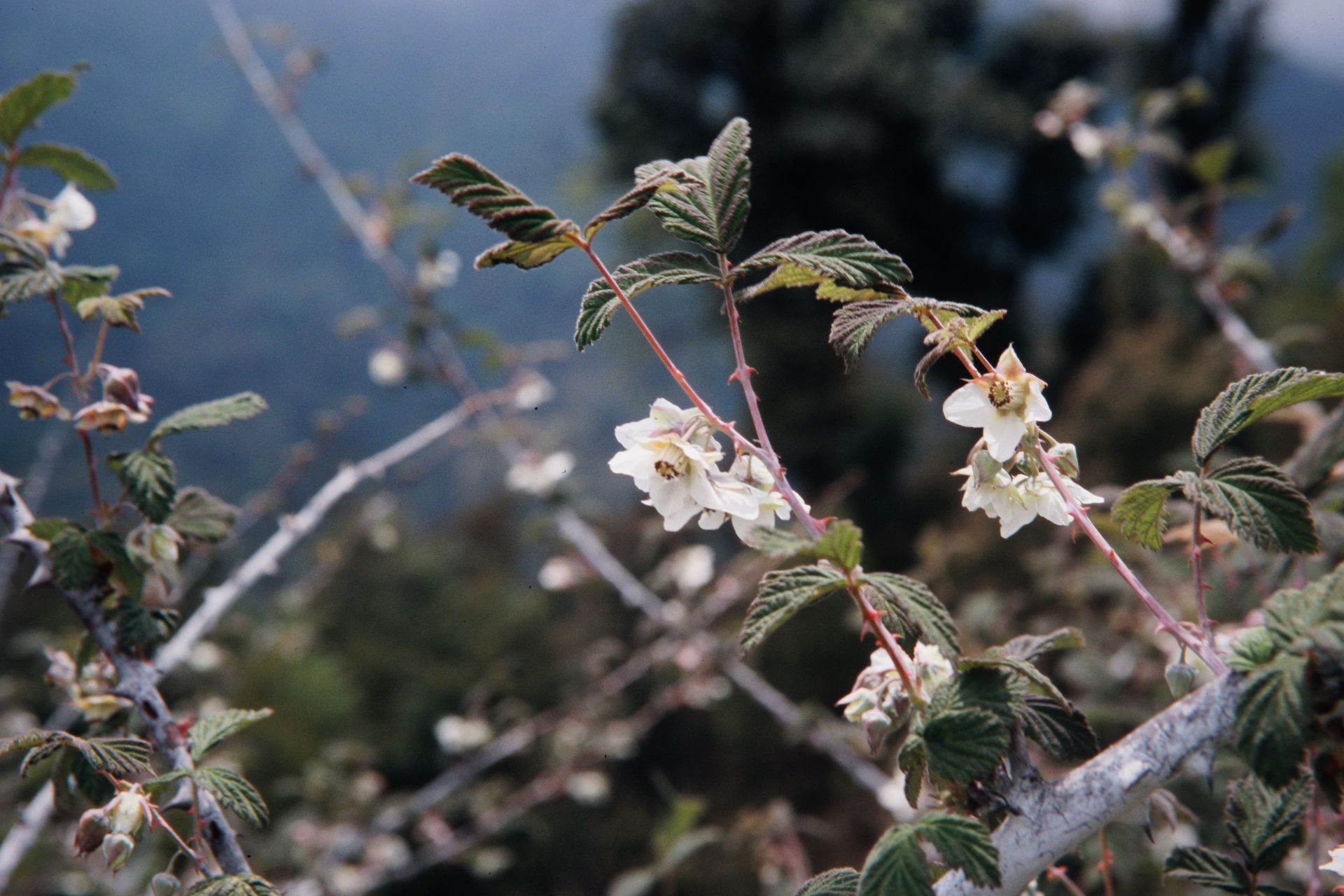
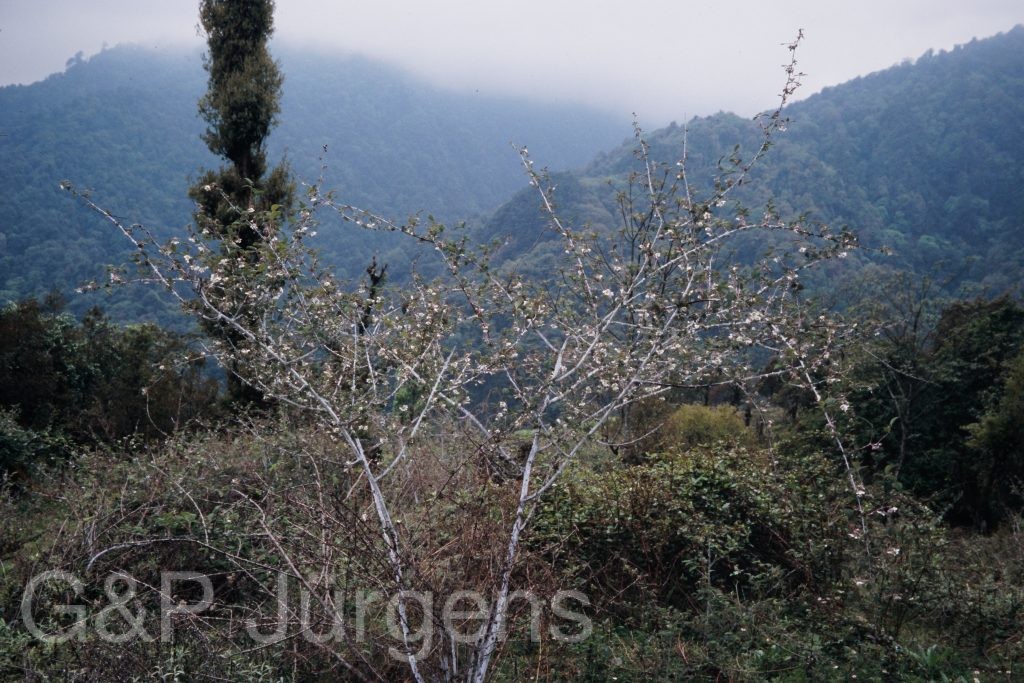
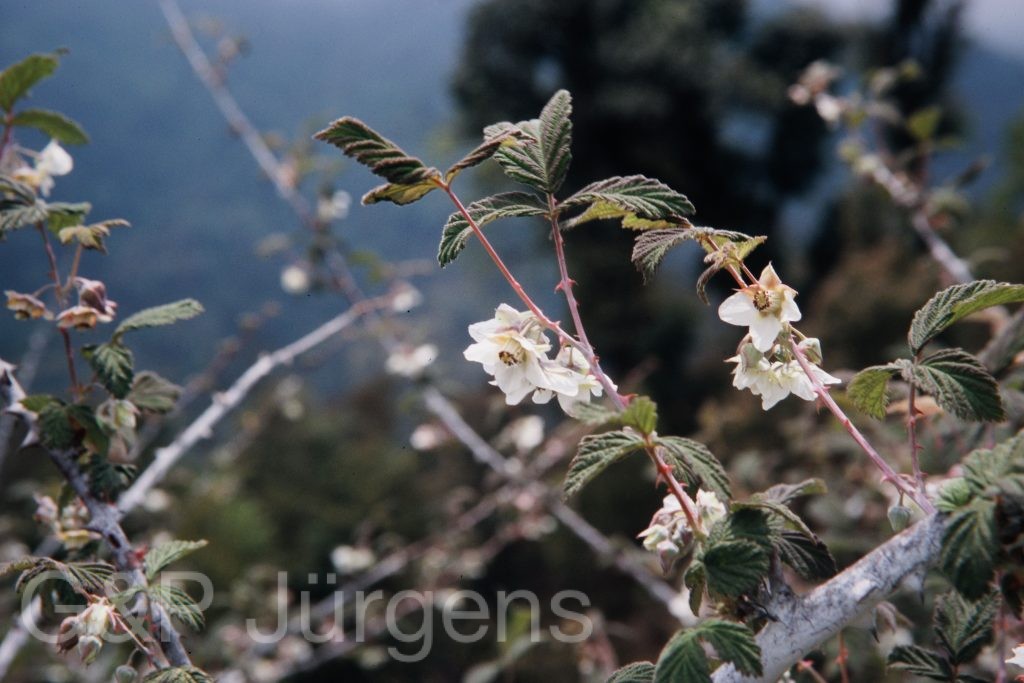
Rubus biflorus Buch.-Ham. ex Sm. is a Himalayan bramble distributed from Pakistan and Afghanistan eastward through Nepal, India, Bhutan and into southern China and Myanmar, with around 651 GBIF records anchored in the temperate Himalaya. It is characteristic of forest margins, scrub, clearings and roadside thickets in the moist temperate zone, generally between about 1800 and 3500 m. The photographed material from Chendebji in central Bhutan at roughly 2100 m, flowering in April, typifies its occurrence in cool, humid mid-montane habitats where it forms dense tangled stands on disturbed and successional ground.
The species is a robust, arching to scrambling shrub whose biennial canes are conspicuously coated with a white, waxy bloom and armed with stout, hooked prickles. The leaves are imparipinnate with three to five ovate, doubly serrate leaflets that are green above and white-tomentose beneath. The flowers, often borne in twos or few-flowered clusters as the epithet suggests, have white petals subtended by a tomentose calyx. The aggregate fruit is a globose, yellow to orange edible drupelet cluster maturing in summer.
Rubus biflorus belongs to the taxonomically complex genus Rubus (Rosaceae, subfamily Rosoideae), where extensive hybridisation and apomixis complicate species delimitation; it is placed in the white-stemmed Himalayan brambles allied to R. niveus. Widespread, common and ecologically pioneering, it is of least conservation concern, and its fruit is gathered locally while the canes contribute to soil stabilisation on eroded slopes.
Author: Buch.-Ham. ex Sm. · Sources: POWO (Kew), GBIF, Flora of Bhutan, Flora of China, Flora of Pakistan, H. Hara Enumeration of the Flowering Plants of Nepal, Focke monograph Species Ruborum