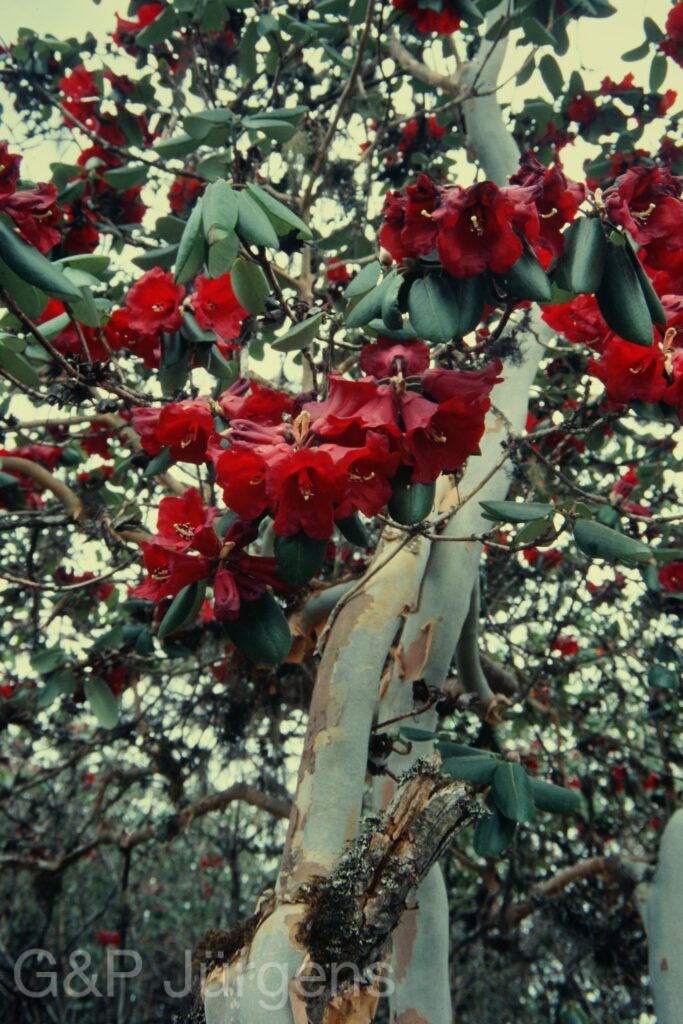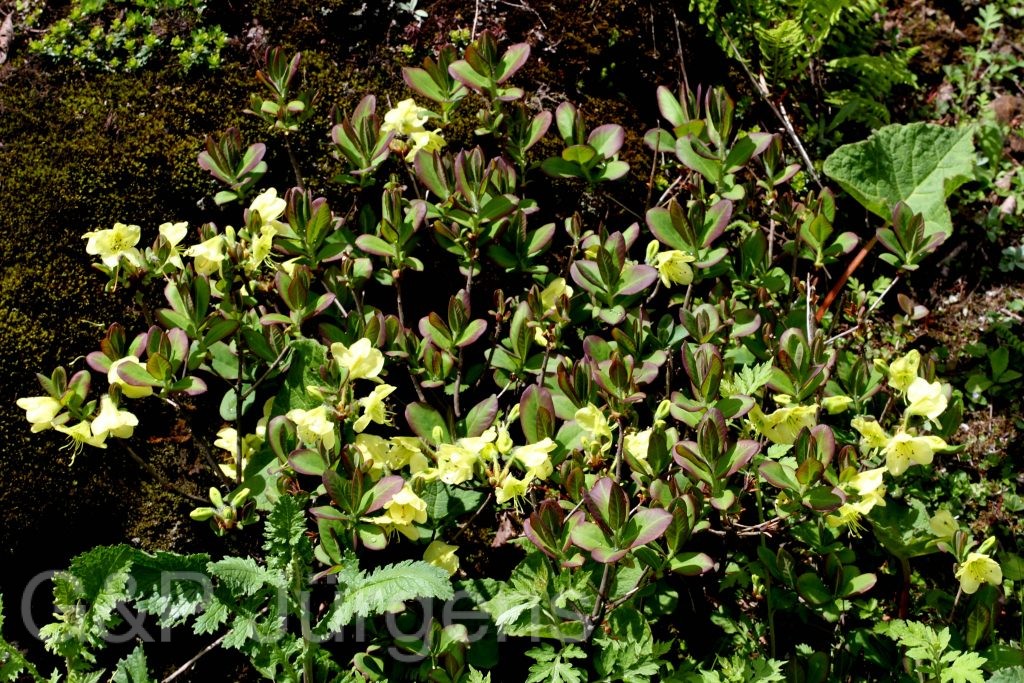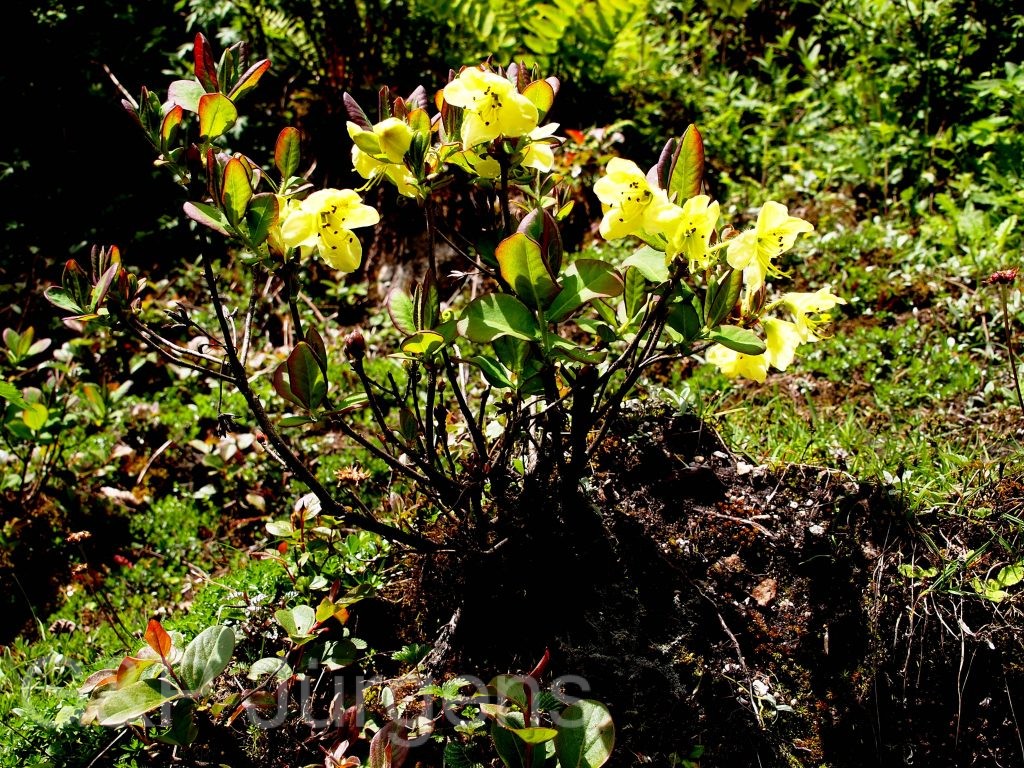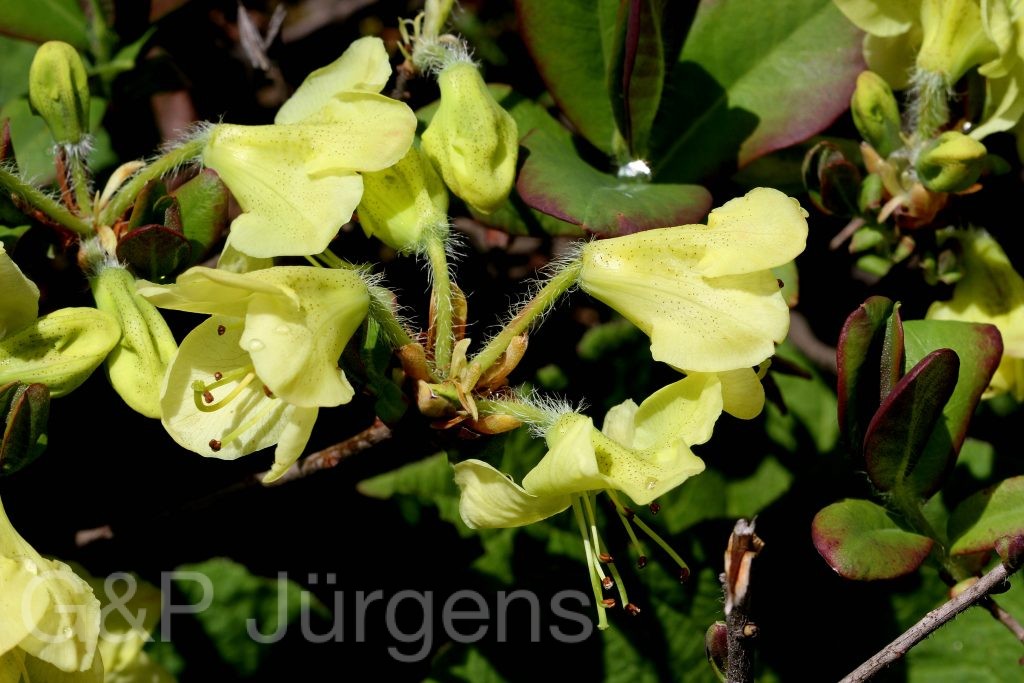
Tag:

Tibet

Flowers of Tibet — 70 high-altitude species from the Tibetan plateau and its Himalayan borderlands, adapted to cold, arid and intensely sunlit alpine conditions. The Tibetan flora is distinctive for its cushion plants, saussureas, gentians and alpine poppies. Each entry includes a botanical description, distribution, habitat and flowering season with the original field photograph and altitude.

Kingdon-Ward

BhutanPG2011 241
Bhutan Tsochenchen, 3800m June

Description

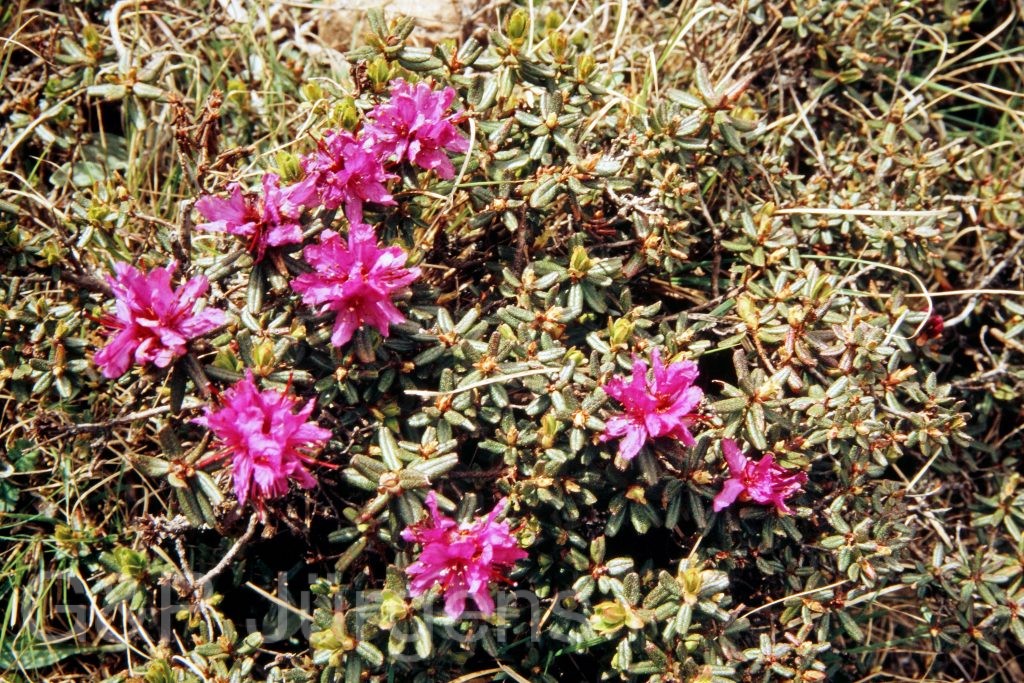
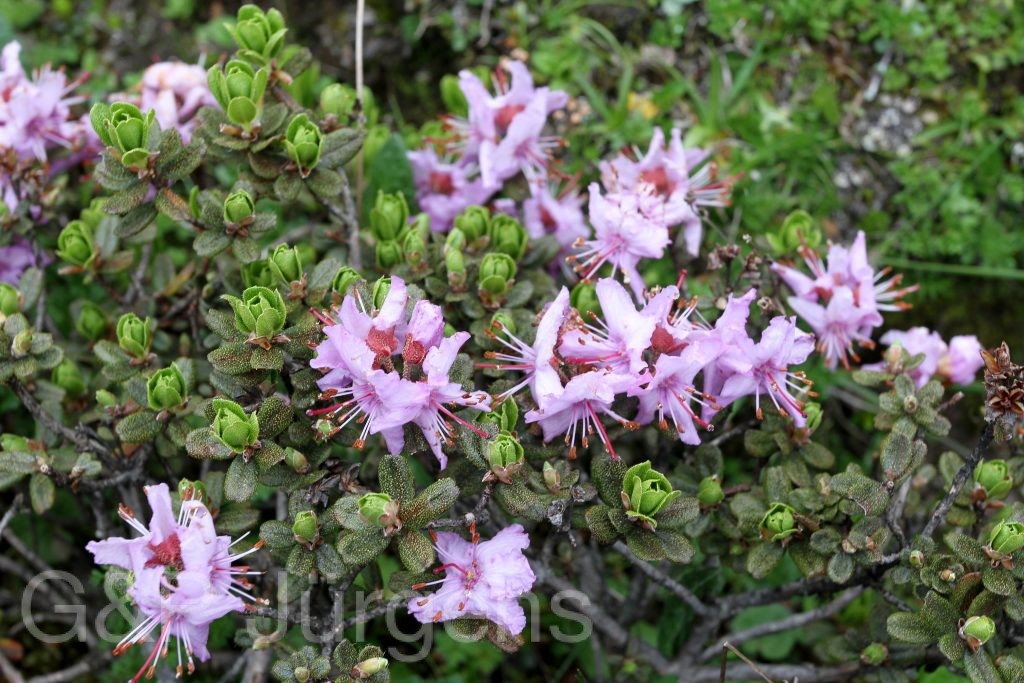
Rhododendron fragariiflorum (correctly orthographed as R. fragariflorum) is a dwarf, cushion-forming shrub endemic to the high eastern Himalaya and adjacent southeastern Tibet. Its distribution, documented by GBIF across China (Xizang), India (Sikkim, Arunachal Pradesh) and Bhutan, is restricted to the alpine zone, where it grows on open, peaty slopes, in moist meadows and among rocks at elevations of roughly 3,800–5,000 m. The photographed population near Tsochenchen in Bhutan at 3,800 m in June illustrates its typical habitat above the treeline, where it forms low mats in the company of alpine sedges, primulas and other prostrate rhododendrons subjected to strong insolation, frost and a brief summer growing season.

The plant is a low, much-branched, semi-prostrate shrublet seldom exceeding 10–20 cm in height, with slender, often decumbent stems clad in persistent leaf scales. The small, elliptic to obovate leaves are coriaceous, scaly (lepidote) beneath, and dark green above, frequently with revolute margins. Distinctively, the flowers are solitary or borne in pairs and are a deep purplish-crimson to magenta, often described as strawberry-coloured, hence the epithet fragariflorum. The corolla is broadly campanulate to rotate, five-lobed and lepidote on the outer surface, with ten exserted stamens; the fruit is a small, scaly, dehiscent capsule.

The species belongs to subgenus Rhododendron, section Pogonanthum-related lepidote groups, and is taxonomically notable for its unusually open, non-tubular corolla among scaly rhododendrons. As a strict high-alpine specialist with a narrow range and modest occurrence record, it is of biogeographic interest as an indicator of intact Sino-Himalayan alpine habitats. Climate-driven upward shifts of the treeline pose the principal long-term threat to such cushion communities.

Author: Kingdon-Ward · Sources: POWO (Kew), GBIF, Flora of Bhutan Vol. 2, Flora of China Vol. 14, Cullen: Revision of Rhododendron subgenus Rhododendron (Notes RBG Edinburgh)
Wight

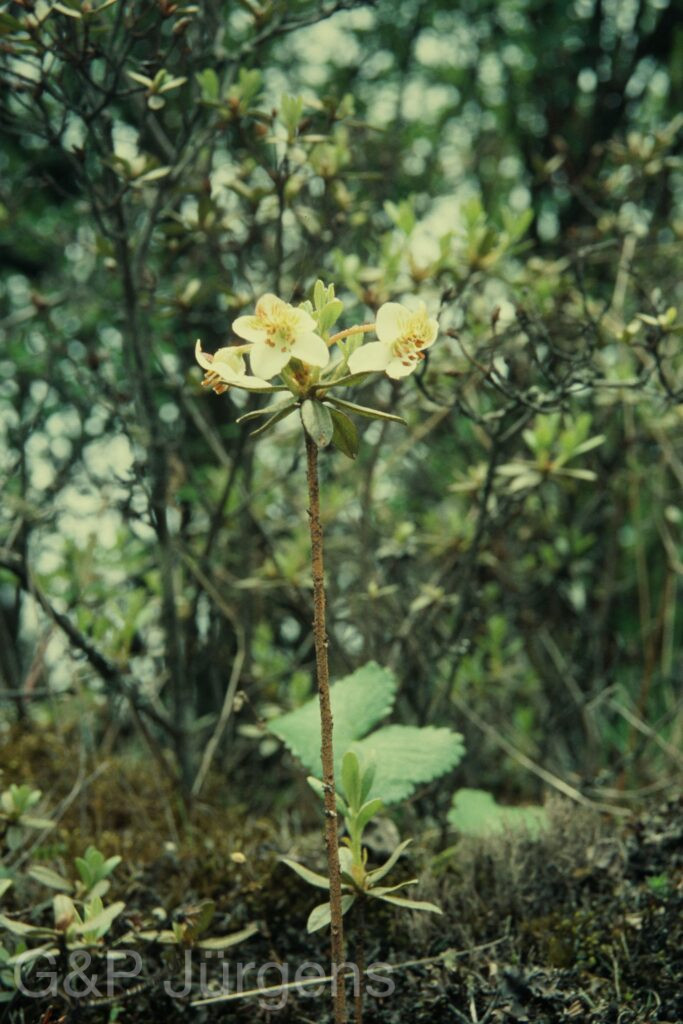
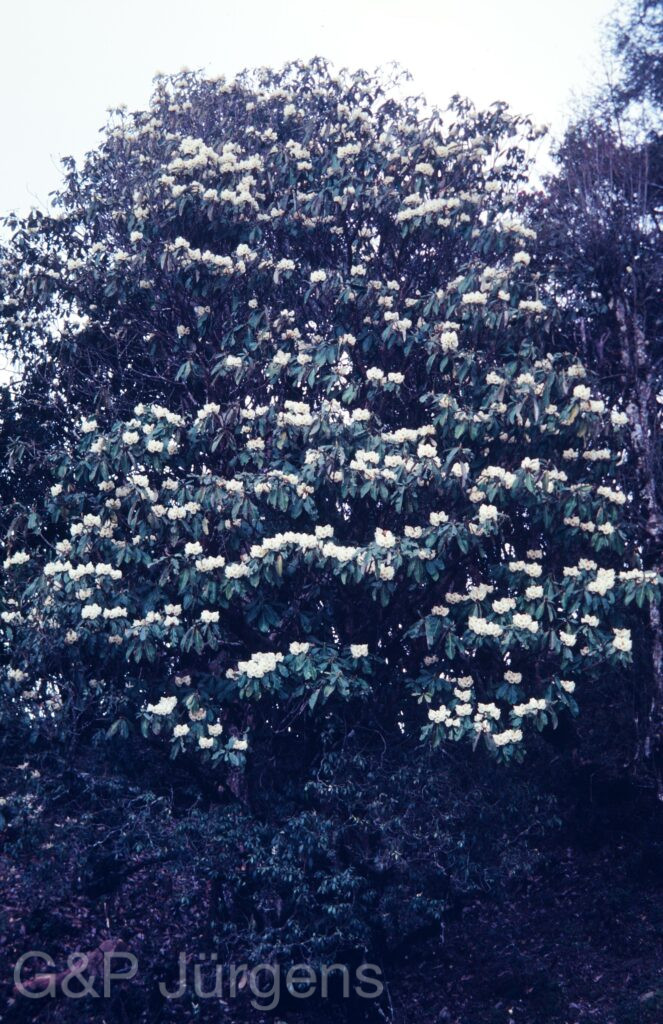
Nepal1992 196 P285 ergebnis
Nepal Suketar 2400m March 
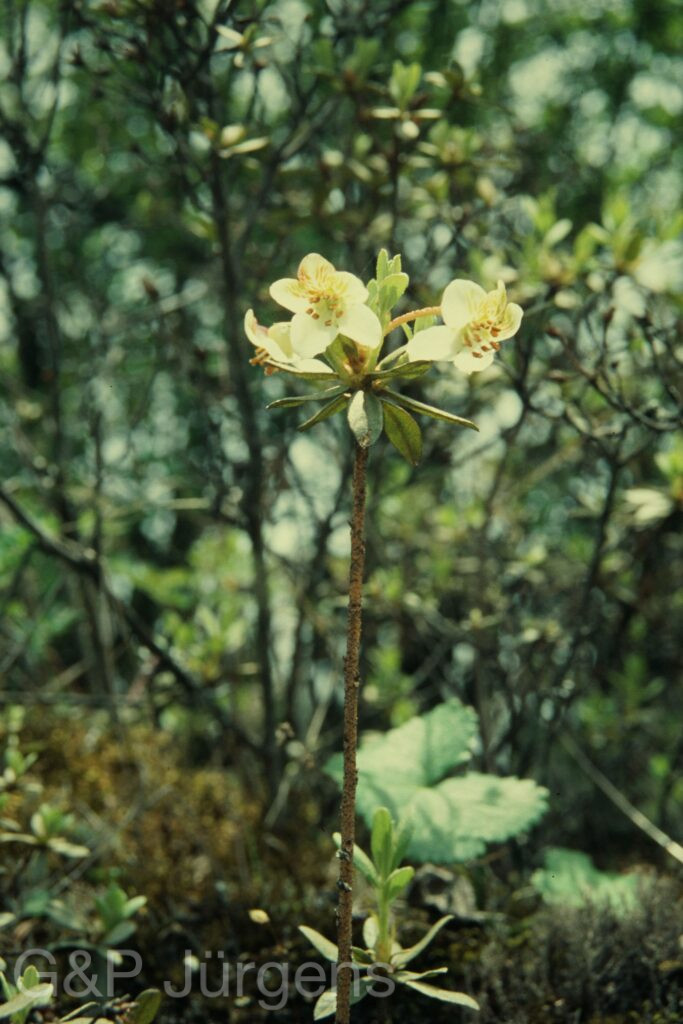
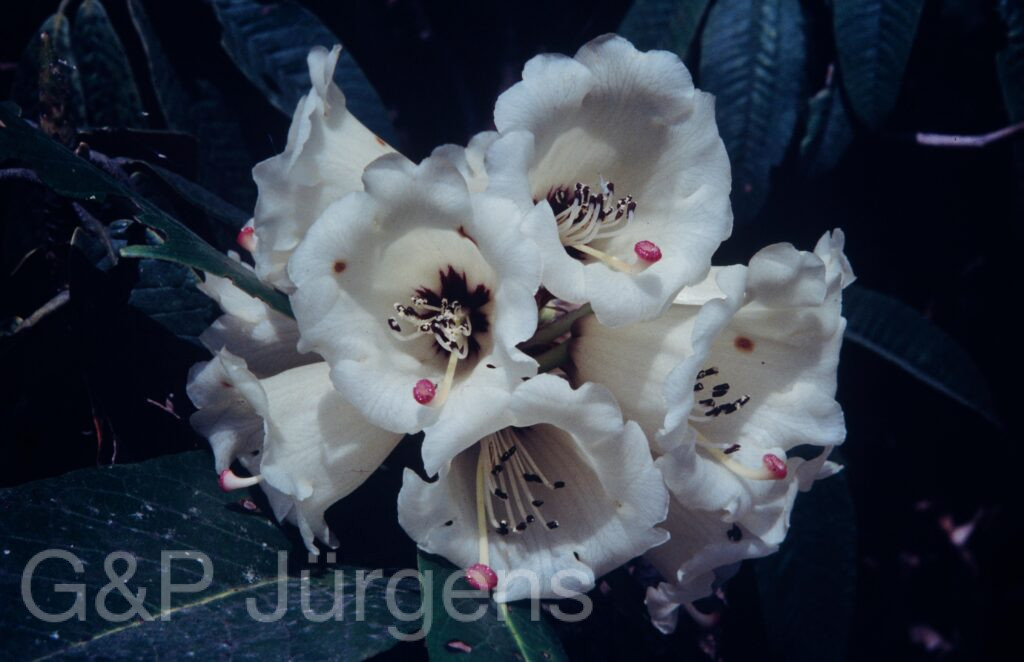
Nepal1992 197 P286 ergebnis
Nepal Suketar 2400m March 

Description

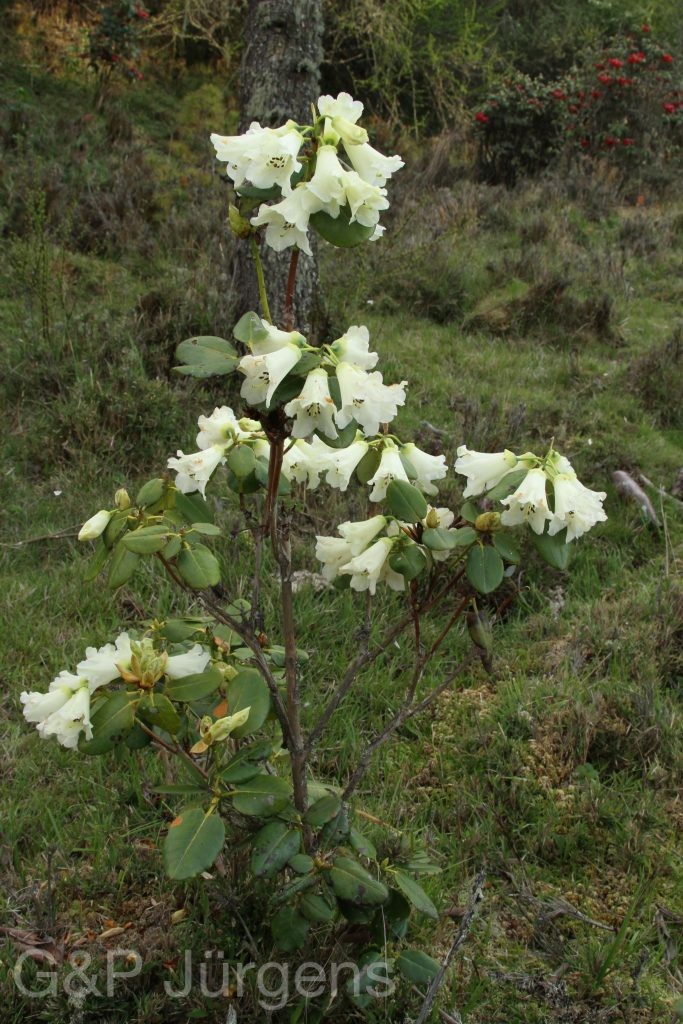
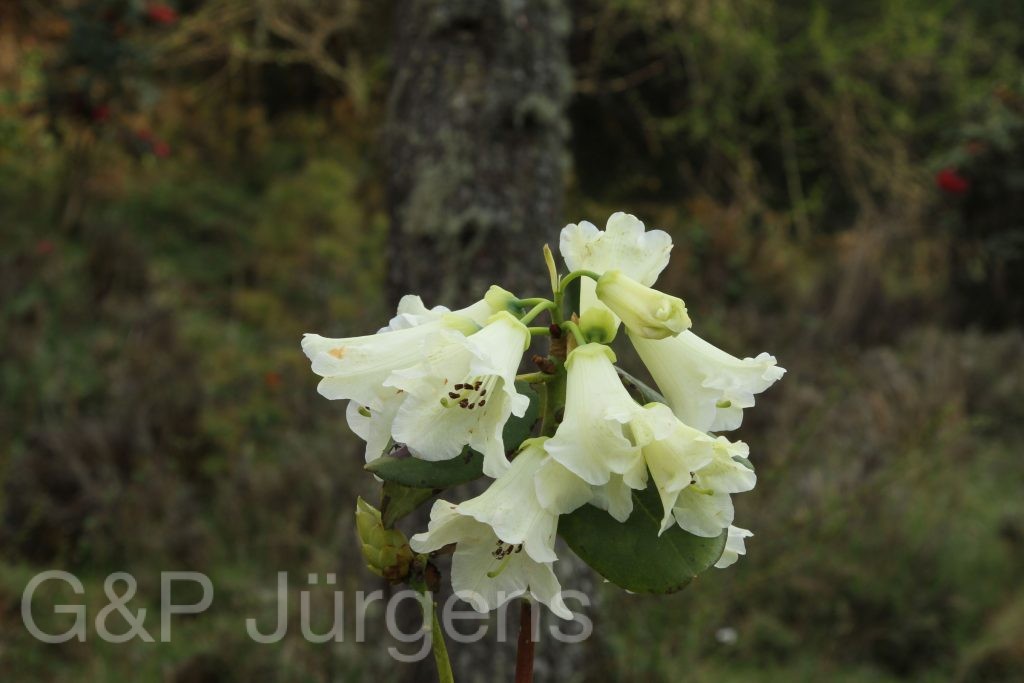
Rhododendron grande is a tree species of the eastern Himalayan temperate forest belt, ranging through Nepal, Sikkim and Darjeeling in India, Bhutan, northern Myanmar and southwestern China (Yunnan, Tibet), with cultivated and naturalised records extending to Great Britain, Belgium, Canada and the United States; the GBIF dataset comprises some 284 georeferenced occurrences. It typically grows between 2000 and 3000 m in cool, humid broad-leaved and conifer forests, ravine margins and on shaded slopes, often forming an understorey component beneath Tsuga and Quercus. The photographed plant from Suketar in eastern Nepal at 2400 m, flowering in March, is characteristic of these mid-montane mist forests where high rainfall and persistent cloud cover prevail.

It is an evergreen shrub or small tree reaching 10–15 m, with stout branchlets and smooth grey-brown bark. The leaves are large, coriaceous, oblong-elliptic to oblanceolate, 15–30 cm long, dark glossy green above and conspicuously silvery to fawn lanate-tomentose beneath with a thin plastered indumentum. The inflorescence is a dense compact truss of 15–25 flowers; the corolla is campanulate, 4–5 cm long, ivory-white to creamy with a basal crimson-purple blotch, eight-lobed, and subtended by a swollen nectary. Stamens are 16, the ovary tomentose, and the fruit a woody curved capsule dehiscing to release numerous minute winged seeds.

Rhododendron grande belongs to subgenus Hymenanthes, subsection Grandia, a group of large-leaved species centred on the Sino-Himalaya and noted for their bicoloured indumentum. As one of the earliest-flowering large rhododendrons it is valued in horticulture and draws nectar-feeding birds and bumblebees. Though not globally threatened, populations face pressure from forest clearance and grazing.

Author: Wight · Sources: POWO (Kew), GBIF, Flora of China Vol. 14, Flora of Bhutan Vol. 2, Flora of Nepal, The Genus Rhododendron (Cox & Cox)

Nutt.

Bhutan2014 529
Bhutan Pele-La 2900m, May
Bhutan2014 643
Bhutan Pele-La 2900m, May
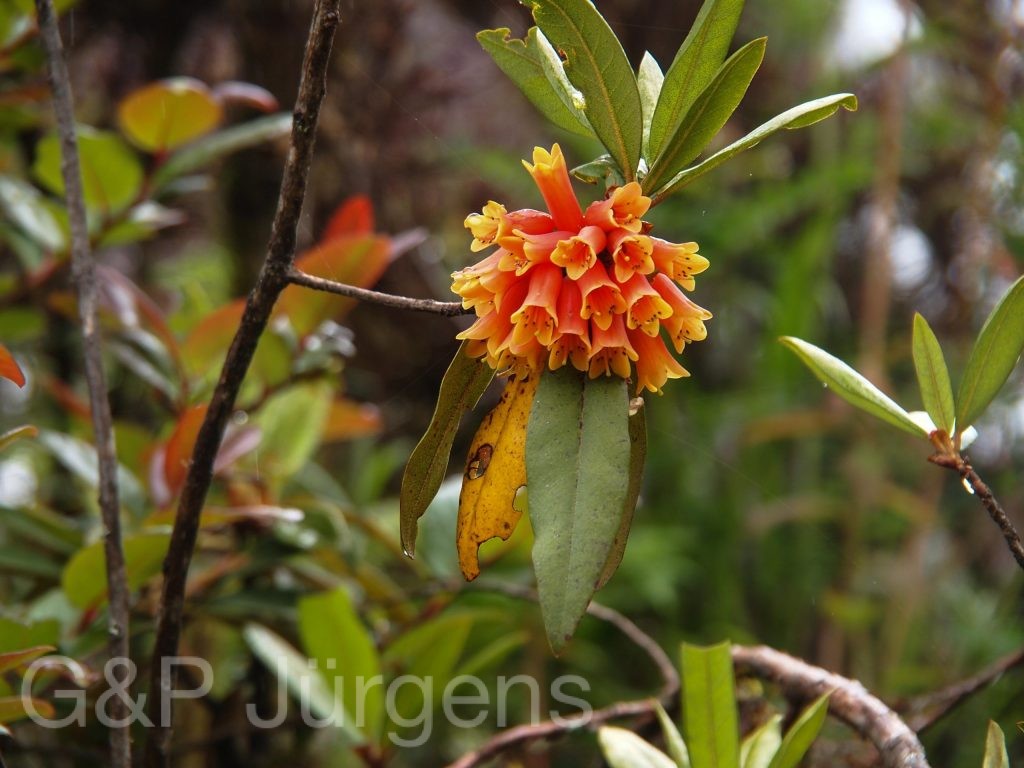
BhutanPG2011 262011 Bhutan Rhod. keysii scaled
Bhutan Pele-La, 2800m June

Description

Rhododendron keysii is an eastern Himalayan shrub native to Bhutan, India (Arunachal Pradesh, Sikkim) and southern Tibet (China), with 202 georeferenced occurrences; further records from Canada, Great Britain and New Zealand reflect its cultivation as a curiosity in temperate gardens rather than a natural range. It grows in cool, humid montane and temperate forest, in scrub, forest margins and as an epiphyte or terrestrial shrub among conifers and broad-leaved trees, generally between about 2400 and 3300 m. It was photographed at the Pele-La pass in Bhutan at 2800 to 2900 m in May and June, within the moist mid-montane belt where mist and high rainfall favour its growth.

It is an erect, sparsely branched evergreen shrub 1 to 3 m tall, with scaly young shoots and rather thin, elliptic-lanceolate leaves that are lepidote beneath. The flowers are highly distinctive among rhododendrons: borne in small axillary clusters along the upper stems, they are narrowly tubular to cylindrical, only slightly flared at the mouth, and bicoloured, with an orange-red to brick-red tube and contrasting yellow-green lobes. The corolla shape recalls a Correa or a small Cestrum rather than a typical rhododendron. The fruit is a slender scaly capsule.

The species belongs to Rhododendron subgenus Rhododendron, section Rhododendron (subsection Cinnabarina, the keysii alliance), and its tubular axillary flowers make it instantly recognisable. The narrow tube and exserted style point to pollination by sunbirds. Ecologically it is a component of mossy montane forest undergrowth. It is not regarded as threatened, though uncommon and locally distributed, and is valued horticulturally for its unusual floral form.

Author: Nutt. · Sources: POWO (Kew), GBIF, Flora of Bhutan, Flora of China, The Genus Rhododendron (Cullen & Chamberlain monograph)

Nutt.

Sikkim2004 436 P760
Sikkim/India Lachung 3600m May
Sikkim2004 437 P761
Sikkim/India Lachung 3600m May

Description

Rhododendron leptocarpum is an Eastern Himalayan endemic restricted to the moist temperate and subalpine belt of Sikkim, Bhutan, adjacent India, southern Tibet (China) and northern Myanmar, where GBIF documents some 119 georeferenced collections across the four countries CN, IN, MM and BT. It is an epiphytic or terrestrial shrub of mossy fir and Rhododendron forest, frequently perching on trunks, boulders and humus-laden ledges in a cool, perhumid, fog-bathed climate. The photographed plant at Lachung in northern Sikkim, growing near 3600 m and flowering in May, is typical of its altitudinal range of roughly 2700-4000 m.

The species is a small, twiggy shrub, often pendulous or scandent when epiphytic, with thin, flaky bark and slender, scaly young shoots. The leaves are evergreen, coriaceous, elliptic to oblong-lanceolate, glossy above and densely lepidote beneath, the scales golden to ferruginous. The campanulate to broadly funnelform corolla is comparatively small, pale to deep yellow, sometimes flushed greenish, borne in few-flowered terminal umbels; the stamens are 10 and the slender style is sharply deflexed. The diagnostic fruit is an elongate, narrowly cylindrical, curved capsule, the slenderness of which gives the epithet leptocarpum ('slender-fruited').

Placed in Rhododendron subgenus Rhododendron, the lepidote (scaly-leaved) rhododendrons, R. leptocarpum belongs to a group of small-flowered yellow species centred on the wettest Eastern Himalayan ranges. Its epiphytic habit and narrow elevational and geographic span make it a sensitive indicator of intact, high-humidity cloud forest, a habitat increasingly fragmented by grazing, fuelwood collection and warming-driven upslope shifts of the forest belt.

Author: Nutt. · Sources: POWO (Kew), GBIF, Flora of Bhutan, Flora of China, The Rhododendron Handbook (Royal Horticultural Society), Cox & Cox A Encyclopedia of Rhododendron Species

(Tagg & Forrest) W.K. Hu

Bh2008 268 P421
Bhutan Ura 3400m, April
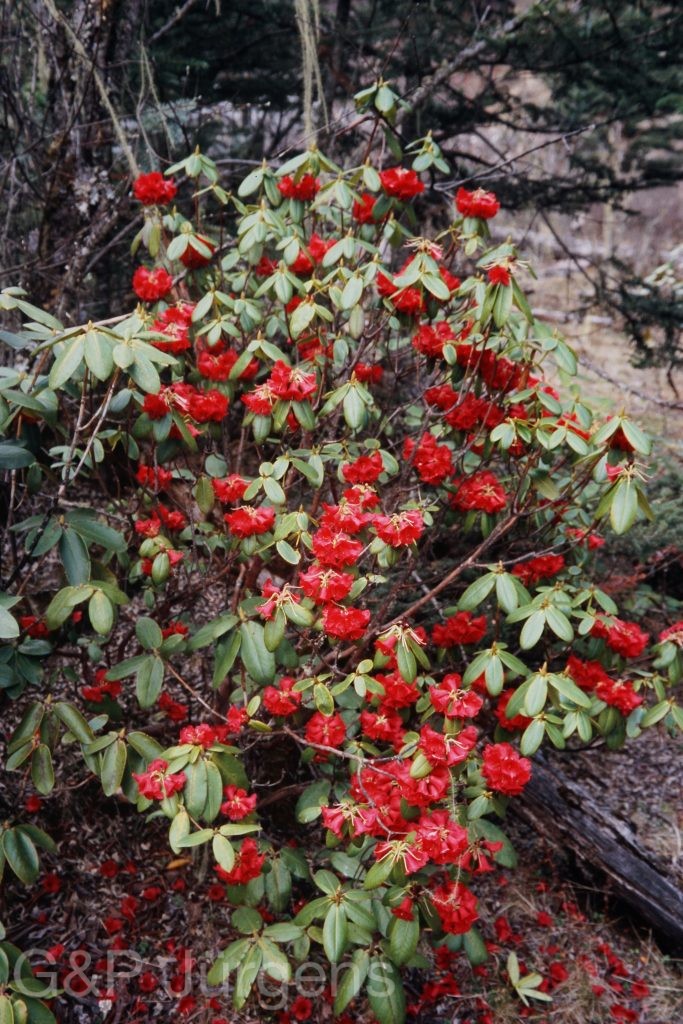
Bhutan2014 540
Bhutan Pele-La 3000m, May

Description

Rhododendron neriiflorum var. appropinquans is an evergreen shrub of the eastern Himalaya, known from a small number of records: GBIF documents only about 9 occurrences, confined to China (Yunnan/Tibet) and Bhutan. It grows in the temperate and subalpine forest belt, on rhododendron-clad slopes, forest margins and rocky banks broadly between 3000 and 3600 m. The photographed plants are from Bhutan at Ura (3400 m, April) and the Pele-La (3000 m, May), flowering in spring as the snow recedes, when the bright corollas appear against cool, humid, peaty mountain soils.

The plant is a much-branched shrub with leathery, evergreen leaves that are elliptic to oblong, dark green and glabrous above and glaucous to whitish-papillose beneath, recalling the foliage of an oleander as the specific epithet neriiflorum implies. The flowers are borne in a compact terminal truss of several blooms; the corolla is tubular-campanulate, fleshy in texture and a vivid crimson to scarlet, with conspicuous dark nectar pouches at the base. Stamens and the long style are exserted, and the calyx is fleshy and often coloured. The fruit is a curved, cylindrical capsule that dehisces septicidally to release numerous minute seeds.

Rhododendron neriiflorum belongs to subgenus Hymenanthes, subsection Neriiflora, a Sino-Himalayan complex of red-flowered species in which infraspecific variants such as var. appropinquans are distinguished by leaf indumentum and floral detail. GBIF treats the name as accepted. Its very restricted documented range and narrow ecological niche make it of biogeographic interest and potentially of conservation concern amid habitat change in eastern Himalayan rhododendron forests.

Author: (Tagg & Forrest) W.K. Hu · Sources: POWO (Kew), GBIF, Flora of Bhutan, Flora of China, Royal Horticultural Society revision of Rhododendron

Hook. f.

BhutanPG2011 549 1
Bhutan Ludlow-Sherriff-Trail Dem-Tso, 4700m July

Description

Rhododendron pumilum is a diminutive alpine shrublet of the eastern Himalaya and adjacent Sino-Himalayan region, recorded from China (Tibet, Yunnan), Nepal, India, Bhutan and Myanmar, with 115 georeferenced occurrences. It inhabits the high alpine zone, growing in damp turf, on mossy rocks, peaty banks and the margins of snow-fed meltwater seeps, typically between about 3500 and 4800 m. The species was photographed on the Ludlow-Sherriff Trail near Dem-Tso, Bhutan, at 4700 m in July, an elevation reflecting its strong association with the uppermost alpine meadows and moist micro-sites close to the limit of vascular plant growth.

It is one of the smallest rhododendrons, a creeping, mat-forming evergreen rarely more than 8 to 15 cm tall, with slender prostrate stems rooting at the nodes and minutely scaly young growth. The tiny leaves are obovate to elliptic, leathery, lepidote beneath with pale scales and often slightly revolute at the margin. The flowers are borne singly or in pairs at the shoot tips on relatively long pedicels and are nodding, broadly campanulate and pink to rose-purple, comparatively large in proportion to the plant; the stamens are typically ten and the style short and stout. The fruit is a small scaly capsule.

The species is placed in Rhododendron subgenus Rhododendron, section Rhododendron (subsection Uniflora), a group of cushion-forming dwarf lepidote species of the high Sino-Himalaya. Its solitary nodding flowers and creeping habit distinguish it from related dwarfs. Ecologically it is a specialist of cold, moist, well-aerated alpine substrates and an associate of cushion-plant communities. Though not assessed as globally threatened, its restriction to narrow high-elevation habitats makes it vulnerable to climate-driven habitat contraction.

Author: Hook. f. · Sources: POWO (Kew), GBIF, Flora of Bhutan, Flora of China, The Genus Rhododendron (Cullen & Chamberlain monograph)

D. Don

BhutanPG2011 242
Bhutan Tsochenchen 3800m June
BhutanPG2011 550 01 scaled
Bhutan Tsochenchen 3800m June, see also: Cassiope fastigiata
Bh09 6 P8
Bhutan Chele-La 3950m June

Description

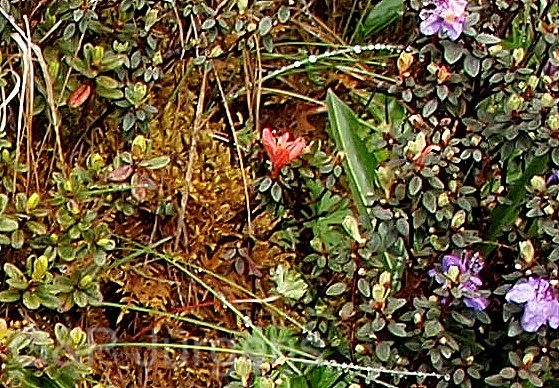
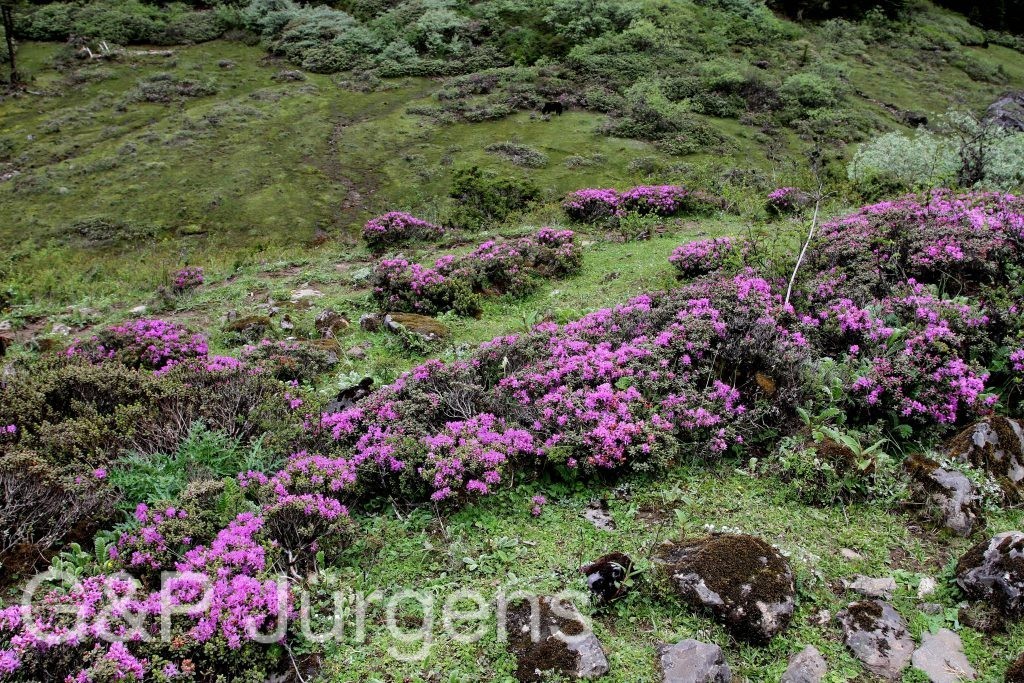
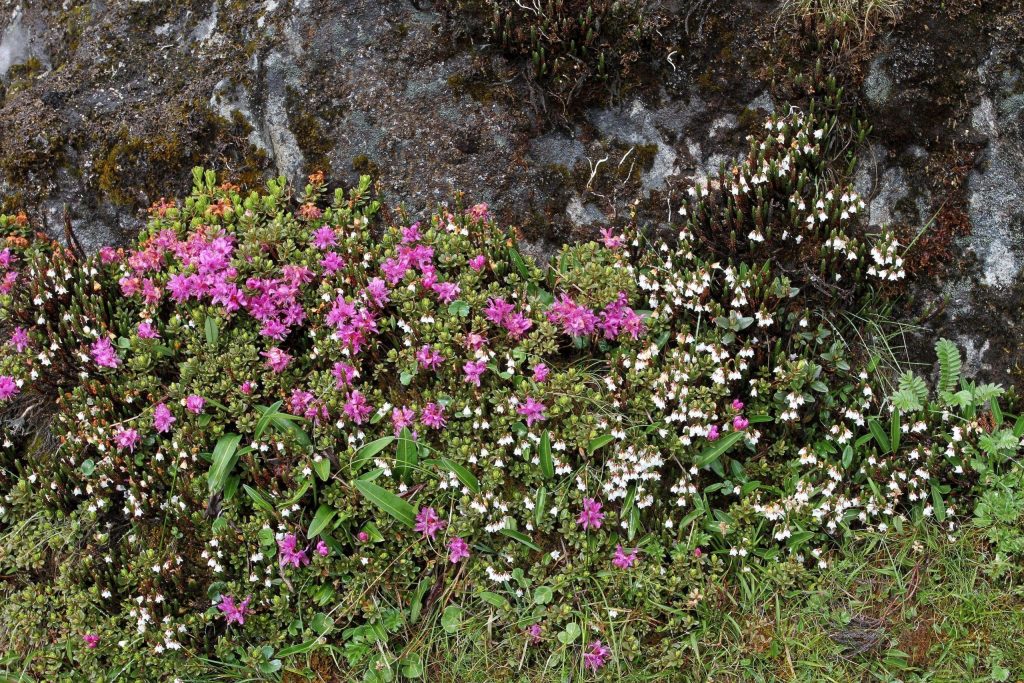
Rhododendron setosum is a high-alpine dwarf shrub distributed through the eastern and central Himalaya, recorded from Nepal, India (Sikkim), Bhutan, and southern Tibet (China), with 507 georeferenced occurrences confirming a continuous arc along the main range. It is a characteristic plant of the upper alpine zone, forming low cushions and open mats on exposed ridges, moraines and the margins of dwarf-rhododendron heath, frequently above the treeline between about 3500 and 5000 m. It was photographed at Tsochenchen, Bhutan, at 3800 m in June and on the Chele-La pass at 3950 m, where it grows alongside Cassiope fastigiata in cold, peaty acidic substrates exposed to strong insolation and wind.

It is a much-branched, prostrate to ascending evergreen shrublet rarely exceeding 30 cm, the young shoots densely setose with stiff bristly hairs and gland-tipped trichomes that give the plant a strongly aromatic resinous scent. The small leaves are elliptic to oblong, leathery, glandular-scaly (lepidote) on both surfaces and bristly-margined, crowded toward the branch tips. The flowers, borne in small terminal clusters, are broadly campanulate to funnel-shaped and a vivid pink-purple to magenta, with a setose, glandular calyx and exserted stamens. The fruit is a small ovoid septicidal capsule.

The species belongs to Rhododendron subgenus Rhododendron, section Pogonanthum, a group of aromatic small-leaved lepidote rhododendrons centred on the Sino-Himalaya. Its glandular indumentum and powerful scent are diagnostic within this section. Ecologically it is a pioneer of disturbed alpine ground and a component of dwarf-shrub heath, tolerant of frost and intense radiation. Though locally abundant and not threatened, populations are sensitive to grazing and warming-driven shifts of the treeline.

Author: D. Don · Sources: POWO (Kew), GBIF, Flora of Bhutan, Flora of China, The Genus Rhododendron (Cullen & Chamberlain monograph)

Hook. f.

Bhutan2014 631
Bhutan Phobjika 2800m, May
Bhutan2014 632
Bhutan Phobjika 2800m, May
Bhutan2014 382
Bhutan Tongsa 2000m, May
Sikkim2004 307 P542
Sikkim/India May

Description

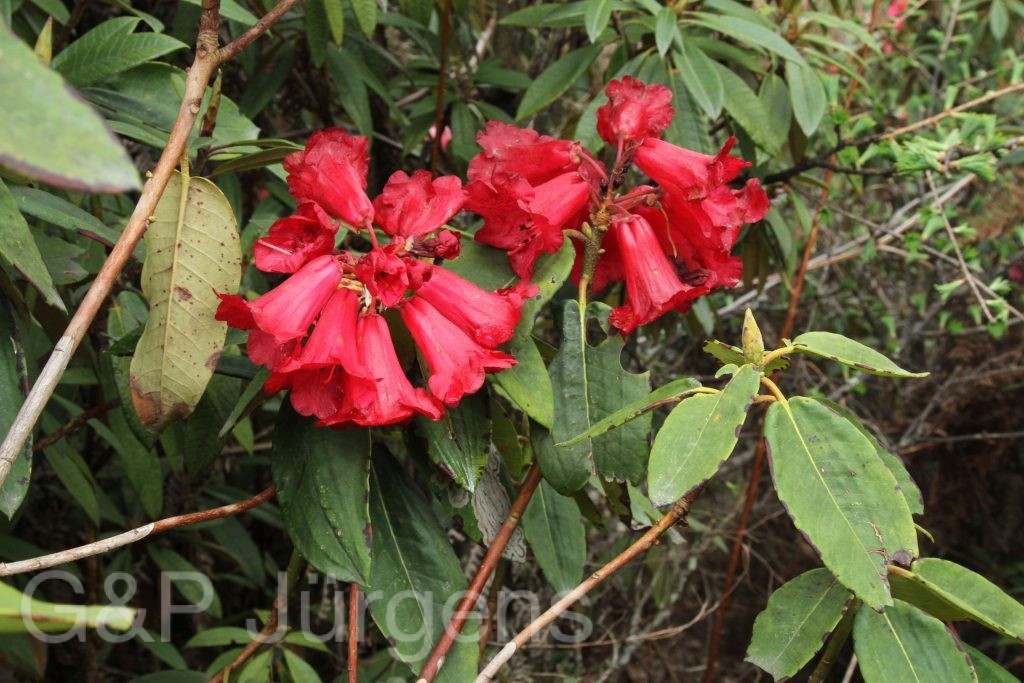
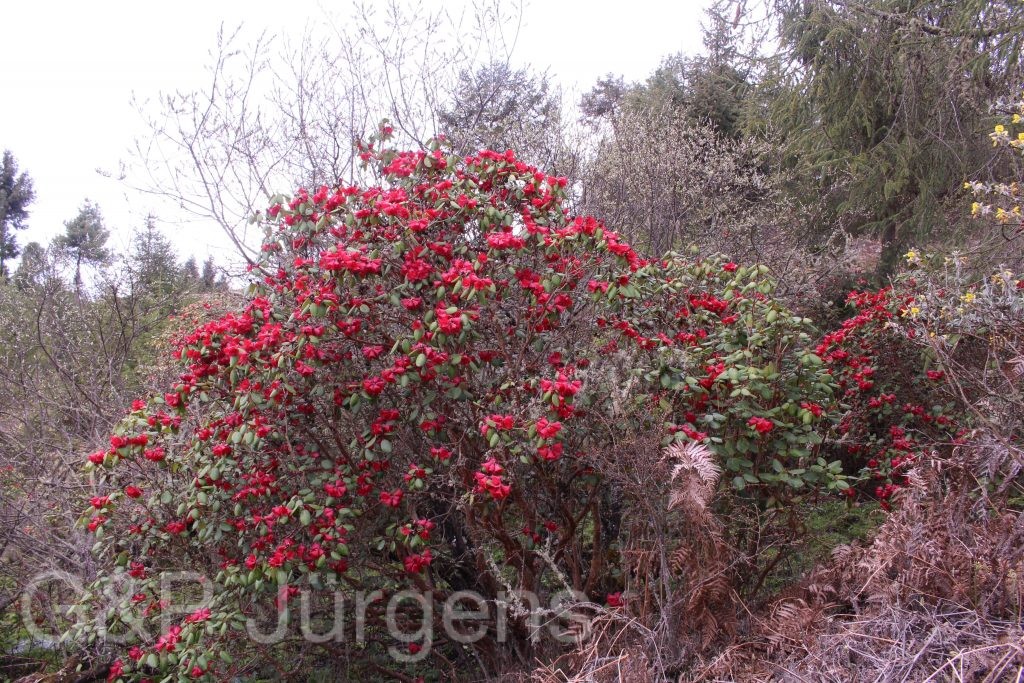
Rhododendron thomsonii is an Eastern Himalayan endemic centred on Sikkim, Bhutan, adjacent northeastern India, southern Tibet (China) and easternmost Nepal, with the nearly 479 records also reflecting widespread cultivation in Britain, North America and continental Europe. In its native range it occupies the cool, humid temperate forest zone, the images documenting plants at Phobjika around 2800 m and Tongsa near 2000 m in Bhutan, flowering in May, together with material from Sikkim. It grows in fir and mixed broadleaved forest, on forest margins, in rhododendron thickets and on open rocky slopes between roughly 3000 and 4000 m, often where the monsoon brings high atmospheric humidity.

It is an evergreen shrub or small tree reaching several metres, with smooth, flaking reddish-brown to plum bark. The leaves are broadly obovate to orbicular, glabrous, glaucous beneath, rounded or emarginate at the apex and cordate at the base, borne on short petioles. The inflorescence is a loose terminal truss of few flowers; the corolla is fleshy, broadly campanulate and a deep blood-red to crimson, subtended by a large, cup-shaped, persistent and conspicuously coloured calyx that is diagnostic for the species. Stamens are ten; the ovary and curved style are glabrous, maturing into a woody capsule.

The species was described by J.D. Hooker from his Sikkim Himalayan expeditions and is the type of subsection Thomsonia within Rhododendron subgenus Hymenanthes. Its large fleshy calyx, glaucous foliage and waxy red bells distinguish it from related taxa and have made it a foundation species in horticultural breeding. Though restricted in distribution, it is locally common within suitable montane forest and is buffered by extensive cultivation, so it is not regarded as globally threatened, although habitat pressures affect parts of its native range.

Author: Hook. f. · Sources: POWO (Kew), GBIF, Flora of Bhutan, Flora of China, The Genus Rhododendron (Royal Botanic Garden Edinburgh)

Franch.

Sikkim2011 211
Sikkim Yumthang 3500m, June
Sikkim2011 213
Sikkim Yumthang 3500m, June
Sikkim2011 218
Sikkim Yumthang 3500m, June

Description

Rhododendron trichocladum is a deciduous, scaly-leaved shrub of the eastern Himalaya and adjacent Sino-Himalayan ranges, distributed across south-western China (notably Yunnan and south-eastern Tibet), northern Myanmar and the Indian Himalaya, with GBIF records (553 occurrences) confirming a centre of abundance in Sikkim, Yunnan and Upper Myanmar. It occupies open hillsides, forest margins, rhododendron thickets and rocky slopes at roughly 2700-4000 m, frequently in cool, humid, moss-rich montane settings. The photographed plant from the Yumthang valley in north Sikkim at about 3500 m in June typifies its preferred sub-alpine zone, where it flowers as the snow recedes alongside dwarf rhododendrons and primulas.

A much-branched shrub usually 0.5-1.5 m tall, with thin, often bristly young shoots bearing scattered scales and setae. The thin, deciduous leaves are obovate to elliptic, bright green, sparsely scaly above and densely lepidote beneath, with ciliate margins and a short petiole. Flowers are borne in small terminal clusters of one to three, opening with or before the leaves; the widely funnel-campanulate corolla is yellow, often greenish-yellow and sometimes faintly spotted, with five lobes and a scaly outer surface. Stamens ten, declinate; the ovary is densely scaly, tapering into a slender style. The fruit is a small, ovoid, scaly capsule dehiscing septicidally to release minute winged seeds.

The species belongs to Rhododendron subsection Trichoclada (subgenus Rhododendron), a small group of deciduous, yellow-flowered, scaly-leaved shrubs characterised by their bristly indumentum. It is a valuable subject for cool temperate woodland gardens and has contributed to horticultural breeding. Though not globally threatened given its broad Sino-Himalayan range, populations are locally dependent on undisturbed sub-alpine scrub, making them sensitive to grazing pressure, fuelwood collection and habitat shifts driven by warming climates.

Author: Franch. · Sources: POWO (Kew), GBIF, Flora of China, Flora of Bhutan, The Genus Rhododendron (Royal Horticultural Society monograph)

Cowan

Bh2008 223 G352
Bhutan Tumching-La, 3800m April
Bh2008 224 P355
Bhutan Tumching-La, 3800m April
Bh09 339 G553
Bhutan Jakar 3700m April

Description

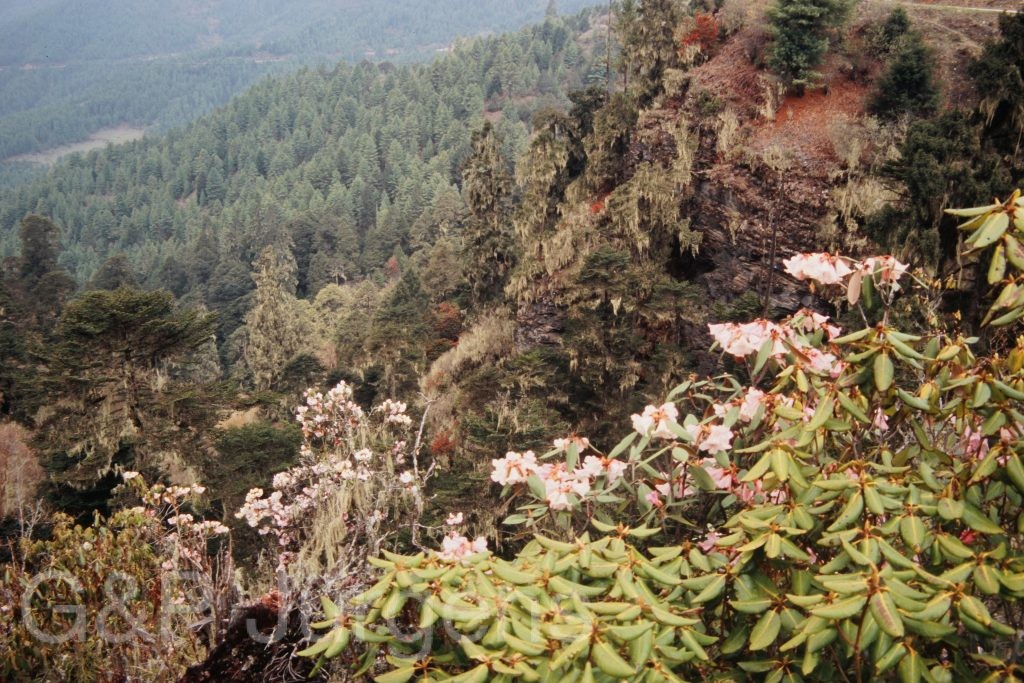
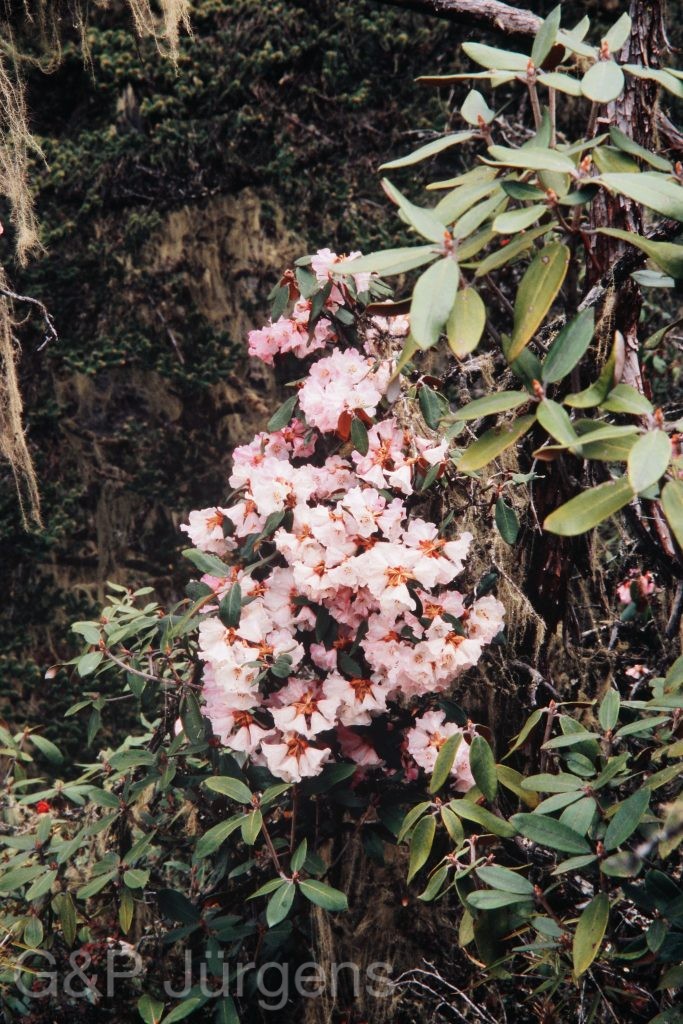
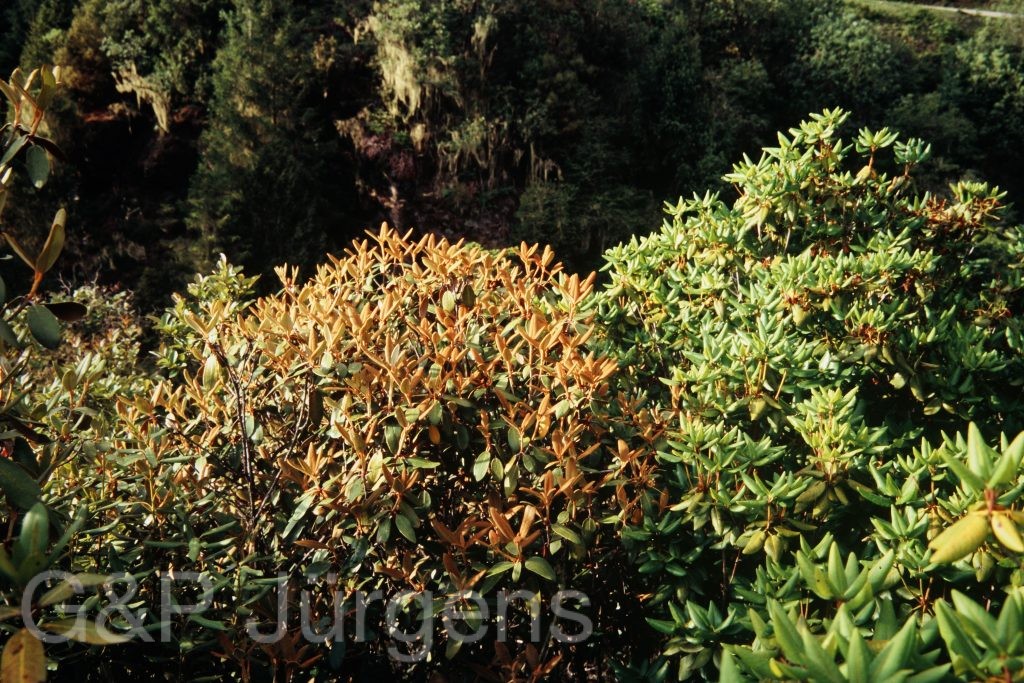
Rhododendron tsariense is a shrub of the eastern Himalaya, restricted to China (south-eastern Tibet), north-eastern India and Bhutan, with a small number of records (66 occurrences in GBIF) reflecting its limited range. It inhabits high subalpine and alpine zones, growing in open coniferous and Rhododendron scrub, on rocky slopes, ridges and the margins of fir forest, characteristically between about 3000 and 4300 m. The photographed plants come from Bhutan, at Tumching-La (3800 m) and near Jakar (3700 m), flowering in April as the high passes emerge from winter, an elevation typical of the species' montane habitat.

It is a compact, much-branched evergreen shrub, the young shoots and undersides of the leaves clothed in a dense, felted, fawn to rusty-brown indumentum that is one of its most diagnostic features. The leaves are small, leathery, elliptic to obovate, dark green and somewhat rugose above. The flowers are borne in small terminal trusses; the corolla is campanulate (bell-shaped), creamy white to pale pink, often flushed rose and spotted within. The fruit is a woody dehiscent capsule, the persistent style and calyx remaining at the apex.

The species belongs to subsection Lanata (subgenus Hymenanthes), a group of indumented eastern Himalayan rhododendrons characterised by their conspicuously hairy leaf undersurfaces. Named for the Tsari region, it is a narrow-range endemic of conservation interest, its alpine populations potentially sensitive to climate shifts and to grazing and burning pressure in the high pastures. Like other rhododendrons it is bee- and bird-pollinated and forms ericoid mycorrhizal associations adapted to acidic, peaty mountain soils.

Author: Cowan · Sources: POWO (Kew), GBIF, Flora of Bhutan, The Genus Rhododendron (Cowan & Davidian), Edinburgh Rhododendron revision