Tag:

Tibet

Flowers of Tibet — 70 high-altitude species from the Tibetan plateau and its Himalayan borderlands, adapted to cold, arid and intensely sunlit alpine conditions. The Tibetan flora is distinctive for its cushion plants, saussureas, gentians and alpine poppies. Each entry includes a botanical description, distribution, habitat and flowering season with the original field photograph and altitude.

Hook. f.

Sikkim2011 290
Sikkim Lada-La 3950m, June
Bh2008 257 G404
Bhutan Tumching-La, 3750m April
Bh2008 591 P884
Bhutan Tumching-La, 3750m April
Bh2008 592 P885
Bhutan Chele-La, 3850m April
Sikkim2004 224 P383
Sikkim/India Singalila 4000m May

Description

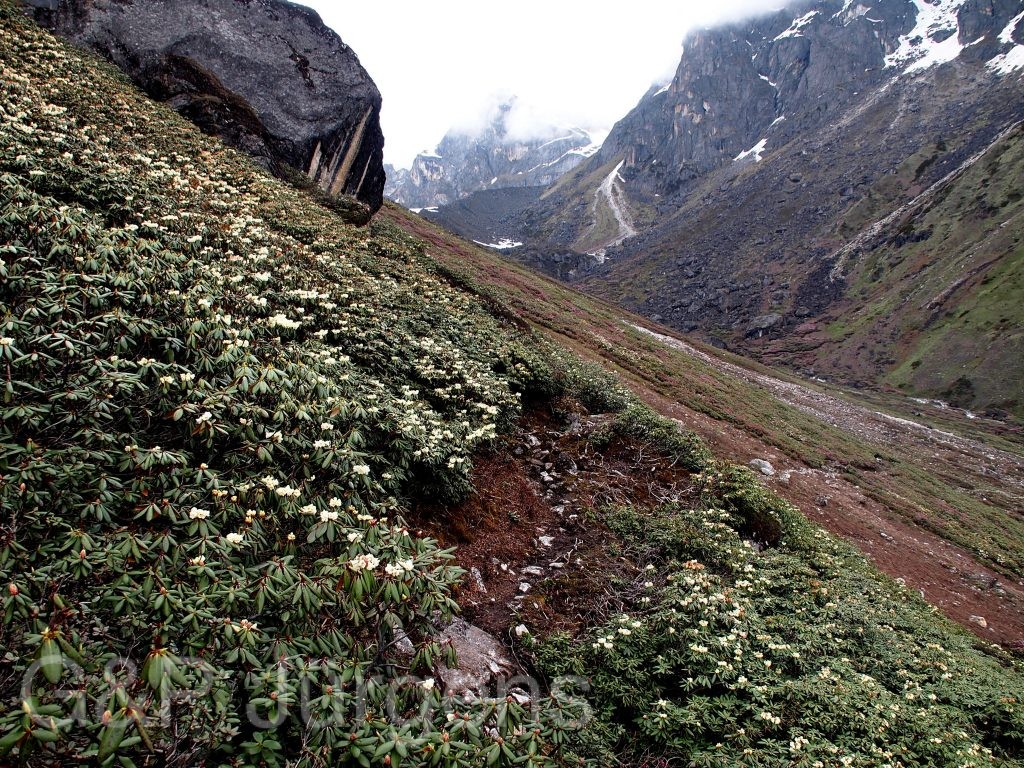
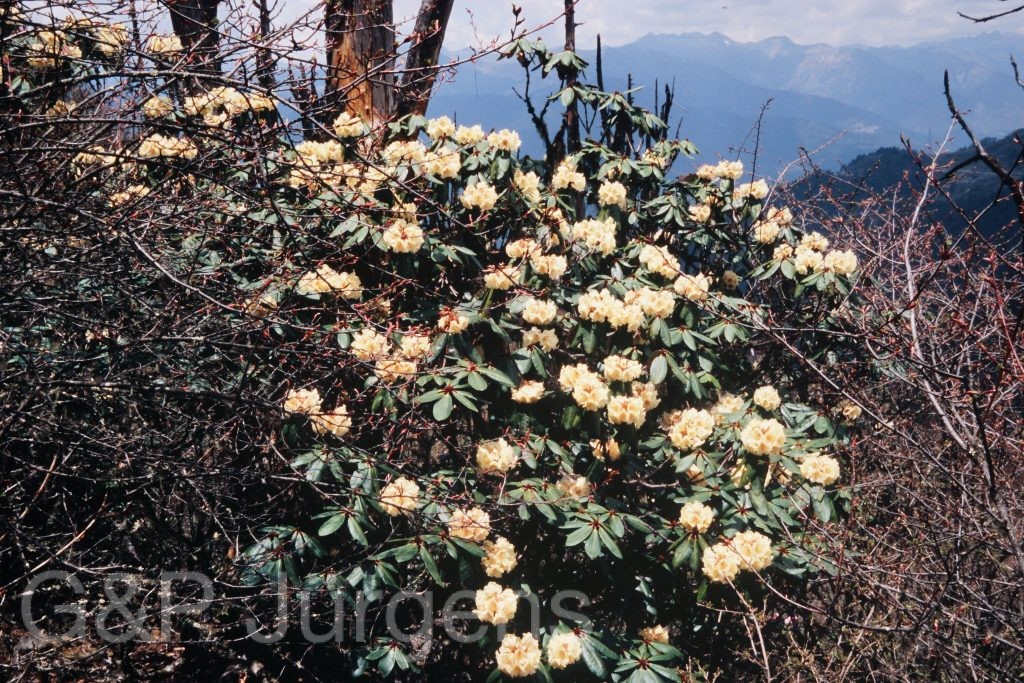
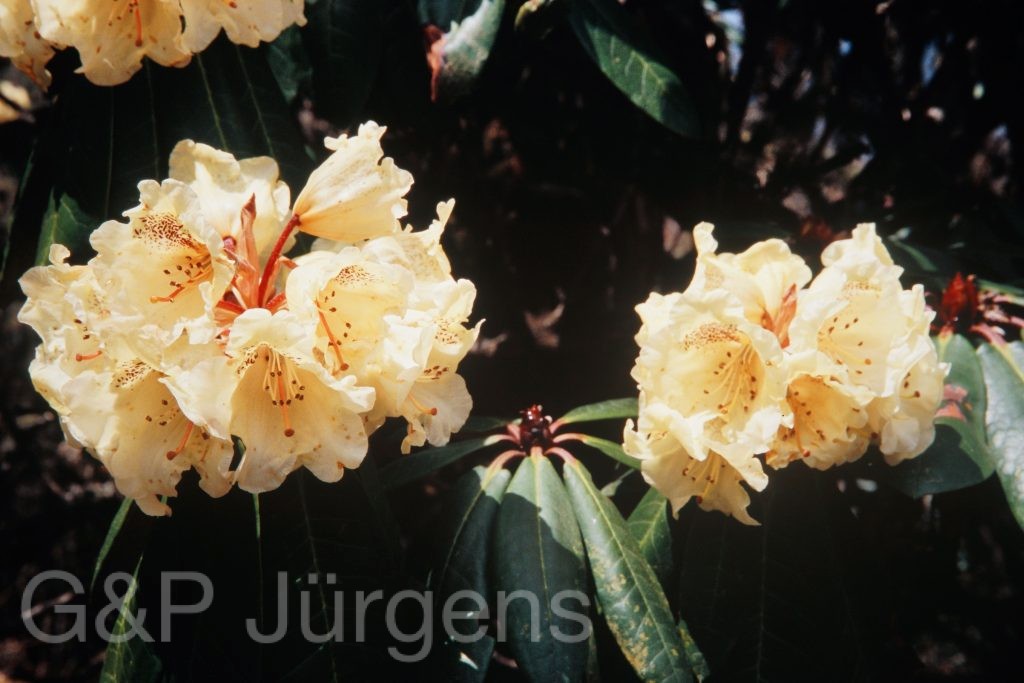
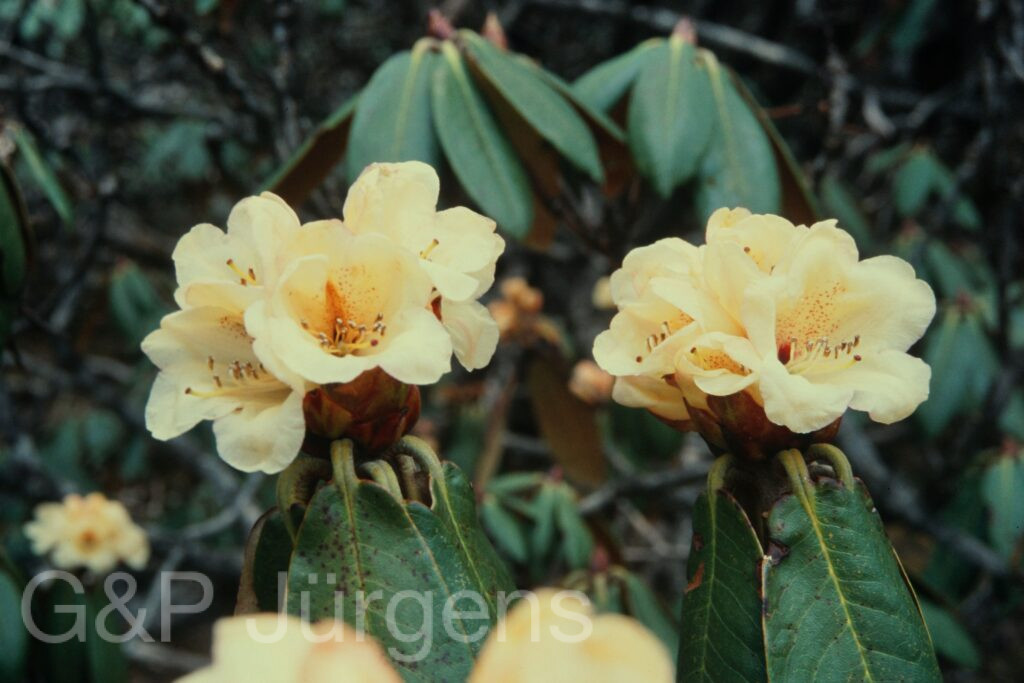
Rhododendron wightii is an Eastern Himalayan shrub or small tree ranging from eastern Nepal through Sikkim and northern West Bengal into Bhutan and adjoining southern Tibet (China), with GBIF recording 251 occurrences over IN, NP, CN and BT alongside cultivated records from Britain and elsewhere. It is a constituent of the upper temperate to subalpine zone, growing in rhododendron thickets, at the forest limit and among open hillsides between about 3300 and 4300 m. The photographed populations span Sikkim (Lada-La 3950 m, June; Singalila 4000 m, May) and Bhutan (Tumching-La 3750 m and Chele-La 3850 m, April), documenting its spring to early-summer flowering.

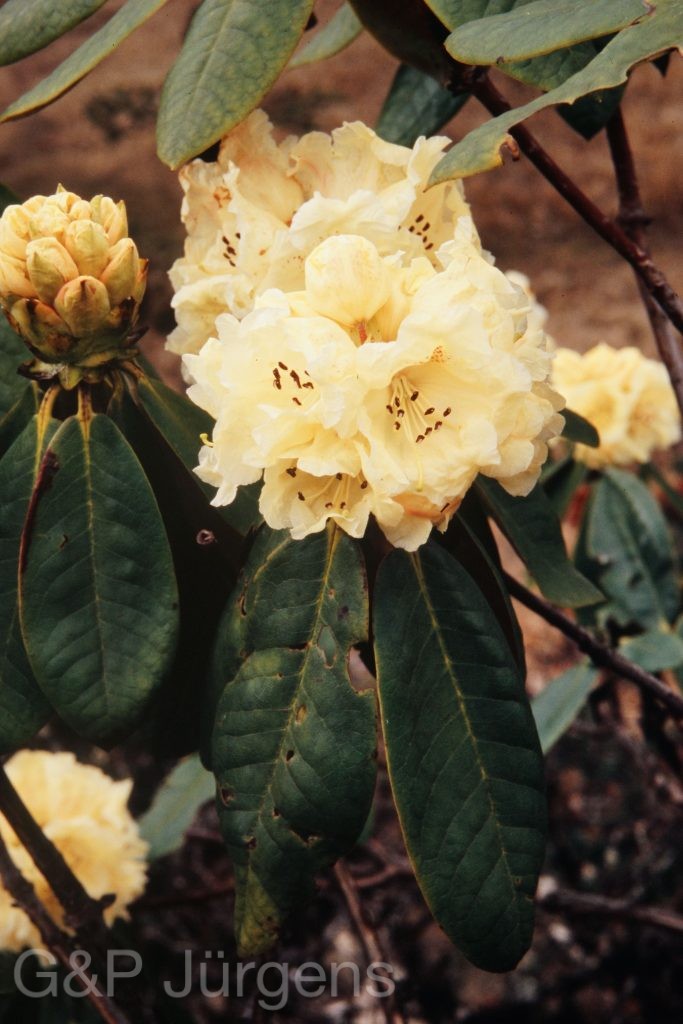
It is an evergreen shrub to small tree with stout branches. The leaves are leathery, elliptic to obovate, dark green and glabrous above, and conspicuously coated beneath with a dense, suede-like, fawn to rust-coloured indumentum of agglutinate hairs that is diagnostic. The flowers are grouped in lax, one-sided terminal trusses; each campanulate corolla is pale yellow to creamy-yellow, often marked with a crimson basal blotch, and has five lobes. The androecium of ten stamens surrounds a superior ovary topped by a long style, and the fruit is a curved, woody, septicidal capsule releasing numerous small seeds.

Within the genus, R. wightii belongs to subgenus Hymenanthes (the elepidote rhododendrons), allied to the Taliensia group and characterised by its yellow flowers and thick leaf indumentum. Named for the botanist Robert Wight, it is valued in horticulture for hardiness and foliage. Its dwarf-rhododendron habitat is locally extensive, but high-altitude shrublands face pressure from grazing, burning and a warming climate.

Author: Hook. f. · Sources: POWO (Kew), GBIF, Flora of Bhutan, The Genus Rhododendron (Cullen & Chamberlain, Edinburgh), Hooker's Rhododendrons of the Sikkim-Himalaya
Harry Sm.

BhutanPG2011 465
Bhutan Jule-Tso, 4300m June

Description

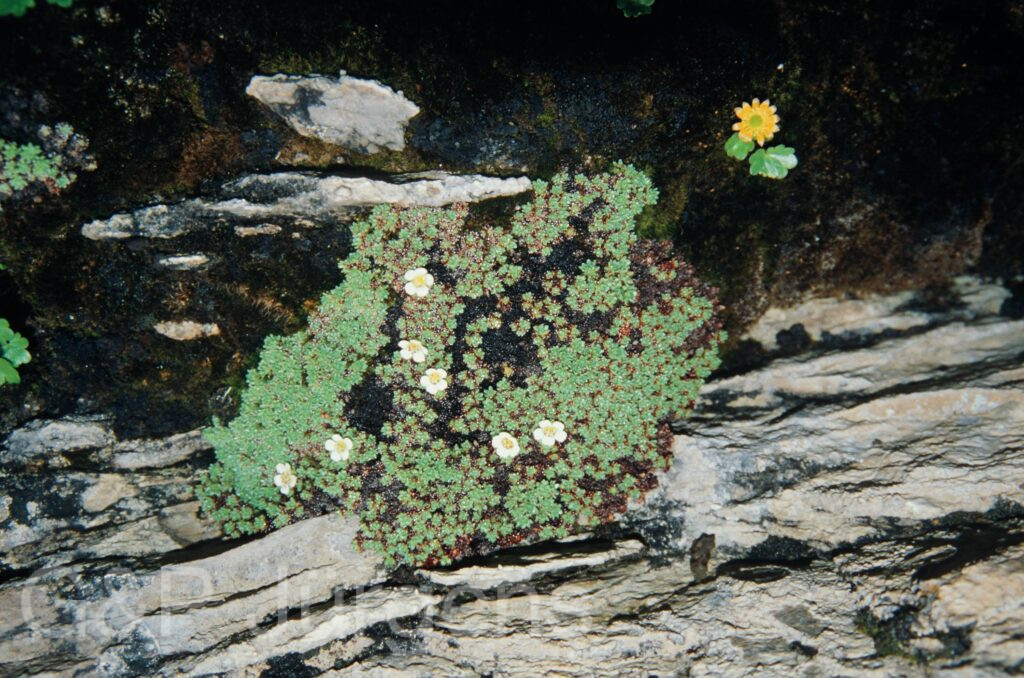
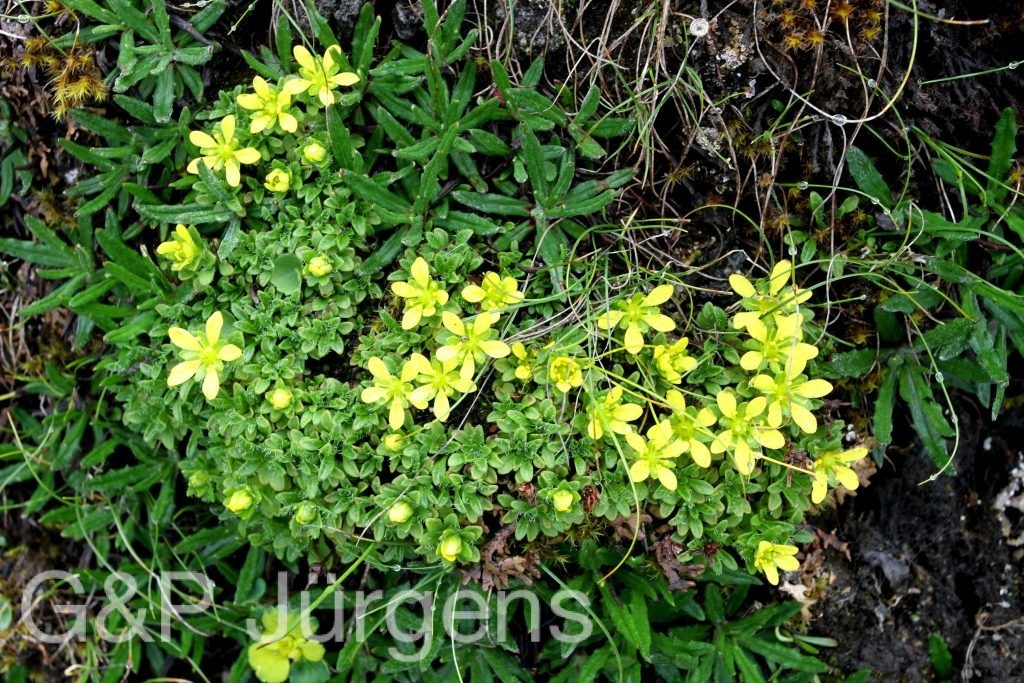
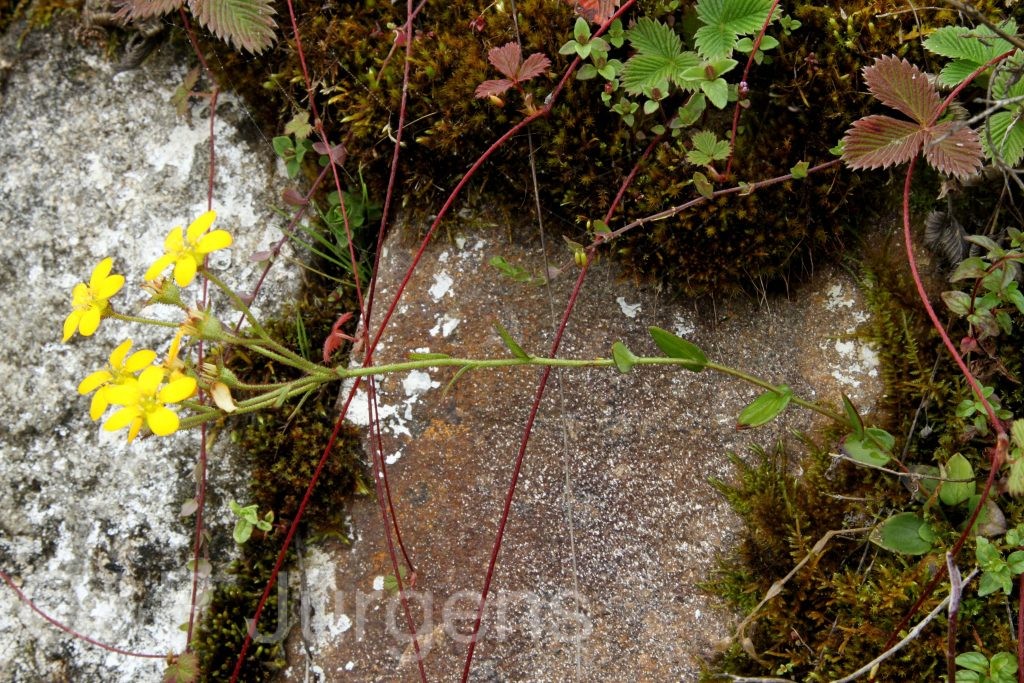
Saxifraga erinacea is a high-alpine cushion saxifrage of the eastern Himalaya, with a narrow distribution recorded by GBIF only from China (south-eastern Tibet) and Bhutan (12 occurrences), pointing to a restricted Sino-Himalayan range. It inhabits open alpine turf, fine scree, rock crevices and moist gravelly slopes well above the treeline, typically between about 4000 and 4800 m. The photographed plant from Jule-Tso in Bhutan at 4300 m, flowering in June, exemplifies its preference for the cold, exposed, snow-influenced alpine zone where it forms low mats among rocks moistened by snowmelt.

The species is a small, tufted to loosely cushion-forming perennial herb, the name erinacea (hedgehog-like) alluding to its bristly, congested habit. The leaves are small, narrowly oblong to linear, often rigid, marginally ciliate or setose and crowded into dense rosettes or low mats. Flowering stems are short, glandular-hairy, bearing one to few flowers held just above the foliage. Each flower is small and pentamerous, with five spreading petals (typically yellow to pale yellow) exceeding the calyx, ten stamens, and a bicarpellate ovary that is more or less superior. The fruit is a two-beaked capsule splitting between the divergent styles to shed numerous minute seeds.

Described by Harry Smith, a leading specialist on Asian Saxifraga, the species belongs within the large and morphologically diverse genus Saxifraga, most likely allied to the yellow-flowered alpine sections of the Sino-Himalaya. Its dense cushion architecture is a classic adaptation to cold, wind-exposed, desiccating high-mountain habitats, conserving heat and moisture. Given its apparently localised range and specialised alpine niche, the species is potentially sensitive to climate warming and upslope habitat compression, though it remains formally unassessed.

Author: Harry Sm. · Sources: POWO (Kew), GBIF, Flora of China, Flora of Bhutan, Saxifrages: The Complete Cultivars and Species (McGregor)

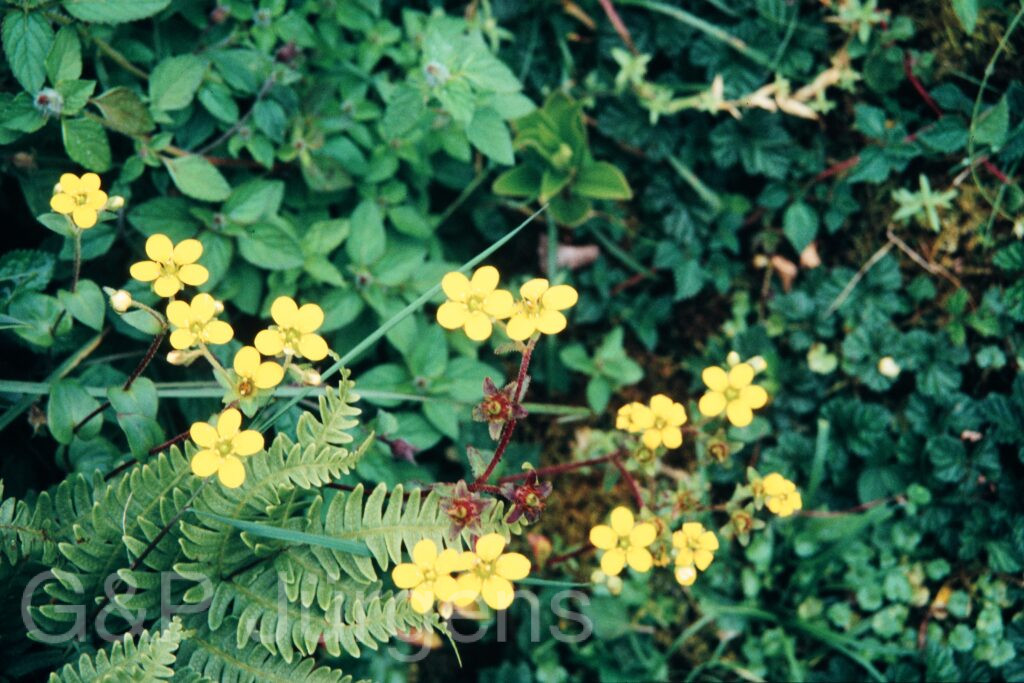
D. Don

Bhutan2012 49
Bhutan Chele-La 3800m, September
Bhutan2015 485
Bhutan Chele-La 3800m, September
Bhutan2015 486
Bhutan, Pele-La 3000m, October
Nepal 95 129 P221 ergebnis
Nepal south of Rupien La 3200m October

Description

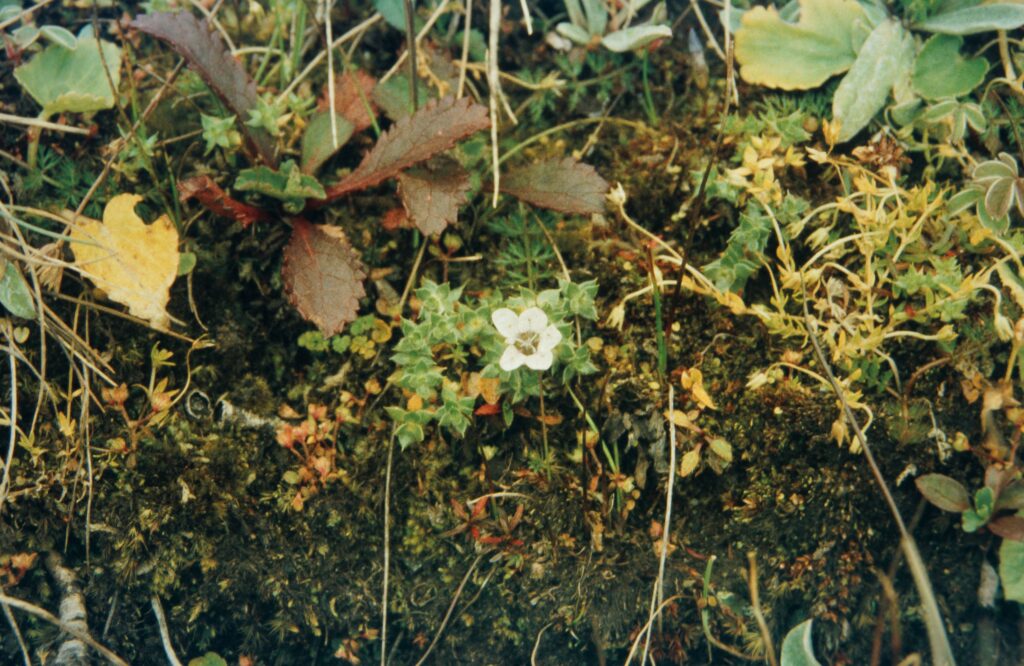
Saxifraga parnassifolia is a Himalayan saxifrage distributed from Nepal through Sikkim and the adjoining Indian hills into Bhutan and southern Tibet (China), with GBIF recording 208 occurrences across NP, CN, IN and BT. It grows on damp rock ledges, mossy banks, cliff faces and shaded humid slopes in the upper temperate to subalpine zone, broadly between about 3000 and 4000 m. The photographed populations were documented in Bhutan at Chele-La (3800 m, September) and Pele-La (3000 m, October) and in Nepal south of the Rupien La (3200 m, October), reflecting a notably late, autumn flowering period for the species.

The plant is a perennial herb forming small tufts from a short rootstock. As the epithet parnassifolia suggests, its basal leaves resemble those of Parnassia: they are ovate to cordate, long-petiolate, entire or slightly toothed, and somewhat fleshy, clustered in a rosette. The flowering stems are erect and bear a lax, few- to several-flowered cyme. Each flower has five free sepals, five spreading white to greenish or pinkish petals, ten stamens, and a half-inferior ovary of two carpels united below and produced into two divergent styles. The fruit is a two-beaked capsule splitting between the styles to release numerous minute seeds.

Within the large genus Saxifraga, the species is placed in section Mesogyne/Cymbalaria allies of the broad-leaved Himalayan rosette saxifrages, distinguished by its Parnassia-like foliage and autumnal anthesis. As a chasmophyte of moist montane rock it indicates humid, sheltered microhabitats. It is locally frequent across its Himalayan range and is not considered threatened, though its cliff and ledge habitats are naturally restricted.

Author: D. Don · Sources: POWO (Kew), GBIF, Flora of Bhutan, Annotated Checklist of the Flowering Plants of Nepal, Flora of China (Saxifragaceae)

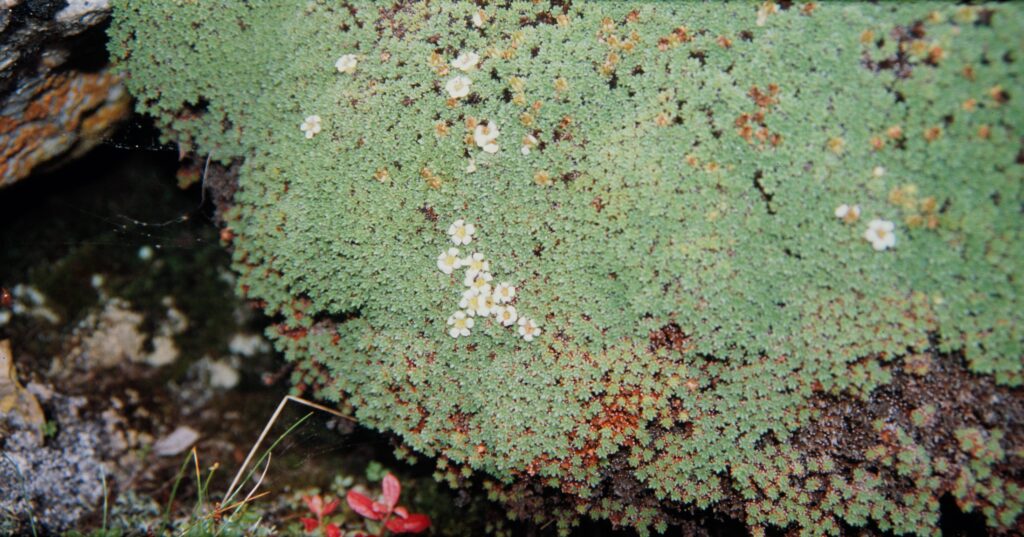
Harry Sm.

Nepal 99 592 ergebnis
West-Nepal, Grabung-Khola, July
Nepal 99 593 ergebnis
West-Nepal, Grabung-Khola, July

Nepal 99 824 ergebnis
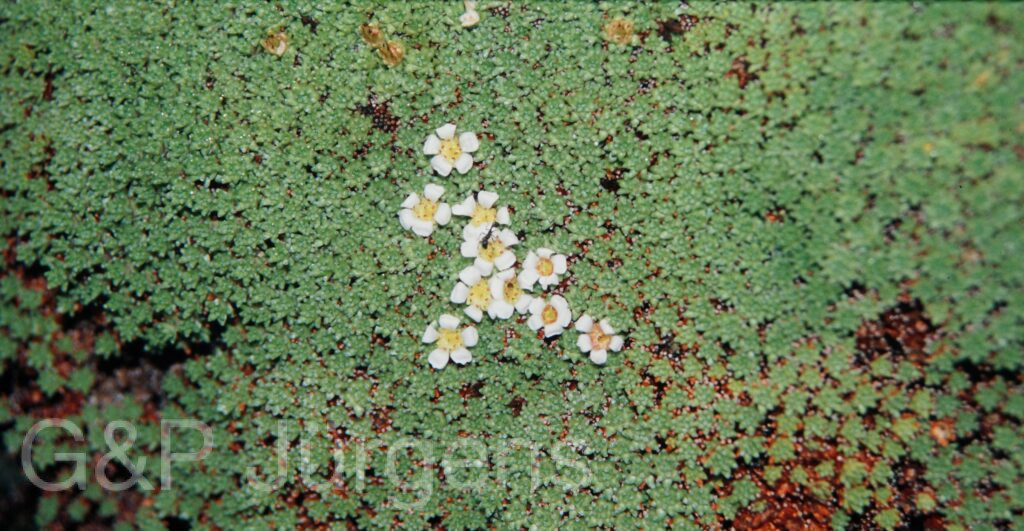
West-Nepal Baga-La-Phedi 4200m, July

Description

Saxifraga pulvinaria is a high-alpine cushion saxifrage of the Himalaya and adjacent Central Asia, recorded from Pakistan, India, Nepal, Bhutan and southern Tibet (China), extending into Tajikistan, Myanmar and the Russian mountains; GBIF holds about 287 occurrences. It is a plant of the upper alpine and subnival zone, colonising stony slopes, moraine, rock crevices and exposed fellfield, as documented in West Nepal at the Grabung-Khola and at Baga-La-Phedi at 4200 m. At these elevations the cushion habit is an adaptation to wind, frost, desiccation and intense radiation, and flowering is restricted to the brief summer window (July) following snowmelt.

It is a perennial forming a dense, compact, hemispherical cushion (the epithet "pulvinaria" denoting this pulvinate growth form) composed of crowded, columnar leaf rosettes. The leaves are minute, sessile, narrowly oblong to spathulate, often somewhat fleshy, imbricate and persistent, frequently bearing chalk-secreting hydathode lime pits along the margin characteristic of the encrusted saxifrages. The flowers are solitary and nearly sessile, set just above the cushion surface; they are small and 5-merous, with white to pinkish or pale yellow petals, ten stamens and a half-inferior to nearly superior ovary of two carpels. The fruit is a small two-beaked capsule releasing numerous minute seeds.

Described by the saxifrage specialist Harry Smith, the species belongs to Saxifraga sect. Porphyrion, the large group of cushion- and crust-forming alpine saxifrages centred on the high mountains of Asia and Europe. The compact cushion architecture buffers internal temperature and humidity and traps wind-blown debris, an ecological strategy shared with many subnival plants. The flowers are pollinated by the few flies and bees active at such heights. Widespread though confined to extreme habitats, the species is not regarded as threatened, but its cold, high-elevation niche makes it a sensitive indicator of alpine climate change.

Author: Harry Sm. · Sources: POWO (Kew), GBIF, Flora of Pakistan, Flora of China, Webb & Gornall's monograph of the Saxifrages

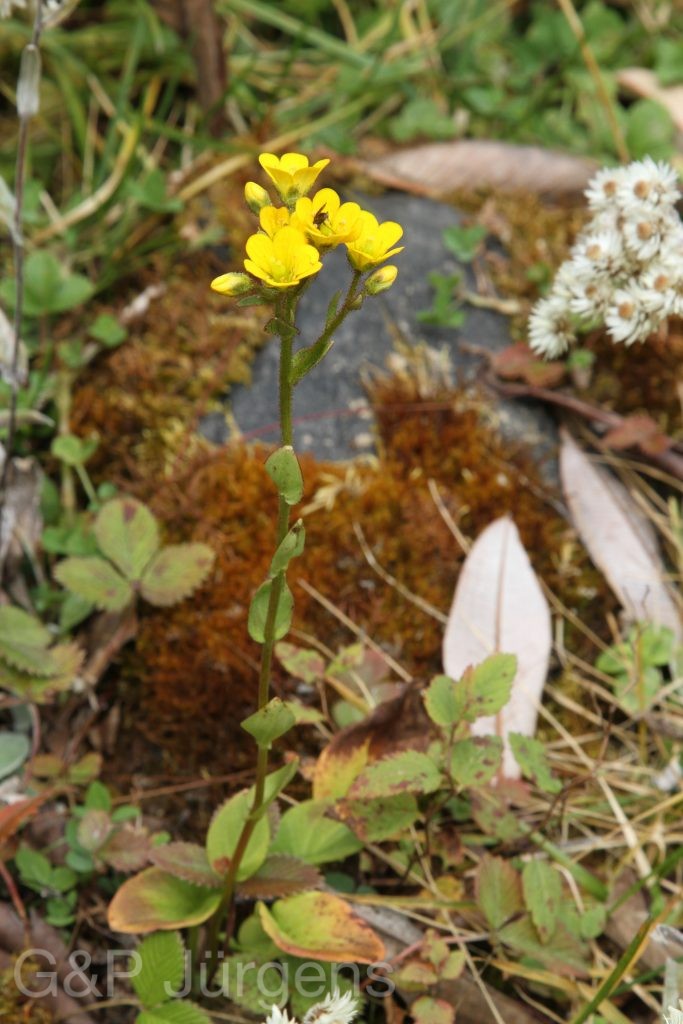
Engl.

Nepal 99 655 ergebnis
West-Nepal Kagmara-La 5000m, July

Description

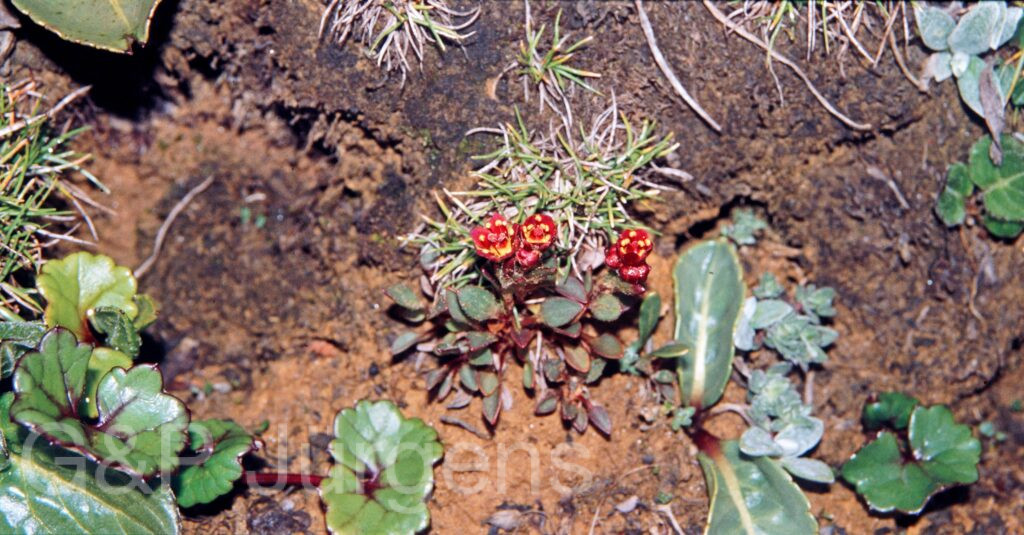
Saxifraga tangutica is a high-alpine saxifrage of the Himalaya and Tibetan plateau, distributed across China, Nepal, India and Bhutan, with GBIF documenting 734 occurrences from these four countries (CN, NP, IN, BT). It is a true alpine, growing on open grassy and stony slopes, gravelly flats, rock ledges, moraines and damp turf, typically between about 3500 and 5300 m, ranking among the highest-ascending flowering plants of the region. The photographed plant from the Kagmara-La in West Nepal at 5000 m in July shows it flowering at the height of the brief alpine summer, on a high pass in the Dolpo region where it endures intense radiation, frost and a very short growing season.

It is a small, tufted, perennial herb forming low rosettes or loose mats, the basal leaves oblong to spathulate, often somewhat fleshy and ciliate or glandular-margined. From the rosettes arise slender, glandular-hairy flowering stems bearing a few small cauline leaves and a terminal cymose cluster of several flowers. Each flower has five reflexed green sepals, five yellow petals frequently dotted with orange or reddish glandular spots, ten stamens, and a bicarpellate, partly inferior ovary. The fruit is a two-beaked capsule splitting between the persistent divergent styles to release numerous minute seeds.

The species is referable to Saxifraga section Ciliatae, a large Sino-Himalayan group of yellow-flowered alpine saxifrages centred on the Qinghai-Tibet plateau and the Hengduan ranges, the epithet tangutica alluding to the Tangut (Amdo/northeast Tibet) region. Its compact cushion to rosette habit and glandular indumentum are adaptations to the cold, dry, exposed alpine environment, and the small glandular flowers are visited by flies and other generalist high-altitude insects. Widespread on remote high terrain and not subject to significant pressure, it is of least conservation concern.

Author: Engl. · Sources: POWO (Kew), GBIF, Flora of China Vol. 8, Flora of Bhutan Vol. 1, Flora of Nepal, Saxifrages: A Definitive Guide (Webb & Gornall, and Pan's revision of section Ciliatae)

Sedum amabile

by GP Jürgens

H. Ohba

BhutanPG2011 470
Bhutan Ludlow-Sherriff-Trail Warrtlang-La, 4450m June

Description

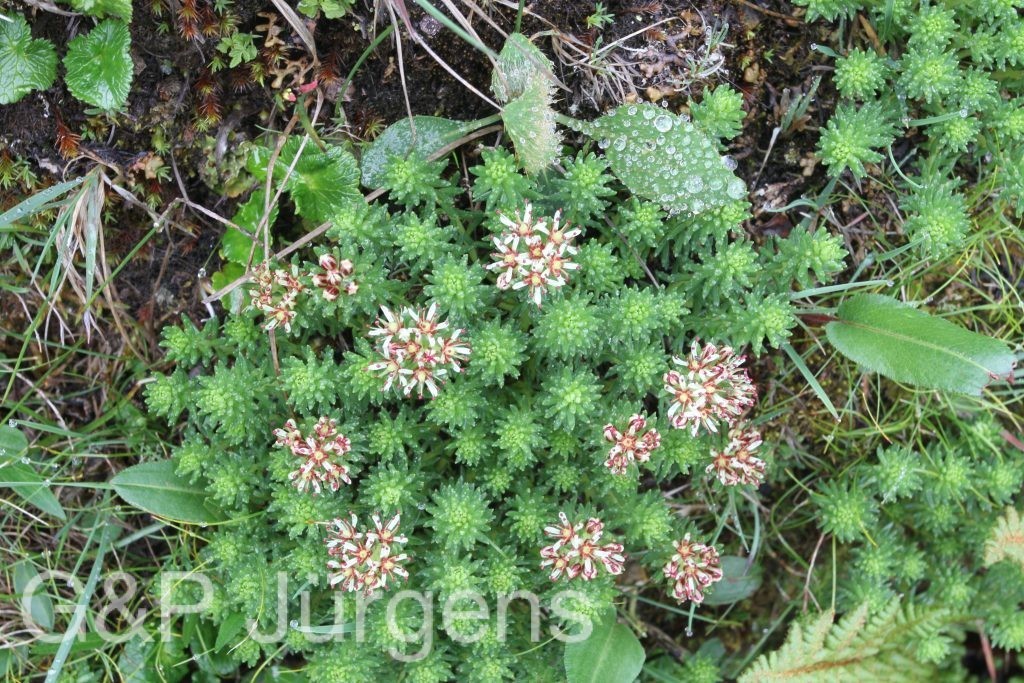
Sedum amabile is a high-alpine succulent of the Eastern Himalaya, recorded principally from Bhutan and the adjacent mountains of Sikkim and southern Tibet (China). GBIF currently holds no georeferenced occurrences and no associated country list for this name, reflecting both its rarity and the unsettled status discussed below. It is a plant of the high alpine zone above about 4000 m, growing among rocks, on stony slopes, moraine and in crevices, as documented along the Ludlow-Sherriff Trail at Warrtlang-La in Bhutan at 4450 m. Like other high-elevation stonecrops it is adapted to a short, cool growing season, flowering in early summer (June) shortly after snowmelt.

It is a small, glabrous, succulent perennial herb forming low tufts from a short rootstock, with fleshy stems bearing crowded, fleshy leaves that are entire, sessile and oblong to obovate. The flowers are borne in a compact, terminal, cymose to corymbose inflorescence; they are typically 5-merous, with free or nearly free petals that in this species are an attractive bright reddish-pink (the epithet "amabile" meaning lovely or pleasing), and twice as many stamens as petals. The carpels are erect and free, maturing into a star-like cluster of small follicles that split along the ventral suture to release numerous minute seeds.

Though catalogued under the genus Sedum, GBIF treats this name as a synonym, with the accepted name given as Sedum amabile; the basionym by H. Ohba and the WordPress link (referencing Rhodiola amabilis) indicate the long-standing taxonomic movement of high-Himalayan succulents between Sedum and the segregate genus Rhodiola, distinguished chiefly by the latter's perennial scaly caudex and frequently dioecious flowers. Such nomenclatural instability is typical of the Sino-Himalayan Crassulaceae. Given its very restricted, high-altitude range and the paucity of records, the species is potentially of conservation concern, although it has not been formally assessed.

Author: H. Ohba · Sources: POWO (Kew), GBIF, Flora of Bhutan, Flora of China, Ohba's monograph of Himalayan Crassulaceae (Sedum and Rhodiola)

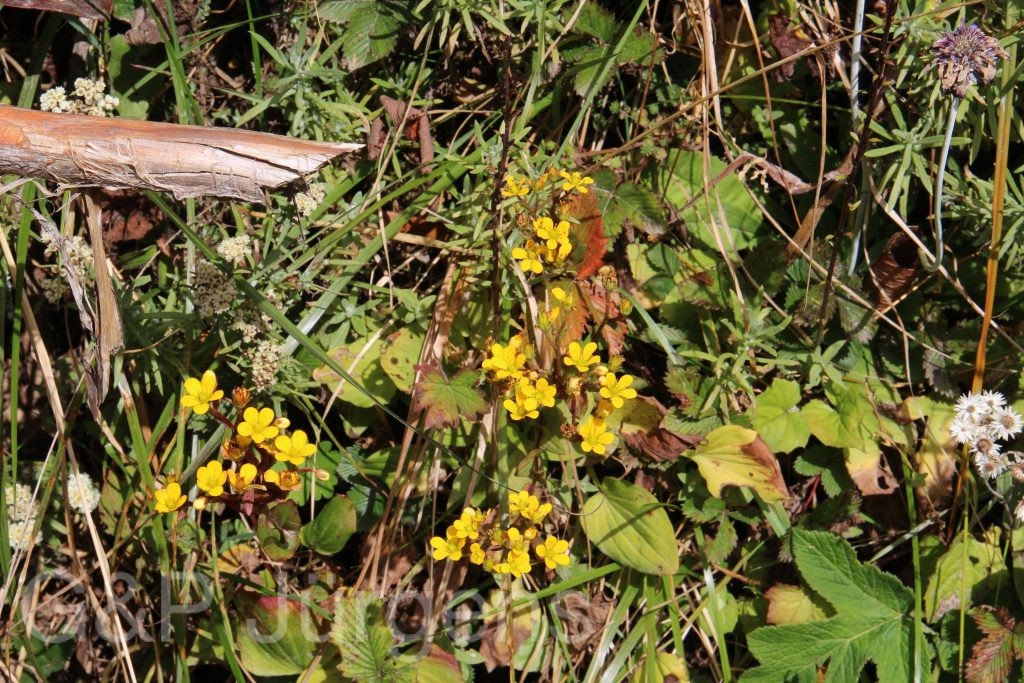
Fröd.

Bhutan2012 148
Bhutan Haarvalley 3500m, October

Description

Sedum correptum is a rare stonecrop with a restricted distribution in the eastern Himalaya, known from Bhutan and adjacent areas of southwestern China (southern Tibet). GBIF records only nine occurrences, indicating the species is infrequently collected and poorly documented. It inhabits rocky ledges, cliff faces, stony ground, and mossy boulders in the upper temperate to subalpine zone, at elevations of approximately 3,000–4,000 m. The photograph from the Haar Valley in Bhutan at 3,500 m, taken in October, captures the species in fruit or late flowering in its characteristic rocky subalpine habitat.
The plant is a perennial succulent herb, 5–15 cm tall, with ascending to decumbent stems arising from a slender rootstock. Leaves are alternate, sessile, fleshy, oblong-elliptic to obovate, 8–15 mm long, entire, glabrous, often tinged reddish-purple especially under high light conditions. The inflorescence is a compact, terminal, corymbose cyme with few to several flowers. Flowers are pentamerous with lanceolate, fleshy sepals and yellow to pale yellow petals, 4–6 mm long, lanceolate to elliptic, acute. Stamens 10, in two whorls. Carpels five, erect, ripening into divergent follicles containing minute, oblong seeds.
Sedum correptum was described by the Swedish botanist Harald Fröderström, who monographed the genus extensively in the early twentieth century. The species belongs to the large and taxonomically difficult genus Sedum, which has undergone significant reclassification in recent decades as molecular phylogenetics have revealed polyphyly in its traditional circumscription. The placement of S. correptum within current infrageneric classifications requires further study. Its limited collection record and restricted range suggest it may be uncommon, though it likely remains undercollected due to the remoteness and inaccessibility of its subalpine habitats in Bhutan and Tibet.

Author: Fröd. · Sources: POWO (Kew), GBIF, Grierson & Long: Flora of Bhutan Vol. 1, Fu & Ohba: Crassulaceae in Flora of China Vol. 8

(Edgew.) Pusalkar & D.K.Singh

Garw 2005 333 ergebnis
India Garhwal Bagubas 4000m, October

Description

Shivparvatia glanduligera is an alpine herb of the Caryophyllaceae distributed across the Himalaya from northern India (Kashmir, Himachal Pradesh, Uttarakhand) through Nepal and Bhutan to southwestern China (Tibet). GBIF records 256 occurrences, making it one of the more frequently collected high-altitude caryophylls in the region. The species inhabits alpine meadows, moist scree, rocky slopes, and gravel flats at elevations of 3,500–5,200 m. The photograph from Bagubas in the Garhwal Himalaya at 4,000 m, taken in October, shows the species in the western part of its range during its late-season flowering.
The plant is a low, tufted perennial herb, 3–12 cm tall, with ascending stems that are characteristically glandular-pubescent throughout — the feature referenced in the epithet glanduligera. Leaves are opposite, linear-lanceolate to narrowly elliptic, 5–15 mm long, acute, with glandular hairs on both surfaces and margins. Flowers are solitary or in few-flowered terminal cymes. Sepals five, ovate-lanceolate, glandular-hairy, 3–5 mm long. Petals five, white, obovate, slightly exceeding the sepals, entire or shallowly emarginate at the apex. Stamens 10. Styles three. The capsule is ovoid, dehiscing by six teeth, containing numerous small, reniform, tuberculate seeds.
This species was long placed in Arenaria as A. glanduligera Edgew. before molecular phylogenetic analyses revealed that the traditional genus Arenaria was massively polyphyletic. Pusalkar and D.K. Singh transferred it to the newly erected genus Shivparvatia, named after the Hindu deities Shiva and Parvati in reference to the Himalayan home of these plants. The reclassification reflects a broader reorganisation within Caryophyllaceae tribe Arenarieae based on molecular evidence. The species is ecologically significant as a component of high-alpine plant communities and is not currently assessed as threatened.

Author: (Edgew.) Pusalkar & D.K.Singh · Sources: POWO (Kew), GBIF, Pusalkar & Singh (2015) in Phytotaxa, Flora of China Vol. 6, Naithani: Flora of Chamoli Vol. 1

L.

Nepal 1989 65
Nepal Bhatang 2915m, April
Nepal 99 362 ergebnis
West-Nepal Kalomura 3600m, June

Description

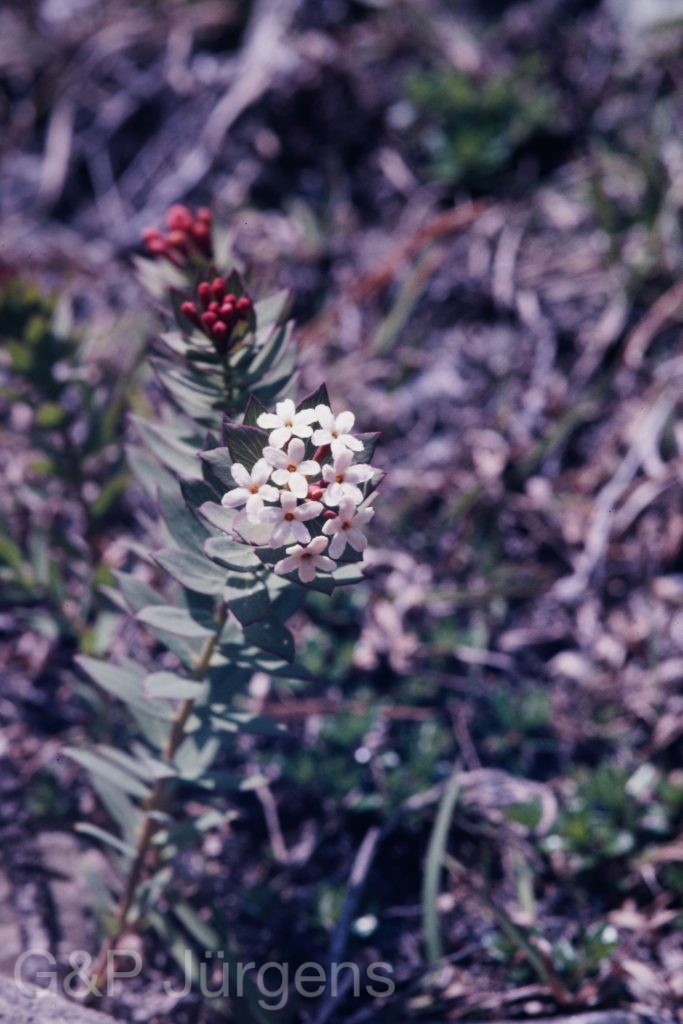
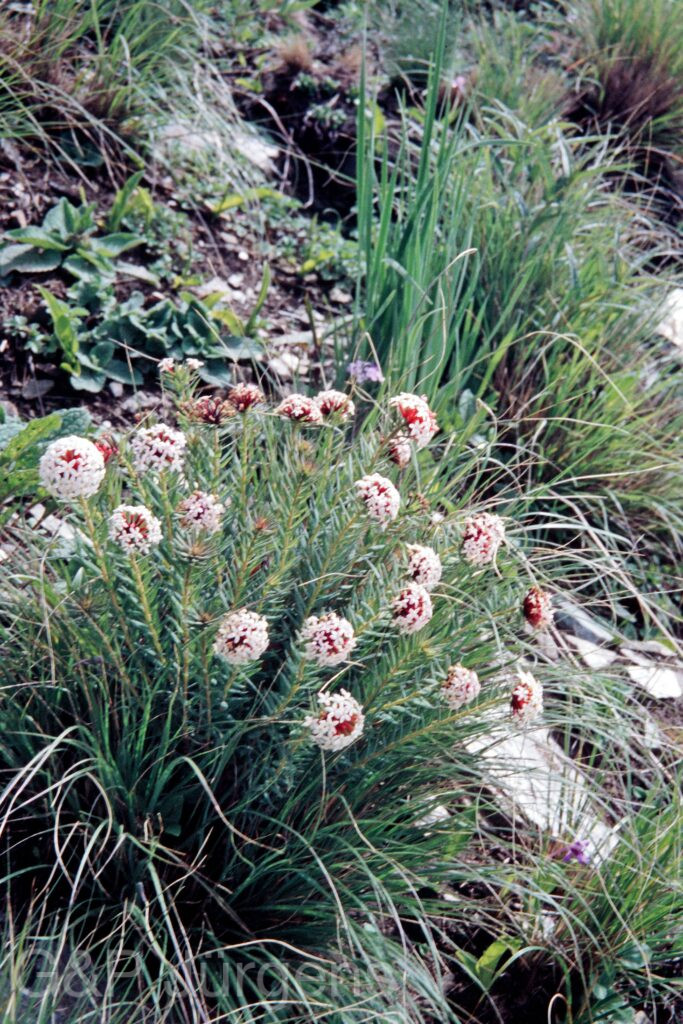
Stellera chamaejasme is a widespread perennial herb of the dry uplands of Central and East Asia, recorded by GBIF from China, Russia, Mongolia, Nepal, India, Bhutan, Kazakhstan, Korea, Iran and Turkey, among others, across some 3,400 georeferenced occurrences. It is characteristic of arid and semi-arid grasslands, alpine and subalpine meadows, sunny rocky slopes and overgrazed pastures on the Tibetan Plateau and throughout the trans-Himalaya, generally between about 2,600 and 4,500 m. The cited Nepalese records, from Bhatang at 2,915 m in April and from Kalomura in West Nepal at 3,600 m in June, span its lower temperate and upper subalpine occurrences and bracket its long spring-to-summer flowering season. It thrives on poor, dry soils where grazing has reduced competing vegetation.

The plant grows from a thick, woody, deep-seated taproot and rootstock, producing numerous erect, slender, unbranched leafy stems in a dense tuft. The leaves are numerous, alternate, crowded, narrowly lanceolate to elliptic, sessile and entire. The flowers are borne in a dense terminal capitate head; each flower lacks petals but has a showy, petaloid, tubular calyx whose five spreading lobes are commonly white above and flushed rose-red to purplish in bud on the outside, producing a striking bicoloured head. There are typically ten stamens in two whorls within the calyx tube, and the fruit is a small dry achene-like nutlet enclosed in the persistent base of the perianth.

Stellera chamaejasme is the best-known species of its genus within Thymelaeaceae and is notorious as a toxic, unpalatable indicator of rangeland degradation; its expansion is regarded across Tibet and Mongolia as a sign of overgrazing, since livestock avoid the poisonous foliage and roots. The plant is rich in bioactive diterpenoids and lignans and has a long history in Tibetan and Chinese traditional medicine, while its tough bast fibres have been used in papermaking. Though abundant and in no way threatened, it is ecologically significant as both a grassland weed and a chemically defended species of considerable pharmacological interest.

Author: L. · Sources: POWO (Kew), GBIF, Flora of China Vol. 13, Flora of Bhutan Vol. 2, Flora of Nepal, Flora of Pakistan, Tan & Wang: revision of Asian Thymelaeaceae and the Stellera complex

Lindl.

Bhutan2012 1024
Bhutan Trithangebe 900m, October
Bhutan2012 1025
Bhutan Trithangebe 900m, October

Description

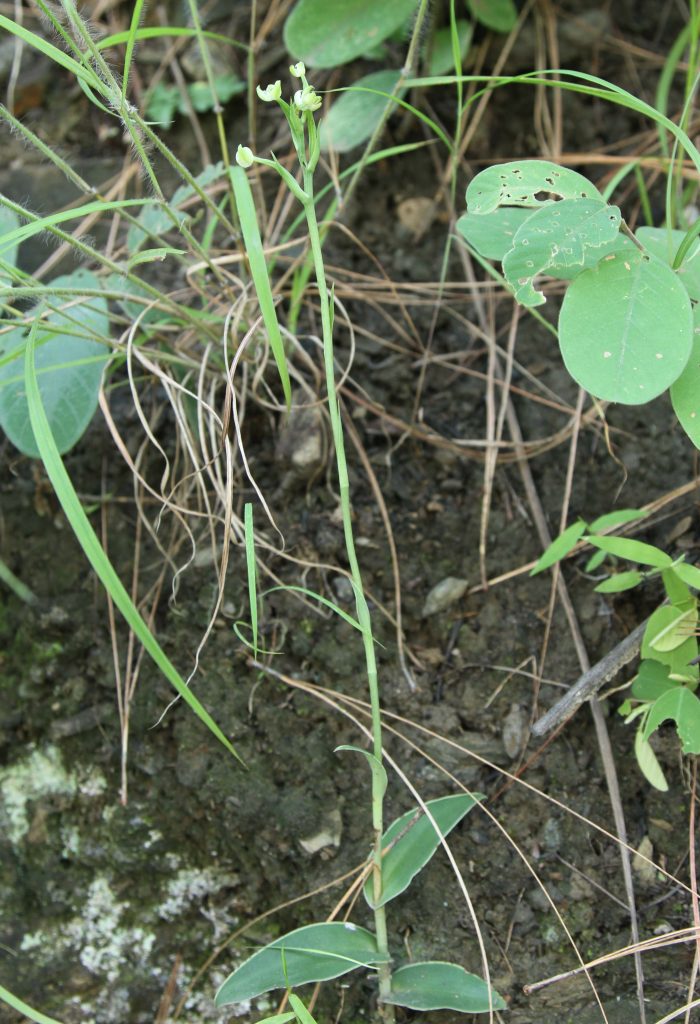
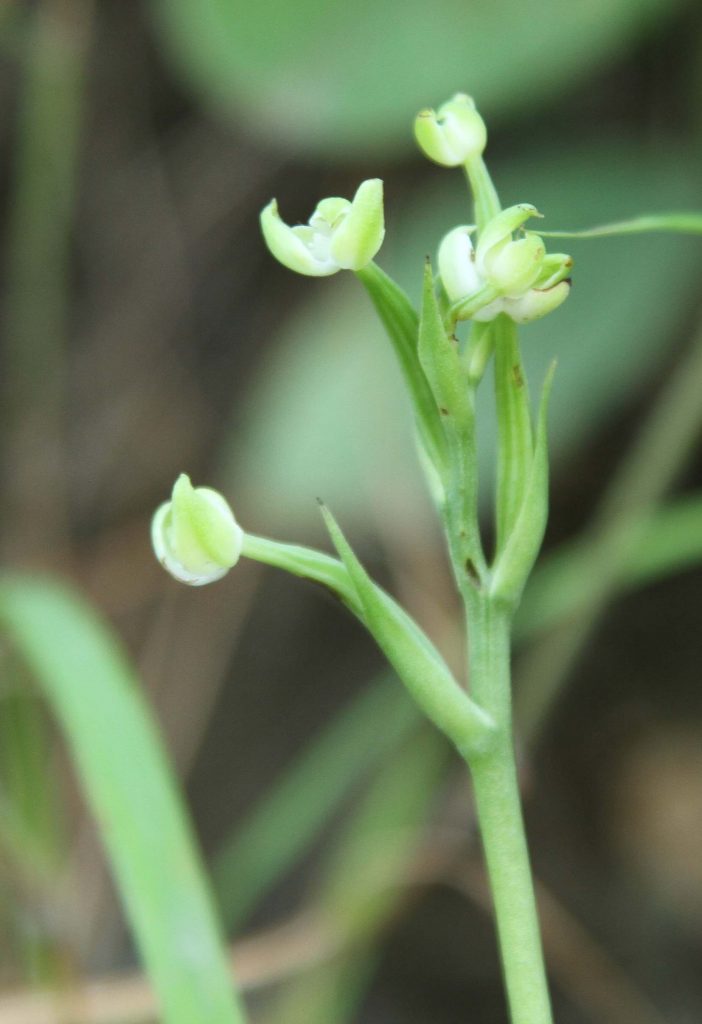
Zeuxine goodyeroides is a terrestrial orchid of shaded forest floors in the eastern Himalaya and adjoining mountains of China (including Yunnan and Tibet), India, Nepal, Bhutan, Myanmar and Sri Lanka, with around 56 documented occurrences indicating a scattered but wide distribution. It grows in leaf litter and humus-rich soils of subtropical to lower-temperate broad-leaved and mixed forest, generally between about 800 and 2000 m. The photographed plant was recorded at Trithangebe in Bhutan at 900 m, flowering in October, when the post-monsoon humidity favours the development of these inconspicuous ground orchids.

The species is a small herb arising from a creeping, fleshy rhizome that roots at the nodes, the erect stem bearing several spirally arranged leaves toward the base. The leaves are ovate-lanceolate, somewhat fleshy, often with a pale midrib, recalling the genus Goodyera to which the epithet alludes. The inflorescence is a slender, pubescent terminal raceme of numerous small, non-resupinate-appearing white to greenish flowers; the sepals are pubescent dorsally, the petals adhere to the dorsal sepal forming a hood, and the diagnostic labellum is saccate at the base with two basal glands and bears a transversely dilated, bilobed epichile. The fruit is a small dehiscent capsule with dust-like seeds.

Zeuxine belongs to subtribe Goodyerinae of the Orchidaceae (here spelled Orchideaceae as supplied), the jewel-orchid alliance, distinguished by the spurless, basally pouched labellum bearing internal glands. Easily overlooked owing to its small stature, it depends like most terrestrial Goodyerinae on mycorrhizal associations in undisturbed forest humus. It is not formally assessed but is sensitive to forest-floor disturbance.

Author: Lindl. · Sources: POWO (Kew), GBIF, Flora of Bhutan, Flora of China, The Genera Orchidacearum (Pridgeon et al.)