Tag:

Tibet

Flowers of Tibet — 70 high-altitude species from the Tibetan plateau and its Himalayan borderlands, adapted to cold, arid and intensely sunlit alpine conditions. The Tibetan flora is distinctive for its cushion plants, saussureas, gentians and alpine poppies. Each entry includes a botanical description, distribution, habitat and flowering season with the original field photograph and altitude.

Franch.

Bhutan2014 469
Bhutan Tongsa 2000m, May
Bhutan2014 586
Bhutan Phobjika 3100m, May

Description

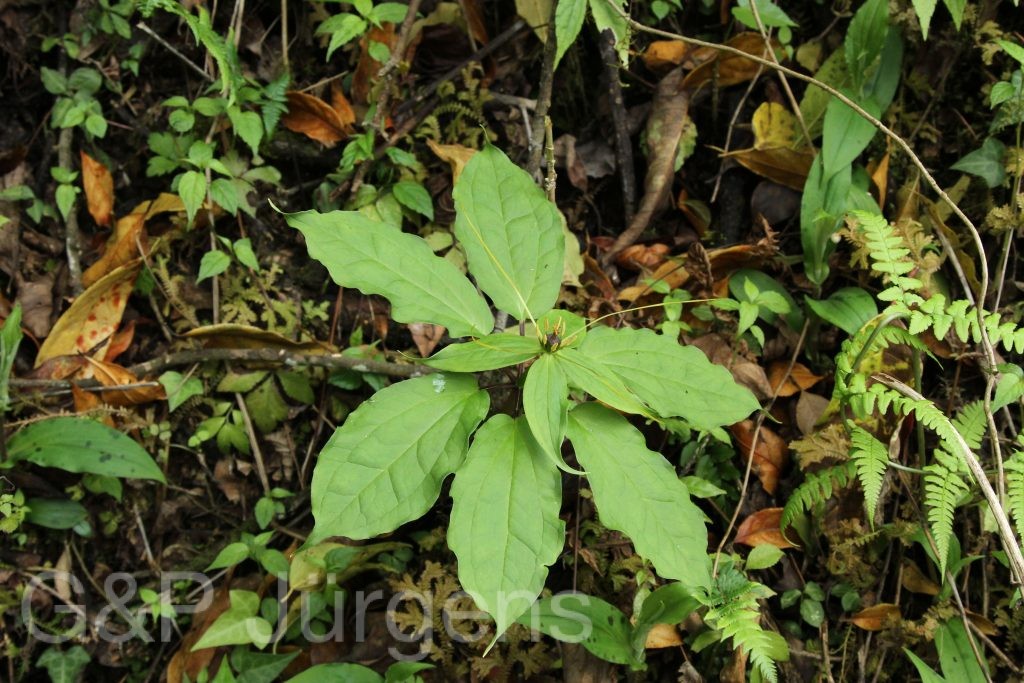
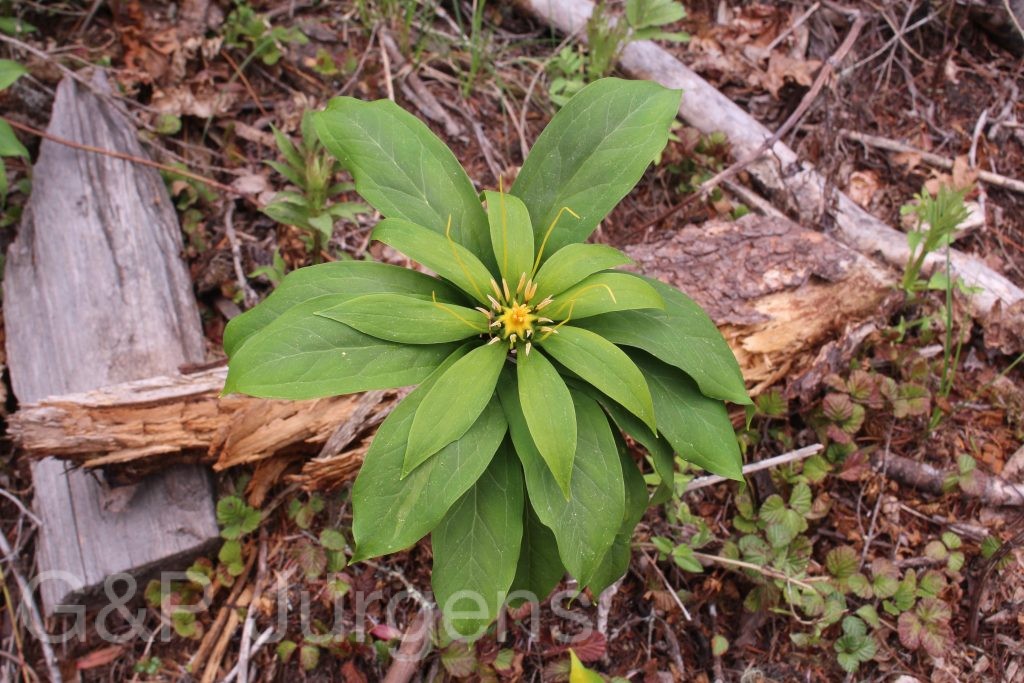
Paris thibetica is a rhizomatous woodland herb of the eastern Himalaya and Sino-Himalayan region, recorded from China, Nepal, India, Bhutan and Myanmar, the Norwegian (NO) datum representing cultivated or herbarium material. Its roughly 281 georeferenced collections concentrate in the temperate forests of the Tibet-Himalaya borderlands. It grows in shaded, moist, humus-rich broadleaved and mixed forest, on banks and in damp ravines beneath the canopy. The photographed plants from Bhutan at Tongsa (2000 m) and Phobjika (3100 m), both in May, demonstrate its broad altitudinal range across the temperate belt and its spring flowering as the rhizome resumes growth after winter.

It is an erect perennial arising from a thick, creeping rhizome that produces a single unbranched stem. At the stem apex is a single whorl of typically four or more leaves, ovate-lanceolate to oblanceolate, with the netted-reticulate venation characteristic of the genus. From the centre of the whorl rises a solitary terminal flower on a slender pedicel. The perianth is in two distinct whorls: the outer of green, leaf-like sepals and the inner of very narrow, filiform to thread-like yellowish-green petals. Numerous stamens with elongate connectives surround a globose ovary crowned by spreading styles. The fruit is a capsule that opens to expose seeds borne in a fleshy, often reddish aril.

The genus Paris (herb-Paris) is placed in the Melanthiaceae (formerly Trilliaceae) and is centred on the temperate Sino-Himalayan mountains, where it is taxonomically intricate and much studied. Several species, including members of the Paris polyphylla complex to which P. thibetica is allied, are valued in traditional medicine for their steroidal saponins, exposing wild populations to harvesting pressure. Slow-growing and habitat-specific, herb-Paris species are increasingly of conservation concern owing to forest loss and over-collection.

Author: Franch. · Sources: POWO (Kew), GBIF, Flora of China Vol. 24, Flora of Bhutan Vol. 3, Flora of Nepal, Li's The Genus Paris (Trilliaceae)
Nekr.

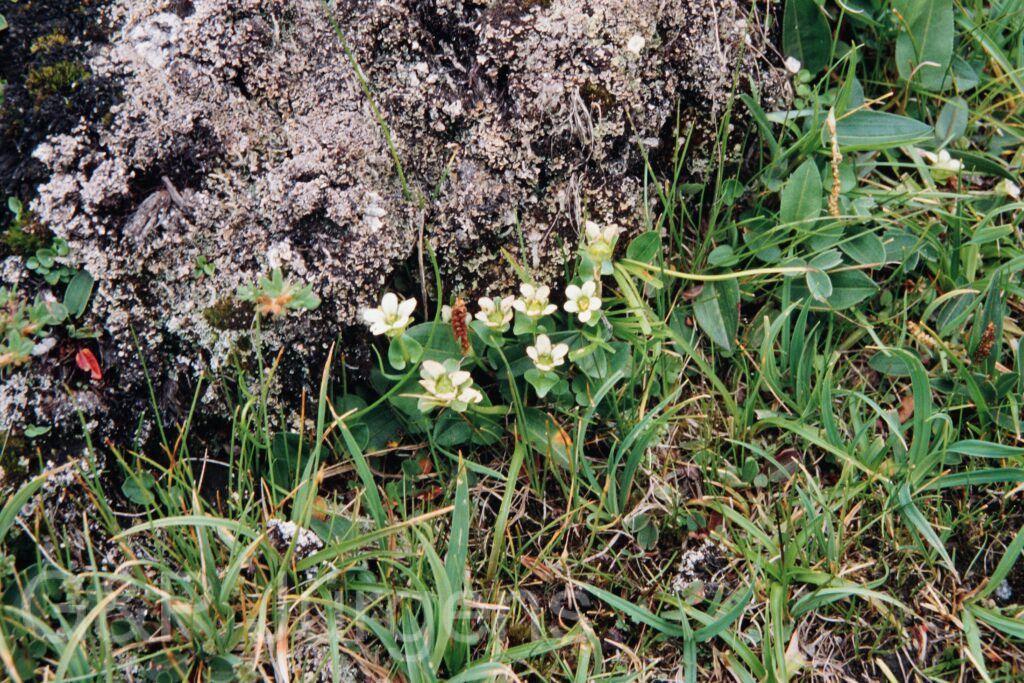
Nepal 99 521 ergebnis
West-Nepal Churta-Khola 3800m, June

Description

Parnassia kumaonica Nekr. is a small alpine herb now placed in the Celastraceae (formerly Parnassiaceae or Saxifragaceae), endemic to the western and central Himalaya and adjacent Tibet. GBIF records, numbering 28 occurrences, place it in Nepal, India and China. The species grows in moist alpine meadows, on seepage slopes, streamsides and damp turf, generally between 3,500 and 4,500 m. The illustrated plant from the Churta-Khola in West Nepal at 3,800 m, in flower in June, typifies its habitat in the cool, well-watered alpine zone where snowmelt sustains the marshy ground it requires.

The plant forms a compact, glabrous perennial arising from a short rootstock, with a basal rosette of long-petioled, ovate to reniform, entire leaves that are somewhat fleshy. Each flowering stem bears a single cauline leaf clasping the stem and is terminated by a solitary, regular flower. The five white petals are conspicuously veined and characteristically fringed or fimbriate at the margins; alternating with the fertile stamens are dissected staminodes bearing gland-tipped processes that function as nectar-mimicking visual lures. The superior ovary develops into a capsule splitting into valves to release numerous small winged seeds.

Parnassia is a taxonomically distinctive genus whose elaborate staminodial nectaries have made it a classic subject of pollination biology, and P. kumaonica fits within the western Himalayan assemblage of the genus, distinguished by petal fringing and staminode morphology. Restricted to high-altitude wetlands, it is a sensitive indicator of intact alpine seepage habitats and, like other narrowly distributed Himalayan endemics, is potentially vulnerable to trampling, grazing and the desiccation of alpine springs under a warming climate.

Author: Nekr. · Sources: POWO (Kew), GBIF, Flora of China Vol. 8, Flora of Nepal, Annotated Checklist of the Flowering Plants of Nepal, Ku: Revision of Parnassia

W.W.Sm.

Bh09 155 G277
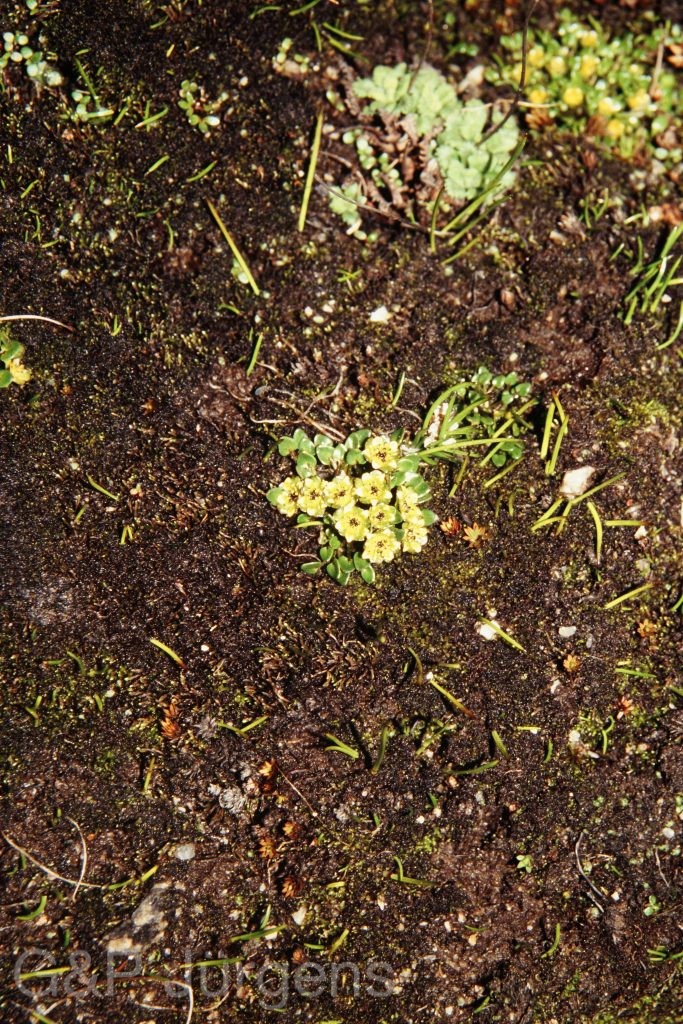
Bhutan Jimilangtso, 4100m June

Description

Paroxygraphis sikkimensis is a rare alpine member of the buttercup family endemic to the Eastern Himalaya, recorded from Nepal, Sikkim and adjacent India, Bhutan and southern Tibet (China), with GBIF documenting only 24 occurrences across NP, IN, BT and CN. It inhabits open alpine turf, moist meadows and damp gravelly slopes near the upper limit of vegetation, generally between about 3800 and 4500 m. The photographed plant was found in Bhutan near Jimilangtso (Jimilang Tsho) at around 4100 m, flowering in June at the start of the brief alpine growing season.

The plant is a small, low perennial herb forming a basal rosette of leaves from a slender rootstock, with short, few-flowered stems. The leaves are simple, spathulate to obovate, entire or shallowly toothed toward the apex, and somewhat fleshy. The flowers are solitary or few, with a calyx of sepals and a corolla of small white to yellowish petals each bearing a basal nectary, surrounding numerous free stamens and an apocarpous gynoecium of many separate carpels. The fruit is a head of achenes, each tipped with a short style, in the manner of the closely allied genus Ranunculus.

Paroxygraphis is a small, segregate genus erected by W.W. Smith and traditionally placed near Oxygraphis and Ranunculus within the Ranunculeae; molecular studies have prompted discussion of its relationships and possible inclusion in a broadly circumscribed Ranunculus. Its very restricted range, low number of recorded occurrences and specialised high-alpine habitat make P. sikkimensis a taxon of biogeographic interest and potential conservation concern, though it has not been formally assessed.

Author: W.W.Sm. · Sources: POWO (Kew), GBIF, Flora of Bhutan, Annotated Checklist of the Flowering Plants of Nepal, Flora of China (Ranunculaceae)

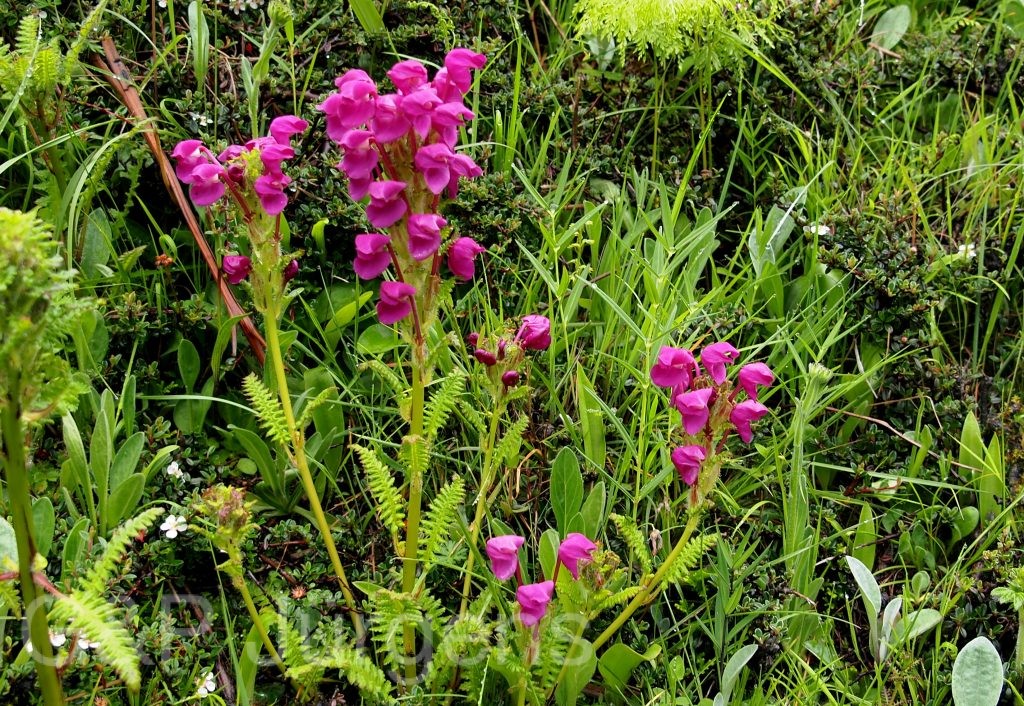
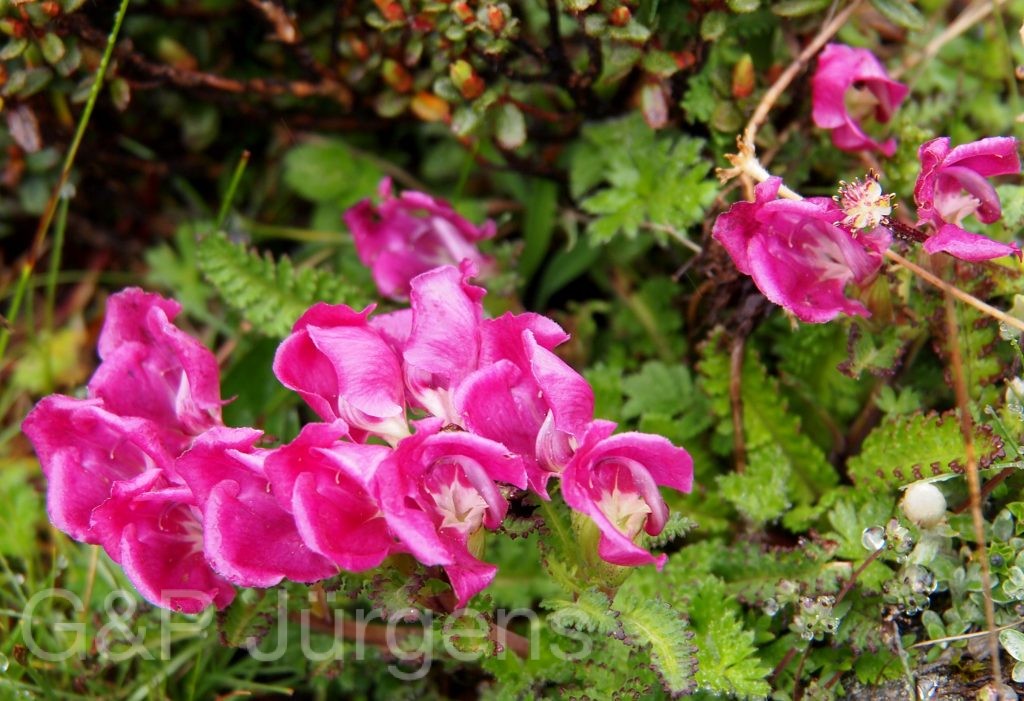
D.Don.

BhutanPG2011 388
Bhutan Dur-Tso-Chu, 3400m June

Description

Pedicularis megalantha D.Don is a hemiparasitic perennial of the central and eastern Himalaya, with some 369 georeferenced GBIF occurrences from Pakistan, Nepal, northern India, Bhutan and adjacent southern Tibet (China). It favours moist subalpine and alpine meadows, open forest margins and damp streamsides, typically between about 2800 and 4200 m. The population photographed at Dur-Tso-Chu in Bhutan at 3400 m in June, beside a glacial-fed valley, is characteristic of the cool, humid summer habitats it favours, where it draws water and nutrients by haustorial attachment to the roots of neighbouring herbs and grasses.

The species forms erect, often unbranched stems 15-40 cm tall arising from a short rhizome and fascicled fleshy roots. The leaves are mostly cauline, oblong-lanceolate and pinnatisect, the lobes serrate to incised-dentate. The inflorescence is a loose terminal raceme of comparatively large, showy flowers; the calyx is tubular and cleft, and the corolla is pink to rose-purple with a strongly bent galea ending in a short slender beak that encloses the anthers, the lower lip broadly three-lobed. Pollination is by long-tongued bumblebees, and the fruit is an asymmetrical, beaked loculicidal capsule with several reticulate seeds.

Pedicularis is among the largest genera of Orobanchaceae and reaches its greatest diversity in the Sino-Himalayan region, where corolla architecture has radiated to match specialised bee pollinators. P. megalantha belongs to the large-flowered, shortly beaked alliance and is a conspicuous member of Himalayan meadow communities. As a root hemiparasite it influences surrounding vegetation and nutrient cycling. Though not assessed as threatened and locally frequent, its dependence on intact moist alpine turf makes it sensitive to overgrazing and to climate-driven shifts in the snow-melt regime.

Author: D.Don. · Sources: POWO (Kew), GBIF, Flora of Bhutan, Flora of China, Annotated Checklist of the Flowering Plants of Nepal, Robert R. Mill revision of Himalayan Pedicularis

H.L.Li

BhutanPG2011 534
Bhutan Ludlow-Sherriff-Trail Dem-Tso, 4650m June

Description

Pedicularis megalochila is a high-alpine lousewort of the Eastern Himalaya, distributed across Bhutan, Sikkim and adjacent India, eastern Nepal and southern Tibet (Xizang) in China, with GBIF logging 62 occurrences over CN, BT, NP and IN. It inhabits open alpine turf, moist meadows, seepage slopes and the margins of glacial tarns at considerable altitude, typically between about 4000 and 4800 m. The photographed plant was recorded in Bhutan along the Ludlow-Sherriff Trail near Dem-Tso at 4650 m, flowering in June, consistent with the brief summer flowering window of high-elevation Pedicularis.

The species is a low perennial herb with a stout rootstock and short, ascending stems. The leaves are largely basal and rosulate, pinnatisect into closely set, toothed segments, with reduced cauline leaves. The flowers are aggregated into a dense terminal head or short spike, each subtended by a leafy bract. As the epithet megalochila implies, the zygomorphic corolla bears a notably large lower lip; the corolla is two-lipped, the upper lip forming a hooded, often beaked galea enclosing the four didynamous stamens, the colour ranging from rose-purple to pink. The calyx is tubular and toothed, and the fruit is an oblique, laterally compressed capsule containing few seeds.

Like all members of Pedicularis (now placed in Orobanchaceae), it is a hemiparasite, attaching by haustoria to the roots of neighbouring alpine plants while retaining green, photosynthetic foliage. The genus is exceptionally diverse and rapidly radiating in the Sino-Himalayan alpine zone, where bumblebee pollination and corolla architecture drive species differentiation. Its remote high-altitude habitat affords natural protection, and no specific conservation threat is currently documented.

Author: H.L.Li · Sources: POWO (Kew), GBIF, Flora of Bhutan, Flora of China (Scrophulariaceae/Orobanchaceae), H.L.Li and Tsoong revisions of Himalayan Pedicularis

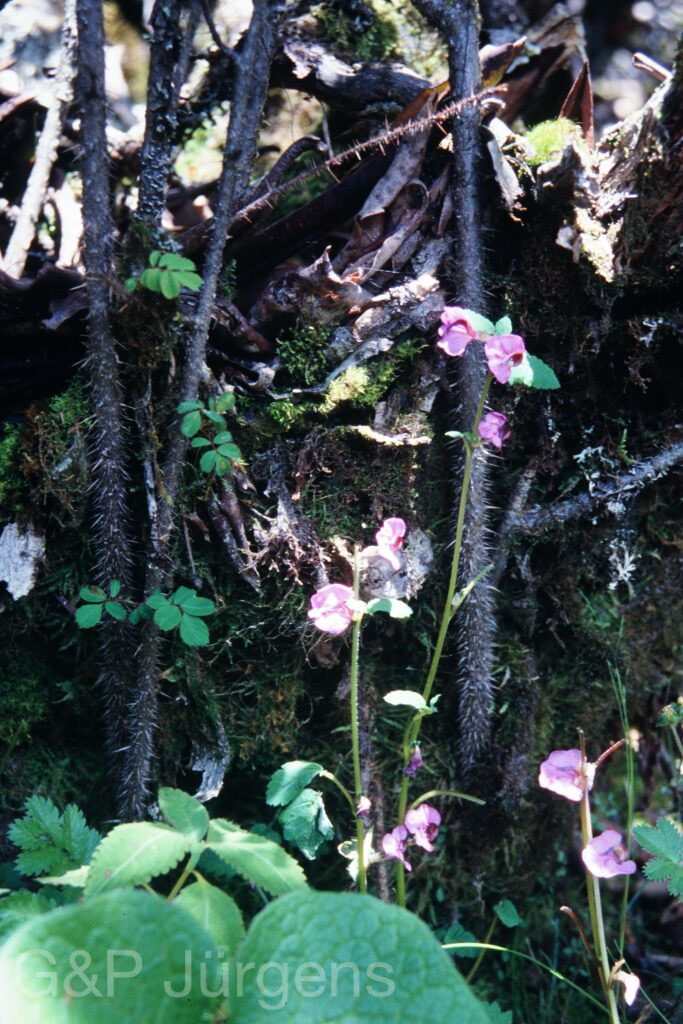
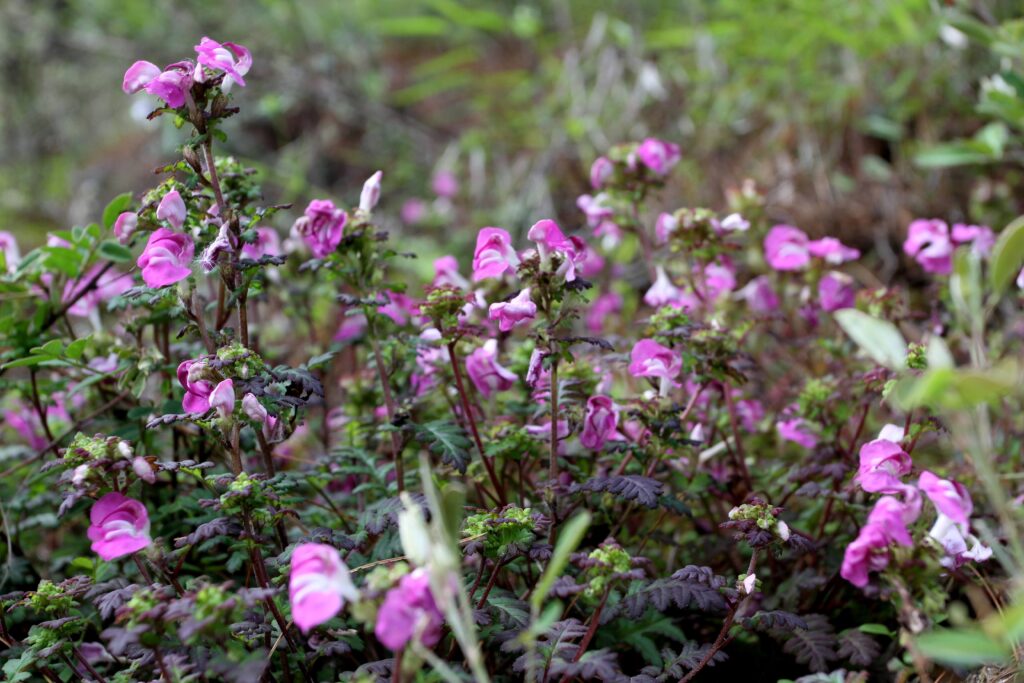
Prain

Sikkim2003 205 P285
Sikkim Dzongri 3900m, August
BhutanPG2011 719 ergebnis
Bhutan Timphu 2490m, July

Description

Pedicularis pantlingii is an alpine hemiparasitic herb of the eastern Himalaya, distributed across India (notably Sikkim), China, Bhutan, Myanmar and Nepal, with the Austrian (AT) record almost certainly representing cultivated or herbarium-derived material rather than a natural occurrence. The roughly 114 georeferenced collections concentrate along the high mountain arc from Sikkim and Bhutan into adjacent south-eastern Tibet. It favours moist alpine meadows, open grassy slopes, streamsides and the margins of rhododendron and dwarf-shrub thickets. As the photographed material from Sikkim's Dzongri at 3900 m in August and from Bhutan near Thimphu at 2490 m in July shows, the species ranges from upper temperate to alpine elevations, flowering through the summer monsoon when these pastures are at their most lush.

Like most members of the genus, it is a semi-parasitic perennial drawing water and nutrients from neighbouring roots via haustoria. The stems arise from a short rootstock and bear leaves that are oblong to lanceolate in outline and pinnatisect, the segments toothed and often crisped at the margin. The flowers are borne in a terminal spike or raceme, each subtended by a leafy bract, with a tubular, toothed calyx. The corolla is strongly two-lipped and characteristically galeate: the hooded upper lip (galea) is frequently prolonged into a slender beak enclosing the four didynamous stamens, while the spreading three-lobed lower lip forms a landing platform for bumblebee pollinators. The fruit is an obliquely ovoid, laterally compressed capsule containing several seeds.

The genus Pedicularis (lousewort) is exceptionally diverse in the Sino-Himalayan region, which forms its global centre of speciation, and the elaborate corolla beaks reflect tight coevolution with long-tongued bumblebees. Commemorating the collector Robert Pantling of the Sikkim botanical surveys, P. pantlingii is a regional endemic of restricted range. Although not formally assessed as threatened, its dependence on intact alpine pasture makes it sensitive to overgrazing and climate-driven upslope shifts of montane vegetation.

Author: Prain · Sources: POWO (Kew), GBIF, Flora of China Vol. 18, Flora of Bhutan Vol. 2, Flora of Nepal, Tsoong's Monograph of the Genus Pedicularis

(DC.) C. Norman

Sikkim2003 247 P340
Sikkim Dzongri 4100m 08.2003

Description

Physospermopsis obtusiuscula is an alpine umbellifer of the eastern and central Himalaya, distributed across China (Tibet and adjacent provinces), Nepal, northern India and Bhutan, the roughly 136 GBIF records tracing this high-mountain arc. It inhabits open alpine meadows, moist grassy slopes, scree margins and the edges of dwarf-rhododendron and juniper scrub, characteristically between about 3500 and 4800 m. The photographed plant from Dzongri in Sikkim at 4100 m in August illustrates its late-summer flowering on a damp, high-alpine pasture, where it grows among cushion plants and short turf.

It is a small to medium perennial herb arising from a slender taproot or short rhizome, with one to few erect, ribbed, sometimes purplish stems. The leaves are mostly basal, with sheathing petioles, the blade ternately to pinnately dissected into narrow, obtuse ultimate segments. The inflorescence is a compound umbel subtended by conspicuous, often leafy bracts and bracteoles; the small flowers bear white to pinkish petals. The fruit is a mericarp pair, ovoid and somewhat laterally compressed, with prominent ribs, the genus name alluding to the inflated or bladder-like fruit character within the Apioideae.

The genus Physospermopsis comprises a small group of high-Asian umbellifers centred on the Himalaya and the Hengduan Mountains, allied to Pleurospermum and segregated chiefly on fruit and vittae characters. P. obtusiuscula, distinguished by its blunt leaf segments, is a typical element of the wet alpine flora at the upper limit of vascular plant growth. It is not formally assessed for conservation but, like other narrowly distributed alpine umbellifers, is potentially sensitive to grazing pressure and climate-driven upslope shifts.

Author: (DC.) C. Norman · Sources: POWO (Kew), GBIF, Flora of China, Flora of Bhutan, Annotated Checklist of the Flowering Plants of Nepal, Umbelliferae of the Himalaya (revision)

Picea smithiana

by G & P Jürgens

(Wall.) Boiss.

Nepal 99 189 ergebnis
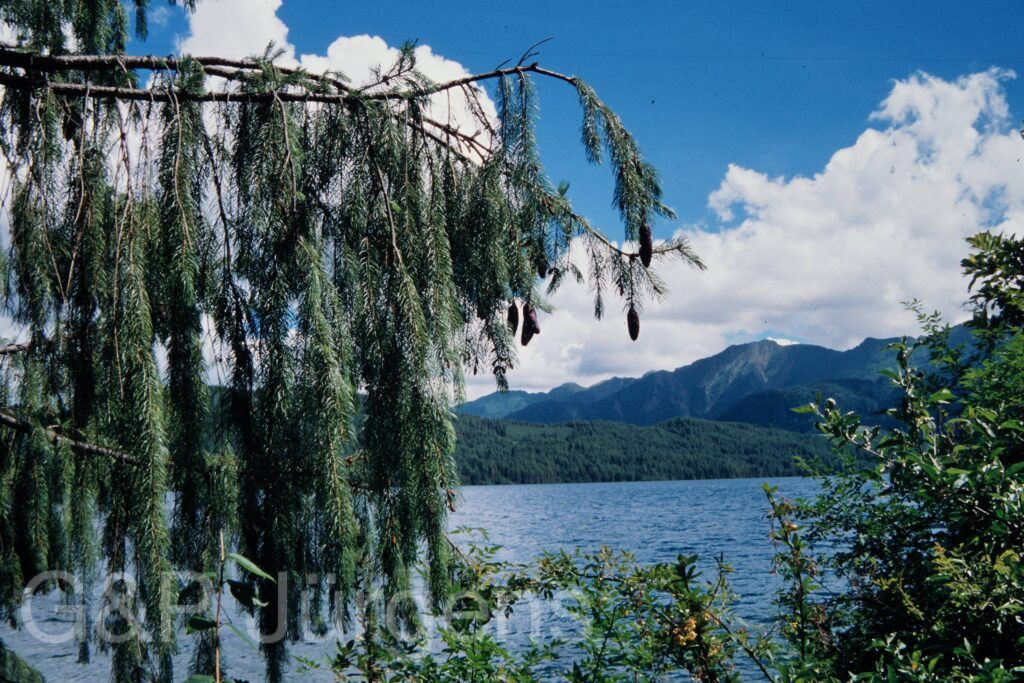
West-Nepal Lara-Lake 3000m, June

Description

Picea smithiana, the West Himalayan or morinda spruce, is a large coniferous tree native to the western and central Himalaya, with a natural range from Afghanistan through northern Pakistan and India to western Nepal and adjacent Tibet (China). The numerous GBIF records outside this core area (United Kingdom, United States, New Zealand, Spain, Italy, Germany, Belgium and others) reflect its long history in arboreta and forestry cultivation rather than natural occurrence. In the wild it forms montane and subalpine coniferous forest, often mixed with Cedrus deodara, Abies pindrow and Pinus wallichiana, typically between about 2,000 and 3,600 m. The plant photographed at Lara Lake in West Nepal at 3,000 m in June lies near the south-eastern limit of its distribution.

The tree is evergreen, reaching 40 m or more, with a straight trunk and conspicuously pendulous branchlets that give it a weeping habit. The leaves are needle-like, quadrangular in cross-section, dark green, among the longest of any spruce at up to 4 cm, borne radially on raised peg-like pulvini. It is monoecious; the pollen cones are small and reddish, while the seed cones are pendulous, cylindrical, 12-18 cm long, green ripening to glossy brown, with smooth-margined, rounded scales. The winged seeds are shed in autumn.

Picea smithiana is the only spruce native to the western Himalaya and is valued for its soft, light timber and as an ornamental. It is assessed as Least Concern globally, though local populations are reduced by logging and grazing pressure. Its weeping, long-needled morphology distinguishes it readily from the eastern Himalayan Picea spinulosa, with which it forms a vicariant pair across the genus's Himalayan distribution.

Author: (Wall.) Boiss. · Sources: POWO (Kew), Flora of China Vol. 4, Flora of Pakistan, GBIF, Farjon: A Handbook of the World's Conifers

Pinus bhutanica

by G & P Jürgens

Grierson, D.G.Long & C.N.Page

Bhutan2015 468
  Bhutan Trongsa 2300m, October
Bh2008 479 P744
Bhutan, Chongsakha 1800m, May

Description

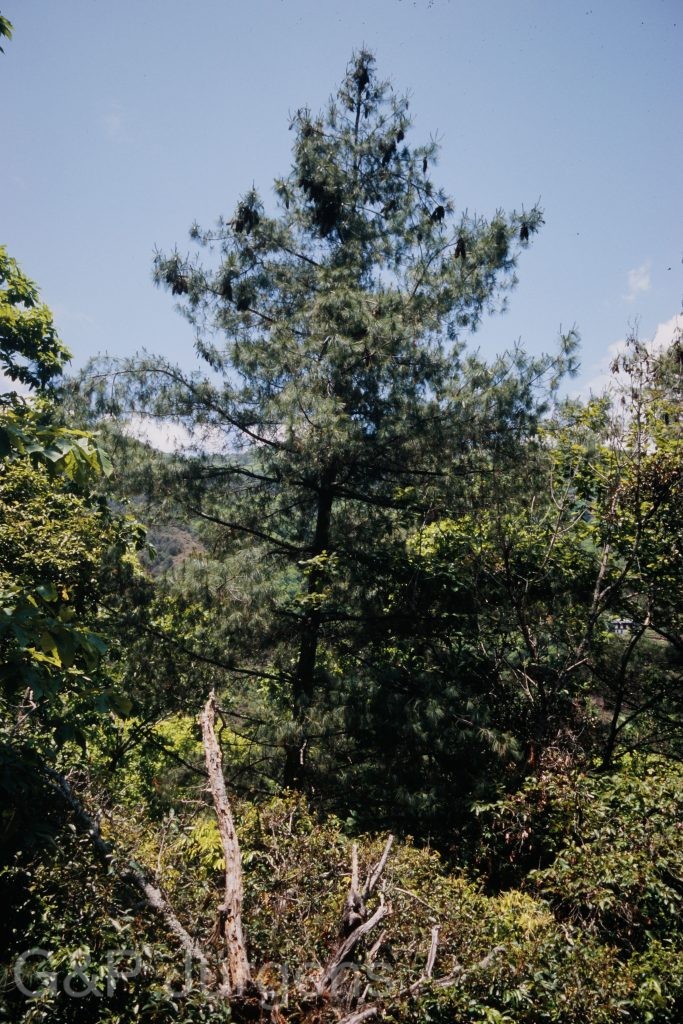
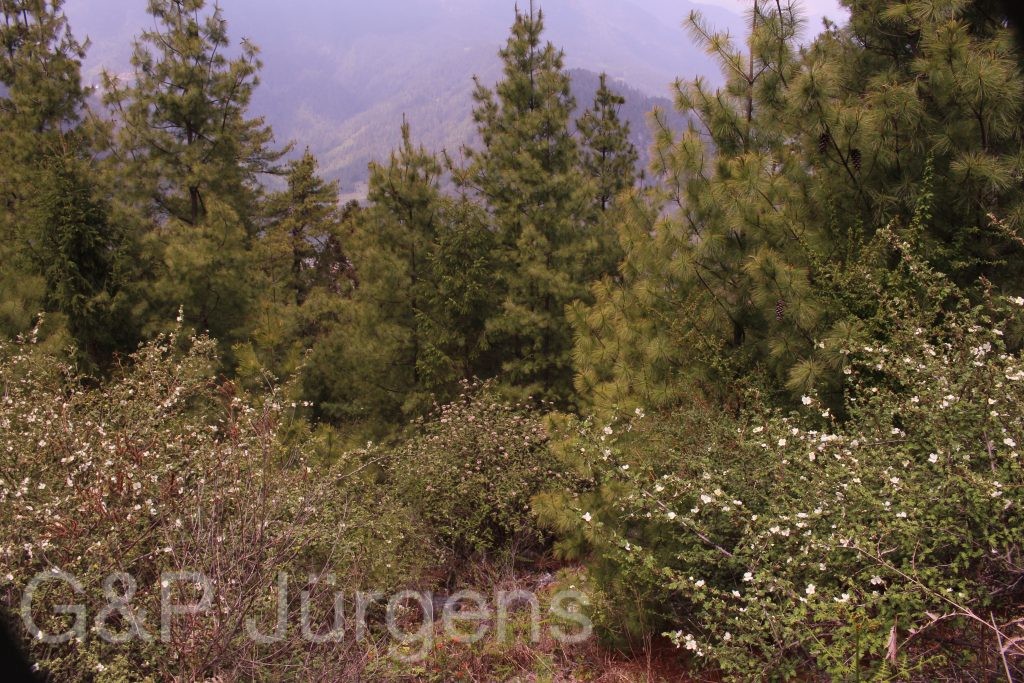
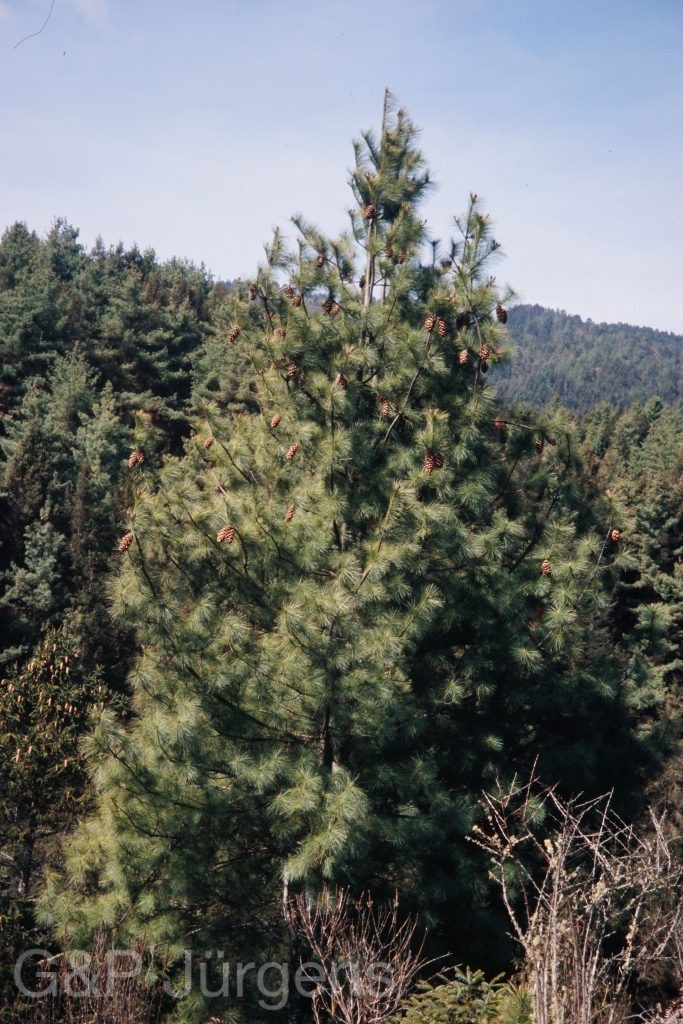
Pinus bhutanica Grierson, D.G.Long & C.N.Page is a five-needled white pine of the eastern Himalaya, restricted to Bhutan, north-eastern India (Arunachal Pradesh) and adjacent south-eastern Tibet (China); GBIF records about 96 occurrences, the few extralimital points reflecting cultivation or database artefacts. It grows in warm-temperate to subtropical montane forest, often on humid, monsoon-exposed slopes, typically between about 1,700 and 2,400 m. Both photographed stands are Bhutanese – Trongsa at 2,300 m in October and Chongsakha at 1,800 m in May – matching its known occurrence in the wet central and eastern Bhutanese hills.

It is an evergreen coniferous tree to 25 m or more, with spreading branches and a somewhat open crown. The needles are borne in fascicles of five, and are notably long, slender and pendulous, drooping gracefully and distinguishing it from the related P. wallichiana. The species is monoecious, with small pollen cones clustered at the base of new shoots and erect young seed cones that mature in the second year. The mature cone is large, cylindrical and resinous, with thin woody scales; the seeds are winged for wind dispersal, borne beneath the cone scales.

Pinus bhutanica was described as recently as 1980 and belongs to subgenus Strobus (the soft or white pines), being closely allied to the widespread Himalayan blue pine P. wallichiana, from which it differs chiefly in its longer, conspicuously drooping needles and more pronounced resin glands. Its narrow eastern Himalayan range makes it of biogeographic interest as a regional endemic of the wetter Bhutan-Arunachal sector; it is assessed by IUCN as Least Concern owing to stable populations within extensive forest.

Author: Grierson, D.G.Long & C.N.Page · Sources: POWO (Kew), GBIF, Flora of Bhutan, Flora of China, IUCN Red List of Threatened Species, Farjon Handbook of the World's Conifers, Grierson Long & Page protologue of Pinus bhutanica

(Wall. ex. D.Don) A.B.Jacks.

Bhutan2014 544
Bhutan, Phobjika 3000m, May
Bhutan2014 961
Bhutan, Haa-valley, 2800m, May
Bh2008 295 P454
Bhutan, Ura 2900m, April

Description

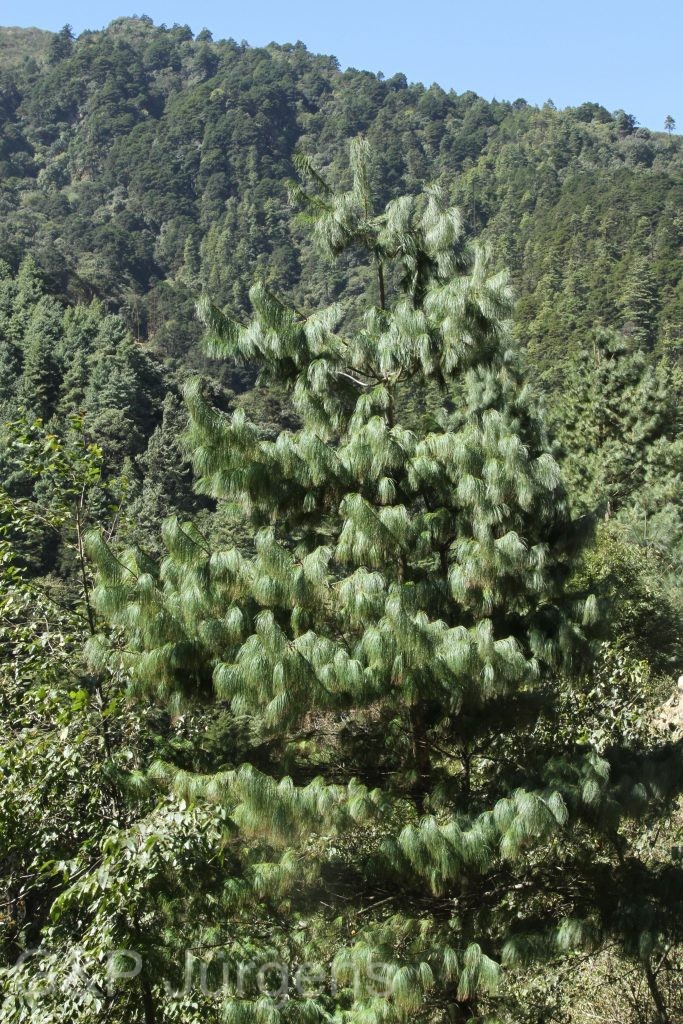
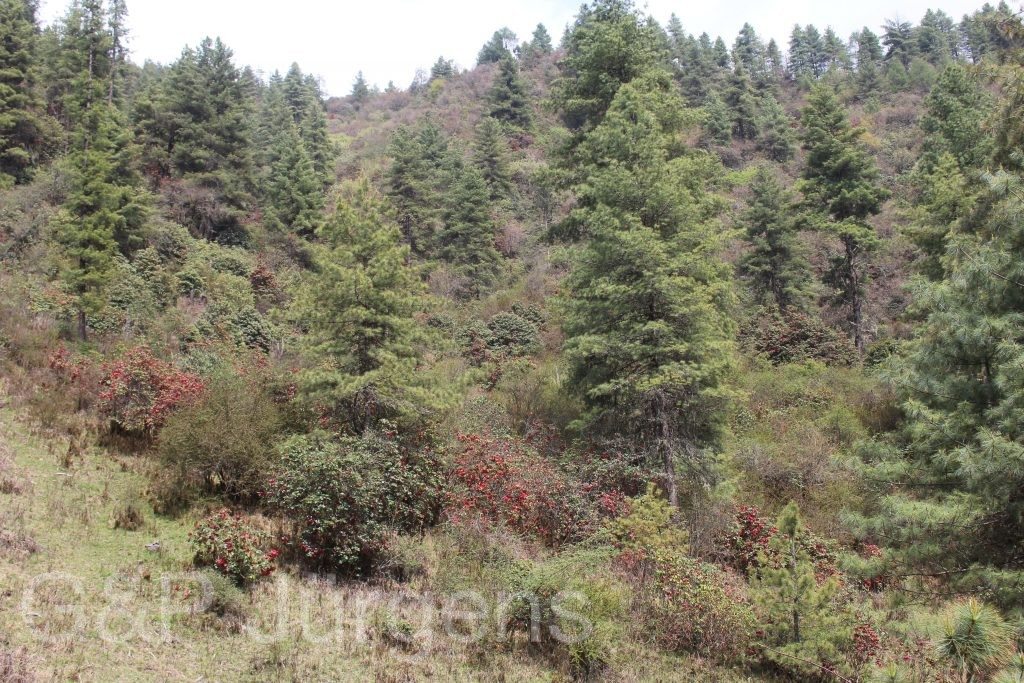
Pinus wallichiana, the Bhutan or blue pine, is a major timber conifer of the Himalaya and Hindu Kush, ranging from Afghanistan and Pakistan through Kashmir, the Indian Himalaya, Nepal and Bhutan to south-eastern Tibet and China. It is among the best-recorded Himalayan trees, GBIF holding over 2400 occurrences, many from cultivation in Europe, North America and Australasia where it is a graceful ornamental. Natively it forms montane forests, often with Picea, Abies and Cedrus, on well-drained slopes between about 1800 and 4000 m. The Bhutanese stands at Phobjikha, the Haa valley and Ura between 2800 and 3000 m exemplify its dominance in the temperate conifer belt.

It is a large evergreen tree to 40 m or more, with a straight trunk, greyish fissured bark and whorled spreading branches forming a broad conical crown. The needle leaves are five per fascicle, slender, soft and drooping, 12 to 20 cm long, glaucous-bluish (whence blue pine) and finely serrulate. It is monoecious: small yellow pollen cones cluster at the base of new shoots, while the seed cones are long-pedunculate, cylindrical and resinous, 15 to 30 cm long and pendent, with broad woody scales spreading at maturity, each fertile scale bearing two winged, wind-dispersed seeds.

A member of Pinus subgenus Strobus (the soft or white pines, section Quinquefoliae), P. wallichiana is allied to P. griffithii and other five-needle pines of eastern Asia and North America, distinguished by its long pendulous cones and drooping foliage. It is important for construction timber, resin and fuel, and ecologically as a pioneer colonising landslides and abandoned terraces. Though widespread and not threatened, it is locally susceptible to blister rust and to over-exploitation near settlements.

Author: (Wall. ex. D.Don) A.B.Jacks. · Sources: POWO (Kew), GBIF, Flora of China Vol. 4, Flora of Bhutan Vol. 1, Flora of Pakistan, Farjon A Handbook of the World's Conifers