Tag:

Tibet

Flowers of Tibet — 70 high-altitude species from the Tibetan plateau and its Himalayan borderlands, adapted to cold, arid and intensely sunlit alpine conditions. The Tibetan flora is distinctive for its cushion plants, saussureas, gentians and alpine poppies. Each entry includes a botanical description, distribution, habitat and flowering season with the original field photograph and altitude.

J.Gay

Bh09 291 P480
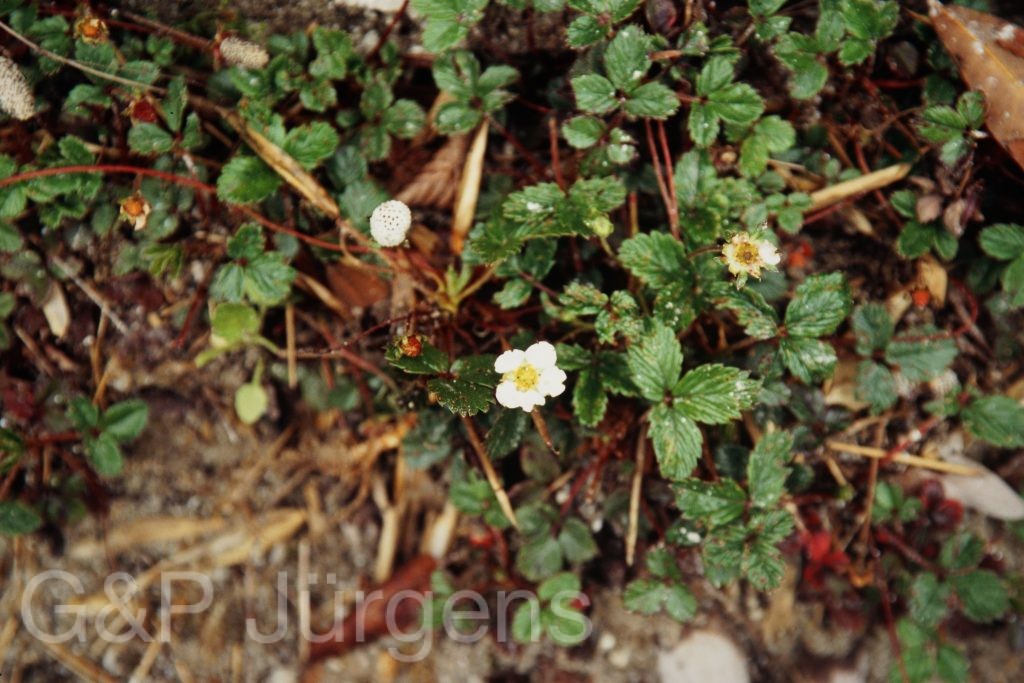
Bhutan Pele-La, 3200m June

Description

Fragaria daltoniana, the Sikkim strawberry, is a Himalayan wild strawberry native to Nepal, India, Bhutan, southern Tibet (China) and northern Myanmar; the additional GBIF country codes (USA, Norway, France, Sweden, Armenia) reflect cultivated material and herbarium holdings rather than wild range, the dataset listing some 181 records. It grows in moist montane forest margins, clearings, mossy banks, grassy slopes and along streamsides, generally between about 2500 and 4000 m. The plant photographed at the Pele-La in Bhutan at around 3200 m in June represents its typical temperate-forest belt habitat.

It is a slender, stoloniferous perennial herb forming open mats by rooting runners. The trifoliolate leaves are long-petiolate, the leaflets thin, obovate and coarsely serrate, sparsely hairy. Solitary or few white flowers are borne on slender pedicels, each with five spreading petals, numerous stamens and an epicalyx alternating with the sepals. The fleshy receptacle ripens into the diagnostic fruit: an elongate, narrowly ovoid to oblong scarlet 'strawberry' bearing numerous achenes superficially on its surface, larger and more cylindrical than in most relatives but reputedly insipid.

Fragaria daltoniana is one of the few strawberries of the Sino-Himalayan region and is notable to horticulturists and breeders as a wild diploid genetic resource within the genus. Its long, narrow red receptacle distinguishes it from the rounder fruits of F. nubicola and F. vesca, with which it can co-occur. The species is not considered threatened, being locally common across a wide range, though it depends on cool, humid forest-edge microhabitats vulnerable to deforestation and to climatic drying at the lower limits of its altitudinal band.

Author: J.Gay · Sources: POWO (Kew), GBIF, Flora of Bhutan, Flora of China, Annotated Checklist of the Flowering Plants of Nepal, Staudt Taxonomic Studies in the Genus Fragaria
Iris clarkei

by GP Jürgens

Baker ex Hook.f.

BhutanPG2011 773 01 01
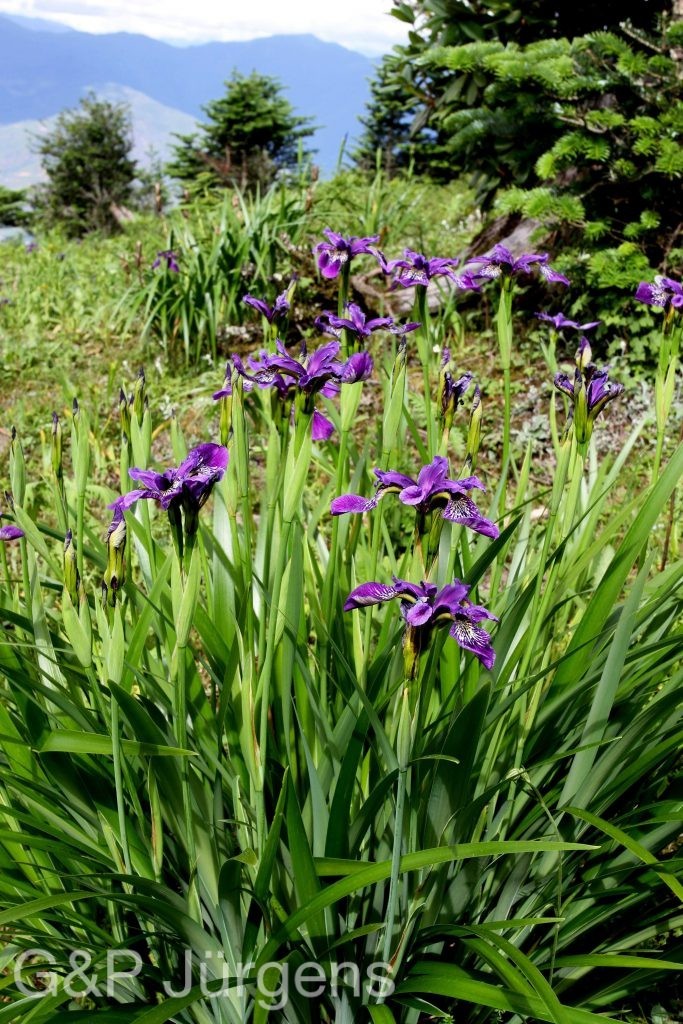
Bhutan Chele-La, 3900m June
Bh09 35 P65
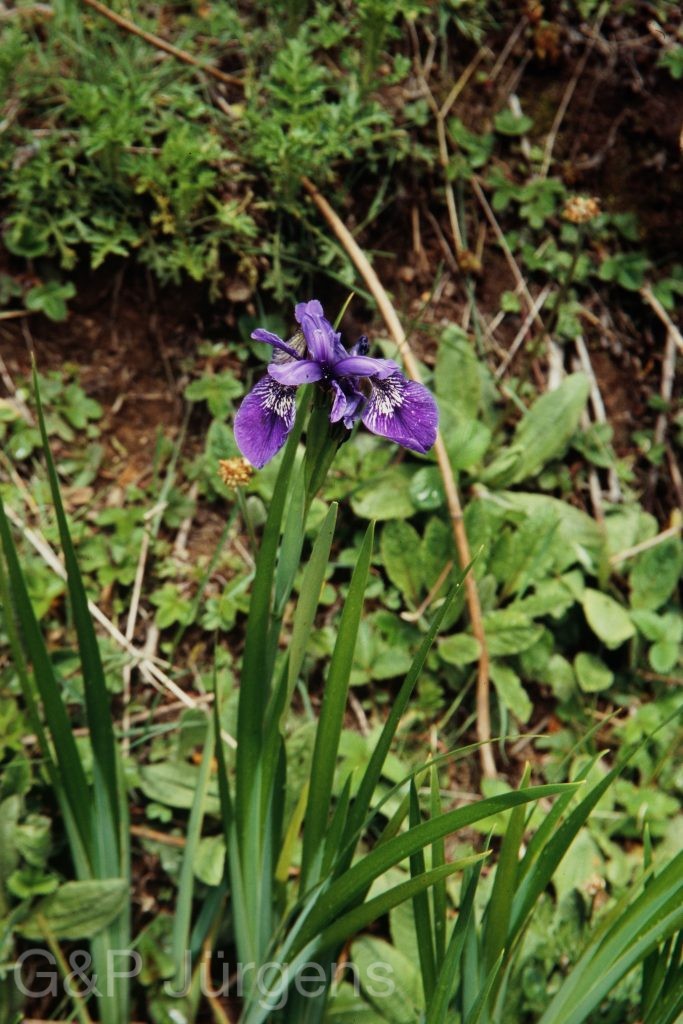
Bhutan Dochu-La, 3000m June
Bh09 206 P346
Bhutan Dochu-La, 3000m June

Description

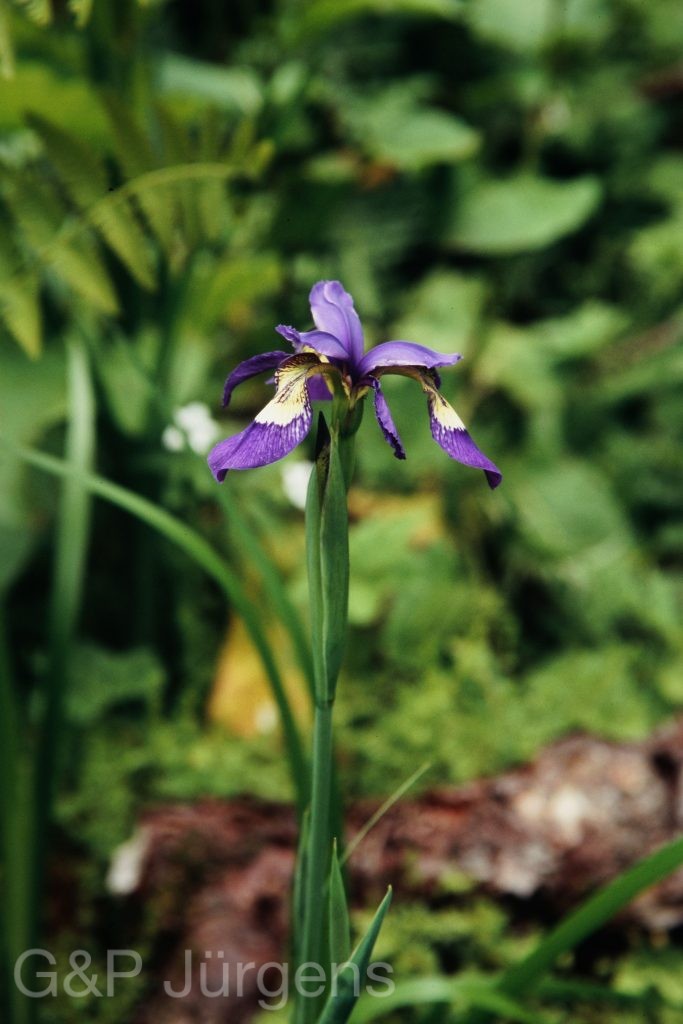
Iris clarkei is an eastern Himalayan beardless iris distributed through Bhutan, Sikkim and northeastern India, Nepal, southern Tibet (China) and northern Myanmar, with GBIF holding about 174 occurrences. It is a subalpine to alpine moisture-lover, recorded here from two Bhutanese passes, Chele-La at 3900 m and Dochu-La at 3000 m, both flowering in June. The species favours wet alpine meadows, marshy hollows, stream sides and seasonally flushed turf on slopes, typically between roughly 3000 and 4300 m, where it forms colonies in the open, moist grassland of the upper temperate and subalpine zones.

It is a tufted rhizomatous perennial of the Sibiricae group, with slender creeping rhizomes producing erect, solid (not hollow) flowering stems that are characteristically branched and bear a distinctive solid pith. The leaves are linear-ensiform, grass-like, ribbed and grouped in basal fans. Each stem carries one to several flowers; the perianth is blue-violet to reddish-purple, the spreading or deflexed falls bearing a paler, conspicuously veined and blotched signal patch, and the standards are smaller and more erect, the flowers beardless and crestless. The fruit is a three-angled loculicidal capsule containing flattened seeds.

Described by Baker (ex Hook.f.) and named for C. B. Clarke, the species belongs to series Sibiricae, the Asian relatives of Iris sibirica, and is of horticultural interest for its solid stems and richly marked falls. Though restricted to specialised wetland habitats, it remains locally common within its range; pressures such as grazing, trampling and drainage of montane mires are the principal local threats to its boggy habitat.

Author: Baker ex Hook.f. · Sources: POWO (Kew), GBIF, Flora of Bhutan, Flora of China, Mathew The Iris, British Iris Society A Guide to Species Irises

(Burkill) Harry Sm.

Bhutan2015 666
Bhutan Chele-La 4000m, October
Bhutan2015 682
Bhutan Chele-La 4000m, October
Bhutan2015 685
Bhutan Chele-La 4000m, October

Description

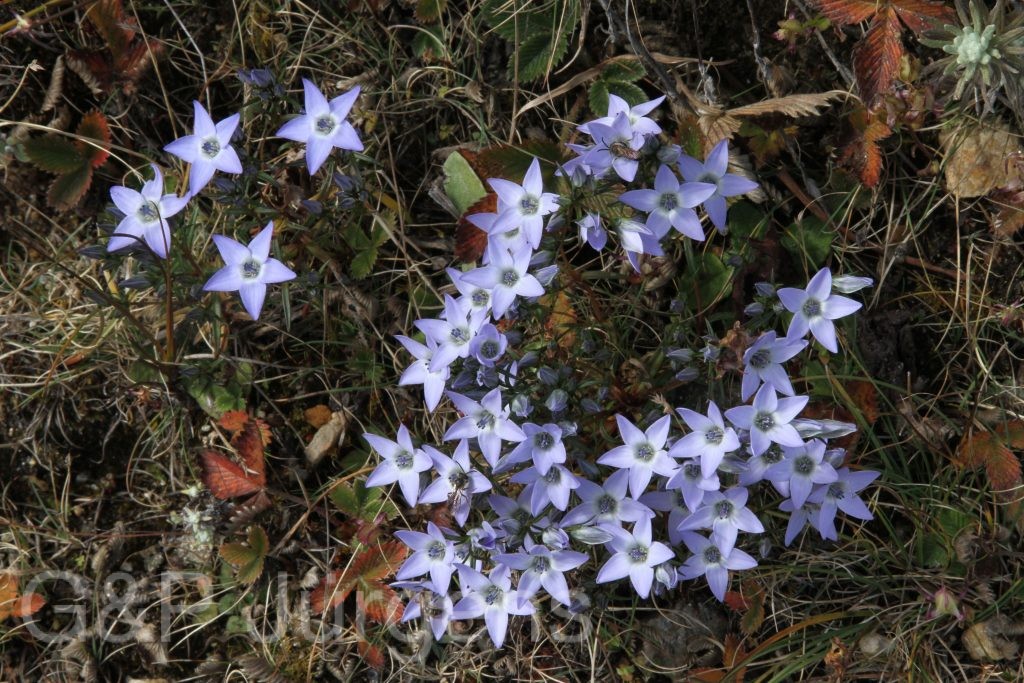
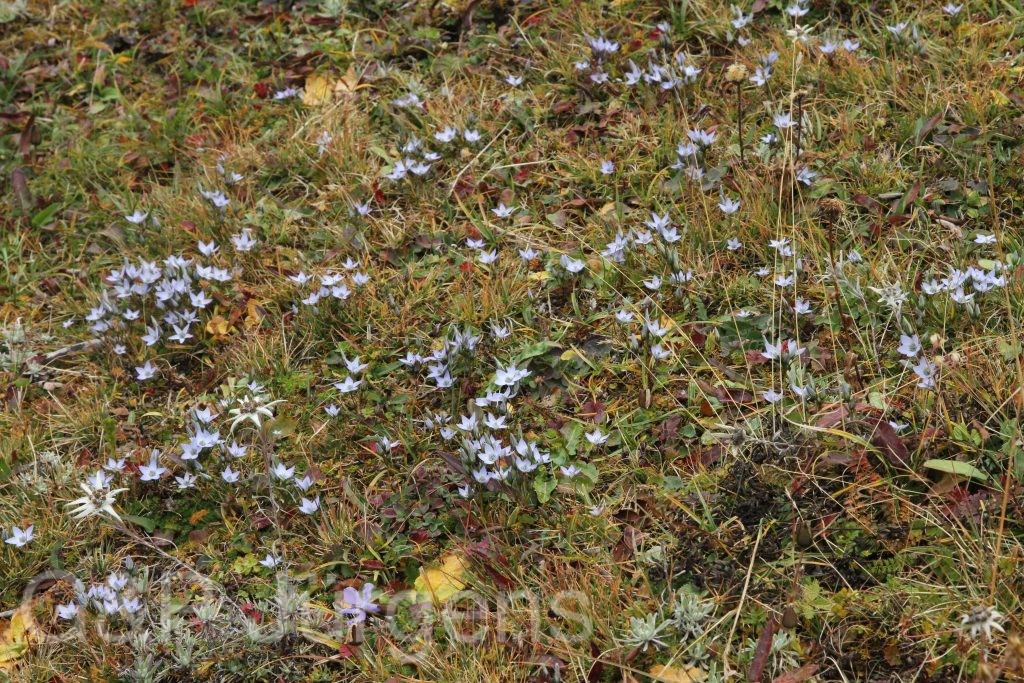
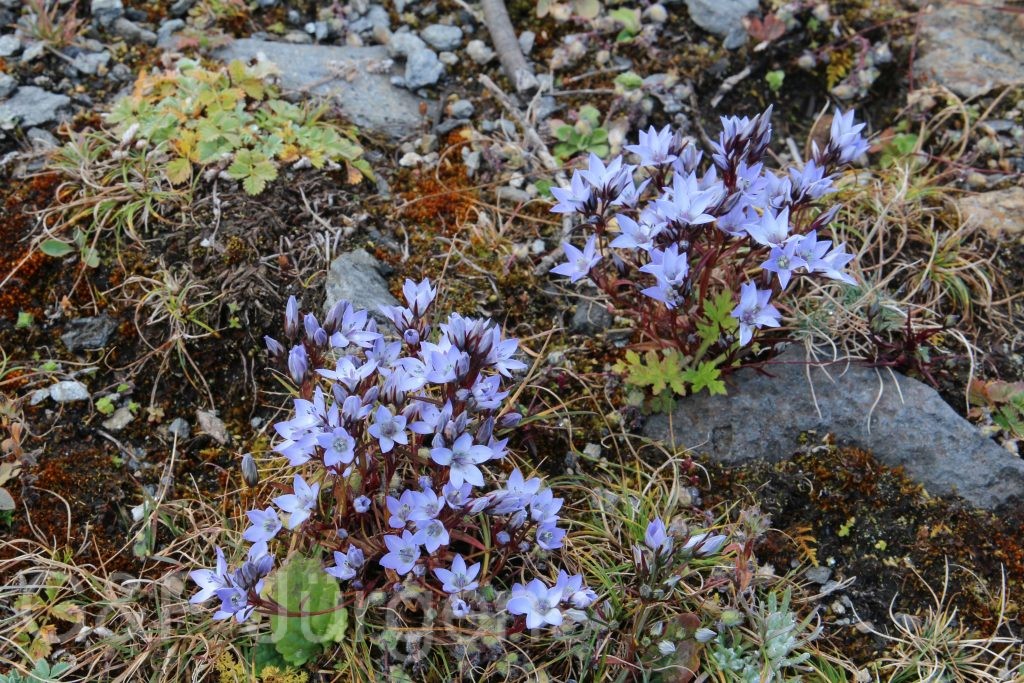
Lomatogonium sikkimense is a high-alpine gentian relative restricted to the eastern Himalaya and adjacent Tibet, recorded from Nepal, India, Bhutan and China, with about 74 occurrences in GBIF. It grows in the alpine zone on open turf, moist meadows, streamsides and gravelly slopes, characteristically between about 3500 and 4500 m, flowering late as the monsoon ends. The plants photographed at the Chele-La in Bhutan at around 4000 m in October exemplify this habitat, where the species blooms among short alpine vegetation just before the onset of winter.

It is a slender annual or short-lived herb with erect or ascending, often branched stems bearing opposite, sessile, narrowly lanceolate to linear leaves. The flowers, borne singly or in a few-flowered cyme, are rotate and deeply five-lobed, the blue to violet-blue corolla lobes acute and often delicately veined; characteristically for the genus, each lobe bears a pair of fringed nectary scales at its base, distinguishing Lomatogonium from the closely related Swertia and Gentianella. The five stamens alternate with the lobes, and the superior ovary develops into a many-seeded capsule.

Lomatogonium is a small Eurasian genus of high mountains and is centred on the Sino-Himalayan and Tibetan flora, with L. sikkimense among its narrowly distributed eastern Himalayan members, as its epithet referencing Sikkim records. The fringed paired nectaries and rotate corolla are key diagnostic features separating it from allied swertioid gentians. No formal conservation assessment exists; the species appears locally frequent within its restricted alpine range, though such narrowly zoned high-altitude annuals are potentially vulnerable to climate-driven shifts in alpine meadow vegetation.

Author: (Burkill) Harry Sm. · Sources: POWO (Kew), GBIF, Flora of Bhutan, Flora of China, Annotated Checklist of the Flowering Plants of Nepal, Ho & Liu Worldwide Monograph of Swertia and its Allies

Pall. ex Schult.

BhutanPG2011 590
Bhutan Kem-La 4100m, July
Garh 07 111 ergebnis
India Garhwal Meggu Kichatti 3200m, June

Description

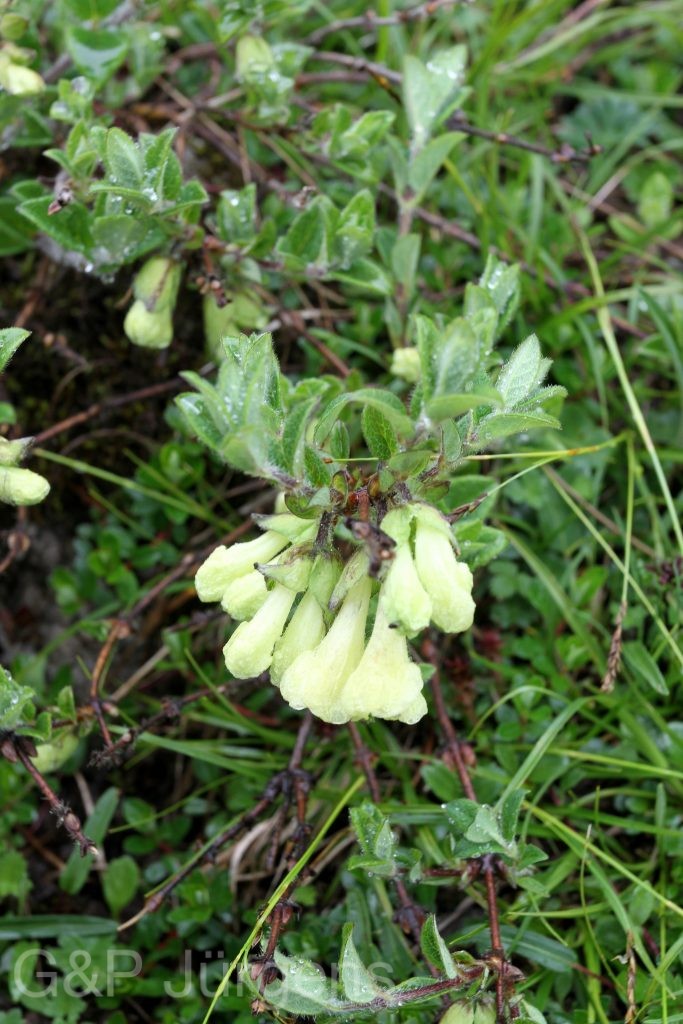
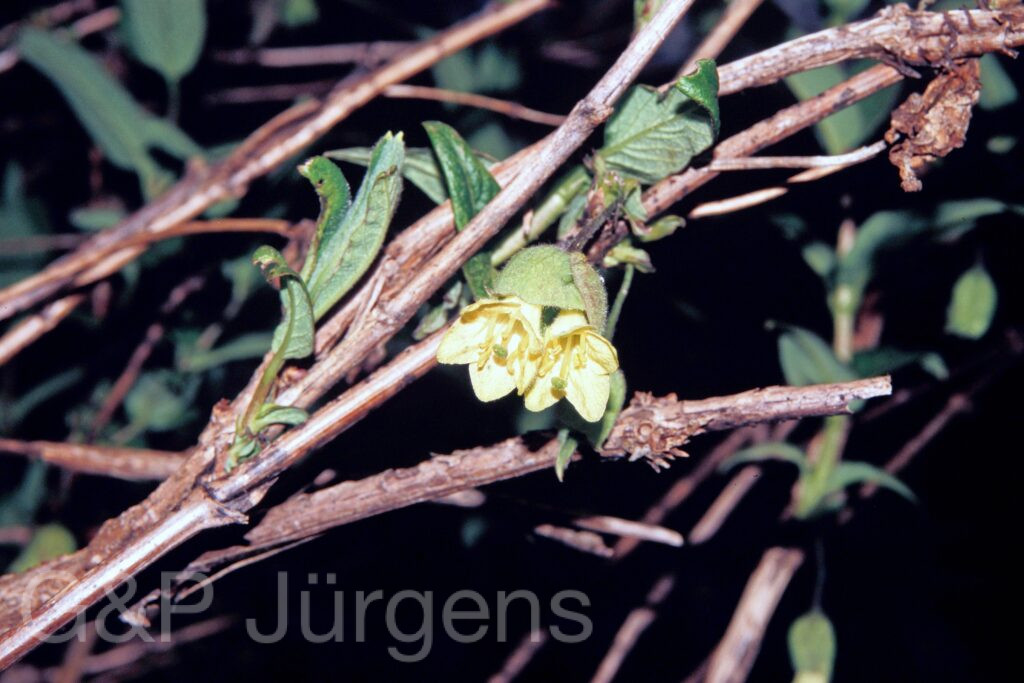
Lonicera hispida is a deciduous shrub of the high mountains of Central and High Asia, ranging through the Himalaya from Pakistan and India to Nepal and Bhutan, across Tibet and western China, and northward into the Tien Shan, Pamir-Alai and Altai of Central Asia and Russia. It grows in subalpine and alpine scrub, open coniferous forest, stream banks and rocky slopes, typically between about 2500 and 4500 m. The photographed material comes from Kem-La in Bhutan at around 4100 m and from Meggu Kichatti in Indian Garhwal at about 3200 m, flowering in June and July. With over 3100 georeferenced records it is a well-documented and widespread montane honeysuckle.

It forms an erect, much-branched shrub up to about 2 m, the young shoots and petioles bristly-hispid with stiff spreading hairs and glandular bristles, the older bark exfoliating. The leaves are opposite, oblong to elliptic, ciliate and bristly-margined, often glaucous beneath. The flowers are borne in axillary pairs subtended by large, broad, persistent bracts that enlarge in fruit; the corolla is tubular-funnelform, white to pale yellow, weakly two-lipped, with a gibbous base and exserted stamens and style. The paired ovaries are partly united, and the fruit is a fleshy berry, red at maturity, the bracts often colouring and partly enclosing the twin fruits.

Lonicera hispida belongs to section Isika and is distinguished by its conspicuously hispid bristly indumentum and large floral bracts. It is morphologically variable across its enormous range, and several varieties have been recognised. The berries are taken by birds, aiding dispersal. As a common, broadly distributed alpine shrub it is of least conservation concern.

Author: Pall. ex Schult. · Sources: POWO (Kew), GBIF, Flora of China, Flora of Bhutan, Rehder's revision of Lonicera

Royle

Description

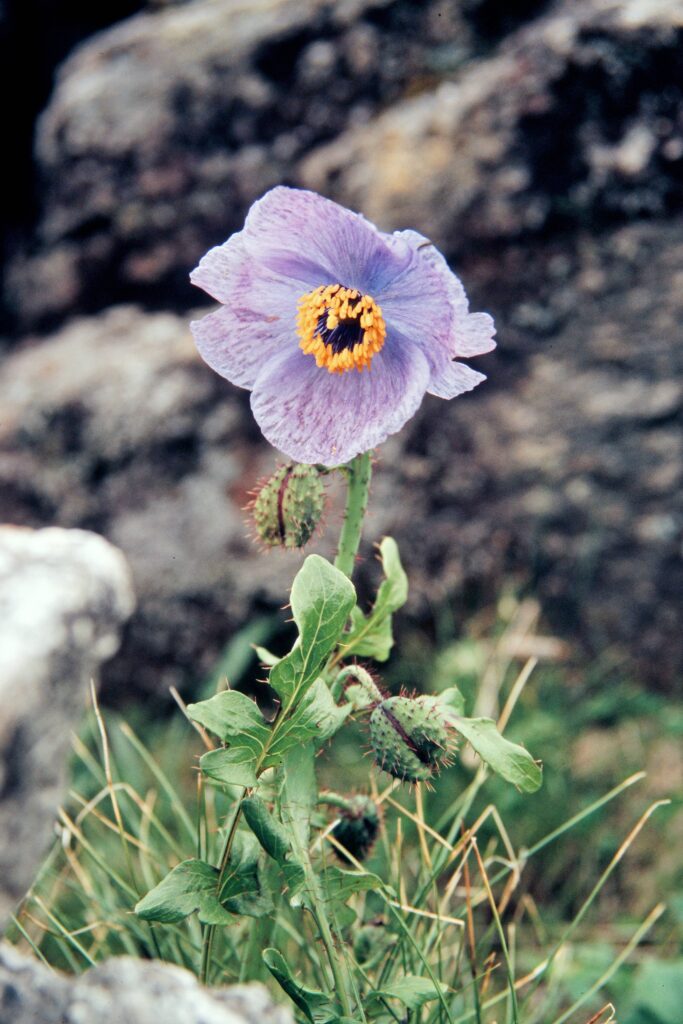
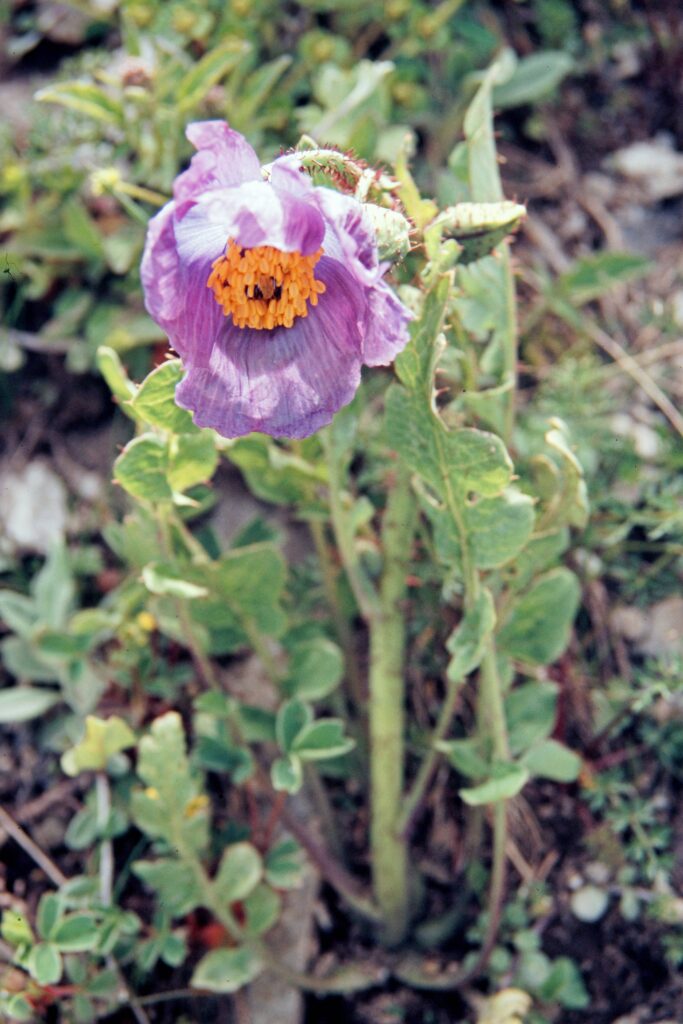
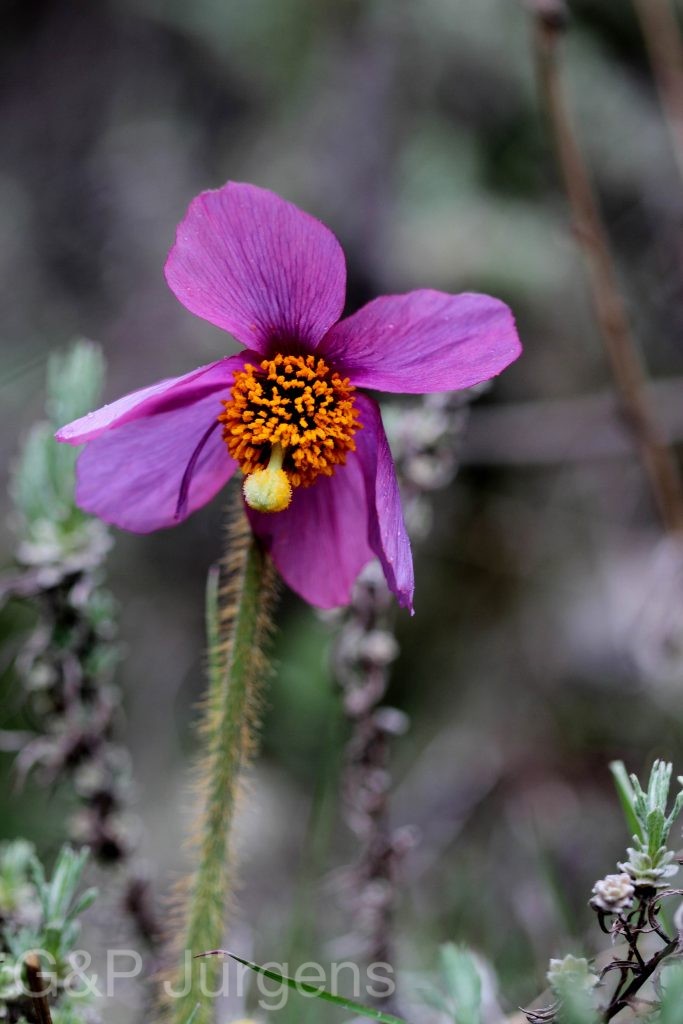
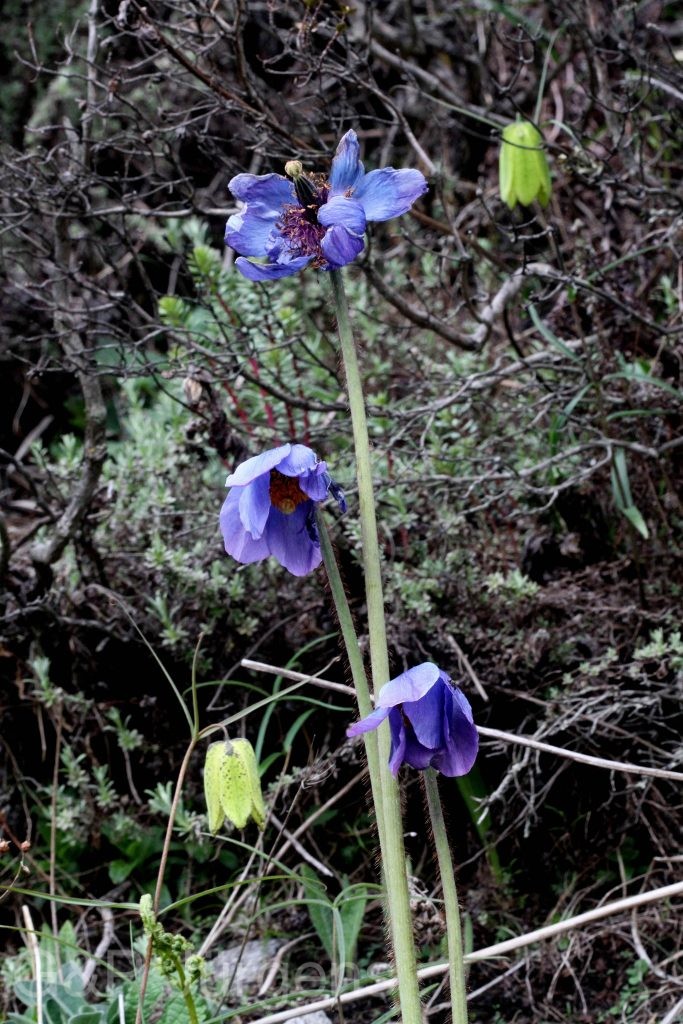
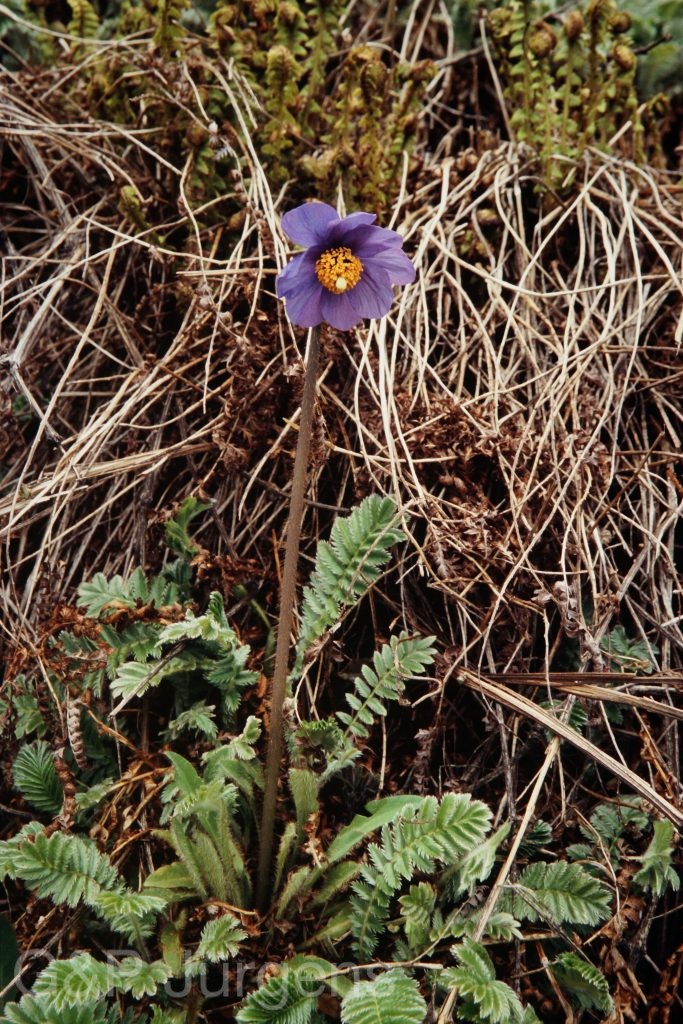
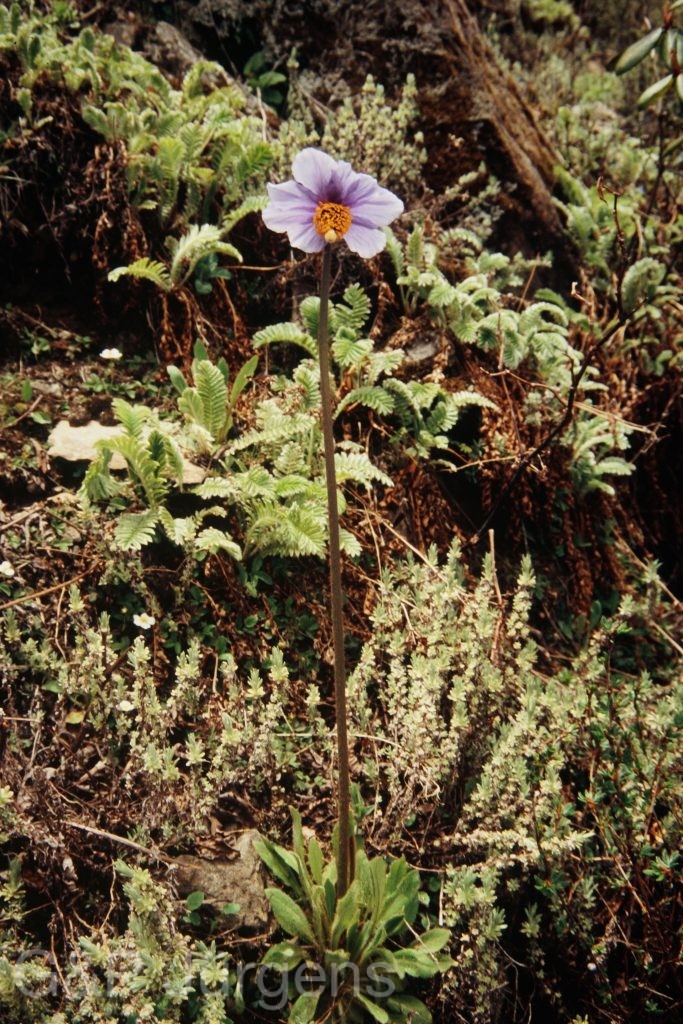
Meconopsis aculeata is a Western Himalayan endemic of the high mountains of northern India, Pakistan and adjacent China (Tibet), extending marginally into Nepal; its roughly 249 GBIF records concentrate in the north-western ranges, with cultivated and herbarium material accounting for the scattered occurrences in Great Britain, Canada and Egypt. It grows on open alpine slopes, moist screes, rock crevices and moraine margins, typically between 3000 and 4500 m. The photographed population at Khiar Kutti in the Garhwal Himalaya of India, at 3850 m in June, is characteristic of its early-summer flowering on damp, stony alpine meadow.

It is a monocarpic or short-lived perennial herb forming a stout taproot and a basal rosette. The whole plant is densely armed with stiff, yellowish bristles and prickle-like setae, giving it its epithet aculeata. Leaves are oblong to oblanceolate, pinnately lobed to deeply pinnatifid, narrowed to a winged petiole. The flowering stem bears several large, nodding to spreading flowers; the four petals are clear sky-blue to purplish-blue, broadly obovate and crinkled. Stamens are numerous; the bristly ovary ripens into an ellipsoid, setose capsule dehiscing by short apical valves to release many small seeds.

Within Meconopsis, this species belongs to the blue-flowered, bristly poppies and is among the most widespread of the blue Himalayan poppies west of Nepal. Its dense armature is an adaptation to grazing and harsh exposure, and like many monocarpic Meconopsis it depends on a multi-year rosette to accumulate resources before a single flowering episode. It remains locally frequent and is not formally assessed as threatened, though habitat degradation and collection pressure are localised concerns.

Author: Royle · Sources: POWO (Kew), GBIF, Flora of Pakistan, Flora of British India, The Genus Meconopsis (Grey-Wilson monograph)

Prain

Nepal 97 187 G369
Nepal Tayla-La 4050m April
Nepal 99 107 ergebnis
West-Nepal South of Rara-Lake 3600m, June
Nepal 99 280 ergebnis
West-Nepal Kalomura 4100m, June
Nepal 99 281 ergebnis
West-Nepal Kalomura 4100m, June

Description

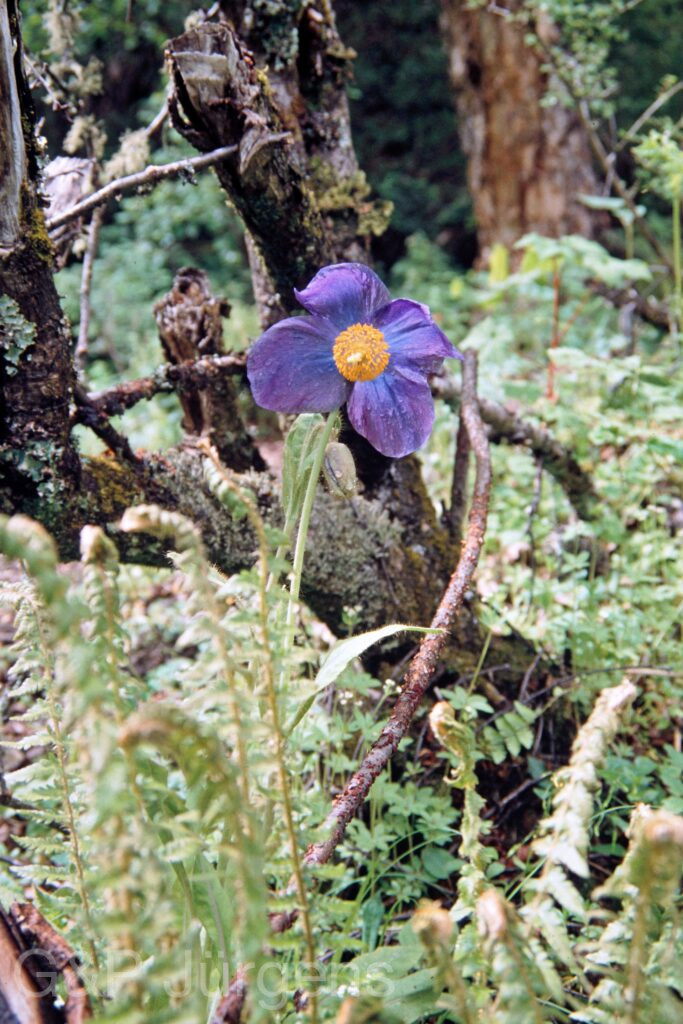
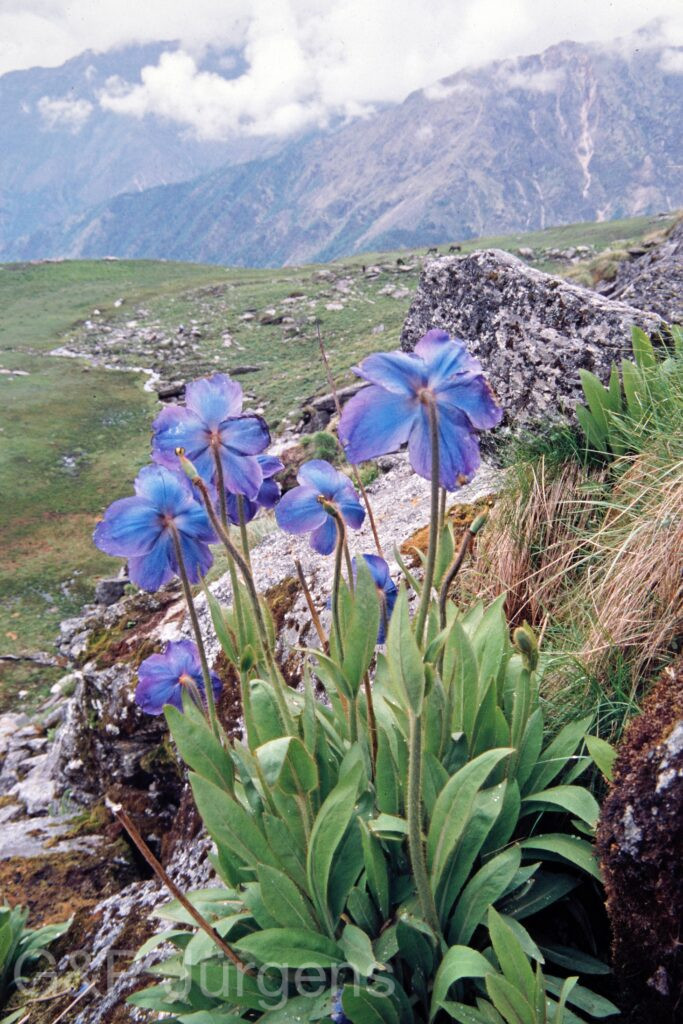
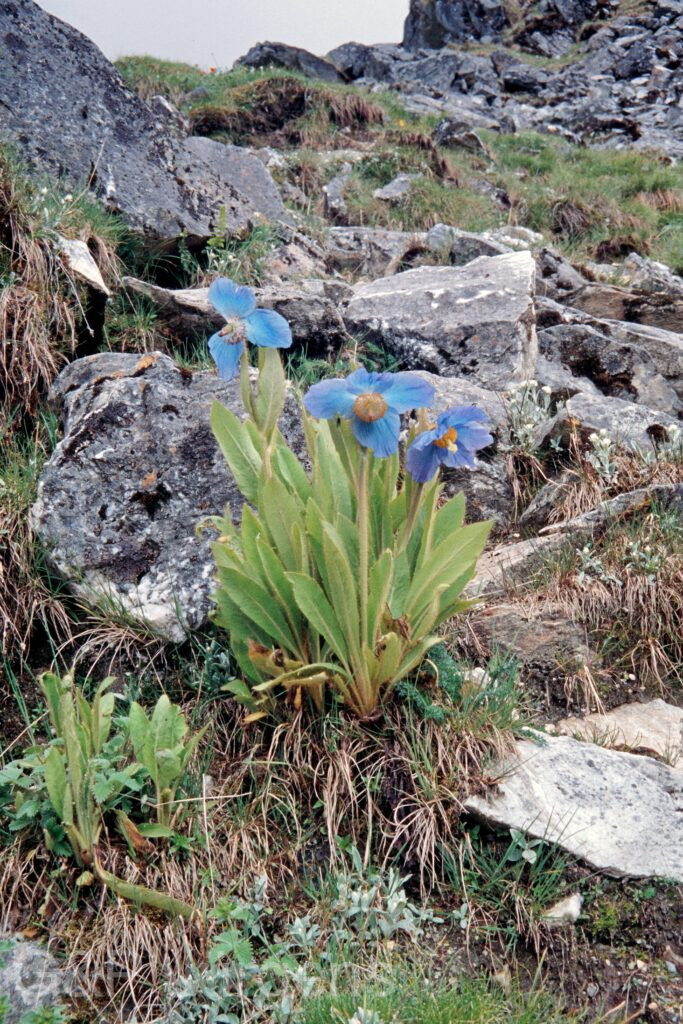
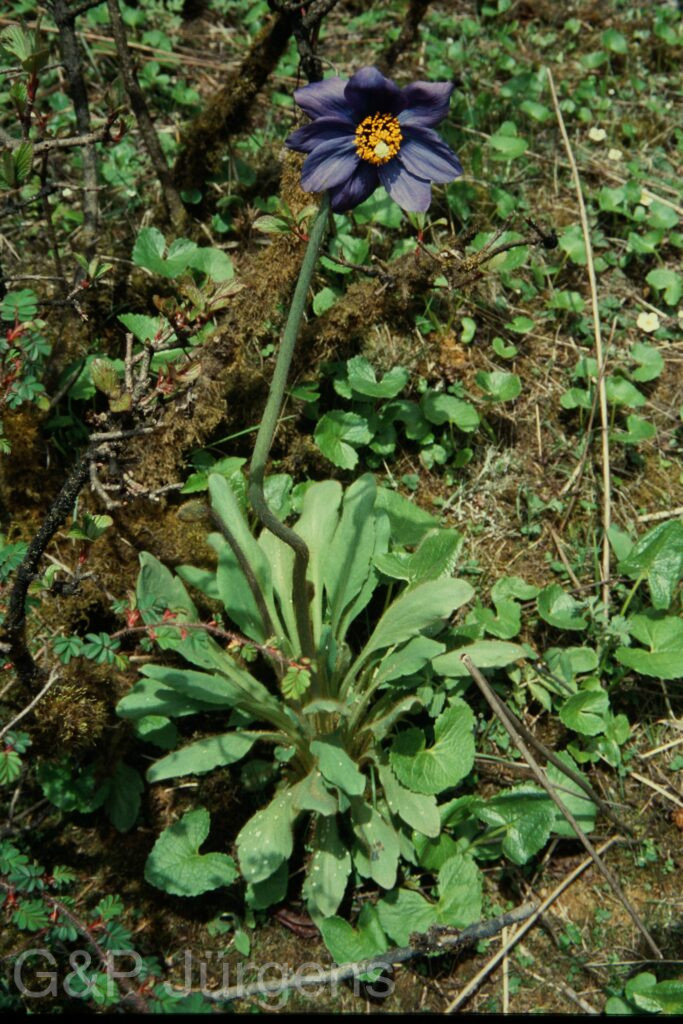
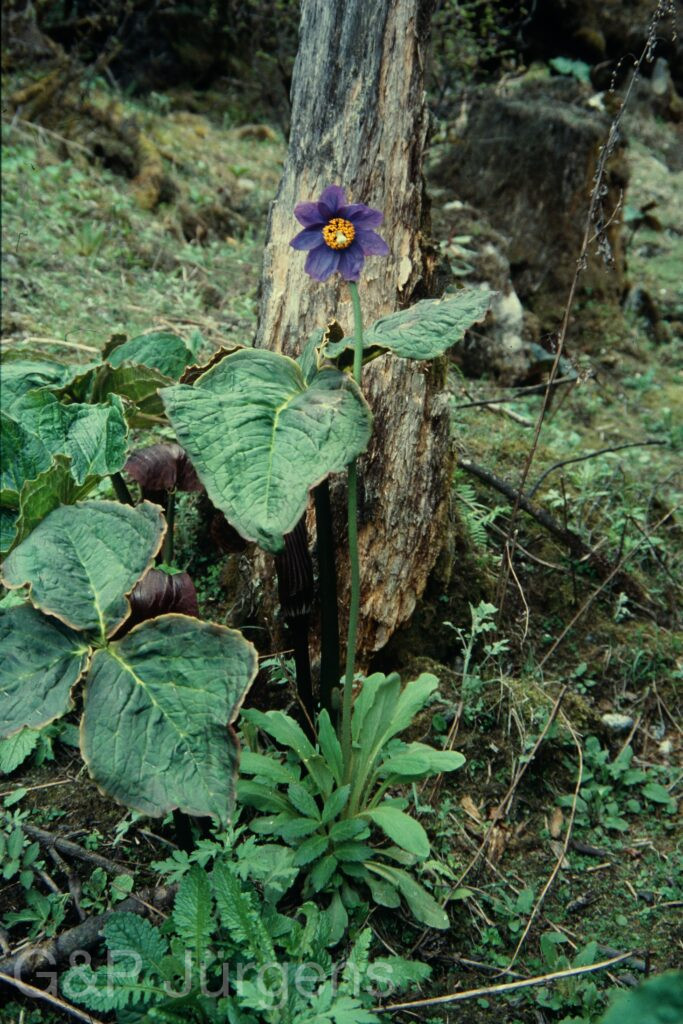
Meconopsis grandis is a high-altitude perennial of the eastern and central Himalaya, distributed across Nepal, northern India, Sikkim, Bhutan and adjacent southern Tibet (China), with cultivated and naturalised records reflected in the European data (United Kingdom, Belgium, Norway, Sweden). GBIF documents some 266 occurrences, a figure inflated by its long horticultural history as one of the celebrated "blue poppies." In its native range it grows in moist alpine meadows, open scrub, the margins of Rhododendron thickets and along streamsides on humus-rich, well-drained acidic soils. The collections illustrated span the snowmelt belt between roughly 3600 and 4100 m, from Tayla-La in central Nepal at 4050 m in April to the slopes south of Rara Lake at 3600 m and Kalomura at 4100 m in June, where it flowers as the monsoon advances.

It forms a stout, deciduous perennial from a thick rootstock, with a basal rosette of oblanceolate to elliptic leaves clothed in rust-coloured to fulvous bristly hairs, the blades narrowing into a winged petiole and often shallowly toothed. The flowering scape is erect, bristly and bears one to several large nodding flowers, each typically with four (sometimes more) broad, satiny, overlapping petals of intense azure to violet-blue, occasionally purplish. Numerous golden stamens surround a stout ovary crowned by a short, well-defined style and capitate to clavate stigma. The fruit is an elongate, ellipsoid to narrowly ovoid capsule, bristly-hairy, dehiscing by short apical valves to release small seeds.

Meconopsis grandis belongs to a taxonomically intricate complex of perennial blue poppies and has historically hybridised in cultivation, giving rise to the widely grown Meconopsis × sheldonii. Variation in flower colour, leaf indumentum and monocarpic versus polycarpic habit has prompted recognition of several subspecies and forms by different authors. Ecologically it is pollinated chiefly by bumblebees attracted to its conspicuous corolla. Though not formally assessed as threatened across its wide range, populations are localised and sensitive to grazing pressure, trampling and the warming of alpine habitats, making it a flagship species for Himalayan montane conservation.

Author: Prain · Sources: POWO (Kew), GBIF, Flora of Bhutan, Flora of Nepal, Annotated Checklist of the Flowering Plants of Nepal, Christopher Grey-Wilson – The Genus Meconopsis

(D. Don) Prain

Sikkim2011 89
Sikkim Chopta-valley 4200m, June
BhutanPG2011 321
Bhutan
Sikkim2011 252
Sikkim Yumthang 3700m, June
Nepal 97 136 G252
Nepal Mewa-Khola 3100m April

Description

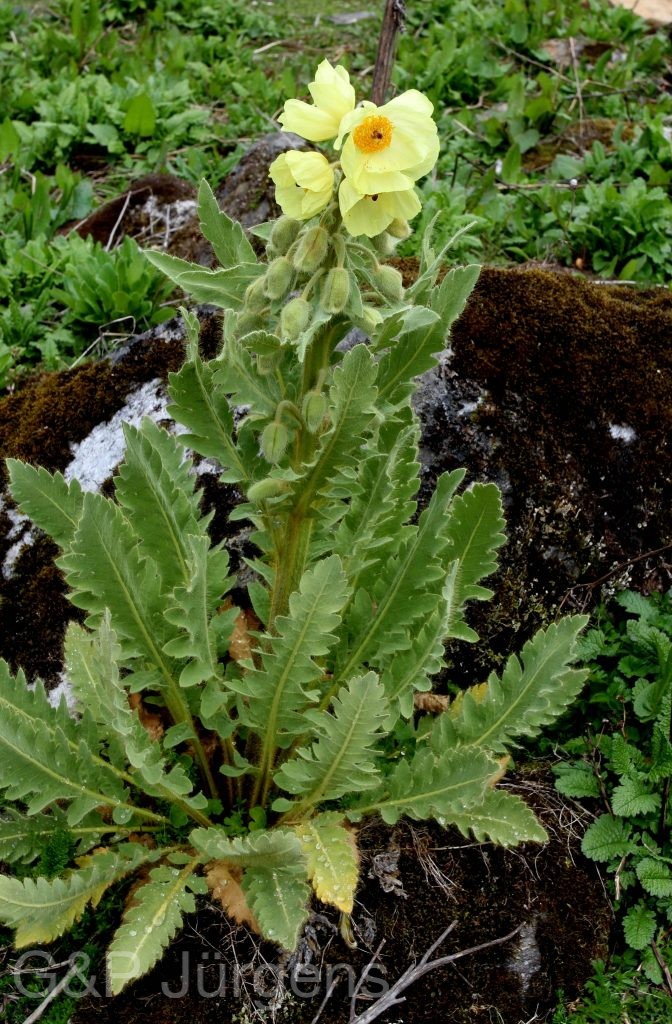
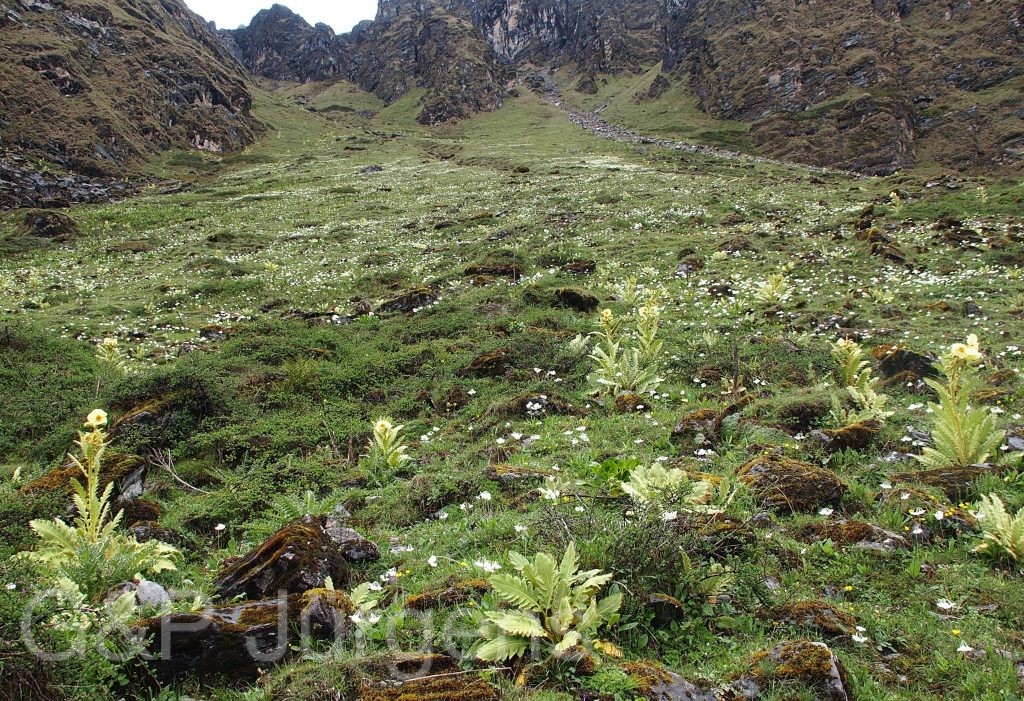
Meconopsis paniculata is a stately Himalayan poppy distributed through Nepal, the Indian states of Sikkim and Darjeeling, Bhutan and southern Tibet (China), with cultivated records in Britain and Canada; GBIF documents about 440 occurrences. It grows in the upper temperate to subalpine and lower alpine zone, on open grassy slopes, forest clearings, streamsides and shrubby hillsides, as recorded in the Chopta valley (4200 m) and at Yumthang (3700 m) in Sikkim and at Mewa-Khola (3100 m) in Nepal. Spanning roughly 3000-4200 m, it flowers from spring into early summer (April-June), often forming conspicuous stands on damp, humus-rich slopes.

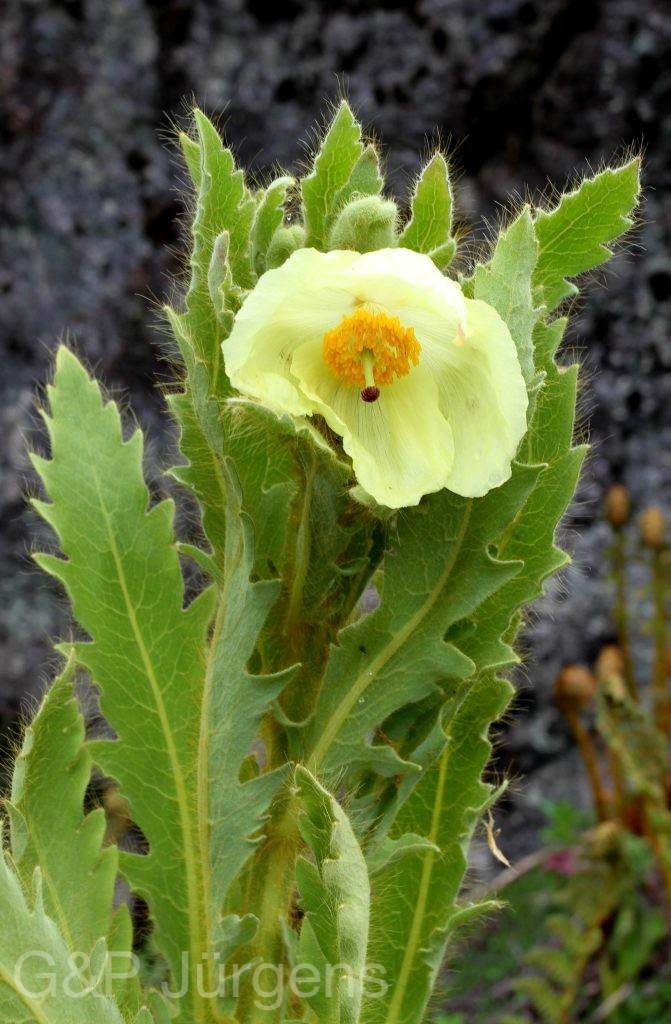
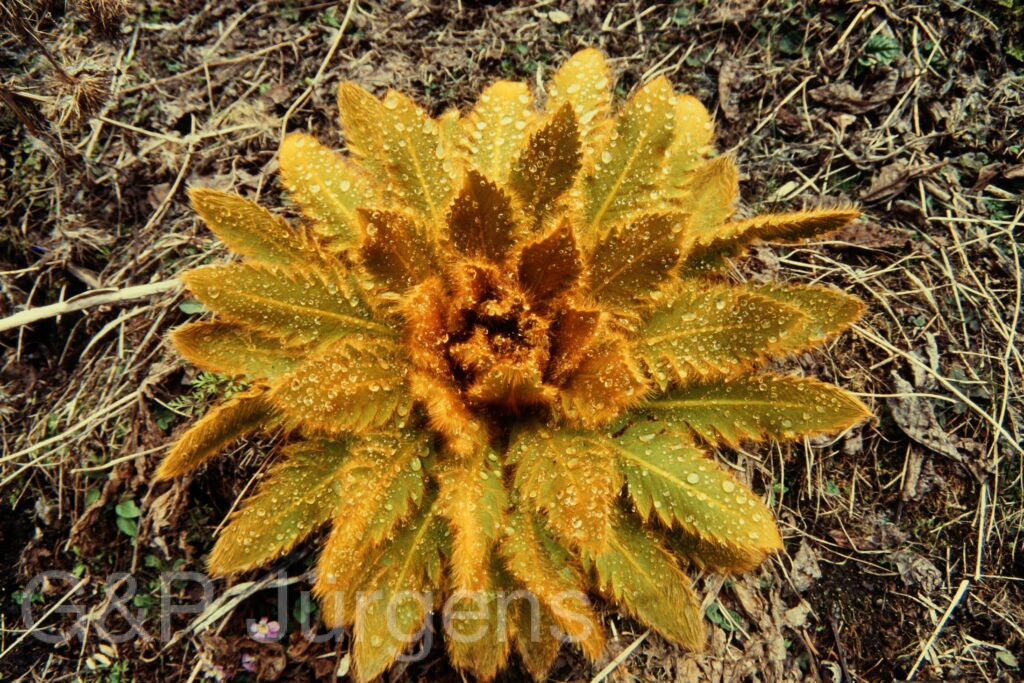
It is a robust monocarpic herb, forming in its first years a large basal rosette before producing a single tall, branched flowering stem up to 1.5-2 m. The whole plant is densely clothed in golden to rusty, spreading bristly hairs. The basal leaves are large, oblong-lanceolate and pinnately lobed or deeply cut, narrowing into a winged petiole. The inflorescence is an elongate, leafy panicle (the epithet "paniculata") of nodding, broadly cup-shaped flowers; the four (rarely more) petals are pale to clear yellow, surrounding a boss of numerous yellow stamens and a stout ovary crowned by a short style and lobed stigma. The fruit is an oblong, bristly capsule dehiscing by apical pores to shed many small seeds.

Described by Prain from D. Don's basionym, M. paniculata belongs to the monocarpic, bristly-fruited group of Meconopsis allied to M. napaulensis and M. wallichii, a complex whose taxonomy has long been debated owing to hybridisation and variable indumentum. As a monocarpic species it dies after a single flowering, relying entirely on abundant seed for regeneration. The flowers are visited by bumblebees foraging at altitude. Widespread across its range, it is not considered globally threatened, though seed collection and grazing can affect local populations.

Author: (D. Don) Prain · Sources: POWO (Kew), GBIF, Flora of Bhutan, Flora of Nepal, Grey-Wilson's monograph of the genus Meconopsis

(D. Don) Walp.

Description

Meconopsis simplicifolia (D. Don) Walp. is a high-mountain perennial blue poppy of the central and eastern Himalaya, ranging through Nepal, Sikkim and northern India, Bhutan and southern Tibet (China), with cultivated records accounting for the United Kingdom entries in a GBIF dataset of roughly 267 occurrences. It inhabits alpine meadows, open turf, rocky slopes and the margins of Rhododendron scrub on moist, humus-rich, well-drained acidic soils, typically within the snowmelt-fed alpine zone. The illustrated collections cluster between about 3200 and 3900 m, from Tanghu in Sikkim at 3900 m and Chele-La in Bhutan at 3200 m in June to Yumthang on the Sikkim-India border at 3600 m in May, marking a late-spring to early-summer flowering as the snow retreats.

It forms a perennial herb with a basal rosette of simple, undivided leaves, oblanceolate to elliptic or narrowly lanceolate, entire to faintly toothed and clothed in soft, often fulvous to fawn-coloured bristly hairs, narrowing to a winged petiole; the simple, unlobed foliage gives the species its epithet. From the rosette arise one or several slender, bristly, leafless scapes, each bearing a solitary, nodding flower. The flowers have four (sometimes more) broad, silky, overlapping petals of clear sky-blue to violet or, in some forms, reddish-purple, surrounding a tuft of golden stamens and a stout ovary topped by a short, distinct style and capitate stigma. The fruit is an ellipsoid, bristly capsule opening by short apical valves.

Meconopsis simplicifolia is part of the perennial, scapose blue-poppy assemblage and is distinguished from allies such as M. grandis by its single-flowered scapes and entirely simple leaves; it is variable in flower colour and in whether it behaves as monocarpic or polycarpic. Pollinated chiefly by bumblebees, it is a celebrated ornamental long grown in cool temperate gardens. Across its range populations are localised and sensitive to grazing, trampling and the warming of alpine habitats, making it, like its relatives, a species of interest for Himalayan alpine conservation though not formally assessed as threatened.

Author: (D. Don) Walp. · Sources: POWO (Kew), GBIF, Flora of Bhutan, Flora of Nepal, Christopher Grey-Wilson – The Genus Meconopsis

(DC.) Brouillet

Garw 2005 77 ergebnis ergebnis
India Garhwal Gaushon 3000m, September

Description

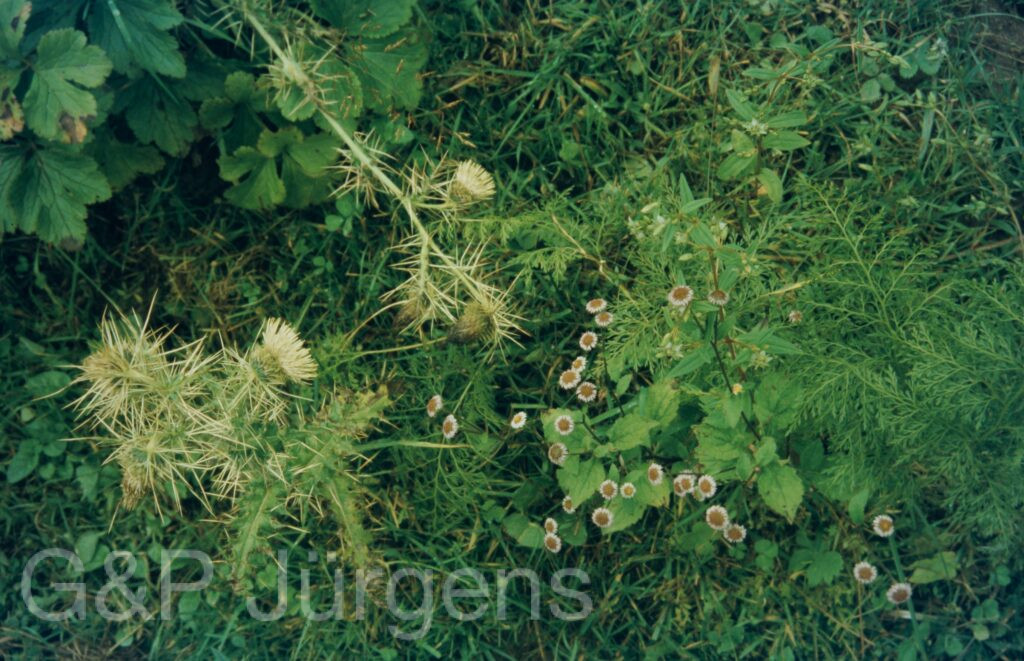
Neobrachyactis anomala is a Himalayan composite distributed from Pakistan and Iran eastward through India, Nepal, Bhutan and southern Tibet (China), with around 153 records in GBIF. It is a plant of disturbed and open montane to subalpine ground: rocky slopes, screes, riverbanks, fallow fields, roadsides and forest clearings, generally between about 2500 and 4000 m. The population photographed at Gaushon in Garhwal, India, at around 3000 m in September occupies this kind of late-season, semi-ruderal high-mountain habitat where the species sets seed before winter.

It is an annual or short-lived herb with erect, often branched stems bearing alternate, lanceolate to oblong leaves that are toothed or pinnately lobed and somewhat glandular or hairy. The small heads (capitula) are numerous, arranged in a leafy panicle, each with an involucre of narrow bracts. As the generic relationship to Brachyactis implies, the heads are disciform: the marginal florets are female, filiform and very shortly rayed or rayless, surrounding numerous yellowish bisexual disc florets. The fruit is a small flattened cypsela crowned by a pappus of fine bristles facilitating wind dispersal.

The species was long placed in Brachyactis and allied to Erigeron and Aster, but molecular phylogenetic work in the Astereae led Brouillet to transfer it to the segregate genus Neobrachyactis, reflected in its current author citation. Its annual, ruderal strategy and abundant wind-dispersed achenes suit it to colonising unstable and disturbed alpine terrain. It is widespread and locally common, and as a weedy pioneer it is under no conservation concern; if anything such opportunistic species may expand with increasing human disturbance of mountain landscapes.

Author: (DC.) Brouillet · Sources: POWO (Kew), GBIF, Flora of China, Flora of Pakistan, Annotated Checklist of the Flowering Plants of Nepal, Brouillet Systematics of North American Astereae

(Pennell) D.Y.Hong

Sikkim2011 278
Sikkim Lada-La 3600m, June

Description

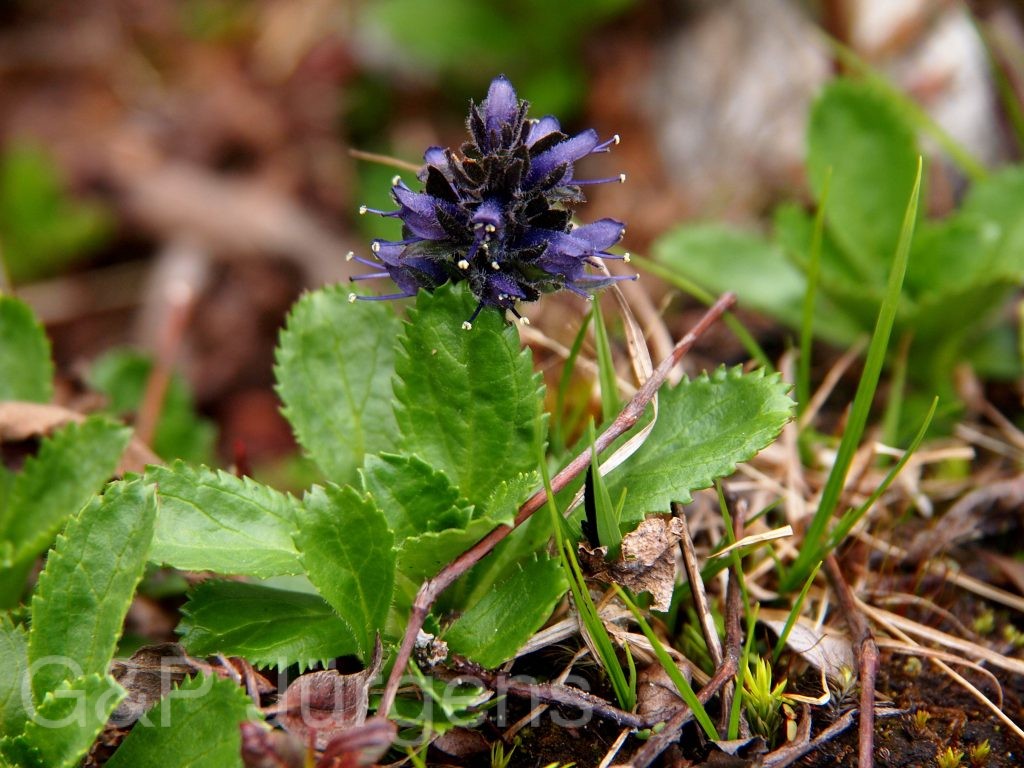
Neopicrorhiza scrophulariiflora is an alpine herb of the central and eastern Himalaya, ranging through Nepal, Bhutan, northern India and south-western China (Tibet), the roughly 106 GBIF records concentrating along this high-mountain belt with cultivated and herbarium material accounting for the United States occurrences. In GBIF the name is treated as a synonym, with Neopicrorhiza scrophulariiflora cited as the accepted name. It grows on open alpine slopes, moist rocky meadows, screes and humus-rich crevices, typically between 3500 and 4800 m. The photographed plant from Lada-La in Sikkim at 3600 m in June reflects its early-summer flowering on damp, high-alpine ground.

It is a low, creeping perennial herb spreading by a stout, bitter, woody rhizome that roots at the nodes and bears persistent leaf remains. The leaves are mostly basal, spathulate to oblong-obovate, with a crenate-serrate margin, narrowed to a winged base. From the rosette arises a short, erect scape terminating in a dense, cylindrical, spike-like raceme of small flowers; the corolla is dark bluish-purple to violet, with conspicuously exserted stamens. The fruit is a small ovoid capsule containing numerous minute seeds.

The monotypic genus Neopicrorhiza was segregated from Picrorhiza and, following molecular work, is now placed in the Plantaginaceae (formerly within Scrophulariaceae). The rhizome, known in trade as kutki, is intensely bitter and is among the most heavily harvested Himalayan medicinal plants, used for hepatic and febrile complaints. Sustained wild collection has caused marked population decline, and the species is regarded as threatened and is subject to harvesting controls and cultivation initiatives across its range.

Author: (Pennell) D.Y.Hong · Sources: POWO (Kew), GBIF, Flora of China, Flora of Bhutan, Annotated Checklist of the Flowering Plants of Nepal, Picrorhiza and Neopicrorhiza systematic study