Tag:

Tibet

Flowers of Tibet — 70 high-altitude species from the Tibetan plateau and its Himalayan borderlands, adapted to cold, arid and intensely sunlit alpine conditions. The Tibetan flora is distinctive for its cushion plants, saussureas, gentians and alpine poppies. Each entry includes a botanical description, distribution, habitat and flowering season with the original field photograph and altitude.

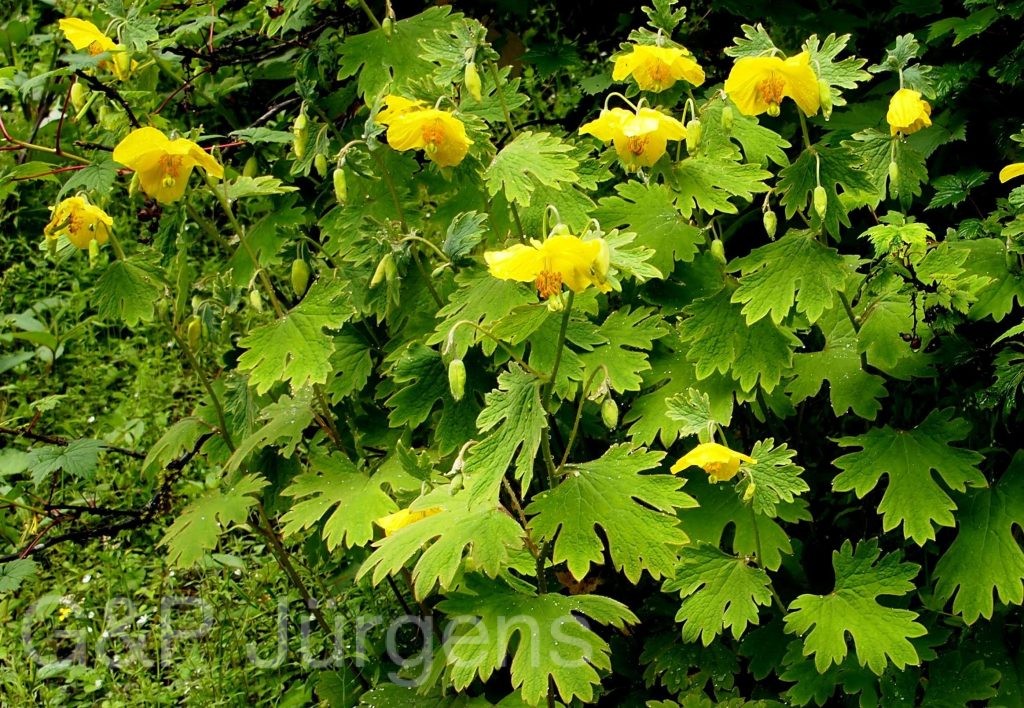
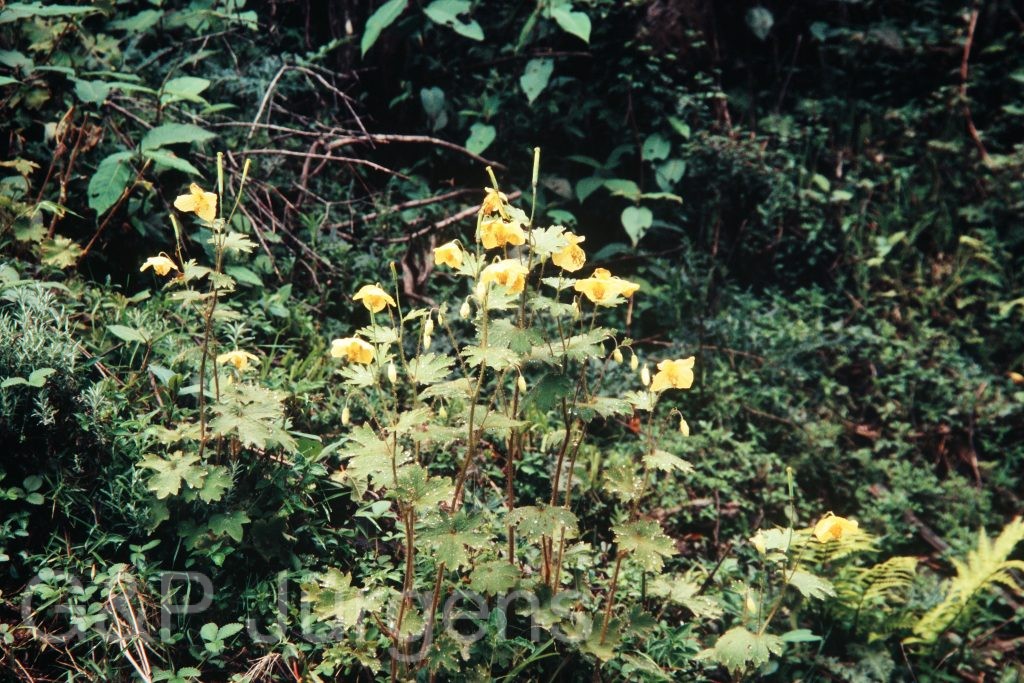
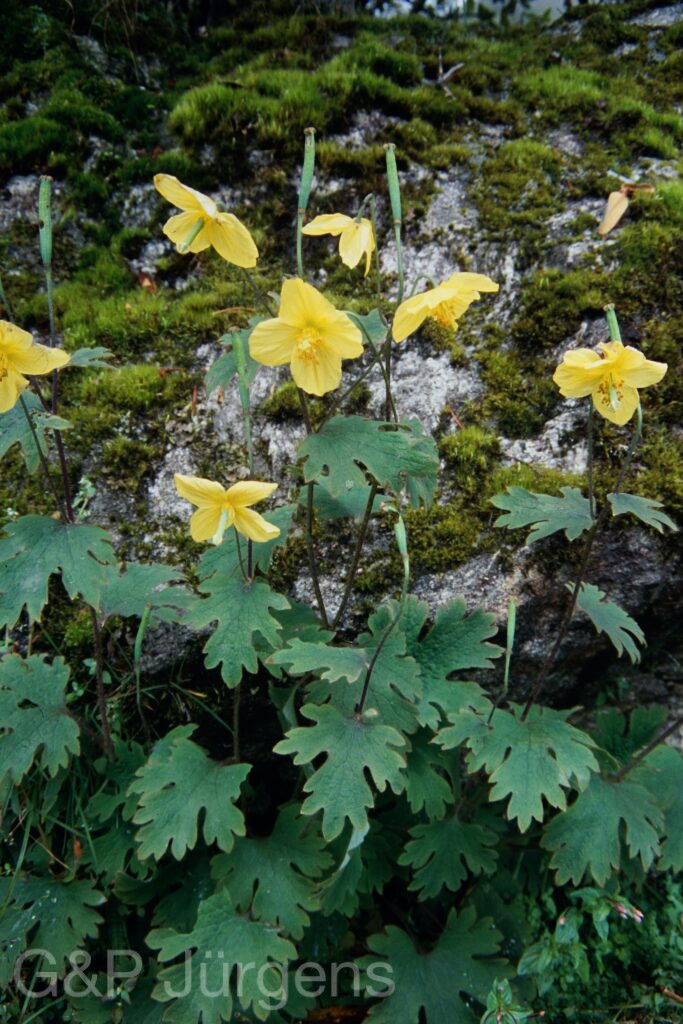
Hook.f.

BhutanPG2011 681 01 01
Bhutan Luksor, 3000m July
Bh09 293 G482
Bhutan Tongsa 2400m, June
Sikkim2003 152 G203
Sikkim Dzongri 4000m 08.2003

Description

Cathcartia villosa is an eastern Himalayan poppywort distributed through India, Nepal, Bhutan and southern Tibet (China), the GBIF dataset holding about 110 records (codes for Canada and Great Britain reflect cultivated and herbarium material). It grows in cool, humid montane and subalpine settings: shaded forest margins, mossy rocks, ravine sides and damp banks, broadly between about 2400 and 4000 m. The collections illustrated span this gradient, from Tongsa in Bhutan at around 2400 m and Luksor at 3000 m to Dzongri in Sikkim near 4000 m, recorded between June and August.

It is a softly villous perennial herb clothed throughout in long, spreading yellowish-brown hairs. The leaves are mostly basal, long-petiolate, the blade rounded and palmately lobed to crenate, the whole densely hairy and yielding a coloured latex when broken, as is typical of the poppy family. One or a few nodding, golden-yellow flowers are borne on slender hairy scapes; each has two caducous sepals, four broad spreading petals, numerous stamens and a superior ovary. The fruit is an elongate, hairy capsule dehiscing by valves to shed many small seeds.

Long treated within Meconopsis, this plant is now widely referred to the segregate genus Cathcartia, a Sino-Himalayan group of yellow-flowered, villous poppyworts distinguished from true Meconopsis by molecular and morphological evidence; older sources and the source URL still use the name Meconopsis villosa. It is valued in temperate gardens as an elegant woodland perennial. The species is locally frequent across its range and is not formally assessed as threatened, but it depends on cool, moist forest-edge habitats susceptible to deforestation and to climatic warming.

Author: Hook.f. · Sources: POWO (Kew), GBIF, Flora of Bhutan, Flora of China, Annotated Checklist of the Flowering Plants of Nepal, Grey-Wilson The Genus Meconopsis
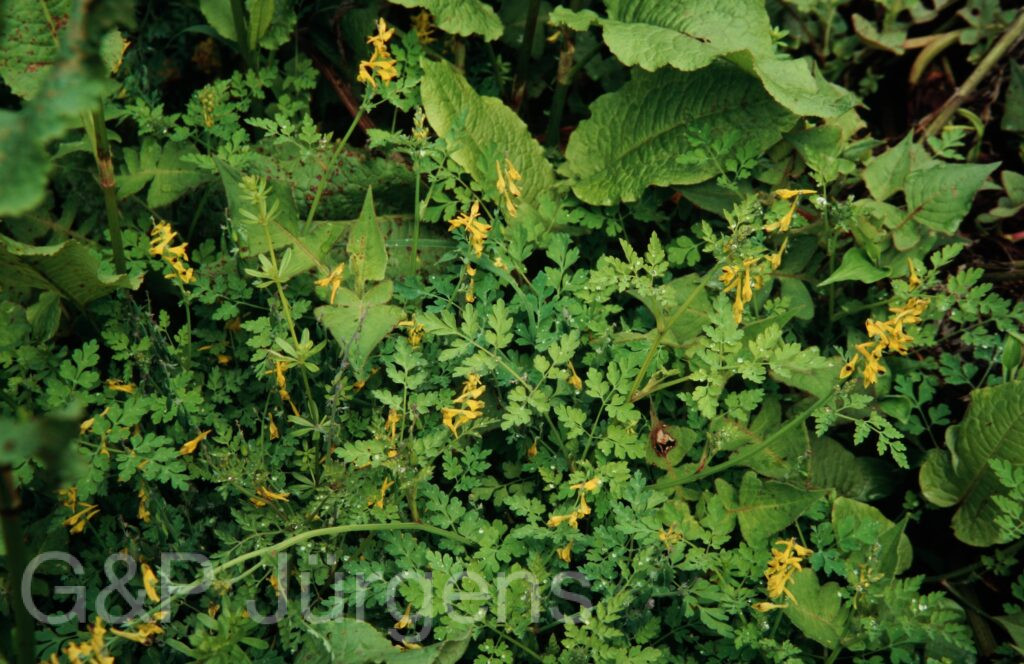
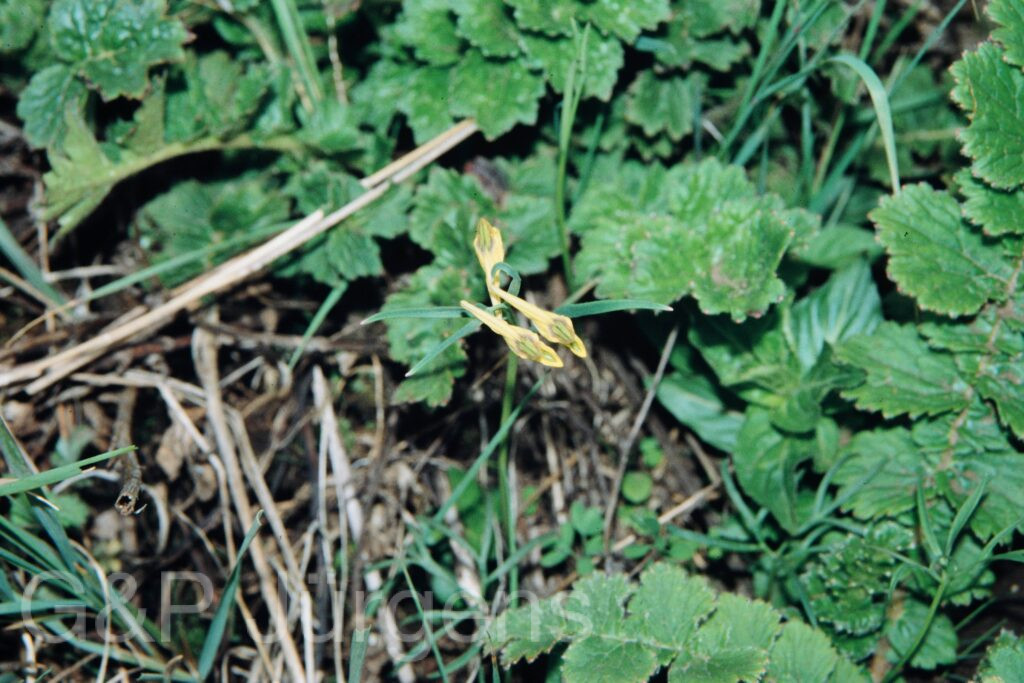
Royle

Nepal 2009 86 ergebnis
Nepal Helambu Bolgoau 2000, May

Description

Corydalis cornuta is a Himalayan fumitory whose reliable distribution lies along the temperate ranges of Nepal, India, Pakistan, Afghanistan and adjacent China; GBIF returns 273 occurrences, though several listed countries reflect database artefacts rather than genuine native populations. It grows in moist shaded sites, on damp banks, forest floors, ledges and cultivated terrace margins in the temperate belt, broadly between about 1800 and 3000 m. The illustrated plant was recorded in Nepal, in Helambu near Bolgoau, at around 2000 m in May, a typical mid-montane spring station where the slender annual completes its cycle before the monsoon.

The plant is a delicate, glabrous annual herb with brittle, often branched stems arising from a slender root. Leaves are alternate and two- to three-pinnately dissected into small obovate to cuneate ultimate segments, the foliage glaucous and somewhat fern-like. The flowers are borne in short, leaf-opposed or terminal racemes; each is strongly zygomorphic and yellow, with four petals in two whorls, the outer upper petal prolonged backwards into a slender nectar spur and the inner pair connate over the stigma. There are two stamens, each split into three (diadelphous), and a superior ovary that ripens into a narrow, linear, dehiscent capsule shedding shining black seeds.

Corydalis is treated here within an expanded Papaveraceae (incorporating the former Fumariaceae), consistent with the input family. POWO and GBIF accept the name. The genus is enormously diverse in the Himalaya and Tibet, and the spurred yellow-flowered annuals such as this form a distinctive ecological group of the moist temperate forest floor.

Author: Royle · Sources: POWO (Kew), GBIF, Flora of Pakistan, Annotated Checklist of the Flowering Plants of Nepal, Flora of China, The Genus Corydalis (Papaveraceae/Fumariaceae monograph)

Ludlow & Stearn

Nepal 99 135 ergebnis
West-Nepal South of Rara-Lake 3800m, June

Description

Corydalis pseudojuncea is a poorly collected high-Himalayan herb known from a narrow range across Nepal, northern India and adjacent south-western China (Tibet), with only 14 GBIF records reflecting both its restricted distribution and the remoteness of its habitat. It occupies open alpine and subalpine ground – stony slopes, moraine flats and seasonally moist gravels – in the inner ranges. The cited gathering from south of Rara Lake in West Nepal at 3800 m in June places it in the early-summer flowering flush of the western Nepalese alpine zone, where snowmelt briefly supports such ephemeral fumitories.

It is a slender, glabrous and somewhat glaucous perennial herb arising from a small tuber or fleshy rootstock, the rush-like ("juncea") aspect alluded to in its epithet given by the few, narrow, much-reduced leaves and the wiry erect stems. The leaves are finely dissected into linear segments. The flowers are borne in a lax terminal raceme, zygomorphic and spurred in the manner of the genus, the outer two petals one of which bears a long backward-pointing nectar spur, the inner pair connate over the stigma; the corolla is pale yellow to bluish. The fruit is a slender dehiscent capsule releasing few shining seeds.

Corydalis is an exceptionally large genus with a Sino-Himalayan diversity centre, and C. pseudojuncea, described by Ludlow and Stearn, belongs among the narrow-leaved alpine species. Its spurred flowers indicate long-tongued bee pollination. Given its rarity in collections and limited known range it warrants monitoring, though insufficient data exist for a formal threat assessment.

Author: Ludlow & Stearn · Sources: POWO (Kew), GBIF, Flora of China, Annotated Checklist of the Flowering Plants of Nepal, Flora of Bhutan, Lidén & Zetterlund monograph of Corydalis

Hook.f. & Thomson

Bhutan2012 84
Bhutan Shele-La, 4100m September
Bhutan2012 87
Bhutan Shele-La, 4100m September
Sikkim2003 136 G184
Sikkim Dzongri 3950m, August

Description

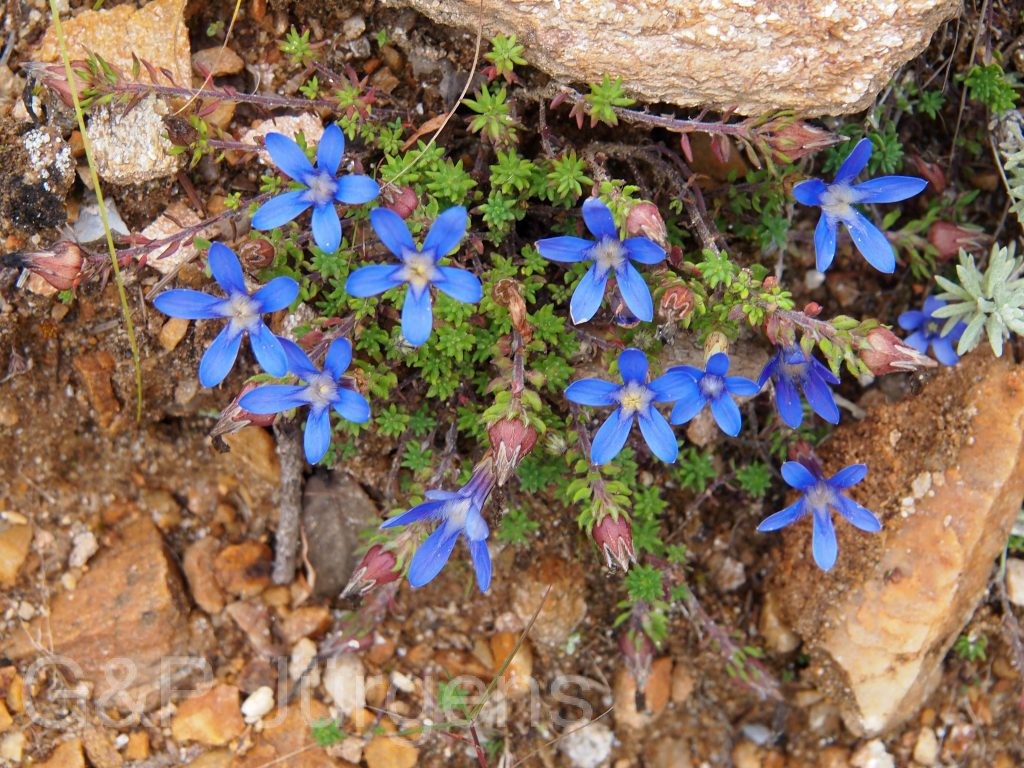
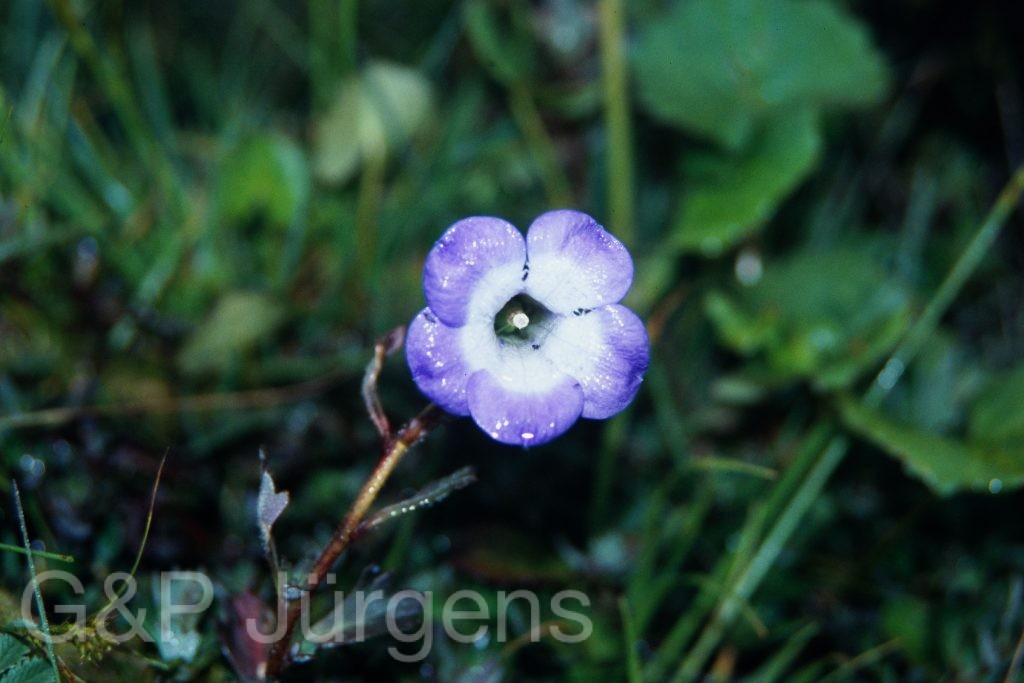
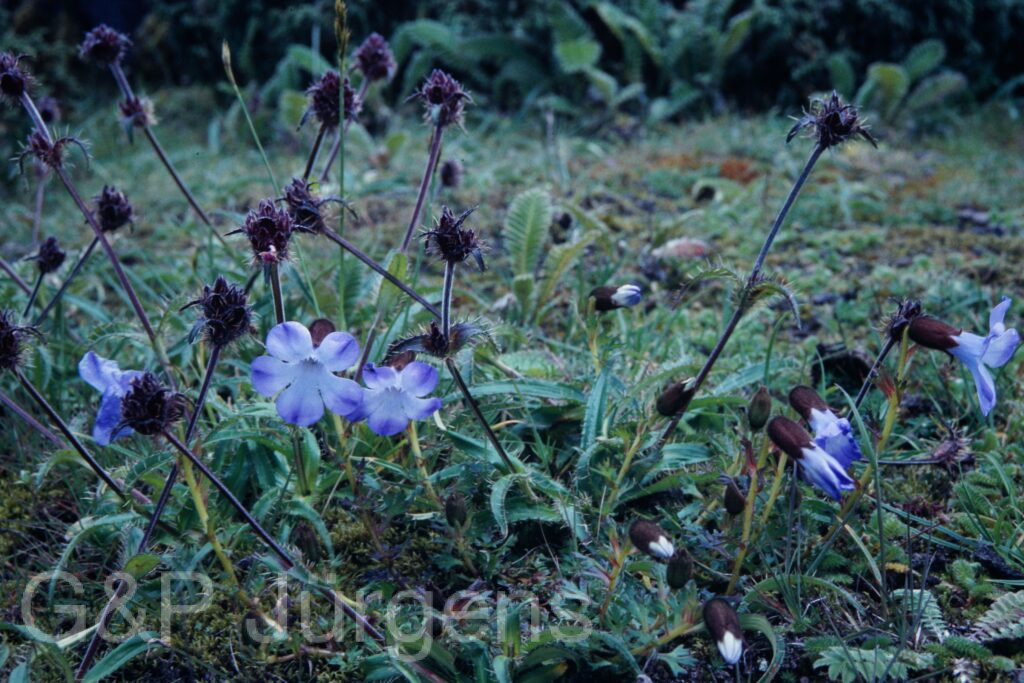
Cyananthus incanus is a low alpine perennial of the eastern Himalaya and adjacent Tibet, recorded from China, Nepal, India, Bhutan and Myanmar, with about 777 occurrences in GBIF. It grows on open alpine turf, stony slopes, screes and the margins of dwarf rhododendron scrub, generally between 3500 and 4500 m, in well-drained sites of the upper alpine zone. The photographs from the Shele La in Bhutan at about 4100 m in September and from Dzongri in Sikkim at about 3950 m in August show the plant flowering through the late-monsoon and early-autumn season typical of the high eastern Himalaya.

The plant is a mat-forming or loosely tufted perennial with a stout, woody rootstock from which radiate slender, prostrate to ascending stems. The small leaves are alternate, ovate to obovate, entire or slightly toothed, and clothed in greyish hairs, the indumentum reflected in the epithet incanus. The flowers are solitary and terminal, comparatively large for the plant; the calyx is densely hairy and tubular, and the broadly bell-shaped to funnelform corolla is blue to purplish-blue with five spreading lobes and a conspicuous tuft of hairs (a beard) closing the throat, a hallmark of the genus. The fruit is a capsule splitting from the apex to release numerous small seeds.

Cyananthus is a small Sino-Himalayan genus of the Campanulaceae distinguished from Campanula by its terminal solitary flowers, a deeply lobed corolla and the bearded throat. The cushion or mat habit and woolly leaves are typical adaptations to the cold, wind-exposed and sun-drenched conditions of the alpine zone. Several species, including C. incanus, are prized in alpine and rock gardens for their intense blue flowers. Locally frequent across its range, it is not regarded as threatened.

Author: Hook.f. & Thomson · Sources: POWO (Kew), GBIF, Flora of China, Flora of Bhutan, Annotated Checklist of the Flowering Plants of Nepal, Lammers' classification of the Campanulaceae

Wall. ex Benth.

Bhutan2012 75
Bhutan Shele-La, 4100m September
Sikkim2003 114 G154
Sikkim below Dzongri 4000m 08.2003
Sikkim2003 130 P176
Sikkim Dzongri 4100m 08.2003

Description

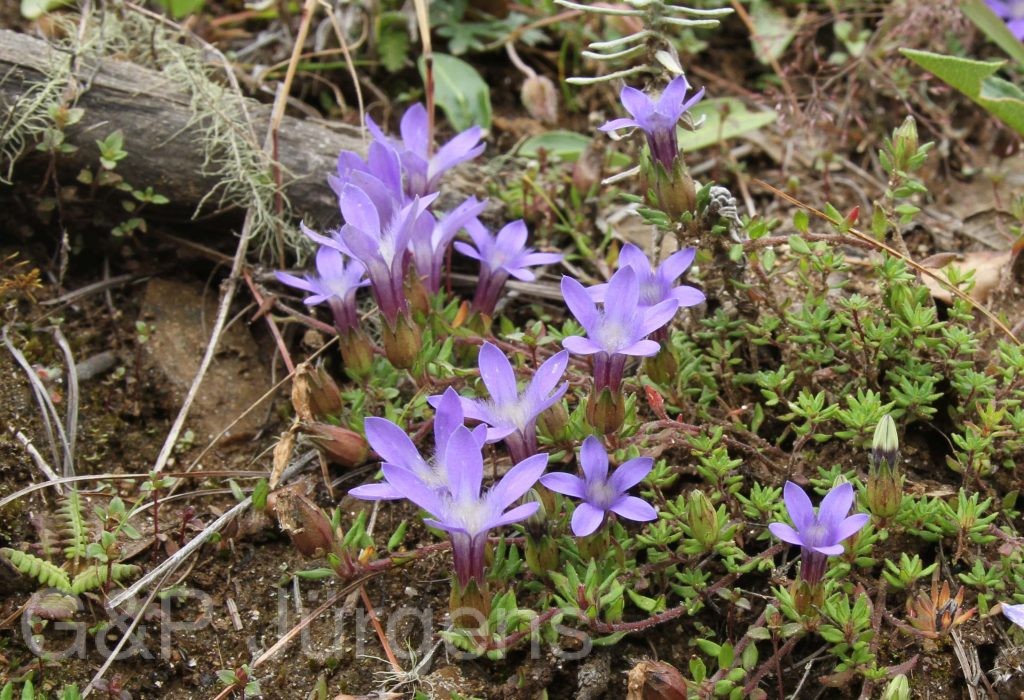
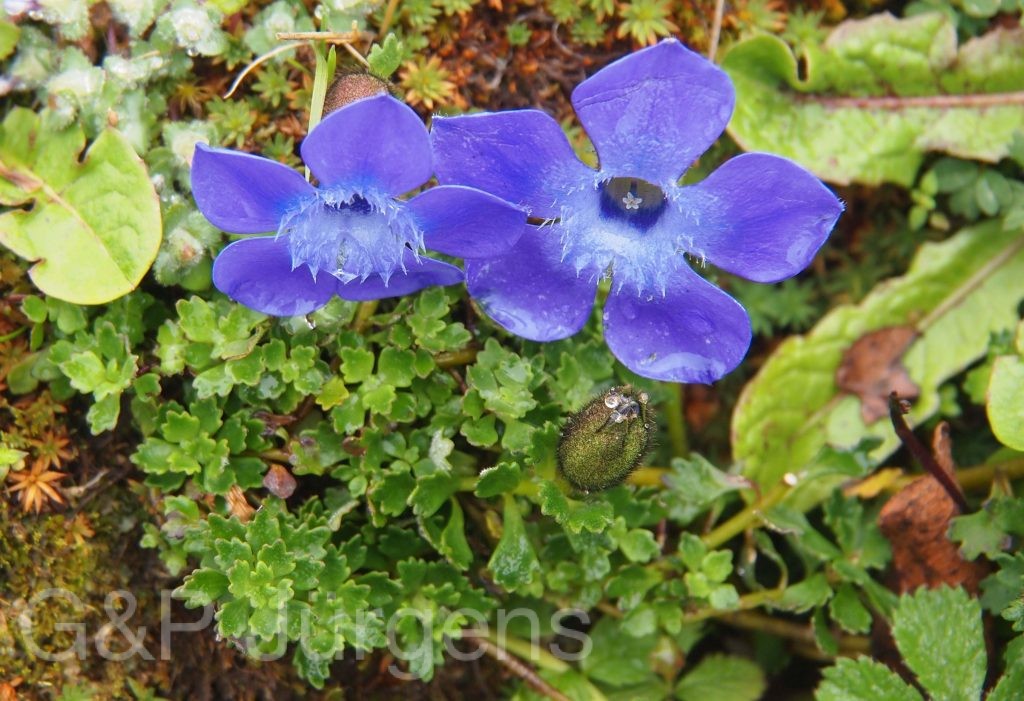
Cyananthus lobatus is a well-known Himalayan trailing bellflower distributed from Nepal through India, Bhutan and southern Tibet (China) into Myanmar, with the genus's comparatively abundant 515 GBIF records (additional European and North American codes reflect its popularity in cultivation). It grows in the alpine and upper subalpine zones on open grassy slopes, rock ledges, screes and moist turf, broadly between about 3000 and 4500 m. The plants illustrated, from the Shele-La in Bhutan at around 4100 m in September and from Dzongri in Sikkim near 4000 m in August, occupy this late-summer to autumn alpine habitat.

It is a low, mat-forming or sprawling perennial herb arising from a stout rootstock, with prostrate to ascending, often reddish stems bearing small, alternate, obovate leaves that are usually lobed or toothed and somewhat fleshy. The flowers are solitary and terminal, large and showy for the plant's size; the broadly funnelform to bowl-shaped corolla is deep blue to violet-blue, five-lobed, and conspicuously bearded with white hairs in the throat, subtended by a swollen, hairy calyx tube. The fruit is a capsule enclosed in the persistent calyx, releasing numerous small seeds.

Cyananthus is a Sino-Himalayan genus distinguished from other Campanulaceae by its terminal solitary flowers, throat beard and superior ovary, and C. lobatus is its most familiar species, long valued as a choice late-flowering rock-garden plant, which explains its wide ex-situ record base. Its prostrate, cushiony habit suits exposed high-altitude ground. The species is widespread and locally common across the Himalaya and is not considered threatened, although alpine grazing and warming-driven upslope vegetation shifts could affect individual populations.

Author: Wall. ex Benth. · Sources: POWO (Kew), GBIF, Flora of Bhutan, Flora of China, Annotated Checklist of the Flowering Plants of Nepal, Lammers Revision of Campanulaceae

Rolfe ex. Hemsl.

BhutanPG2011 188
Bhutan Tsochenchen, 3600m June
BhutanPG2011 794
Bhutan Chele-La, 3850m July
Nepal 99 48 ergebnis
West-Nepal Nyor Gaad 2700m, June
Nepal 99 51 ergebnis
West-Nepal Nyor Gaad 2700m, June
Nepal 99 370 ergebnis
West-Nepal Nyor Gaad 2700m, June

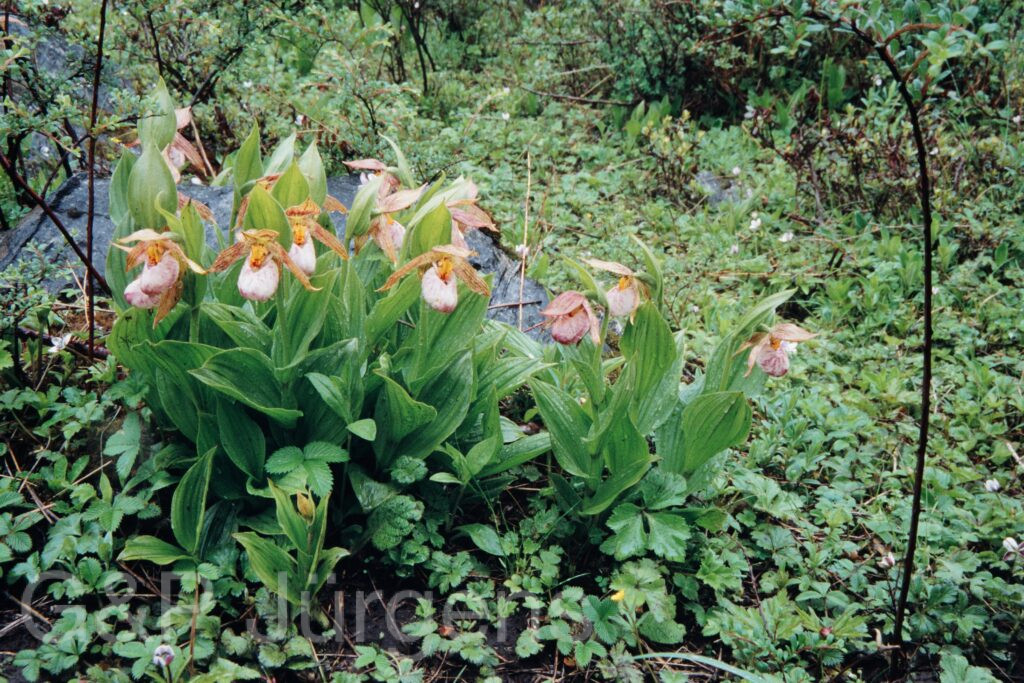
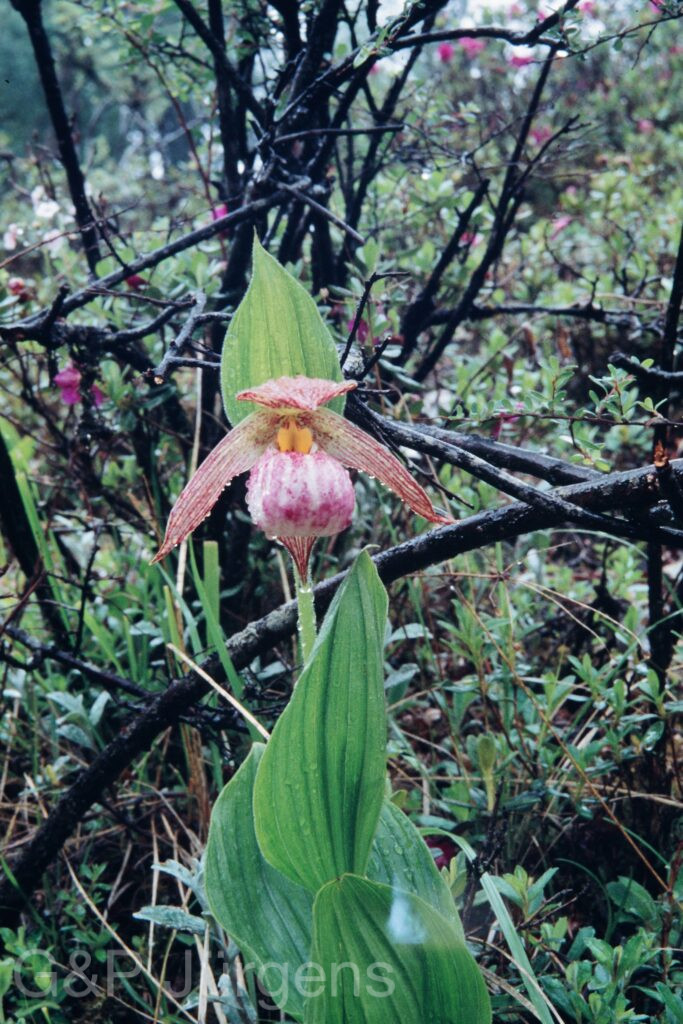
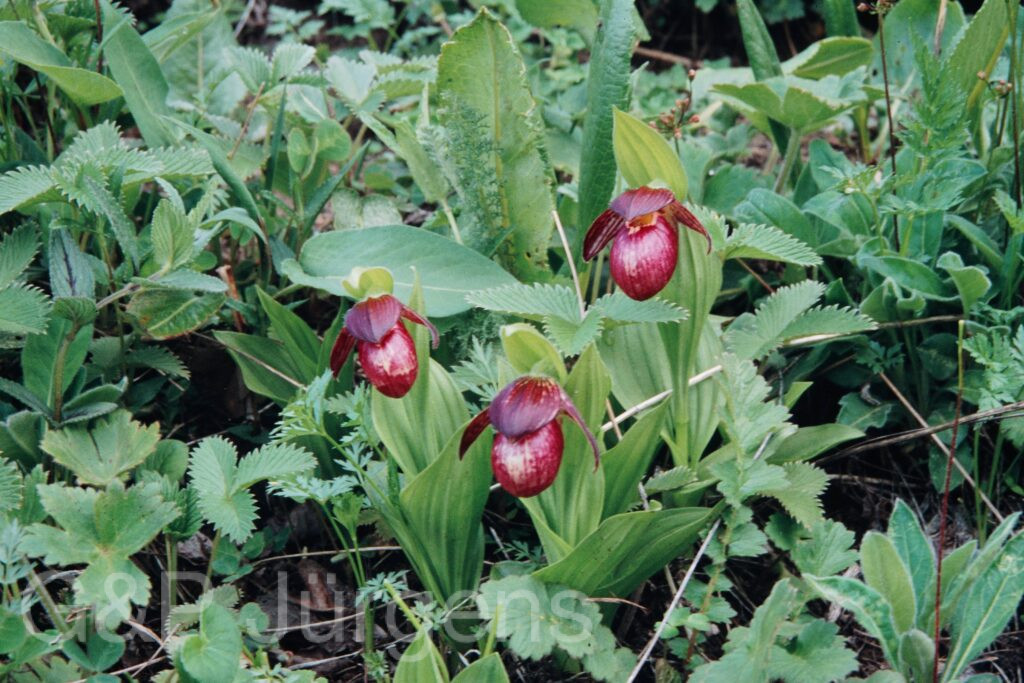
Description

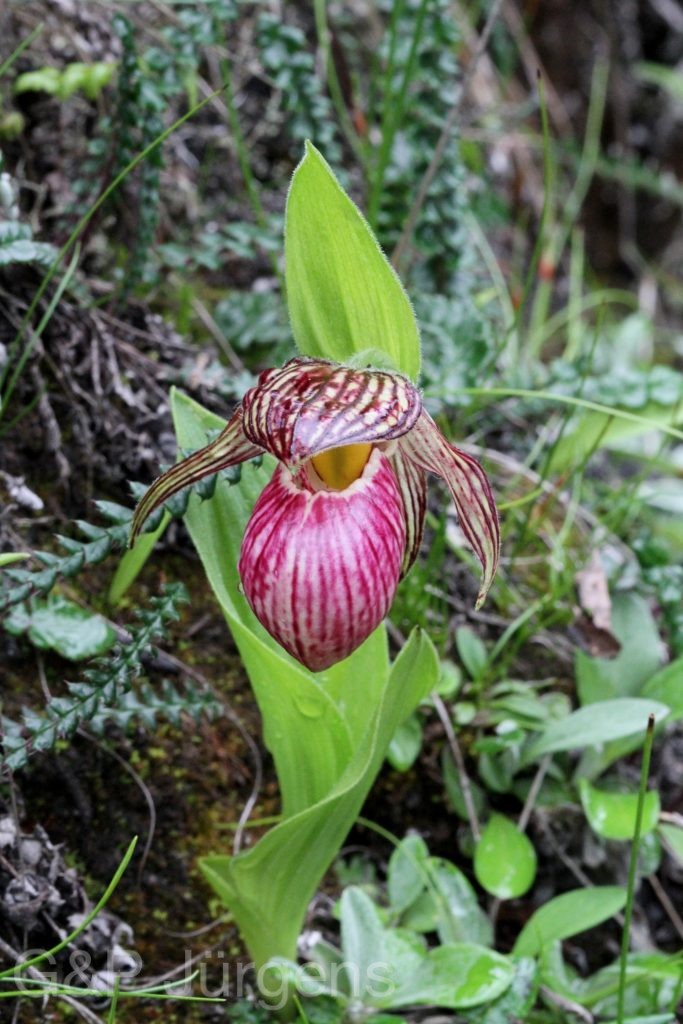
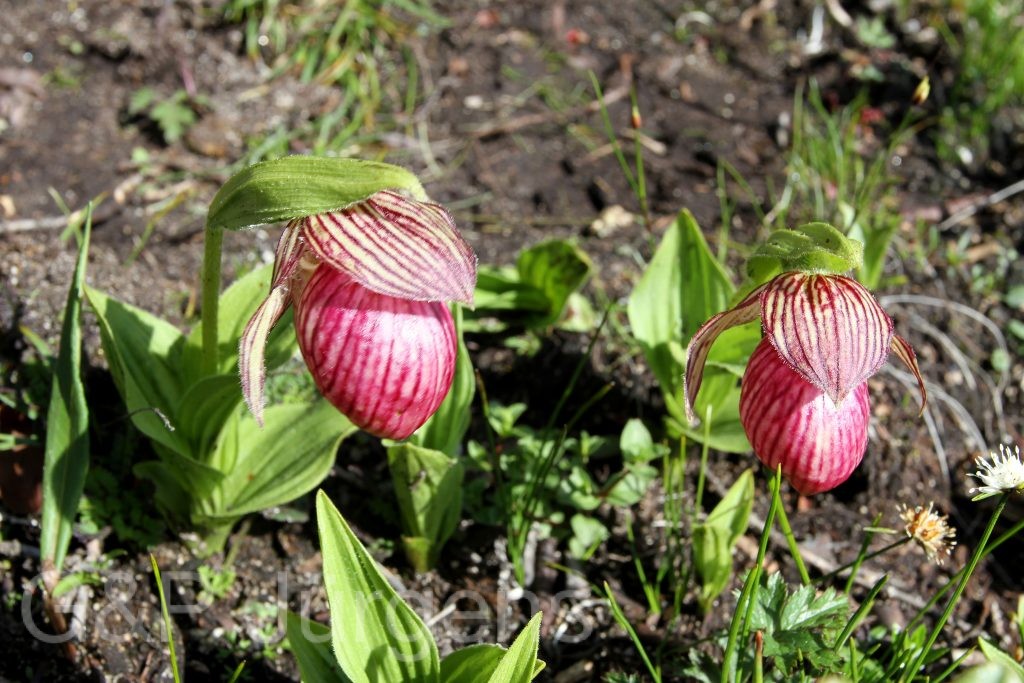
Cypripedium himalaicum is a terrestrial slipper orchid native to the eastern Himalayas, found in Bhutan, Nepal, Sikkim, and southern Tibet. It grows in alpine meadows and open forests at elevations of 3,000 to 4,500 m.

The plant reaches 15–35 cm in height, bearing one or two broadly elliptic leaves. The solitary flower is distinctive: the dorsal sepal is greenish-white with purple veins, the petals are narrow and twisted, and the lip forms a large inflated pouch, pale yellowish-green with purple spotting. Flowering occurs from May to July.

Cypripedium himalaicum is one of the highest-altitude slipper orchids in the world. It is classified as vulnerable due to habitat loss and overcollection. All Cypripedium species are listed under CITES Appendix II.

Author: Rolfe ex. Hemsl. · Sources: POWO (Kew), Flora of Bhutan, CITES Checklist

Hook.f. & Thomson

Nepal 95 415 G723 ergebnis
Nepal Jaisuli Kund 4200m October

Description

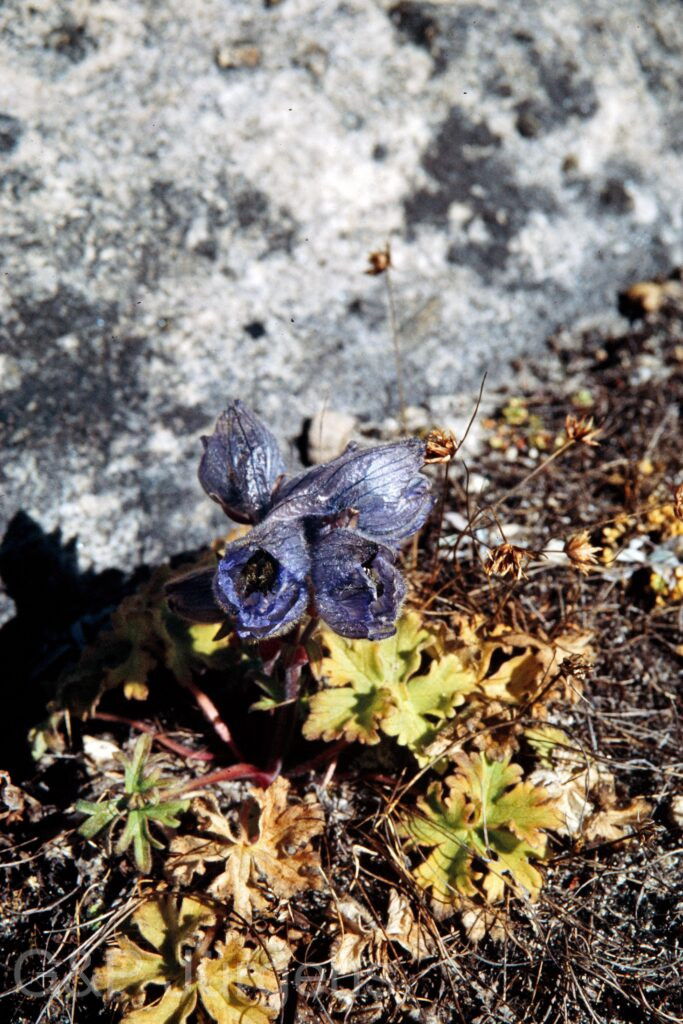
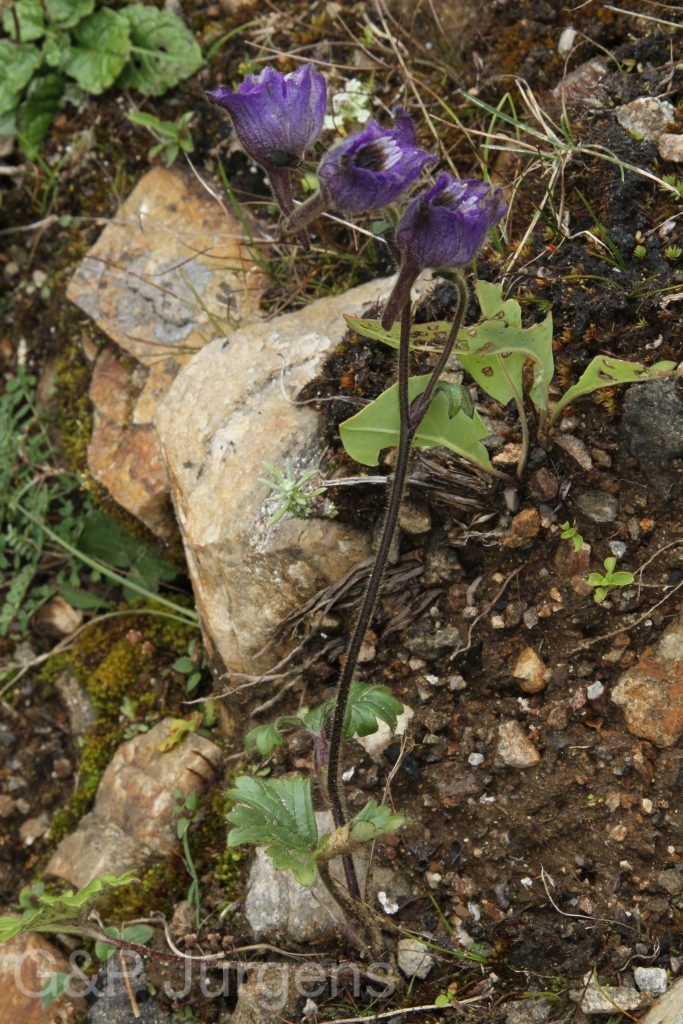
Delphinium glaciale is a high-alpine larkspur distributed across the central and eastern Himalaya, with documented occurrences in Nepal, India, Bhutan and southern Tibet (China); GBIF records some 85 collections from this range. It is a plant of the upper alpine and subnival zones, typically encountered between roughly 4000 and 5000 m on open screes, moraines, glacial forelands and stony alpine turf, as reflected by the population photographed near Jaisuli Kund in Nepal at about 4200 m in October. It tolerates a short growing season, intense insolation and prolonged snow cover.

The species is a dwarf, cushion-forming or compactly tufted perennial herb arising from a stout woody rootstock. Stems are short, ascending and densely covered, like the foliage, in spreading whitish to yellowish hairs that lend the plant a shaggy appearance. The leaves are palmately divided into narrow segments, mostly basal or crowded toward the stem base. The inflorescence is few-flowered and condensed; the zygomorphic flowers are deep blue to violet-blue, the posterior sepal prolonged into a stout spur enclosing two nectariferous petals, the whole densely pubescent externally. The fruit is a cluster of erect, hairy follicles releasing small angular seeds.

Within Delphinium the species belongs to the assemblage of dwarf, glandular- or villous-haired Sino-Himalayan high-alpine larkspurs adapted to glacial habitats, a feature echoed in the epithet glaciale. Its compact habit and dense indumentum are classic adaptations to wind exposure and cold. Like most members of the genus it contains diterpenoid alkaloids and is toxic to livestock. No specific conservation assessment has been published; its restriction to remote subnival terrain confers natural protection, though high-altitude warming and habitat shifts may threaten such narrowly zoned alpine specialists.

Author: Hook.f. & Thomson · Sources: POWO (Kew), GBIF, Flora of Nepal, Flora of Bhutan, Flora of China, Annotated Checklist of the Flowering Plants of Nepal, Munz Monograph of Delphinium

C.Marquand & Airy Shaw

Bhutan2012 270
Bhutan Shele-La, 4000m September
Bhutan2012 271
Bhutan Shele-La, 4000m September

Description

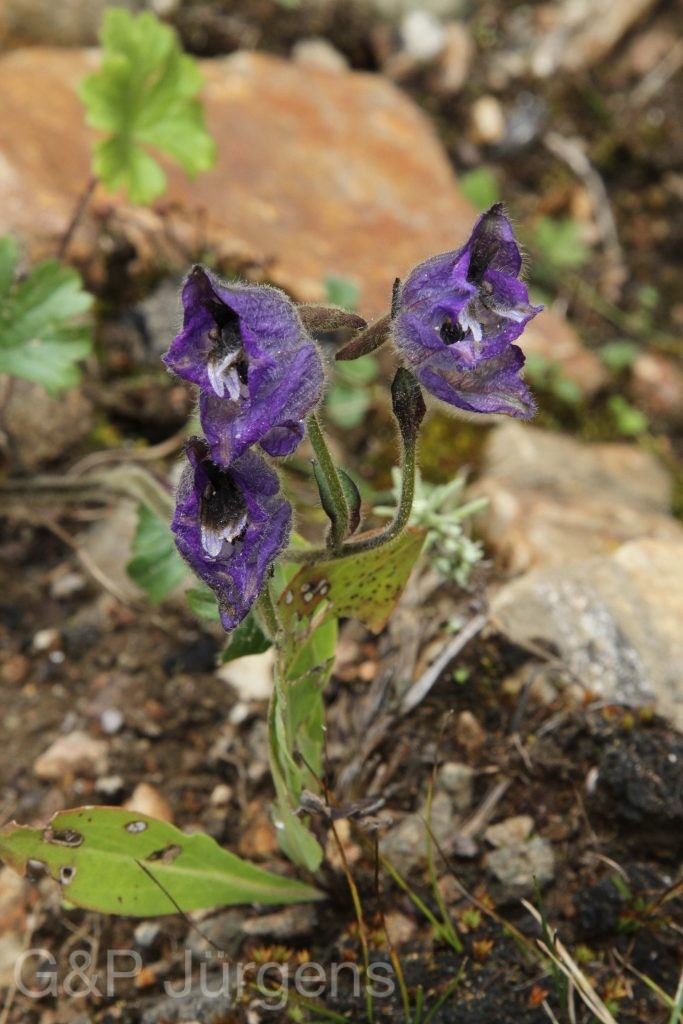
Delphinium wardii C.Marquand & Airy Shaw is a high-alpine larkspur of very limited distribution; GBIF holds only about 10 occurrences, from Bhutan, neighbouring China (southern Tibet) and northeastern India. It is a plant of open alpine habitats, growing on stony slopes, rocky meadows, scree and grassy turf above the treeline, generally between about 3800 and 4500 m. The individual photographed at Shele-La in Bhutan at 4000 m in September, flowering in the late-season alpine zone, exemplifies its occupation of cold, well-drained, exposed high-altitude sites near the upper limit of vascular plant growth in the eastern Himalaya.

It is a perennial herb arising from a fibrous to somewhat woody rootstock, with erect stems of modest height, often pubescent in the upper parts. The leaves are palmately divided into narrow lobes or segments, the basal leaves long-petiolate and the cauline ones smaller and shorter-stalked. The flowers are borne in a few-flowered terminal raceme; each is zygomorphic with five petaloid sepals, the uppermost prolonged backward into a conspicuous spur, the whole flower deep blue to violet-blue. Within the sepals sit the smaller petals, the upper pair extended into nectar-bearing spurs enclosed in the sepaline spur. The fruit is a cluster of several erect follicles releasing angular, scaly seeds.

The genus Delphinium is well represented in the Sino-Himalayan alpine flora, where its spurred, bee-pollinated flowers are adapted to long-tongued bumblebees that probe the nectar spurs. Like its congeners the plant contains diterpenoid alkaloids and is poisonous to livestock. With an extremely small known range, very few documented collections and confinement to a narrow, climatically vulnerable high-alpine band, Delphinium wardii is a regionally restricted endemic of the eastern Himalaya whose limited occurrence record warrants particular attention to its conservation.

Author: C.Marquand & Airy Shaw · Sources: POWO (Kew), GBIF, Flora of Bhutan, Flora of China, Annotated Checklist of the Flowering Plants of Nepal, Wang & Warnock revision of Delphinium

O.E.Schulz

BhutanPG2011 656
Bhutan Thitha-Tso 4360m, July

Description

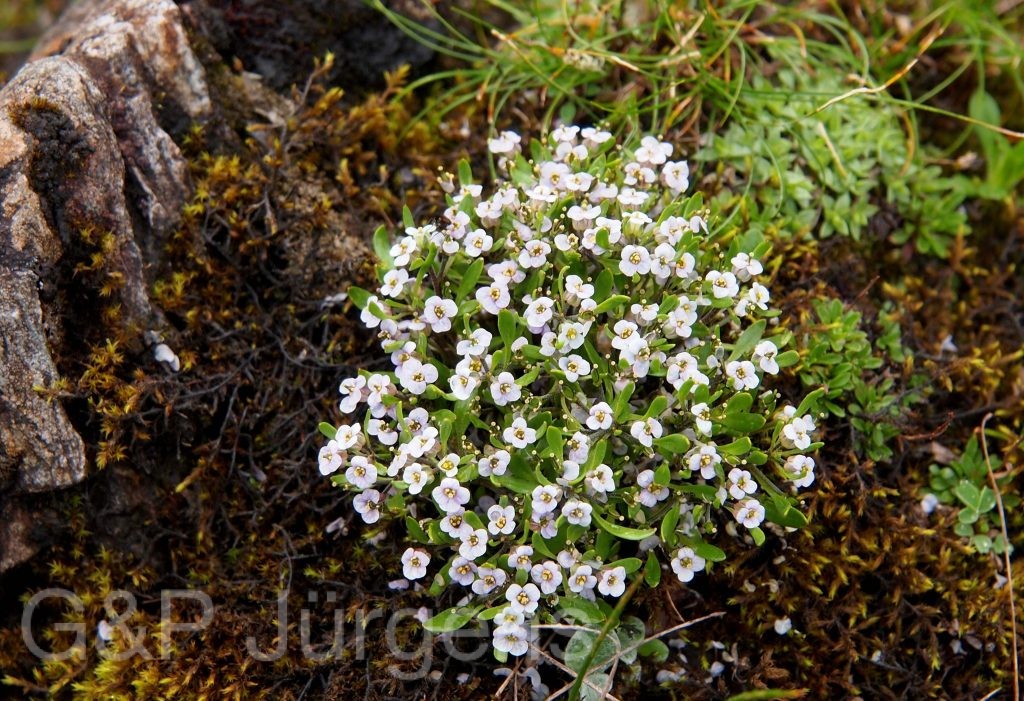
Draba oariocarpa is a high-alpine crucifer of the eastern Himalaya, known principally from Bhutan and adjoining areas, where GBIF holds only a single occurrence record, reflecting both its narrow distribution and its remote habitat. It is a plant of open alpine screes, stony slopes, moraines and frost-disturbed gravels of the upper alpine and subnival zones, generally above 4000 m. The photograph from the Thitha Tso in Bhutan at about 4360 m in July shows the species flowering in the brief high-summer window in its harsh, exposed lakeside scree habitat.

The plant is a small, tufted or cushion-forming perennial arising from a branched caudex topped by rosettes of leaves. The leaves are small, oblong to spathulate, entire or nearly so, and clothed in the stellate and simple hairs characteristic of the genus, giving a greyish, roughened texture. From the rosettes arise short, leafless or few-leaved scapes bearing a compact raceme of small flowers; these have four sepals and four yellow (sometimes fading whitish) petals in the cruciform arrangement typical of the Brassicaceae, with six stamens. The fruit, alluded to in the epithet oariocarpa (egg-fruited), is a small, ovate to elliptic, somewhat flattened silicula containing several seeds.

Draba is a very large, predominantly arctic-alpine genus of the Brassicaceae, taxonomically intricate owing to widespread polyploidy, apomixis and minor morphological differentiation, so that many narrowly defined species and synonyms have been described from the Himalaya and Tibet. The dwarf cushion habit and dense indumentum are classic adaptations to the cold, desiccating and intensely irradiated subnival environment. Given its apparently very restricted range and few documented collections, D. oariocarpa is poorly known and warrants further field assessment of its distribution and status.

Author: O.E.Schulz · Sources: POWO (Kew), GBIF, Flora of Bhutan, Flora of China, Annotated Checklist of the Flowering Plants of Nepal, Al-Shehbaz's systematic studies of Draba and the Brassicaceae

Hook.f. & Thomson

Nepal 2009 88 ergebnis
Nepal Samthang 2410m, May

Description

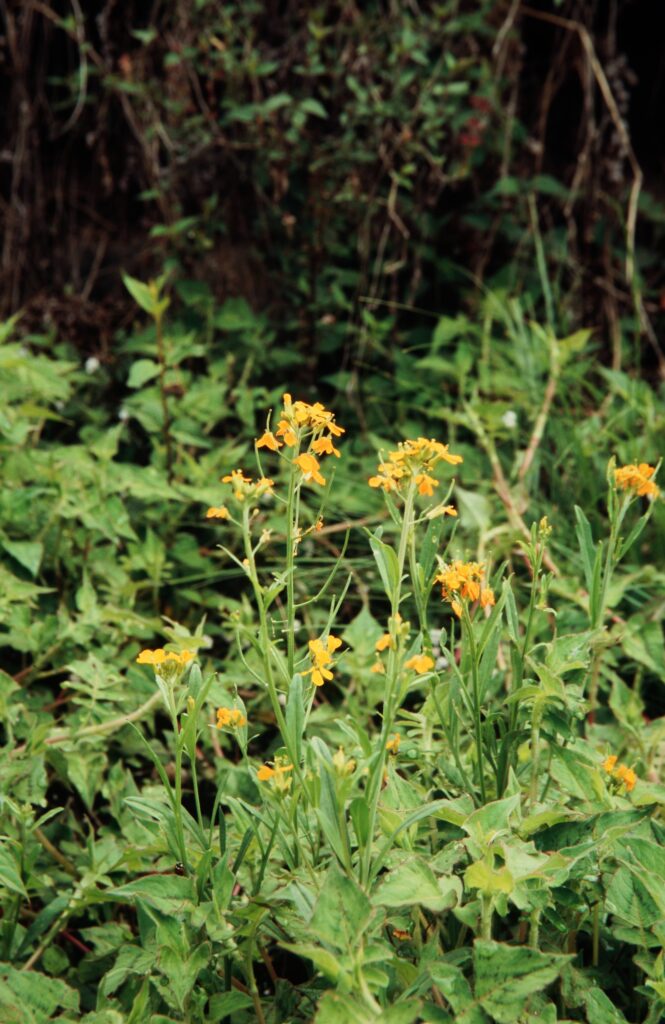
Erysimum pachycarpum is a Himalayan wallflower distributed across Nepal, Bhutan, northern India, and extending into southwestern China (Tibet, Yunnan). GBIF documents 39 occurrences from these countries. The species inhabits dry rocky slopes, open scrubland, disturbed ground along trails, and stony riverbanks in the warm to cool temperate zone, at elevations from approximately 1,800 to 3,500 m. The photograph from Samthang in Nepal at 2,410 m, taken in May, shows the species at a mid-elevation site during its spring flowering period.
The plant is a biennial or short-lived perennial herb, 20–60 cm tall, with erect, usually unbranched stems covered in appressed, medifixed (malpighian) trichomes characteristic of the genus. Basal leaves are oblanceolate, 3–8 cm long, with entire to sinuate-dentate margins, forming a rosette that may wither at flowering; cauline leaves are narrowly lanceolate, sessile, progressively smaller upward. The inflorescence is a dense, terminal raceme that elongates considerably in fruit. Flowers are tetramerous with yellow petals, 8–12 mm long, spatulate, clawed. Stamens six, tetradynamous. The silique is stout and thick-walled — hence the epithet pachycarpum (thick-fruited) — erect to slightly spreading, 3–6 cm long, quadrangular in cross-section, densely covered with appressed trichomes. Seeds are oblong, narrowly winged.
Erysimum pachycarpum is distinguished from other Himalayan Erysimum species primarily by its robust, thickened siliques and relatively large flowers. The genus Erysimum is taxonomically challenging due to frequent hybridisation and subtle morphological boundaries between species, and molecular studies are ongoing to resolve relationships within the Himalayan clade. The species is not currently assessed as threatened and appears locally common in suitable open, dry habitats across its range.

Author: Hook.f. & Thomson · Sources: POWO (Kew), GBIF, Flora of China Vol. 8, Grierson & Long: Flora of Bhutan Vol. 1