
Hook.f. & Thomson
Description
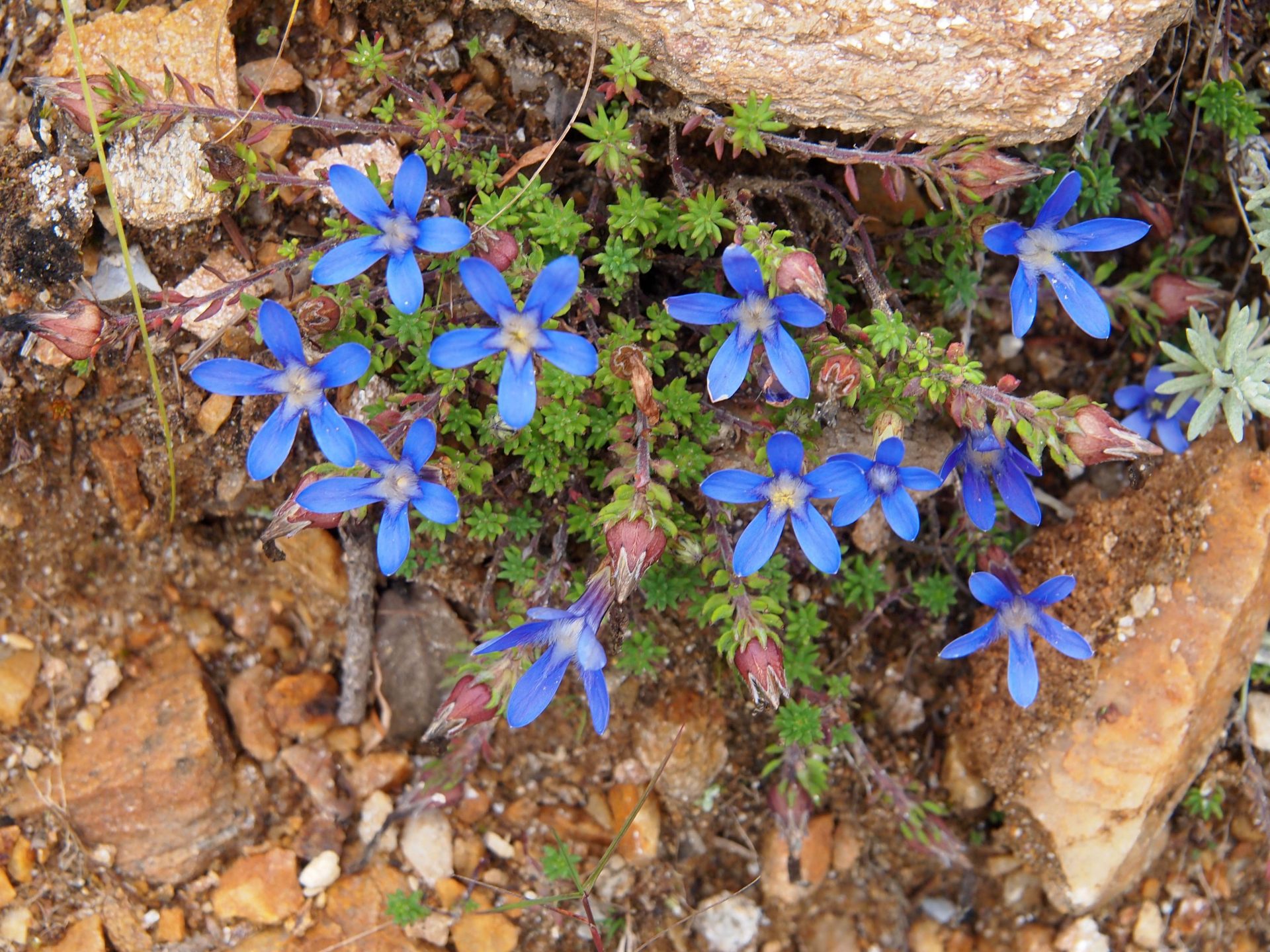
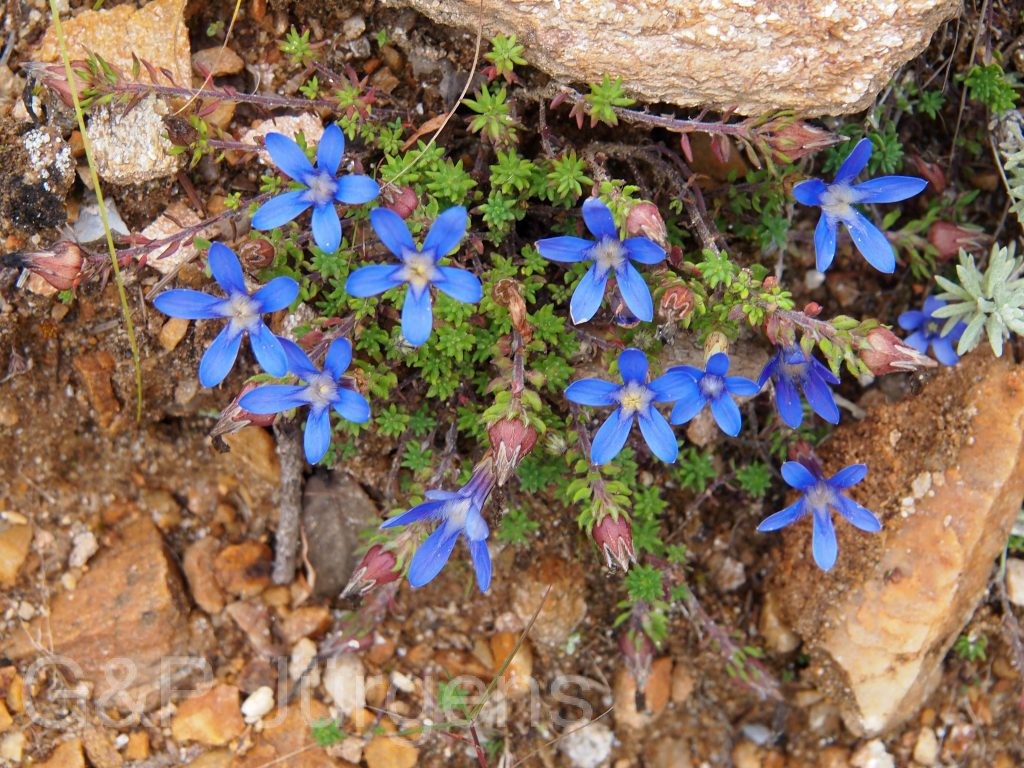
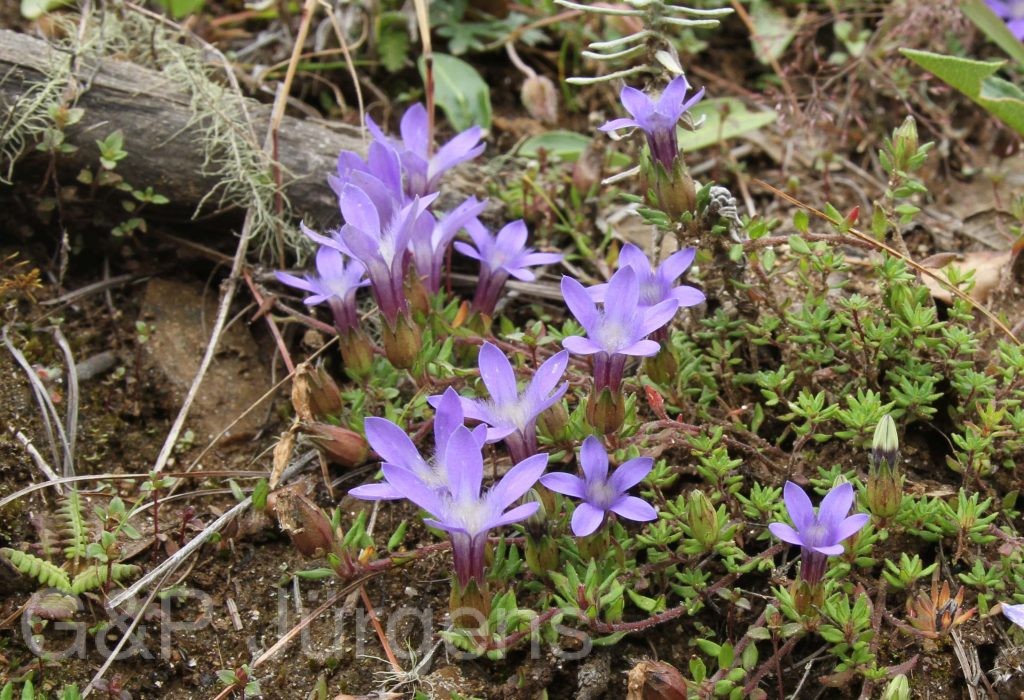
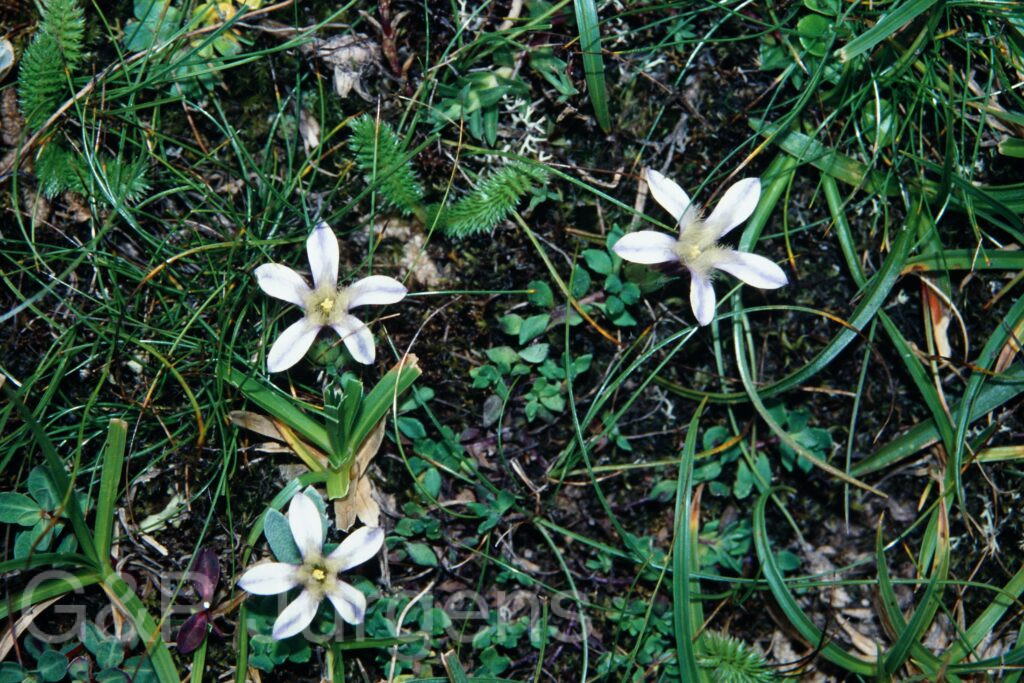
Cyananthus incanus is a low alpine perennial of the eastern Himalaya and adjacent Tibet, recorded from China, Nepal, India, Bhutan and Myanmar, with about 777 occurrences in GBIF. It grows on open alpine turf, stony slopes, screes and the margins of dwarf rhododendron scrub, generally between 3500 and 4500 m, in well-drained sites of the upper alpine zone. The photographs from the Shele La in Bhutan at about 4100 m in September and from Dzongri in Sikkim at about 3950 m in August show the plant flowering through the late-monsoon and early-autumn season typical of the high eastern Himalaya.
The plant is a mat-forming or loosely tufted perennial with a stout, woody rootstock from which radiate slender, prostrate to ascending stems. The small leaves are alternate, ovate to obovate, entire or slightly toothed, and clothed in greyish hairs, the indumentum reflected in the epithet incanus. The flowers are solitary and terminal, comparatively large for the plant; the calyx is densely hairy and tubular, and the broadly bell-shaped to funnelform corolla is blue to purplish-blue with five spreading lobes and a conspicuous tuft of hairs (a beard) closing the throat, a hallmark of the genus. The fruit is a capsule splitting from the apex to release numerous small seeds.
Cyananthus is a small Sino-Himalayan genus of the Campanulaceae distinguished from Campanula by its terminal solitary flowers, a deeply lobed corolla and the bearded throat. The cushion or mat habit and woolly leaves are typical adaptations to the cold, wind-exposed and sun-drenched conditions of the alpine zone. Several species, including C. incanus, are prized in alpine and rock gardens for their intense blue flowers. Locally frequent across its range, it is not regarded as threatened.
Author: Hook.f. & Thomson · Sources: POWO (Kew), GBIF, Flora of China, Flora of Bhutan, Annotated Checklist of the Flowering Plants of Nepal, Lammers' classification of the Campanulaceae