
Wall. ex Benth.
Description
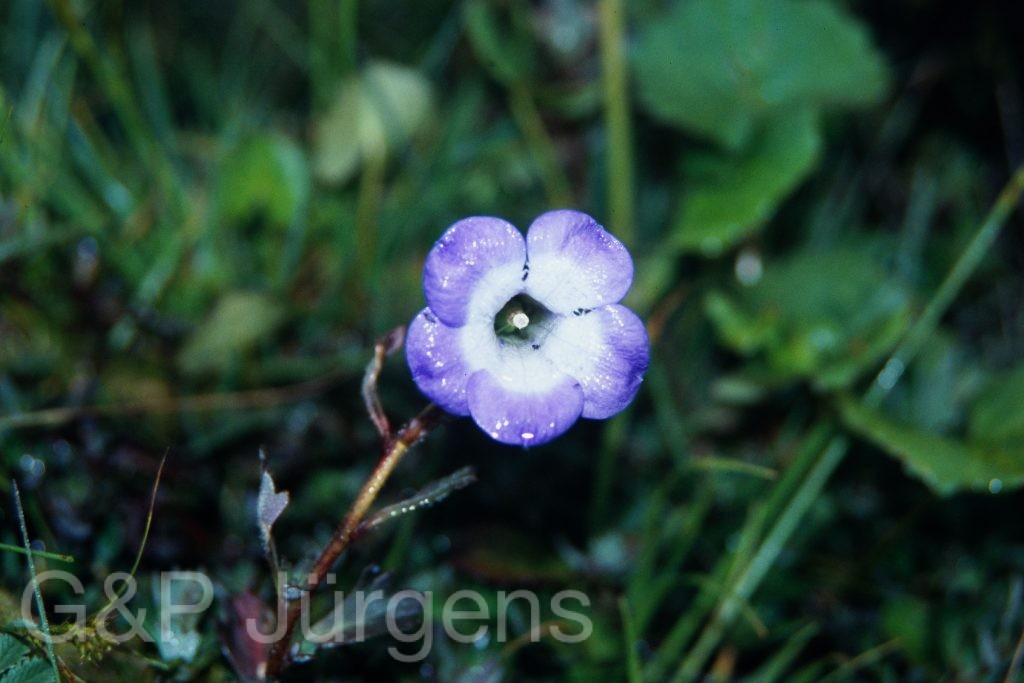
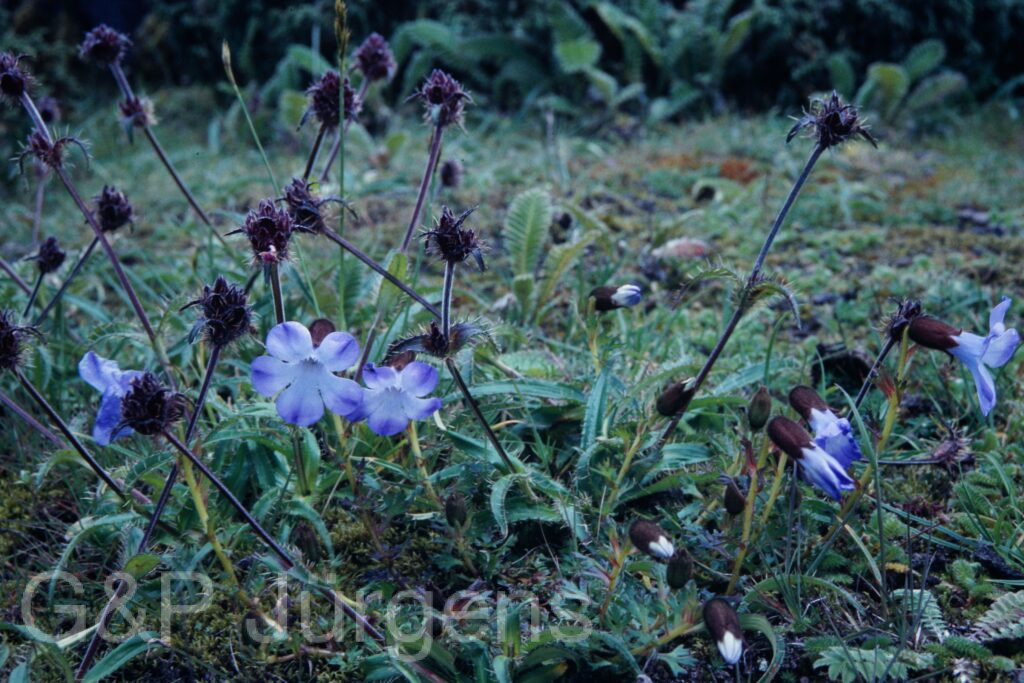
Cyananthus lobatus is a well-known Himalayan trailing bellflower distributed from Nepal through India, Bhutan and southern Tibet (China) into Myanmar, with the genus's comparatively abundant 515 GBIF records (additional European and North American codes reflect its popularity in cultivation). It grows in the alpine and upper subalpine zones on open grassy slopes, rock ledges, screes and moist turf, broadly between about 3000 and 4500 m. The plants illustrated, from the Shele-La in Bhutan at around 4100 m in September and from Dzongri in Sikkim near 4000 m in August, occupy this late-summer to autumn alpine habitat.
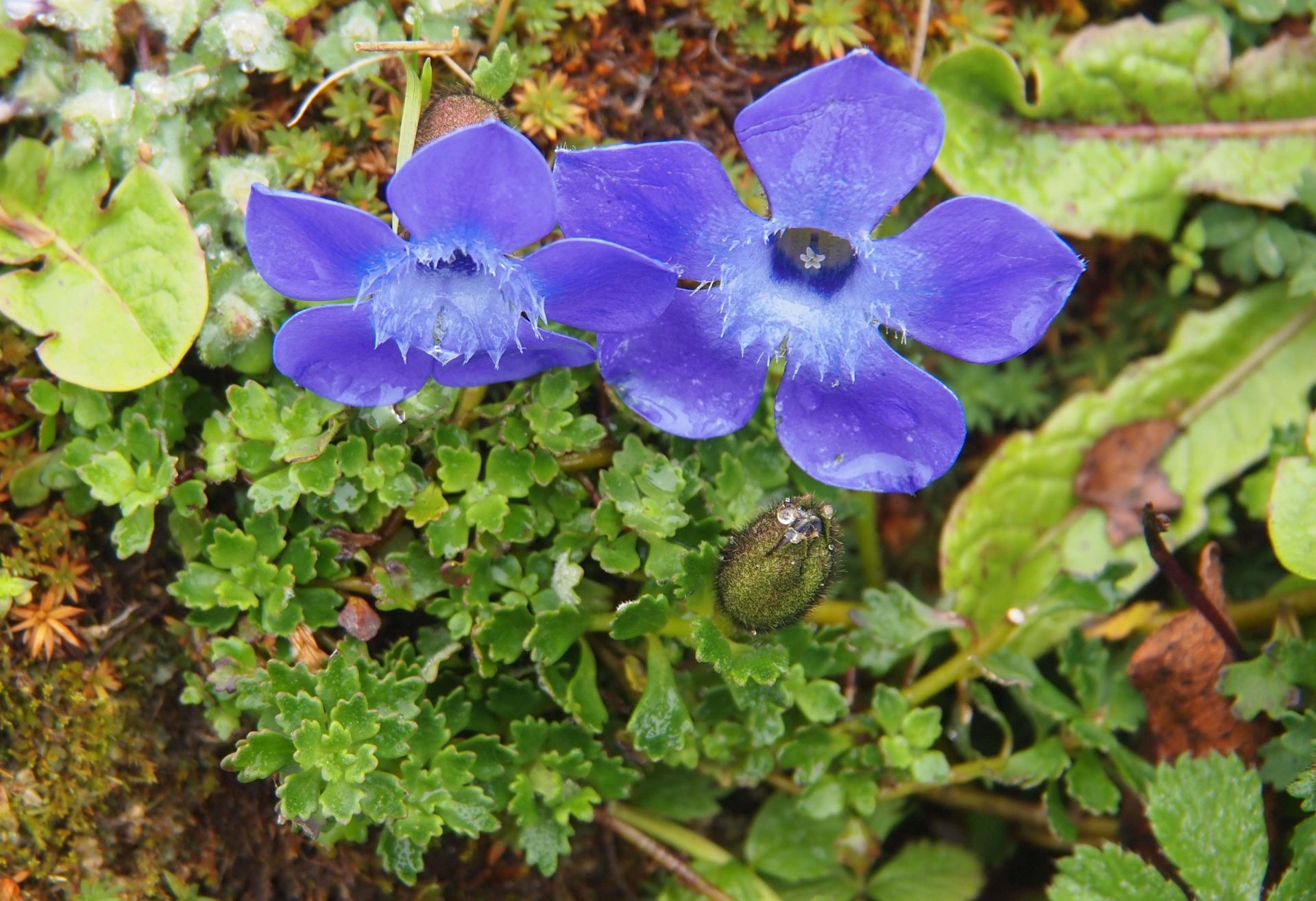
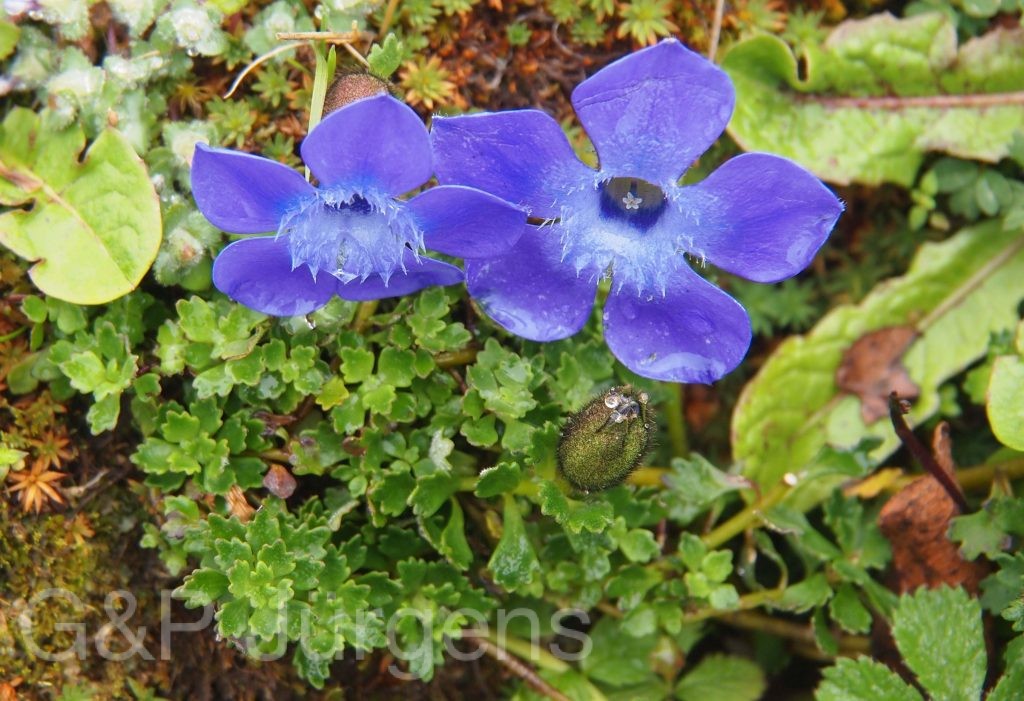
It is a low, mat-forming or sprawling perennial herb arising from a stout rootstock, with prostrate to ascending, often reddish stems bearing small, alternate, obovate leaves that are usually lobed or toothed and somewhat fleshy. The flowers are solitary and terminal, large and showy for the plant's size; the broadly funnelform to bowl-shaped corolla is deep blue to violet-blue, five-lobed, and conspicuously bearded with white hairs in the throat, subtended by a swollen, hairy calyx tube. The fruit is a capsule enclosed in the persistent calyx, releasing numerous small seeds.
Cyananthus is a Sino-Himalayan genus distinguished from other Campanulaceae by its terminal solitary flowers, throat beard and superior ovary, and C. lobatus is its most familiar species, long valued as a choice late-flowering rock-garden plant, which explains its wide ex-situ record base. Its prostrate, cushiony habit suits exposed high-altitude ground. The species is widespread and locally common across the Himalaya and is not considered threatened, although alpine grazing and warming-driven upslope vegetation shifts could affect individual populations.
Author: Wall. ex Benth. · Sources: POWO (Kew), GBIF, Flora of Bhutan, Flora of China, Annotated Checklist of the Flowering Plants of Nepal, Lammers Revision of Campanulaceae