
C.Marquand & Airy Shaw
Description
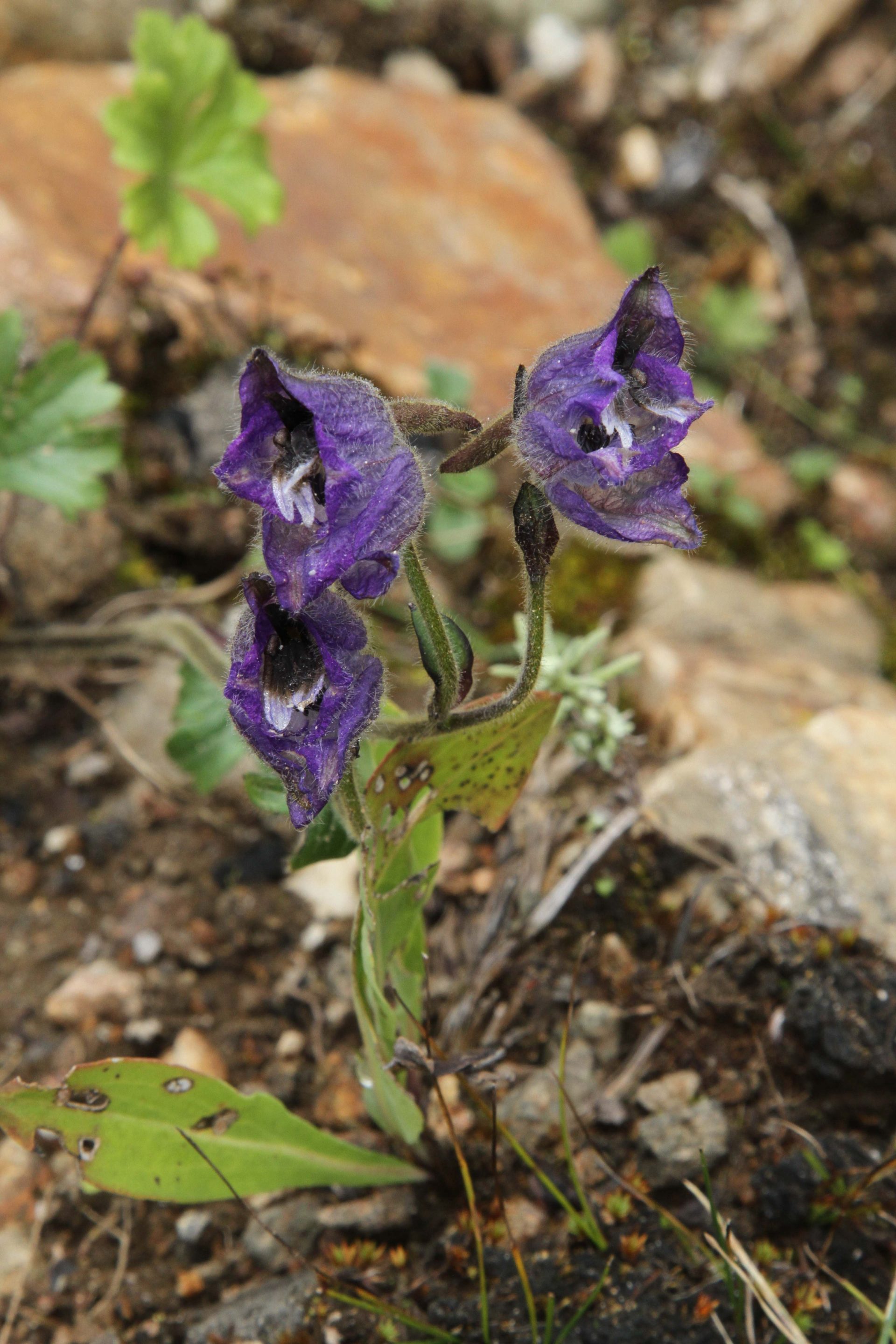
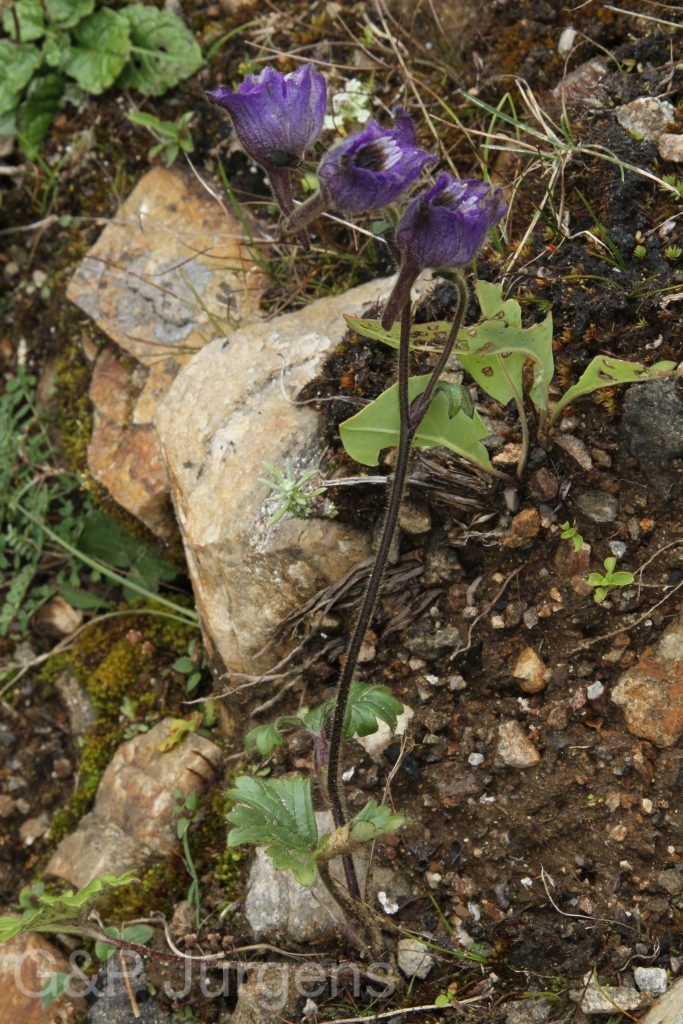
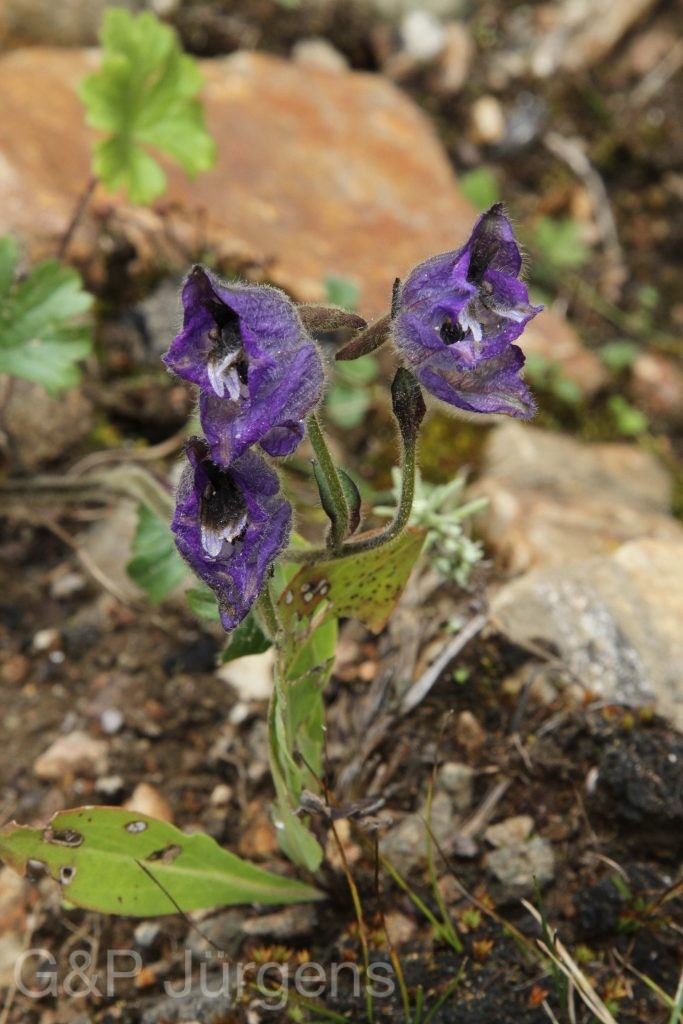
Delphinium wardii C.Marquand & Airy Shaw is a high-alpine larkspur of very limited distribution; GBIF holds only about 10 occurrences, from Bhutan, neighbouring China (southern Tibet) and northeastern India. It is a plant of open alpine habitats, growing on stony slopes, rocky meadows, scree and grassy turf above the treeline, generally between about 3800 and 4500 m. The individual photographed at Shele-La in Bhutan at 4000 m in September, flowering in the late-season alpine zone, exemplifies its occupation of cold, well-drained, exposed high-altitude sites near the upper limit of vascular plant growth in the eastern Himalaya.
It is a perennial herb arising from a fibrous to somewhat woody rootstock, with erect stems of modest height, often pubescent in the upper parts. The leaves are palmately divided into narrow lobes or segments, the basal leaves long-petiolate and the cauline ones smaller and shorter-stalked. The flowers are borne in a few-flowered terminal raceme; each is zygomorphic with five petaloid sepals, the uppermost prolonged backward into a conspicuous spur, the whole flower deep blue to violet-blue. Within the sepals sit the smaller petals, the upper pair extended into nectar-bearing spurs enclosed in the sepaline spur. The fruit is a cluster of several erect follicles releasing angular, scaly seeds.
The genus Delphinium is well represented in the Sino-Himalayan alpine flora, where its spurred, bee-pollinated flowers are adapted to long-tongued bumblebees that probe the nectar spurs. Like its congeners the plant contains diterpenoid alkaloids and is poisonous to livestock. With an extremely small known range, very few documented collections and confinement to a narrow, climatically vulnerable high-alpine band, Delphinium wardii is a regionally restricted endemic of the eastern Himalaya whose limited occurrence record warrants particular attention to its conservation.
Author: C.Marquand & Airy Shaw · Sources: POWO (Kew), GBIF, Flora of Bhutan, Flora of China, Annotated Checklist of the Flowering Plants of Nepal, Wang & Warnock revision of Delphinium