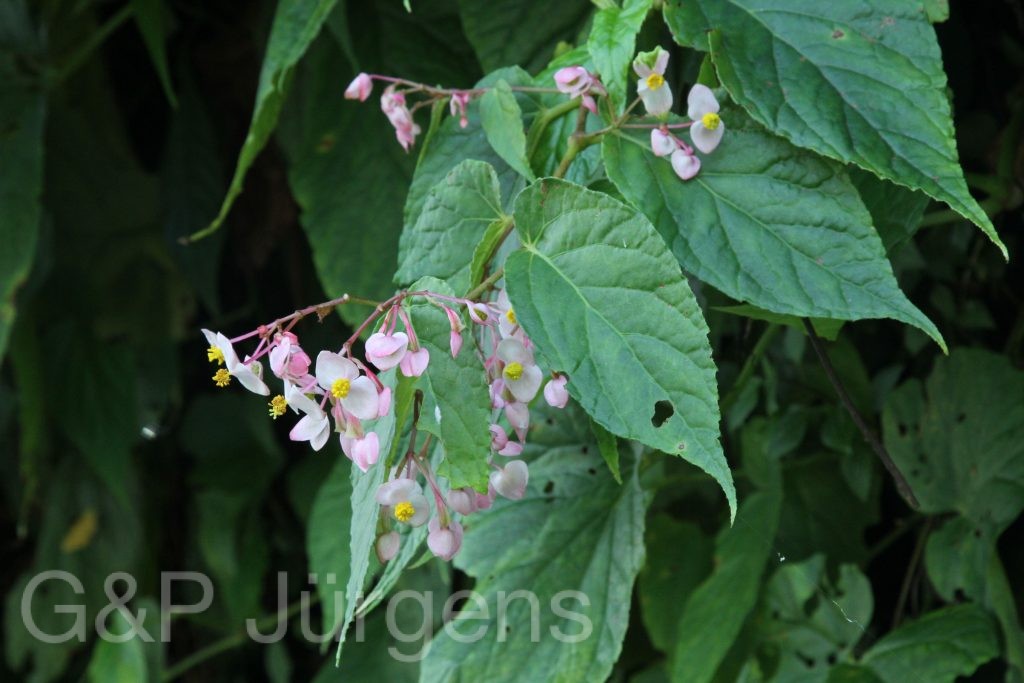
Author

GP Jürgens

(Wall.) Briq.

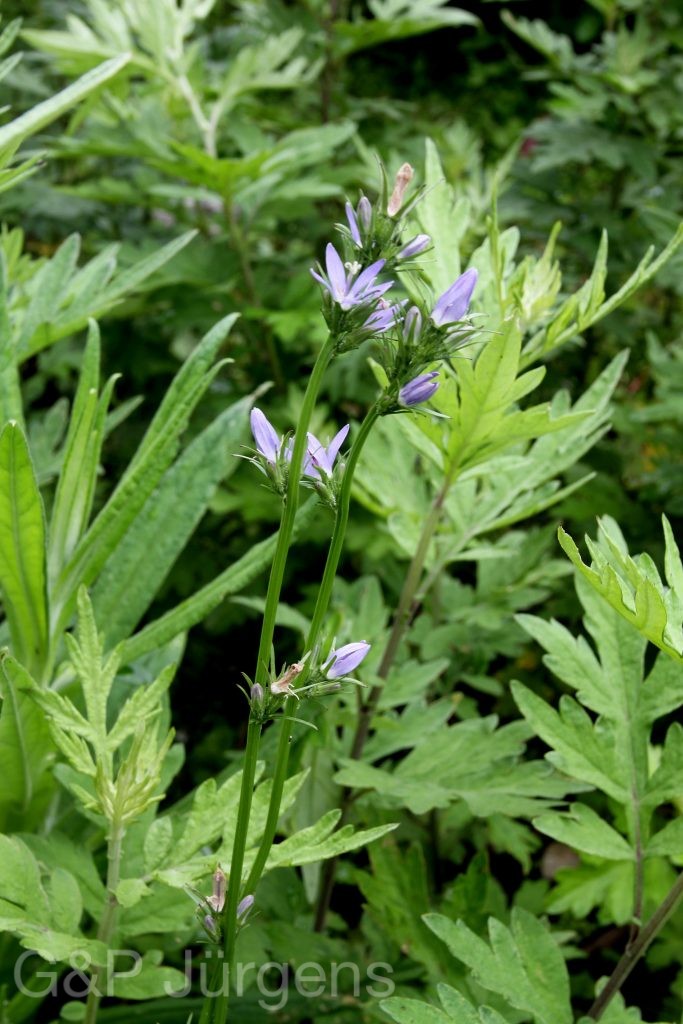
BhutanPG2011 840
Bhutan Paro-Chu, 2400m July

Description

Asyneuma fulgens is a bellflower-family herb widely distributed across the Himalaya and adjacent Asia, well represented in GBIF with about 276 occurrences from China, India, Nepal, Bhutan, Myanmar and beyond. It is a plant of open, sunny situations, occurring on grassy and rocky slopes, banks, clearings, scrub and roadside verges in the warm-temperate to lower subalpine belt. The plant photographed along the Paro-Chu in Bhutan at about 2400 m in July was recorded in the monsoon flowering season, consistent with its preference for moist but well-drained montane slopes in the lower part of its altitudinal range.

It is an erect perennial herb, often slender and somewhat wiry, with simple or sparingly branched stems arising from a thickened rootstock and exuding latex when cut, as is typical of the family. The leaves are alternate, the lower ones petiolate and ovate to lanceolate, the upper sessile and narrower, with toothed margins. The flowers are borne in elongate, often interrupted spike-like or racemose inflorescences; each has a five-lobed calyx and a deeply five-parted, star-shaped corolla in shades of blue, violet or purple, the linear lobes spreading at anthesis. The style is exserted with a lobed stigma, and the fruit is a capsule dehiscing by lateral pores to shed many small seeds.

Asyneuma is segregated from Phyteuma and Campanula chiefly by its deeply divided, rotate corolla and the manner of capsule dehiscence. The genus is centred on Eurasia, with a notable Himalayan and Sino-Himalayan representation. As a widespread, ecologically tolerant species occupying disturbed as well as natural slopes, A. fulgens is not of conservation concern, and it provides a nectar and pollen resource for bees and other insect visitors in montane meadows.

Author: (Wall.) Briq. · Sources: POWO (Kew), GBIF, Flora of China, Flora of Bhutan, Hooker Flora of British India, Lammers World Checklist of Campanulaceae
Müll.Arg.

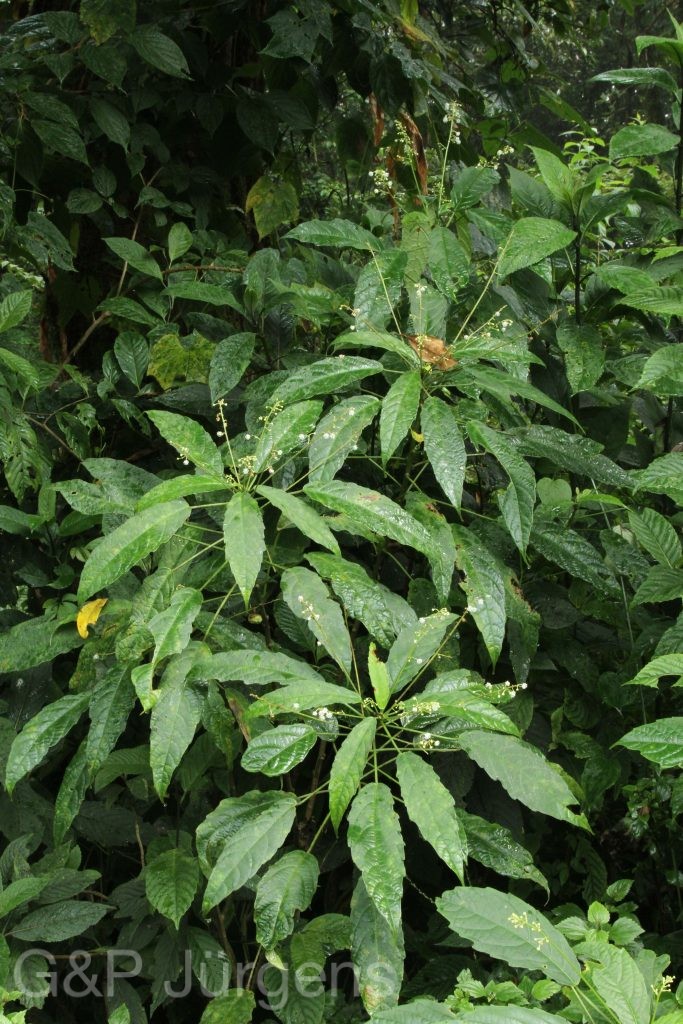
Bhutan2012 684
Bhutan Tserang 850m, September

Description

Baliospermum calycinum is a broadly distributed spurge of the Indo-Himalayan and Southeast Asian region, with more than 550 georeferenced occurrences across China, Thailand, India, Myanmar, Nepal, Vietnam, Bhutan, Laos and Bangladesh. It is a plant of warm, subtropical forest margins, scrub, ravines and disturbed ground at low to moderate elevations. The specimen recorded near Tsirang (Tserang) in southern Bhutan at about 850 m in September reflects its typical lowland habitat, fruiting toward the end of the monsoon on moist, fertile soils in partly shaded settings.

It is a monoecious, somewhat woody undershrub or robust herb exuding a watery to milky sap typical of the Euphorbiaceae. The leaves are alternate, large, the lower ones often broadly ovate and palmately lobed while the upper become narrower and merely toothed, with glandular teeth and a serrate margin. The small, apetalous unisexual flowers are borne in axillary racemiform inflorescences, with female flowers below and numerous male flowers above; the species is distinguished by its conspicuously developed, persistent calyx. The fruit is a three-lobed schizocarpic capsule splitting into three two-valved cocci that eject the smooth, mottled seeds.

Within Euphorbiaceae the genus Baliospermum comprises a small number of Asian species long valued in traditional medicine for the purgative and irritant properties of the seed oil. Taxonomic confusion with related taxa such as B. montanum has historically obscured its limits, and modern treatments rely on calyx, leaf-lobing and capsule characters for separation. Common and weedy across its wide range, it is of least conservation concern.

Author: Müll.Arg. · Sources: POWO (Kew), GBIF, Flora of Bhutan, Flora of China, Flora of British India, Radcliffe-Smith's account of Euphorbiaceae

Bauhinia purpurea

by GP Jürgens

L.

Bhutan2015 551
Bhutan Punaka 1400m, October
Nepal 95 20 P29 ergebnis
Nepal Gorkha 1200m, Octobre

Description

Bauhinia purpurea is a tropical and subtropical tree native to South and Southeast Asia, with a centre of diversity across India, Nepal, Bhutan, southern China, Thailand, Malaysia and the Philippines. Through widespread cultivation as an ornamental and street tree it has become naturalised across the tropics, and the more than 11,500 GBIF records include numerous occurrences in the Americas (Brazil, Colombia, Mexico, Costa Rica, the Caribbean) and elsewhere. In its native Himalayan foothill range it occupies warm broad-leaved forest, scrub and cultivated margins at low to mid elevations; the Bhutanese tree at Punakha (1400 m) and the Nepalese population near Gorkha (1200 m), both flowering in October, mark its autumn blooming in the eastern Himalaya.

It is a small to medium-sized deciduous tree with a spreading crown. The leaves are distinctive and diagnostic of the genus: broadly ovate to orbicular, cleft at the apex into two rounded lobes for up to one-third to one-half their length, giving the characteristic bilobed "camel-foot" outline, with several palmate veins. The fragrant flowers are borne in short racemes and have five free, narrow, clawed petals coloured rose-purple to magenta, with usually three fertile stamens. The fruit is a flattened, linear-oblong, woody legume that dehisces elastically to scatter several seeds.

Bauhinia purpurea is often confused with the closely allied B. variegata, from which it differs in its narrower petals, reduced number of fertile stamens and later flowering season. The species is economically and culturally significant, valued for shade, ornament, edible flower buds, fibre and traditional medicine. It is common and widely planted, of no conservation concern, but its readiness to naturalise has led to its being treated as locally invasive in some introduced tropical regions.

Author: L. · Sources: POWO (Kew), GBIF, Flora of China, Flora of Bhutan, Annotated Checklist of the Flowering Plants of Nepal, Larsen & Larsen revision of Asian Bauhinia (monograph)

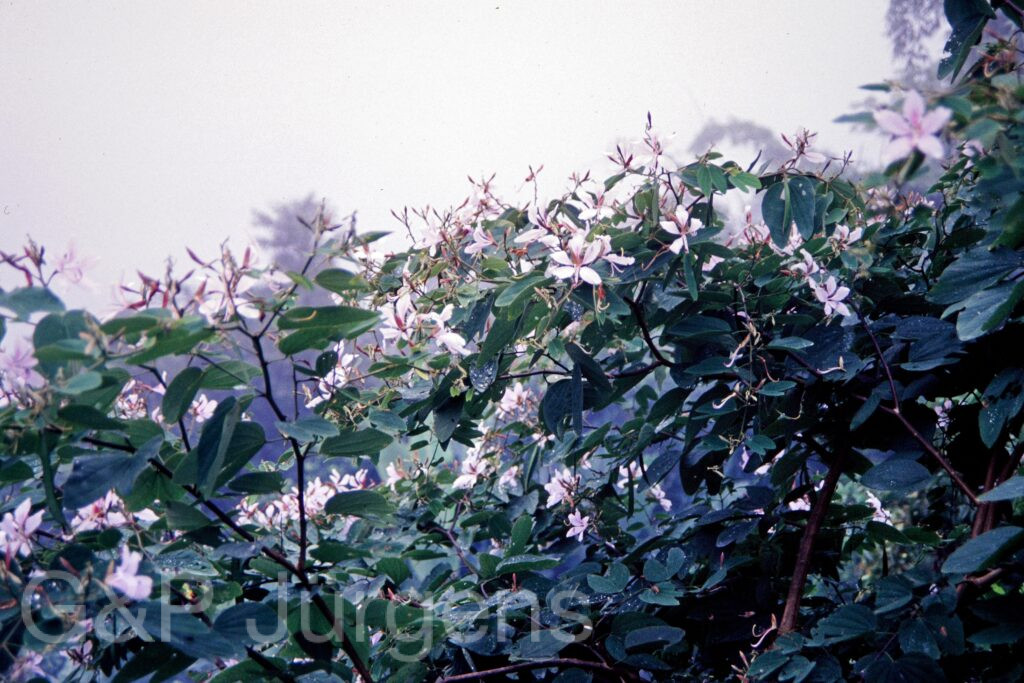
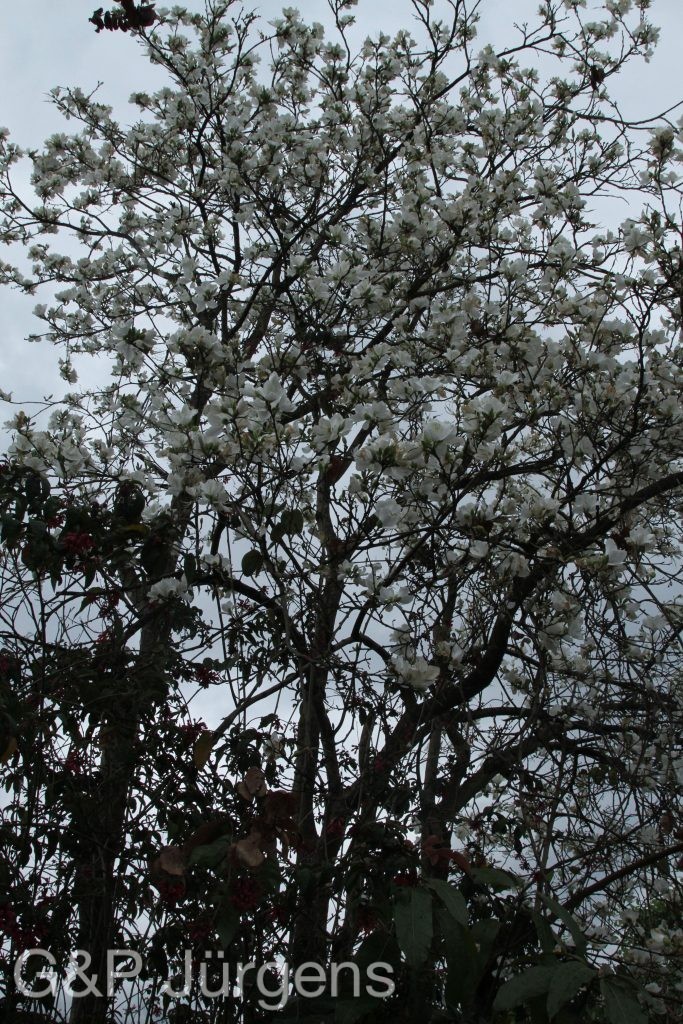
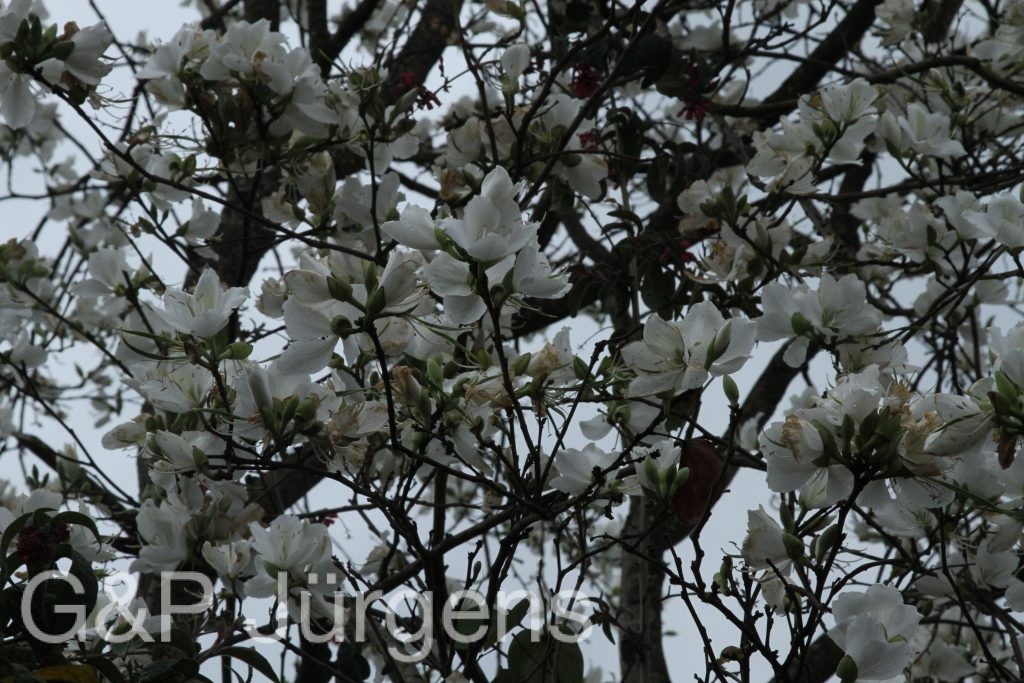
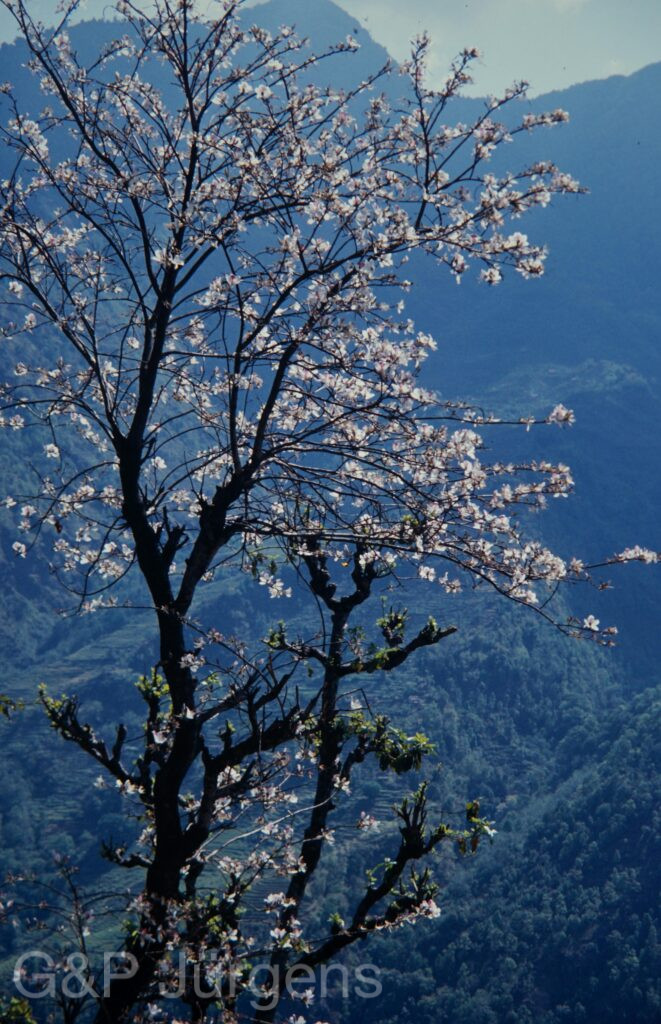
Bauhinia variegata

by GP Jürgens

L.

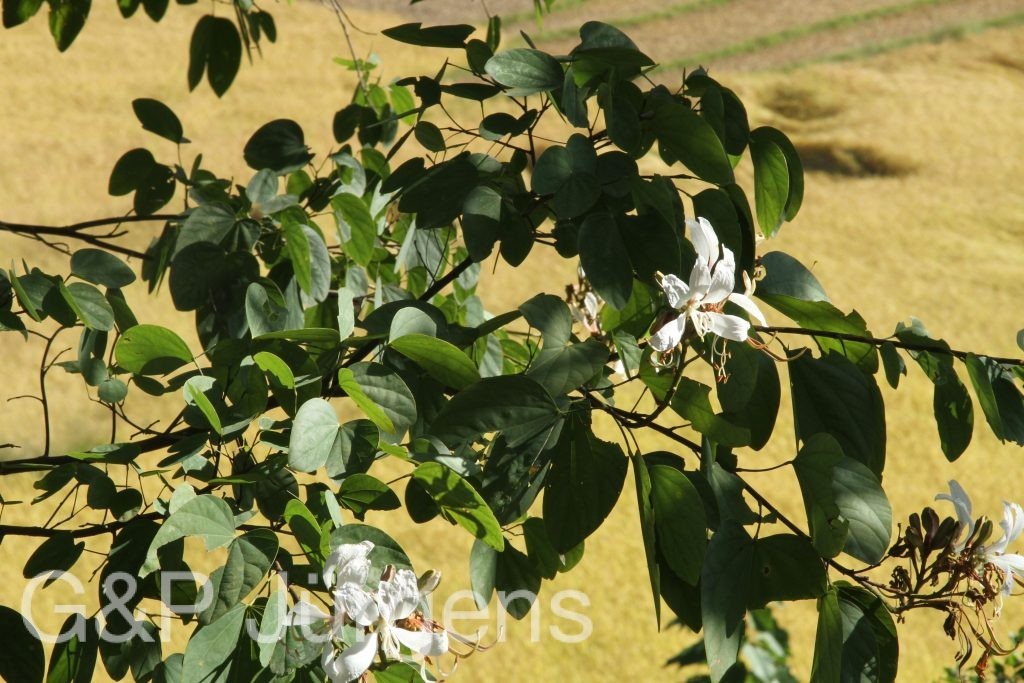
Bhutan2014 45
Bhutan Trashigang 1200m, May
Bhutan2014 46
Bhutan Trashigang 1200m, May
Nepal 1994 170 ergebnis
Ost-Nepal Mewa-Khola
1850m April

Description

Bauhinia variegata, the orchid tree or kachnar, is a deciduous tree native to tropical and subtropical Asia and now pantropically naturalised, reflected in GBIF's nearly 5000 occurrences spanning India, Nepal, China, Myanmar, Thailand and Pakistan as well as introduced ranges in Brazil, the United States, Mexico, South Africa, Australia and Spain. In the Himalayan foothills it occupies warm, seasonally dry broadleaf forest, riverine slopes and disturbed ground from the plains to about 1900 m. The photographed trees from Trashigang in eastern Bhutan at 1200 m in May and from the Mewa-Khola in eastern Nepal at 1850 m in April illustrate its lower-montane habitat, where it flushes conspicuous blossoms in the dry pre-monsoon months on largely leafless branches.

It is a small to medium tree with grey-brown bark and a spreading crown. The alternate leaves are broadly ovate-cordate, bilobed for up to one-third their length into two rounded lobes giving the characteristic camel-footprint outline, with palmate venation. The showy, fragrant flowers are borne in short axillary or terminal racemes; each has five obovate, clawed petals ranging from white through pink to mauve-purple, the uppermost broader and streaked with deeper veining, and typically three to five fertile stamens. The fruit is a flat, dehiscent, woody legume up to 30 cm long containing several compressed seeds.

A member of Fabaceae (Caesalpinioideae), Bauhinia is the type genus of the diagnostically bilobed-leaved tribe Cercideae. The species is extensively cultivated as an ornamental and avenue tree, while its flower buds, bark and young pods are used as vegetables and in traditional medicine. Widespread, weedy and able to fix little nitrogen yet tolerant of poor soils, it is of Least Concern and locally invasive beyond its native range.

Author: L. · Sources: POWO (Kew), GBIF, Flora of Bhutan, Flora of China, Annotated Checklist of the Flowering Plants of Nepal, Larsen & Larsen revision of Bauhinia

Wall.

Bhutan2014 270
Bhutan Trithangebe near a farmhouse 700m, May
Bhutan2014 271
Bhutan Trithangebe near a farmhouse 700m, May

Description

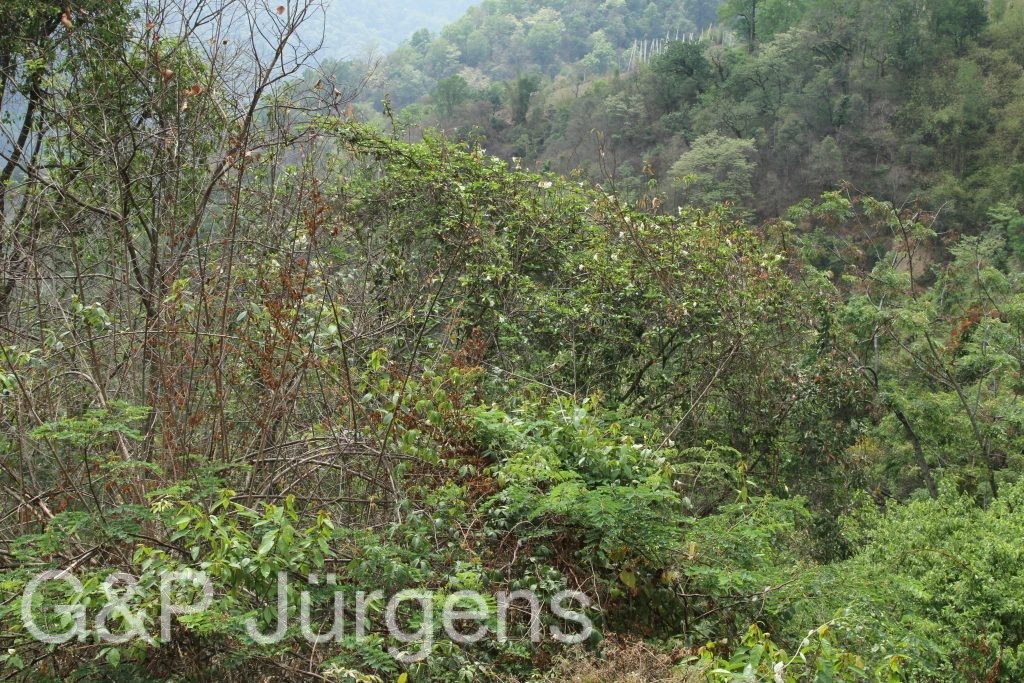
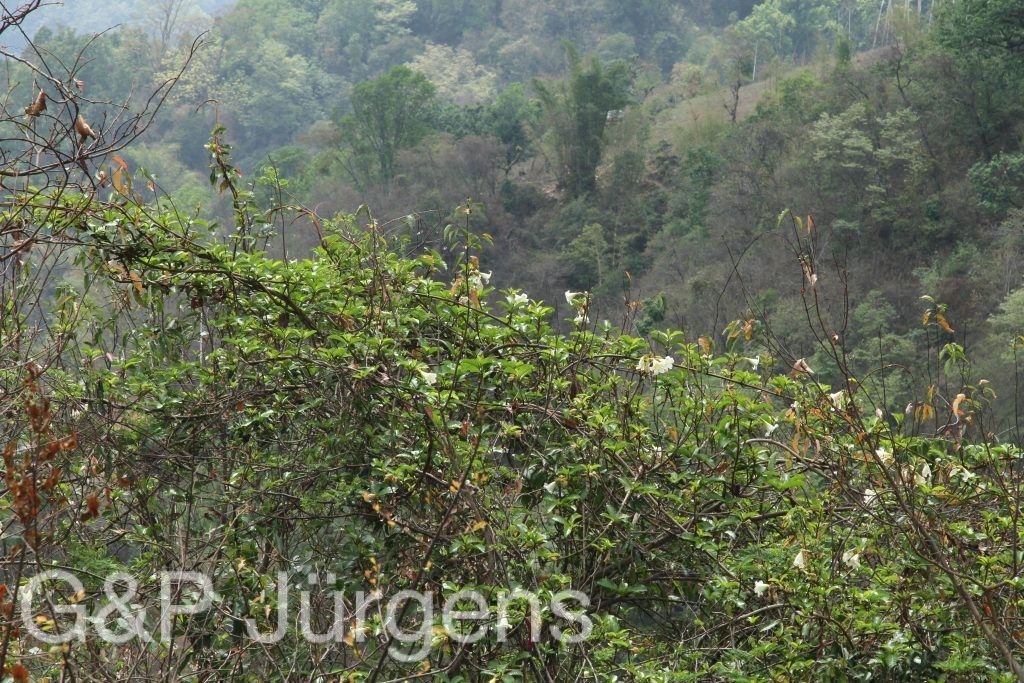
Beaumontia grandiflora is a large woody climber native to the eastern Himalaya and Indo-Chinese region, with native occurrences in India, China, Nepal, Bhutan, Thailand and Vietnam; the long list of additional countries among its roughly 602 records, spanning the Americas, Africa, the Caribbean and Oceania, reflects its extensive use as an ornamental in tropical and subtropical gardens worldwide. In the wild it is a plant of warm, humid lowland to lower-montane forest, scrambling over trees at forest margins and along streams. The photographed plant near a farmhouse at Trithangebe in Bhutan, at about 700 m and flowering in May, is consistent with its subtropical foothill habitat and its spring flowering, and hints at its frequent cultivation around dwellings.

It is a vigorous, large liana with stout woody stems exuding milky latex when cut. The leaves are opposite, simple, large, obovate to elliptic, leathery and glossy above with prominent venation and often rusty-pubescent beneath. The flowers, among the showiest in the family, are large, fragrant and trumpet-shaped, borne in terminal cymes; the corolla is broadly funnelform to campanulate, white, with five spreading lobes and a conspicuously expanded green-veined throat, giving rise to its garden name of Herald's-trumpet or Easter-lily vine. The five stamens have arrow-shaped anthers connivent around the stigma, and the fruit is a pair of large, woody, divergent follicles releasing numerous flat seeds, each with a tuft of silky hairs for wind dispersal.

Beaumontia belongs to the subfamily Apocynoideae of Apocynaceae, a family characterised by latex, contorted corolla aestivation and a specialised gynostegial pollination apparatus; the genus is allied to other tropical Asian lianas of the tribe Apocyneae. The plumed seeds and large insect-pollinated flowers fit a strategy of conspicuous floral display and wind-borne dispersal. Though valued and widely planted as a spectacular flowering vine, in its native Himalayan and Indo-Chinese range it is a natural component of subtropical forest and is not regarded as threatened.

Author: Wall. · Sources: POWO (Kew), GBIF, Flora of Bhutan, Flora of China, Flora of British India, Middleton's revisionary studies of Asian Apocynaceae

K.Koch

Bhutan2015 146
Bhutan Galephug 700m, October

Description

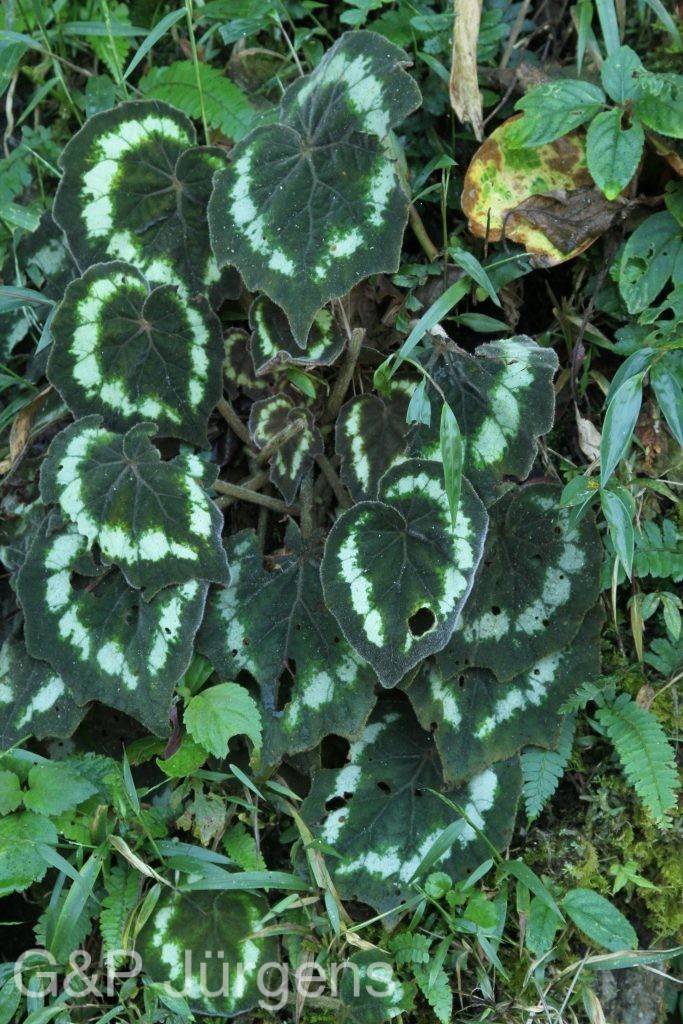
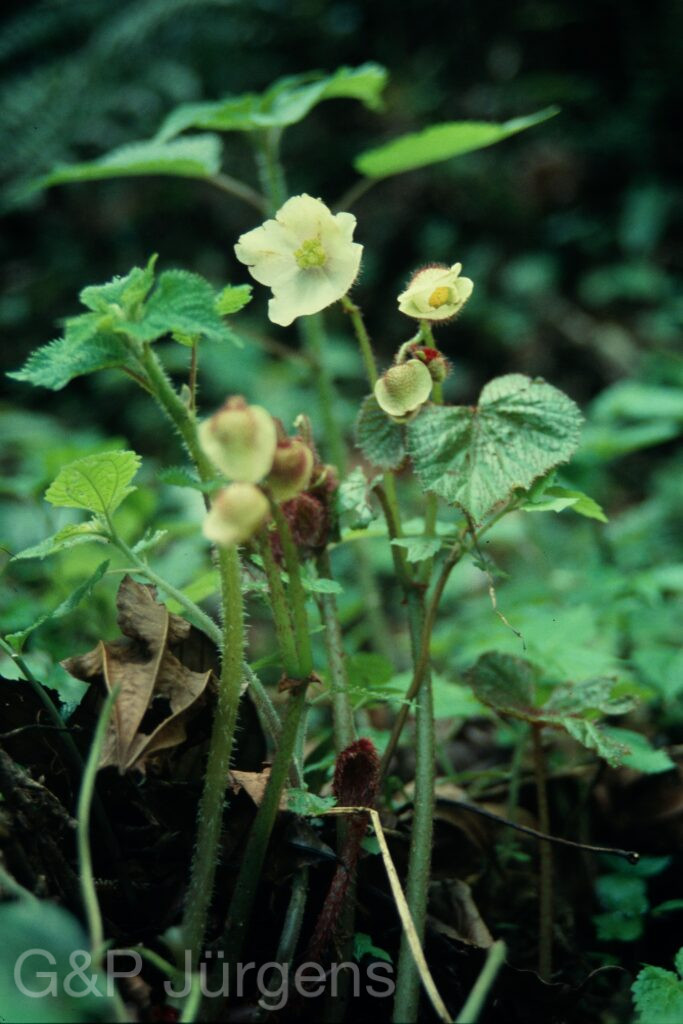
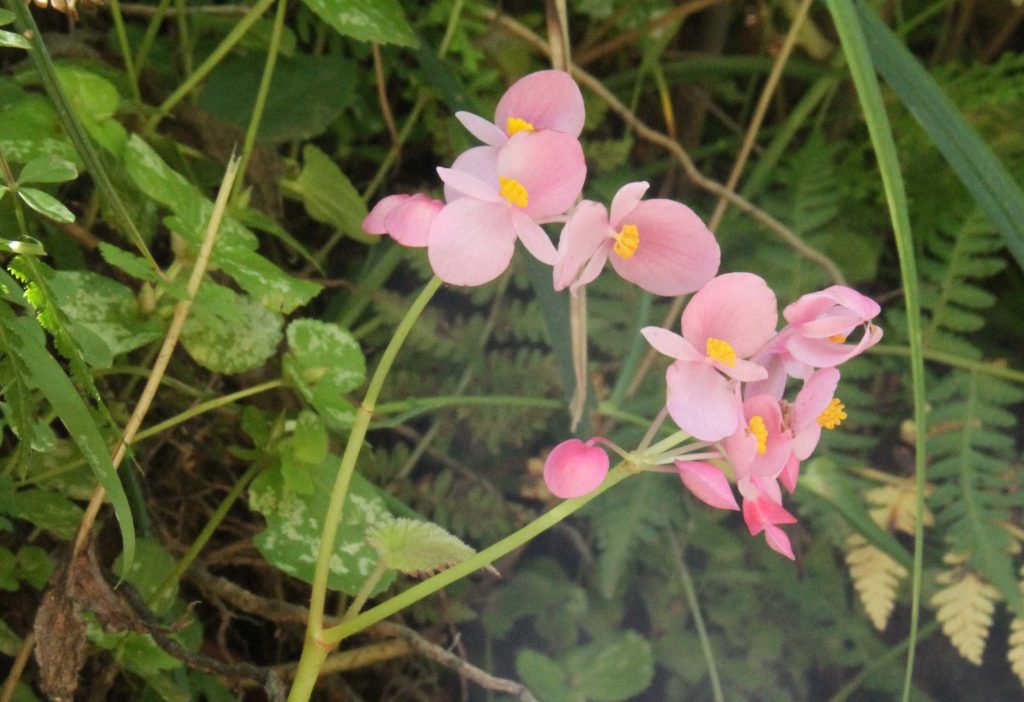
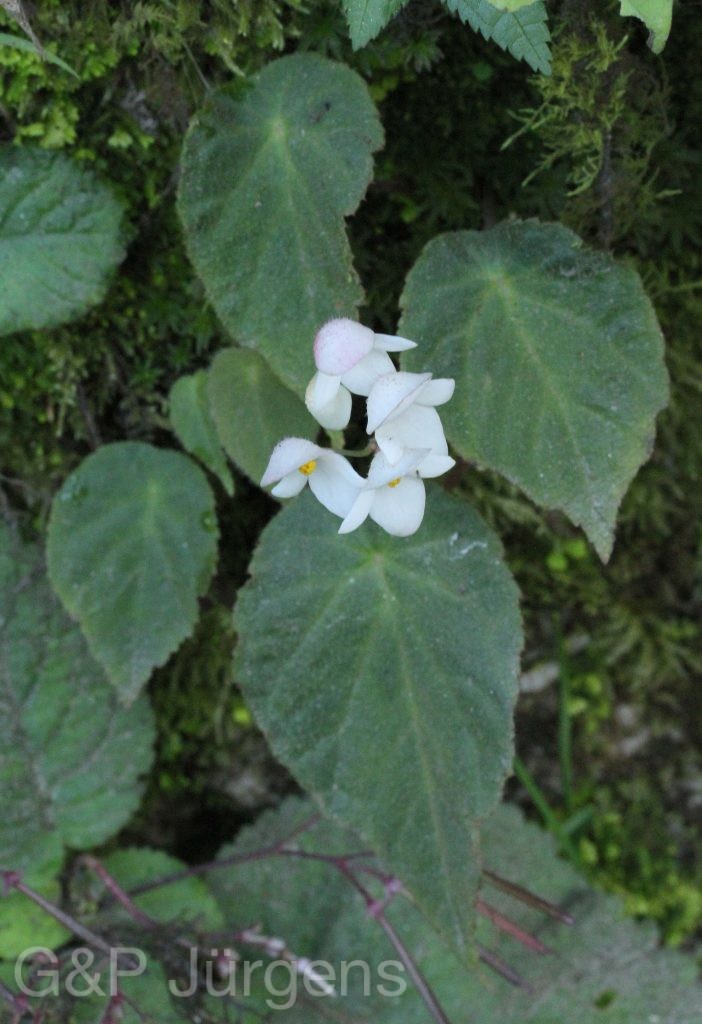
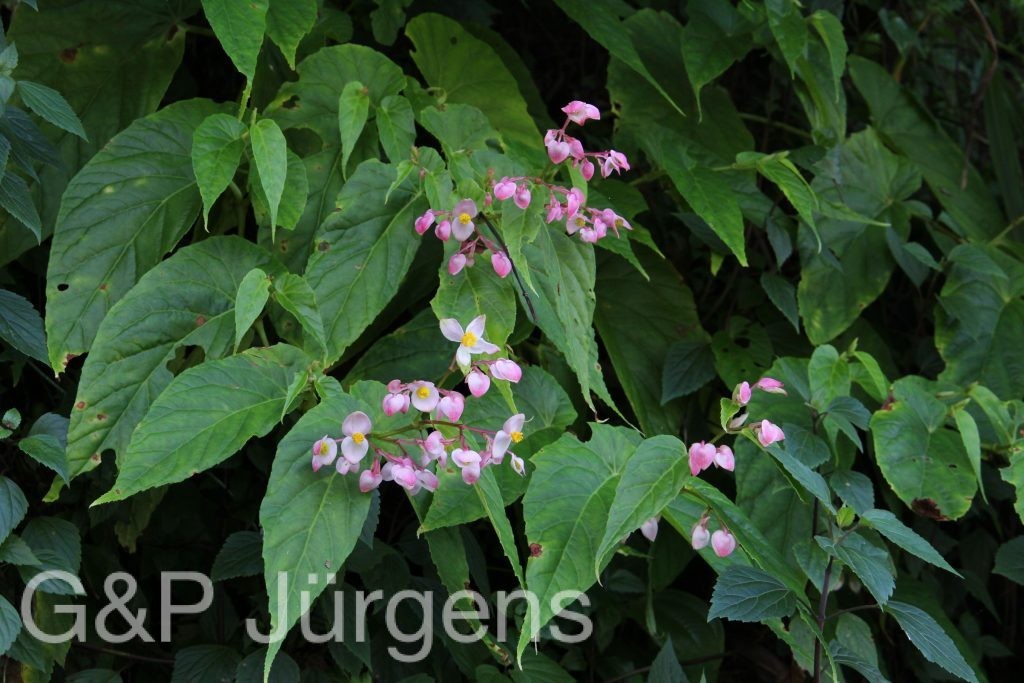
Begonia annulata is a Himalayan and Indo-Burmese begonia ranging through India, Bhutan, Bangladesh, Nepal and Myanmar; GBIF lists about 109 occurrences, the lower figure reflecting its restriction to humid lowland and submontane forest. It grows in warm, shaded, perpetually moist habitats, on damp rocks, mossy banks, ravines and forest-floor seepages in evergreen broadleaved forest of the foothills and outer ranges. The photograph from Galephug in southern Bhutan at about 700 m in October shows it in the low, humid subtropical belt along the Himalayan front, fruiting late in the year where high rainfall and dense canopy sustain its succulent growth.

It is a fleshy perennial herb with an erect to ascending, jointed, translucent stem arising from a creeping rhizome or tuberous base. The leaves are alternate, conspicuously asymmetric (oblique) at the base as is typical of the genus, ovate to broadly ovate with an acuminate apex and toothed margin, palmately veined and often bearing scattered hairs, the petioles and nodes sometimes ringed (annulate, the source of the epithet). Plants are monoecious, the flowers white to pale pink and unisexual, borne in axillary cymes; staminate flowers with several stamens and pistillate flowers with a conspicuously winged inferior ovary. The fruit is a three-winged, unequally winged capsule containing very numerous minute seeds.

Begonia is one of the largest angiosperm genera, strongly radiated in the wet forests of tropical Asia, and B. annulata represents the shade- and moisture-demanding rhizomatous group of the eastern Himalaya. Its asymmetric leaves, winged capsules and dust-fine seeds are hallmarks of the family. While not formally assessed as threatened, such narrowly humid-forest specialists are sensitive to lowland deforestation and habitat drying along the Himalayan foothills.

Author: K.Koch · Sources: POWO (Kew), GBIF, Flora of Bhutan, Flora of British India (Hooker), Tebbitt Begonias: Cultivation, Identification and Natural History

Hook.f. & Thomson

Sikkim2004 342 G603
India West-Bengal, Utaray 2100m April
Sikkim2004 116 P199
Sikkim West-Bengal, Yoksam, 1950m April

Description

Begonia cathcartii is a perennial herb of the moist eastern Himalaya and neighbouring montane Southeast Asia, recorded from northern India (Sikkim, Darjeeling), Nepal, Bhutan, Myanmar, Thailand and Peninsular Malaysia; GBIF documents about 138 occurrences. It is a plant of shaded, humid broadleaved forest, growing on damp banks, mossy boulders and stream sides where humidity remains high, chiefly between about 1500 and 2700 m. The photographed material came from the Darjeeling hills at Utaray near 2100 m and from Yoksam in Sikkim at about 1950 m, both in April, matching the cool, dripping understorey it favours during the pre-monsoon flush.

The plant is a fleshy, somewhat succulent herb with an erect or ascending, sparingly branched stem arising from a rhizomatous or tuberous base. As in the genus the leaves are alternate, markedly asymmetric (oblique) at the base, broadly ovate, acuminate, with a toothed and often shallowly lobed margin and conspicuous stipules. The flowers are monoecious and borne in axillary cymes, white to pale pink; the staminate flowers bear several stamens while the pistillate flowers sit above a winged inferior ovary. The fruit is a three-winged capsule, with one wing usually larger, releasing very numerous minute seeds.

Begonia (Begoniaceae) is one of the largest angiosperm genera, and B. cathcartii belongs to its rich Sino-Himalayan rhizomatous assemblage, named for J. F. Cathcart. Its monoecious flowers, unequal capsule wings and asymmetric leaves are characteristic of the family. Dependent on humid forest microhabitats, it is locally frequent and not formally assessed as threatened, but sensitive to forest clearance and desiccation.

Author: Hook.f. & Thomson · Sources: POWO (Kew), GBIF, Flora of China Vol. 13, Flora of Bhutan Vol. 2, Flora of Nepal, Flora of Pakistan, Hooker Begonias of the Himalaya in Flora of British India

Begonia dioica

by GP Jürgens

Buch.-Ham. ex D.Don

Bhutan2012 472
Bhutan Wangdi 2500m, September

Description

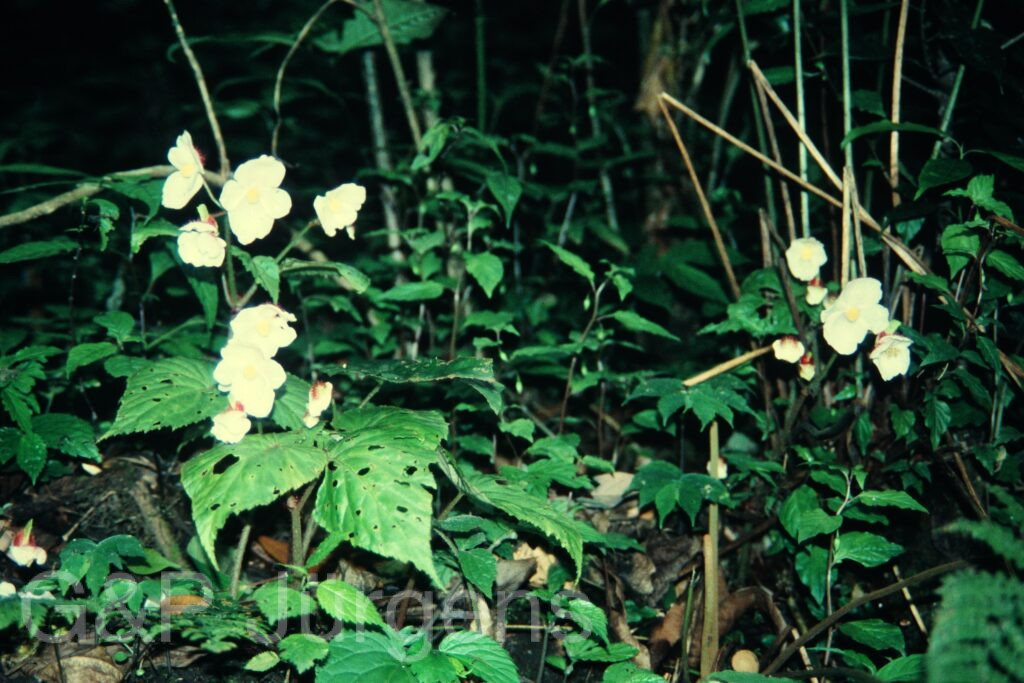
Begonia dioica is a Himalayan tuberous herb whose GBIF range (c. 147 occurrences) centres on India, Nepal, Bhutan and Pakistan, with a few cultivated European records. It grows in shaded, humid situations—mossy rock faces, damp banks, ravine walls and broadleaved forest floor—generally at mid elevations between roughly 1000 and 2800 m, flowering through the monsoon into autumn. The plant photographed from Wangdi (Wangdue) in Bhutan at 2500 m, in flower in September, typifies its preference for cool, moist, partially shaded montane microhabitats kept continuously damp by seepage.

It is a low, succulent, monoecious perennial arising from a small subterranean tuber, with reddish, watery, more or less hairy stems 10–40 cm tall. The leaves are alternate, ovate and markedly asymmetric (oblique) at the base in the manner characteristic of the genus, palmately veined, with a serrate to shallowly lobed, ciliate margin. As in all Begonia the flowers are unisexual and borne in axillary cymes; staminate flowers have two larger and two smaller white to pinkish tepals with yellow stamens, while pistillate flowers subtend an inferior, three-winged ovary. The fruit is a membranous, unequally three-winged capsule releasing minute seeds.

Described by Buchanan-Hamilton (ex D. Don), the epithet "dioica" is misleading because the species is in fact monoecious—a frequent source of nomenclatural confusion in Begonia, a genus of several thousand species. It is locally frequent and not regarded as threatened, though dependent on intact shaded forest and seepage. Ecologically it specialises in moist rock and forest-floor niches, its dust-like seeds dispersed by water splash and air currents.

Author: Buch.-Ham. ex D.Don · Sources: POWO (Kew), GBIF, Flora of Bhutan, Flora of British India, Begoniaceae (Doorenbos, Sosef & de Wilde monograph)

Begonia josephi

by GP Jürgens

A.DC.

Bhutan2012 487
Bhutan Pele-La 2850m, September

Description

Begonia josephi is a Himalayan herb distributed through India, Nepal, Bhutan, southern China, Myanmar and Bangladesh, with 177 GBIF occurrences across the region. It is a plant of cool, humid, shaded montane habitats — mossy rock faces, banks, ravines and the floor of broadleaved and mixed forest — in the temperate zone, generally between about 2000 and 3200 m, a higher and cooler niche than many of its lowland congeners. The illustrated plant from the Pele-La in central Bhutan at around 2850 m, in September at the end of the monsoon, is characteristic of its preference for moist, montane forest reaching its flowering peak late in the wet season.

It is a tuberous perennial herb arising from a depressed underground tuber, with one or few erect, succulent, often reddish stems. The leaves are alternate and conspicuously asymmetric (oblique-based) as in the genus, broadly ovate to suborbicular, palmately veined, irregularly toothed and frequently bronze- or red-tinged, sometimes with a paler zone. The monoecious, zygomorphic flowers are pink to rose and arranged in axillary cymes; staminate flowers bear a cluster of stamens while pistillate flowers carry an inferior, unequally 3-winged ovary. The fruit is the typical winged, dehiscent capsule releasing copious minute seeds.

Belonging to the tuberous Himalayan begonias of section Platycentrum and allied groups, B. josephi shows the strongly seasonal phenology of monsoon-climate species, dying back to its tuber through the dry winter and re-emerging with the rains. The genus Begonia is hyperdiverse and the Eastern Himalaya a significant centre of endemism; like other shade-demanding forest begonias the species depends on intact humid forest cover, leaving it locally vulnerable to deforestation despite a fairly wide overall range.

Author: A.DC. · Sources: POWO (Kew), GBIF, Flora of Bhutan, Flora of British India, Annotated Checklist of the Flowering Plants of Nepal, Begoniaceae monographic studies

Warb.

Bhutan2015 123
Bhutan Galephug 600m, October
Bhutan2015 126
Bhutan Galephug 600m, October

Description

Begonia nepalensis is a robust herbaceous Begonia of the Himalaya and its foothills, recorded by GBIF from Nepal, India, Bhutan, China and elsewhere across about 91 occurrences. It grows in warm, humid, shaded habitats, on moist banks, in ravines, beside streams and on damp rocks within subtropical and lower montane broad-leaved forest, typically at low to middle elevations. The plant photographed at Gelephu (Galephug) in southern Bhutan at about 600 m, in October, reflects this warm, wet foothill setting where the species flourishes in the deep shade and high humidity of the monsoon-fed forest understorey.

The plant is a tall, succulent, erect herb arising from a thick rhizome, with stout, somewhat fleshy, swollen-noded stems. The leaves are alternate, large and markedly asymmetric (oblique) at the base as is characteristic of the genus, broadly ovate, acuminate, with a toothed to shallowly lobed and ciliate margin and palmate venation; the foliage is often somewhat hairy. The plant is monoecious, bearing separate male and female flowers in the same axillary cymes; the white to pinkish flowers have tepals rather than differentiated sepals and petals, the staminate flowers with a cluster of stamens and the pistillate with an inferior, conspicuously winged ovary. The fruit is a three-winged, unequally winged capsule that dries and releases very numerous minute seeds.

Begonia is one of the largest angiosperm genera, hyper-diverse in the wet tropics, and the Himalayan species such as B. nepalensis belong to the assemblage of large-leaved, cane-stemmed forest herbs adapted to shaded, perennially moist habitats. The asymmetric leaves, winged capsules and dust-like seeds are hallmarks of the family. Although not assessed as threatened, the species' dependence on humid, undisturbed forest understorey makes it sensitive to deforestation and drying, and its restriction to the warm Himalayan foothills reflects a tropical-Asian biogeographic affinity.

Author: Warb. · Sources: POWO (Kew), GBIF, Flora of China, Flora of Bhutan, Annotated Checklist of the Flowering Plants of Nepal, Tebbitt "Begonias: Cultivation, Identification, and Natural History"