Author

GP Jürgens

D. Don

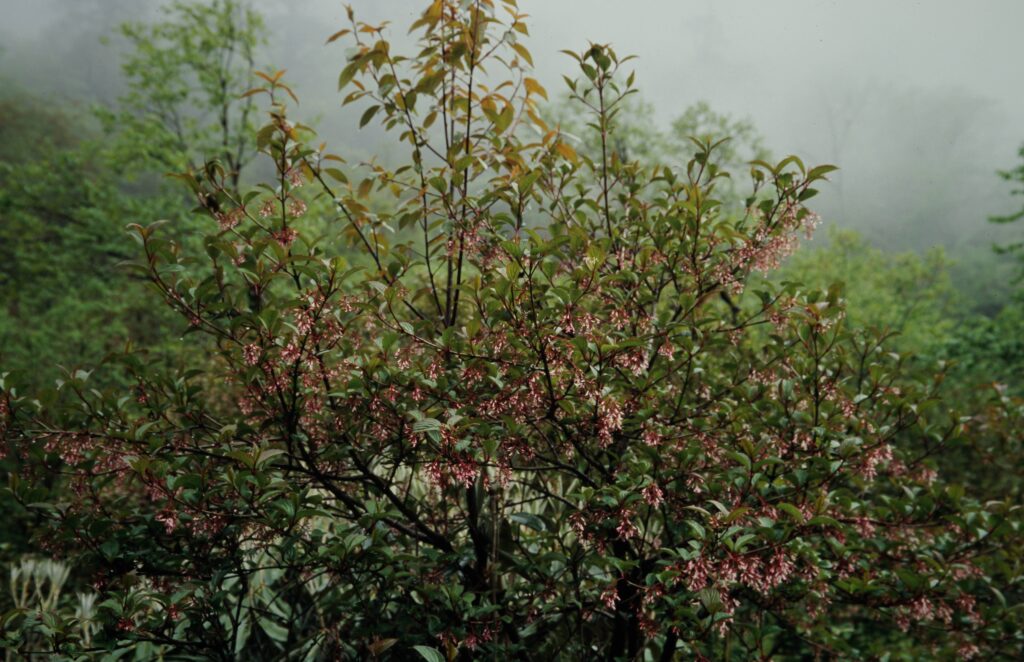
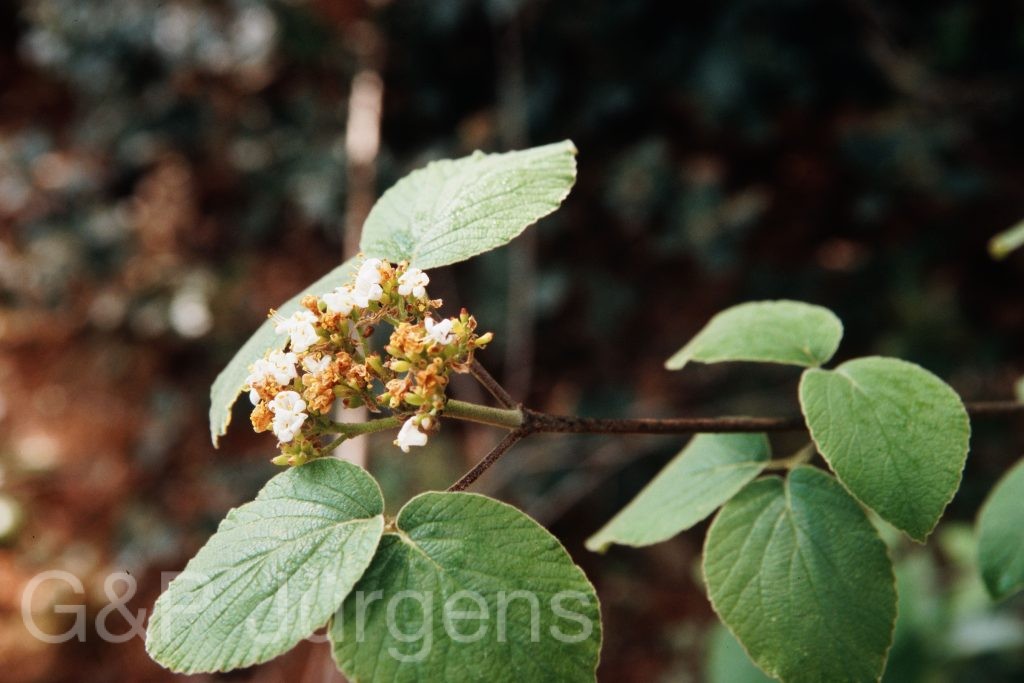
Bhutan2014 863
Bhutan Chele-La 3100m, May
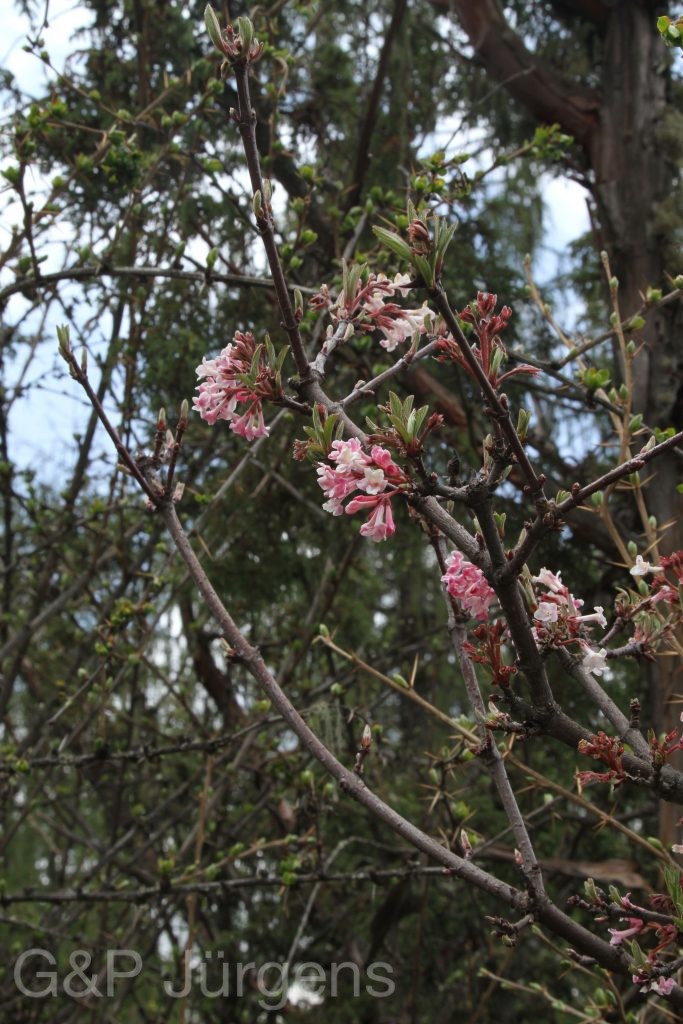
Bhutan2014 965
Bhutan Chele-La 3400m, May
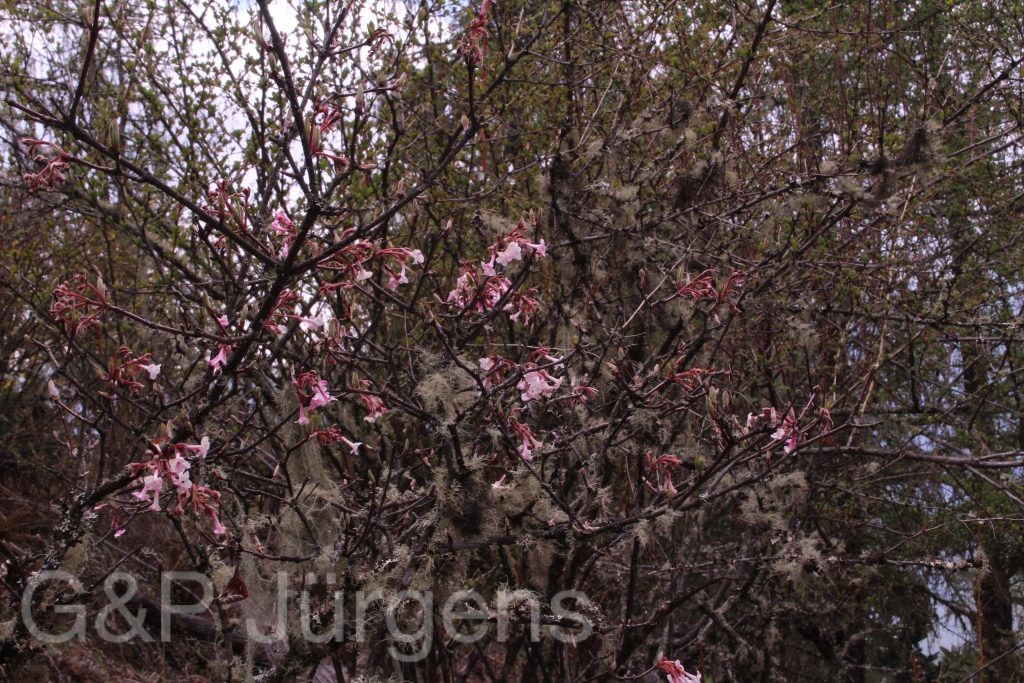
Bh2008 554 P838
Bhutan Paro 1950m April

Description

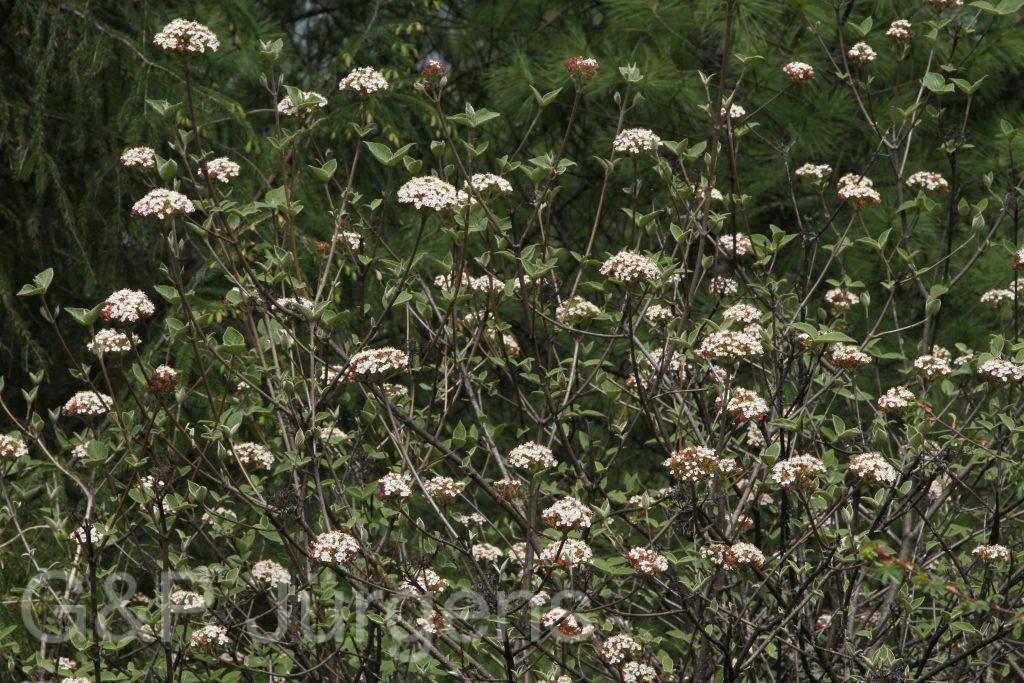
Viburnum cotinifolium is a Himalayan and Central Asian shrub distributed from Afghanistan and Pakistan eastward through Kashmir and the Indian Himalaya, Nepal and Bhutan to western and southwestern China; GBIF records 714 occurrences, principally from Pakistan, Nepal, India, China and Bhutan. It inhabits open temperate forest, scrub, forest margins, ravines and dry rocky slopes, mostly between about 1500 and 3500 m. The cited records from Chele-La in Bhutan at 3100 and 3400 m in May and from Paro at 1950 m in April illustrate its broad elevational range and its spring flowering, when the white-pink corymbs open as the new foliage flushes in the western Bhutanese borderlands.

It is a deciduous shrub with stellate-tomentose young branchlets and opposite, broadly ovate to orbicular leaves that recall those of Cotinus (whence the epithet), the blades entire to obscurely toothed, three- to five-veined at the base and densely grey stellate-pubescent beneath. The flowers are small, white tinged pink, all fertile and aggregated into dense, rounded, peduncled corymbose cymes; each has a short campanulate corolla with five spreading lobes. The fruit is an ovoid, somewhat compressed drupe ripening from red to glossy black, containing a single flattened, grooved stone, and is edible.

The species belongs to Viburnum, transferred with the genus from the traditional Caprifoliaceae to the Adoxaceae on molecular evidence. Its showy fertile corymbs attract diverse insect pollinators, while the colourful drupes are dispersed by birds; the fruits are also gathered locally for food. Widespread, hardy and ornamental, it is cultivated in temperate gardens and is of least conservation concern throughout its extensive range.

Author: D. Don · Sources: POWO (Kew), GBIF, Flora of China Vol. 19, Flora of Bhutan Vol. 2, Flora of Pakistan, A Monograph of the Genus Viburnum (Kern / Hara studies)

Buch.-Ham. ex D. Don

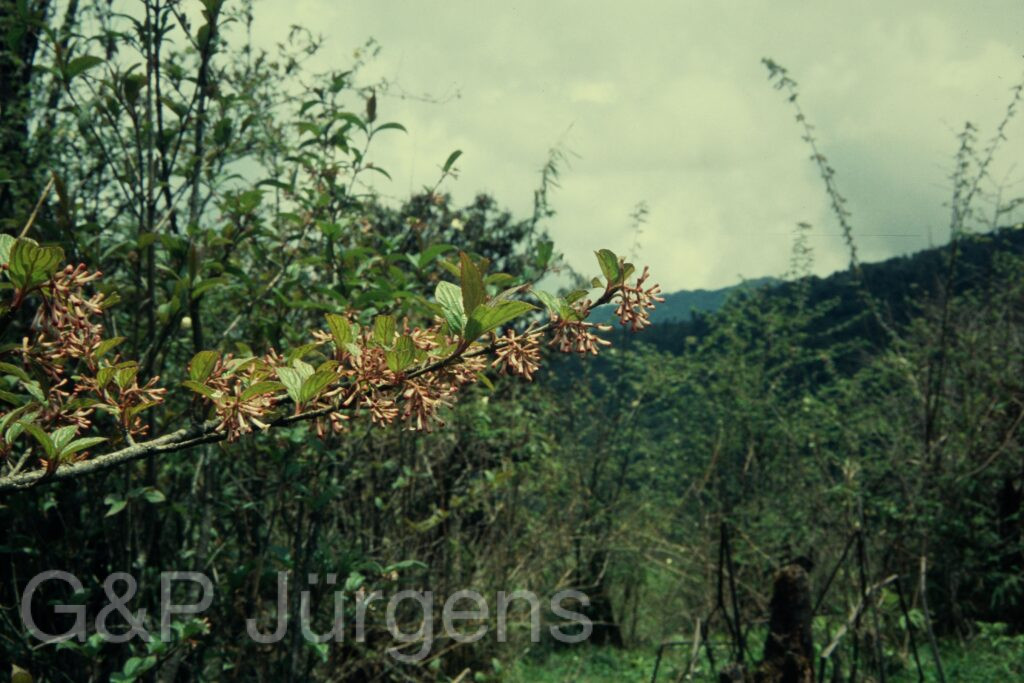
Bhutan2012 525
Bhutan Wangdi 2400m, September

Description

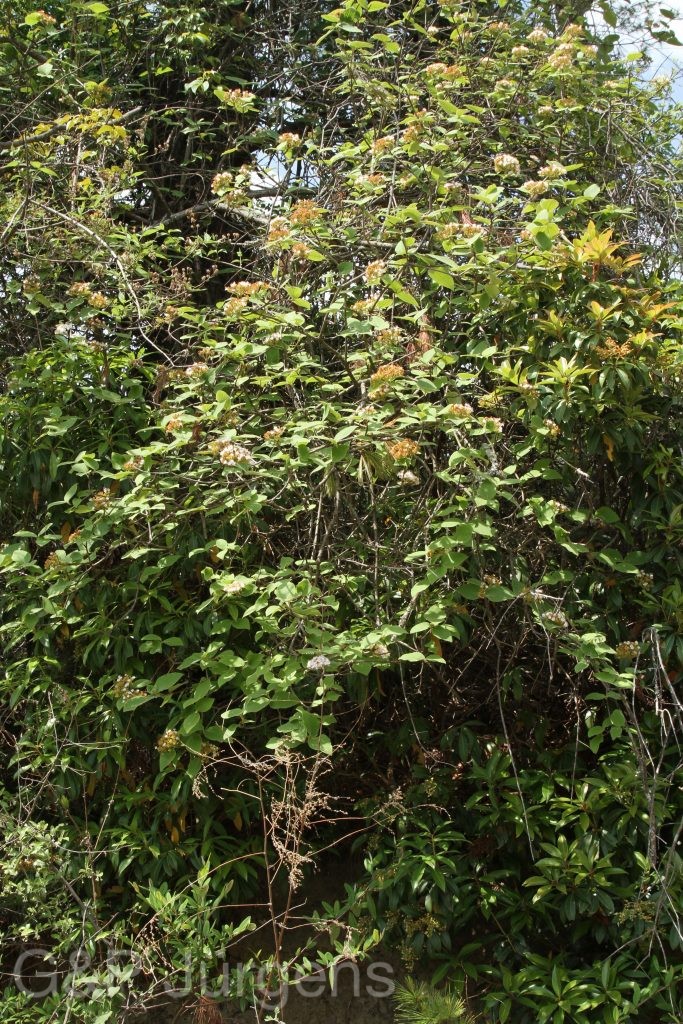
Viburnum cylindricum is a widespread evergreen or semi-evergreen shrub to small tree of the Sino-Himalayan and Indochinese region, exceptionally well documented with over 5700 GBIF occurrences spanning China, Nepal, India, Thailand, Myanmar, Bhutan, Vietnam, Laos and beyond, together with numerous cultivated and introduced records in Europe, North America and elsewhere reflecting its horticultural use. It grows in open forests, thickets, forest margins and scrub on hill slopes, typically between 1000 and 3000 m. The plant photographed near Wangdi in Bhutan at about 2400 m in September occupies this mid-montane belt, flowering and fruiting in the post-monsoon period within the warm-temperate broad-leaved forest zone of the eastern Himalaya.

It is an erect, glabrous-twigged shrub or small tree reaching several metres, immediately recognisable by its leathery, glaucous leaves whose surface bears a waxy bloom that can be marked or written upon. The leaves are opposite, simple, elliptic to oblong, entire or obscurely toothed towards the apex, and often somewhat blue-grey beneath. The inflorescence is a large, flat-topped to slightly domed terminal compound cyme of small white to pinkish-white flowers, each with a five-lobed campanulate to tubular corolla and long-exserted stamens that give the open umbel a delicate, brush-like appearance. The fruit is a small ovoid to ellipsoid drupe ripening from red to blue-black, containing a single compressed stone and dispersed by birds.

Viburnum is now placed in Adoxaceae following molecular phylogenetic revision of the old Caprifoliaceae, and V. cylindricum belongs to section Megalotinus, a predominantly tropical to subtropical Asian assemblage. The waxy, exserted-stamened flowers and bird-dispersed drupes are typical of the section. The species is locally used in traditional medicine, and the leaf wax has been put to minor practical uses. Owing to its very broad geographic and altitudinal range and tolerance of disturbed habitat it is of no conservation concern, ranking among the most frequently encountered viburnums of the eastern Himalaya and southwestern China.

Author: Buch.-Ham. ex D. Don · Sources: POWO (Kew), GBIF, Flora of China Vol. 19, Flora of Bhutan Vol. 2, Flora of Nepal, Kern Revision of Viburnum sect. Megalotinus

Wall. ex. DC.

Sikkim2004 111 G188
India West-Bengal, Utaray 2000m April
Sikkim 2006 353 ergebnis
India West-Bengal, Tamrong 2700m, May

Description

Viburnum erubescens Wall. ex DC. is a deciduous to semi-evergreen shrub of the Adoxaceae, widespread across the Himalaya and into East and Southeast Asia. GBIF data (over 2,800 occurrences) record it from China, Nepal, India, Bhutan, Myanmar, Taiwan, and beyond, indicating a broad Sino-Himalayan range. It was photographed in West Bengal at Utaray (2,000 m, April) and Tamrong (2,700 m, May), typical of its occurrence in temperate broad-leaved and mixed forests, forest margins, and shrubberies between roughly 1,500 and 3,000 m, where it flowers in spring as the new foliage expands.

The plant forms a shrub to small tree with opposite, elliptic to ovate-lanceolate leaves that are finely serrate, acuminate, and sparsely hairy on the veins beneath. The flowers are borne in pendulous, paniculate cymes; the corolla is tubular with five spreading lobes, white flushed with pink (the epithet "erubescens" meaning blushing), and sweetly fragrant. The fruit is a small ovoid drupe that ripens from red to glossy black, containing a single compressed stone, and is readily taken by birds.

Viburnum, long placed in Caprifoliaceae, is now referred to Adoxaceae on molecular grounds. Viburnum erubescens is a variable species comprising several recognised varieties across its range, and its pendulous, tubular-flowered inflorescences distinguish it from most co-occurring Himalayan congeners. Widespread, adaptable, and locally common, it is of no conservation concern and is valued horticulturally as an ornamental flowering shrub.

Author: Wall. ex. DC. · Sources: POWO (Kew), Flora of China Vol. 19, Flora of Bhutan Vol. 2, GBIF, Kern: Revision of Asian Viburnum

Wall. ex DC.

Bhutan2014 977
Bhutan Chele-La 3500m, May
Bhutan2014 978
Bhutan Chele-La 3500m, May

Description

Viburnum grandiflorum is a Himalayan shrub distributed from Pakistan and north-west India through Nepal, Bhutan and adjacent south-western China; records from Britain, Ireland, Belgium, Canada and Korea reflect its cultivation as an ornamental rather than a natural range. It occurs in the upper temperate to subalpine zone, in forest margins, open scrub, Rhododendron thickets and rocky slopes, generally between about 2,400 and 3,900 m. The shrub photographed at the Chele La in western Bhutan at 3,500 m in May illustrates its spring flowering high in the inner ranges, the inflorescences often expanding before the leaves are fully out.

It is a deciduous shrub of moderate stature with stiff, spreading branches. The leaves are opposite, elliptic to oblong-ovate, with a serrate to crenate-serrate margin, acuminate apex, prominent impressed venation above and pubescence along the veins beneath, often colouring richly in autumn. The flowers are borne in dense, rounded, terminal corymbose cymes; the corolla is tubular-funnelform with five spreading lobes, comparatively large for the genus (whence "grandiflorum"), pink to rose in bud and opening paler, fragrant. The fruit is an ovoid drupe ripening from red to blue-black, containing a single compressed stone.

Viburnum, long placed in Caprifoliaceae, is now referred to Adoxaceae on molecular grounds, allied to Sambucus and Adoxa. The species is closely related to V. nervosum and other Himalayan members of section Pseudotinus, with which it can be confused. Hardy and ornamental, it is established in temperate horticulture and has contributed to garden hybrids; in the wild it remains widespread and is not considered threatened.

Author: Wall. ex DC. · Sources: POWO (Kew), Flora of China Vol. 19, Flora of Bhutan Vol. 2, GBIF, Kern: Revision of Viburnum (Asia)

Sm.

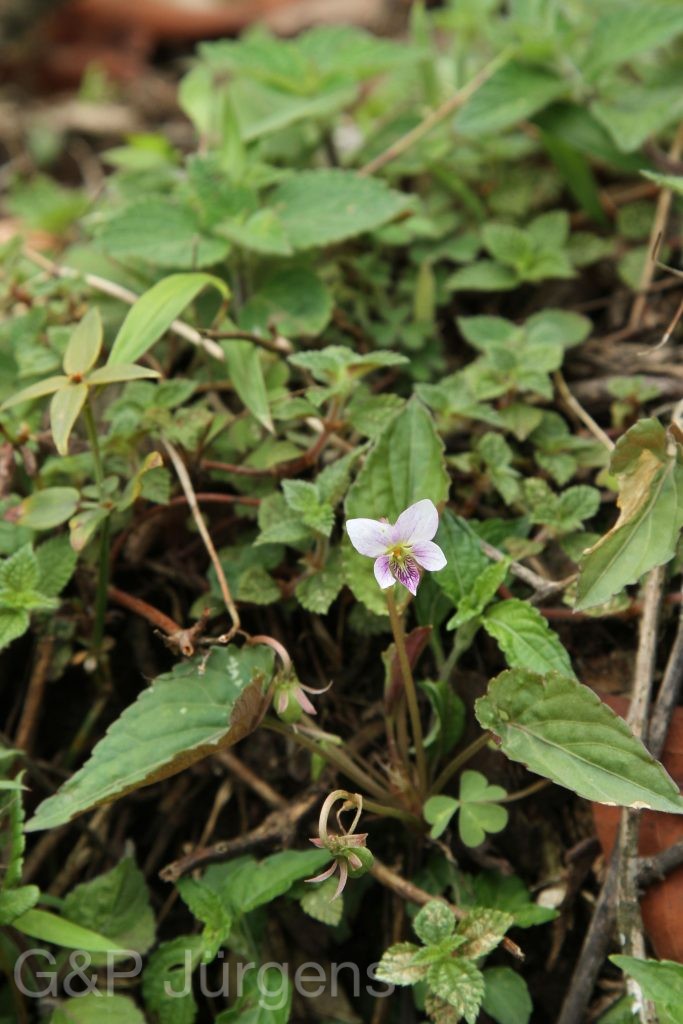
Bhutan2014 109
Bhutan Trashigang 1550m, May

Description

Viola betonicifolia is a widespread, polymorphic violet ranging across South, East and Southeast Asia to Australasia, documented by GBIF in over 16,600 occurrences spanning Australia, New Zealand, Japan, China, Taiwan, Korea, the Philippines, India, Nepal, Pakistan, Sri Lanka, Myanmar, Thailand, Vietnam, Indonesia and beyond. It grows in open grassland, meadows, grassy slopes, forest margins, roadsides and disturbed ground from low elevations to over 3000 m, tolerating a broad range of subtropical to temperate conditions. The illustrated plant from Trashigang in eastern Bhutan at about 1550 m, flowering in May, represents a low-montane subtropical population at the warm end of this exceptionally wide ecological amplitude.

It is an acaulescent perennial herb forming a basal rosette from a short, stout rhizome. The leaves are erect and long-petioled, the blade narrowly triangular-lanceolate to hastate or oblong with a truncate to subcordate base and a crenate to entire margin, recalling those of Betonica (whence the epithet 'betony-leaved'); the stipules are adnate to the petiole and fimbriate. Solitary flowers are borne on slender bracteolate peduncles; the zygomorphic corolla of five unequal petals is violet to purple (rarely white), the lowest spurred and the laterals usually bearded. Summer cleistogamous flowers supplement the spring chasmogamous ones, and the fruit is an elastically dehiscent three-valved capsule.

A member of Viola section Viola (the stemless, spring-flowering rosette violets), V. betonicifolia is a notoriously variable species treated by some authors as a complex of regional forms. Its tolerance of disturbance, dual chasmogamous-cleistogamous breeding system and effective seed dispersal underpin its broad distribution, and it is of no conservation concern.

Author: Sm. · Sources: POWO (Kew), GBIF, Flora of China, Flora of Bhutan, Flora of British India, W. Becker Violae Asiaticae

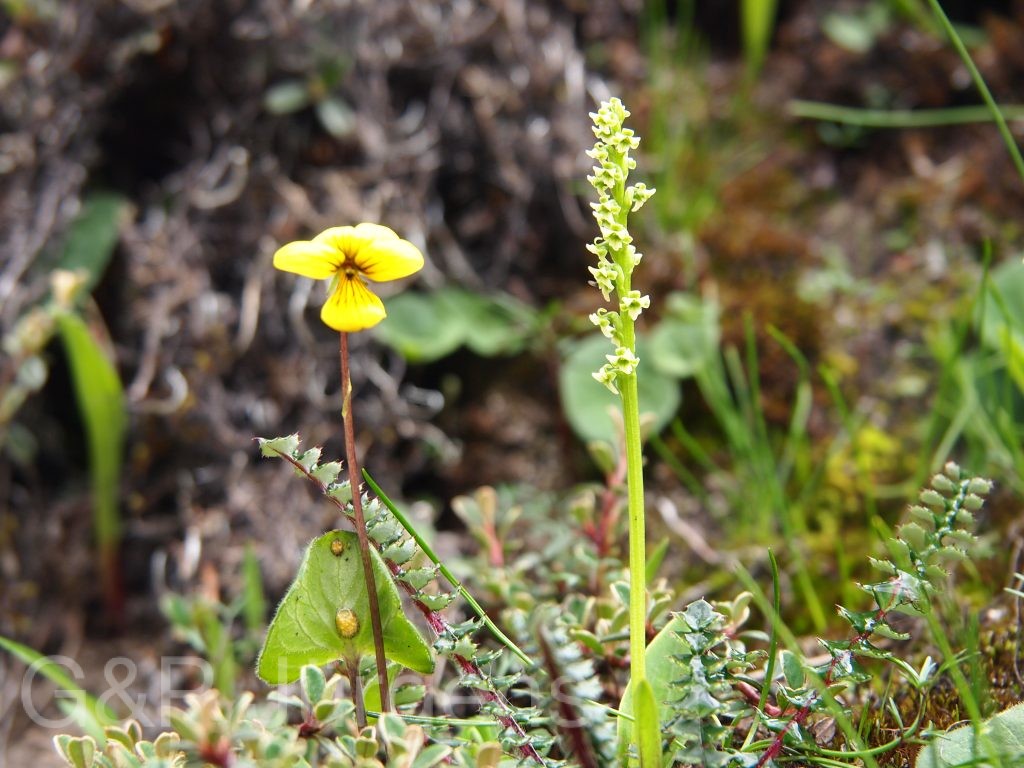
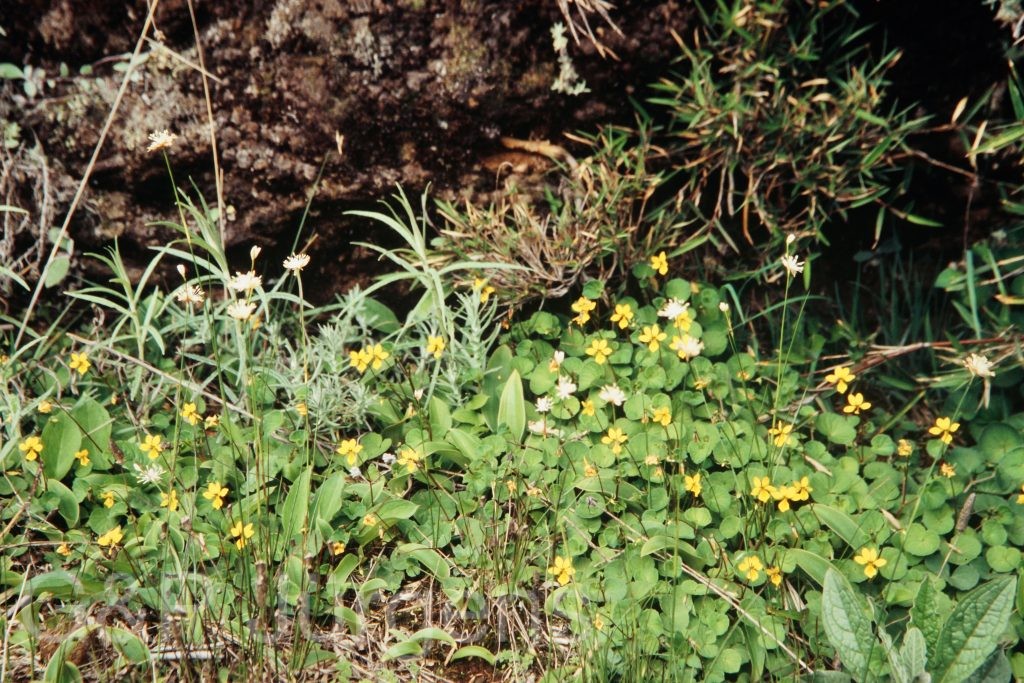
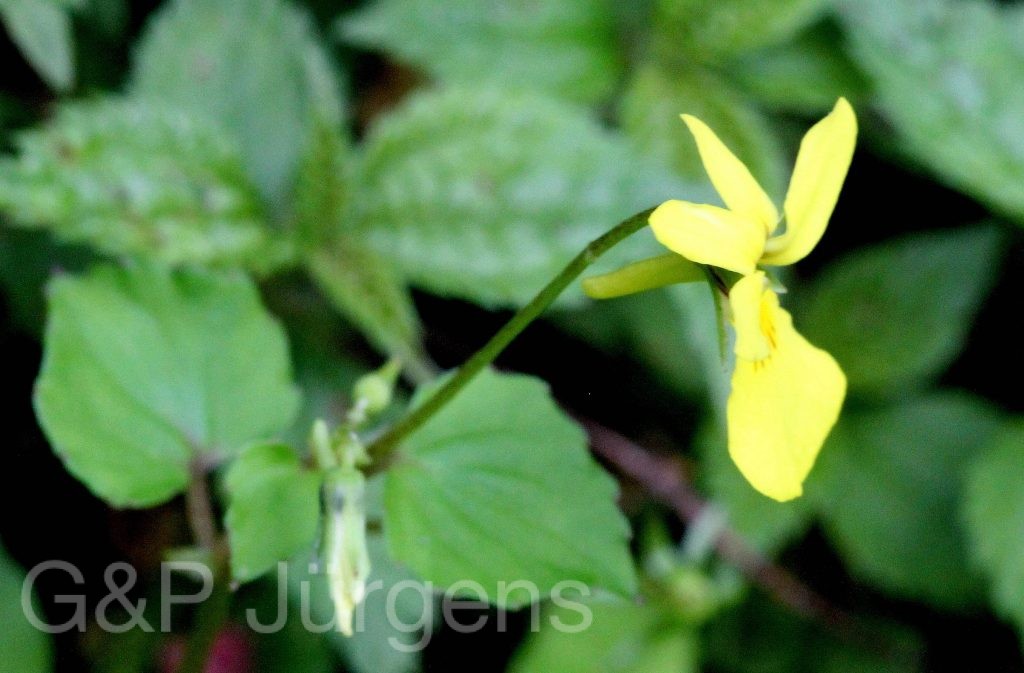
Viola biflora

by GP Jürgens

L.

BhutanPG2011 200
also included: Herminium duthiei Bhutan 2011
Bh09 246 P412
Bhutan Pele-La 3000m, April

Description

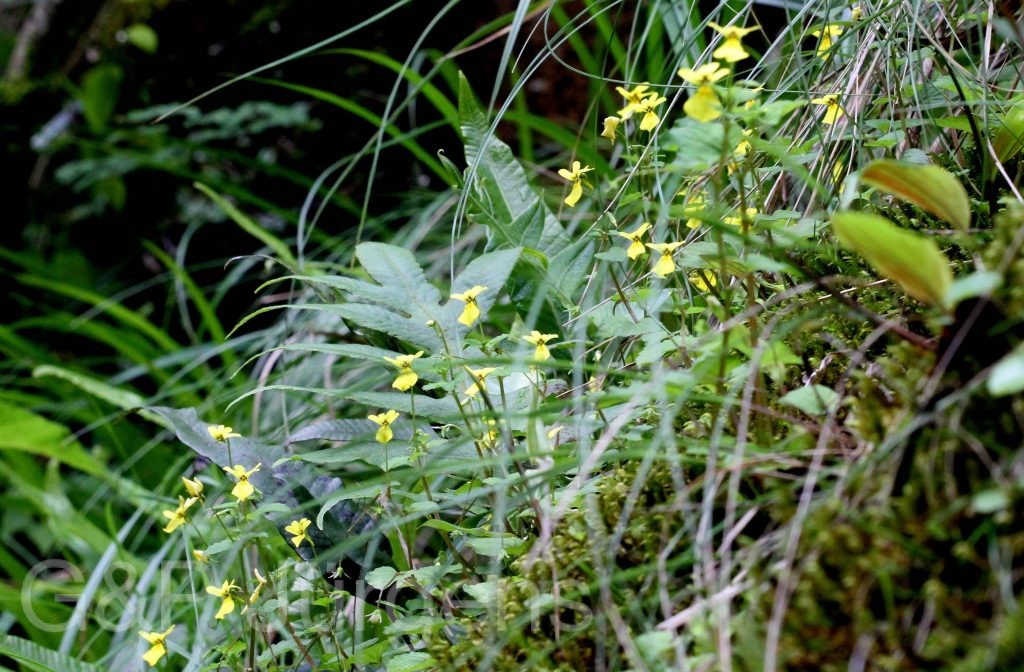
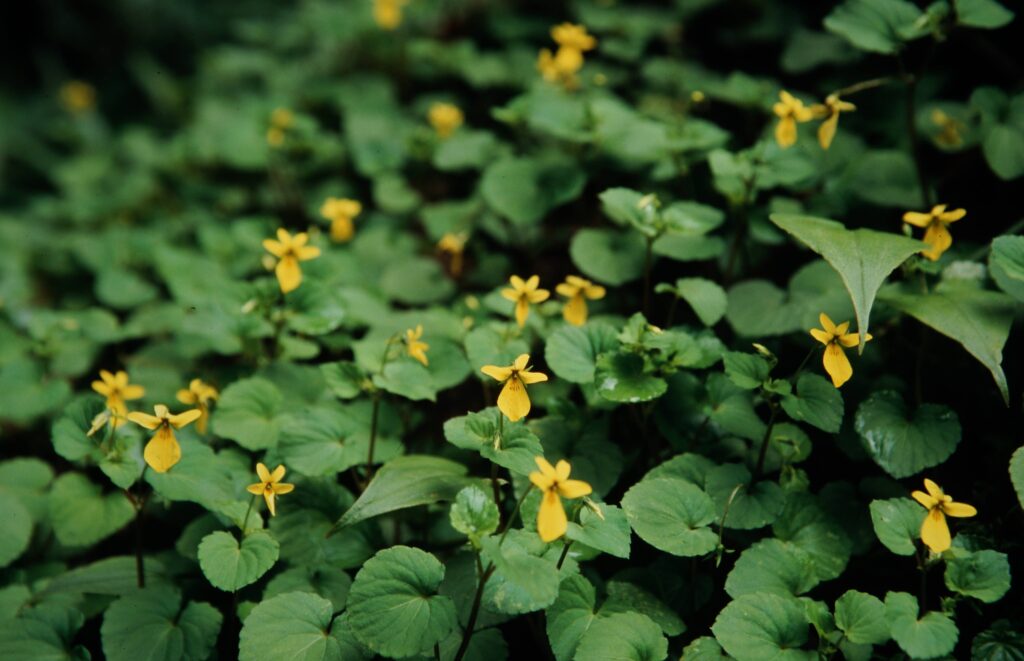
Viola biflora is a circumboreal, arctic-alpine herb with one of the widest distributions in the genus, the GBIF dataset of over 83000 records spanning the mountains of Europe (France, Switzerland, Austria, Germany, Italy, Spain, Scandinavia, Poland), Russia, China, Japan, Taiwan, Nepal and North America. It grows in cool, moist montane to alpine habitats: shaded rock ledges, streamsides, damp turf, mossy banks and conifer-forest margins, ascending well above the treeline. The photographed plant from the Pele-La in Bhutan at 3000 m in April, where it grew alongside the orchid Herminium duthiei, exemplifies its occurrence in high Himalayan meadow and rock-crevice communities flushed by snowmelt.

It is a small, delicate perennial herb arising from a slender creeping rhizome, with weak ascending stems 5–15 cm tall. The leaves are reniform to broadly cordate, crenate-margined, thin-textured and bright green, the basal ones long-petiolate. The flowers are characteristically borne one or two per axil (hence the epithet biflora) on slender pedicels; the corolla is small, bright yellow, with five petals, the lowest petal broadest and conspicuously veined with fine brown-purple nectar-guide striae, and produced into a short blunt spur. The five stamens surround a superior ovary maturing into a small loculicidal capsule that splits into three valves, ejecting the seeds.

Viola biflora is the type of section Chamaemelanium and is exceptional among violets for its yellow flowers and circumpolar range, with numerous regional varieties recognised across its vast area. The nectar-guided flowers attract small bees and hoverflies, and explosive capsule dehiscence aids seed dispersal. Widespread and abundant, it is of least conservation concern.

Author: L. · Sources: POWO (Kew), GBIF, Flora of China Vol. 13, Flora of Bhutan Vol. 1, Flora of Nepal, Violets of the World (Marcussen et al.)

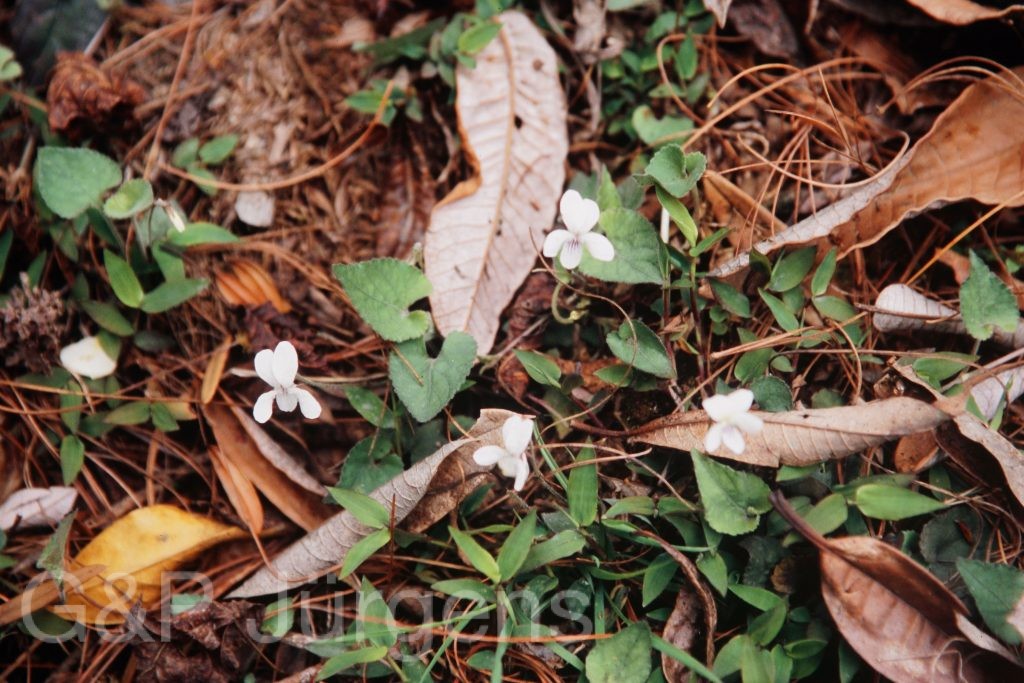
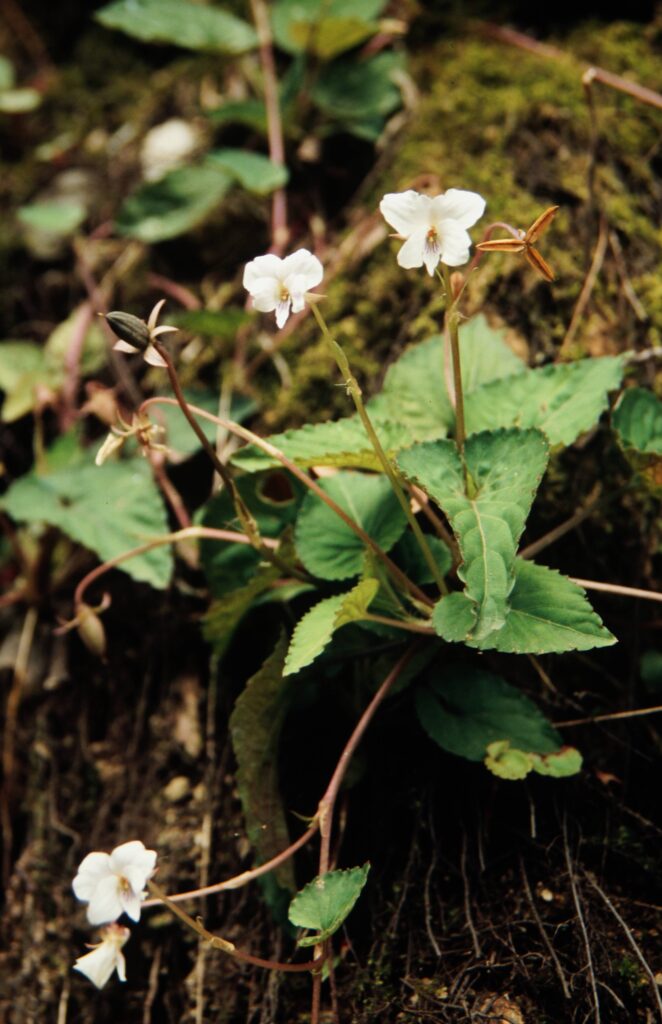
D. Don

Bh2008 157 P257
Bhutan Chendebji, 2500m April
Sikkim 2006 288 ergebnis
India West-Bengal, Chaana 1700m, May

Description

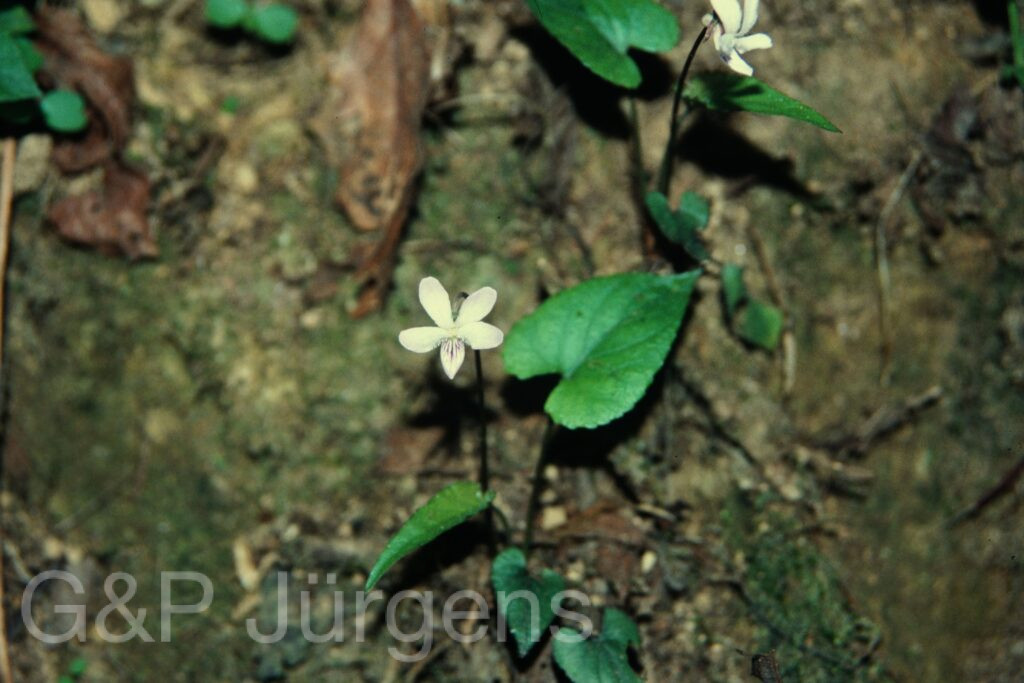
Viola hamiltoniana D.Don is a small perennial violet of the temperate Himalaya and East Asia. GBIF documents a broad distribution including Nepal, NE India, Bhutan, Bangladesh, Sri Lanka, China, Taiwan, Japan, Korea, the Russian Far East and Southeast Asia, with over 10,000 records, reflecting its place within a widespread and taxonomically intricate East Asian complex. In the Himalaya it grows in moist temperate forest, on grassy banks and shaded slopes; the illustrated plants are from Bhutan at Chendebji, 2,500 m, in April, and from West Bengal at Chaana, 1,700 m, in May, the flowering season of early spring.

The plant is a low, acaulescent or shortly stemmed herb arising from a slender rhizome, sometimes producing stolons. The leaves are basal in a loose rosette, the blades ovate to oblong-lanceolate or cordate with a crenate to serrate margin and a long, slender petiole, the stipules narrow and entire to fimbriate. Flowers are solitary on long axillary peduncles, zygomorphic and spurred in typical violet fashion, white to pale lilac or bluish with darker veining on the lower petal and a short blunt spur; cleistogamous flowers are commonly produced later in the season. The fruit is a three-valved loculicidal capsule that dehisces explosively to disperse the smooth seeds.

Viola section taxa of the Himalaya are notoriously variable, and V. hamiltoniana has been variously circumscribed and synonymised within the East Asian violet complex. The frequent cleistogamy ensures reliable seed set, contributing to its wide range and abundance. The species is common and of no conservation concern.

Author: D. Don · Sources: POWO (Kew), GBIF, Flora of China Vol. 13, Flora of Bhutan Vol. 1, Flora of Nepal, W. Becker: Violae Asiaticae

Viola hookeri

by GP Jürgens

Thomson ex Hook.f.

Sikkim2004 73 P128
Sikkim West-Bengal, Bersay 2700m April
Sikkim 2006 160 ergebnis
India West-Bengal, Molley 3200m, May

Description

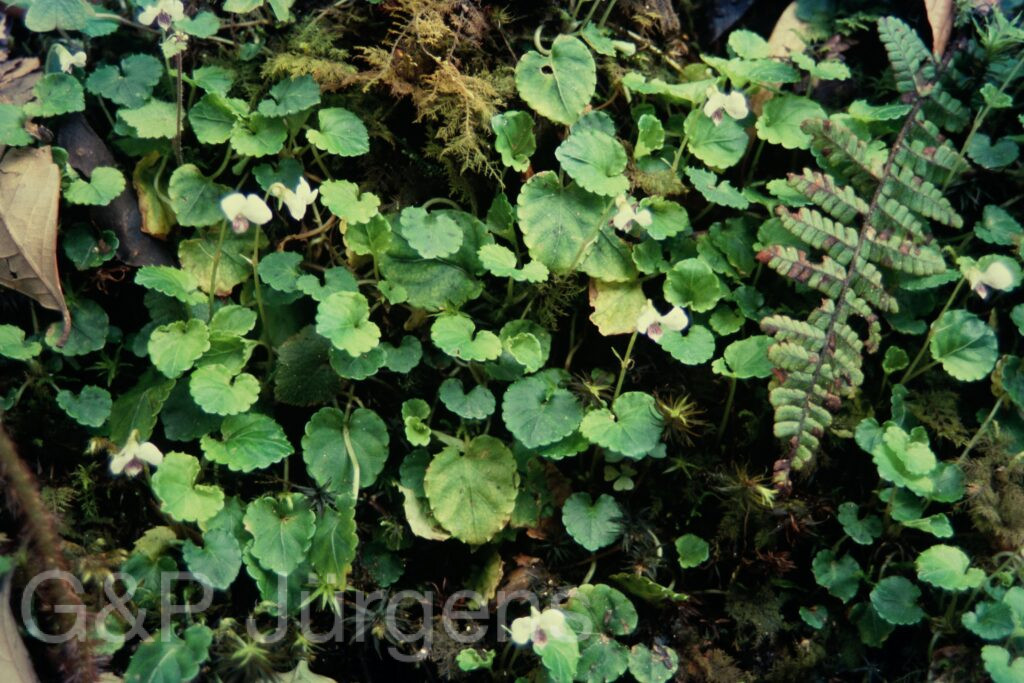
Viola hookeri Thomson ex Hook.f. is a small Himalayan violet of the eastern ranges, occurring in Sikkim, Darjeeling and adjacent India, Nepal and Bhutan. The GBIF figures attached to this record (over 3.8 million occurrences across chiefly European and North American countries) pertain to the genus Viola as a whole, not to this species, whose true range is confined to the temperate eastern Himalaya. It grows in cool, moist, shaded forest, on mossy banks and along path margins. The photographed plants are from the Sikkim-West Bengal border at Bersay (2,700 m, April) and from Molley (3,200 m, May), placing it in the upper temperate to subalpine forest belt.

It is a small acaulescent perennial herb forming a basal rosette from a slender rhizome, without elongated leafy stems. The leaves are long-petiolate, the lamina ovate to cordate-reniform with a crenate margin and a stipulate base. The solitary flowers are borne on slender axillary peduncles and have the characteristic zygomorphic violet structure: five unequal petals, the lowest spurred, white to pale lilac and often violet-veined, with the lower lateral petals sometimes bearded. As in many violets, cleistogamous flowers may also be produced. The fruit is a small, ellipsoid, three-valved loculicidal capsule that splits explosively to eject the smooth seeds.

Viola (Violaceae) is a near-cosmopolitan genus with a strong Himalayan radiation of acaulescent, rosette-forming species adapted to montane woodland. V. hookeri belongs to this eastern Himalayan group, in which basal rosettes, spurred flowers and frequent cleistogamy reflect adaptation to shaded, seasonally cool conditions. The species is not formally assessed but, like its relatives, depends on intact temperate forest.

Author: Thomson ex Hook.f. · Sources: POWO (Kew), GBIF, Flora of Bhutan, Flora of China, Hooker Flora of British India, Annotated Checklist of the Flowering Plants of Nepal, Becker conspectus of Viola

Franch.

Sikkim2004 339 G600
Sikkim/India Choka 3000m May

Description

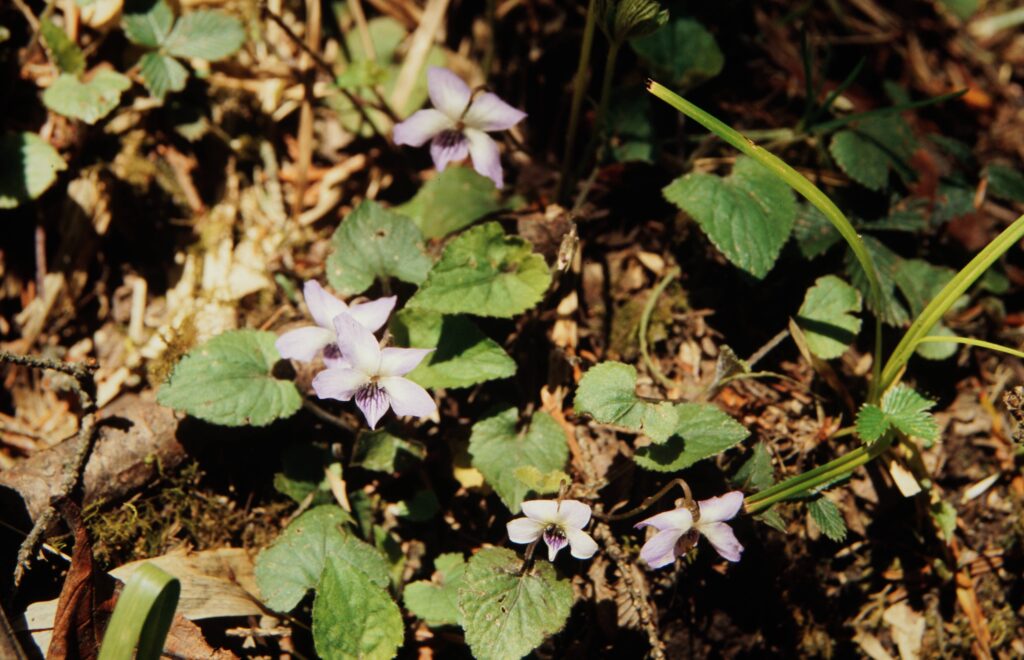
Viola moupinensis Franch. is a stemless perennial violet of the Sino-Himalayan mountains, distributed according to GBIF across China, India, Myanmar, Nepal and Bhutan. It inhabits cool, moist temperate and subalpine forests, shaded grassy slopes, forest margins and stream sides, typically between about 2,000 and 3,500 m. The May record from Choka in Sikkim at 3,000 m reflects its flowering during the spring monsoon onset in mossy, humus-rich woodland, where it grows among ferns and other shade-tolerant herbs in the understorey of mixed conifer and broad-leaved forest.

The species is an acaulescent (rosette-forming) perennial arising from a short, stout rhizome bearing fibrous roots. The leaves are basal, long-petiolate, with broadly cordate to reniform-cordate blades that are crenate-serrate at the margin and somewhat pubescent, often enlarging considerably after flowering. The solitary, long-pedunculate flowers are pale violet to whitish with darker purple veining on the lower petals; the lowermost petal bears a short, blunt spur. As is typical of Viola, the plant also produces self-pollinating cleistogamous flowers later in the season, and the fruit is an ellipsoid, three-valved capsule that dehisces explosively to disperse the seeds, which are further dispersed by ants via their elaiosomes.

Viola moupinensis belongs to section Viola and is closely allied to the temperate stemless violets of Eurasia. Its combination of showy chasmogamous and reliable cleistogamous flowers ensures reproductive success in shaded, insect-poor forest understoreys. As a frequent and adaptable woodland species across a broad elevational and geographic range, it is not of conservation concern but is a valued component of Himalayan spring flora.

Author: Franch. · Sources: POWO (Kew), GBIF, Flora of China Vol. 13, Flora of Bhutan Vol. 1, Wang Wencai: Violaceae monographic studies

Ging.

Sikkim2011 165
Sikkim Vista-valley 2500m, June
Sikkim2011 167
Sikkim Vista-valley 2500m, June
Sikkim 2006 460 ergebnis
India West-Bengal, Ruigi-Chu 2100m, May

Description

Viola wallichiana is a small perennial herb of the Himalaya, distributed through Nepal, northern India, Sikkim, Bhutan and southwestern China, with peripheral or introduced records noted from Australia; GBIF holds about 79 collections, reflecting a relatively localised eastern Himalayan range. It grows in shaded, moist temperate forest, on mossy banks, humus-covered slopes and shaded rock ledges, typically between about 2000 and 3000 m. The photographed plants were found in Sikkim's Vista valley at around 2500 m in June and in the West Bengal hills at Ruigi-Chu near 2100 m in May, on the cool, sheltered, leaf-littered forest floor it inhabits through late spring and the early monsoon.

The plant is a low, stemless to short-stemmed perennial arising from a slender rhizome, sometimes spreading by short stolons. The leaves are basal or nearly so, long-petiolate, the blade ovate to cordate or reniform with a crenate margin and conspicuous fringed stipules. The flowers are solitary on slender axillary peduncles, zygomorphic and spurred in typical violet fashion, pale violet to bluish or whitish with darker veining on the lower petal, the spur short. Cleistogamous flowers may also be produced. The fruit is a small loculicidal capsule that splits into three valves, ejecting the seeds elastically.

Viola (Violaceae) is a large, cosmopolitan genus, and V. wallichiana belongs to the temperate Himalayan group of rosulate, spurred-flowered violets, commemorating Nathaniel Wallich. Its cordate basal leaves, fringed stipules and pale veined flowers distinguish it from congeners. It is a typical understorey forb of mid-elevation forest, locally common but not assessed as threatened.

Author: Ging. · Sources: POWO (Kew), GBIF, Flora of China Vol. 13, Flora of Bhutan Vol. 2, Flora of Nepal, Flora of Pakistan, Becker conspectus of Himalayan Viola