Author

GP Jürgens

Maxim.

Bh2008 35 P57
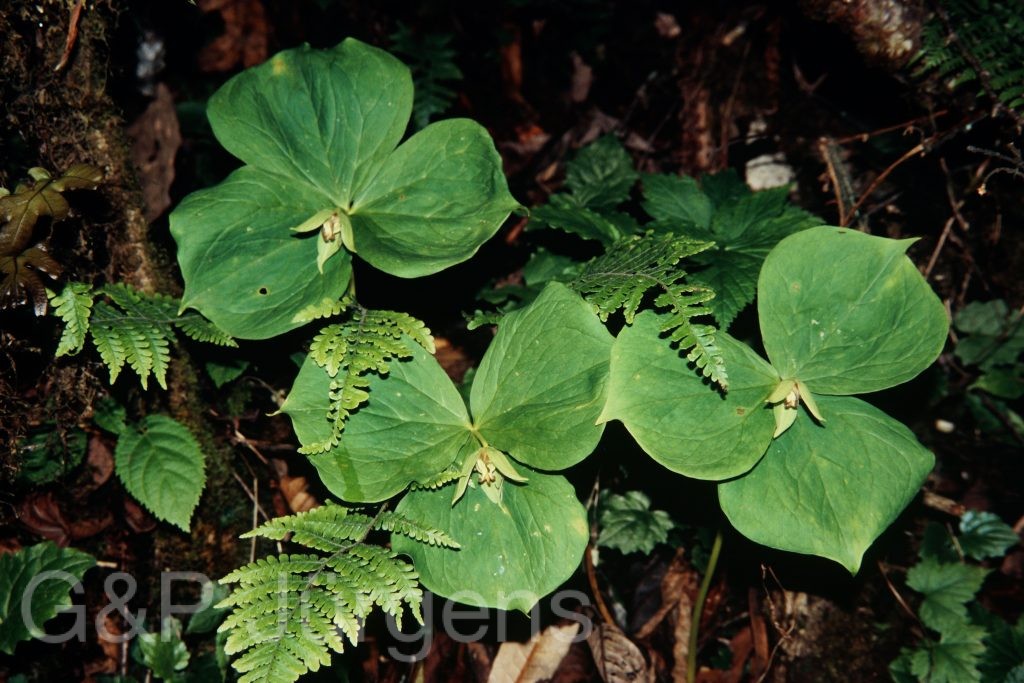
Bhutan Doch-La, 3000m April
Bh09 212 G355
Bhutan Paro, 2400m June

Description

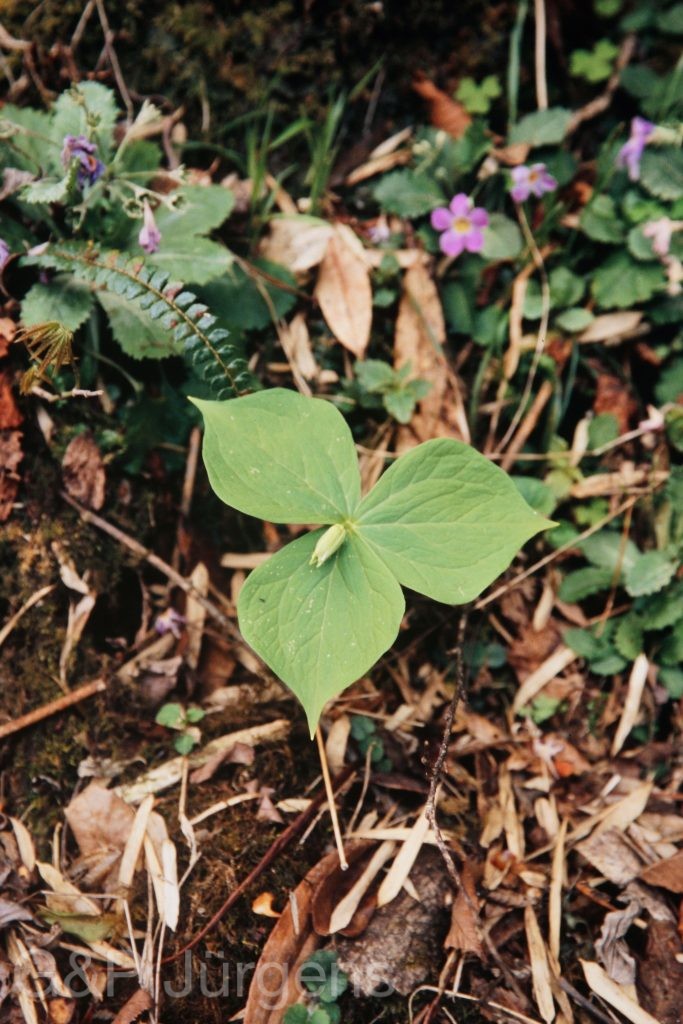
Trillium tschonoskii is a wide-ranging woodland herb of temperate East and South Asia, distributed from Japan, Korea and Taiwan through eastern and central China and into the Himalaya, reaching India, Bhutan and Nepal, with records also from the Russian Far East. With more than two thousand GBIF occurrences it is by far the most widespread Asian trillium, though it thins markedly toward its western Himalayan limit. It is a plant of cool, shaded, humus-rich broadleaved and conifer forest, favouring moist slopes and stream banks, generally between about 2300 and 3600 m in the Himalaya. The Bhutanese material illustrated, from Doch-La at 3000 m in April and from Paro at 2400 m in June, spans the species' flowering season as it tracks elevation, emerging soon after snowmelt in the deep shade of the forest floor.

The plant is a glabrous perennial arising from a short, thick, horizontal rhizome, producing a single erect stem that bears at its summit a single whorl of three broadly rhombic to ovate, net-veined, sessile or short-stalked leaves. Above this whorl a solitary flower is borne on a short erect pedicel. The flower is trimerous, with three green, lanceolate sepals and three white (sometimes ageing pinkish) ovate petals; six stamens with prominent anthers surround a superior, three-locular ovary topped by three recurved stigmas. The fruit is a fleshy, ovoid, reddish to dark berry-like capsule containing numerous seeds, each bearing an oily elaiosome that promotes dispersal by ants.

Trillium, now placed in the Melanthiaceae, is a classic component of the temperate deciduous forest flora of the Northern Hemisphere, and T. tschonoskii is the principal Asian representative reaching the Himalaya, exemplifying the floristic links between East Asian and Sino-Himalayan woodlands. Its slow growth, dependence on undisturbed forest humus and ant-mediated seed dispersal make it sensitive to habitat disturbance, and like many trilliums it has horticultural appeal and some traditional medicinal use of the rhizome, which can drive local collection. Although broadly distributed and not globally threatened, its peripheral Himalayan populations warrant monitoring as forest cover and microclimate change.

Author: Maxim. · Sources: POWO (Kew), GBIF, Flora of China Vol. 24, Flora of Bhutan Vol. 3 Part 1, Flora of Nepal, Trillium (Frederick W. Case and Roberta B. Case)
Wall.

Bh09 321 G527
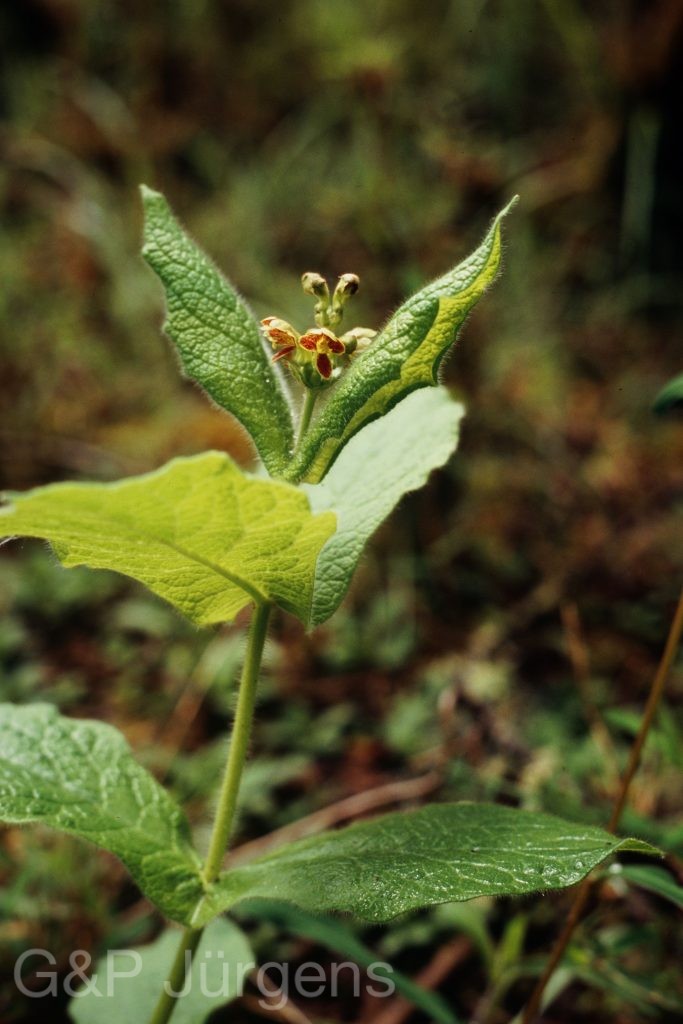
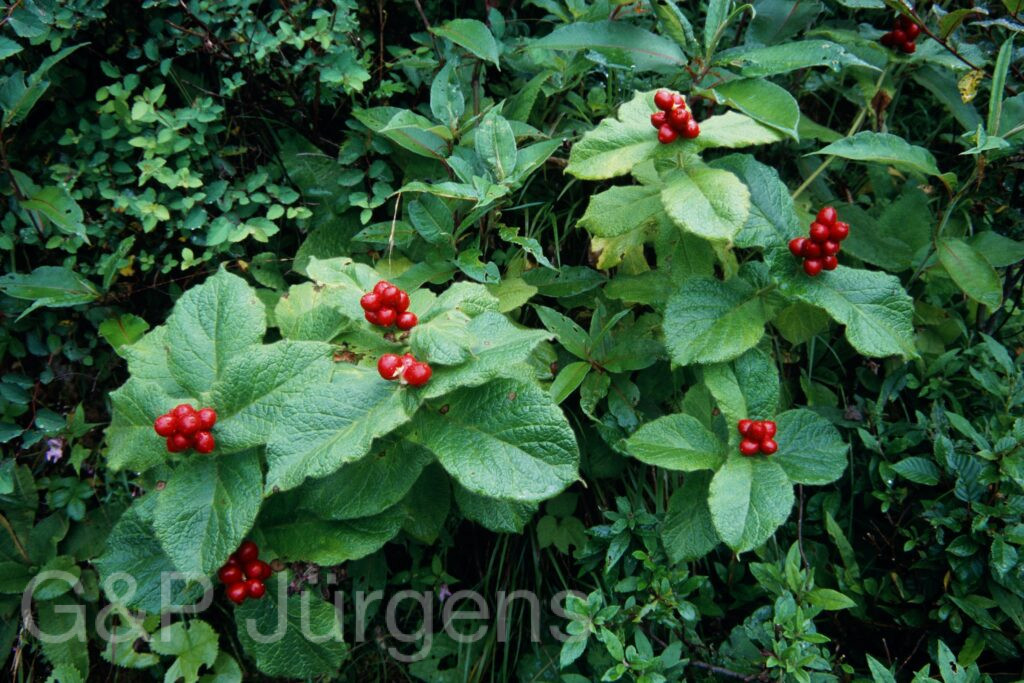
Bhutan Jakar 3200m, June
Sikkim2003 377 G529
Sikkim Tista valley 3400m August

Description

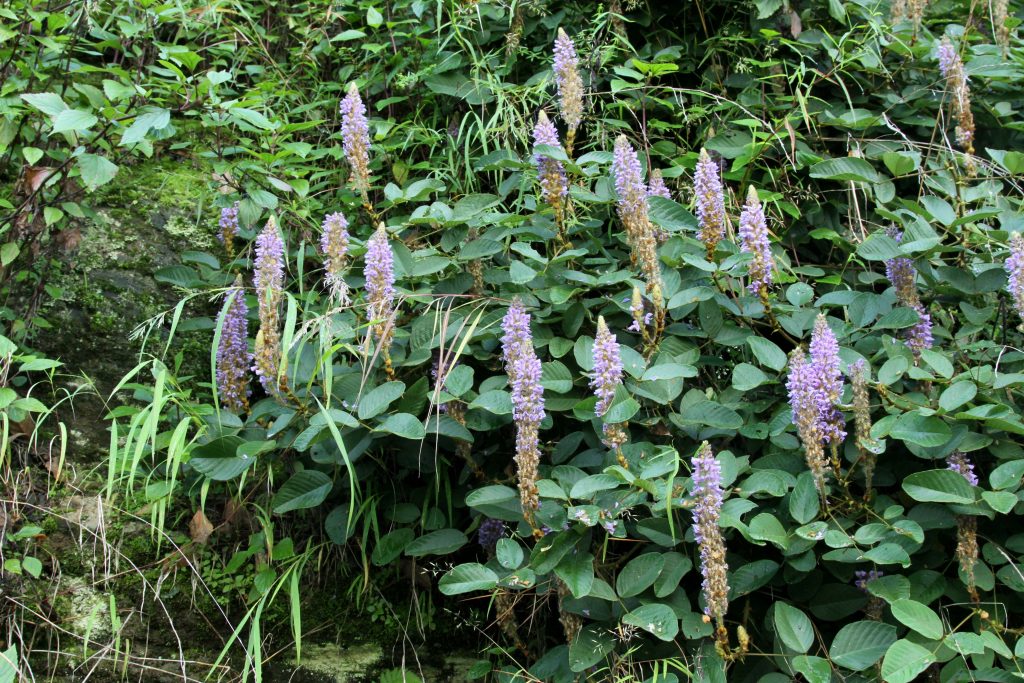
Triosteum himalayanum is a Sino-Himalayan perennial herb distributed across China, Nepal, Bhutan, Sikkim and northern India, with GBIF aggregating around 990 occurrences. It is characteristic of the upper temperate to subalpine forest belt, recorded here from Jakar in Bhutan at 3200 m in June and the Tista valley in Sikkim at 3400 m in August. The species grows in moist shaded forest, woodland margins, scrub and tall-herb communities along streams and on cool, humus-rich slopes, typically between roughly 2500 and 4000 m, where it forms part of the shade-tolerant understorey flora.

It is an erect, softly hairy herbaceous perennial 0.4-1 m tall arising from a stout rhizome, the stems unbranched and glandular-pubescent. The leaves are opposite, large, broadly obovate to elliptic, often shortly connate at the base around the stem (perfoliate to subconnate), entire to shallowly lobed and softly hairy on both surfaces. Small tubular flowers are clustered in dense axillary and terminal verticels; the corolla is dull purplish to greenish-yellow, weakly two-lipped, and the calyx bears persistent, leafy, ciliate lobes. The most conspicuous feature is the fruit, a fleshy, bright red, bristly-hairy drupe crowned by the persistent calyx and containing three bony pyrenes.

Triosteum (horse-gentian) is a small, disjunct genus of about six species in eastern Asia and North America, now placed within an enlarged Caprifoliaceae; this striking amphi-Pacific distribution makes it a classic example of the eastern-Asian-North-American biogeographic link. T. himalayanum is widespread and locally common within its montane range and is not of conservation concern; its showy red drupes are dispersed by birds, and the rhizome has a place in regional herbal traditions.

Author: Wall. · Sources: POWO (Kew), GBIF, Flora of China, Flora of Bhutan, Flora of British India (Hooker), Gould & Donoghue revision of Triosteum (Caprifoliaceae)

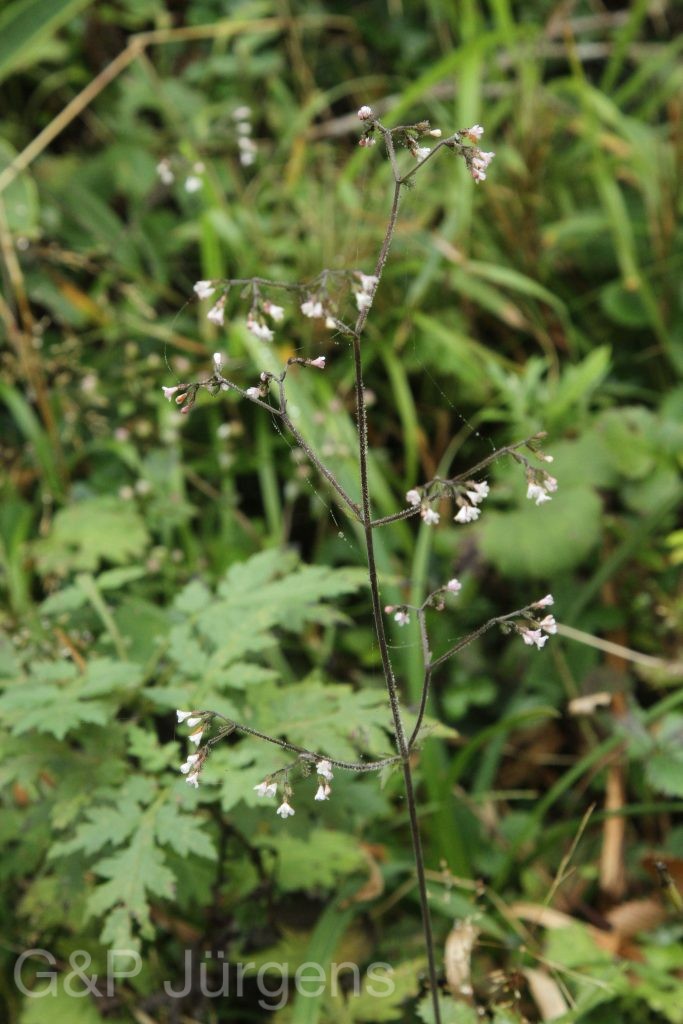
Wall. ex DC.

Bhutan2015 26
Bhutan Dochu-La 3100m, October

Description

Triplostegia glandulifera is a slender montane herb broadly distributed through the Sino-Himalaya and into Malesia, ranging from Nepal, northern India and Bhutan eastward across China and Taiwan to Myanmar, Malaysia, Indonesia and New Guinea, with outliers in Japan. GBIF documents over 1500 occurrences, concentrated in China, Taiwan and the Himalayan countries. It grows in moist temperate forest, on shaded grassy banks, in clearings and along forest margins on humus-rich soils, broadly between about 2000 and 3500 m. The plant illustrated was photographed in Bhutan at the Dochu-La at 3100 m in October, in cool, misty broad-leaved and conifer forest typical of its autumn fruiting.

The plant is a delicate, erect perennial herb with slender, four-angled stems that are glandular-pubescent above. The leaves are opposite, the lower ones often lyrate-pinnatifid and the upper smaller and less divided, with toothed segments. The inflorescence is a lax, dichotomously branched cyme bearing small, regular, five-lobed white to pinkish flowers. Diagnostically, each ovary is enclosed in a double involucel of bracteoles densely covered with stalked, hooked glandular hairs, which persists around the single-seeded fruit and aids epizoochorous dispersal.

The genus Triplostegia comprises only a couple of species and has had an unsettled placement, treated variously within Dipsacaceae, Valerianaceae or its own family Triplostegiaceae; molecular phylogenetics now situates it within an enlarged Caprifoliaceae (the dipsacalean clade), as a sister lineage to the teasels and valerians. Its glandular double involucel is a key character linking it to that alliance. The species is widespread and ecologically unremarkable in distribution, and is not considered of conservation concern.

Author: Wall. ex DC. · Sources: POWO (Kew), GBIF, Flora of China, Flora of Bhutan, An Annotated Checklist of the Flowering Plants of Nepal, Phylogeny and Classification of Dipsacales (Caprifoliaceae s.l.)

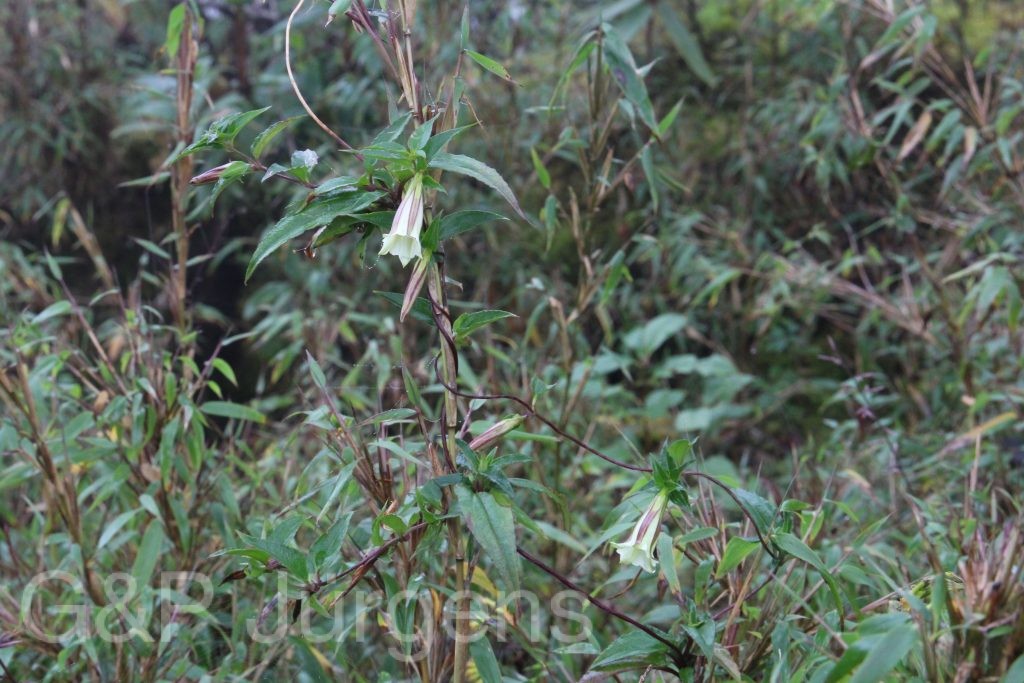
H.Hara

Bhutan2015 23
Bhutan Dochu-La 3000m, October
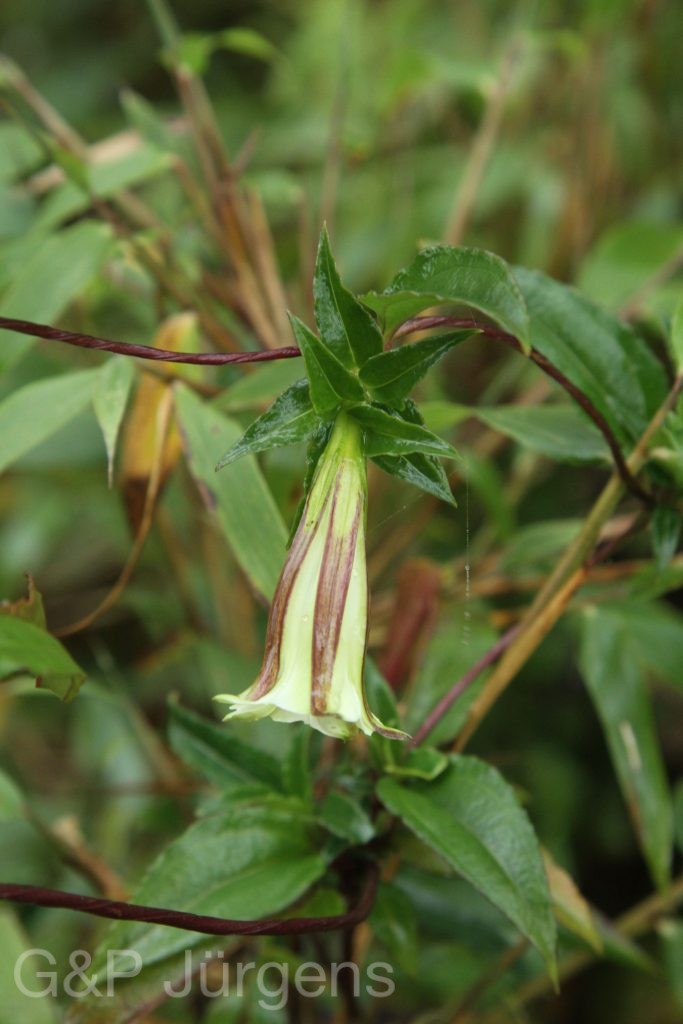
Bhutan2015 25
Bhutan Dochu-La 3000m, October

Description

Tripterospermum nigrobaccatum is an eastern Himalayan twining gentian recorded from Nepal, Bhutan and India, and is among the least-collected taxa in this set with only about 11 GBIF occurrences. It is a forest plant of the temperate zone, scrambling through shaded broadleaved and mixed forest, shrubby margins and mossy banks, broadly between about 2500 and 3500 m. The photograph from the Dochu-La in Bhutan at 3000 m in October reflects its autumn flowering and fruiting, when this well-known forested pass carries a rich understorey flora in the cooling post-monsoon months.

Unlike the erect alpine gentians, it is a slender, herbaceous perennial climber or trailer with twining stems. The leaves are opposite, ovate to lanceolate, acuminate and three- to five-veined, borne on a vine-like stem. The flowers are solitary or few in the leaf axils, with a campanulate to narrowly funnel-shaped corolla that is blue to purplish, the five lobes alternating with small plicate folds in the sinuses as is typical of the Gentianeae. Most diagnostic is the fruit: rather than a dry capsule, Tripterospermum produces a fleshy berry, here ripening black or blackish (the meaning of "nigrobaccatum"), containing flattened, often winged seeds.

The genus Tripterospermum was segregated from Crawfurdia and Gentiana on the basis of its climbing habit, baccate fruit and three-winged or angled seeds, and is centred on East and Southeast Asia. The fleshy fruits suggest at least partial bird dispersal, contrasting with the wind-dispersed capsules of most gentians. Its narrow range and few records make it a plant of biogeographic note, though no formal conservation assessment is established.

Author: H.Hara · Sources: POWO (Kew), GBIF, Flora of Bhutan, Flora of China, Gentianaceae of the World (Ho & Pringle / Struwe)

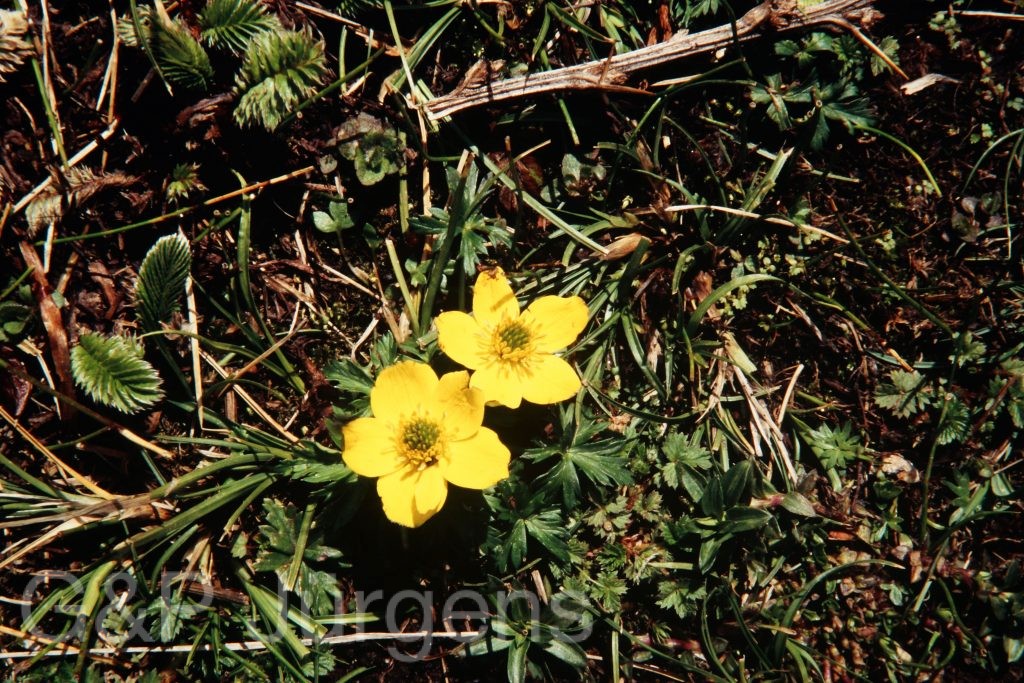
D.Don

BhutanPG2011 332
Bhutan Jule-Tso 4250m, June

Description

Trollius pumilus is a dwarf globeflower of the high alpine zone of the Himalaya and western China, native to China, Nepal, India and Bhutan, with over 520 georeferenced records (those reported from Europe, Canada and Japan representing cultivated and herbarium material). It grows in moist alpine meadows, on grassy and peaty slopes and beside snow-melt streams, typically between about 3500 and 4800 m. The photographed plant was recorded at Jule-Tso in Bhutan at 4250 m, flowering in June, early in the alpine growing season as snowbeds retreat and the high pastures come into bloom.

The species is a small, tufted perennial herb with a short rhizome and fibrous roots, the basal leaves long-petiolate with palmately three- to five-partite blades, the segments further lobed and toothed. The flowering stems are low, simple and few-leaved, bearing usually a single terminal flower. The flower is shallowly bowl-shaped and does not close into the globe characteristic of some congeners; the five or more petaloid sepals are bright golden-yellow, often flushed purplish or greenish outside, surrounding numerous small linear nectariferous petals (staminodes) and many stamens. The fruit is a cluster of several many-seeded follicles with short beaks.

Trollius, of the family Ranunculaceae and tribe Helleboreae, comprises the globeflowers of northern temperate and alpine regions; T. pumilus is among the smallest, distinguished by its open, single-flowered, low-growing habit. As an early snow-melt alpine it is insect-pollinated and a familiar component of Himalayan high-meadow flora. Widespread and locally abundant, it is of no conservation concern and is occasionally grown as an alpine ornamental.

Author: D.Don · Sources: POWO (Kew), GBIF, Flora of Bhutan, Flora of China, A Monograph of the Genus Trollius (Doroszewska)

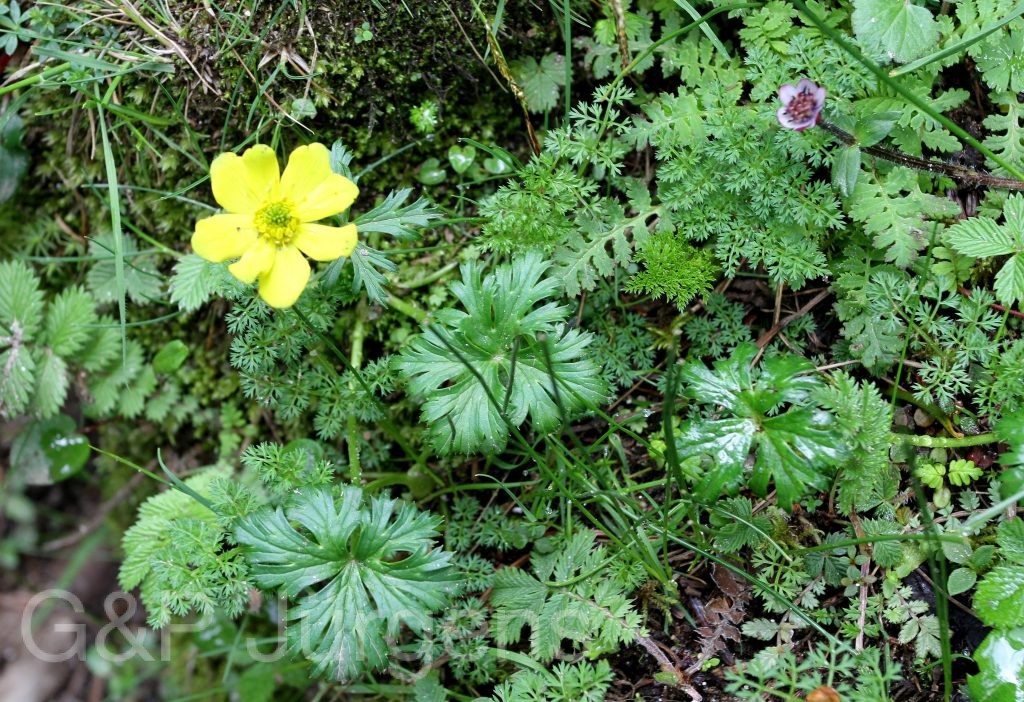
(Bruehl) Dorosz.

BhutanPG2011 218
Bhutan Jimilangtso, 4000m June;
also included: Anemone rupestris Hook.f. & Thomson
Bh09 137 P239
Bhutan Jimilangtso, 4000m June

Description

Trollius sikkimensis is a high-alpine globeflower restricted to the eastern and central Himalaya, recorded from Nepal, China, Bhutan and India, with only about 31 georeferenced occurrences indicating a comparatively narrow and incompletely documented range. It inhabits moist alpine meadows, marshy turf, streamsides and the margins of glacial tarns between roughly 3500 and 4500 m. The photographed plants from Jimilangtso in Bhutan at 4000 m, flowering in June, exemplify its damp high-meadow habitat near alpine lakes, where it grows alongside other snowmelt herbs such as the Anemone rupestris noted from the same locality.

It is a glabrous perennial herb arising from a short rhizome, with erect, simple or sparingly branched stems. The basal leaves are long-petioled and palmately divided into deeply cut, toothed segments, the cauline leaves smaller and subsessile. The flowers are large and solitary or few, the showy part formed by several broad, spreading, golden-yellow petaloid sepals that open more widely than in the cupped European globeflowers; within are numerous narrow nectariferous petals and many stamens. The fruit is a head of many-seeded, beaked follicles.

Unlike the closed, globular flowers of Trollius europaeus, the open, saucer-shaped perianth of the Asian species facilitates access by a wider range of alpine pollinators. Trollius sikkimensis is closely allied to other Himalayan and Chinese globeflowers and is distinguished on perianth and follicle characters. Its restricted distribution and dependence on intact alpine wetlands make it potentially sensitive to grazing pressure and climatic warming.

Author: (Bruehl) Dorosz. · Sources: POWO (Kew), GBIF, Flora of Bhutan, Flora of China, Doroszewski's revision of Trollius

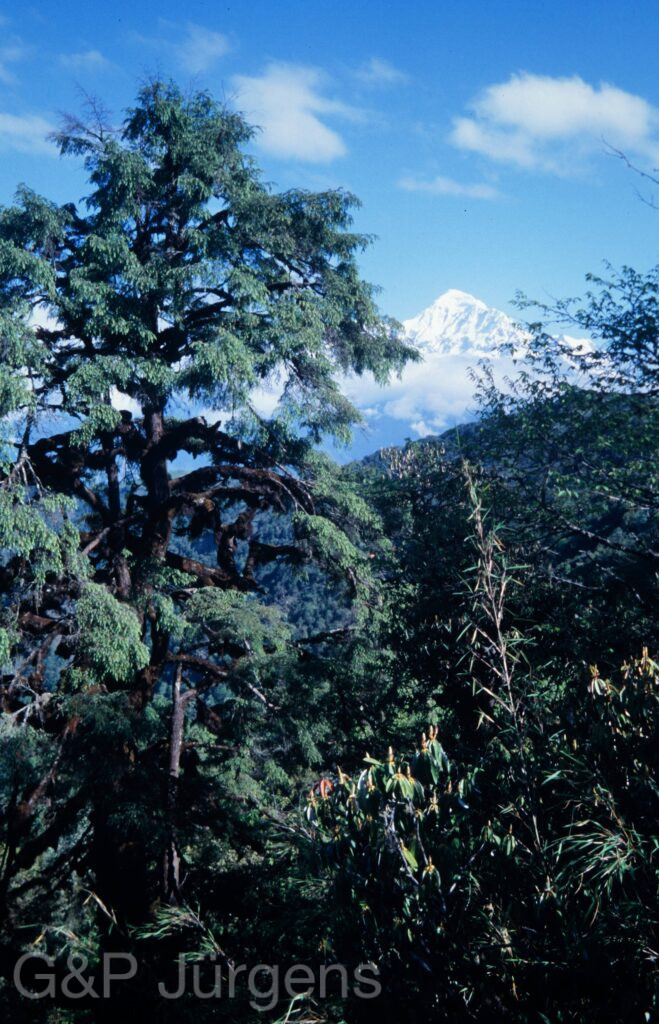
(D.Don) Eichler

Nepal 2001 283 ergebnis ergebnis
Nepal (Gorkha) Lambra Kharka 3000m, May

Description

Tsuga dumosa, the Himalayan hemlock, is a large evergreen conifer distributed across the Himalaya from central Nepal eastward through Sikkim, Bhutan, and northeast India into southern China (Xizang, Yunnan, Sichuan, Guizhou), Myanmar, and northern Vietnam. It is a characteristic component of cool temperate and upper montane forests at elevations of 2,000–3,500 m, where it often forms pure stands or grows in association with Abies, Picea, Acer, and Rhododendron species. The species has been documented at Lambra Kharka in the Gorkha district of Nepal at approximately 3,000 m, near the upper limit of its elevational range.
Tsuga dumosa is a tree attaining 25–40 m in height with a trunk up to 1.5 m in diameter, bearing a broadly conical to irregular crown. The bark is dark greyish-brown, deeply fissured and scaly on mature trees. Leaves are linear, flattened, 10–25 mm long and 2–3 mm wide, with a rounded or emarginate apex, dark glossy green above with two conspicuous white stomatal bands beneath, arranged in a pectinate (comb-like) pattern on lateral shoots. Male strobili are small, axillary, and globose. Female seed cones are pendulous, ovoid to oblong, 1.5–2.5 cm long, with thin, rounded cone scales that open at maturity to release two small winged seeds per scale. The cones mature in a single season.
Tsuga dumosa is the sole Himalayan representative of the genus Tsuga, which comprises approximately nine species with a disjunct distribution between eastern Asia and North America. Phylogenetic studies place it sister to the East Asian T. chinensis complex. The species is of considerable ecological importance as a canopy dominant in Himalayan temperate forests, providing critical habitat for epiphytic bryophytes, lichens, and orchids. Its timber is locally valued for construction. While not currently assessed as threatened globally, localized deforestation and climate-driven upward range shifts pose potential concerns for some populations.

Author: (D.Don) Eichler · Sources: POWO (Kew), GBIF, Flora of China Vol. 4, Flora of Bhutan Vol. 1, Farjon: A Handbook of the World's Conifers (2017)

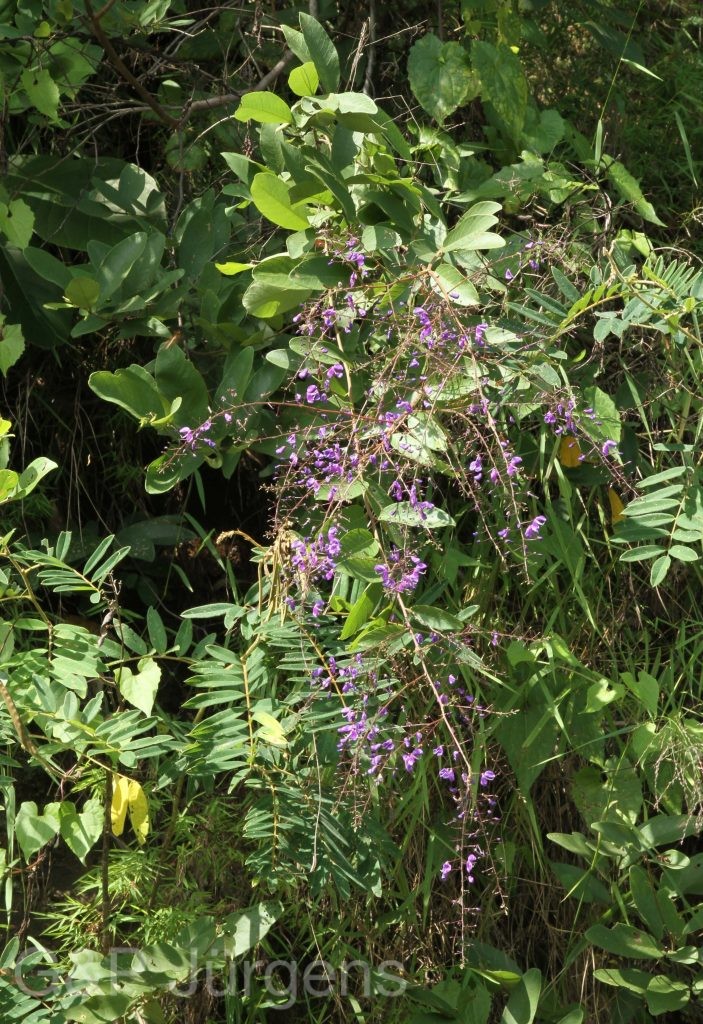
Uraria lagopus

by GP Jürgens

DC.

Bhutan2012 520
Bhutan Wangdi 2800m, September

Description

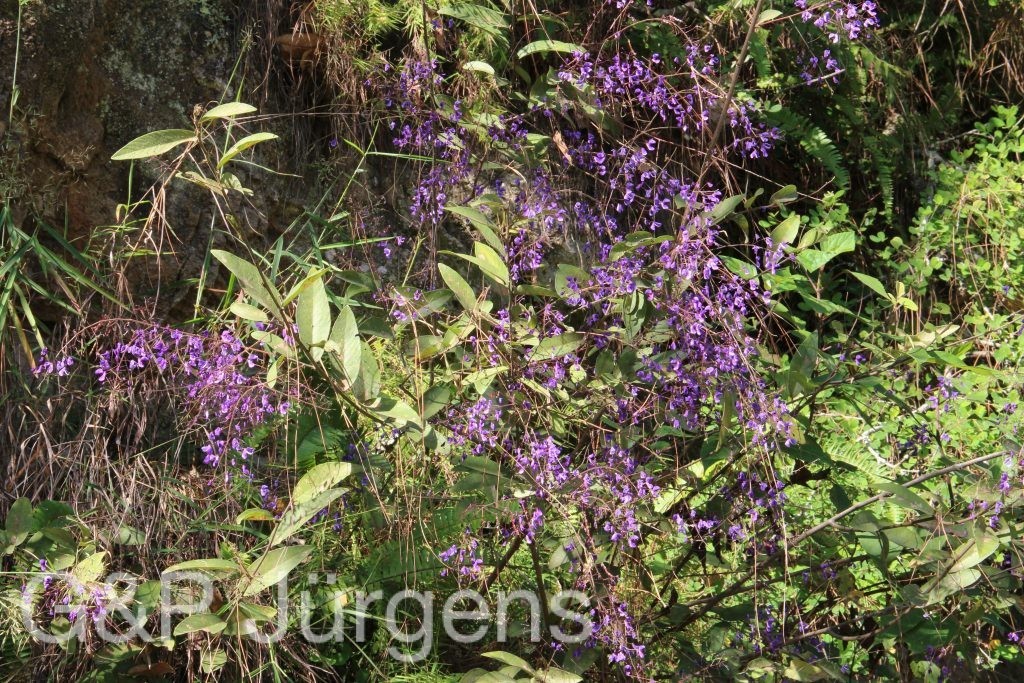
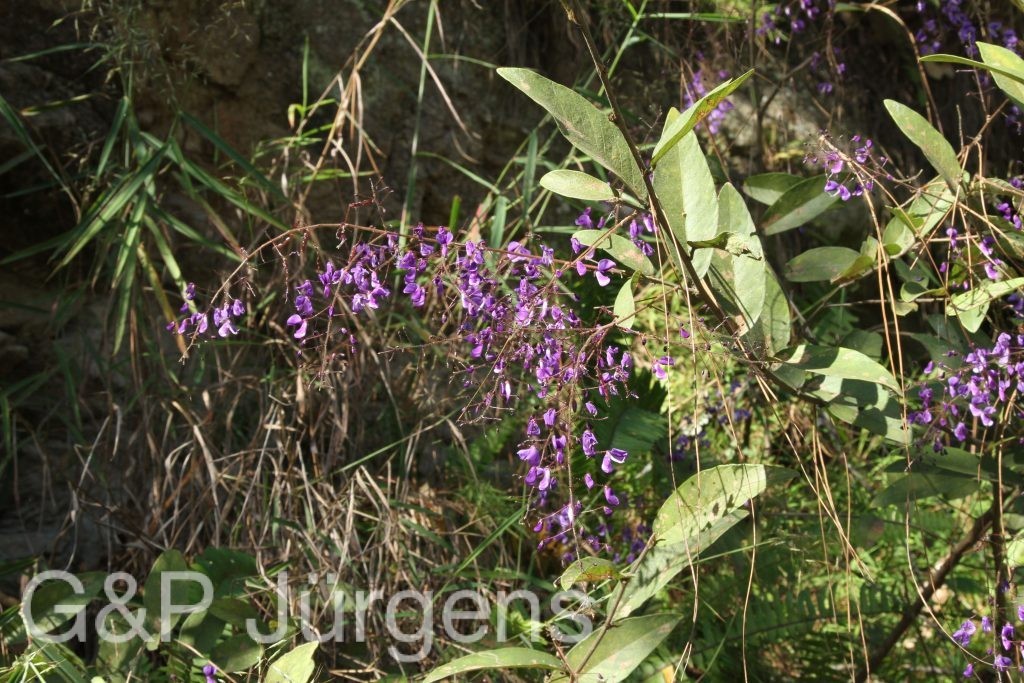
Uraria lagopus is a perennial herb or subshrub widely distributed through the Himalaya, southern China and South and Southeast Asia, recorded from India, China, Nepal, Myanmar, Taiwan, Bhutan, Sri Lanka, Bangladesh and Indonesia, with about 222 occurrences in GBIF. It is a plant of open grassy slopes, scrub, forest margins, roadsides and disturbed sunny ground, ranging from the lowlands into the lower montane zone. The photographed plant was collected in Bhutan near Wangdi (Wangdue) at about 2800 m in September, towards the upper end of its altitudinal range and during the post-monsoon flowering and fruiting season.

The plant produces erect to ascending stems from a woody base, clothed in spreading hairs. The leaves are pinnately compound, usually with three to several leaflets, the leaflets oblong to elliptic, entire, with prominent venation and a hairy underside; stipules are present at the nodes. The flowers are borne in dense, elongate, terminal racemes that are conspicuously shaggy with long hairs, giving the inflorescence the hare's-foot appearance recorded in the epithet lagopus. Each papilionaceous flower is small, pinkish to purplish. The fruit is a small jointed legume (loment) breaking into one-seeded segments at maturity.

Uraria belongs to the tribe Desmodieae of the Fabaceae, a group characterised by loment fruits dispersed as individual articles. Several species, including U. lagopus, are valued in traditional medicine and as fodder, and as legumes they fix atmospheric nitrogen through root-nodule symbiosis with rhizobia, contributing to soil fertility. The species is a tolerant colonist of open and disturbed habitats and is not regarded as threatened across its broad range.

Author: DC. · Sources: POWO (Kew), GBIF, Flora of China, Flora of Bhutan, Legumes of South Asia (Kew)

Uraria oblonga

by GP Jürgens

(Wall. ex Benth.) H.Ohashi & K.Ohashi

Bhutan2012 989
Bhutan Trithangebe 1050m, October
Bhutan2015 543
Bhutan Punaka 1240m, October
Bhutan2015 544
Bhutan Punaka 1240m, October

Description

Uraria oblonga is distributed across the warm-temperate and subtropical belt of mainland Asia, with georeferenced records spanning Thailand, China, India, Myanmar, Laos, Vietnam, Bhutan and Japan; the roughly 235 documented occurrences reflect a continuous range along the southern Himalayan foothills and through Indochina. In Bhutan it has been recorded at lower montane elevations, as the accompanying images from Trithangebe at about 1050 m and Punaka at about 1240 m attest, both gathered in October at the close of the monsoon. It favours open grassland, scrub margins, forest clearings and disturbed roadsides on well-drained slopes, behaving as a light-demanding component of secondary herbaceous communities.

The plant is an erect to ascending perennial herb or subshrub arising from a woody rootstock, the stems sparingly branched and clothed in spreading hairs. Leaves are imparipinnate, typically with one to three pairs of leaflets that are oblong to elliptic-oblong, with entire margins, a reticulate venation prominent beneath, and stipels at the base of the petiolules. The inflorescence is an elongate terminal raceme bearing numerous small papilionaceous flowers, the calyx deeply lobed with elongate teeth and the corolla pink to purplish. The fruit is a small lomentum breaking into several folded, indehiscent one-seeded articles characteristic of the genus.

The species belongs to tribe Desmodieae of the Fabaceae (Faboideae), allied to Desmodium, a relationship echoed in the synonymy and the herbarium history of the basionym described by Wallich and Bentham before transfer by H. Ohashi and K. Ohashi. The jointed, hook-haired lomentum promotes epizoochorous dispersal, while the legume root nodules fix atmospheric nitrogen, allowing the plant to colonise nutrient-poor disturbed ground. With its broad transcontinental range and tolerance of human-modified habitats, U. oblonga is not considered threatened.

Author: (Wall. ex Benth.) H.Ohashi & K.Ohashi · Sources: POWO (Kew), GBIF, Flora of China, Flora of Bhutan, Ohashi revision of Desmodieae (Leguminosae)

Urena lobata

by GP Jürgens

L.

Bhutan2012 458
Bhutan Zhemgang 1200m, October

Description

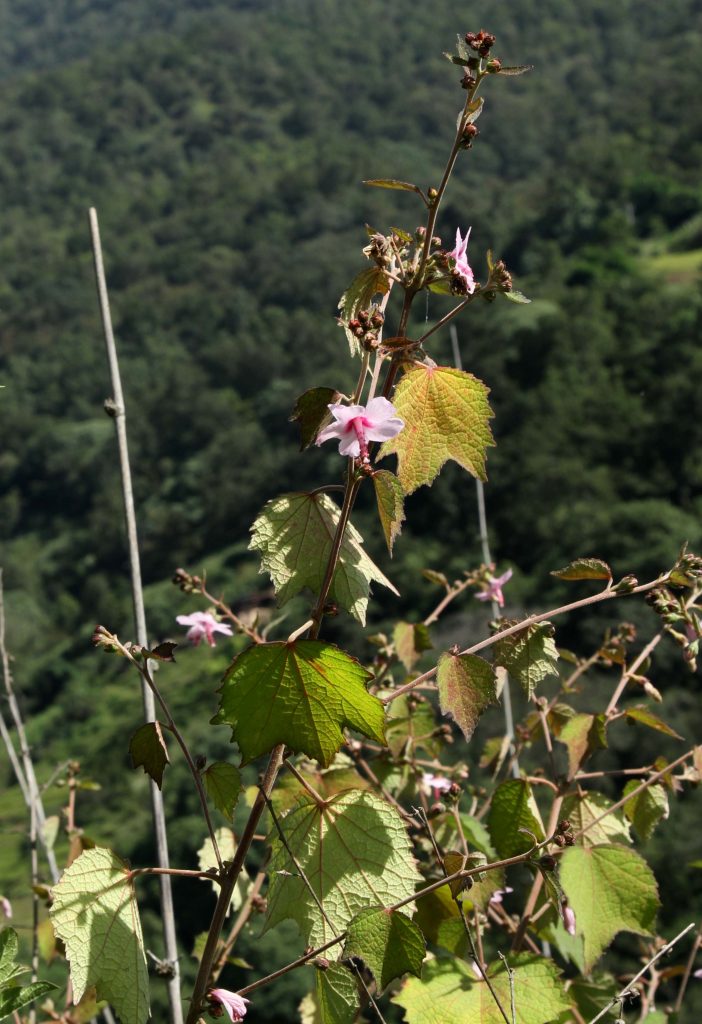
Urena lobata is a pantropical subshrub of remarkably wide distribution, with GBIF recording over 31000 occurrences spanning the Americas, Africa, Asia and Australasia, including the United States, Brazil, China, Australia, India, Indonesia, Madagascar, the Philippines and many other countries. A vigorous colonist of open, disturbed and seasonally moist ground, it grows along roadsides, in waste places, fallow fields, forest margins and grassland, mostly at low to middle elevations. The plant photographed at Zhemgang in southern Bhutan at about 1200 m, in October, occupies the warm subtropical foothill habitat where it is a common weed of cleared and cultivated land.

The plant is an erect, woody-based perennial herb or subshrub clothed throughout in stellate, often stinging-rough hairs. The leaves are alternate, variable, the lower ones rounded and shallowly three- to five-lobed or angled, the upper narrower, with toothed margins and conspicuous nectaries on the principal veins beneath. The flowers are solitary or clustered in the leaf axils, with an epicalyx of five bracteoles, five free pink to rose petals, and the stamens united into a staminal column typical of the Malvaceae. The fruit is a depressed schizocarp splitting into five indehiscent mericarps, each densely covered in glochidiate (hooked) spines that cling to fur and clothing, ensuring epizoochorous dispersal.

Urena lobata is economically significant as a bast-fibre plant, cultivated and gathered as "Congo jute" or "aramina", and the hooked fruits make it both an effective long-distance disperser and an aggressive weed in many warm regions, where it is sometimes regarded as invasive. Its enormous global range and tolerance of disturbance place it well outside any conservation concern. The species exemplifies a successful pantropical weed whose burr-like fruits have carried it, often with human aid, across the tropics and subtropics of both hemispheres.

Author: L. · Sources: POWO (Kew), GBIF, Flora of China, Flora of Bhutan, Flora of Tropical East Africa (Malvaceae), Borssum Waalkes revision of Malesian Malvaceae