
H.Hara
Description
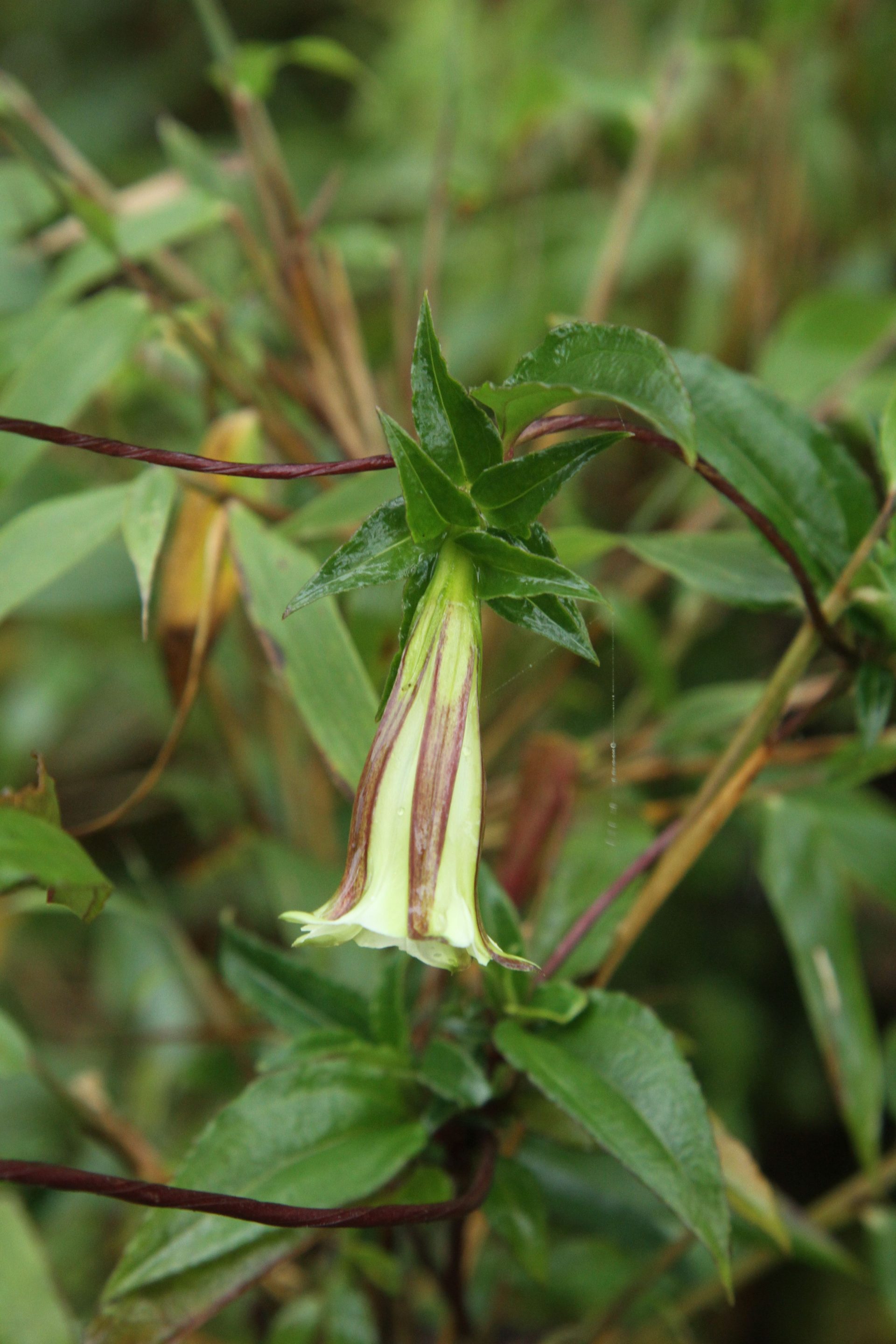
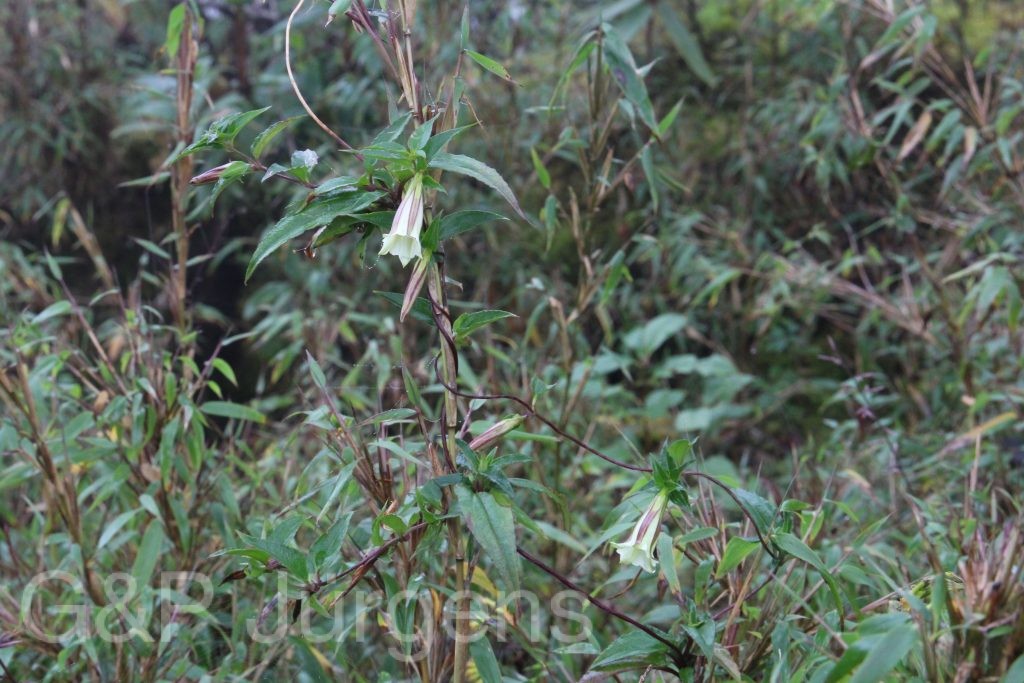
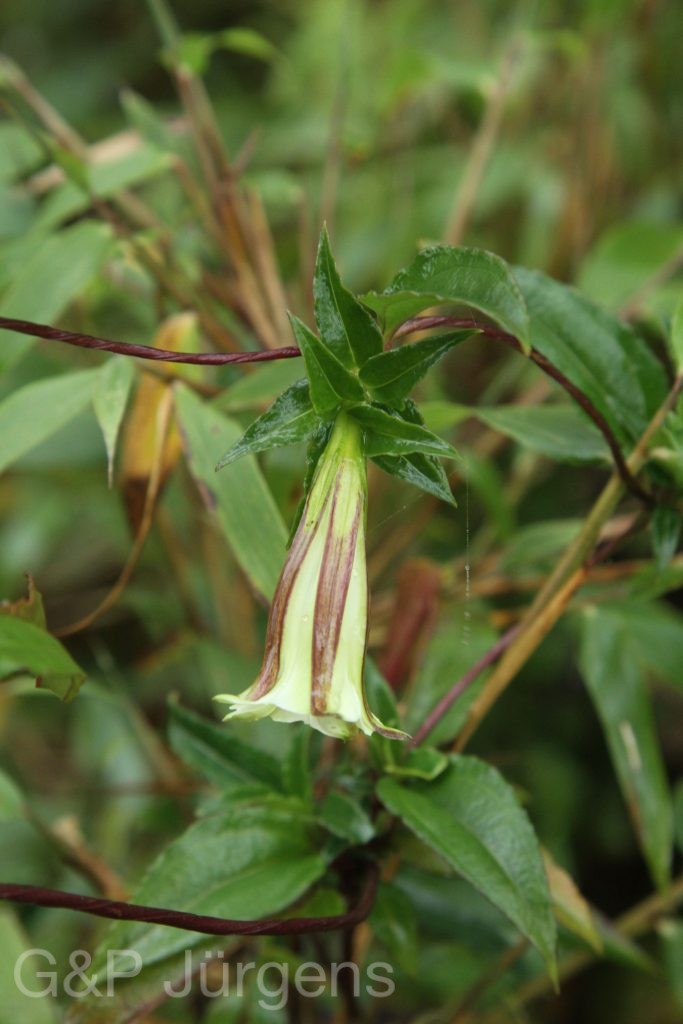
Tripterospermum nigrobaccatum is an eastern Himalayan twining gentian recorded from Nepal, Bhutan and India, and is among the least-collected taxa in this set with only about 11 GBIF occurrences. It is a forest plant of the temperate zone, scrambling through shaded broadleaved and mixed forest, shrubby margins and mossy banks, broadly between about 2500 and 3500 m. The photograph from the Dochu-La in Bhutan at 3000 m in October reflects its autumn flowering and fruiting, when this well-known forested pass carries a rich understorey flora in the cooling post-monsoon months.
Unlike the erect alpine gentians, it is a slender, herbaceous perennial climber or trailer with twining stems. The leaves are opposite, ovate to lanceolate, acuminate and three- to five-veined, borne on a vine-like stem. The flowers are solitary or few in the leaf axils, with a campanulate to narrowly funnel-shaped corolla that is blue to purplish, the five lobes alternating with small plicate folds in the sinuses as is typical of the Gentianeae. Most diagnostic is the fruit: rather than a dry capsule, Tripterospermum produces a fleshy berry, here ripening black or blackish (the meaning of "nigrobaccatum"), containing flattened, often winged seeds.
The genus Tripterospermum was segregated from Crawfurdia and Gentiana on the basis of its climbing habit, baccate fruit and three-winged or angled seeds, and is centred on East and Southeast Asia. The fleshy fruits suggest at least partial bird dispersal, contrasting with the wind-dispersed capsules of most gentians. Its narrow range and few records make it a plant of biogeographic note, though no formal conservation assessment is established.
Author: H.Hara · Sources: POWO (Kew), GBIF, Flora of Bhutan, Flora of China, Gentianaceae of the World (Ho & Pringle / Struwe)