
T.N.Ho & S.W.Liu
Description
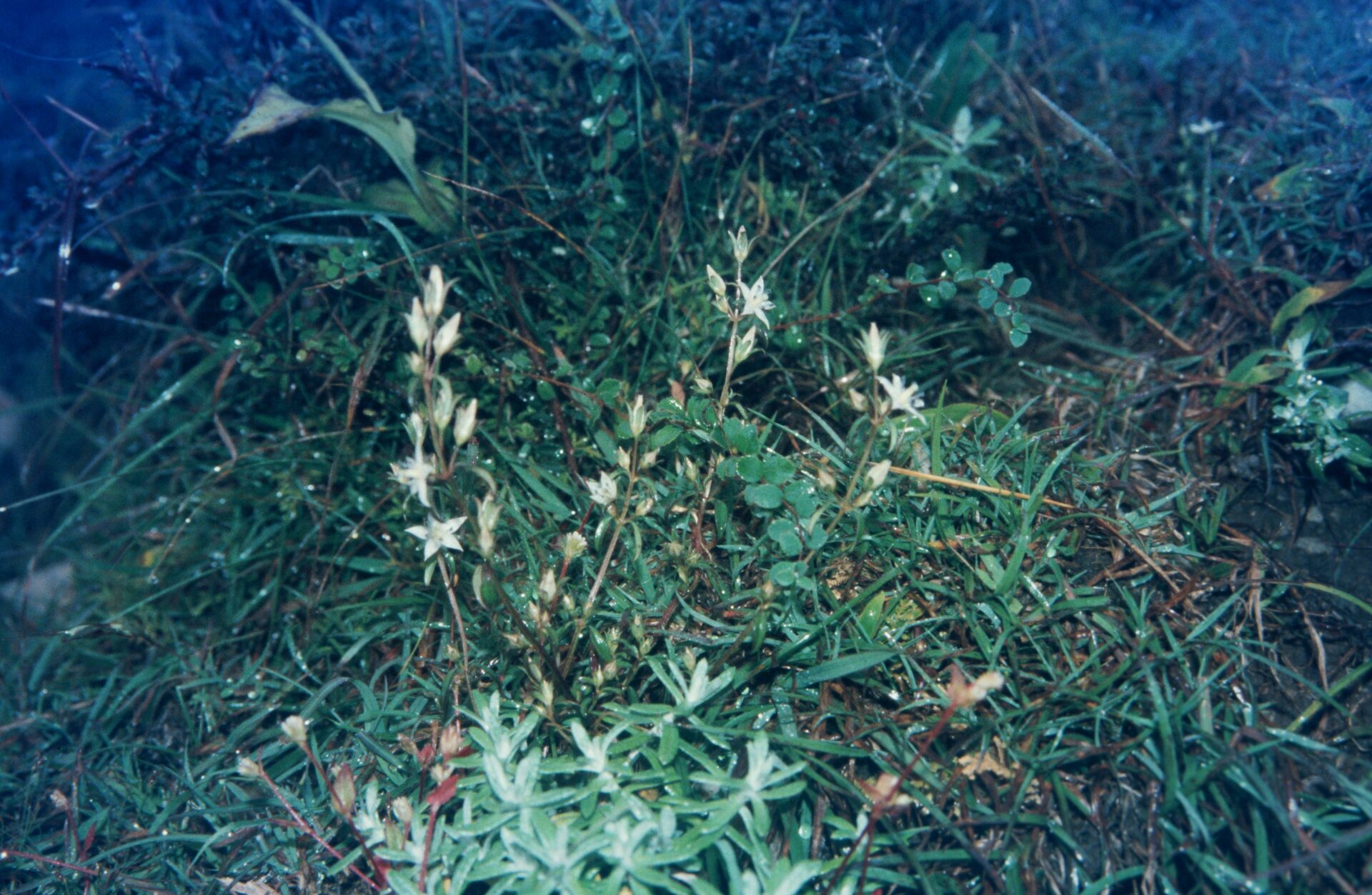
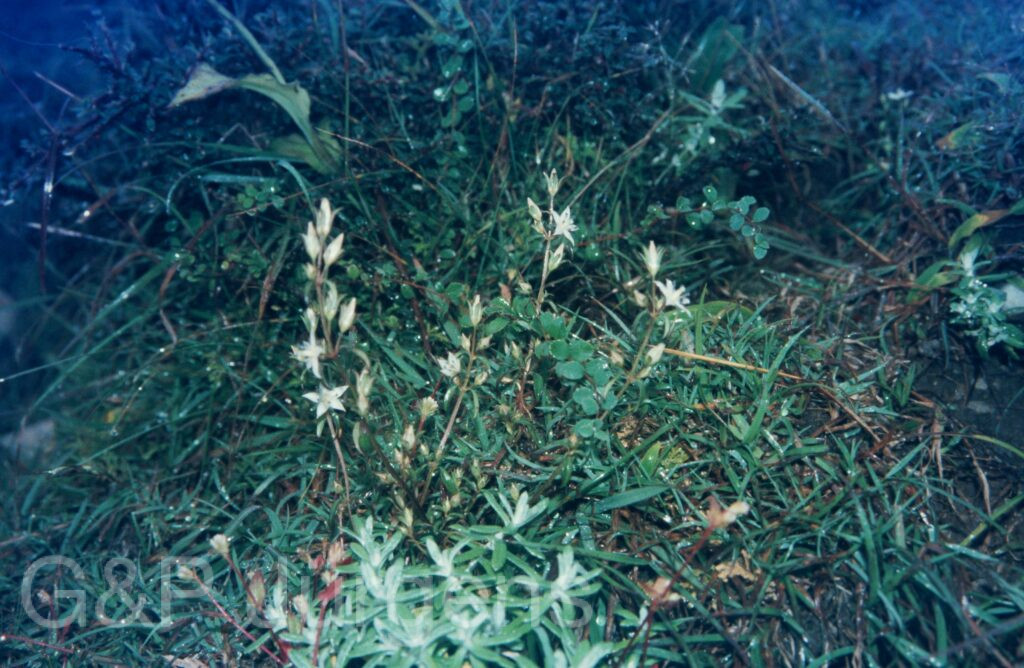
Swertia rotundiglandula is a temperate montane herb originally described from China, where the bulk of its 15 georeferenced records are concentrated, indicating a comparatively restricted and infrequently collected range. The species inhabits moist, humus-rich situations along forest margins, shaded banks, and open grassy slopes within the temperate zone. The collection illustrated from Simkarok in Garhwal, India, at 2600 m in September extends knowledge of its occurrence westward into the Western Himalaya and documents its late-summer to autumn flowering, when the genus typically reaches peak bloom on cool, well-watered slopes.
The plant is a slender erect herb arising from a fibrous root system, with quadrangular to terete stems that may be simple or branched above. The leaves are opposite, sessile or shortly petiolate, lanceolate to elliptic, entire, and three- to several-veined. The flowers are borne in lax terminal and axillary cymes, the corolla rotate and typically four- or five-merous with lobes that are deeply divided nearly to the base. The defining feature, reflected in the epithet, is the pair of rounded, fringed nectary glands seated at the base of each corolla lobe. The androecium consists of stamens alternating with the lobes, and the superior ovary matures into a septicidal capsule containing numerous small seeds.
Swertia is a large genus of the Gentianaceae distinguished from Gentiana by its rotate corolla and conspicuous lobe-borne nectaries, characters used extensively in delimiting its many Sino-Himalayan species. Numerous Swertia are valued in traditional medicine for bitter secoiridoid compounds. The narrow documented distribution and low occurrence count of S. rotundiglandula suggest it is genuinely localised or under-collected, warranting further field survey to clarify its conservation status.
Author: T.N.Ho & S.W.Liu · Sources: POWO (Kew), GBIF, Flora of China, Flowers of the Himalaya (Polunin & Stainton), Ho & Liu monograph of Swertia (Gentianaceae)