
Edgew.
Description
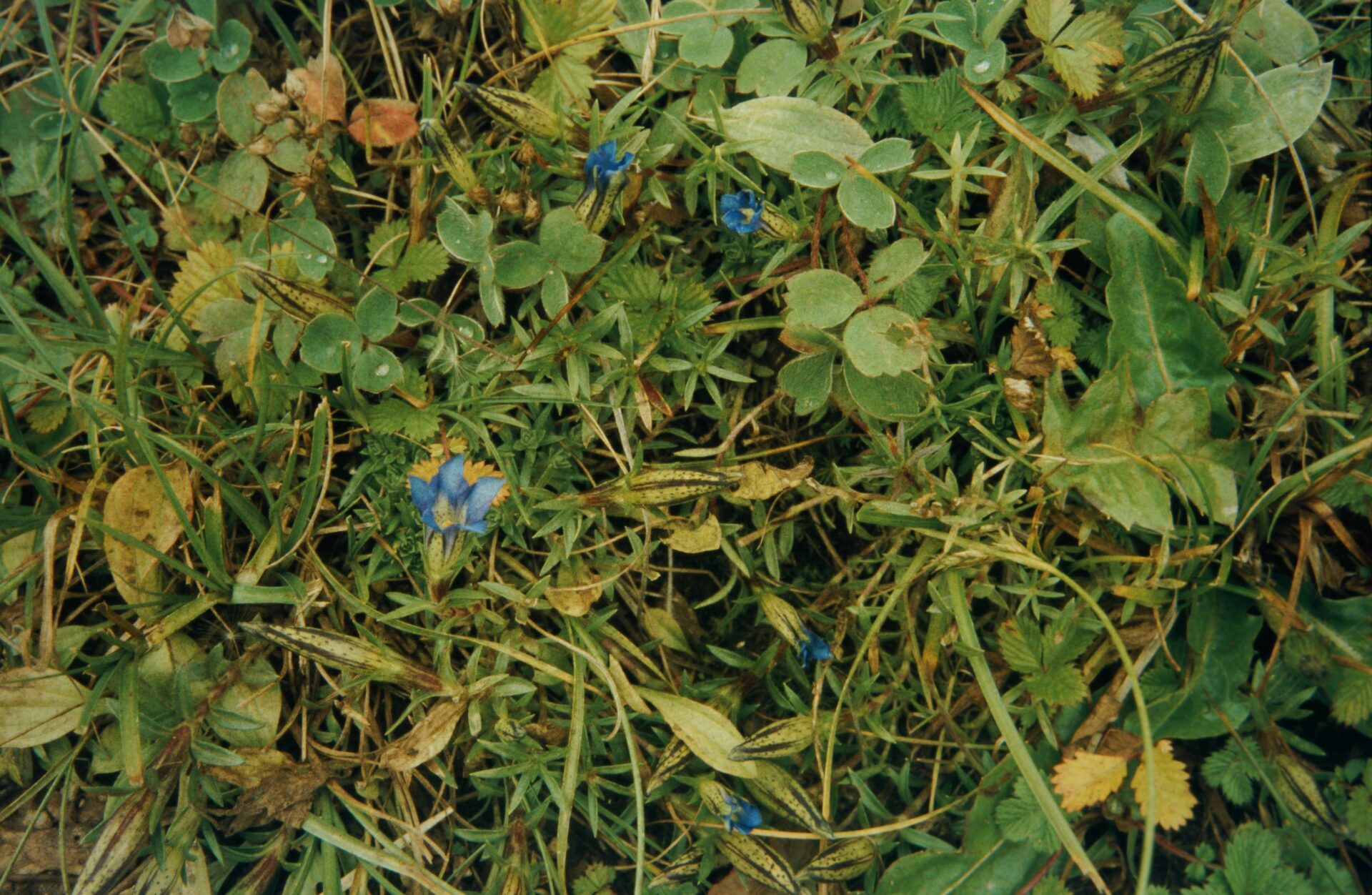
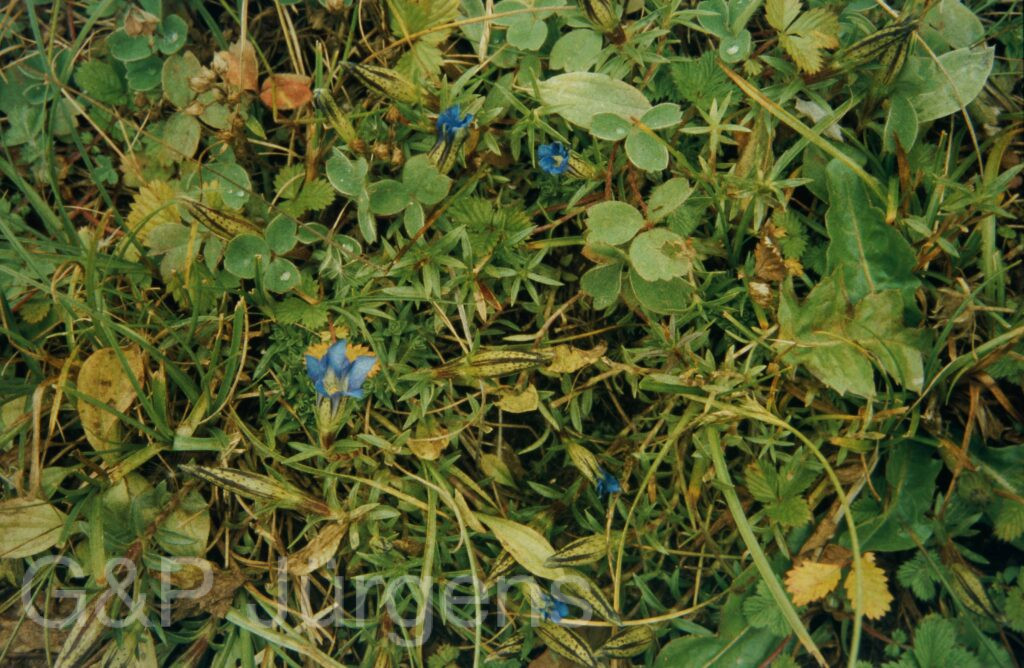
Gentiana stipitata Edgew. is a small alpine gentian endemic to the Sino-Himalayan region. GBIF data (some 239 occurrences) place it across the high mountains of China, India, Nepal, Bhutan and Taiwan, where it inhabits alpine and subalpine meadows, open turf, moist grassy slopes and the margins of seasonal snow-melt flushes. It is a plant of high elevations, typically between 3,000 and 4,500 m. The individual photographed at Baganathi in Garhwal (NW India) at 3,900 m in September captures it in late-season flower, when many high-altitude gentians provide a final burst of colour before the onset of winter.
The species is a low, tufted perennial herb with a slender rootstock and basal rosettes of narrowly lanceolate to spathulate leaves. The flowering stems are short and often several, each bearing a solitary, erect, narrowly funnel-shaped to campanulate corolla. The corolla is blue to purplish-blue, frequently with greenish or pale spotting in the throat, the five lobes alternating with smaller plicate folds (plicae) characteristic of section Frigida-allied gentians. The calyx is tubular with linear lobes, and the fruit is a stipitate capsule, the elongate gynophore (the stipe) giving the species its epithet and a useful diagnostic feature; seeds are numerous and small.
Gentiana stipitata belongs to the species-rich autumn-flowering Himalayan gentians and is distinguished from related taxa by its conspicuously stipitate capsule and floral proportions. Like many high-alpine gentians it is closely tied to short cool growing seasons and snow-influenced microhabitats. Though not assessed as threatened, its restricted high-elevation habitat makes it sensitive to alpine warming and grazing pressure across its range.
Author: Edgew. · Sources: POWO (Kew), Flora of China Vol. 16, Flora of Bhutan Vol. 2, GBIF, Ho & Liu: A Worldwide Monograph of Gentiana (2001)