
Maxim.
Description
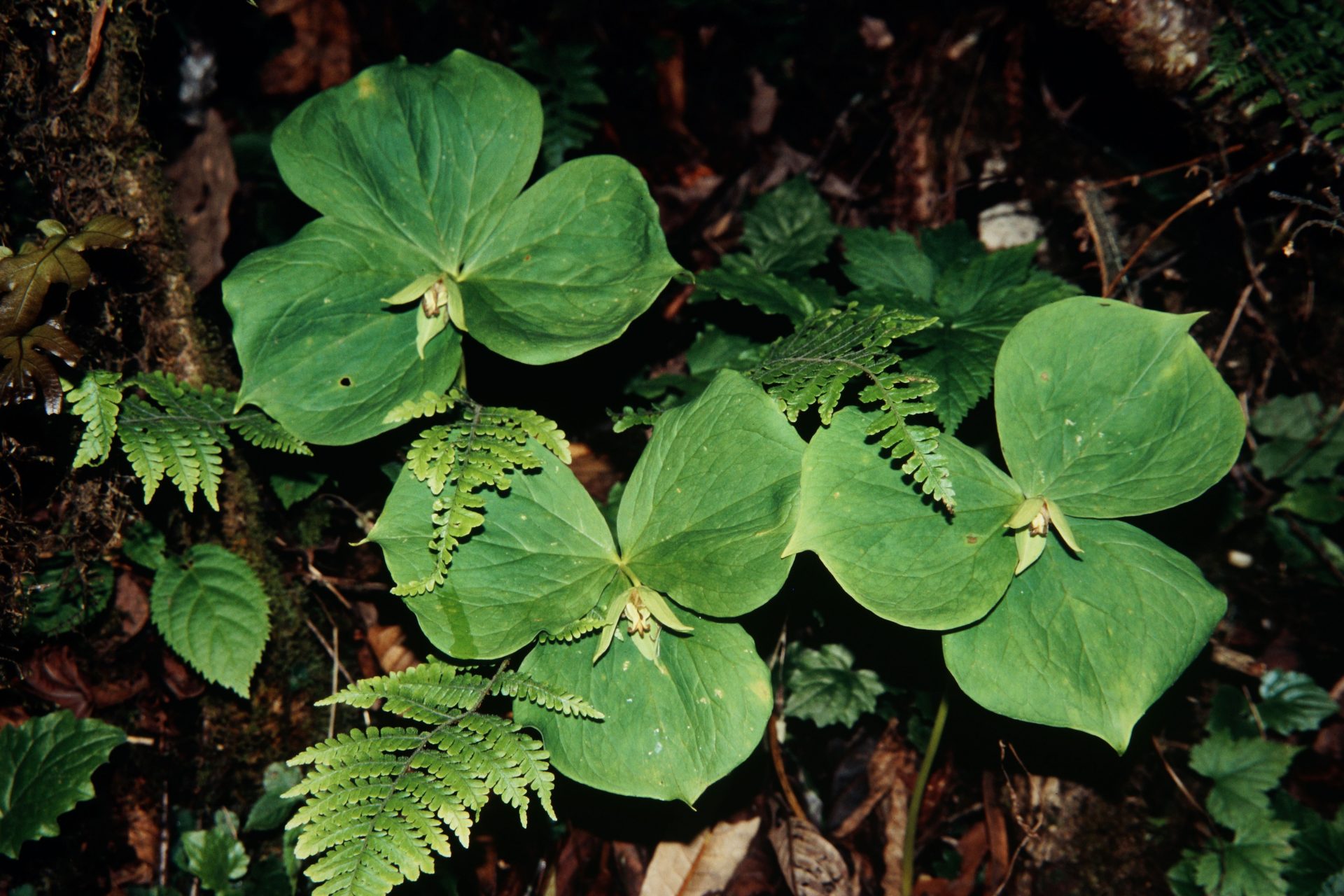
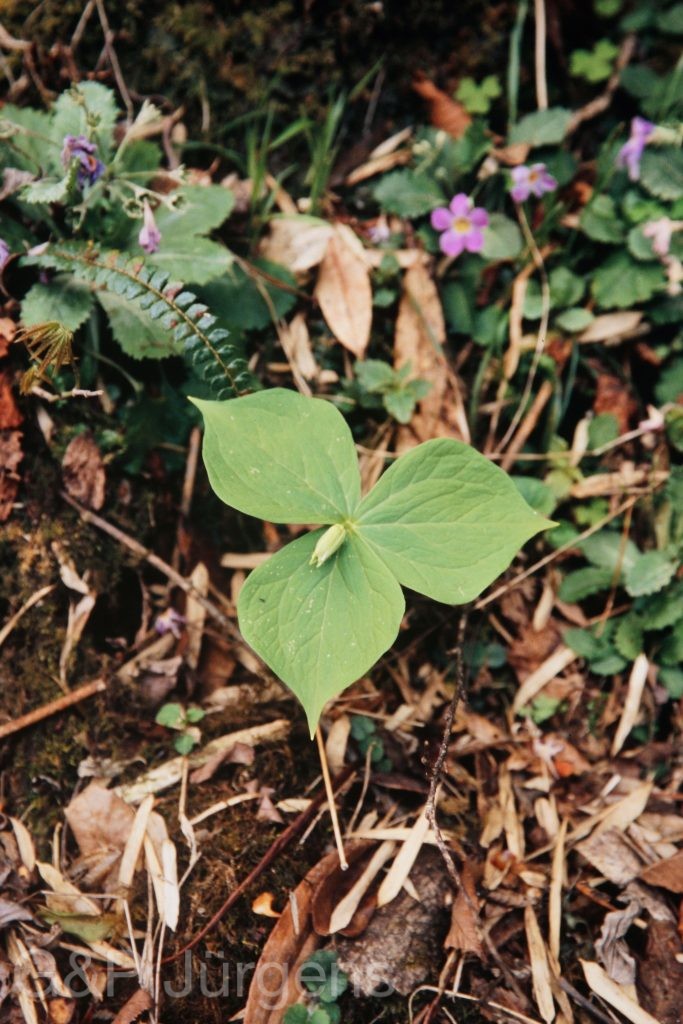
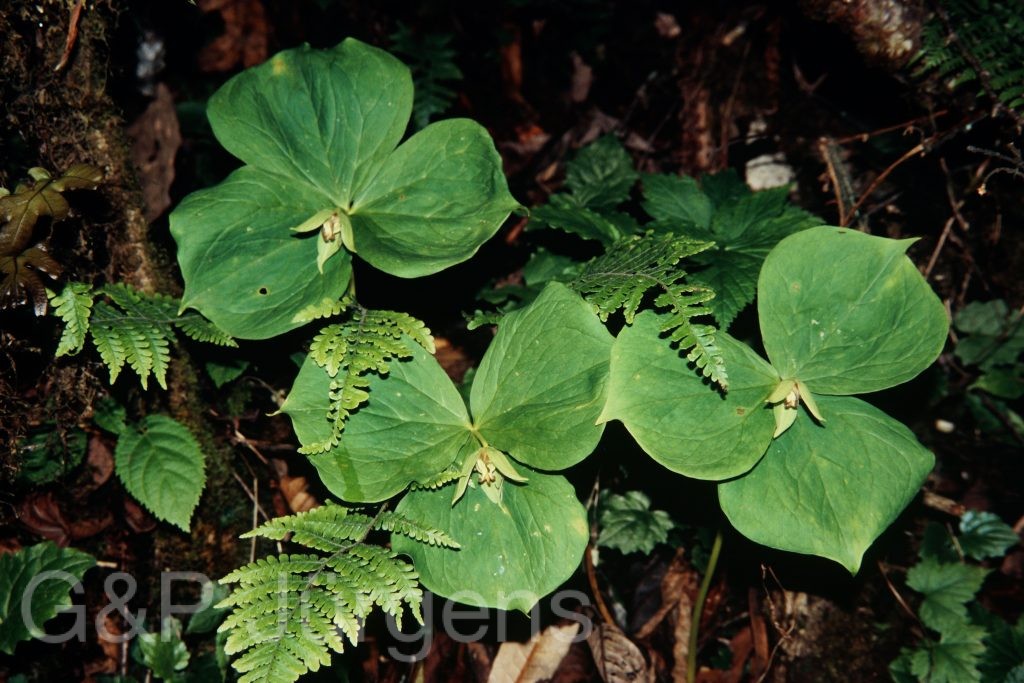
Trillium tschonoskii is a wide-ranging woodland herb of temperate East and South Asia, distributed from Japan, Korea and Taiwan through eastern and central China and into the Himalaya, reaching India, Bhutan and Nepal, with records also from the Russian Far East. With more than two thousand GBIF occurrences it is by far the most widespread Asian trillium, though it thins markedly toward its western Himalayan limit. It is a plant of cool, shaded, humus-rich broadleaved and conifer forest, favouring moist slopes and stream banks, generally between about 2300 and 3600 m in the Himalaya. The Bhutanese material illustrated, from Doch-La at 3000 m in April and from Paro at 2400 m in June, spans the species' flowering season as it tracks elevation, emerging soon after snowmelt in the deep shade of the forest floor.
The plant is a glabrous perennial arising from a short, thick, horizontal rhizome, producing a single erect stem that bears at its summit a single whorl of three broadly rhombic to ovate, net-veined, sessile or short-stalked leaves. Above this whorl a solitary flower is borne on a short erect pedicel. The flower is trimerous, with three green, lanceolate sepals and three white (sometimes ageing pinkish) ovate petals; six stamens with prominent anthers surround a superior, three-locular ovary topped by three recurved stigmas. The fruit is a fleshy, ovoid, reddish to dark berry-like capsule containing numerous seeds, each bearing an oily elaiosome that promotes dispersal by ants.
Trillium, now placed in the Melanthiaceae, is a classic component of the temperate deciduous forest flora of the Northern Hemisphere, and T. tschonoskii is the principal Asian representative reaching the Himalaya, exemplifying the floristic links between East Asian and Sino-Himalayan woodlands. Its slow growth, dependence on undisturbed forest humus and ant-mediated seed dispersal make it sensitive to habitat disturbance, and like many trilliums it has horticultural appeal and some traditional medicinal use of the rhizome, which can drive local collection. Although broadly distributed and not globally threatened, its peripheral Himalayan populations warrant monitoring as forest cover and microclimate change.
Author: Maxim. · Sources: POWO (Kew), GBIF, Flora of China Vol. 24, Flora of Bhutan Vol. 3 Part 1, Flora of Nepal, Trillium (Frederick W. Case and Roberta B. Case)