
Wall. ex D.Don
Description
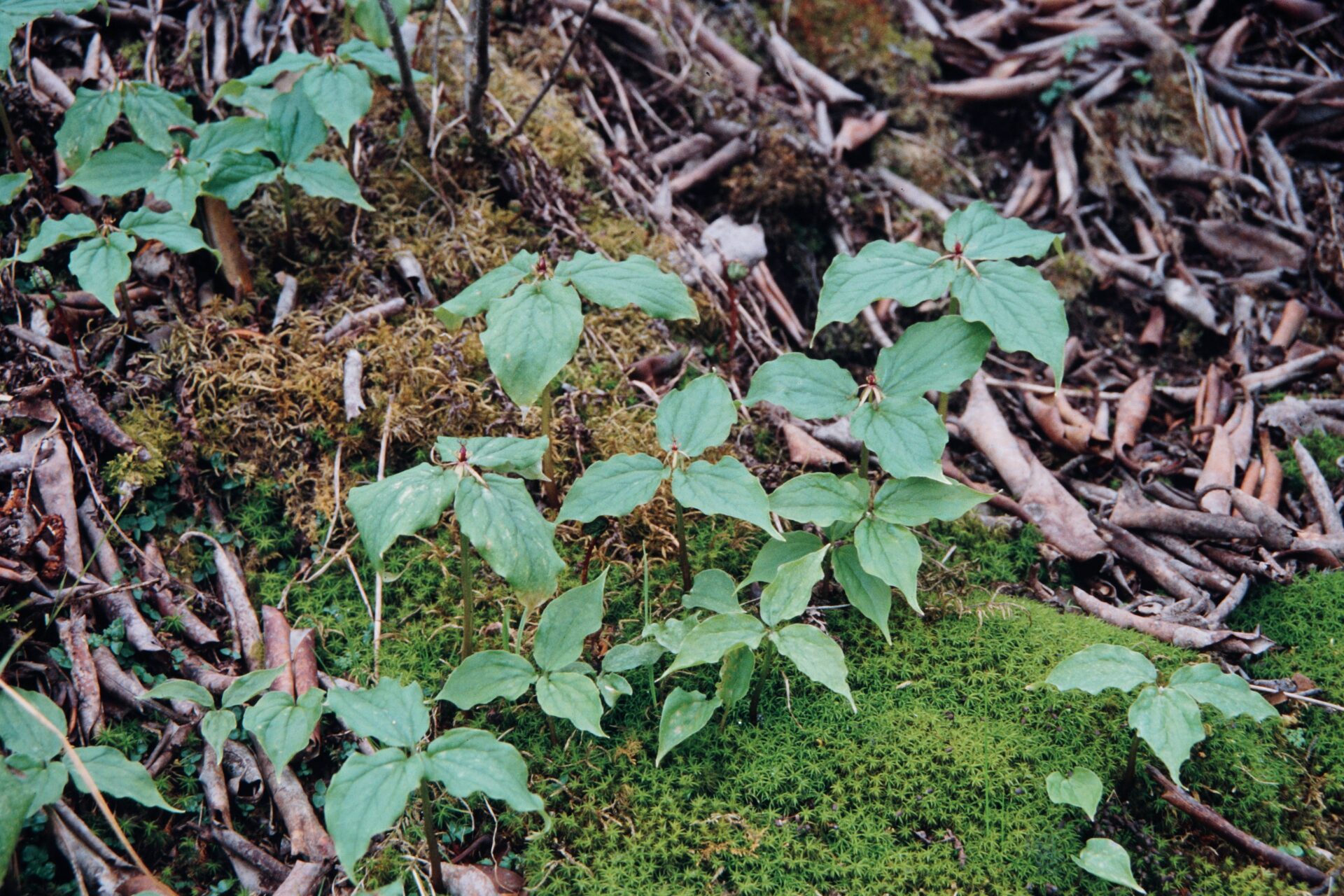
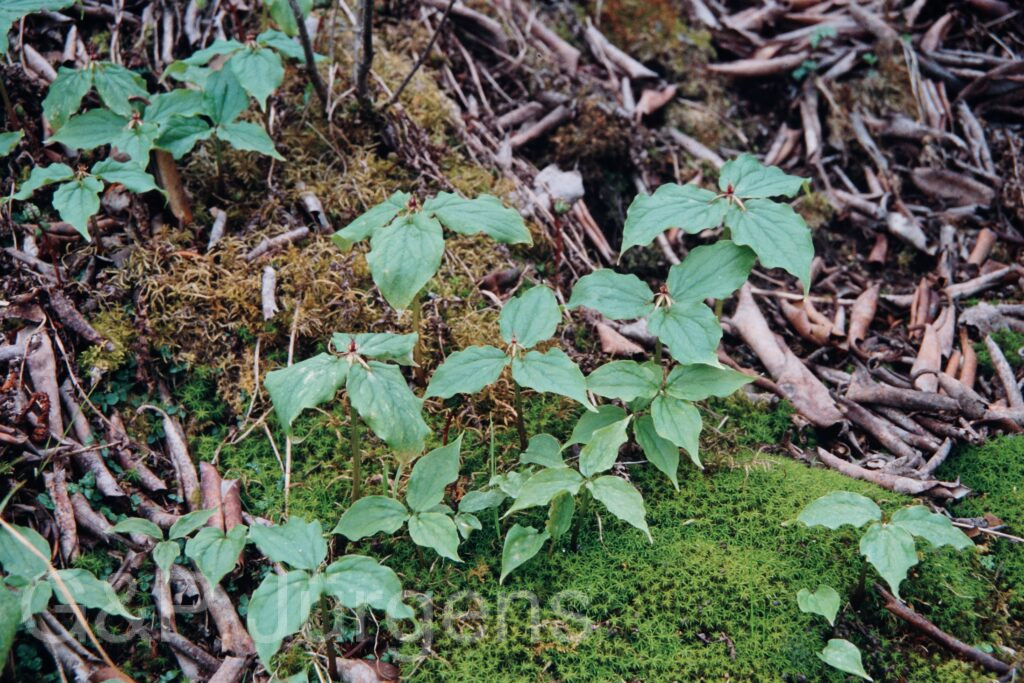
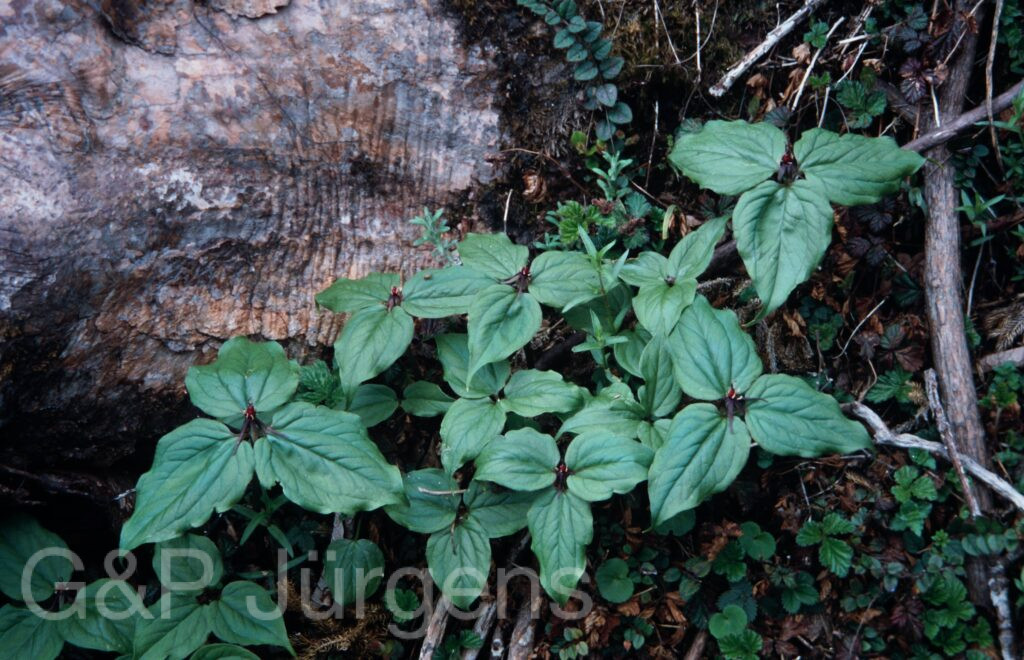
Trillium govanianum is a rhizomatous perennial herb of the family Melanthiaceae and the sole representative of the otherwise North American and East Asian genus Trillium in the Himalaya. GBIF data confirm a core distribution through Pakistan, India and Nepal, extending into Bhutan and the western fringe of China. It is a plant of moist, shaded temperate and subalpine forest, growing on humus-rich soils beneath Abies, Betula and rhododendron, and in damp alpine scrub and meadow margins, typically between about 2,800 and 4,000 m. The collections illustrated from south of Rara Lake in west Nepal at 3,800 m in June and from Kharka in Gorkha at 3,100 m in May are characteristic of this shaded, high-montane habitat.
The species arises from a short, thick, creeping rhizome and produces a single erect stem 10–30 cm tall bearing the diagnostic whorl of three broadly ovate, net-veined, sessile leaves at its summit. From the centre of this whorl a solitary, sessile or shortly stalked flower is borne; it is small and dark, with three narrow green sepals and three slender petals that are deep maroon to purplish-brown, accompanied by six stamens and a three-loculed ovary. The fruit is a fleshy, reddish berry-like capsule containing several seeds, in contrast to the dry capsules of many congeners.
The presence of a single Trillium in the Himalaya is of considerable biogeographic interest, representing a disjunct outlier of a genus otherwise centred on temperate North America and Japan. The species, locally known as nag chhatri, has become the focus of intense and unsustainable harvesting for its rhizome, which is traded for purported steroidal saponin content. This pressure, combined with slow growth and a narrow ecological niche, has raised serious conservation concern, and the plant is now regarded as threatened across much of its range.
Author: Wall. ex D.Don · Sources: POWO (Kew), GBIF, Flora of Nepal, Flora of Pakistan, Annotated Checklist of the Flowering Plants of Nepal, Farmer & Schilling: Phylogenetics of Trillium