Author

GP Jürgens

DC.

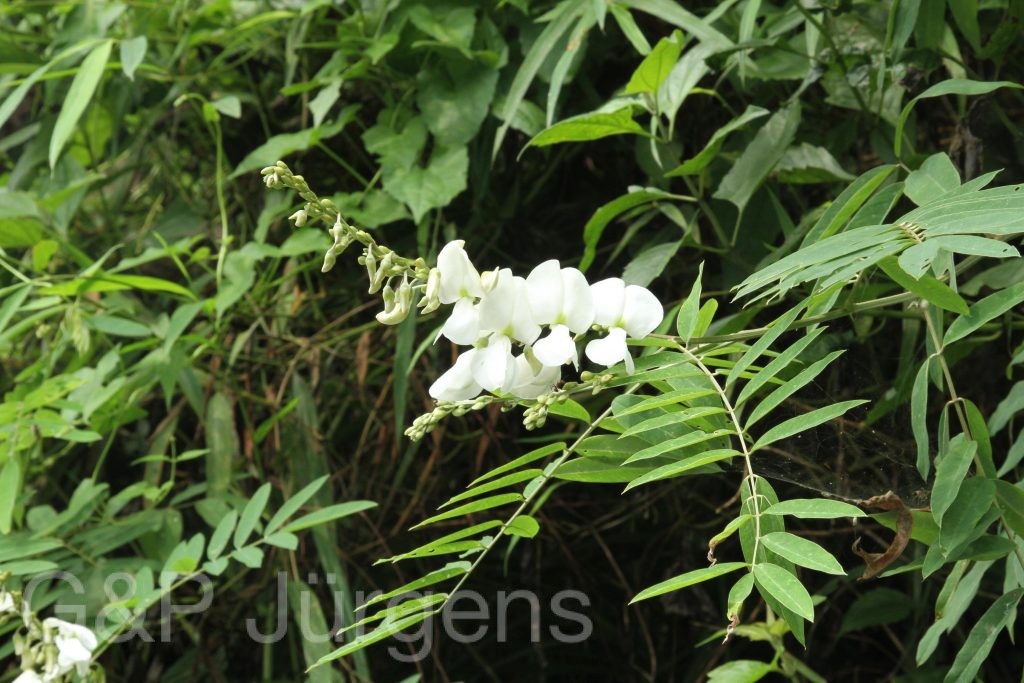
Bhutan2012 628
Bhutan Wangdi 2600m September
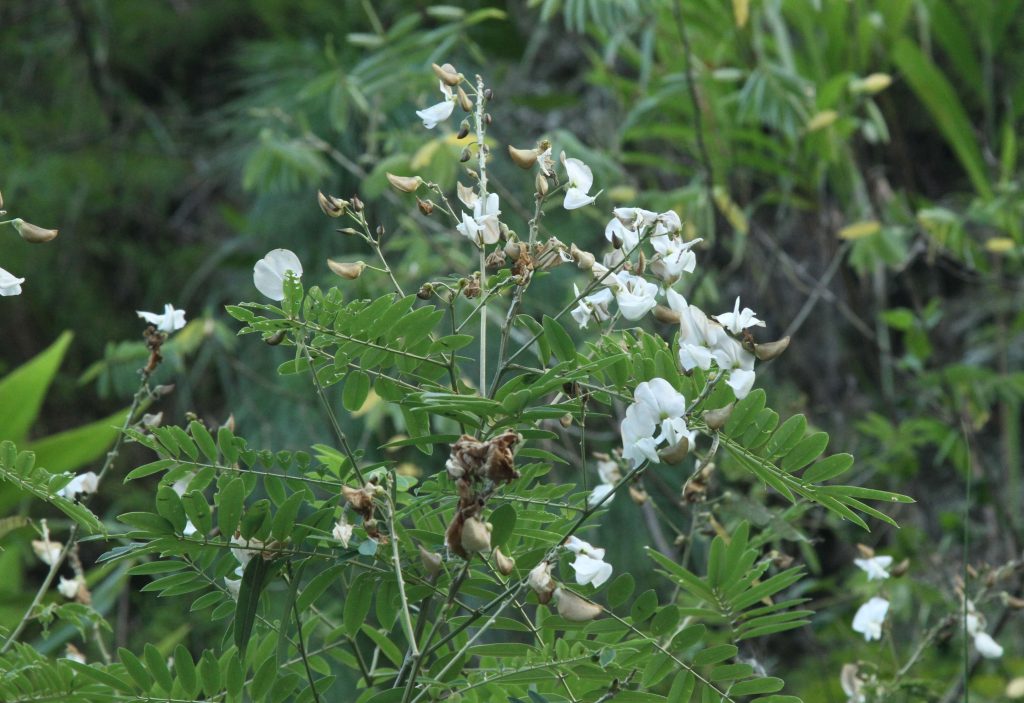
Bhutan2012 734
Bhutan Galephu 650m, October

Description

Tephrosia candida is a shrubby legume native to the Indian subcontinent and adjacent Himalaya, including India, Nepal and Bhutan, but now pantropically naturalised through widespread cultivation, with GBIF records from Brazil, Indonesia, Taiwan, China, Papua New Guinea, Australia, Madagascar, the Caribbean, the Mascarenes and beyond. It thrives in warm subtropical and tropical conditions on forest margins, roadsides, river banks and disturbed open ground. The Bhutanese collections illustrate its altitudinal breadth, from Galephu in the foothills at about 650 m in October to Wangdi at 2600 m flowering in September.

The plant is an erect, much-branched shrub up to about 3 m, with silky-pubescent young growth. The leaves are imparipinnate with numerous (often 8-12 pairs of) narrowly oblong leaflets that are silky-sericeous beneath, giving the foliage a greyish sheen. The flowers are borne in dense terminal racemes; each papilionate flower has a campanulate pubescent calyx and a white to pale pink or cream corolla with a broad standard silky on the outer face, the keel and wings enclosing diadelphous stamens. The fruit is a flattened, linear, densely velvety-pubescent dehiscent pod that twists on splitting to expel several seeds.

A member of the papilionoid Fabaceae and tribe Millettieae, T. candida is a nitrogen-fixing species long valued as a green manure, cover crop, fallow improver and erosion-control plant, which explains its extensive intentional dispersal across the tropics. Like other Tephrosia it contains rotenoid compounds and has been used as a fish poison and insecticide. Robust and weedy in cultivation, it is in no way of conservation concern and can become locally naturalised.

Author: DC. · Sources: POWO (Kew), GBIF, Flora of Bhutan, Flora of British India, Brummitt's and related revisions of Tephrosia (Leguminosae)

Van Heurck & Müll. Arg.

Bhutan2015 170
Bhutan Zhemgang 950m, October
Bhutan2012 783
Bhutan Zemgang 1800m, October

Description

Terminalia myriocarpa Van Heurck & Mull.Arg. is a large evergreen tree of the Combretaceae, distributed across the eastern Himalaya and Indo-Burmese region, ranging from northeastern India, Nepal and Bhutan through Myanmar, Thailand, Laos and Vietnam to southwestern China (GBIF: c. 454 occurrences). It is a canopy tree of subtropical and tropical moist evergreen forests, favouring deep, moist soils along streams and in foothill valleys, generally below about 1,500 m though ascending higher locally. The photographed trees from Zhemgang in central Bhutan, recorded at about 950 m and 1,800 m in October, illustrate its presence in the warm, humid forests of the southern foothills.

The tree is tall, reaching 30 m or more, frequently developing prominent buttresses at the base. The leaves are opposite or subopposite, oblong-elliptic, with an acuminate apex and entire to crenulate margins, and often bear a pair of glands near the base of the petiole. The flowers are small, numerous and bisexual, borne in large, much-branched terminal and axillary panicles, giving rise to the species epithet "myriocarpa" ("many-fruited"). The fruit is a small, two-winged, samaroid nutlet that turns pink to crimson in dense masses, a striking feature that aids wind dispersal.

Terminalia belongs to the pantropical Combretaceae and includes many ecologically and economically important timber trees. Terminalia myriocarpa yields a useful general-purpose hardwood and is a significant component of lowland evergreen forest. Although locally common over a wide range and not globally threatened, its lowland forest habitat is under pressure from logging and land conversion across parts of its distribution.

Author: Van Heurck & Müll. Arg. · Sources: POWO (Kew), Flora of China Vol. 13, Flora of Bhutan Vol. 2, Flora of Nepal, GBIF, Exell: Combretaceae revisions

Oliv.

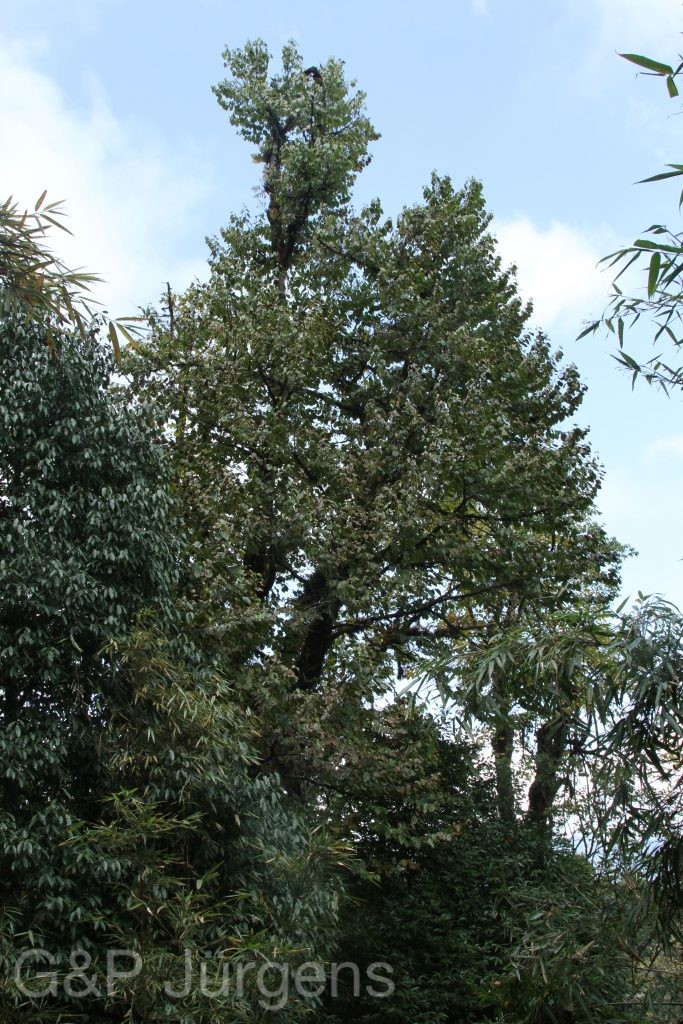
Bhutan2015 34
Bhutan Thimphu 2200m, October
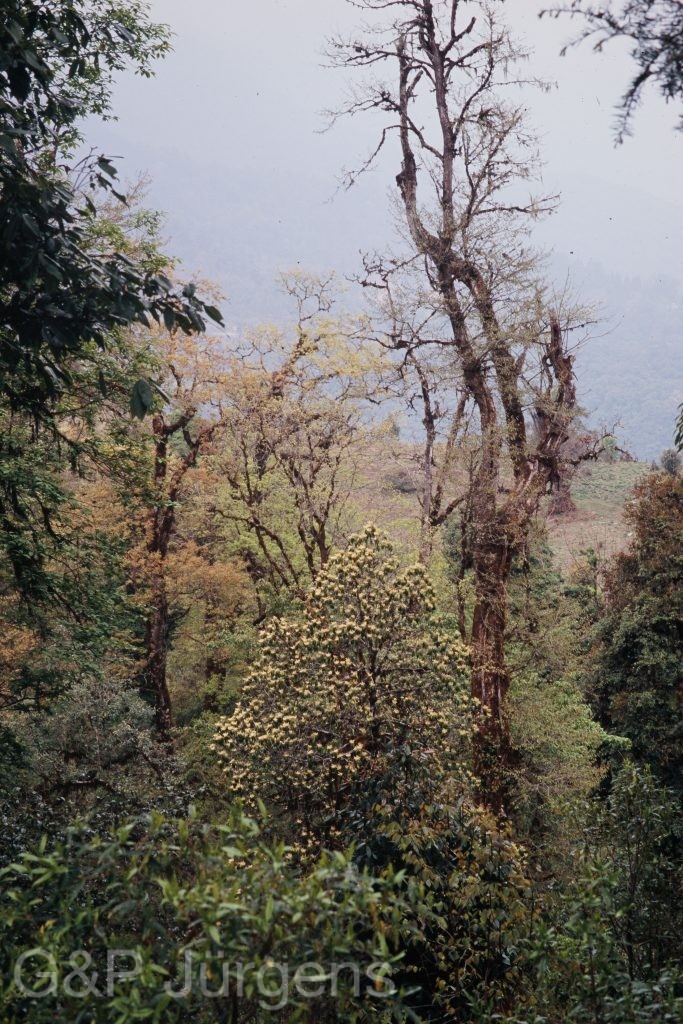
Bh2008 43 G76
Bhutan Thimphu 2200m, April
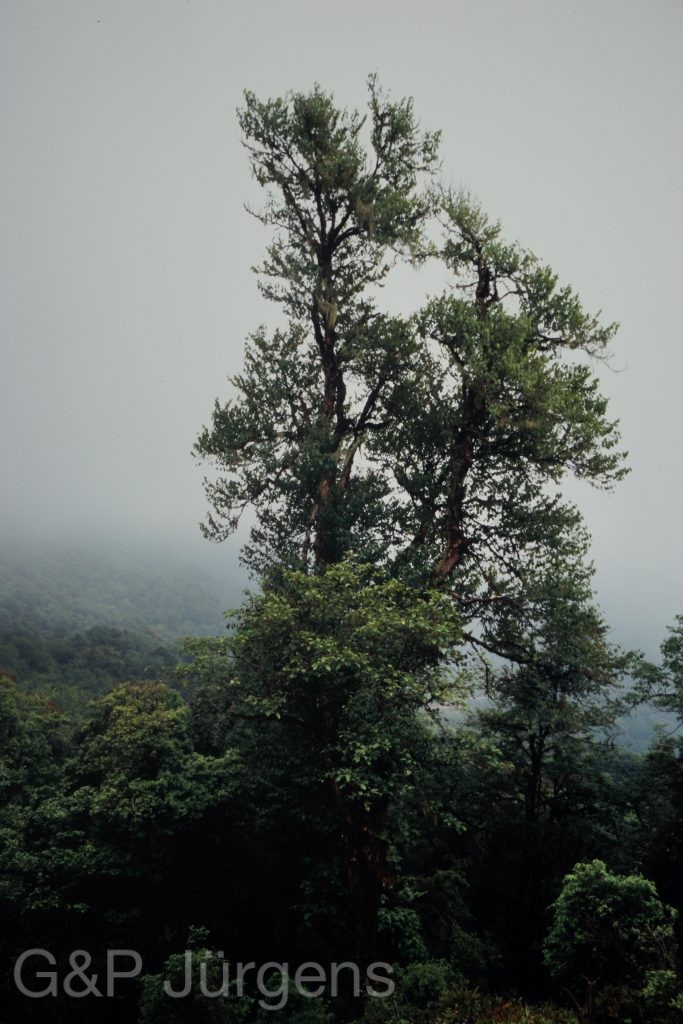
Bh09 209 P350
Bhutan Thimphu 2200m, April

Description

Tetracentron sinense is a deciduous tree of the eastern Himalaya and the mountains of central and southwestern China, recorded by GBIF from China, Nepal, Bhutan, India, Myanmar and Vietnam (with cultivated records in Europe and North America) across about 940 georeferenced occurrences. It is a tree of cool, moist temperate broadleaf and mixed forest, growing in valleys, on shaded slopes and along streamsides, generally between about 1,700 and 3,500 m. The cited records from Thimphu in western Bhutan at around 2,200 m, photographed in both April and October, span the leafing-out and the autumnal phases of its annual cycle and place it well within the temperate forest belt of the inner Himalaya, where it occurs scattered among other broadleaved trees.

The tree has a straight trunk and bears its leaves in two kinds of position: simple, alternate, long-petioled leaves on long shoots and solitary leaves terminating short spur shoots. The leaves are ovate to broadly ovate, cordate at the base, acuminate, finely serrate, and conspicuously palmately veined from the base. The minute, perfect flowers are densely crowded on slender, pendulous, catkin-like spikes; each tetramerous flower has four tepals, four stamens and a four-carpellate ovary. The fruit is a small four-locular capsule that splits to release tiny winged seeds. Anatomically the wood is remarkable for being vesselless, the water-conducting tissue consisting only of tracheids.

Tetracentron sinense is one of only two genera in the small, isolated family Trochodendraceae (the other being Trochodendron), an ancient and phylogenetically basal lineage of eudicots whose vesselless wood is regarded as a primitive or secondarily reduced condition of great interest to plant systematists and to studies of angiosperm wood evolution. As a relict species with a disjunct, fragmented distribution, it is of significant conservation concern: it is legally protected in China and assessed as near-threatened, its populations reduced by logging and habitat loss, making it an emblematic "living-fossil" tree of the East Asian temperate flora.

Author: Oliv. · Sources: POWO (Kew), GBIF, Flora of China Vol. 6, Flora of Bhutan Vol. 1, Flora of Nepal, Flora of Pakistan, Endress: systematics and floral morphology of Trochodendraceae

(D.Don) Manden.

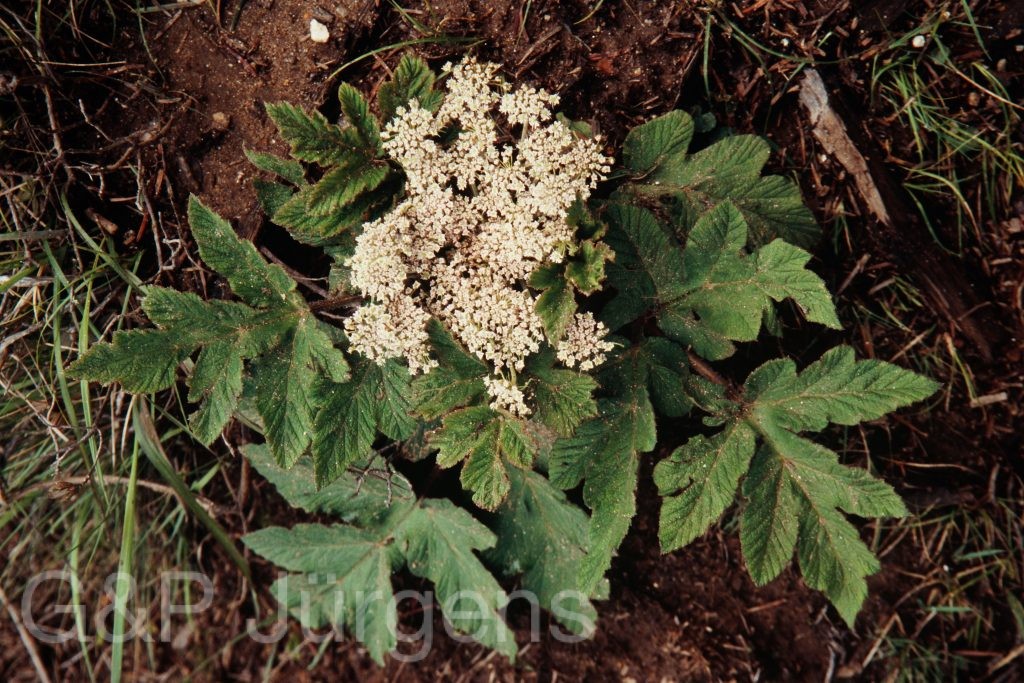
Bh09 71 P123
Bhutan Jili-La 3600m, June

Description

Tetrataenium nepalense is a tall Himalayan umbellifer distributed from Nepal and northern India through Bhutan into south-western China and Myanmar. Its 266 GBIF records lie within this native arc, indicating a widespread montane species of the Eastern and Central Himalaya. It occupies subalpine and alpine meadows, open slopes, forest margins and clearings, generally between about 3000 and 4000 m, where it is a characteristic robust herb of moist high-altitude grassland. The plant photographed at Jili-La in Bhutan at about 3600 m in June illustrates the species at its early-summer flowering on these damp, herb-rich montane slopes.

It is a stout, erect biennial or perennial herb arising from a thick taproot, with hollow, ridged, often pubescent stems. The large leaves are pinnate to ternately compound, the broad leaflets ovate, lobed and toothed, the lower leaves long-petiolate with conspicuous sheathing bases. The inflorescence is a large terminal compound umbel with numerous rays; the small white flowers are often radiant, the marginal petals of the outer flowers enlarged. The fruit is a flattened, broadly ovate to obovate, dorsally compressed schizocarp with conspicuous oil ducts (vittae) and narrowly winged lateral ribs.

Long known as Heracleum nepalense (a name preserved in its WordPress URL), the species was transferred to the segregate genus Tetrataenium, distinguished from Heracleum by features of the vittae and fruit. Its hogweed-like habit and large radiant umbels are typical of the group. Widespread and locally common across its range, T. nepalense is not considered threatened and is a prominent component of high Himalayan meadow vegetation.

Author: (D.Don) Manden. · Sources: POWO (Kew), GBIF, Flora of Bhutan, Flora of China, Pimenov & Kljuykov Umbelliferae revision

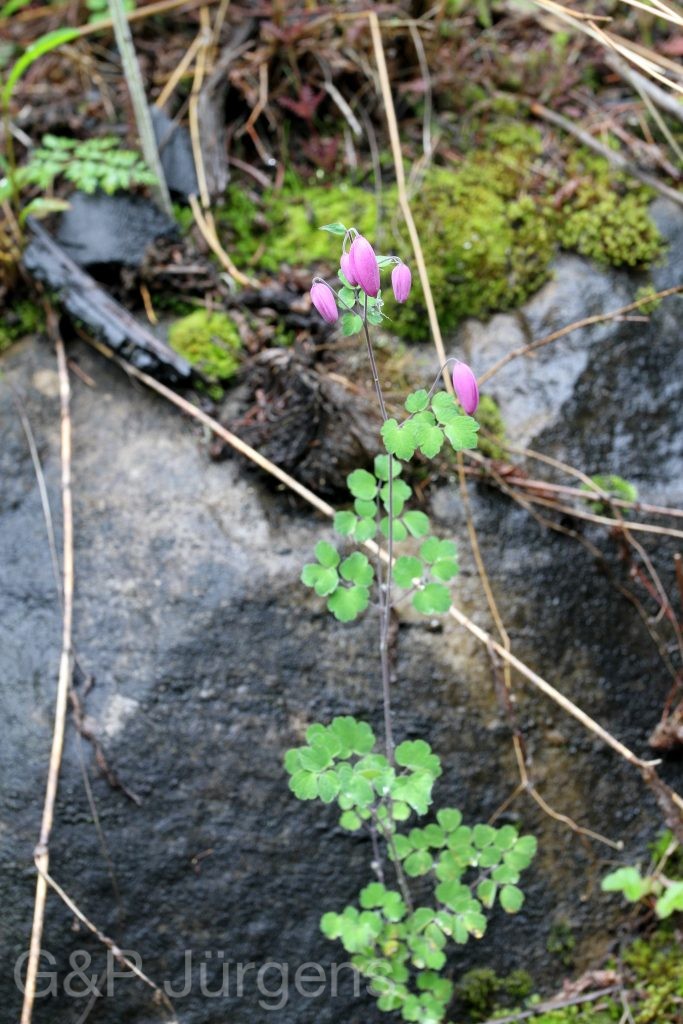
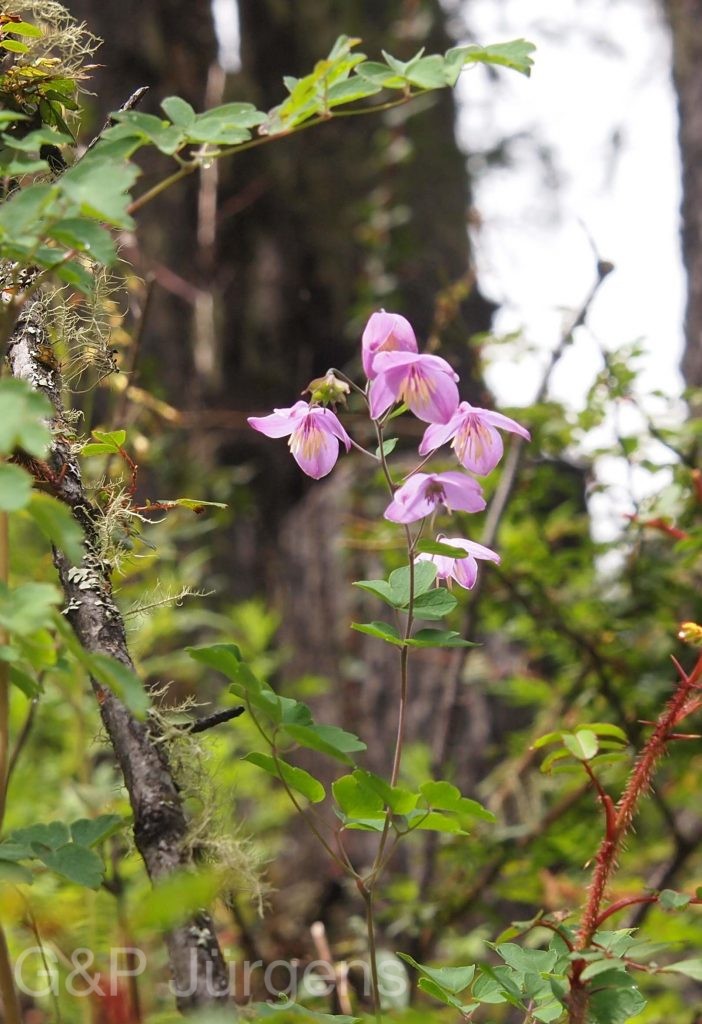
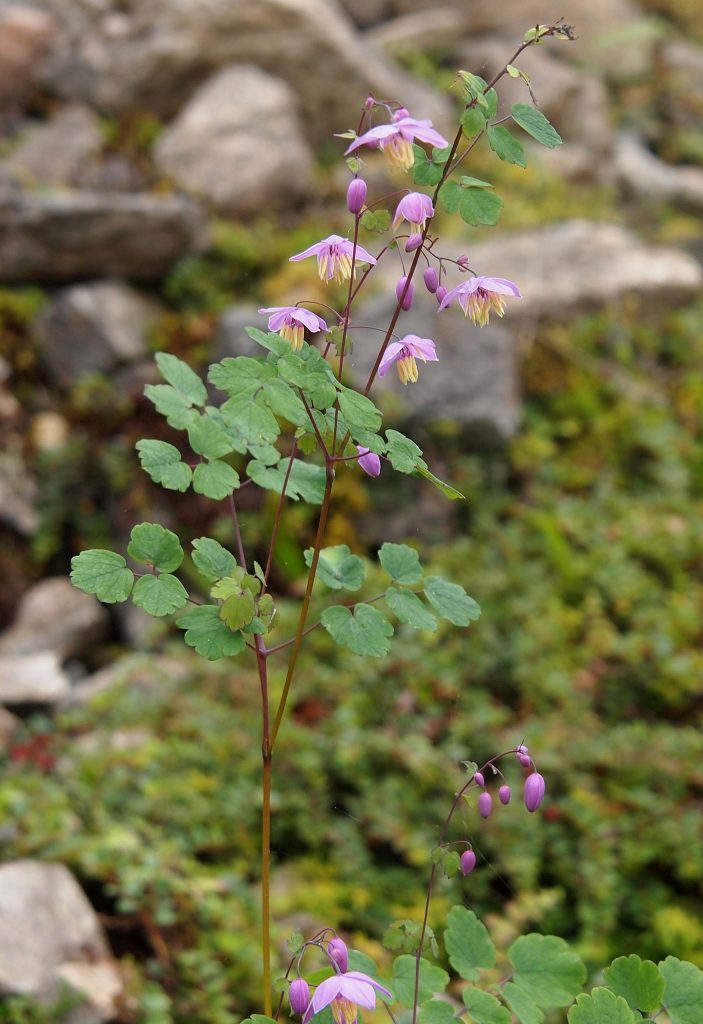
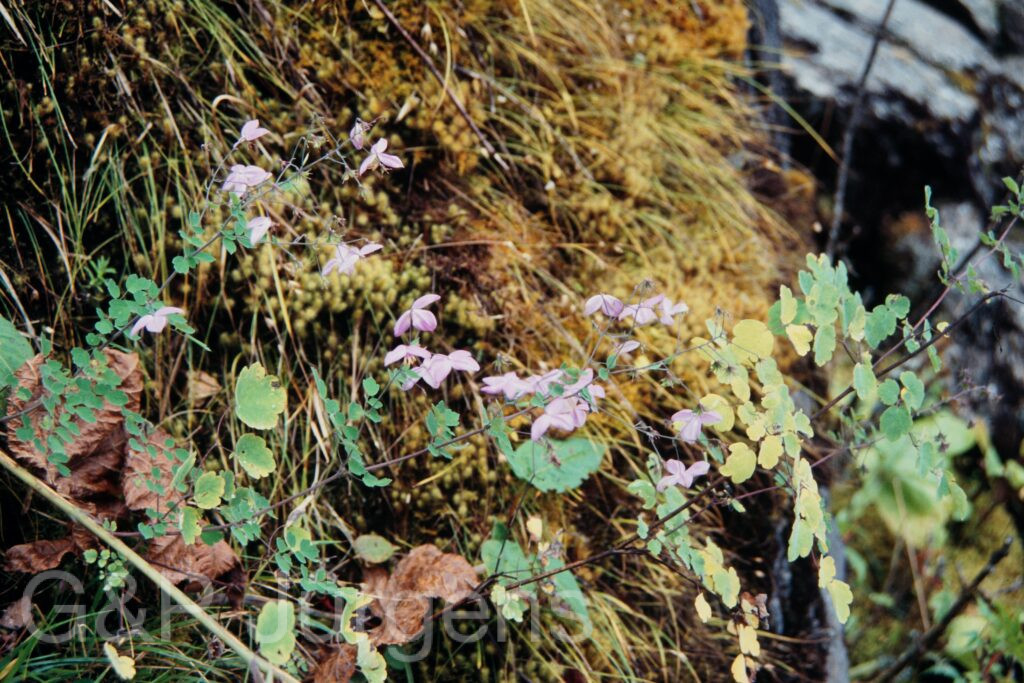
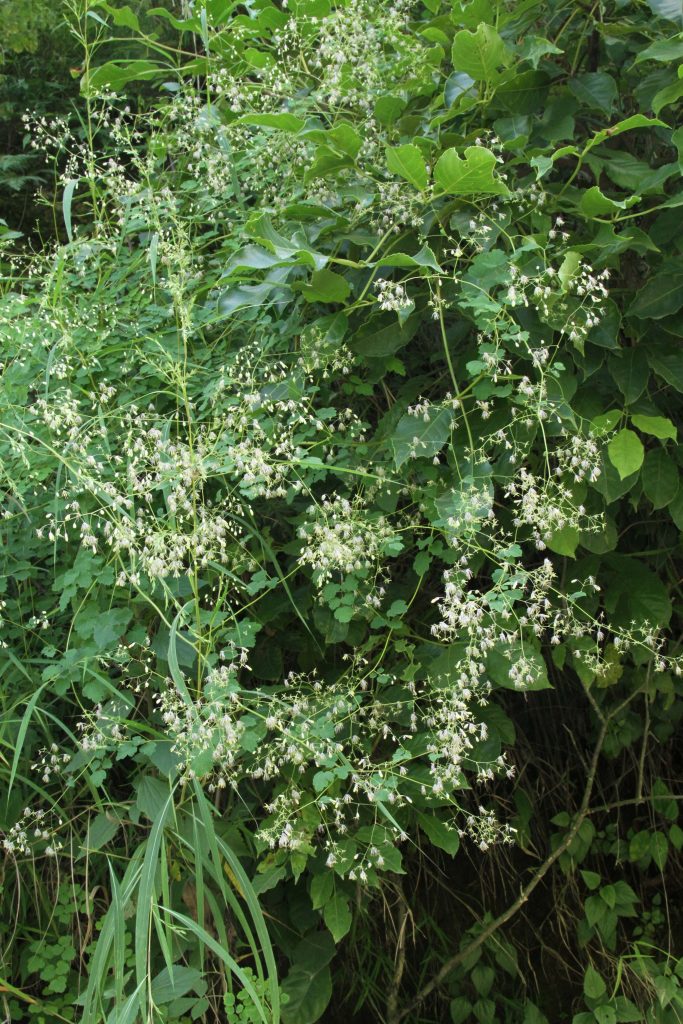
DC.

BhutanPG2011 384
Bhutan Shele-La, 3600m September
Bhutan2012 33
Bhutan Shele-La, 3600m September
Bhutan2012 325
Bhutan Dochu-La, 3600m September
Nepal 95 137 P230 ergebnis
Nepal South of Rupina La 3650m October

Description

Thalictrum chelidonii is a Himalayan meadow-rue distributed through Nepal, north-east India, Bhutan and south-west China, with 178 georeferenced occurrences. It grows in moist, often partly shaded sites along forest margins, in subalpine scrub, on grassy and rocky slopes and beside streams in the upper temperate to subalpine zones. The cited collections at Shele-La and Dochu-La in Bhutan (both about 3600 m, September) and south of Rupina La in Nepal (3650 m, October) reflect its typical altitudinal range of roughly 2700-4000 m, where it flowers and fruits late in the growing season.

It is an erect perennial herb with slender, branching, often glaucous stems and large, two- to three-times ternately or pinnately compound leaves; the leaflets are rounded to obovate, lobed and toothed, recalling those of Aquilegia. Unlike many wind-pollinated meadow-rues, T. chelidonii has conspicuous flowers in which the four or five petaloid sepals are well developed, lilac to rose-purple, surrounding numerous spreading stamens with slender filaments. The carpels are several and free, ripening into a cluster of stipitate, longitudinally ribbed achenes that hang on slender stalks.

Within Ranunculaceae the genus Thalictrum is distinctive for its apetalous flowers in which sepals and stamens provide the floral display; the showy coloured sepals of this species point to insect rather than purely wind pollination. The pendent, winged-ribbed achenes aid dispersal. Widespread and locally common across the central and eastern Himalaya, the species is of no conservation concern, and like several relatives it contains isoquinoline alkaloids of ethnomedicinal interest.

Author: DC. · Sources: POWO (Kew), GBIF, Flora of Bhutan, Flora of China, Flora of Nepal, Tamura Ranunculaceae treatment (Die natürlichen Pflanzenfamilien)

Blume

Bhutan2012 407
Bhutan Wangdi 2500m, June

Description

Thalictrum javanicum Blume is a widespread meadow-rue ranging across tropical and subtropical Asia. GBIF documents some 1366 occurrences from India, Sri Lanka, Nepal, Bhutan, Myanmar and southern China through Taiwan, Japan and into the Malesian uplands of Indonesia. It occupies moist, shaded habitats: streamsides, forest floors, damp ravines, clearings and grassy banks, mainly at middle elevations between roughly 1500 and 3000 m, descending lower in the tropics. The plant photographed near Wangdi in Bhutan at 2500 m in June, during the early monsoon, reflects its association with the cool, humid broad-leaved and conifer forest belt of the Himalaya.

It is a glabrous perennial herb forming erect stems 30-100 cm tall from a short rhizome. The leaves are two- to four-times ternately compound, the ultimate leaflets obovate to suborbicular, three-lobed and crenate at the apex, thin in texture, with conspicuous stipels at the divisions of the petiole. The inflorescence is a lax terminal panicle of small, apetalous flowers; the perianth consists of inconspicuous, caducous greenish sepals, the floral display provided instead by the numerous spreading stamens with slender filaments and oblong anthers. The fruit is a cluster of sessile to shortly stipitate, ribbed, ellipsoid achenes tipped by a short curved beak.

Thalictrum is a large, taxonomically intricate genus characterised by reduced, wind- and generalist-insect-pollinated flowers and considerable variation in stamen and achene morphology, generating a complex synonymy across its broad range. T. javanicum is among the most ecologically plastic species, tolerating a wide altitudinal and geographic span, which accounts for its abundant collection record. It is a common, unthreatened component of Asian montane forest understoreys, and several Thalictrum species, including this one, contain isoquinoline alkaloids used in regional ethnomedicine.

Author: Blume · Sources: POWO (Kew), GBIF, Flora of China, Flora of Bhutan, Flora of Java, Annotated Checklist of the Flowering Plants of Nepal

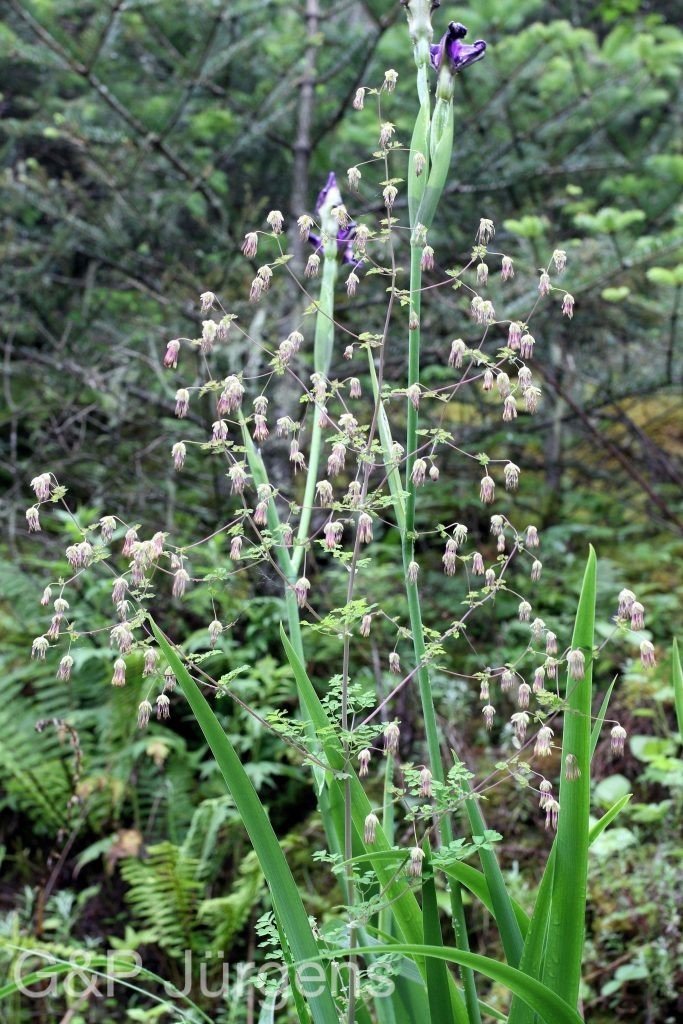
Franch.

BhutanPG2011 817 01 01
Bhutan Chele-La, 3700m July

Also: Iris Clarkei Hook.f.

Description

Thalictrum leuconotum is an alpine meadow rue distributed across the eastern Himalaya and adjacent Sino-Himalayan ranges, with verified records from China, Nepal and Bhutan (GBIF documents some 152 occurrences). It inhabits subalpine and alpine meadows, open grassy slopes, forest margins and the rocky banks of seasonal streams, typically between about 3000 and 4200 m. The species was photographed on the Chele-La in western Bhutan at 3700 m in July, a high pass where it flowers among dwarf rhododendron scrub and herbaceous turf during the brief growing season.

The plant is an erect perennial herb arising from a short, fibrous-rooted rhizome, the stems glabrous to minutely pubescent and branched in the upper part. The leaves are several times ternately compound, the ultimate leaflets thin, obovate to suborbicular and shallowly lobed or crenate, often glaucous and conspicuously whitish beneath, a feature alluded to in the epithet "leuconotum" (white-backed). The inflorescence is a lax, spreading panicle of small apetalous flowers; the showy parts are the numerous pendulous stamens with slender filaments, while the four caducous sepals are greenish to purplish. The fruit is a cluster of small, ribbed, stipitate achenes.

Within Thalictrum, a large and taxonomically intricate genus, T. leuconotum belongs to the broad assemblage of Sino-Himalayan species characterised by reduced perianths and reliance on wind pollination. Its glaucous, white-backed foliage and montane ecology distinguish it from sympatric congeners. As a widespread high-elevation herb of relatively undisturbed alpine pastures, it is not considered threatened, though localised grazing pressure and habitat change may affect populations across its range.

Author: Franch. · Sources: POWO (Kew), GBIF, Flora of Bhutan, Flora of China, Annotated Checklist of the Flowering Plants of Nepal, Monograph of Thalictrum (Boivin)

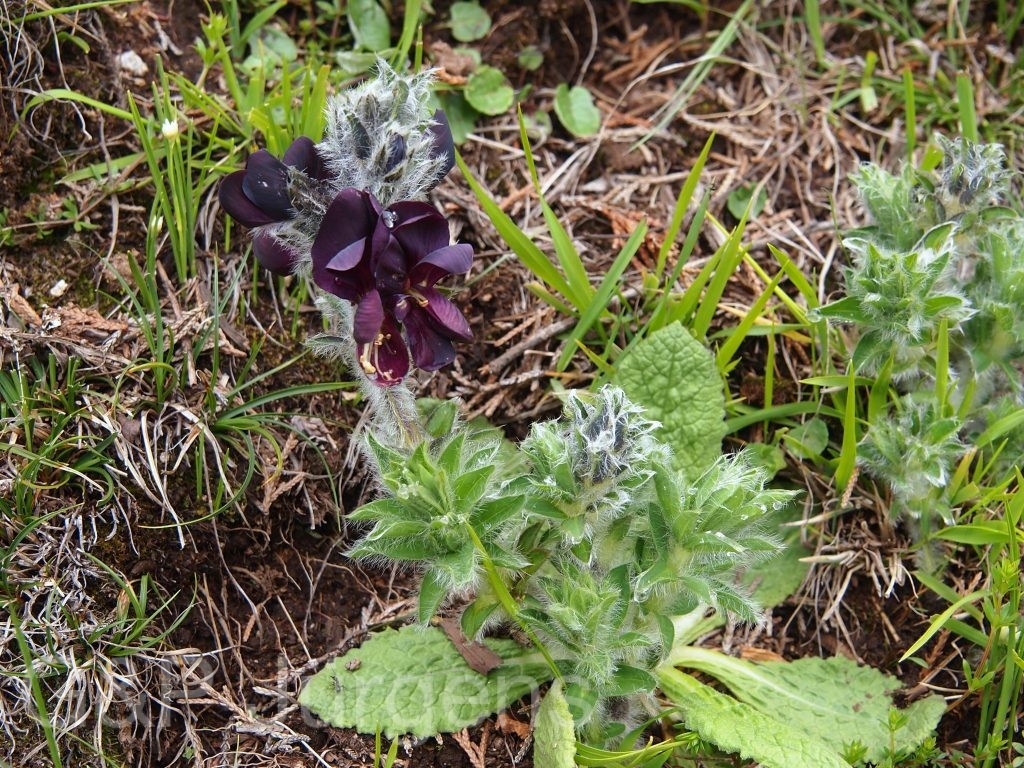
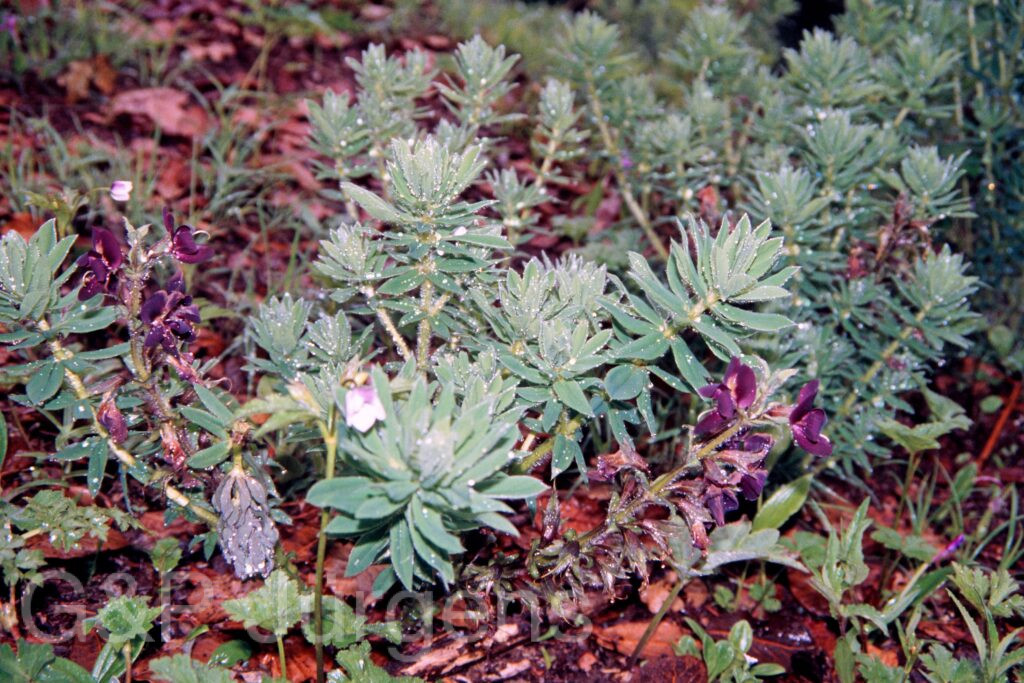
Benth.

Sikkim2011 151
Sikkim Kalep 3670m, June
Nepal 99 452 ergebnis
West-Nepal Naphukana 3080m, June

Description

Thermopsis barbata Benth. is a distinctive legume of the high Himalaya, occurring across China, India, Nepal and Bhutan. It is documented from Sikkim at Kalep around 3670 m and from West-Nepal at Naphukana near 3080 m, both flowering in June, within the subalpine to alpine belt. The species favours open stony slopes, dry grassy hillsides, gravelly pastures and the margins of alpine scrub, typically between 3000 and 4500 m, on well-drained, often disturbed substrates exposed to strong sun and seasonal aridity. Its roughly 606 GBIF records indicate a widespread but characteristically montane Himalayan range.

The plant is a robust perennial herb arising from a stout rootstock, the erect stems and foliage conspicuously clothed in long, soft, silky to villous hairs that give the epithet barbata. The leaves are palmately trifoliolate with elliptic to obovate leaflets and large persistent stipules. The flowers are arranged in a dense terminal raceme and are notably large for the genus, the papilionaceous corolla a deep purple to violet-maroon rather than the yellow usual in Thermopsis, subtended by hairy bracts and an enlarged calyx. The fruit is a hairy, flattened, several-seeded legume.

Thermopsis barbata is exceptional within its predominantly yellow-flowered, north-temperate genus for its dark purple corolla and dense pubescence, traits interpreted as adaptations to the cold, high-radiation alpine environment. Like many genistoid legumes it contains quinolizidine alkaloids that deter herbivores. Widespread and locally frequent across its range, it is not regarded as threatened, though high-altitude grazing and pasture degradation may locally affect populations.

Author: Benth. · Sources: POWO (Kew), GBIF, Flora of China, Flora of Nepal, Flora of British India, Legumes of the World (Lewis et al.)

(Wall. ex Kunth) Maxim.

Bh09 218 G366
Bhutan Wangdi 2250m, June
Nepal 99 897 ergebnis
West-Nepal Sepka 2760m, July
Sikkim 2006 453 ergebnis
India West-Bengal, Tolung 2200m, May

Description

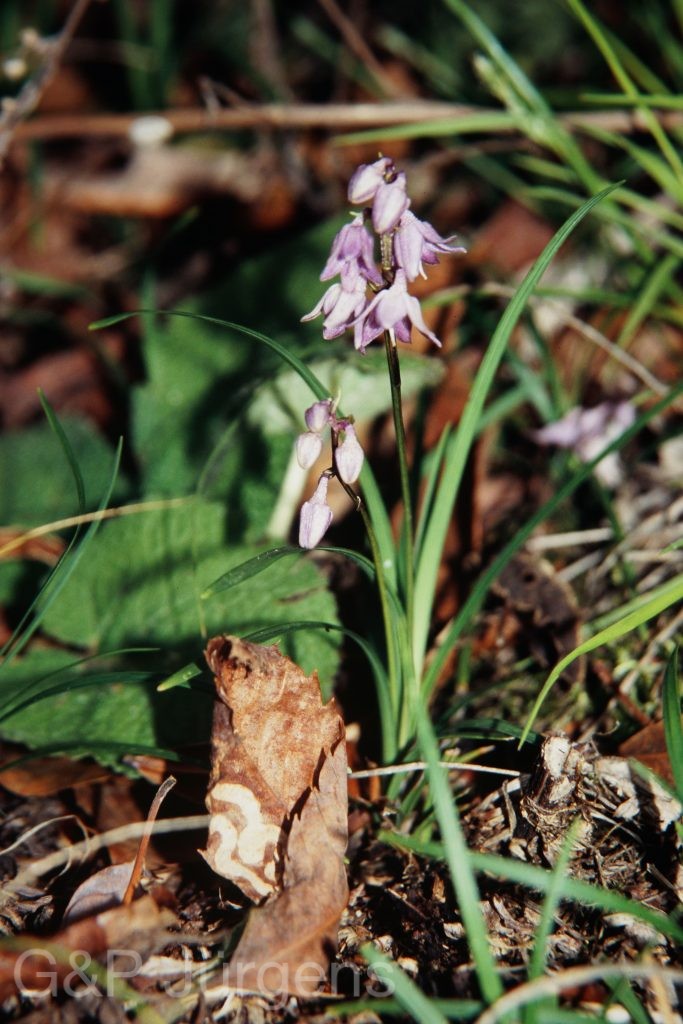
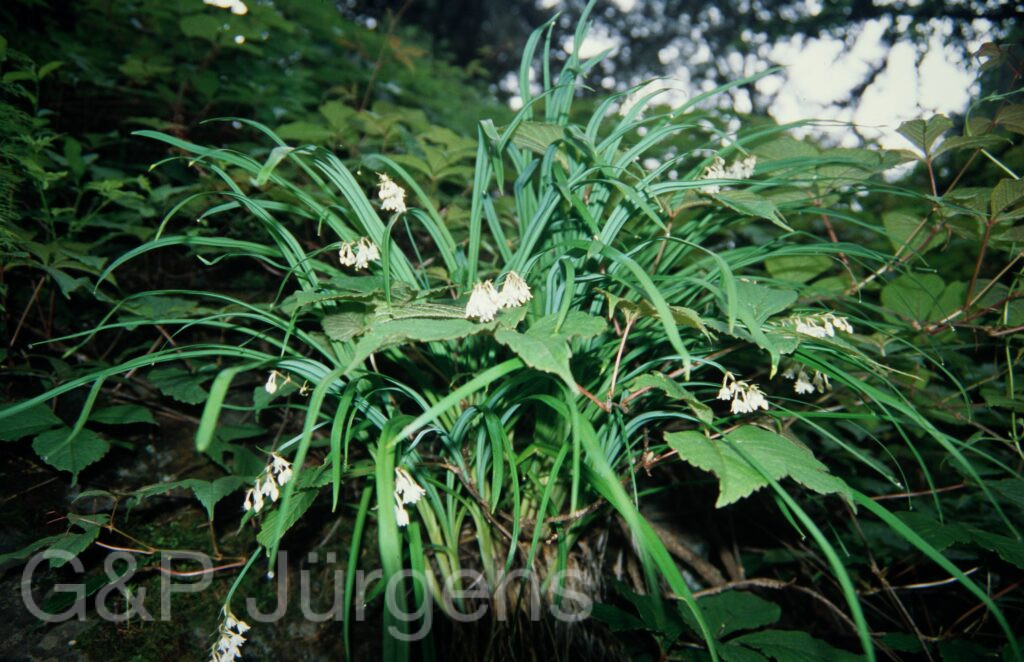
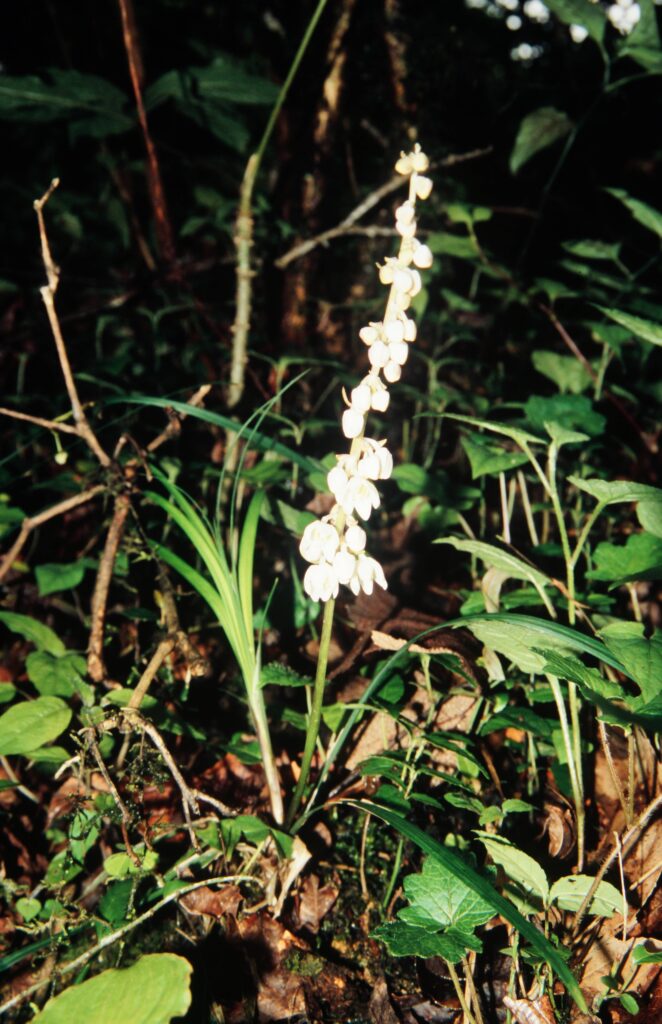
Theropogon pallidus is the sole species of its genus, a rhizomatous woodland herb distributed along the Himalaya from Nepal through northern India, Bhutan and south-western China into Myanmar and Thailand. GBIF lists some 264 occurrences concentrated in Nepal, China, India and Bhutan, with outliers in Myanmar and Thailand. It grows in shaded, humus-rich soils of temperate broad-leaved and mixed forest, on mossy banks, ravine sides and beneath shrubbery, broadly between about 1800 and 3000 m. The accompanying images span its range, from Bhutan at Wangdi (2250 m, June) and West Nepal at Sepka (2760 m, July) to West Bengal at Tolung (2200 m, May), illustrating its early-summer flowering across the mid-montane forest belt.

The plant arises from a short, creeping rhizome and forms tufts of narrowly linear, grass-like basal leaves that are channelled, arching and somewhat fleshy. The flowering scape is erect and leafless, bearing a lax, secund raceme of pendulous, bell-shaped flowers; each flower is subtended by a membranous bract and hangs on a slender, jointed pedicel. The perianth is white to pale pink, the six tepals fused below into a campanulate tube with recurved lobes, enclosing six stamens with short filaments. The ovary is superior and trilocular, maturing into a globose, fleshy berry that ripens red, containing few rounded seeds.

Theropogon is a monotypic genus of the Asparagaceae (formerly Convallariaceae or Liliaceae sensu lato), morphologically intermediate between Ophiopogon and Convallaria and allied to the lily-of-the-valley group by its nodding campanulate flowers and berry fruit. Its disjunct, narrowly montane distribution makes it of biogeographic interest as a relict of Sino-Himalayan forest flora. The species is locally frequent and faces no broad conservation concern, though it depends on intact shaded forest understorey.

Author: (Wall. ex Kunth) Maxim. · Sources: POWO (Kew), GBIF, Flora of China, Flora of Bhutan, An Annotated Checklist of the Flowering Plants of Nepal, Genera of Convallariaceae

(Blume) Cogn.

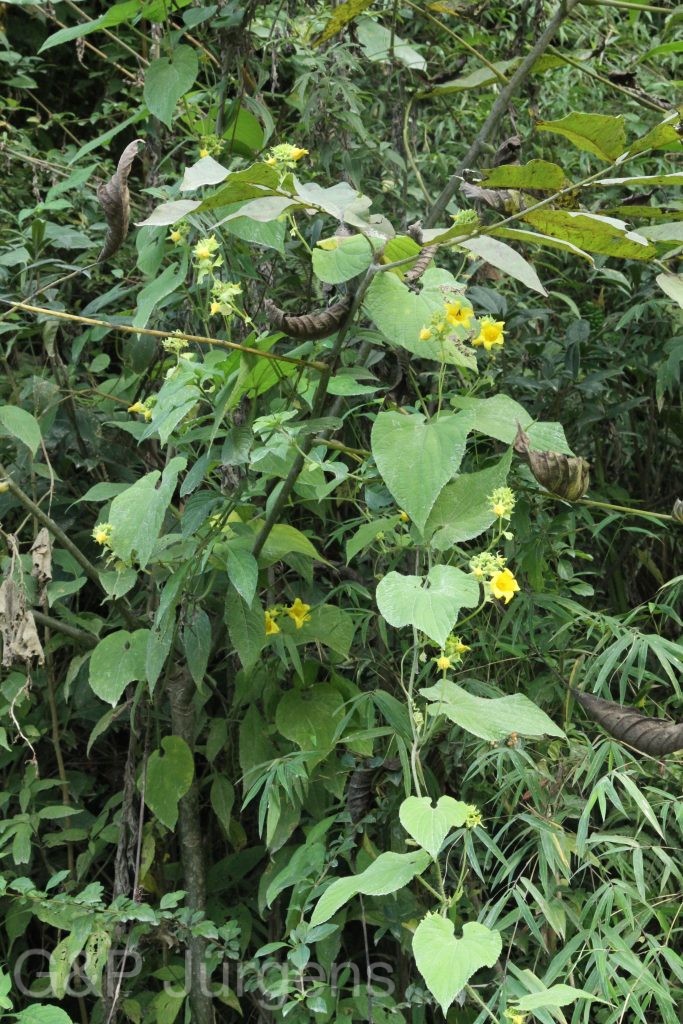
Bhutan2012 476
Bhutan Wangdi, 2500m September
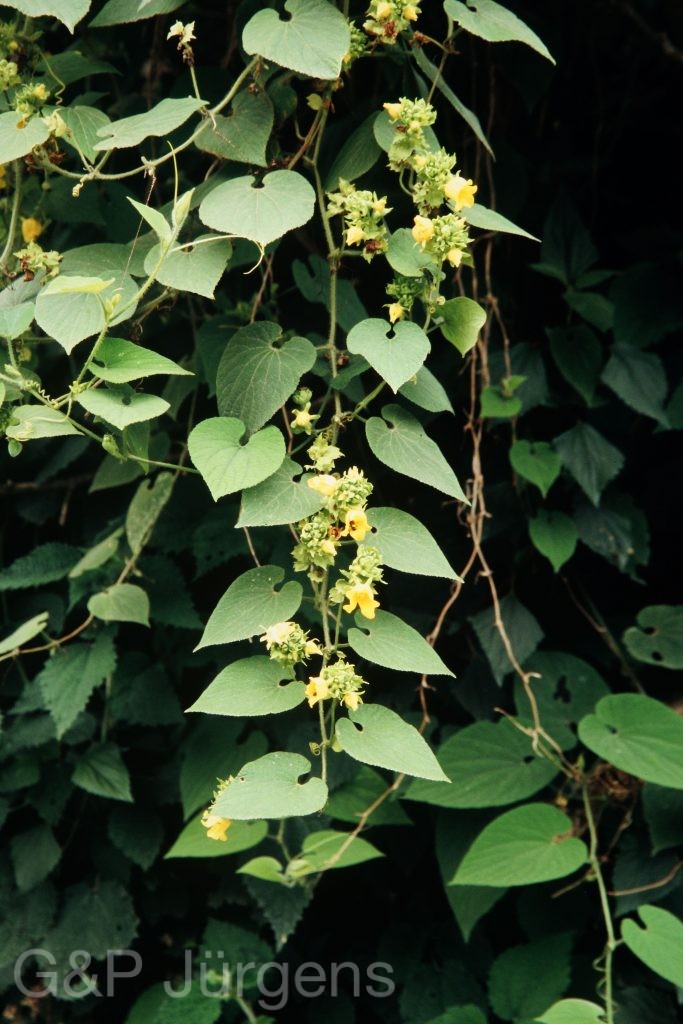
Bhutan2015 63
Bhutan Wangdi, 2500m September
Bh09 229 P385
Bhutan Wangdi, 1600m June

Description

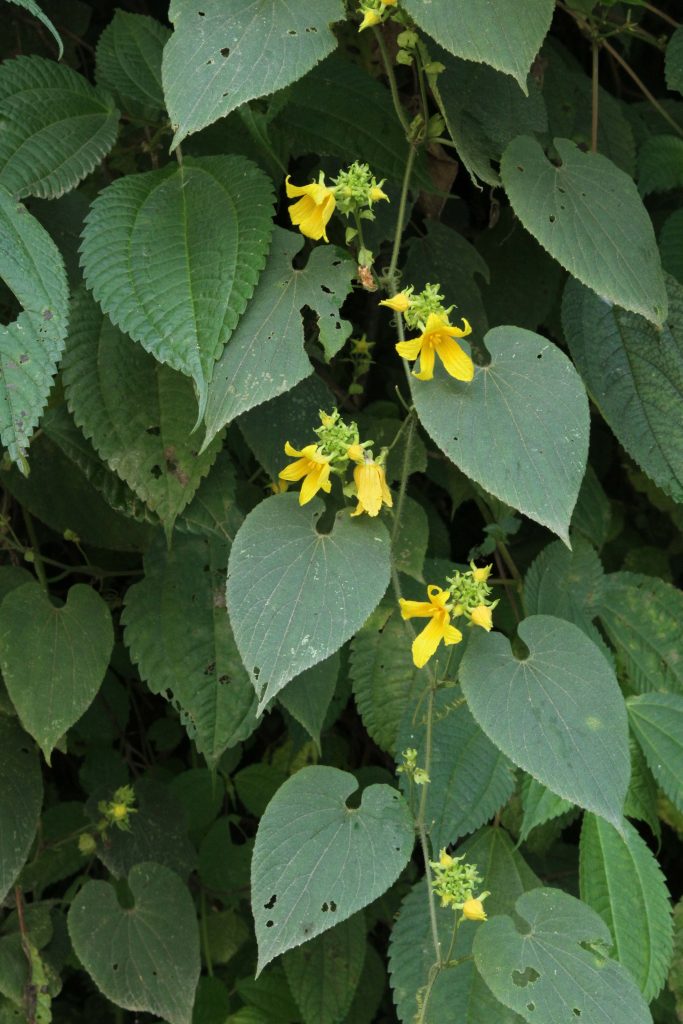
Thladiantha cordifolia is a climbing cucurbit distributed across the Sino-Himalayan and Indomalayan region, from Nepal, India, Bhutan and Bangladesh through Myanmar, Thailand, Vietnam, Laos and Malaysia into southern China, Indonesia and the Philippines; cultivated and casual records (ES, AU, JP, RO, DE, HU) inflate its GBIF country list, which rests on about 1,084 occurrences. The plants shown come from western Bhutan near Wangdue Phodrang, recorded at 1,600 m in June and 2,500 m in September, illustrating its altitudinal spread. It is a vine of forest margins, thickets, hedgerows and disturbed slopes in warm-temperate to subtropical country, typically between about 1,000 and 2,800 m, scrambling over shrubs and into the lower canopy.

It is a herbaceous to somewhat woody perennial climber arising from a tuberous rootstock, the stems angular and hispid and bearing simple or two-branched tendrils opposite the leaves. The leaves are cordate-ovate with a deeply cordate base, an acuminate apex and a denticulate margin, scabrid on both surfaces. The plant is dioecious; the male flowers are borne in axillary racemes and the females usually solitary, both yellow and campanulate with five-lobed corollas, the male flowers with the reduced stamen complement typical of the genus and the female with an inferior ovary. The fruit is an ovoid to oblong fleshy berry, often longitudinally ribbed and red at maturity, containing numerous flattened seeds.

Thladiantha is an Asian genus of the tribe Sicyoeae distinguished by its tuberous habit, dioecy and characteristic stamen arrangement. Its tubers and fruits have local food and medicinal uses. As a vigorous and widespread plant of secondary vegetation, T. cordifolia is not of conservation concern; indeed several Thladiantha species behave as garden escapes in temperate regions.

Author: (Blume) Cogn. · Sources: POWO (Kew), Flora of China Vol. 19, Flora of Bhutan Vol. 2, GBIF, Jeffrey: A review of the Cucurbitaceae