
Oliv.
Description
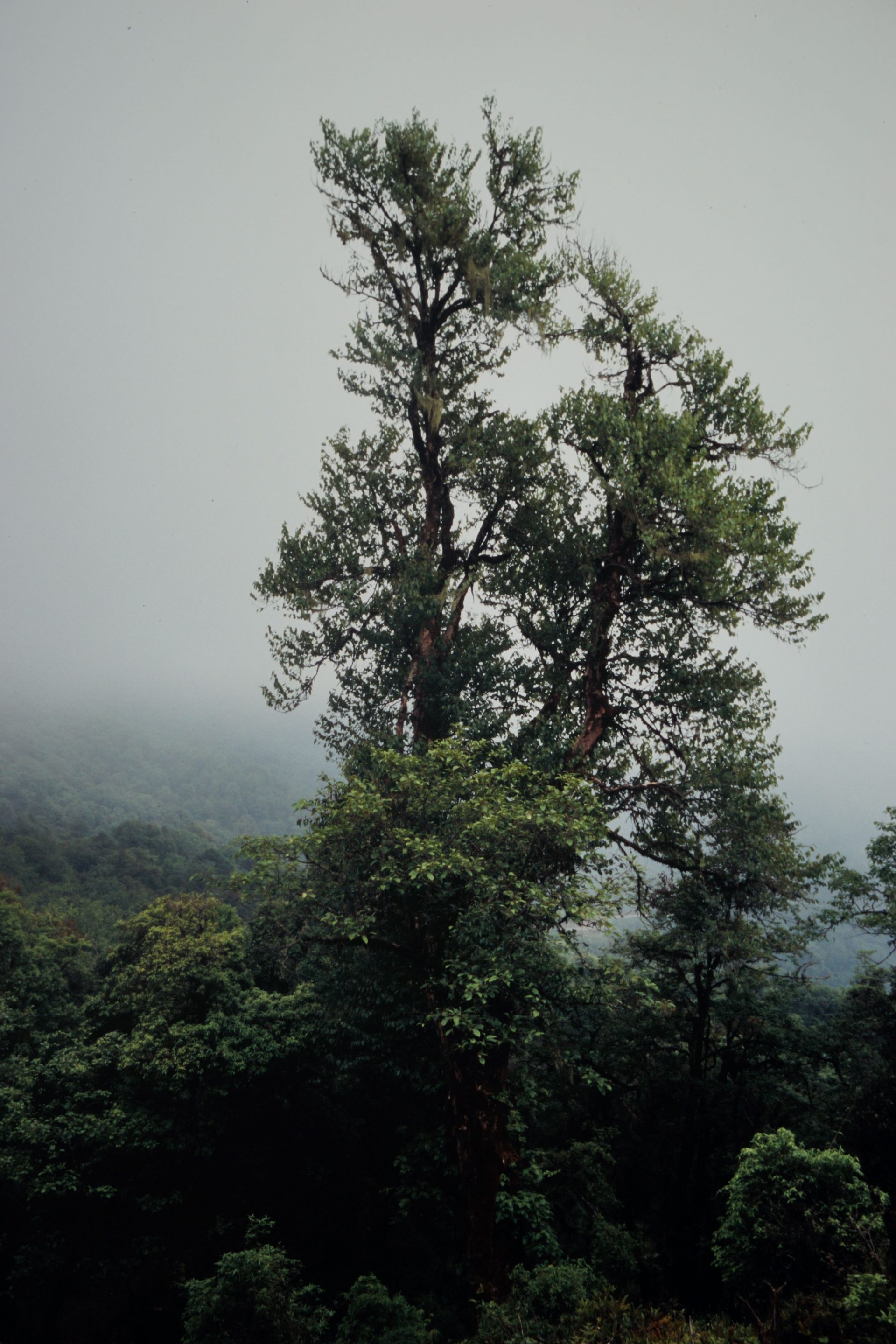
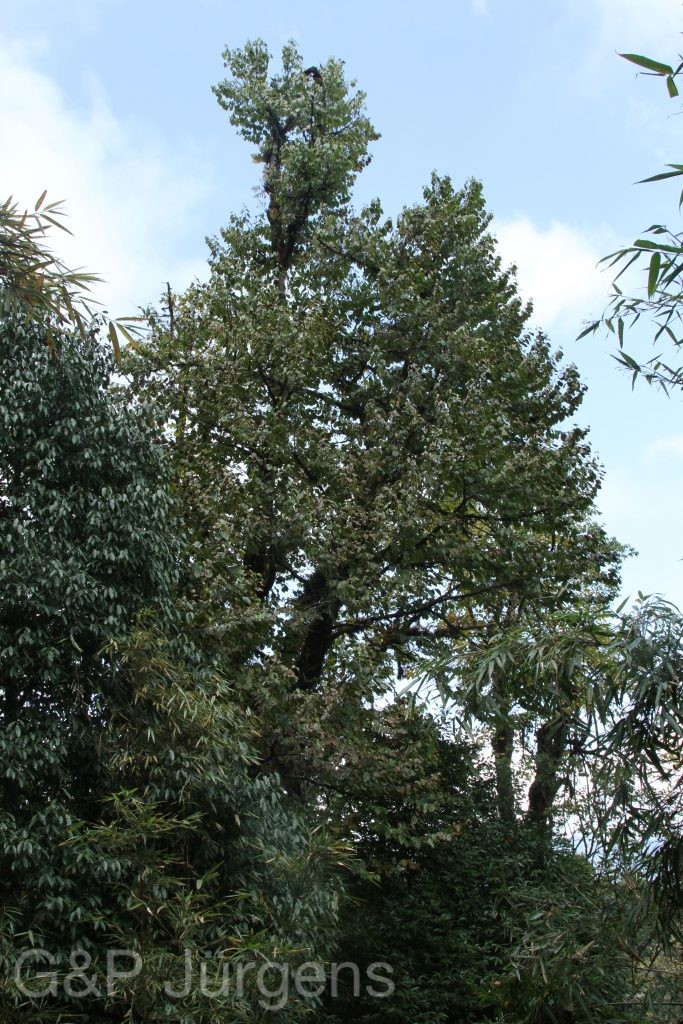
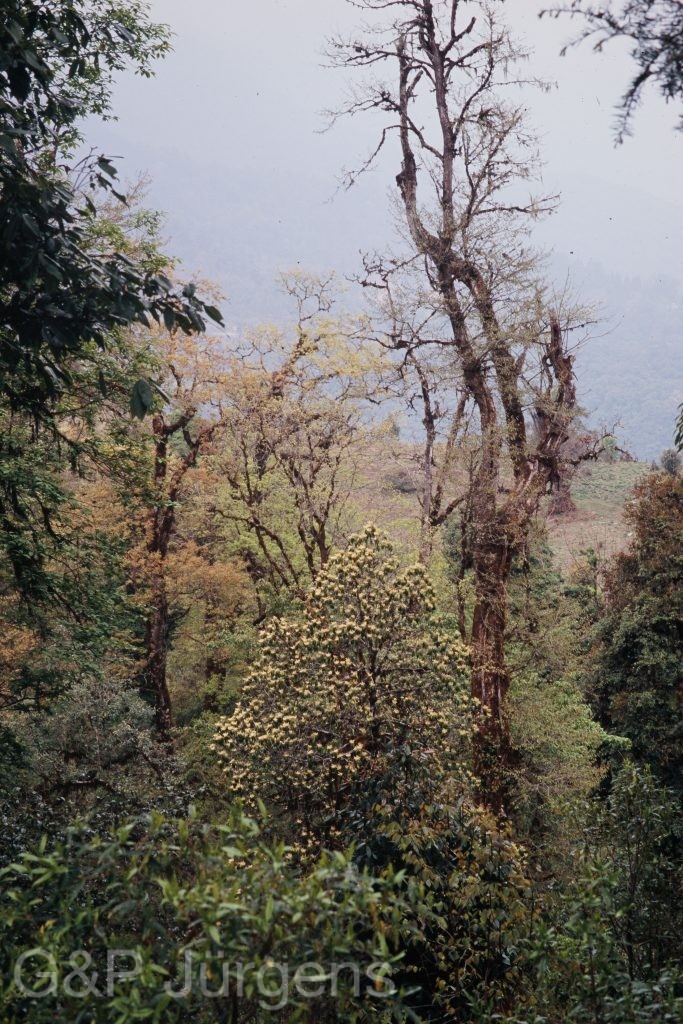
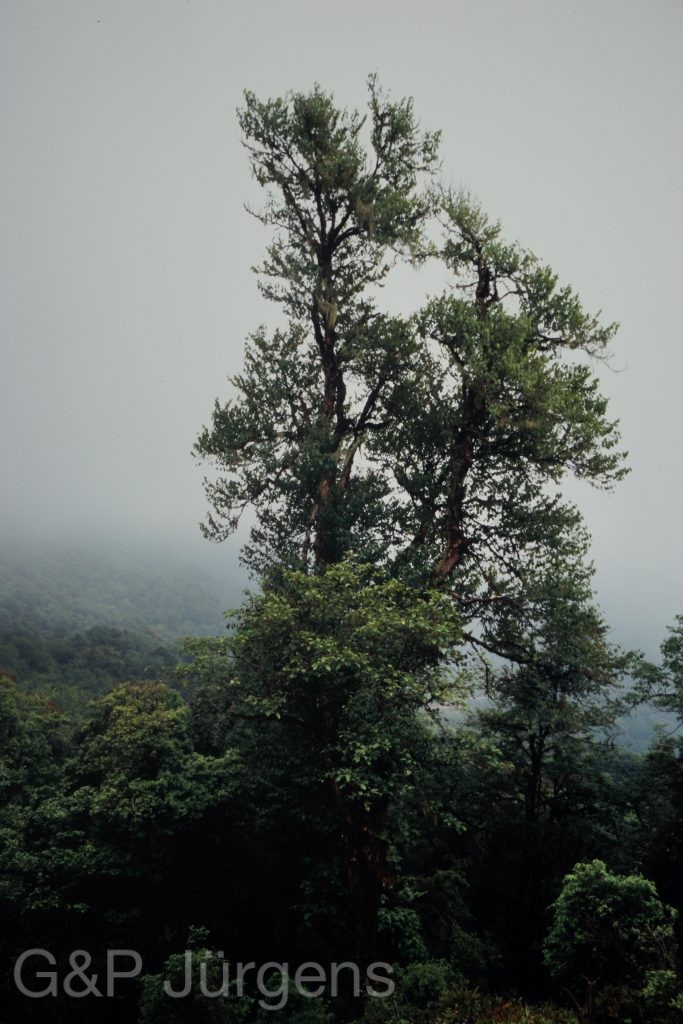
Tetracentron sinense is a deciduous tree of the eastern Himalaya and the mountains of central and southwestern China, recorded by GBIF from China, Nepal, Bhutan, India, Myanmar and Vietnam (with cultivated records in Europe and North America) across about 940 georeferenced occurrences. It is a tree of cool, moist temperate broadleaf and mixed forest, growing in valleys, on shaded slopes and along streamsides, generally between about 1,700 and 3,500 m. The cited records from Thimphu in western Bhutan at around 2,200 m, photographed in both April and October, span the leafing-out and the autumnal phases of its annual cycle and place it well within the temperate forest belt of the inner Himalaya, where it occurs scattered among other broadleaved trees.
The tree has a straight trunk and bears its leaves in two kinds of position: simple, alternate, long-petioled leaves on long shoots and solitary leaves terminating short spur shoots. The leaves are ovate to broadly ovate, cordate at the base, acuminate, finely serrate, and conspicuously palmately veined from the base. The minute, perfect flowers are densely crowded on slender, pendulous, catkin-like spikes; each tetramerous flower has four tepals, four stamens and a four-carpellate ovary. The fruit is a small four-locular capsule that splits to release tiny winged seeds. Anatomically the wood is remarkable for being vesselless, the water-conducting tissue consisting only of tracheids.
Tetracentron sinense is one of only two genera in the small, isolated family Trochodendraceae (the other being Trochodendron), an ancient and phylogenetically basal lineage of eudicots whose vesselless wood is regarded as a primitive or secondarily reduced condition of great interest to plant systematists and to studies of angiosperm wood evolution. As a relict species with a disjunct, fragmented distribution, it is of significant conservation concern: it is legally protected in China and assessed as near-threatened, its populations reduced by logging and habitat loss, making it an emblematic "living-fossil" tree of the East Asian temperate flora.
Author: Oliv. · Sources: POWO (Kew), GBIF, Flora of China Vol. 6, Flora of Bhutan Vol. 1, Flora of Nepal, Flora of Pakistan, Endress: systematics and floral morphology of Trochodendraceae