
(Blume) Cogn.
Description
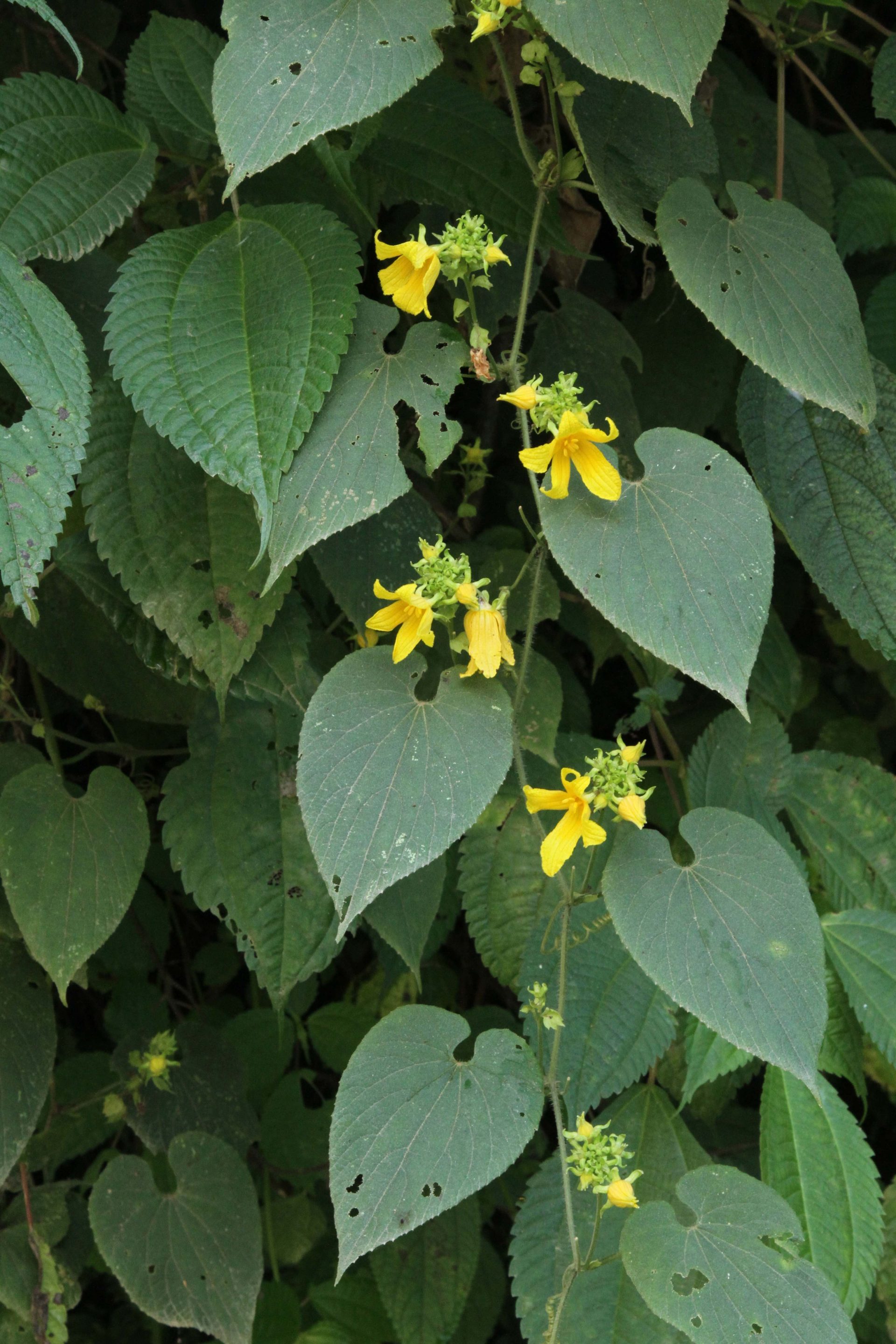
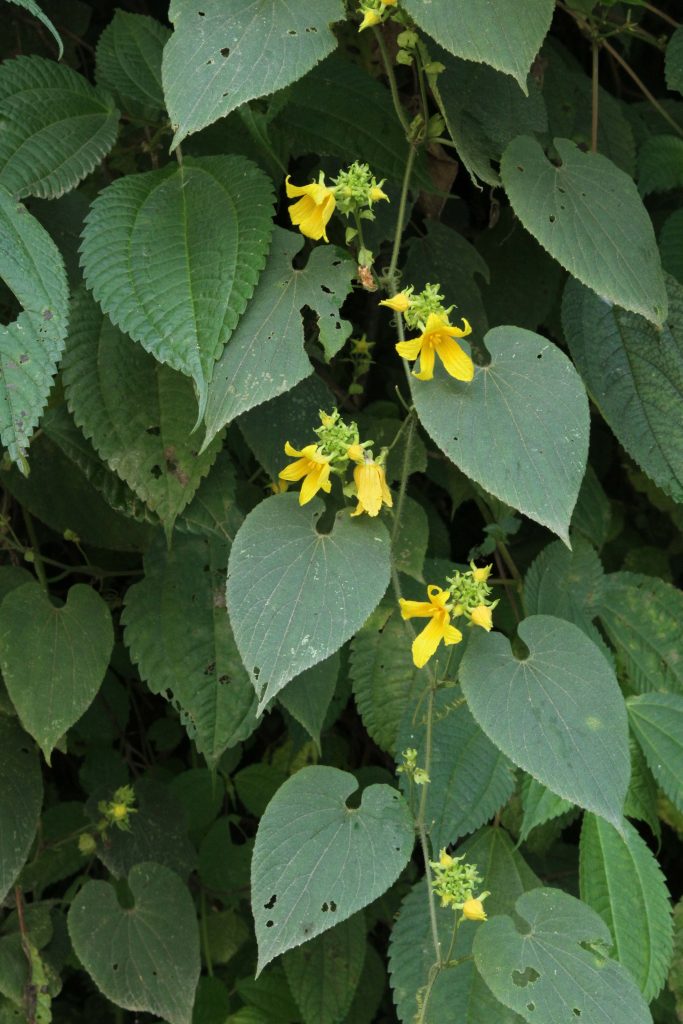
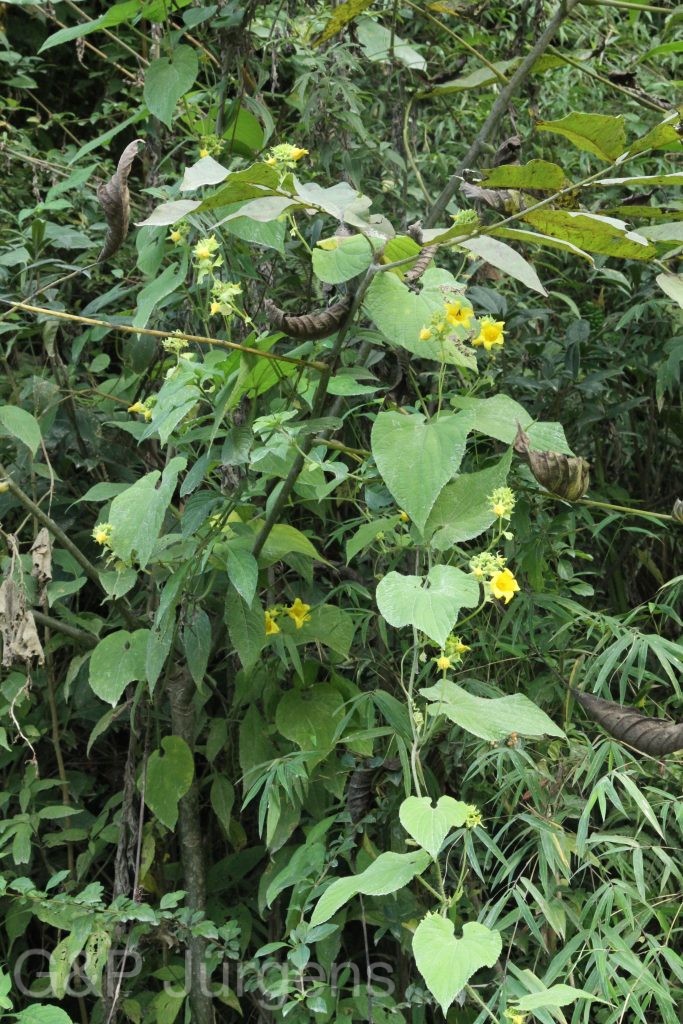
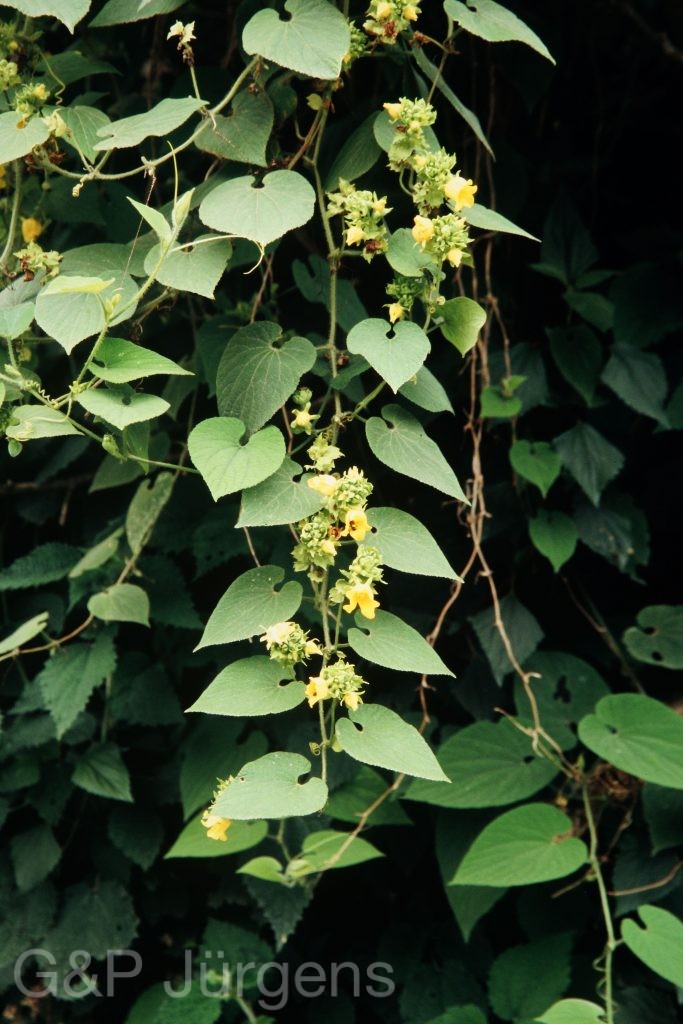
Thladiantha cordifolia is a climbing cucurbit distributed across the Sino-Himalayan and Indomalayan region, from Nepal, India, Bhutan and Bangladesh through Myanmar, Thailand, Vietnam, Laos and Malaysia into southern China, Indonesia and the Philippines; cultivated and casual records (ES, AU, JP, RO, DE, HU) inflate its GBIF country list, which rests on about 1,084 occurrences. The plants shown come from western Bhutan near Wangdue Phodrang, recorded at 1,600 m in June and 2,500 m in September, illustrating its altitudinal spread. It is a vine of forest margins, thickets, hedgerows and disturbed slopes in warm-temperate to subtropical country, typically between about 1,000 and 2,800 m, scrambling over shrubs and into the lower canopy.
It is a herbaceous to somewhat woody perennial climber arising from a tuberous rootstock, the stems angular and hispid and bearing simple or two-branched tendrils opposite the leaves. The leaves are cordate-ovate with a deeply cordate base, an acuminate apex and a denticulate margin, scabrid on both surfaces. The plant is dioecious; the male flowers are borne in axillary racemes and the females usually solitary, both yellow and campanulate with five-lobed corollas, the male flowers with the reduced stamen complement typical of the genus and the female with an inferior ovary. The fruit is an ovoid to oblong fleshy berry, often longitudinally ribbed and red at maturity, containing numerous flattened seeds.
Thladiantha is an Asian genus of the tribe Sicyoeae distinguished by its tuberous habit, dioecy and characteristic stamen arrangement. Its tubers and fruits have local food and medicinal uses. As a vigorous and widespread plant of secondary vegetation, T. cordifolia is not of conservation concern; indeed several Thladiantha species behave as garden escapes in temperate regions.
Author: (Blume) Cogn. · Sources: POWO (Kew), Flora of China Vol. 19, Flora of Bhutan Vol. 2, GBIF, Jeffrey: A review of the Cucurbitaceae