
Blume
Description
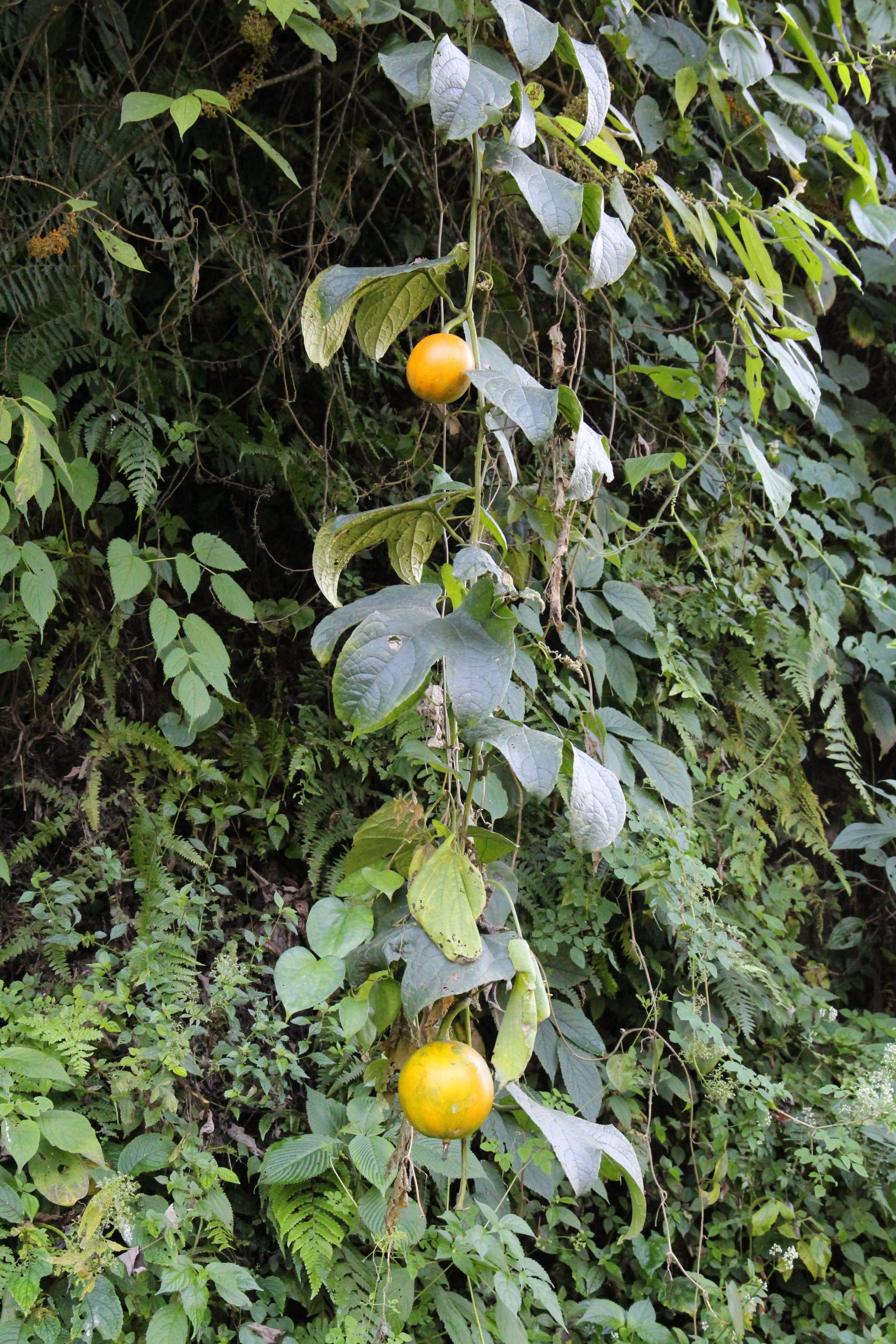
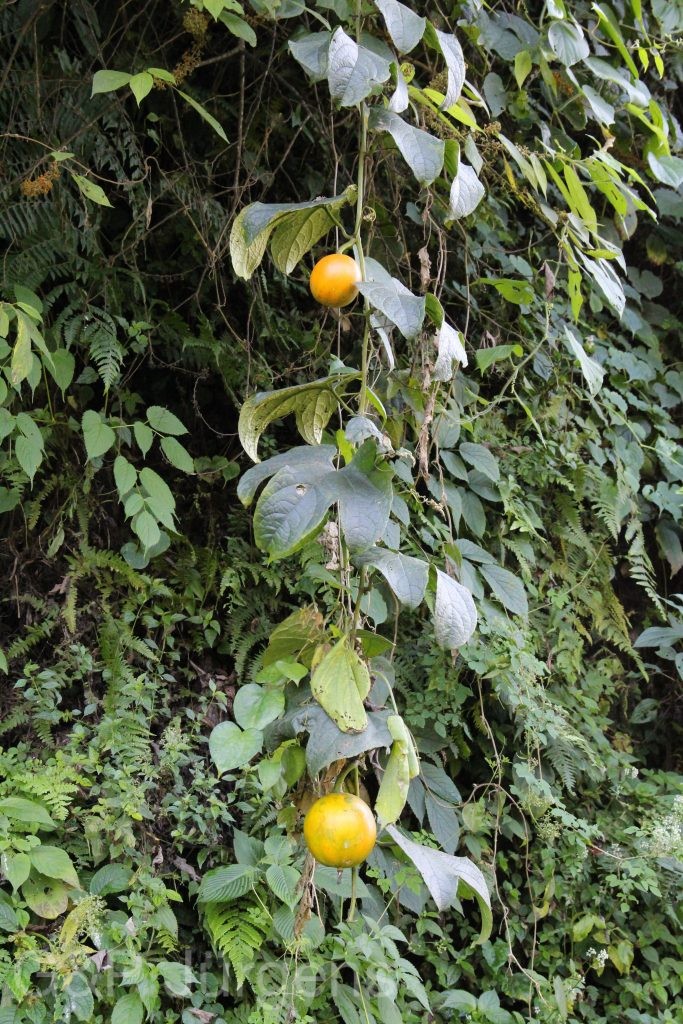
Trichosanthes costata Blume is a climbing cucurbit widely distributed across tropical and subtropical Asia, recorded by GBIF from China, Indonesia, Thailand, Taiwan, India, Malaysia, Vietnam, Cambodia, the Philippines, Myanmar, Laos and Bhutan, with over 600 occurrences. It grows in lowland to lower montane forest, secondary growth and thickets, scrambling over shrubs by tendrils. The Bhutanese material from Zhemgang at 910 m in October reflects its preference for the warm subtropical foothills and its autumn fruiting, when the ribbed fruits that give the epithet mature.
It is a slender, herbaceous to somewhat woody climbing vine with angular or ribbed stems and axillary tendrils. The leaves are alternate, broadly ovate to suborbicular, often three- to five-lobed, cordate at the base, with a dentate margin and palmate venation. The plants are monoecious or dioecious, the white flowers with the fringed corolla lobes characteristic of Trichosanthes, the males in racemes and the solitary females with an inferior ovary. The fruit is a small ellipsoid berry, conspicuously ribbed or costate, ripening red to orange, with several compressed seeds dispersed by frugivores.
Trichosanthes costata, sometimes treated under the segregate name Gymnopetalum but here accepted in the broader Trichosanthes, belongs to a large Old World genus of forest lianas distinguished by their fringed corollas, thought to attract nocturnal hawkmoth pollinators. Its wide Indo-Malesian to Sino-Himalayan range and tolerance of disturbance make it common in secondary forest, and several relatives are economically or medicinally important. It is not considered threatened, reflecting its colonising habit.
Author: Blume · Sources: POWO (Kew), GBIF, Flora of China Vol. 19, Flora of Bhutan Vol. 2, Flora of Nepal, de Wilde & Duyfjes revisions of Asian Cucurbitaceae (Trichosanthes)