
Benth.
Description
Thermopsis barbata Benth. is a distinctive legume of the high Himalaya, occurring across China, India, Nepal and Bhutan. It is documented from Sikkim at Kalep around 3670 m and from West-Nepal at Naphukana near 3080 m, both flowering in June, within the subalpine to alpine belt. The species favours open stony slopes, dry grassy hillsides, gravelly pastures and the margins of alpine scrub, typically between 3000 and 4500 m, on well-drained, often disturbed substrates exposed to strong sun and seasonal aridity. Its roughly 606 GBIF records indicate a widespread but characteristically montane Himalayan range.
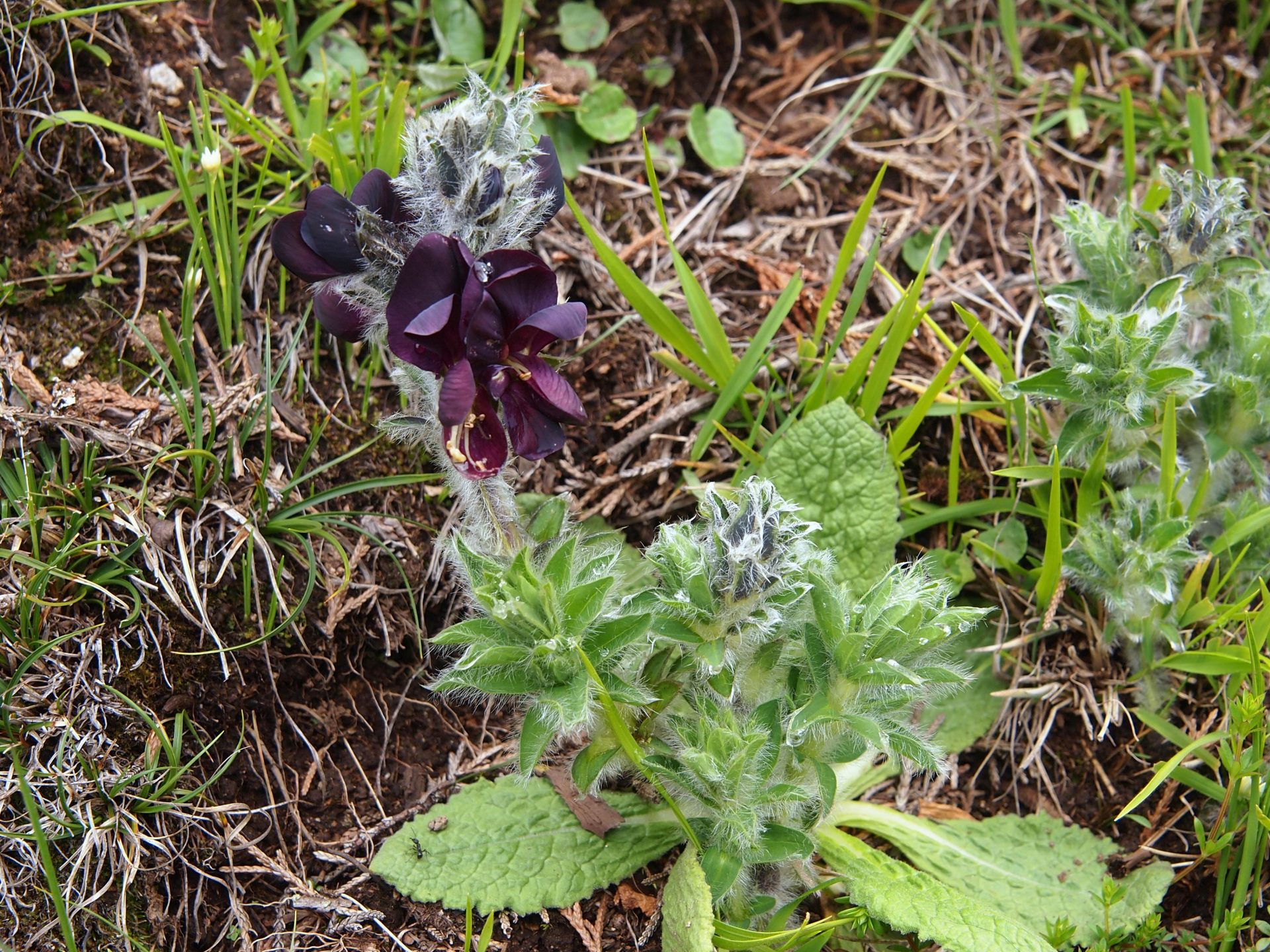
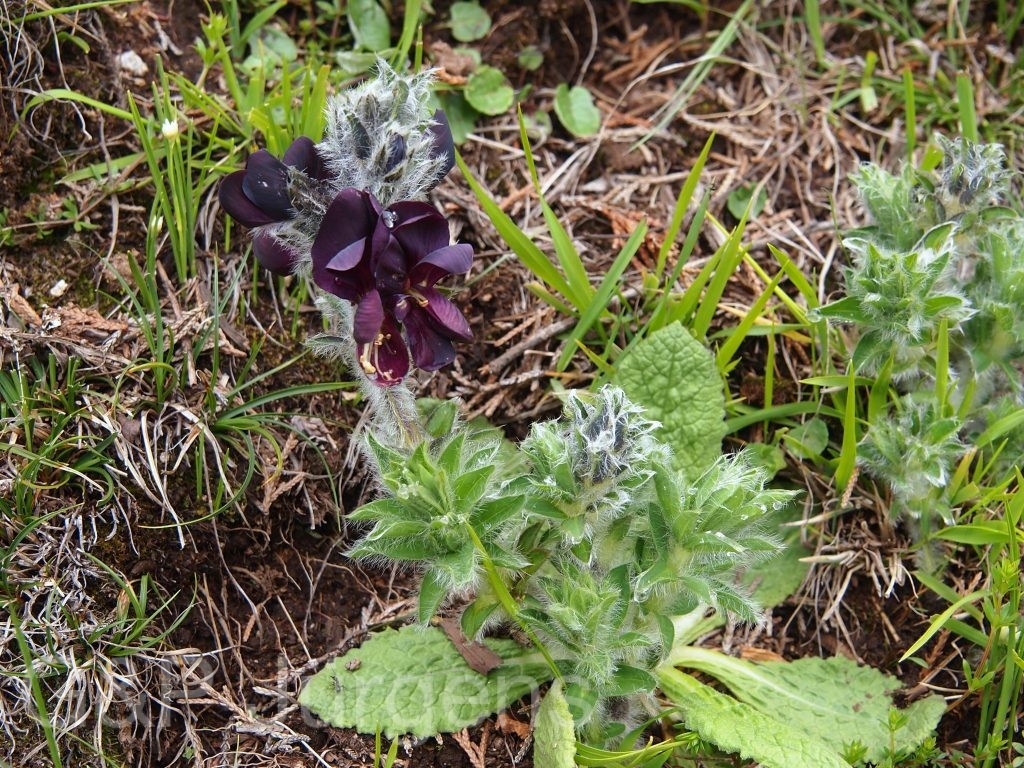
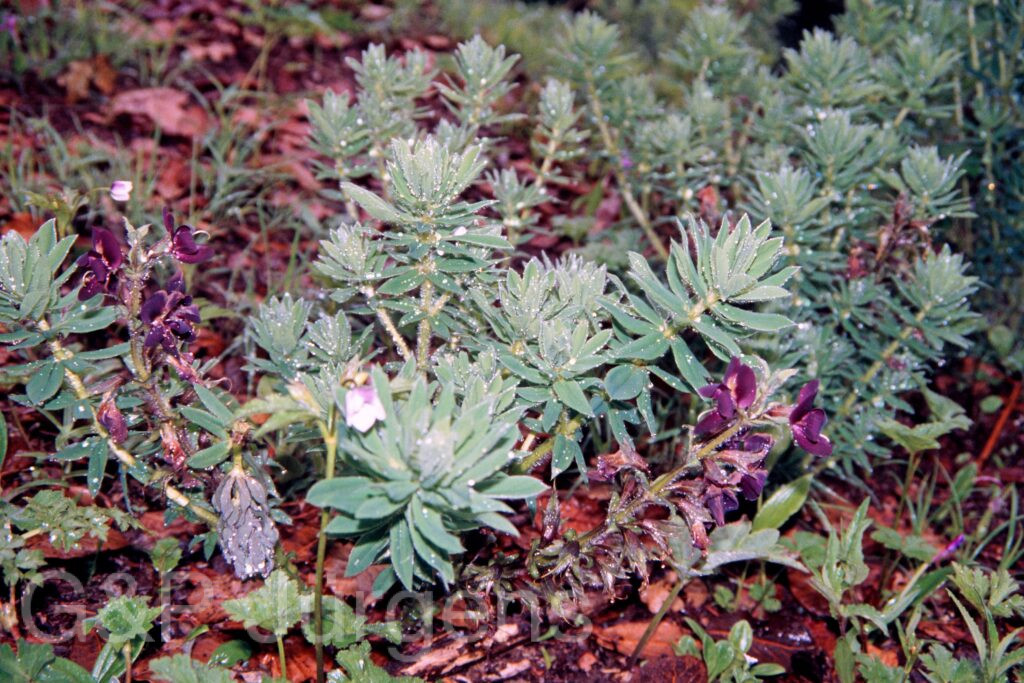
The plant is a robust perennial herb arising from a stout rootstock, the erect stems and foliage conspicuously clothed in long, soft, silky to villous hairs that give the epithet barbata. The leaves are palmately trifoliolate with elliptic to obovate leaflets and large persistent stipules. The flowers are arranged in a dense terminal raceme and are notably large for the genus, the papilionaceous corolla a deep purple to violet-maroon rather than the yellow usual in Thermopsis, subtended by hairy bracts and an enlarged calyx. The fruit is a hairy, flattened, several-seeded legume.
Thermopsis barbata is exceptional within its predominantly yellow-flowered, north-temperate genus for its dark purple corolla and dense pubescence, traits interpreted as adaptations to the cold, high-radiation alpine environment. Like many genistoid legumes it contains quinolizidine alkaloids that deter herbivores. Widespread and locally frequent across its range, it is not regarded as threatened, though high-altitude grazing and pasture degradation may locally affect populations.
Author: Benth. · Sources: POWO (Kew), GBIF, Flora of China, Flora of Nepal, Flora of British India, Legumes of the World (Lewis et al.)