
DC.
Description
Tephrosia candida is a shrubby legume native to the Indian subcontinent and adjacent Himalaya, including India, Nepal and Bhutan, but now pantropically naturalised through widespread cultivation, with GBIF records from Brazil, Indonesia, Taiwan, China, Papua New Guinea, Australia, Madagascar, the Caribbean, the Mascarenes and beyond. It thrives in warm subtropical and tropical conditions on forest margins, roadsides, river banks and disturbed open ground. The Bhutanese collections illustrate its altitudinal breadth, from Galephu in the foothills at about 650 m in October to Wangdi at 2600 m flowering in September.
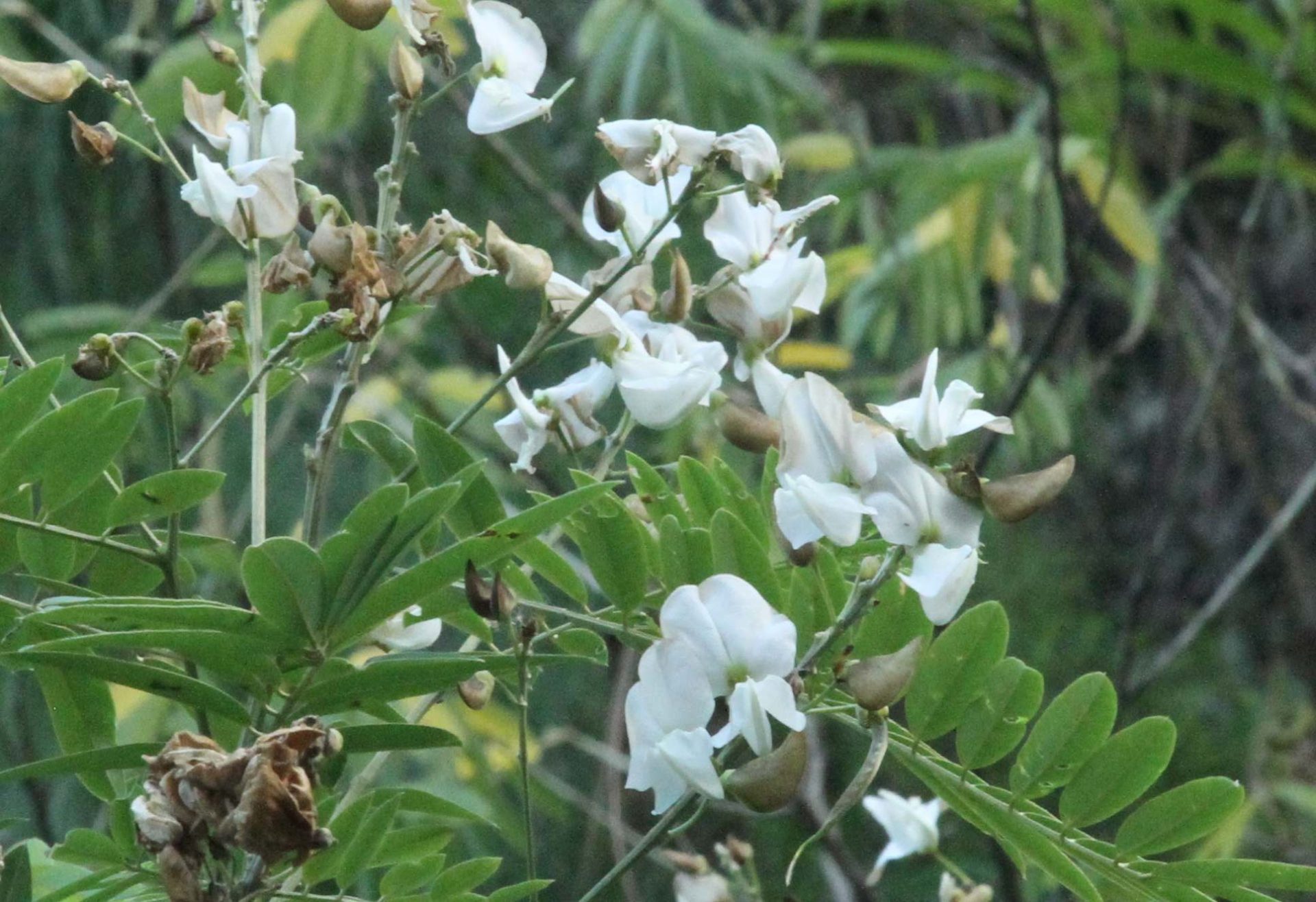
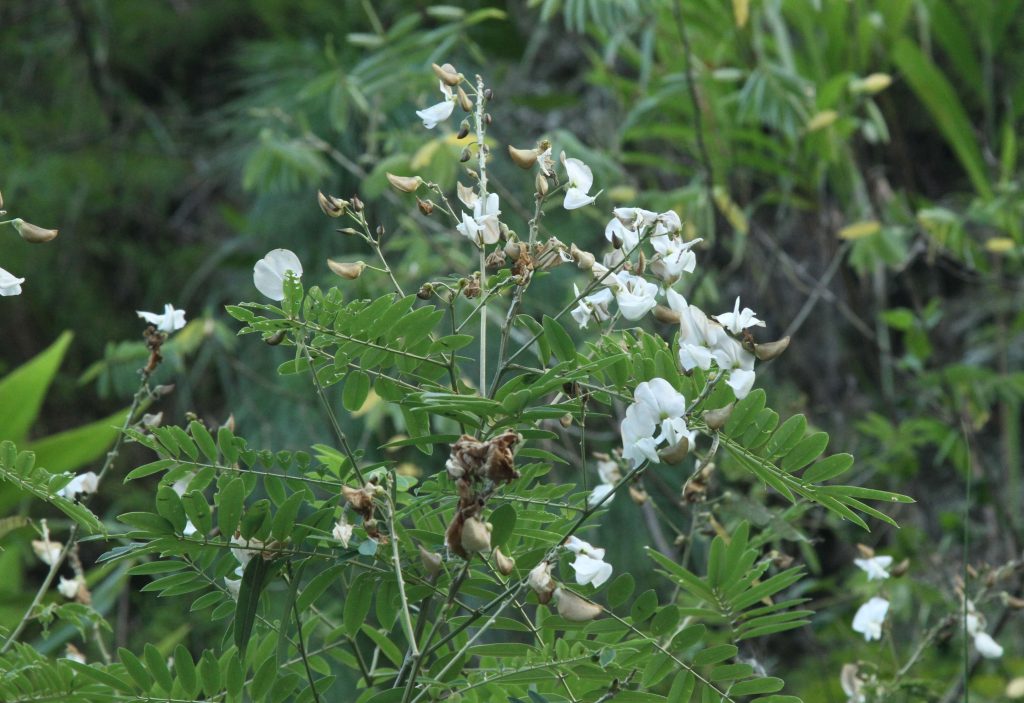
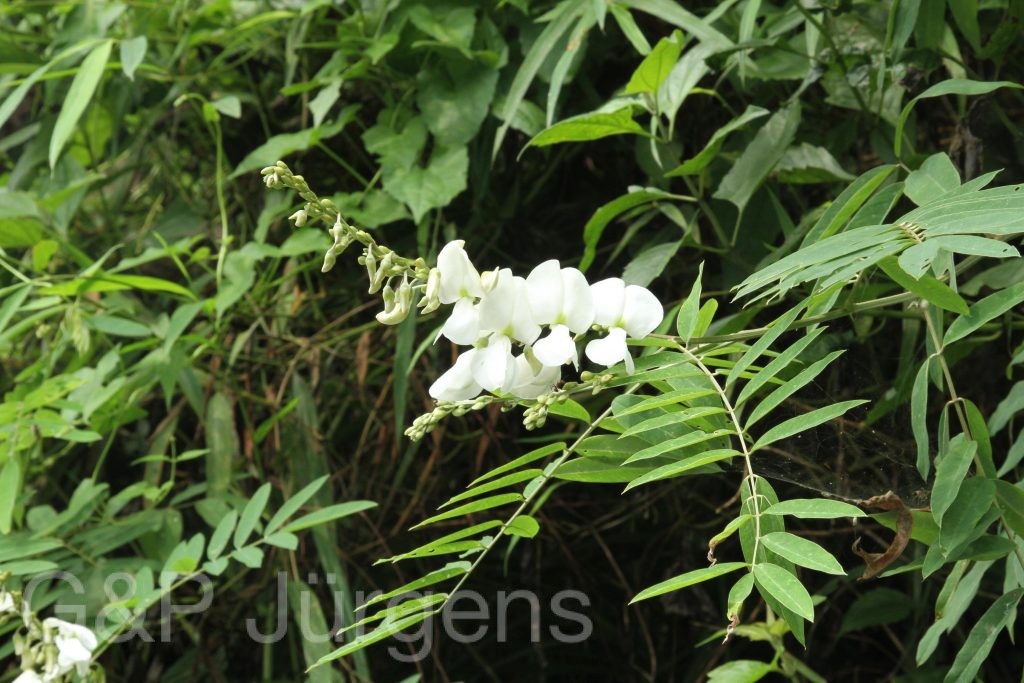
The plant is an erect, much-branched shrub up to about 3 m, with silky-pubescent young growth. The leaves are imparipinnate with numerous (often 8-12 pairs of) narrowly oblong leaflets that are silky-sericeous beneath, giving the foliage a greyish sheen. The flowers are borne in dense terminal racemes; each papilionate flower has a campanulate pubescent calyx and a white to pale pink or cream corolla with a broad standard silky on the outer face, the keel and wings enclosing diadelphous stamens. The fruit is a flattened, linear, densely velvety-pubescent dehiscent pod that twists on splitting to expel several seeds.
A member of the papilionoid Fabaceae and tribe Millettieae, T. candida is a nitrogen-fixing species long valued as a green manure, cover crop, fallow improver and erosion-control plant, which explains its extensive intentional dispersal across the tropics. Like other Tephrosia it contains rotenoid compounds and has been used as a fish poison and insecticide. Robust and weedy in cultivation, it is in no way of conservation concern and can become locally naturalised.
Author: DC. · Sources: POWO (Kew), GBIF, Flora of Bhutan, Flora of British India, Brummitt's and related revisions of Tephrosia (Leguminosae)