Campanulaceae

Hook.f. & Thomson

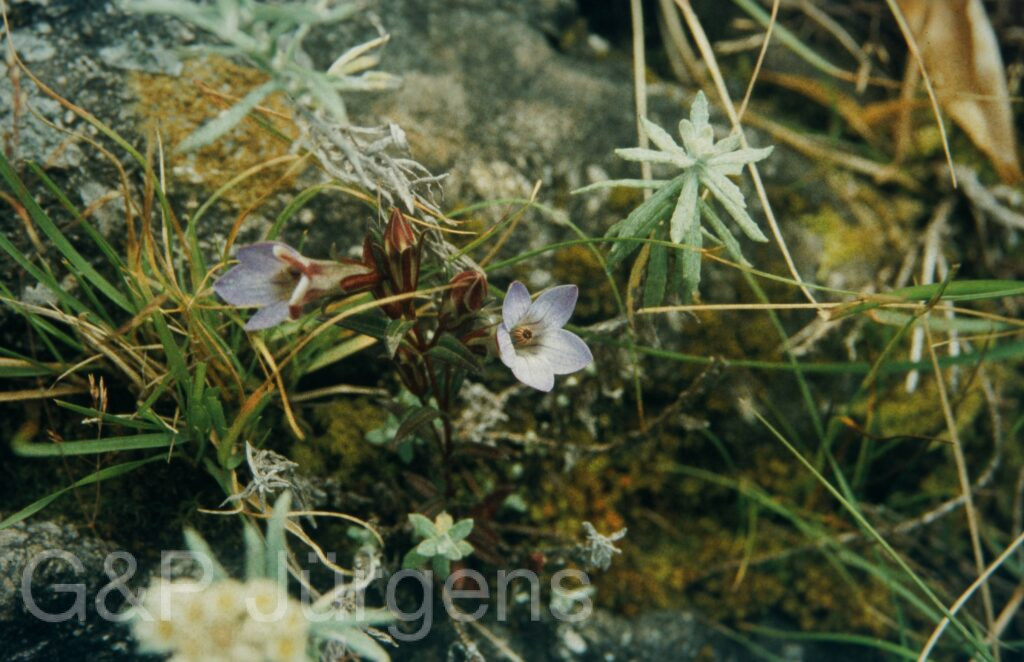
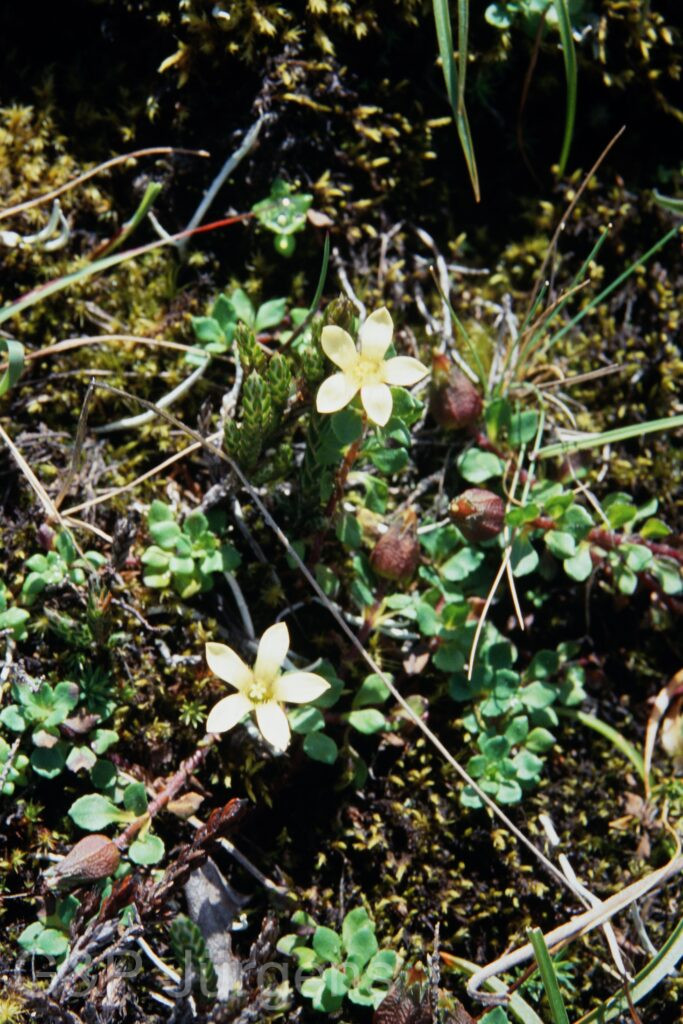
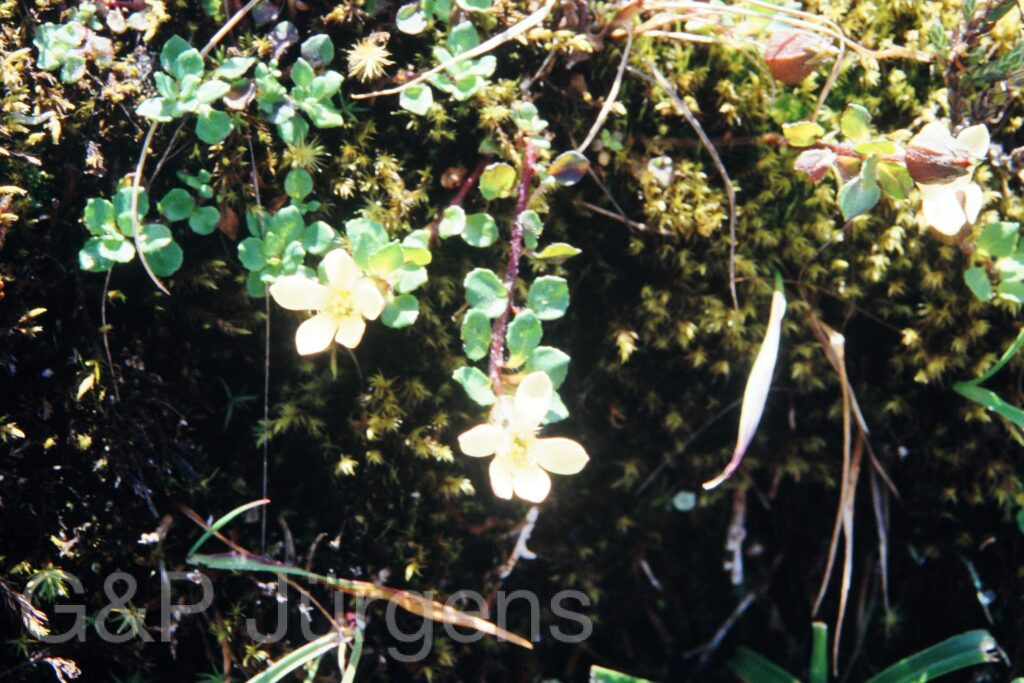
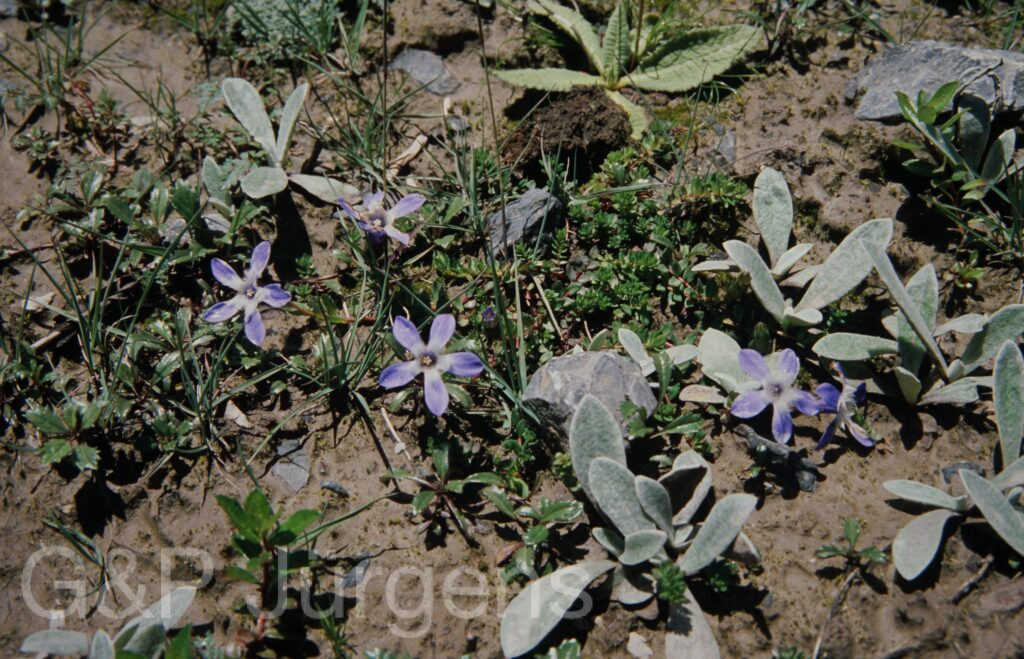
Bhutan2012 84
Bhutan Shele-La, 4100m September
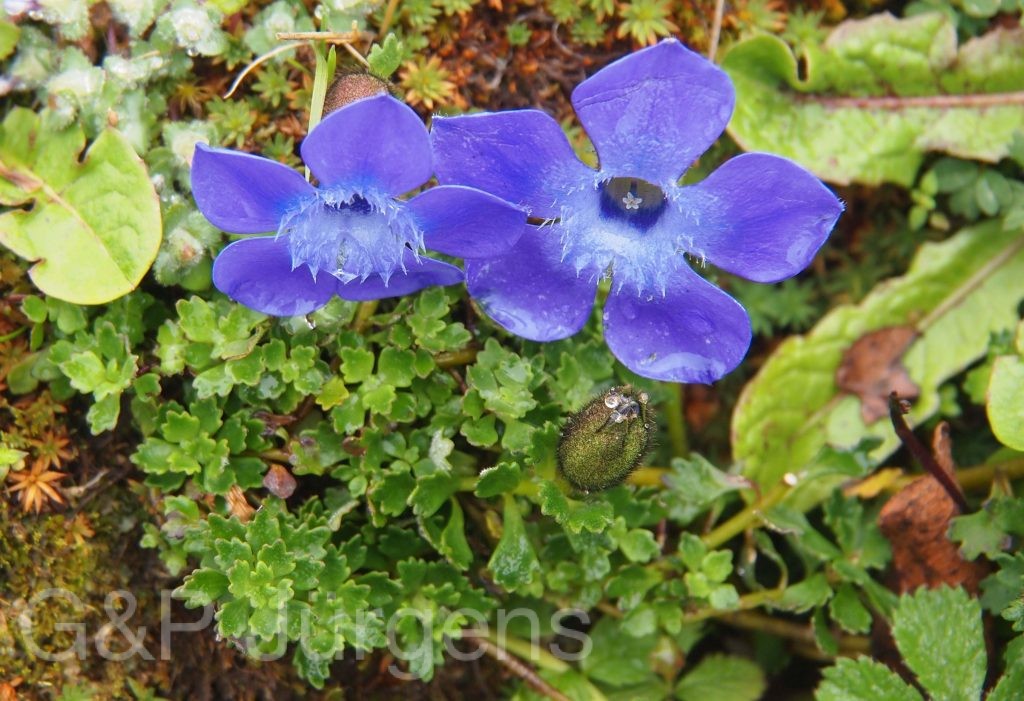
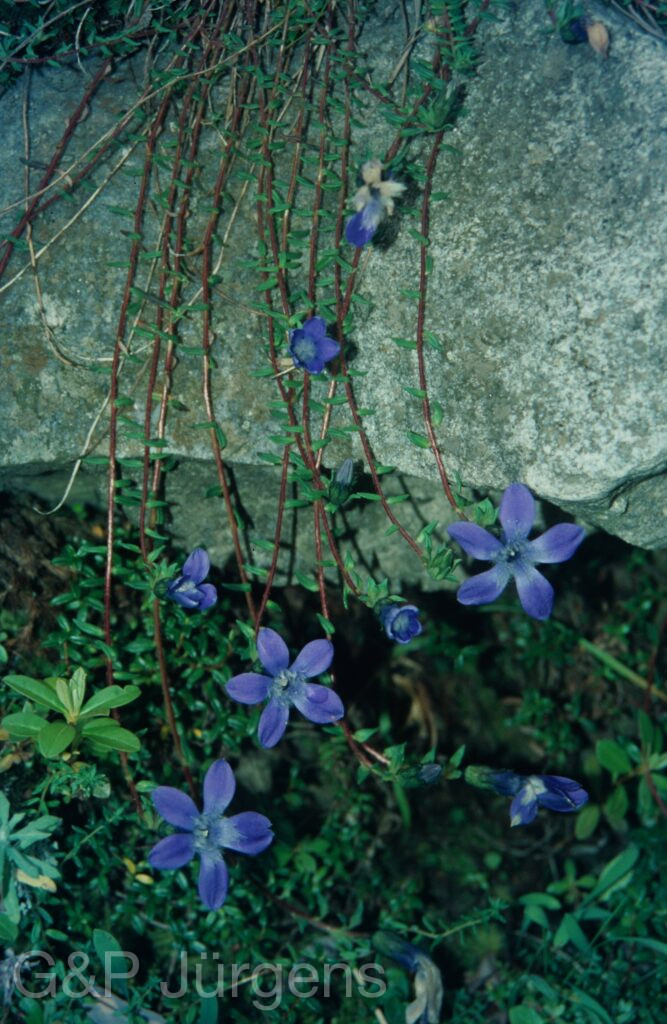
Bhutan2012 87
Bhutan Shele-La, 4100m September
Sikkim2003 136 G184
Sikkim Dzongri 3950m, August

Description

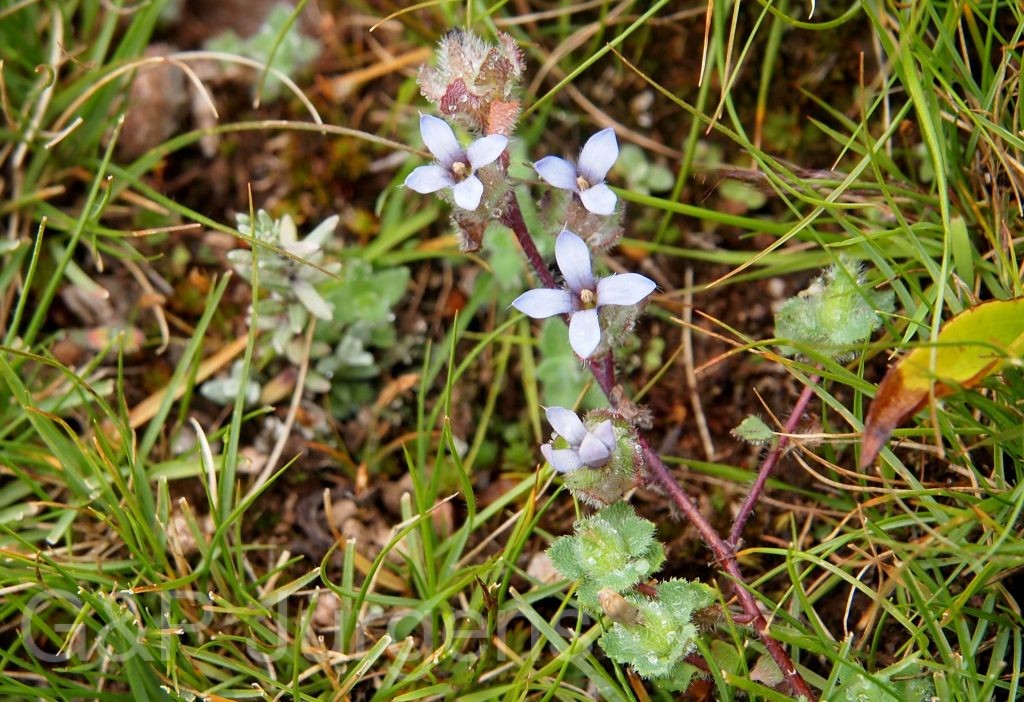
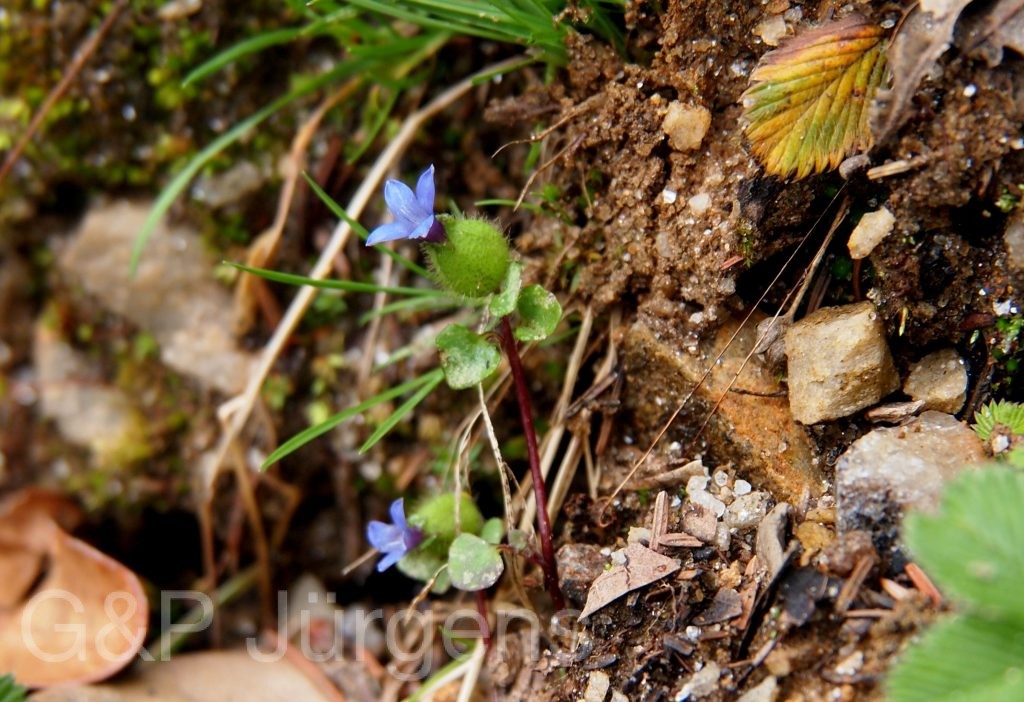
Cyananthus incanus is a low alpine perennial of the eastern Himalaya and adjacent Tibet, recorded from China, Nepal, India, Bhutan and Myanmar, with about 777 occurrences in GBIF. It grows on open alpine turf, stony slopes, screes and the margins of dwarf rhododendron scrub, generally between 3500 and 4500 m, in well-drained sites of the upper alpine zone. The photographs from the Shele La in Bhutan at about 4100 m in September and from Dzongri in Sikkim at about 3950 m in August show the plant flowering through the late-monsoon and early-autumn season typical of the high eastern Himalaya.

The plant is a mat-forming or loosely tufted perennial with a stout, woody rootstock from which radiate slender, prostrate to ascending stems. The small leaves are alternate, ovate to obovate, entire or slightly toothed, and clothed in greyish hairs, the indumentum reflected in the epithet incanus. The flowers are solitary and terminal, comparatively large for the plant; the calyx is densely hairy and tubular, and the broadly bell-shaped to funnelform corolla is blue to purplish-blue with five spreading lobes and a conspicuous tuft of hairs (a beard) closing the throat, a hallmark of the genus. The fruit is a capsule splitting from the apex to release numerous small seeds.

Cyananthus is a small Sino-Himalayan genus of the Campanulaceae distinguished from Campanula by its terminal solitary flowers, a deeply lobed corolla and the bearded throat. The cushion or mat habit and woolly leaves are typical adaptations to the cold, wind-exposed and sun-drenched conditions of the alpine zone. Several species, including C. incanus, are prized in alpine and rock gardens for their intense blue flowers. Locally frequent across its range, it is not regarded as threatened.

Author: Hook.f. & Thomson · Sources: POWO (Kew), GBIF, Flora of China, Flora of Bhutan, Annotated Checklist of the Flowering Plants of Nepal, Lammers' classification of the Campanulaceae
Hook.f. & Thomson

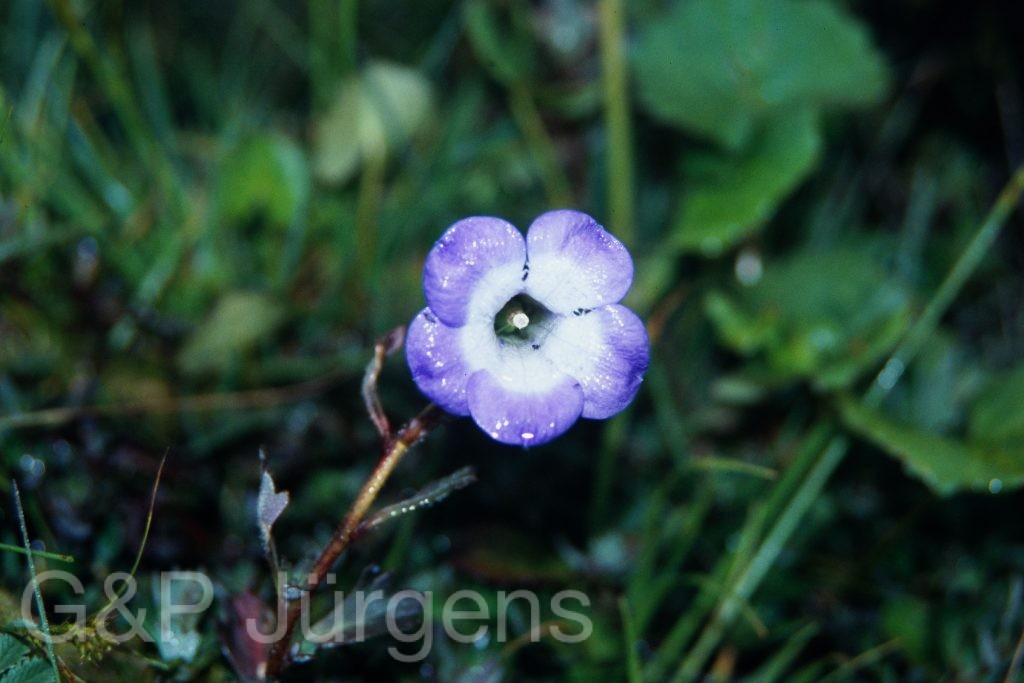
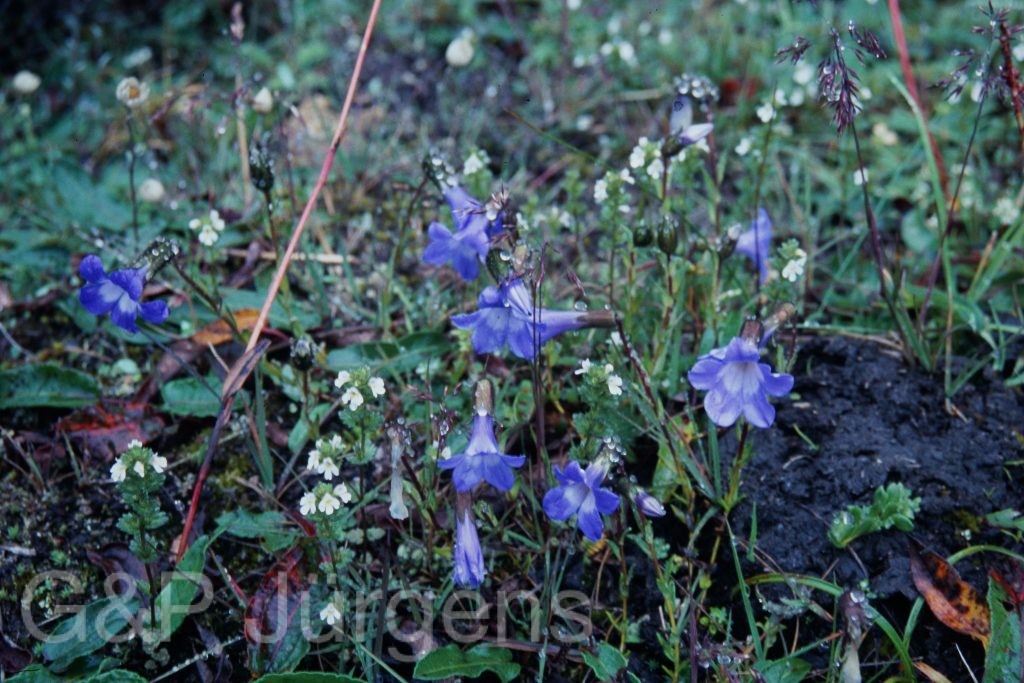
Bhutan2012 258
Bhutan Shele-La, 4000m September
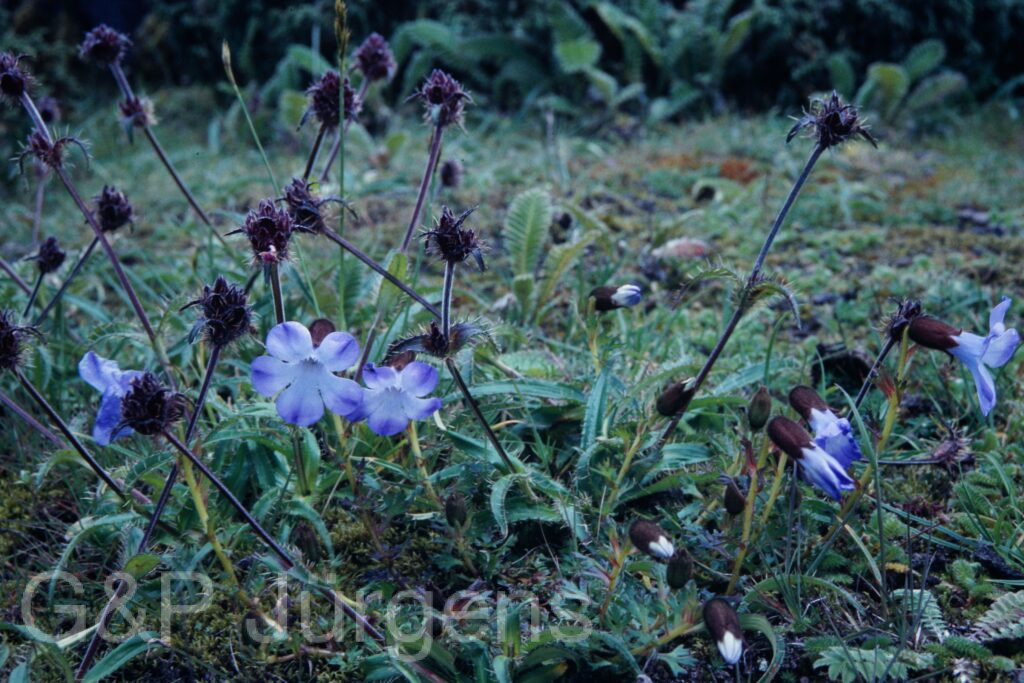
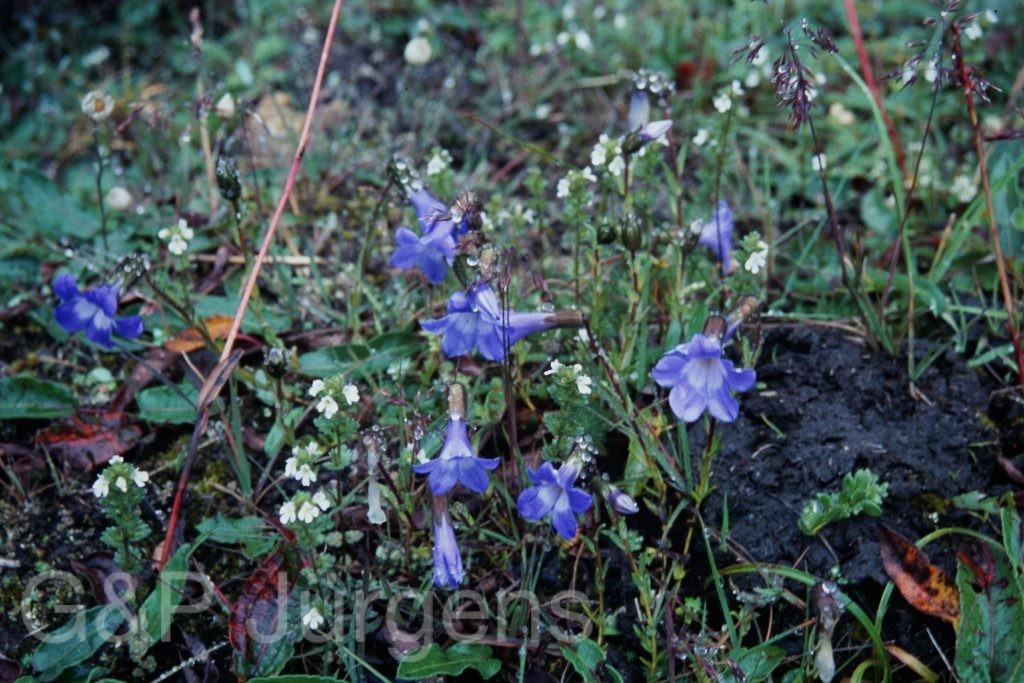
Bhutan2012 106
Bhutan Shele-La, 4000m September

Description

Cyananthus inflatus is an annual herb of the eastern Himalaya and adjacent mountains, recorded by GBIF in some 605 occurrences from China, Nepal, India, Bhutan and Myanmar. It occupies open alpine and subalpine ground, including grassy slopes, screes, disturbed banks and the margins of trails and meadows, broadly between 3000 and 4300 m. The illustrated plant was photographed in Bhutan at the Shele-La at 4000 m in September, flowering late in the season as autumn approaches, when many alpine annuals complete their cycle on cool, well-drained slopes.

The plant is a slender, branching annual with ascending to decumbent stems bearing alternate, small, ovate to spathulate leaves that are entire or slightly toothed and sparsely hairy. The flowers are terminal and solitary on the branch tips, subtended by a leafy involucre. The calyx is conspicuously inflated and tubular, becoming swollen and membranous in fruit, clothed in dark or appressed hairs. The corolla is broadly campanulate, pale to deep blue, five-lobed and bearded within at the throat with a tuft of hairs characteristic of the genus. The fruit is a capsule enclosed by the persistent inflated calyx, splitting to shed numerous small seeds.

Cyananthus (Campanulaceae) is a Sino-Himalayan genus of around twenty species notable for its bearded corolla throat and superior to half-inferior ovary, distinguishing it from the related Codonopsis and Campanula. The epithet inflatus refers to the swollen fruiting calyx, a diagnostic feature within the annual group. GBIF treats the name as accepted. As a wide-ranging, often weedy annual of disturbed alpine ground, it is locally common and of no conservation concern.

Author: Hook.f. & Thomson · Sources: POWO (Kew), GBIF, Flora of China, Flora of Bhutan, Lammers studies of Campanulaceae

Wall. ex Benth.

Garw 2005 294 ergebnis
India Garhwal Patanati 3600m, September

Description

Cyananthus integer is a cushion-forming alpine herb of the western and central Himalaya, recorded by GBIF from India, Nepal and adjacent territories across some 48 occurrences, with an accepted status under its current name. It is a plant of high-altitude open habitats: stony alpine meadows, gravelly slopes, rock crevices and the margins of moraine, typically between about 3300 and 4300 m. The photographed material from Patanati in Garhwal at 3600 m, flowering in September, illustrates both its preferred elevation and its late-season phenology, the blooms opening towards the close of the monsoon when many co-occurring alpines are already in fruit. Like other members of its genus it thrives on the well-drained, sun-exposed turf and screes of the upper alpine zone.

The plant forms low, somewhat trailing to ascending mats from a slender woody rootstock, with numerous prostrate or decumbent stems clothed in small, alternate, entire to shallowly toothed leaves that are often densely arranged toward the stem tips. The solitary, terminal flowers are the conspicuous feature: a broadly funnelform to campanulate corolla, blue to violet-blue, with five spreading lobes and a conspicuous tuft of hairs in the throat. The calyx is tubular and frequently dark-hairy, the stamens five, and the ovary inferior to half-inferior. The fruit is a capsule that releases small seeds, the persistent calyx aiding wind exposure on the open slopes.

Cyananthus is a Sino-Himalayan genus of roughly twenty species centred on the Himalaya and southwest China, distinguished from related Campanulaceae by its throat-bearded, often deeply lobed corolla and its alpine, cushion-forming habit. C. integer sits among the blue-flowered, entire- to weakly toothed-leaved species and is told from relatives by leaf form and indumentum. As a widespread but elevation-restricted alpine it has not been flagged as threatened, though high-mountain plants of this kind are increasingly studied as indicators of climatic shifts in the Himalayan alpine belt.

Author: Wall. ex Benth. · Sources: POWO (Kew), GBIF, Flora of China Vol. 19, Flora of Nepal, Flora of Pakistan, Cyananthus monograph (a revision of the genus by Sykes/Brown)

Wall. ex Benth.

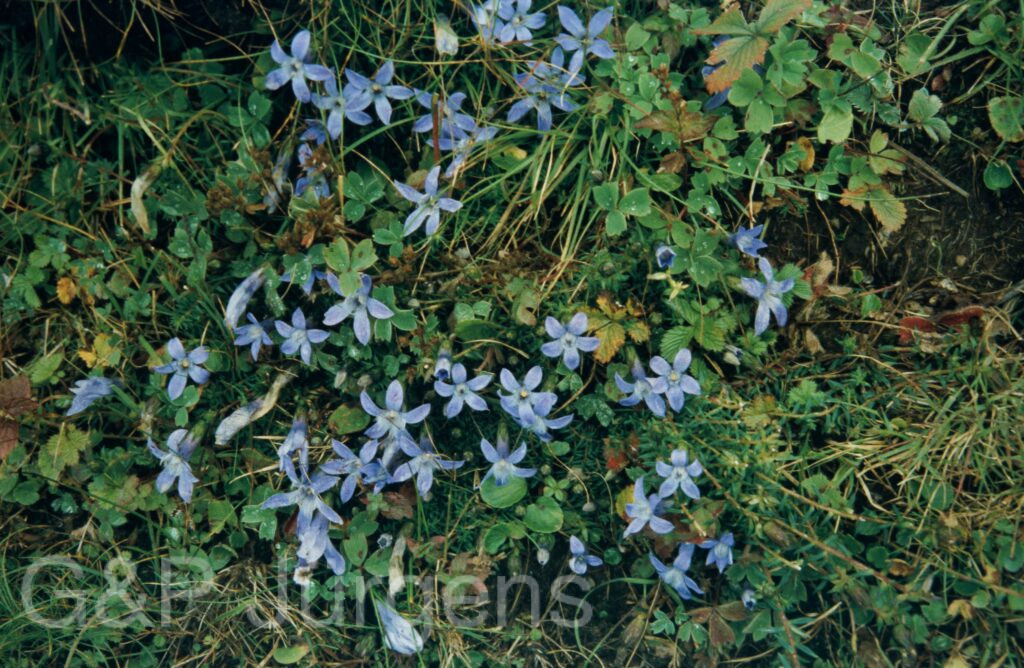
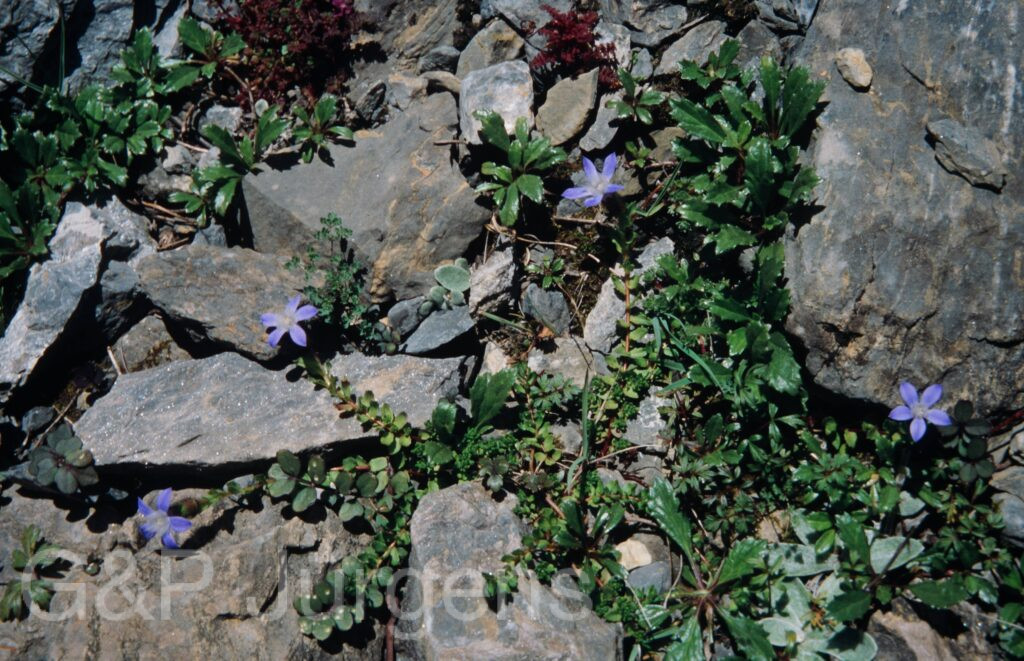
Bhutan2012 75
Bhutan Shele-La, 4100m September
Sikkim2003 114 G154
Sikkim below Dzongri 4000m 08.2003
Sikkim2003 130 P176
Sikkim Dzongri 4100m 08.2003

Description

Cyananthus lobatus is a well-known Himalayan trailing bellflower distributed from Nepal through India, Bhutan and southern Tibet (China) into Myanmar, with the genus's comparatively abundant 515 GBIF records (additional European and North American codes reflect its popularity in cultivation). It grows in the alpine and upper subalpine zones on open grassy slopes, rock ledges, screes and moist turf, broadly between about 3000 and 4500 m. The plants illustrated, from the Shele-La in Bhutan at around 4100 m in September and from Dzongri in Sikkim near 4000 m in August, occupy this late-summer to autumn alpine habitat.

It is a low, mat-forming or sprawling perennial herb arising from a stout rootstock, with prostrate to ascending, often reddish stems bearing small, alternate, obovate leaves that are usually lobed or toothed and somewhat fleshy. The flowers are solitary and terminal, large and showy for the plant's size; the broadly funnelform to bowl-shaped corolla is deep blue to violet-blue, five-lobed, and conspicuously bearded with white hairs in the throat, subtended by a swollen, hairy calyx tube. The fruit is a capsule enclosed in the persistent calyx, releasing numerous small seeds.

Cyananthus is a Sino-Himalayan genus distinguished from other Campanulaceae by its terminal solitary flowers, throat beard and superior ovary, and C. lobatus is its most familiar species, long valued as a choice late-flowering rock-garden plant, which explains its wide ex-situ record base. Its prostrate, cushiony habit suits exposed high-altitude ground. The species is widespread and locally common across the Himalaya and is not considered threatened, although alpine grazing and warming-driven upslope vegetation shifts could affect individual populations.

Author: Wall. ex Benth. · Sources: POWO (Kew), GBIF, Flora of Bhutan, Flora of China, Annotated Checklist of the Flowering Plants of Nepal, Lammers Revision of Campanulaceae

(Nannf.) K.K.Shrestha

Sikkim2003 127 G173
Sikkim Dzongri 4000
Sikkim2003 128 G174
Sikkim Dzongri 4000m 08.2003

Description

Cyananthus macrocalyx subsp. spathulifolius is a high-alpine perennial of the eastern and central Himalaya and adjacent China, recorded from China, Nepal, Bhutan and India, with GBIF documenting about 56 occurrences for the taxon. It grows on open alpine turf, rocky slopes, stabilised scree and moraine in the alpine zone, commonly between 3500 and 4500 m. The photographed plant was found at Dzongri in Sikkim at about 4000 m in August, flowering late in the monsoon summer when its broad blue corollas appear among low alpine herbage on these exposed high ridges.

The plant is a low, somewhat tufted to prostrate perennial with slender, ascending or trailing stems arising from a stout rootstock and exuding milky latex when broken. The leaves are small, alternate and crowded, with spathulate to obovate blades (the source of the subspecific epithet), the margins entire to few-toothed. The flowers are solitary and terminal, comparatively large for the plant; the calyx is conspicuously inflated and large, as the specific epithet "macrocalyx" indicates, often hairy. The corolla is broadly campanulate, blue to purplish-blue, with five spreading lobes and a bearded throat; there are five stamens and an inferior to half-inferior ovary, maturing into a capsule.

The taxon belongs to Cyananthus (Campanulaceae), a Sino-Himalayan genus distinguished from Campanula by its hypogynous nectary disc and large calyx. Recombined by K.K. Shrestha, this subspecies is a regional variant of the polymorphic C. macrocalyx complex. A specialist of high, well-drained alpine habitats, it is naturally localised but not known to be threatened, though sensitive to grazing and warming-driven contraction of the alpine zone.

Author: (Nannf.) K.K.Shrestha · Sources: POWO (Kew), GBIF, Flora of China, Flora of Nepal, Flora of Bhutan, revision of Cyananthus (Shrestha)

Edgew.

Garw 2005 300 ergebnis
India Garhwal Kunol 3100m, September
Nepal 99 855 ergebnis
West-Nepal Sanu Bheri 3850m, July
Nepal 99 856 ergebnis
West-Nepal Sanu Bheri 3850m, July
Garw 2005 44 ergebnis ergebnis
India Garhwal Valley of flowers 3150m, September

Description

Cyananthus microphyllus is an alpine cushion-forming herb endemic to the Himalaya, documented from Nepal, India and China, with the available occurrence records concentrated along the central and western Himalayan arc. It grows in alpine meadows, on open stony slopes, rock ledges and the gravelly margins of glacial moraines, generally between about 3000 and 4500 m. The images, gathered at Kunol in Garhwal at 3100 m and in the Valley of Flowers at 3150 m in September and at Sanu Bheri in West Nepal at 3850 m in July, capture its late-monsoon flowering in high pastures and rocks where the mats anchor in thin, well-drained soils.

The plant forms low, much-branched, somewhat woody-based mats from a slender taproot. The wiry, prostrate to ascending stems are clothed in numerous small, alternate, ovate to elliptic leaves that are often revolute at the margin and sparsely hairy. The flowers are solitary and terminal, with a campanulate, conspicuously hairy calyx whose tube is shorter than the deeply five-lobed, blue corolla; the corolla throat bears a dense ring of white hairs, a defining feature of the genus. Five stamens alternate with the corolla lobes, and the inferior to half-inferior ovary develops into a capsule that exceeds the persistent calyx and dehisces to release numerous small seeds.

Cyananthus is a small Sino-Himalayan genus of perhaps two dozen species, allied to the bellflowers but distinguished by the bearded corolla throat and largely inferior ovary. Cyananthus microphyllus is recognised among the small-leaved, blue-flowered species by its diminutive, densely leafy mats. Its restricted high-elevation distribution makes it sensitive to climatic shifts and trampling by grazing livestock, and as a late-flowering alpine it provides an important resource for bumblebees and other cold-adapted pollinators.

Author: Edgew. · Sources: POWO (Kew), GBIF, Flora of China, Annotated Checklist of the Flowering Plants of Nepal, Flowers of the Himalaya (Polunin & Stainton), revision of Cyananthus (Campanulaceae)

C.B.Clarke

Sikkim2003 430 P597
Sikkim below Dzongri 4000m 08.2003
Sikkim2003 430 P597
Sikkim below Dzongri 4000m 08.2003
Sikkim2003 504 P704
Sikkim below Dzongri 4000m 08.2003

Description

Cyananthus pedunculatus C.B.Clarke is an eastern Himalayan alpine herb confined to the high mountains of Nepal, India (Sikkim, Darjeeling), Bhutan and adjacent southern China, the GBIF record of about 60 occurrences underscoring its restricted distribution. It is a plant of moist alpine turf, rock ledges, scrub margins and grassy slopes in the subalpine to alpine zone, typically between 3500 and 4500 m. The photographed plant below Dzongri in Sikkim at around 4000 m, flowering in August, exemplifies its monsoon-season anthesis in cool, humid, well-drained high-altitude meadows beneath the snow peaks of the eastern ranges.

The species is a low, tufted or shortly ascending perennial arising from a slender woody rootstock, the stems several, prostrate to decumbent and clothed with small, alternate, entire to crenate leaves that are often revolute-margined and sparsely hairy. The flowers are solitary and terminal, borne on conspicuously elongate peduncles that distinguish the species. The corolla is broadly campanulate to funnel-shaped, blue to violet-blue, with five spreading lobes and a dense ring of white hairs in the throat; the calyx is tubular and hairy. Five stamens and a half-inferior ovary are present, the fruit a many-seeded capsule dehiscing apically.

Cyananthus is a genus of around twenty species centred on the Sino-Himalaya and characterised by its throat-bearded, campanulate corollas, sometimes treated near the Lobelioideae but retained within Campanulaceae. C. pedunculatus is recognised by its long flower-stalks, separating it from cushion-forming congeners such as C. lobatus and C. microphyllus. As a localised high-elevation endemic it is potentially sensitive to climate-driven upslope shifts and disturbance, though not formally assessed; it is occasionally grown by alpine-plant specialists.

Author: C.B.Clarke · Sources: POWO (Kew), GBIF, Flora of China, Flora of Bhutan, Annotated Checklist of the Flowering Plants of Nepal, T. T. Yü — Monograph of the genus Cyananthus

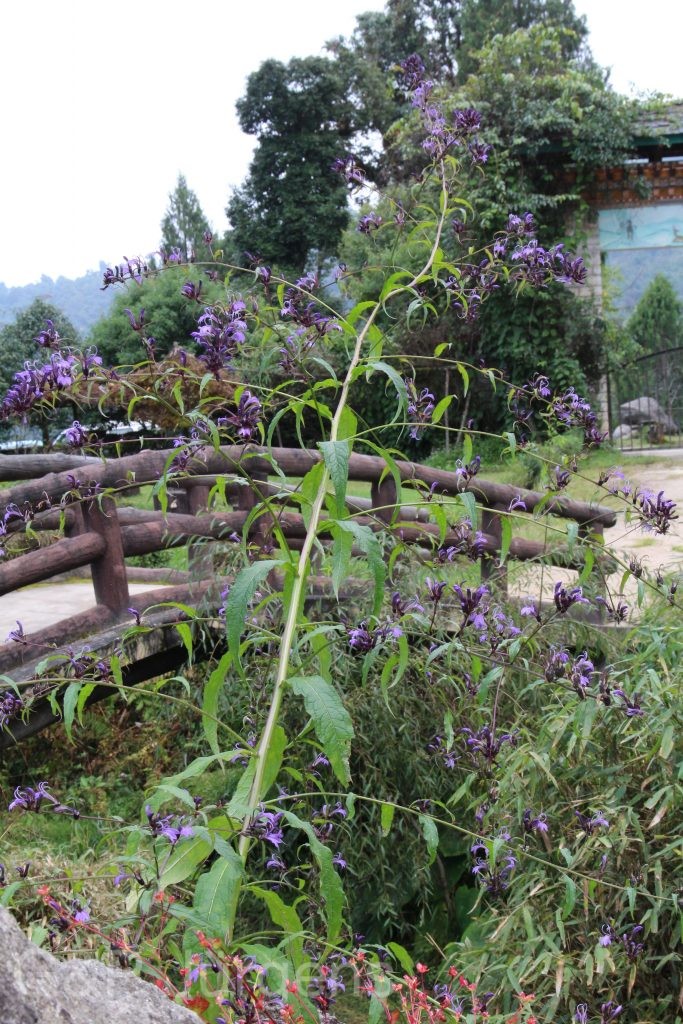
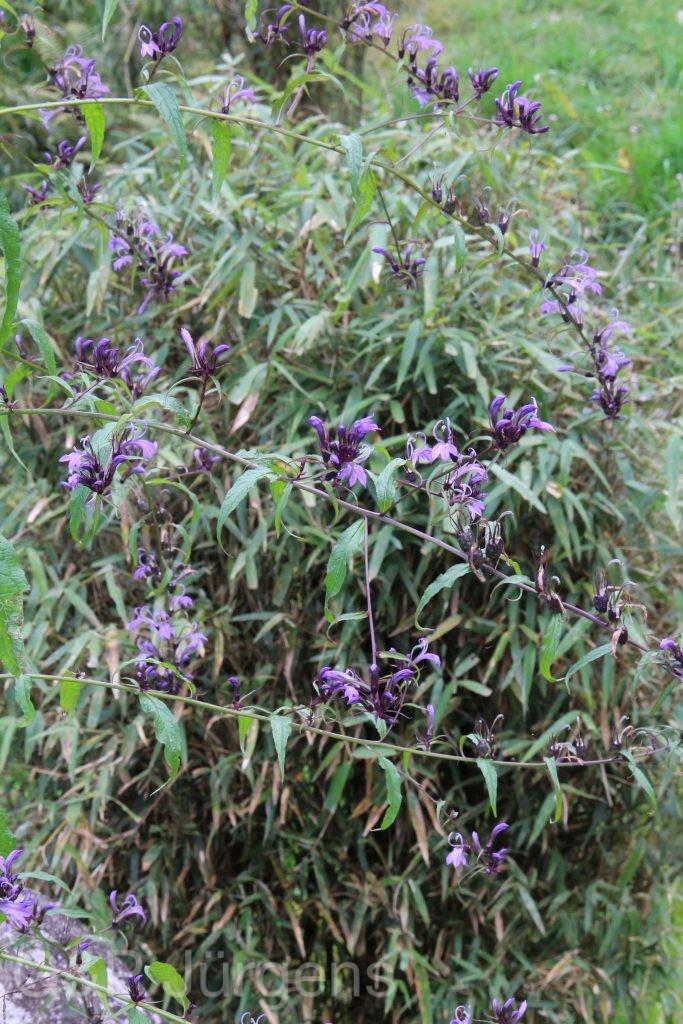
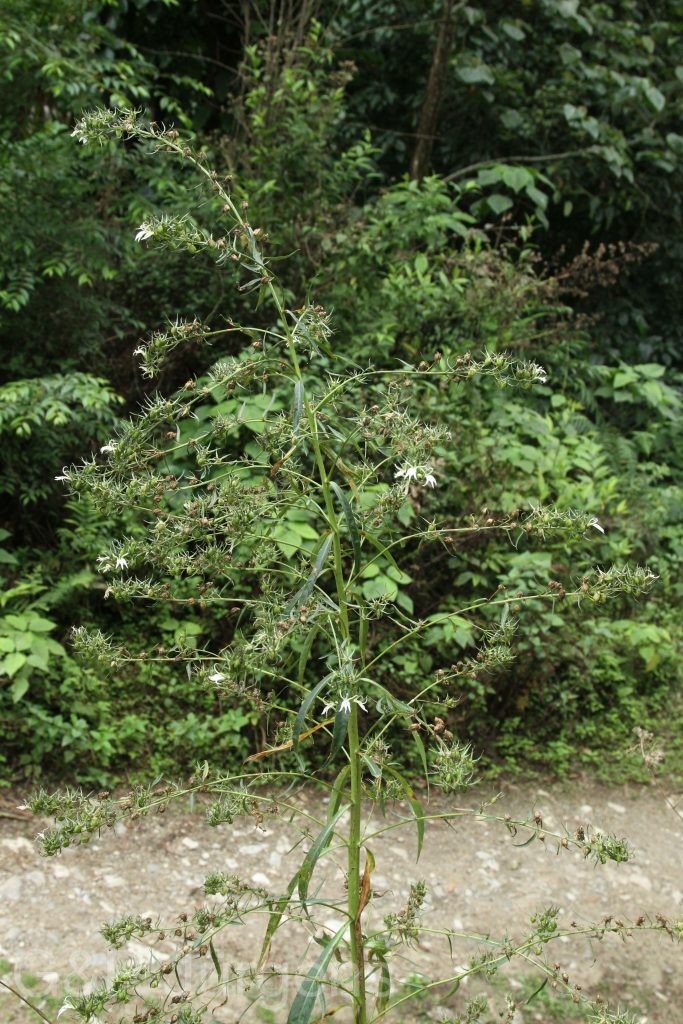
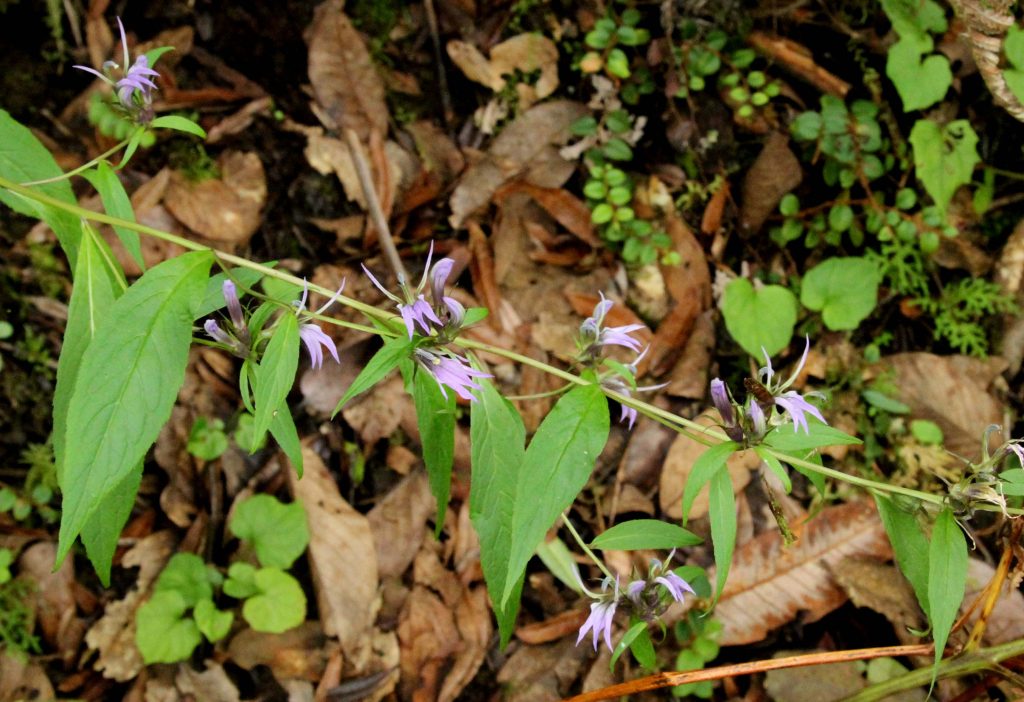
Roth

Bhutan2015 35
Bhutan Dochu-La 2700m, October
Bhutan2015 36
Bhutan Dochu-La 2700m, October
Bhutan2014 286
Bhutan Trithangebe at a farm, 800m May
Bhutan2012 338
Bhutan Dochu-La 3000m, September

Description

Lobelia nicotianifolia is a robust, wide-ranging lobelia of the Indian subcontinent and tropical Asia, documented from India, China, Sri Lanka, Nepal, the Philippines, Thailand, Myanmar, Indonesia, Bangladesh, Vietnam, Bhutan, Laos, Malaysia and Taiwan, with around 763 occurrences making it one of the better-collected species in this set; New World records reflect cultivation or error. It occupies a wide altitudinal span, from warm foothill farmland to cool montane forest margins, favouring open, disturbed, moist ground along roadsides, clearings and field edges. The Bhutanese collections illustrate this breadth, ranging from a farm at Trithangebe at about 800 m in May to the Dochu-La between roughly 2700 and 3000 m flowering in September and October.

It is a tall, stout biennial or short-lived perennial herb, sometimes exceeding two metres, with an erect, little-branched stem exuding acrid milky latex when cut. The leaves are large, alternate, lanceolate to elliptic, finely toothed and tobacco-like in size and texture, hence the epithet nicotianifolia, the lower ones forming a substantial basal array. The flowers are borne in a long, dense terminal raceme; each is zygomorphic with a tubular, two-lipped corolla, typically pale greenish-white to bluish, split nearly to the base, the upper lip of two narrow lobes and the lower of three, the stamens connate into a staminal tube around the style. The fruit is a many-seeded capsule dehiscing at the apex.

Within Campanulaceae, Lobelia is a large genus distinguished by strongly bilabiate flowers and syngenesious anthers, and tall species such as this are notable for their imposing single-stemmed inflorescences and their pyridine alkaloids related to lobeline, giving them a long history of medicinal and folk use. The acrid latex deters herbivores, and the protandrous flowers favour outcrossing by insect visitors. Common and adaptable across a vast range, the species is of no conservation concern and behaves as a colonist of disturbed, anthropogenic habitats.

Author: Roth · Sources: POWO (Kew), GBIF, Flora of Bhutan, Flora of China, Flora of British India, Lammers's monographic studies of Lobelia (Campanulaceae)

Lam.

Sikkim 2006 457 ergebnis
India West-Bengal, Ruigi-Chu 2100m, May

Description

Lobelia nummularia is a creeping, mat-forming perennial herb of the Campanulaceae (subfamily Lobelioideae), widely distributed across tropical and subtropical Asia. GBIF data (over 2,600 occurrences) confirm a broad native range spanning the eastern Himalaya, southern China, Taiwan, Indochina, the Malesian region and Papua New Guinea, with naturalised or cultivated records further afield. The species favours shaded, humid forest floors, mossy banks, ravine sides and the margins of streams in evergreen broadleaved and subtropical montane forest. The collection from the Ruigi-Chu valley in West Bengal at 2,100 m in May illustrates its habit of carpeting damp, sheltered ground in the lower montane belt.
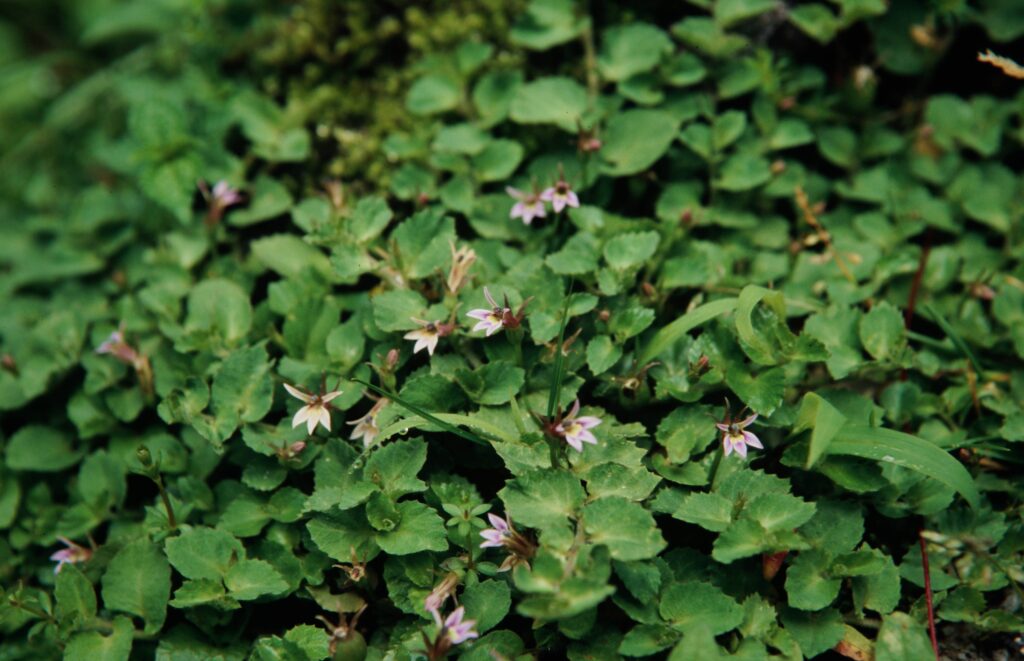
The slender, prostrate stems root at the nodes and form extensive mats. Leaves are alternate, small, orbicular to broadly ovate or cordate, shortly petiolate, with shallowly crenate to serrate margins, the rounded coin-like blades giving rise to the epithet nummularia. The solitary axillary flowers are borne on long, filiform pedicels. The corolla is bilabiate, pale purplish-pink to whitish, with the two upper lobes erect and the three lower lobes spreading; the five anthers are fused into a tube around the style. The fruit is a small, more or less globose to subglobose capsule containing numerous minute seeds.

Members of subfamily Lobelioideae are characterised by their resupinate, strongly zygomorphic flowers and connate anthers, and like many lobelias the species contains piperidine alkaloids. As a ground-cover element of intact understorey, L. nummularia contributes to soil stabilisation on humid forest banks. Its very wide distribution renders it secure overall, though forest clearance threatens local populations dependent on continuous shade and humidity.

Author: Lam. · Sources: POWO (Kew), Flora of China Vol. 19, Flora of Bhutan Vol. 2, GBIF, Lammers: World Checklist and Bibliography of Campanulaceae (2007)

Wall.

Garw 2005 418 ergebnis
India Garhwal Didina 2470m, September

Description

Lobelia pyramidalis is a widespread Asian lobelia ranging through the Himalaya and into mainland Southeast Asia and southern China, with GBIF records from India, Nepal, Bhutan, Bangladesh, China, Taiwan, Myanmar, Thailand and Japan (a few extralimital records from the United States represent cultivation or introductions). Its nearly 419 documented occurrences confirm a broad and well-collected distribution. The species grows on grassy banks, open hillsides, forest margins, roadside cuttings and moist disturbed ground from the lowlands up to roughly 2,800 m. The photographed plant from Didina in Garhwal, India, at 2,470 m flowering in September illustrates its preference for the temperate Himalayan zone, where it flowers late in or after the monsoon.

The plant is an erect biennial or short-lived perennial herb with a tall, simple, pyramidal flowering stem reaching up to a metre or more. The leaves are alternate, sessile and crowded below, lanceolate to oblanceolate with finely toothed margins, the lower ones forming a basal rosette. The inflorescence is a long, dense, spike-like terminal raceme of many small zygomorphic flowers, each subtended by a leafy bract; the corolla is bilabiate and pale blue to lilac or whitish, with the two upper lobes erect and the three lower lobes spreading. The fruit is a small two-valved capsule containing numerous minute seeds.

The species belongs to Lobelia subgenus Tupa-related Asian lineages and, like its congeners, contains piperidine alkaloids that render it acrid and medicinally noteworthy in folk traditions. Its tolerance of disturbed and secondary habitats makes it locally common and of no conservation concern. Its wide latitudinal and altitudinal amplitude makes it a useful indicator of the disturbed grassland flora across monsoonal Asia.

Author: Wall. · Sources: POWO (Kew), Flora of China Vol. 19, Flora of Bhutan Vol. 2, GBIF, Lammers: World Checklist and Bibliography of Campanulaceae